Anguillidae spp.
Spot European Eel from Central Switzerland to the Great Lakes, active in water from near-freezing to almost 28 °C. Here's where divers log them.
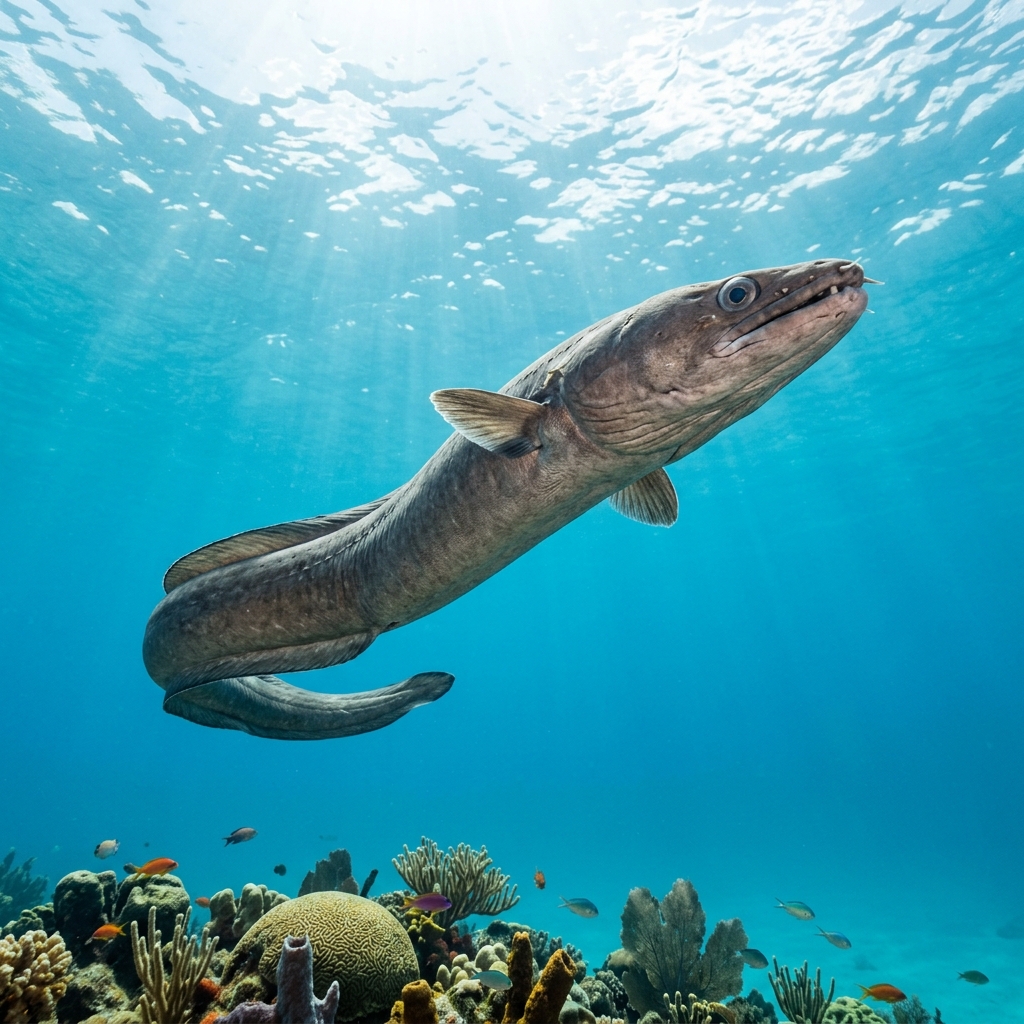
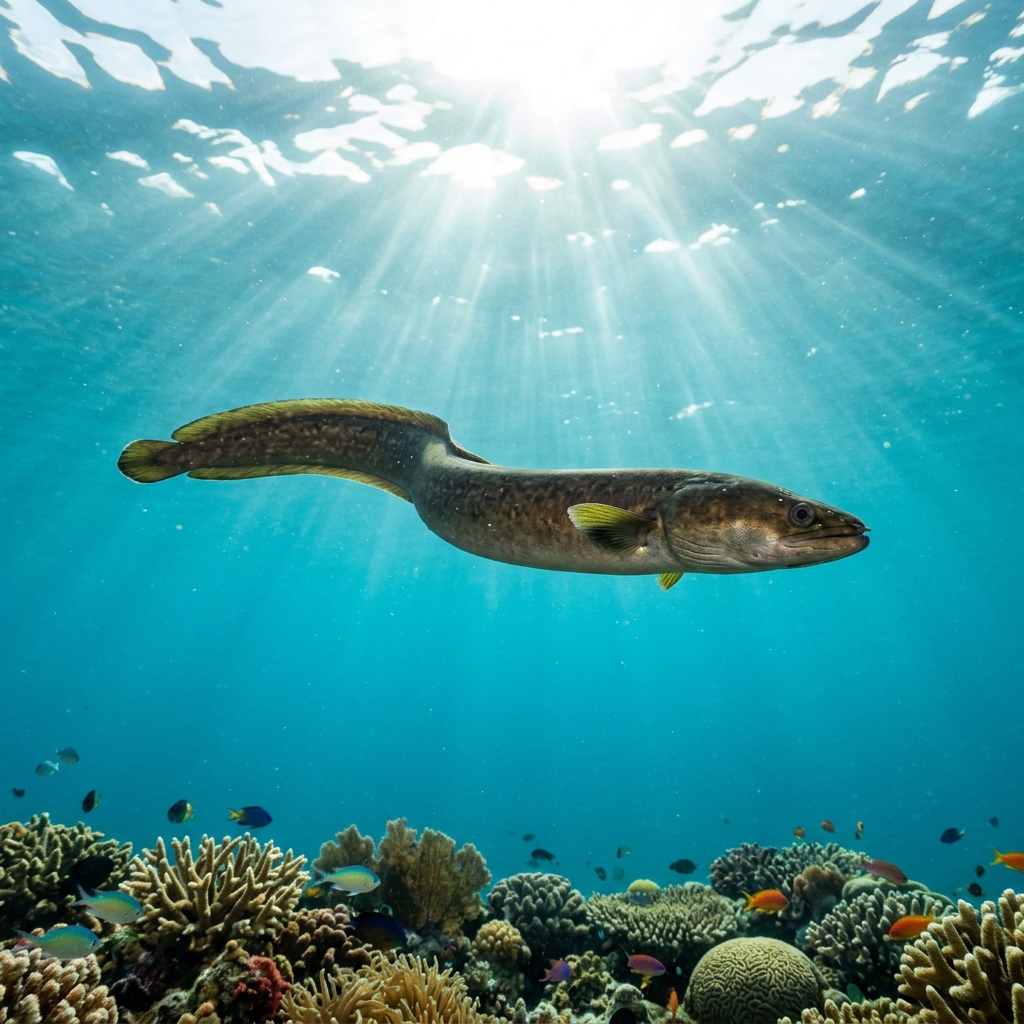
A long, snake-like fish with smooth, scaleless-looking skin that grades from dark olive or grey-brown on the back to a pale yellowish-white belly. Adults can exceed a metre, though most sightings will be of smaller individuals tucked into rocky crevices or buried in soft sediment with only the head visible. The continuous fin that runs along the back, around the tail, and forward along the underside blends into the body shape and is easy to miss, giving the animal a more worm-like silhouette than a typical fish. Females grow notably larger than males, though judging this underwater without a size reference is difficult.
Typically encountered resting in or near cover: beneath rocks, inside submerged woody debris, or partially buried in silt with the head angled outward. During daylight dives they tend to stay hidden and are easy to overlook; a slow, calm approach and a torch directed into crevices improves your chances significantly. When disturbed they reverse deeper into cover rather than swimming openly, so patience pays off more than pursuit.
Every European eel reproduces just once in its lifetime, making a single ocean crossing of thousands of kilometres to the Sargasso Sea to spawn, then dies. The adults you encounter in a Swiss lake or a German river have never been to the ocean and will not leave until that one final journey.
No strong seasonal peak has emerged from logged sightings, so encounters appear possible year-round wherever the eel is present. The broad water-temperature niche, observed across roughly 4 to 28 °C, reflects a species comfortable in everything from cold mountain lakes to warm summer rivers.
Most commonly logged in Germany, Switzerland, and the Netherlands in Europe, with strong representation across inland and coastal sites in the United States and Canada. Top regions include Central Switzerland, Central Germany, the Bavarian Alps, and the Great Lakes and Northeast of North America. Sightings are spread across a wide range of freshwater and brackish environments, from alpine lakes to lowland rivers.
Mapping where European Eels is logged…
Divers log them most often in Germany, Switzerland, and the United States, with notable sightings across Central Switzerland, Central Germany, the Bavarian Alps, and the Great Lakes region. They favour rocky freshwater and brackish habitats, so lake and river diving in those regions gives you the best shot.
No clear seasonal peak has been recorded from diver sightings, so they can be encountered year-round. Their comfort across a very wide temperature range, from near-freezing alpine lakes to warm summer rivers, means season matters less than finding the right habitat and diving slowly.
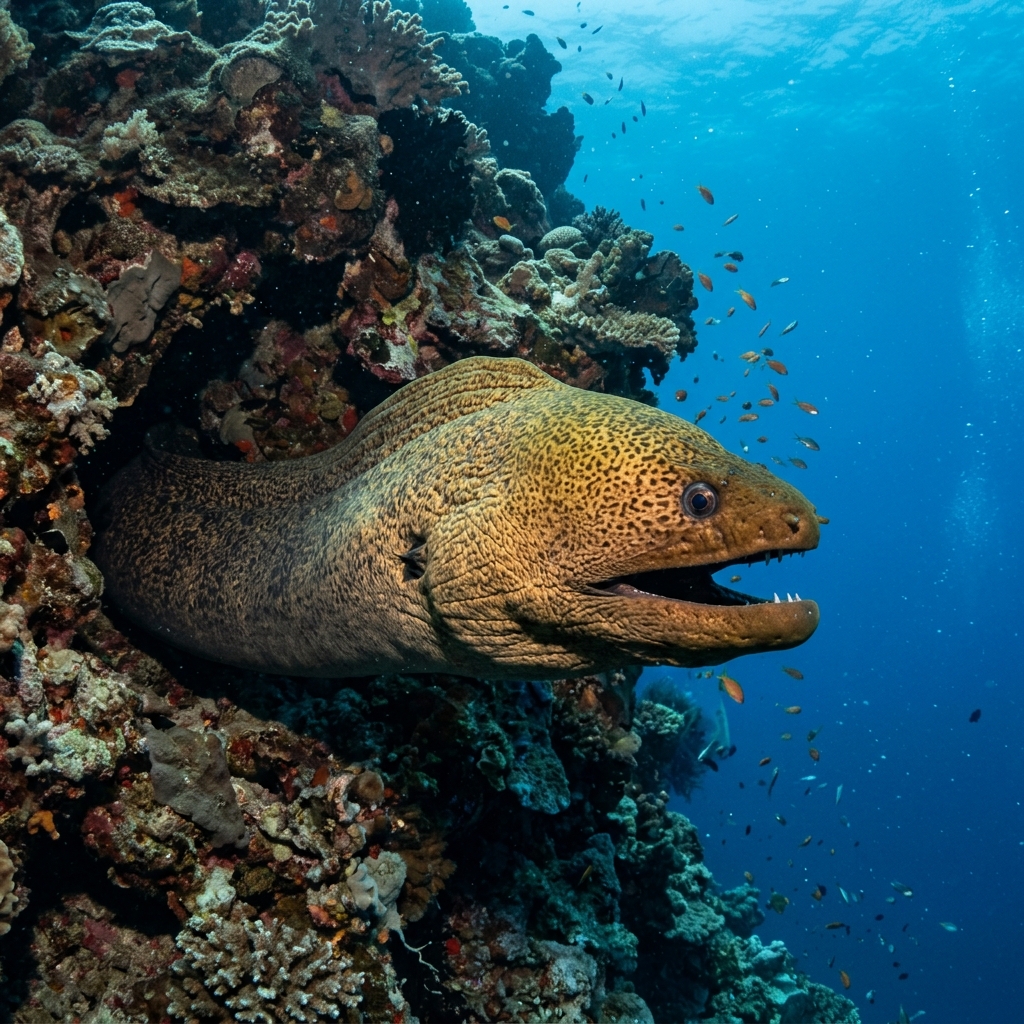
Look for a long, smooth-skinned, olive-brown or grey body with a pale underside, usually with just the head poking from a crevice or burrow. The continuous fin along back and belly blends into the body, giving it a more worm-like look than most fish. Adults are noticeably thicker-bodied than a typical moray eel and lack the gaping, toothy mouth.
Females are the larger sex and can exceed one metre in length; males usually stay under 50 centimetres. Most individuals you see while diving will be somewhere in between, and body thickness varies considerably with age and feeding history.
No. European Eels are not considered dangerous to divers. They are shy and will retreat into cover when approached rather than act defensively.
European Eels are catadromous, meaning they live in fresh water but migrate to the sea to breed. They spend most of their lives, sometimes decades, in lakes and rivers before making a single, one-way spawning migration all the way to the Sargasso Sea in the Atlantic, after which they die. No adult has ever been observed completing this journey and returning.
Site and sighting data is aggregated from diver logs, iNaturalist and GBIF. For taxonomy and conservation status:
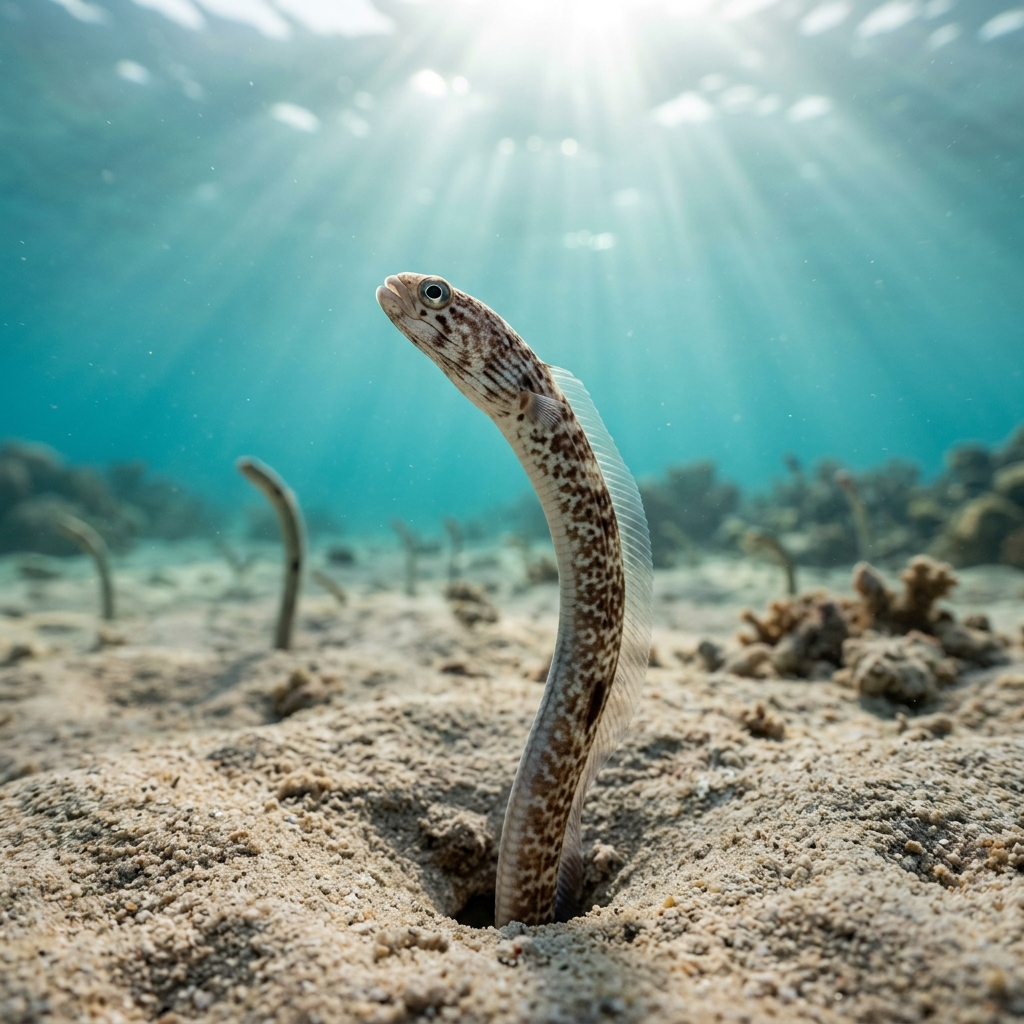
Garden Eel
2,448 sites