Olindiidae spp.
Spot tiny freshwater jellyfish in Central Switzerland and Germany's lakes, here's how to find and recognise these rare, bell-shaped inland wonders.
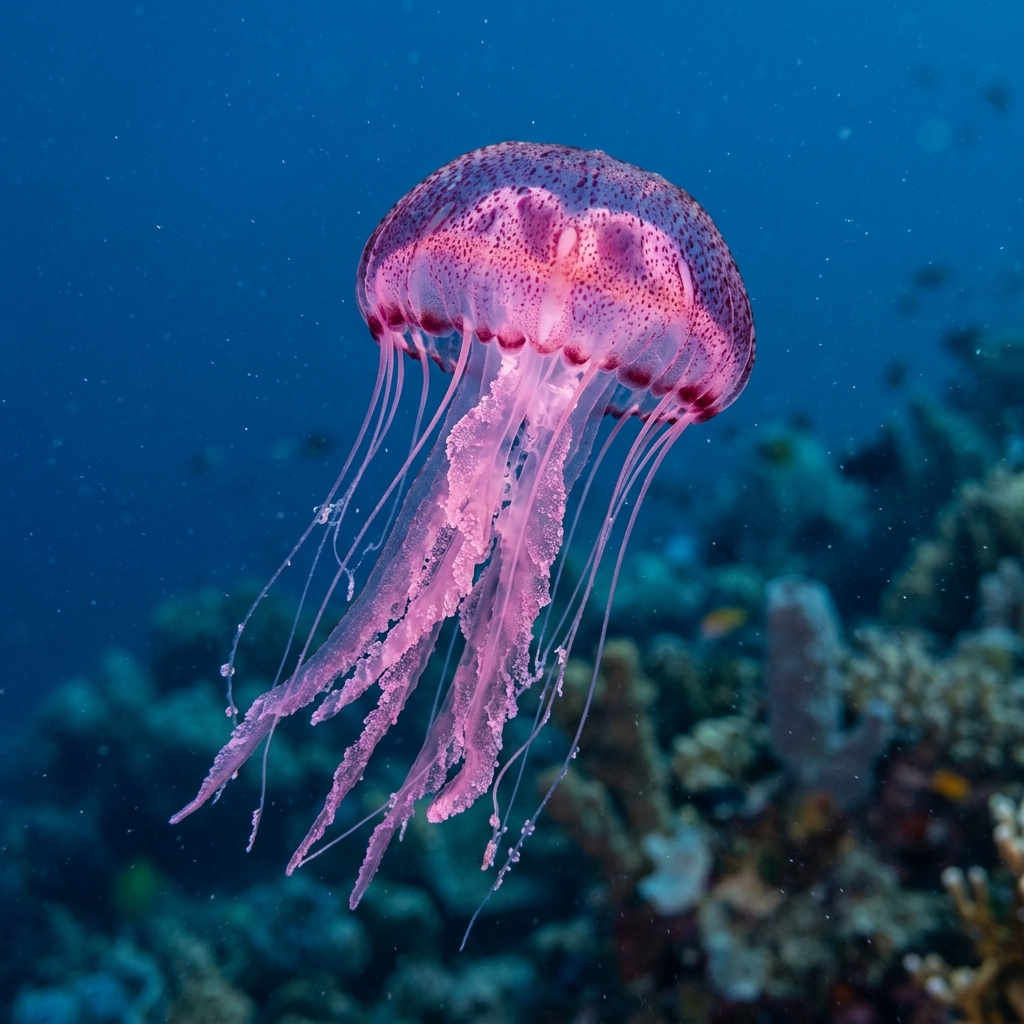
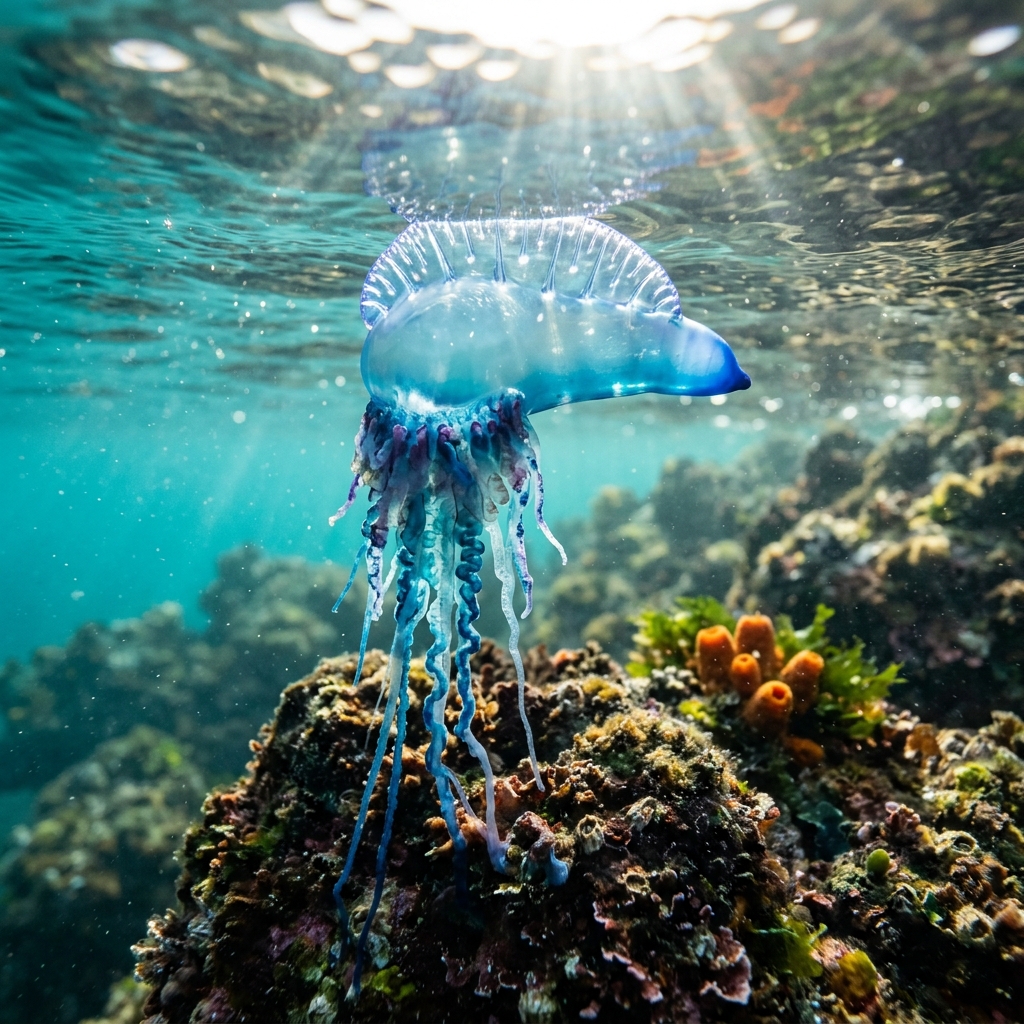
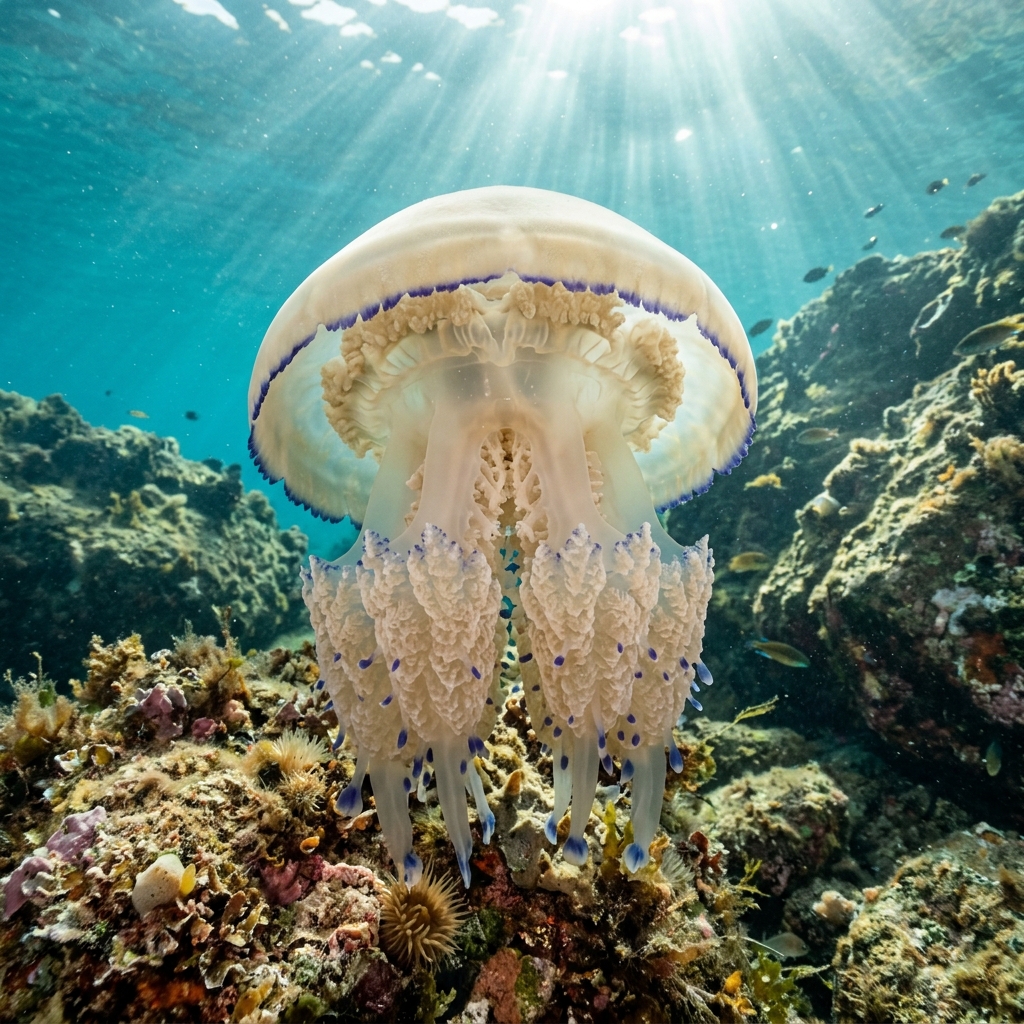
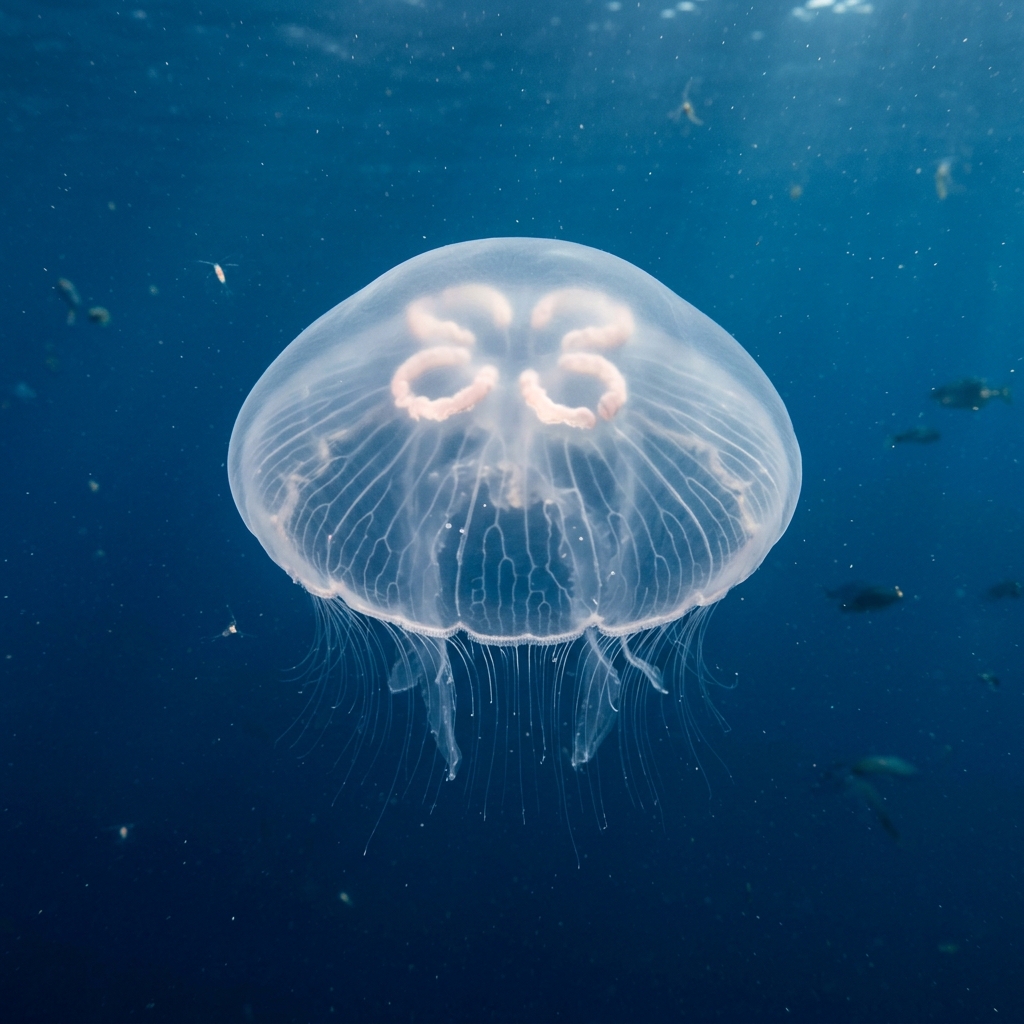
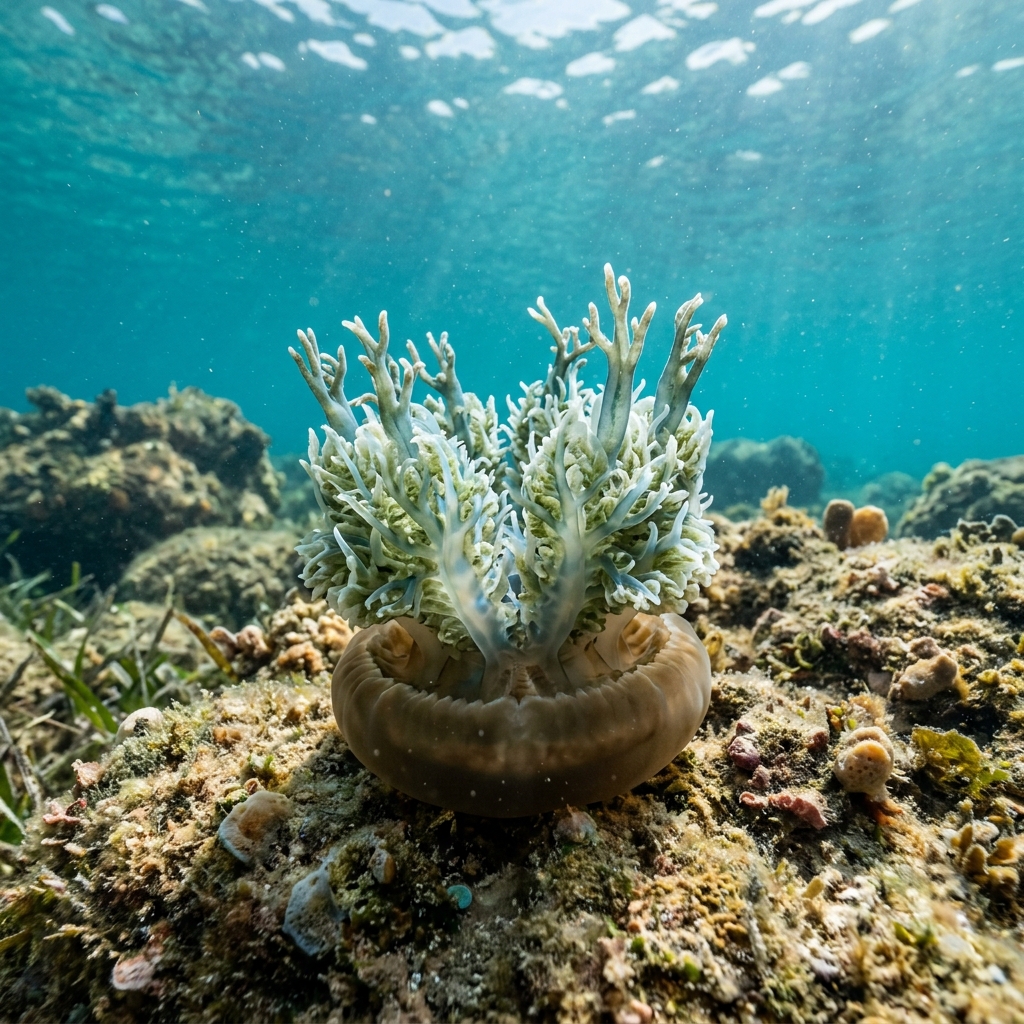
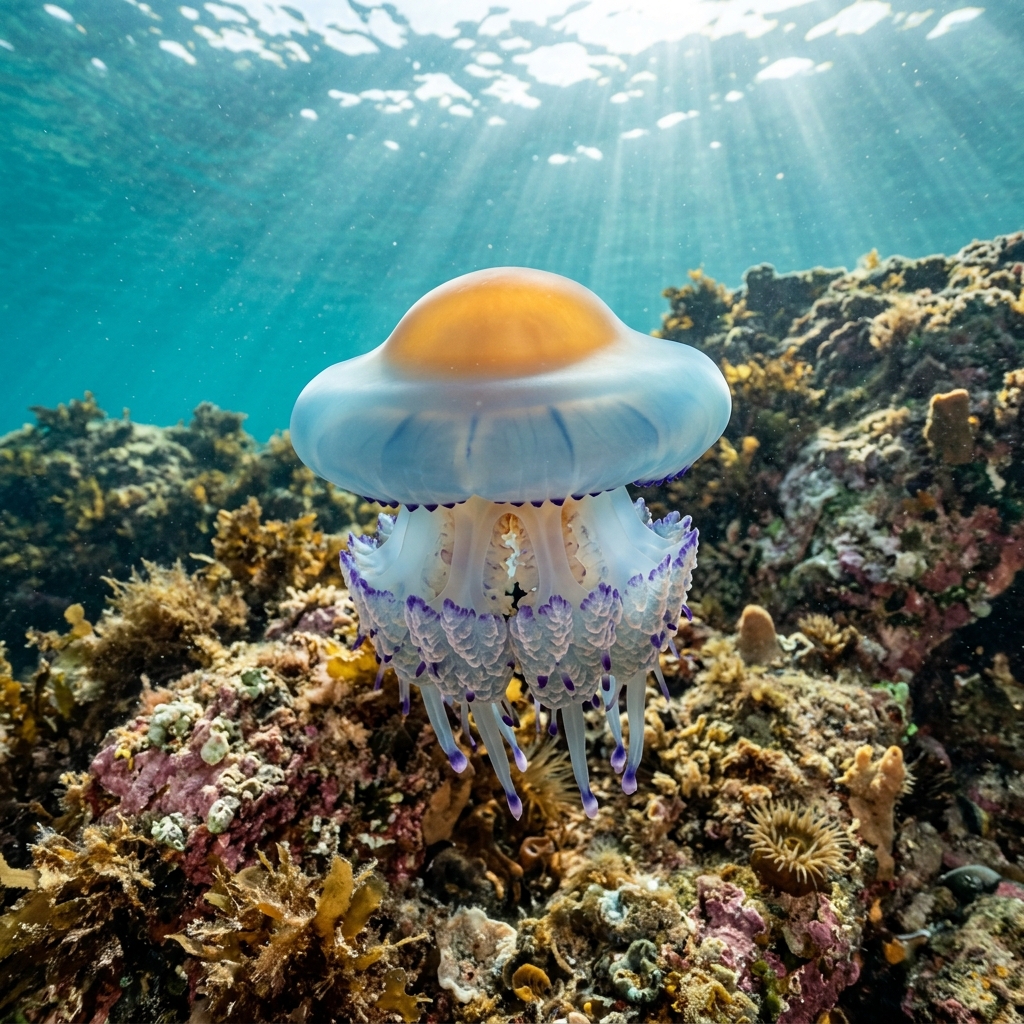
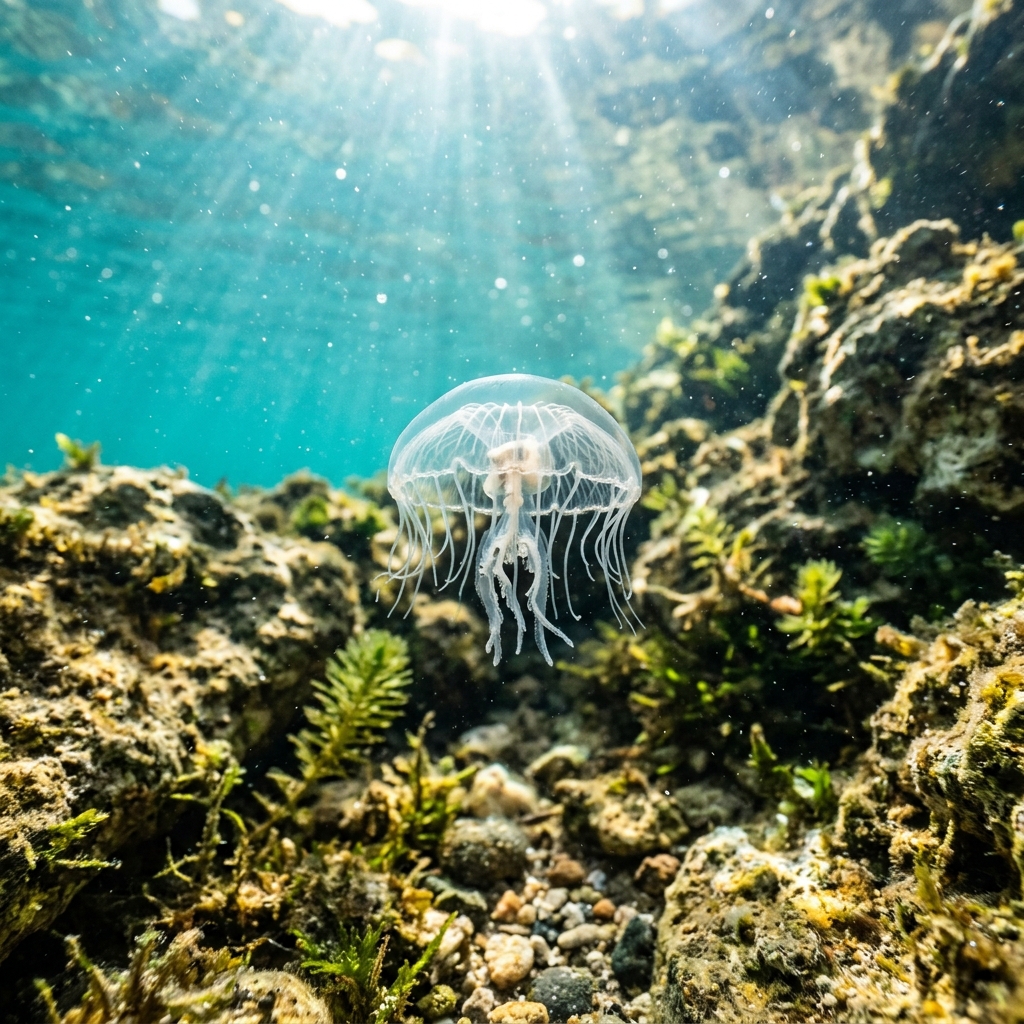
Look for a small, dome-shaped bell, typically no bigger than a coin, that is almost entirely transparent with a faint milky or pale bluish tint. Fine, hair-like tentacles trail below the bell in a fringe, and you can sometimes see the four-lobed internal canal system (the radial canals that carry digested nutrients) through the body wall. Unlike marine jellyfish, these animals are found in still, open freshwater, lakes, reservoirs, and slow rivers, so the habitat itself is as much an ID clue as the animal's appearance.
Freshwater jellyfish drift passively with currents and subtle swimming pulses of the bell, feeding on tiny zooplankton they capture with their tentacles. They tend to appear in open water mid-column, sometimes in loose aggregations when conditions favour population blooms, and they show no reaction to approaching divers. Visibility in freshwater lakes can make spotting them challenging, scan slowly through the open water rather than focusing on the bottom.
Freshwater jellyfish have one of the most remarkable distribution stories in the invertebrate world: native to China's Yangtze basin, they have spread to lakes and reservoirs on every inhabited continent, most likely as polyps (the sessile, bottom-attached life-stage) hitchhiking on aquatic plants and equipment. Their blooms can appear suddenly in a lake that seemed empty of them for years, then vanish just as quickly.
There is not enough monthly sighting data to pin down a clear season, so treat encounters as possible year-round wherever conditions suit. The observed water-temperature range of 9 to 28 °C covers most temperate lake conditions from late spring through early autumn, suggesting sightings are most plausible during the warmer months in Central European lakes.
Freshwater jellyfish are most commonly logged across Central European lakes, with Switzerland leading by a wide margin, Central Switzerland, the Lake Geneva Region, and Ticino & Southern Lakes are the standout hotspots. Germany follows closely, particularly the Bavarian Alps and Berlin & Brandenburg regions, with Austria and the Netherlands also well represented. Outside Europe, the Great Lakes & Ontario area in Canada is the most reliably documented region.
Mapping where Freshwater Jellyfish is logged…
The most reliably documented sightings come from Central European lakes. Switzerland, especially Central Switzerland, the Lake Geneva Region, and Ticino, has the strongest record, followed by Germany's Bavarian Alps and Berlin & Brandenburg regions. Austria, the Netherlands, and the Great Lakes & Ontario region of Canada are also solid options. These are all freshwater dive sites: lakes, reservoirs, and slow rivers.
Sighting data does not show a clear peak month, so encounters can happen at various times of year. The recorded water-temperature range of 9 to 28 °C suggests the warmer half of the year, roughly late spring to early autumn, gives the best conditions in temperate European and North American lakes. Blooms are unpredictable and can appear and disappear rapidly.
The key clues are habitat and size. A tiny, perfectly transparent dome-shaped bell no bigger than a large coin, drifting in the open water of a lake or reservoir, with fine tentacles below and a visible four-lobed canal pattern inside, that combination points strongly to freshwater jellyfish. The freshwater setting alone rules out the vast majority of jellyfish species, as almost all medusae are marine.
Individuals in the wild are typically very small, most bells measure roughly 5 to 25 mm across, about the size of a fingernail to a large coin. Their small size and near-total transparency make them easy to miss unless you are actively scanning the open water column.
No. Freshwater jellyfish pose no meaningful threat to divers or swimmers. Their tentacles carry stinging cells, but these are far too small and weak to penetrate human skin. You can observe them at close range without any concern.
Originally from rivers in central China, this group has established itself in lakes and reservoirs across Europe, North America, and beyond. The leading explanation is that their tiny polyp stage, which attaches to hard surfaces, travelled on imported aquatic plants or on equipment. Once introduced to a suitable lake, a population can remain dormant for years before producing a sudden visible bloom of medusae.
Site and sighting data is aggregated from diver logs, iNaturalist and GBIF. For taxonomy and conservation status:
Moon Jellyfish
1,766 sites