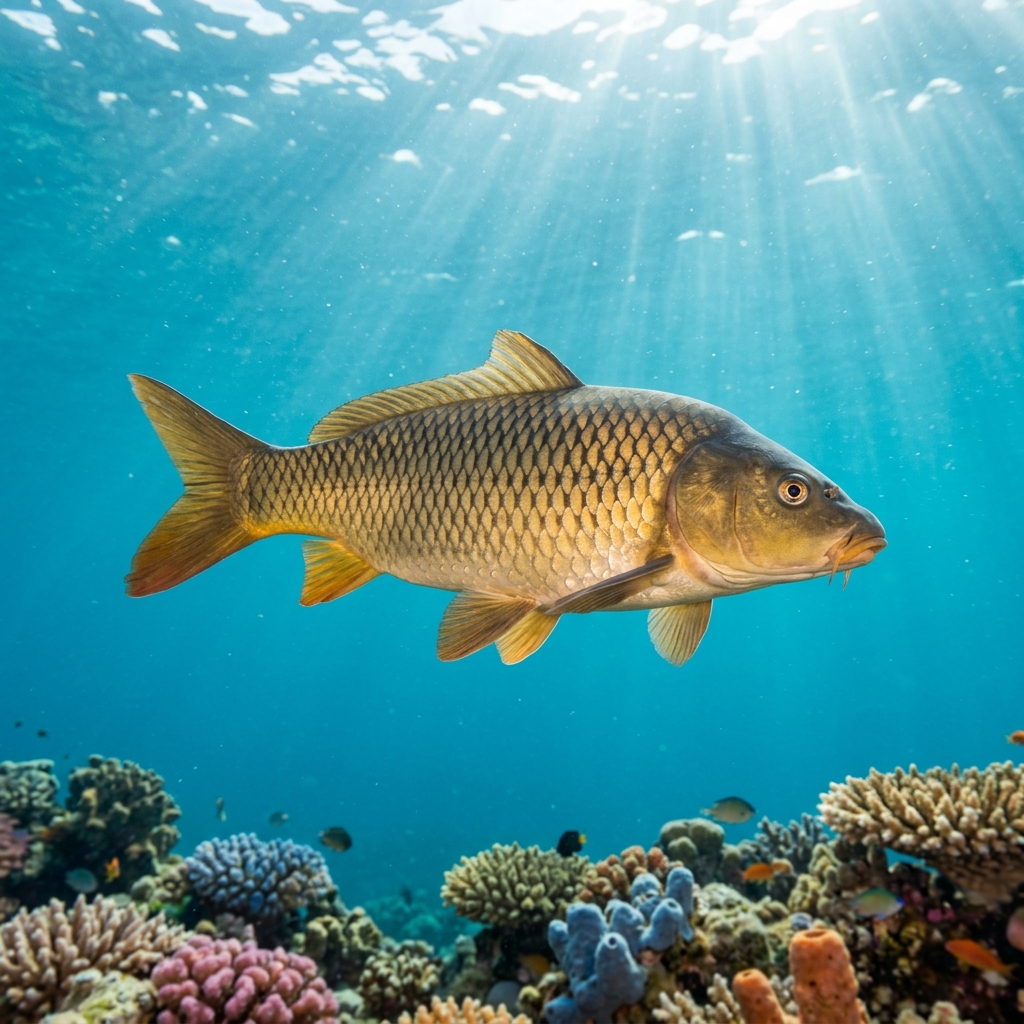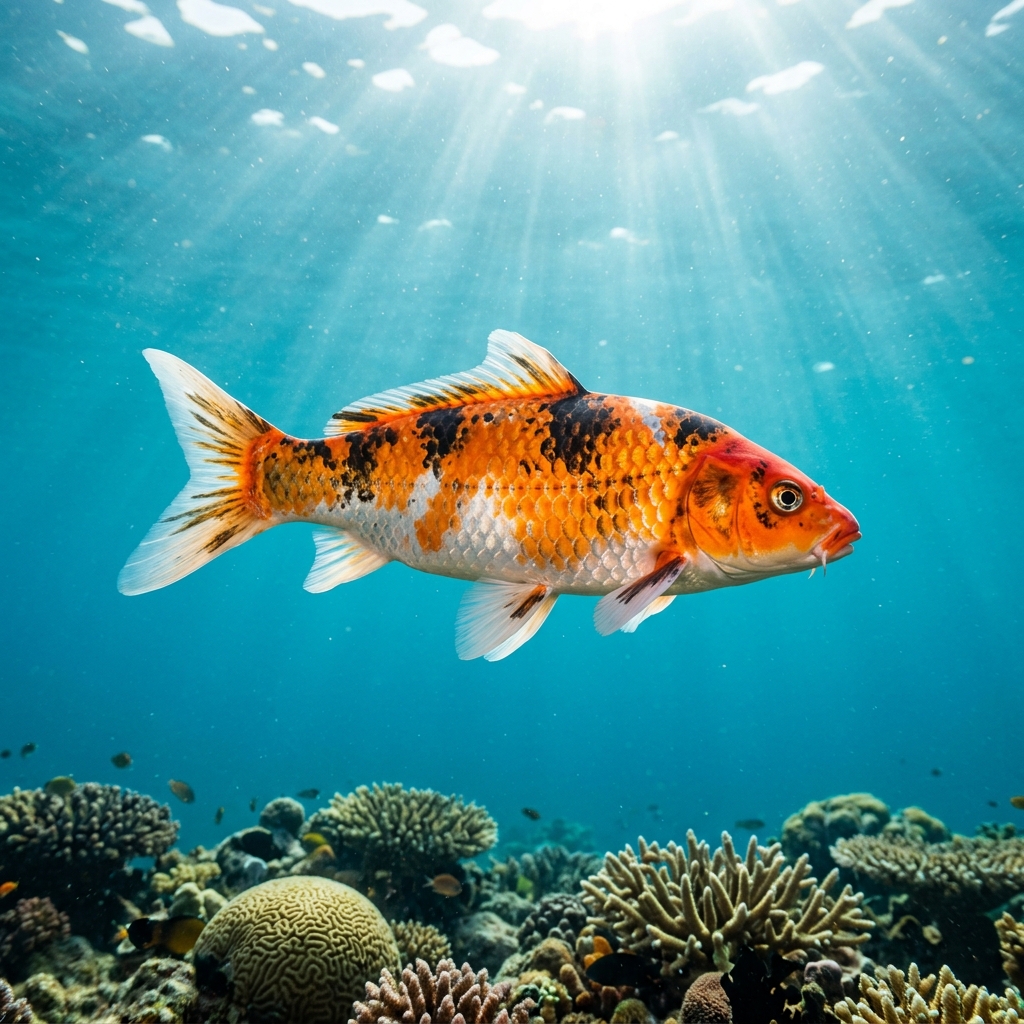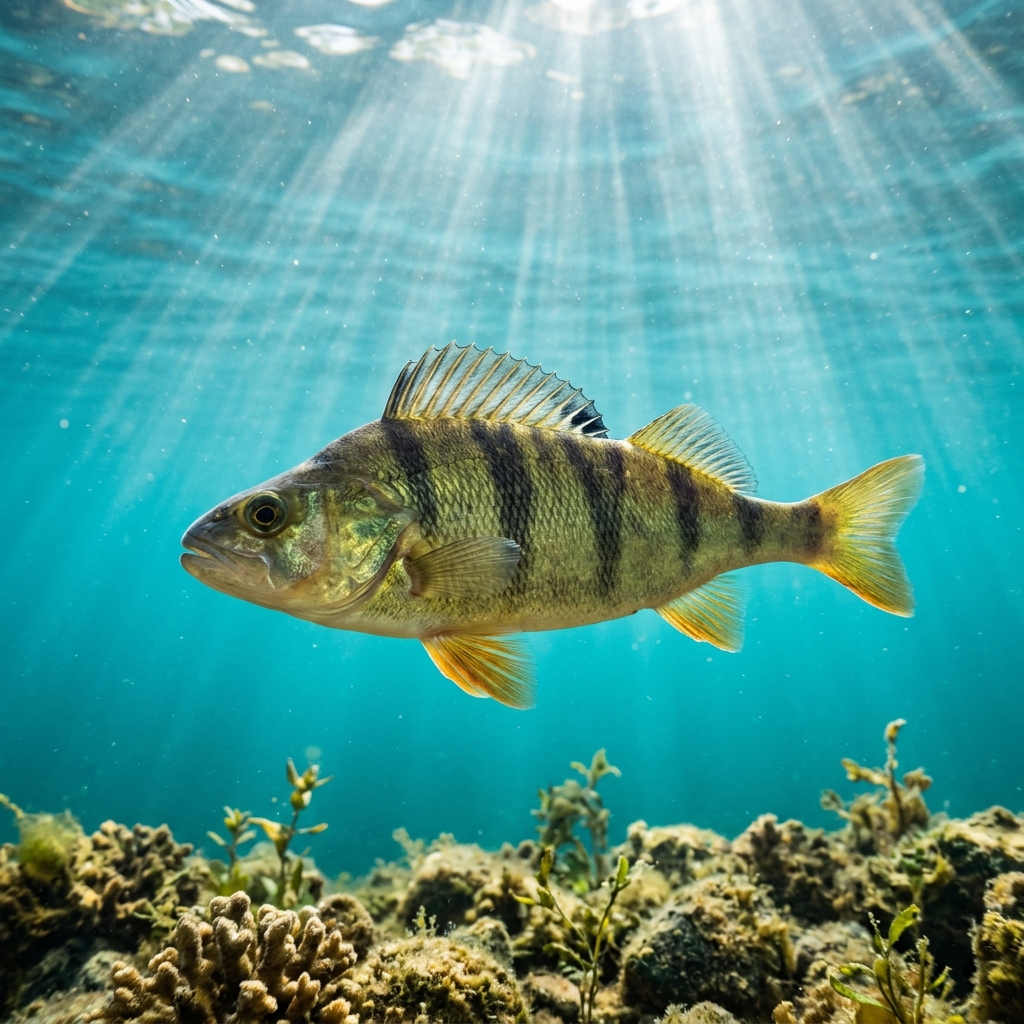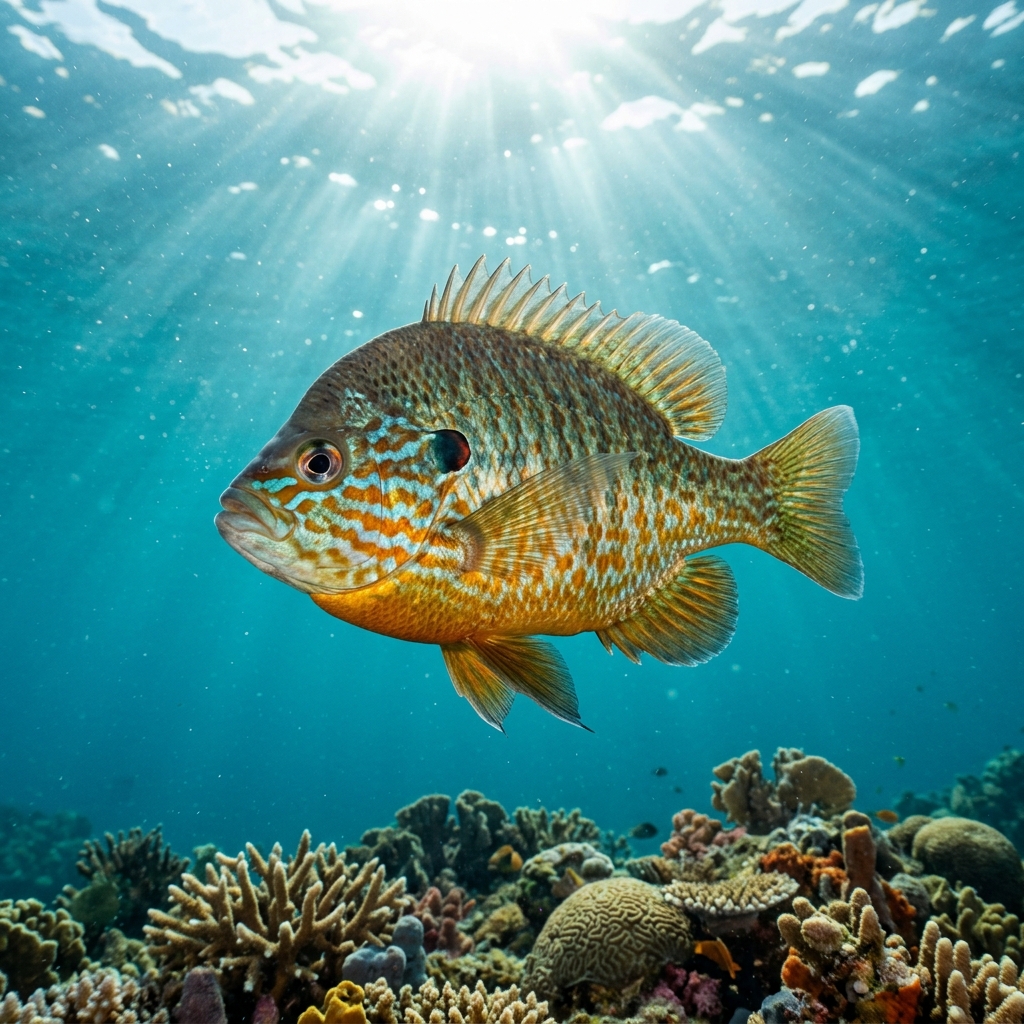
Acipenseridae spp.
Spot sturgeon in Germany, Switzerland, and the Great Lakes. Cold-water giants active in June, logged by divers in rivers and lakes across Europe and North America.
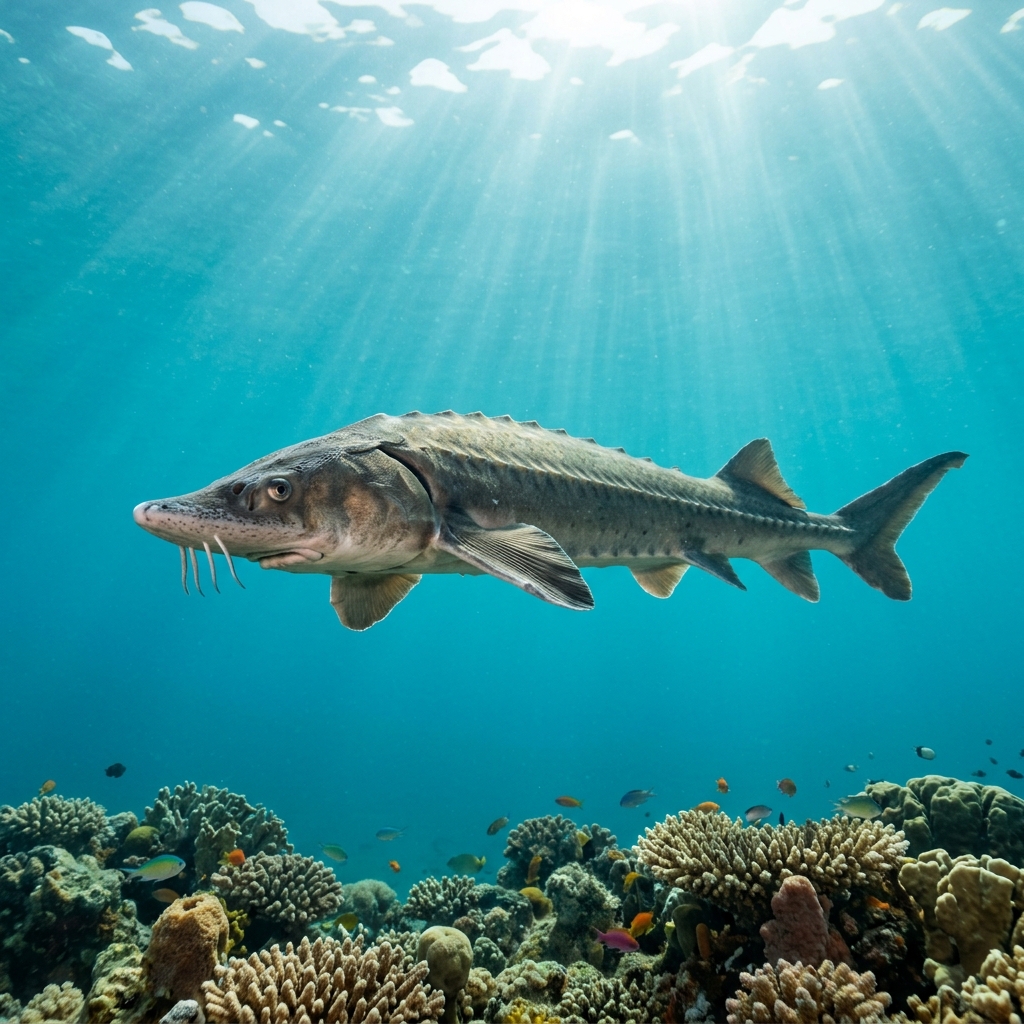
Few freshwater fish are easier to identify once you know the silhouette: a torpedo-shaped body armoured with rows of bony plates called scutes runs from the snout to the tail, replacing the scales you'd expect on most fish. The snout is long and shovel-like with four barbels (whisker-like sensory filaments) hanging in front of a small, toothless, downward-facing mouth. Colouration ranges from olive-grey to brown on the back with a paler belly. These are large animals, and even a mid-sized individual dwarfs most other fish sharing the same river or lake.
Sturgeon spend most of their time close to the bottom, using their sensitive barbels to probe sediment for invertebrates. They are generally slow-moving and unhurried around divers, making no attempt to flee or confront. Encounters typically happen in low-visibility, murky freshwater, so the fish often appears out of the gloom at close range before continuing along the riverbed.
Sturgeon are among the oldest fish lineages on earth, with a body plan largely unchanged for more than 200 million years. Some species live for over a century, meaning a large individual you encounter in the wild may well be older than your grandparents.
Northern Hemisphere sightings concentrate in June, which aligns with sturgeon moving actively through cool, oxygenated river and lake systems. Observed water temperatures at dive sites run from roughly 8 to 11 degrees Celsius, so expect cold-water conditions wherever you target them.
Most sturgeon sightings are logged in Germany and Switzerland, with particularly strong coverage across Central Germany, the Bavarian Alps, and Central Switzerland. North America is the other key region, with divers encountering them in the Great Lakes and Northeast, the Central and Mountain West, and Florida and the Southeast in the United States, as well as the Great Lakes and Ontario in Canada.
Mapping where Sturgeon is logged…
Sturgeon are most reliably logged in Germany and Switzerland in Europe, with Central Germany, the Bavarian Alps, and Central Switzerland the strongest regions. North America is also productive, particularly in the Great Lakes, the Northeast, and the Central and Mountain West of the United States, plus the Great Lakes and Ontario in Canada.
Based on diver sightings, June is the peak month in the Northern Hemisphere. Sturgeon favour cool water in the 8 to 11 degrees Celsius range, so they are most active in spring and early summer when river and lake temperatures are in that window.
Look for the rows of bony scutes running along the back and sides, the long shovel-shaped snout with four barbels, and a heterocercal tail where the upper lobe is longer than the lower. No other large freshwater fish in Europe or North America shares this combination of features, making identification straightforward even in murky water.
Size varies considerably across the family. Smaller species reach around one metre, while the beluga sturgeon of the Caspian and Black Sea basins can exceed five metres and several hundred kilograms, making it one of the largest freshwater fish on earth.
No. Sturgeon pose no threat to divers. They are toothless bottom-feeders that show little reaction to human presence and will typically continue foraging or swim calmly past.
Sturgeon are exceptionally long-lived. Many species routinely exceed 50 years, and some individuals have been documented living past 100 years. This slow life history, combined with late sexual maturity, makes populations very slow to recover from disturbance.
Site and sighting data is aggregated from diver logs, iNaturalist and GBIF. For taxonomy and conservation status:
Sun Perch
2,182 sites