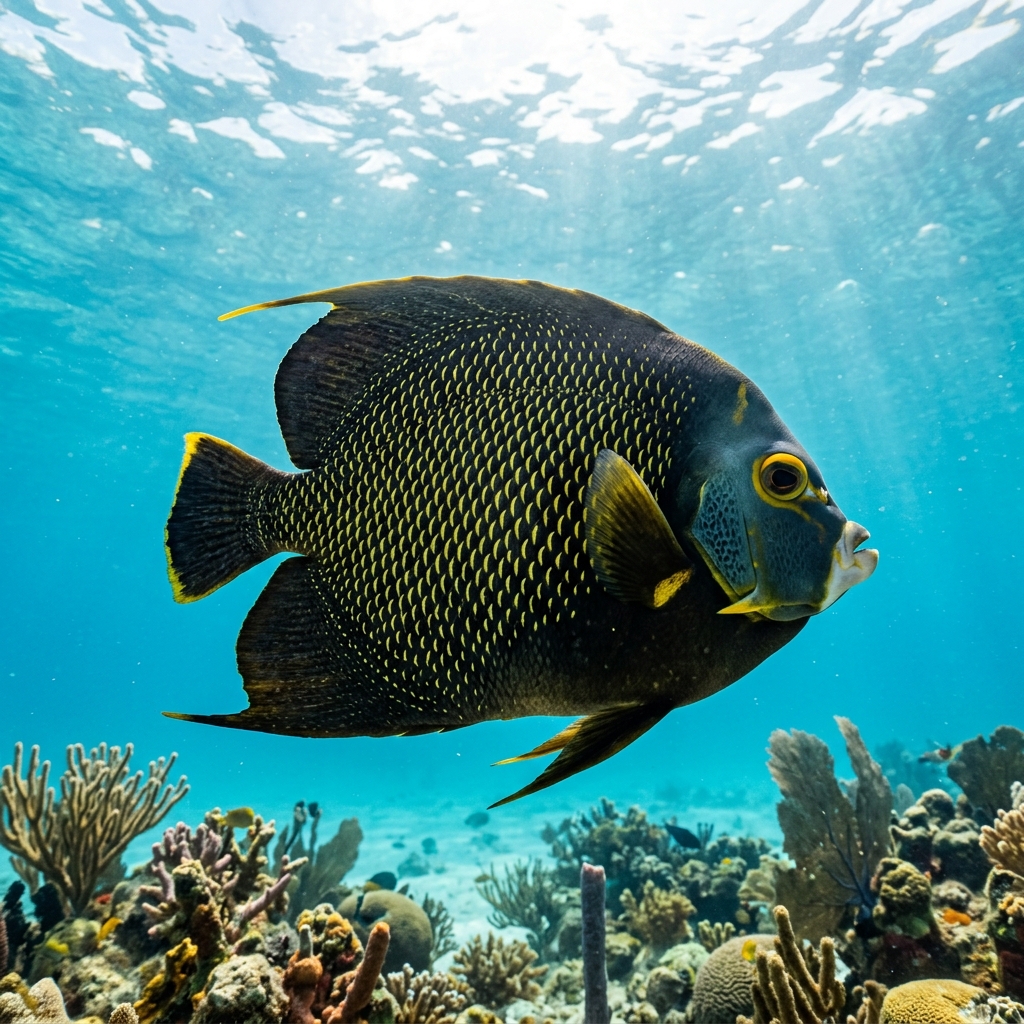
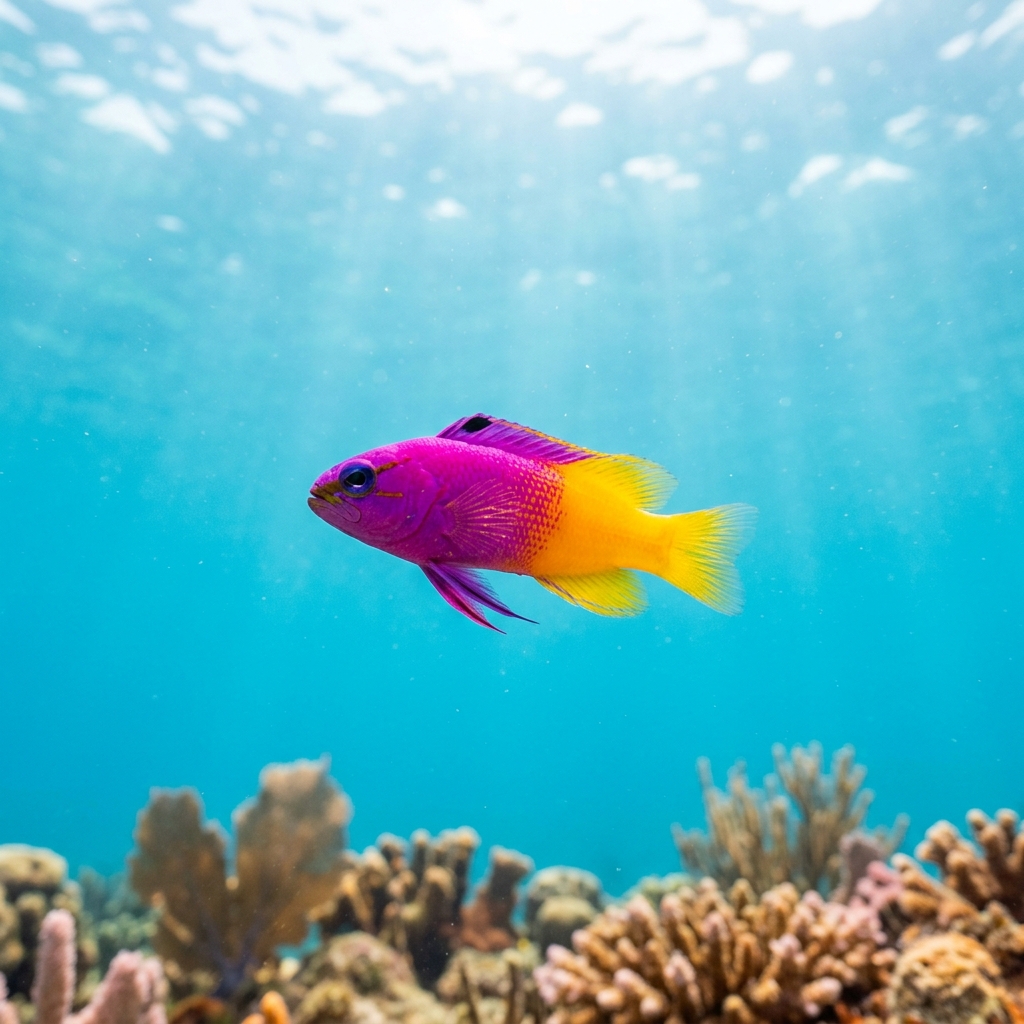
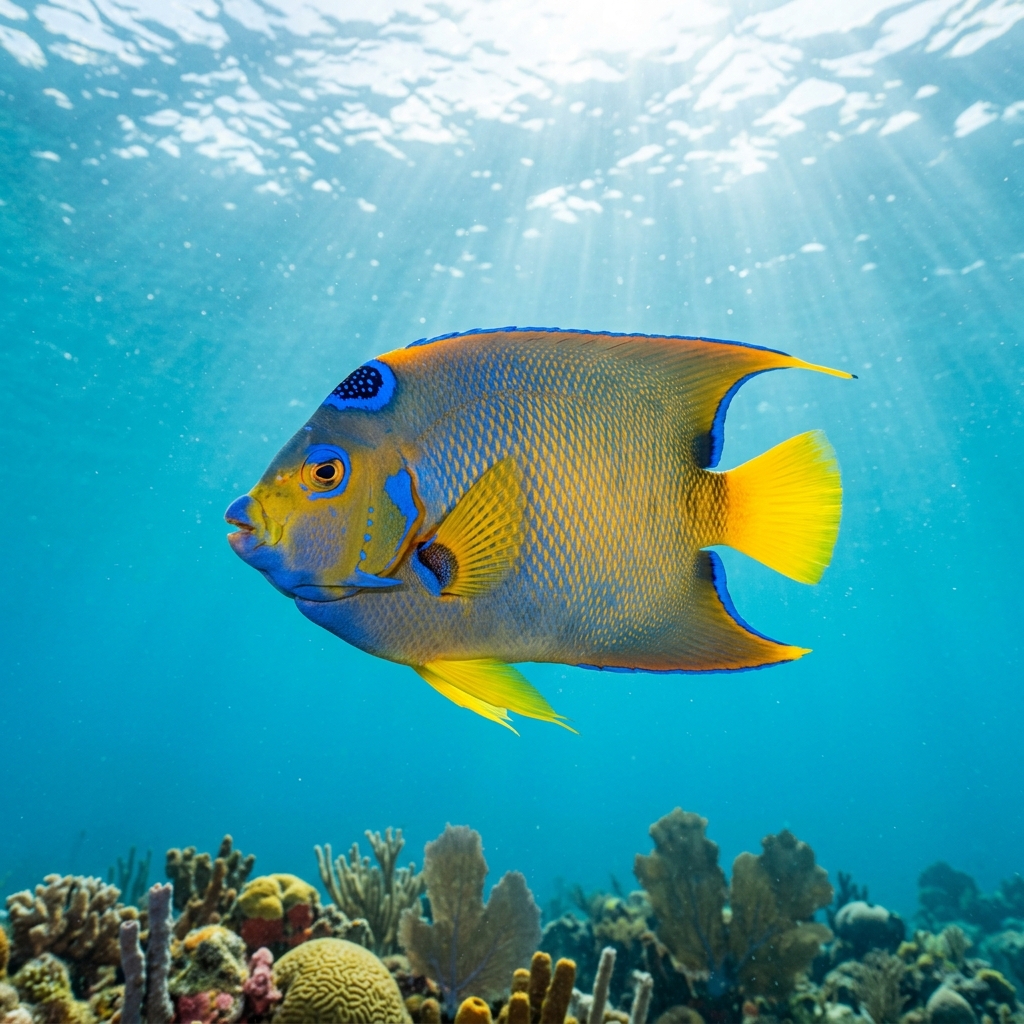
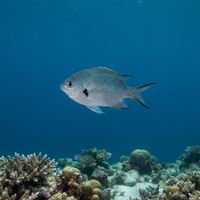
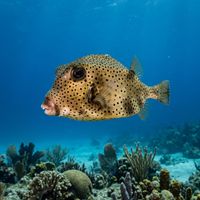
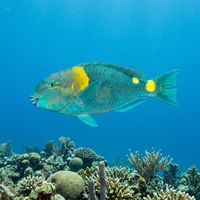
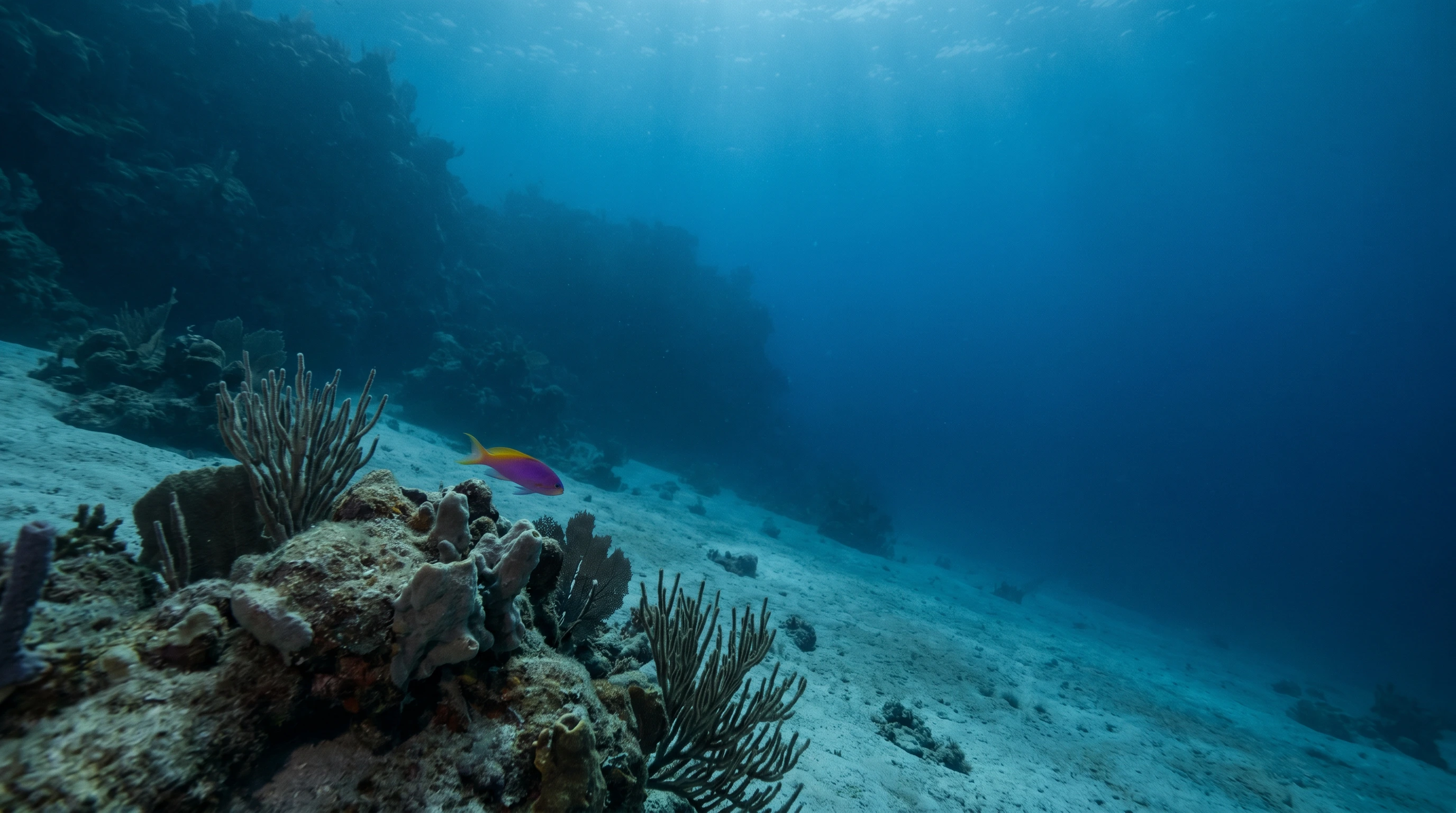
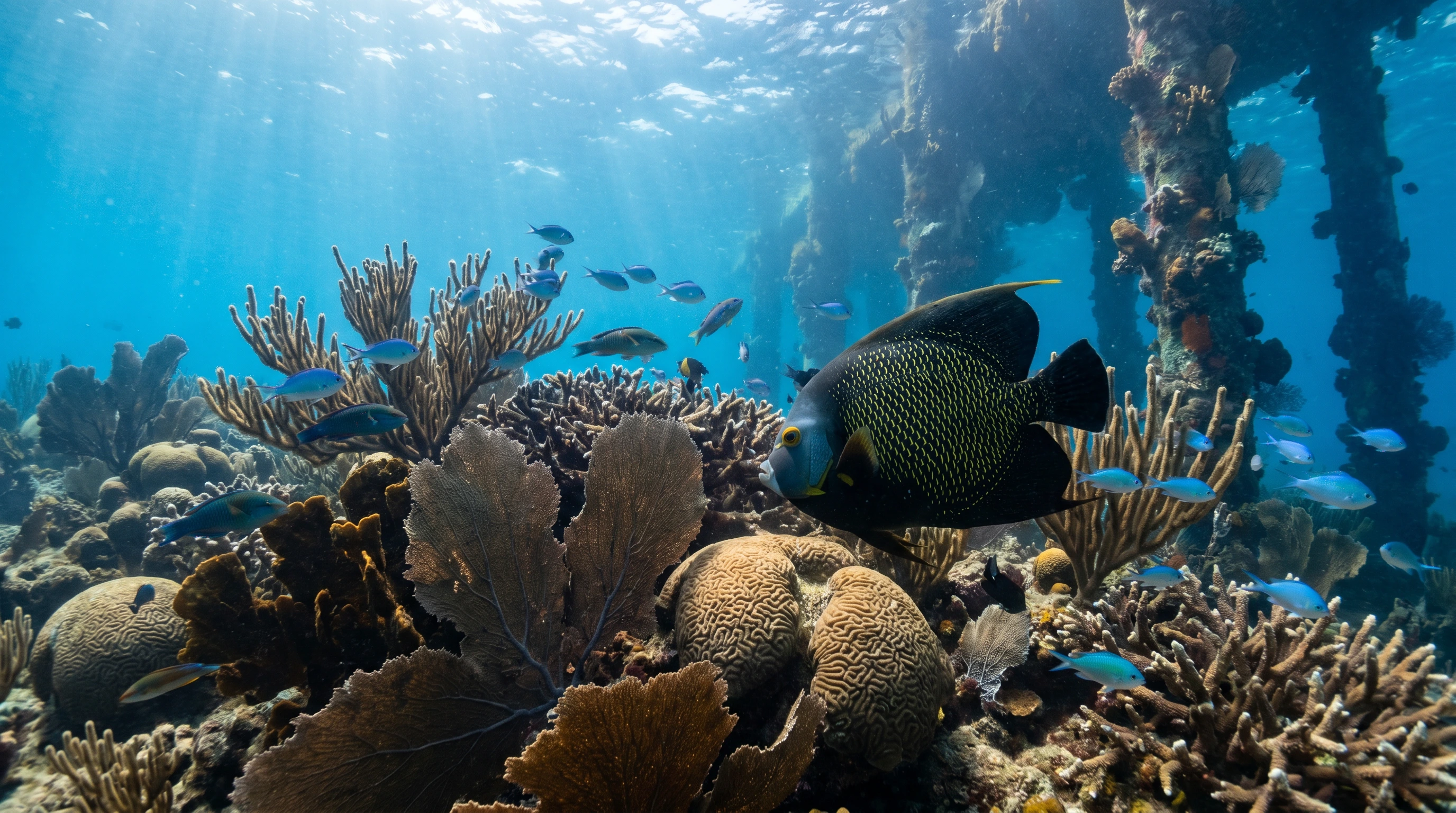
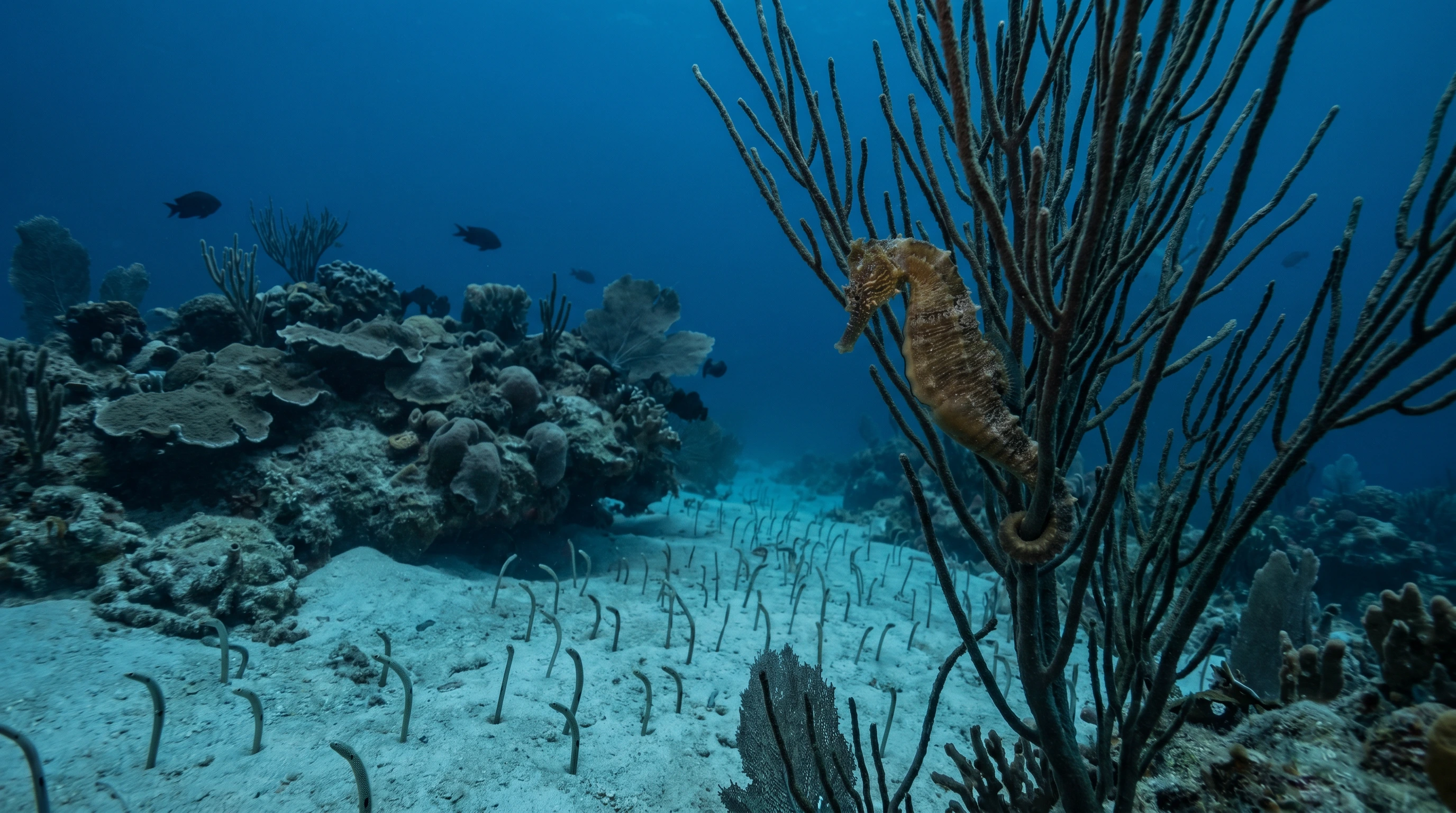
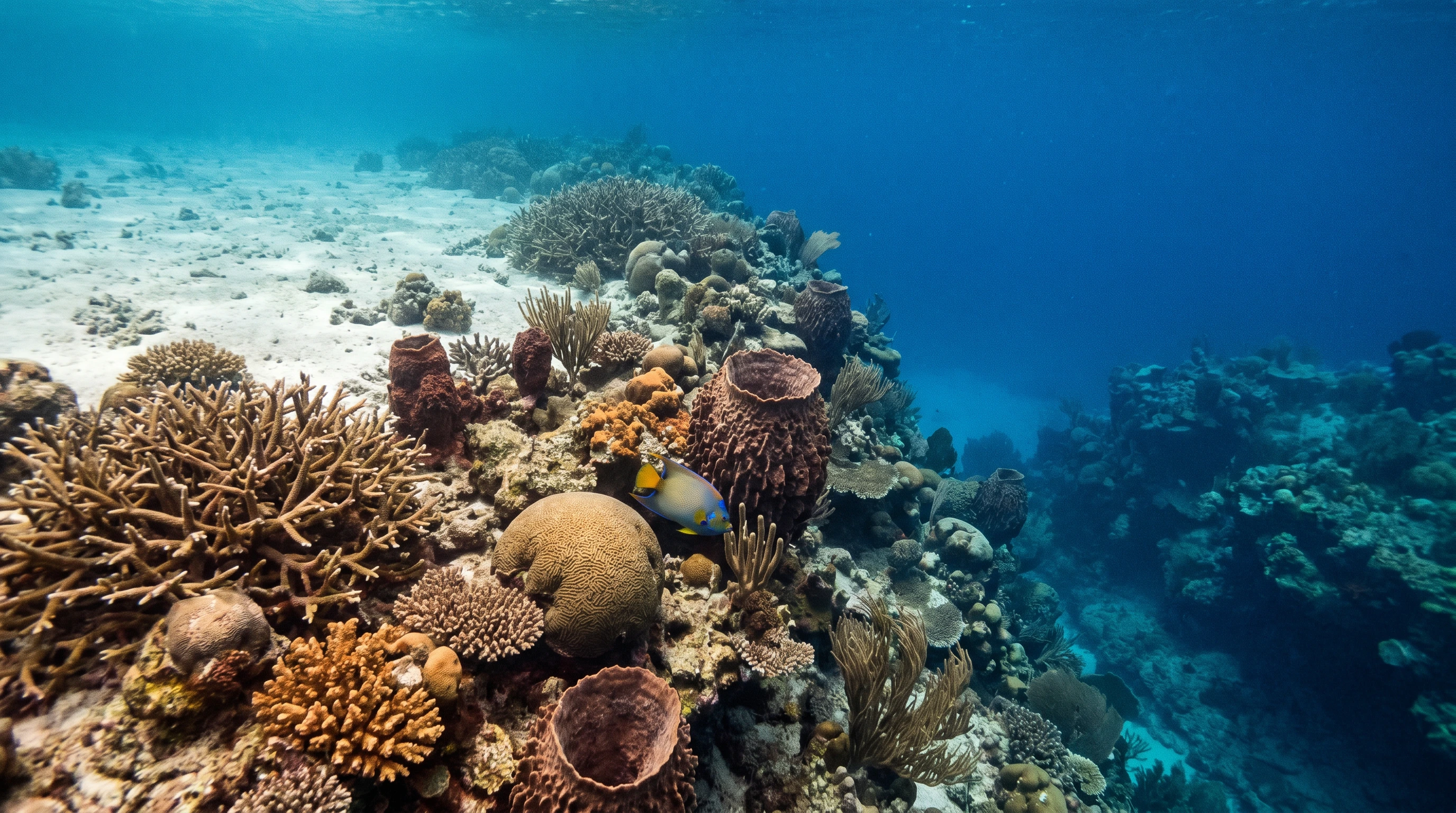
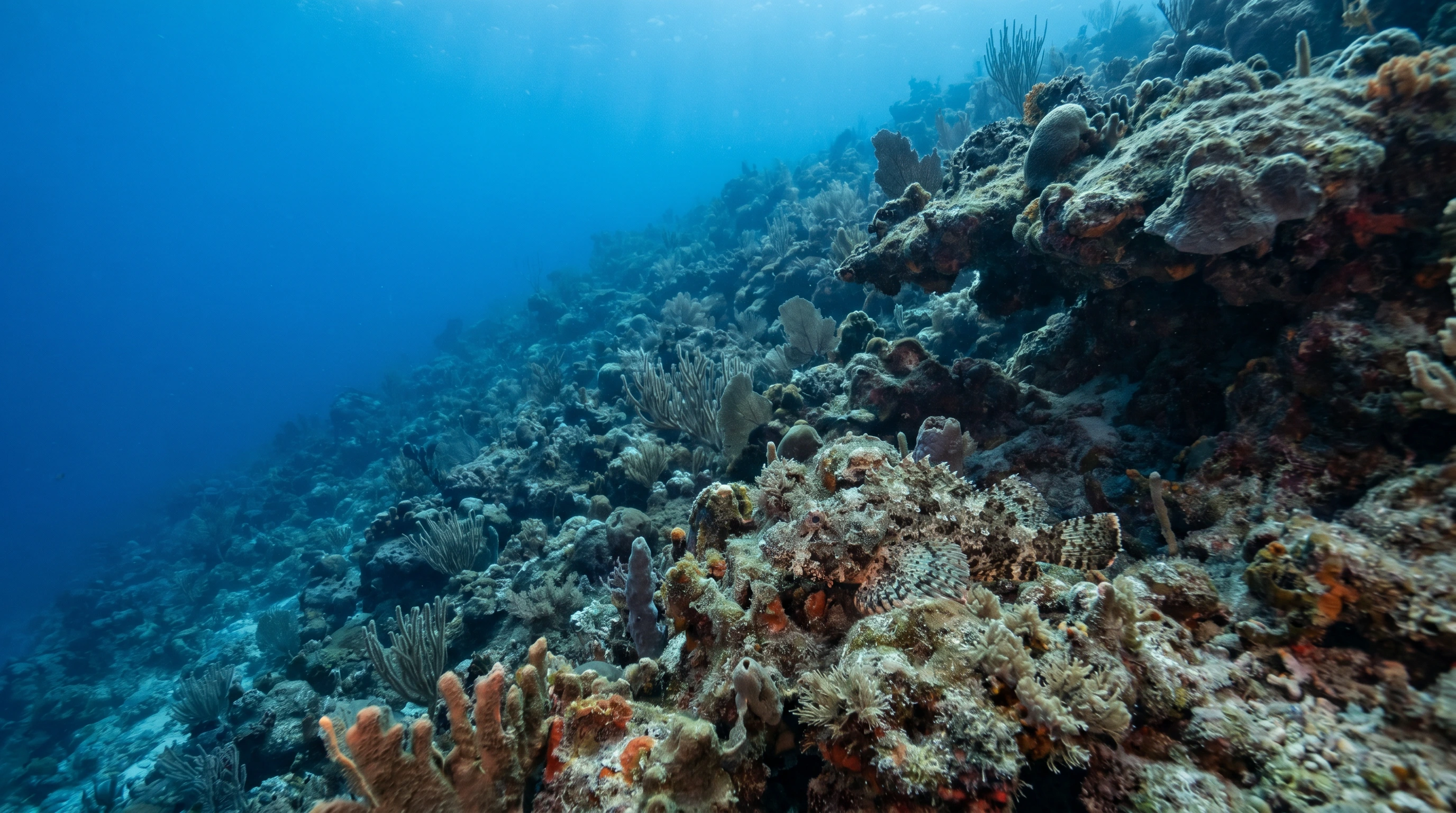
East Coast Bonaire presents a markedly different character from the island's sheltered leeward reefs. Exposed conditions drive stronger currents and surf, shaping a site mix of reef walls, drift dives, seagrass beds, and the colonised pillars of the Salt Pier artificial reef. Shore entry dominates, often requiring careful navigation over rock or through salinas. The range of skill levels is broad: approachable reef dives for beginners sit alongside challenging drift and wall sites suited to advanced divers. French Angelfish, Great Barracuda, and Stoplight Parrotfish are observed consistently, with Green Sea Turtle and Eagle Ray encountered regularly across the reefs.
Monthly water temperature across East Coast Bonaire's sites, from satellite sea-surface data corrected for depth. The band shows the site-to-site spread.
Water temperature stays warm throughout the year, rising slightly from late spring into autumn and easing back toward the end of the year. Diver ratings peak strongly from late spring through autumn, making that stretch the most popular window. The exposed eastern aspect means surf and currents can be significant at sites like Willemstoren Lighthouse and Red Slaves, so conditions should be checked before each dive.
3 operators
Bonaire
18 more sites to explore
Water temperature around East Coast Bonaire ranges from about 27°C in January to 29°C in August, based on satellite sea-temperature data for its dive sites.
With water around 27–29°C, a rash guard or 3mm shorty works in East Coast Bonaire year-round.
Fin maps 30 sites in East Coast Bonaire (30 scuba diving sites and 8 snorkelling spots, with some suited to both).
French Angelfish and Great Barracuda are observed across the vast majority of sites, making them near-certain sightings. Stoplight Parrotfish, Blue Tang, Smooth Trunkfish, and Foureye Butterfly Fish are also very commonly recorded. On a good dive you may encounter a Green Sea Turtle, Eagle Ray, or Green Moray, all of which have solid observation backing across the reefs.
Several sites are rated beginner level, including Turtle City, The Invisibles, and Margate Bay, offering accessible reef dives in moderate depth ranges. However, the eastern coastline's exposure to swell and current means conditions can change, and sites like Willemstoren Lighthouse and Red Slaves are strictly for advanced divers. Beginners should choose their sites carefully and dive with an operator such as Bonaire East Coast Diving who knows the local conditions.
Shore entry is the predominant access method across the region, though the character of each entry varies considerably. Some sites require walking through a salina, others involve navigating sharp rocks, and a few offer both shore and boat options. Boat access is available at sites like Turtle City and White Hole, which can be a practical alternative when shore conditions are rough.
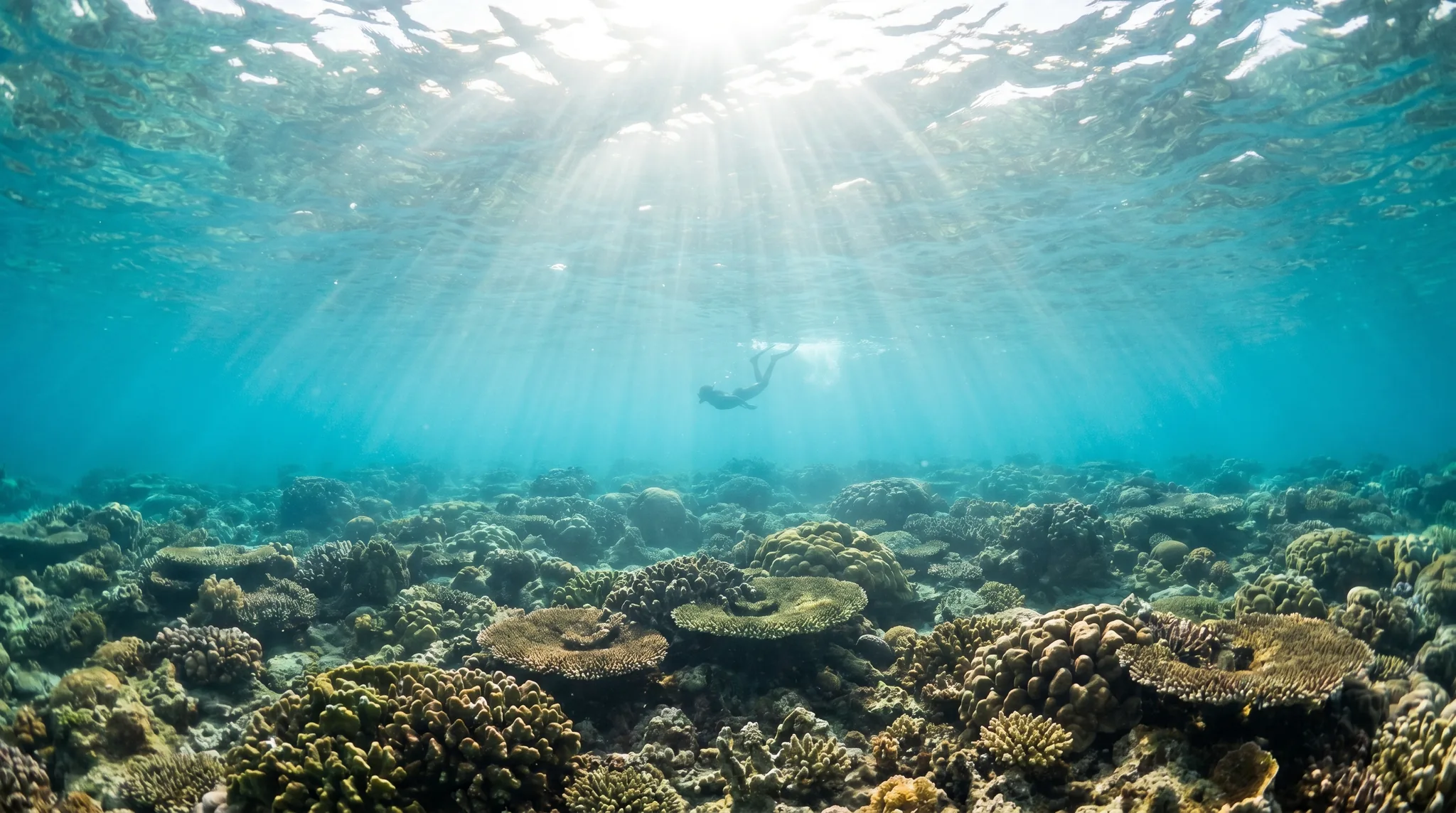
The region covers a wide range of topographies. The Salt Pier offers a distinctive artificial reef experience, with pier pillars encrusted in sponges and corals. Lac Bay adds seagrass habitat to its reef structure, which attracts different species assemblages. Drift sites such as Atlantis and Willemstoren Lighthouse suit divers comfortable with current, while wall sites like Larry's Lair and Vista Blue reward those looking for dramatic drop-offs.