Acentronura spp.
Rare but logged across the Philippines and Timor-Leste, the dwarf pipehorse hides in warm tropical reefs at 24-29°C. Here's how to spot one.
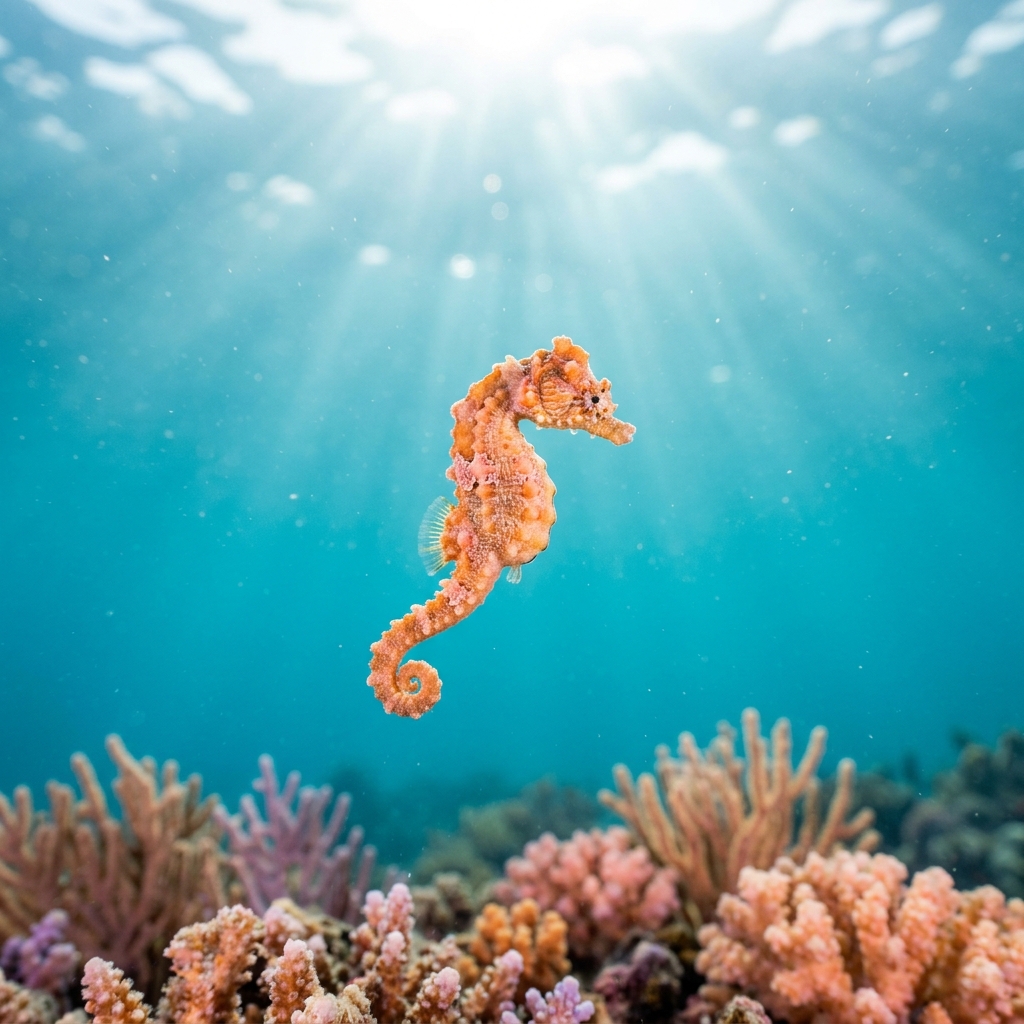
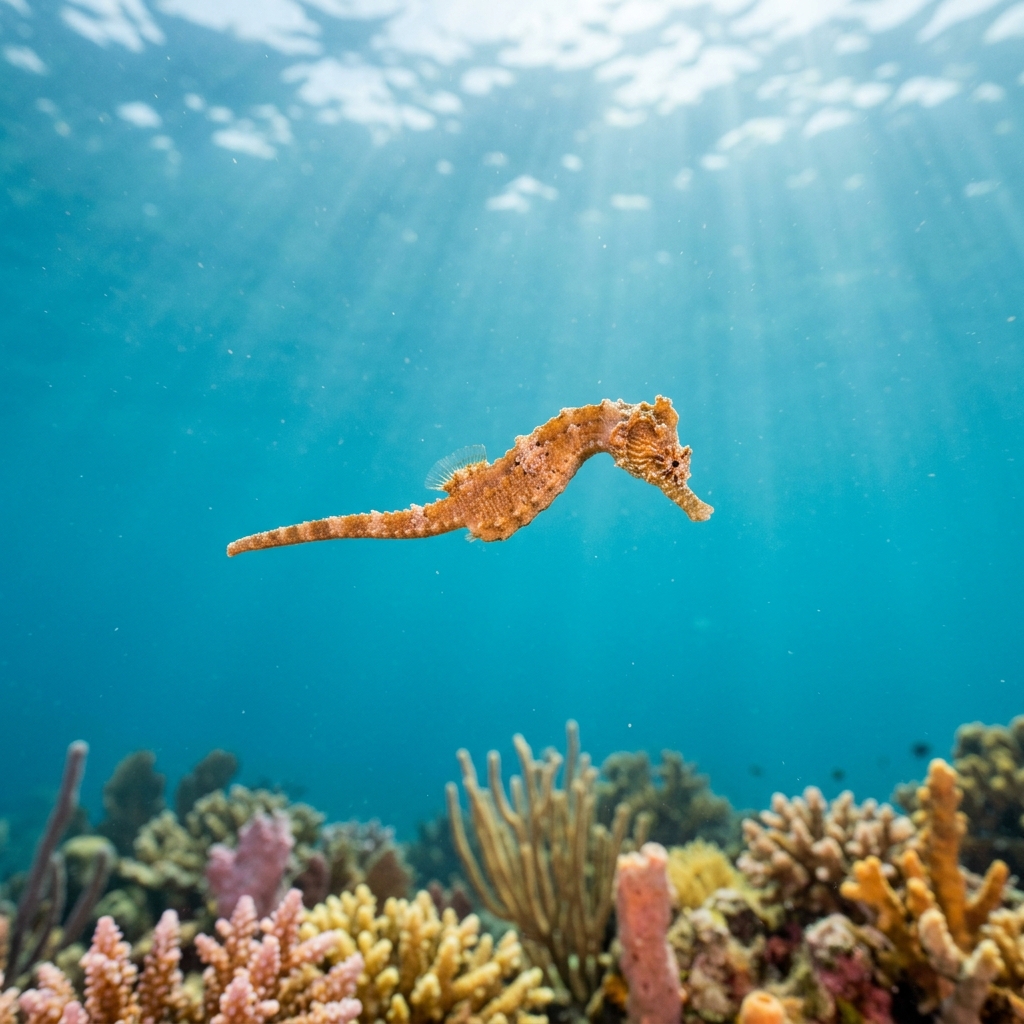
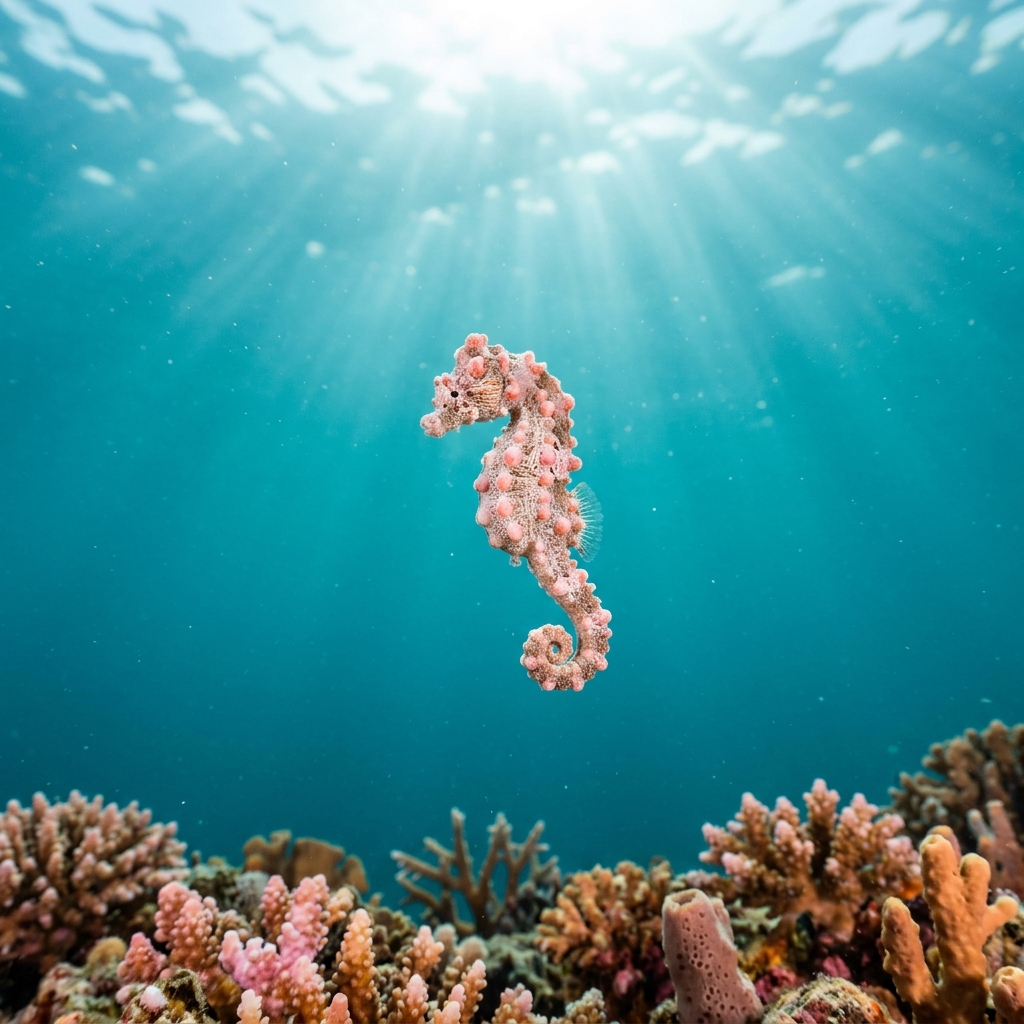
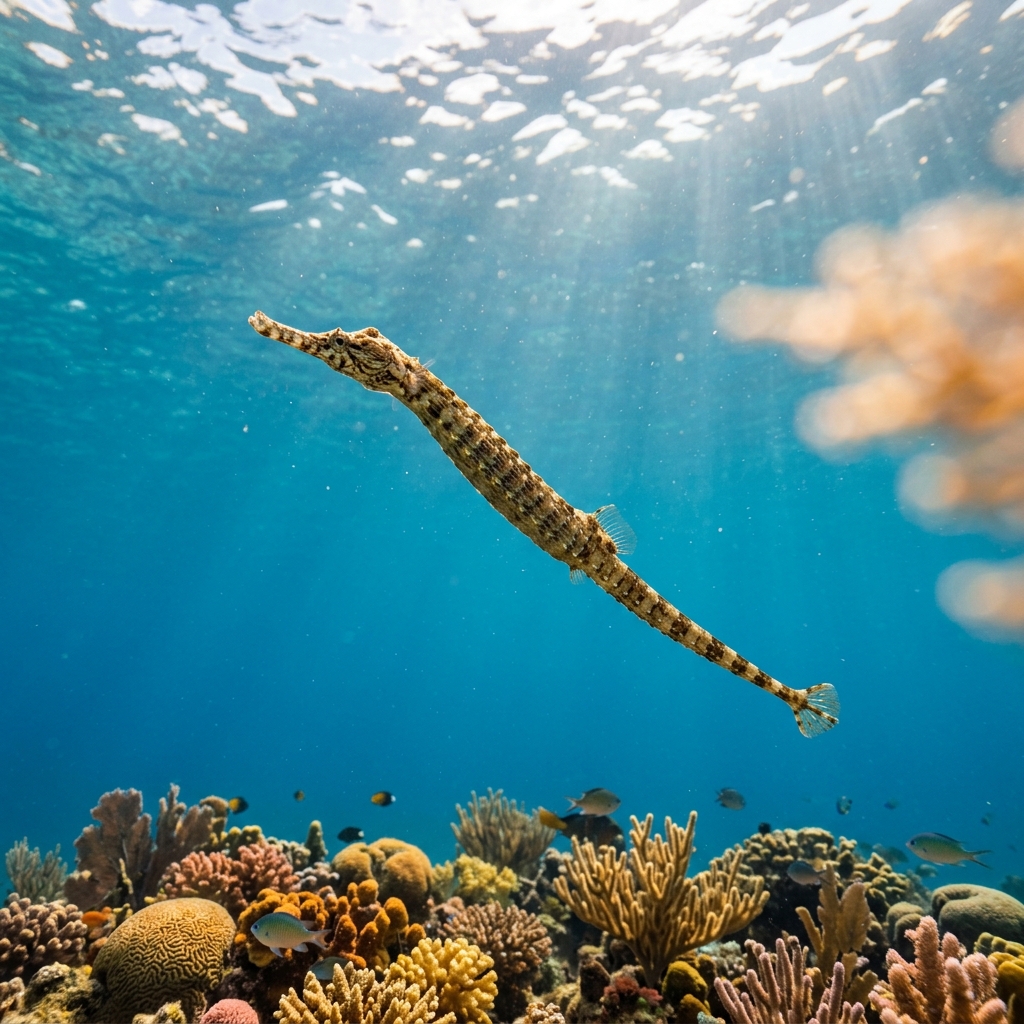
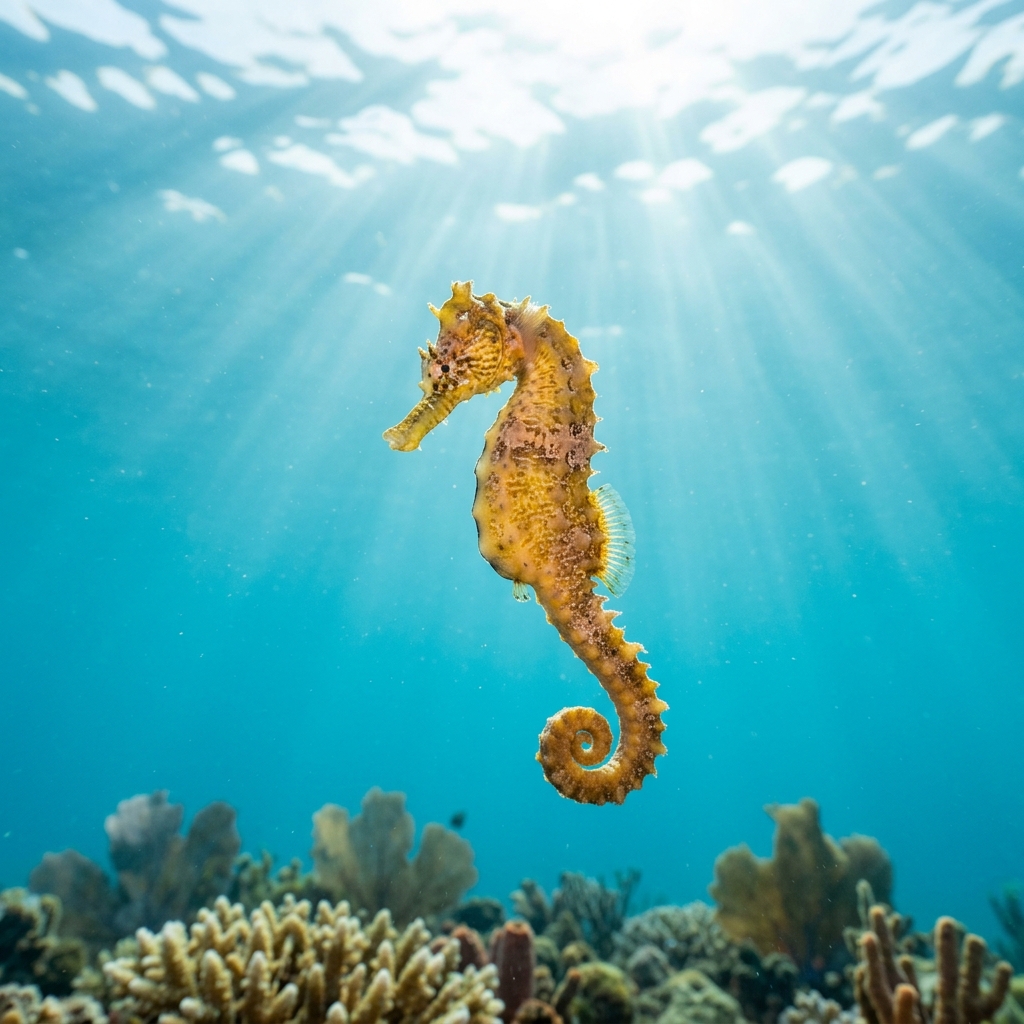
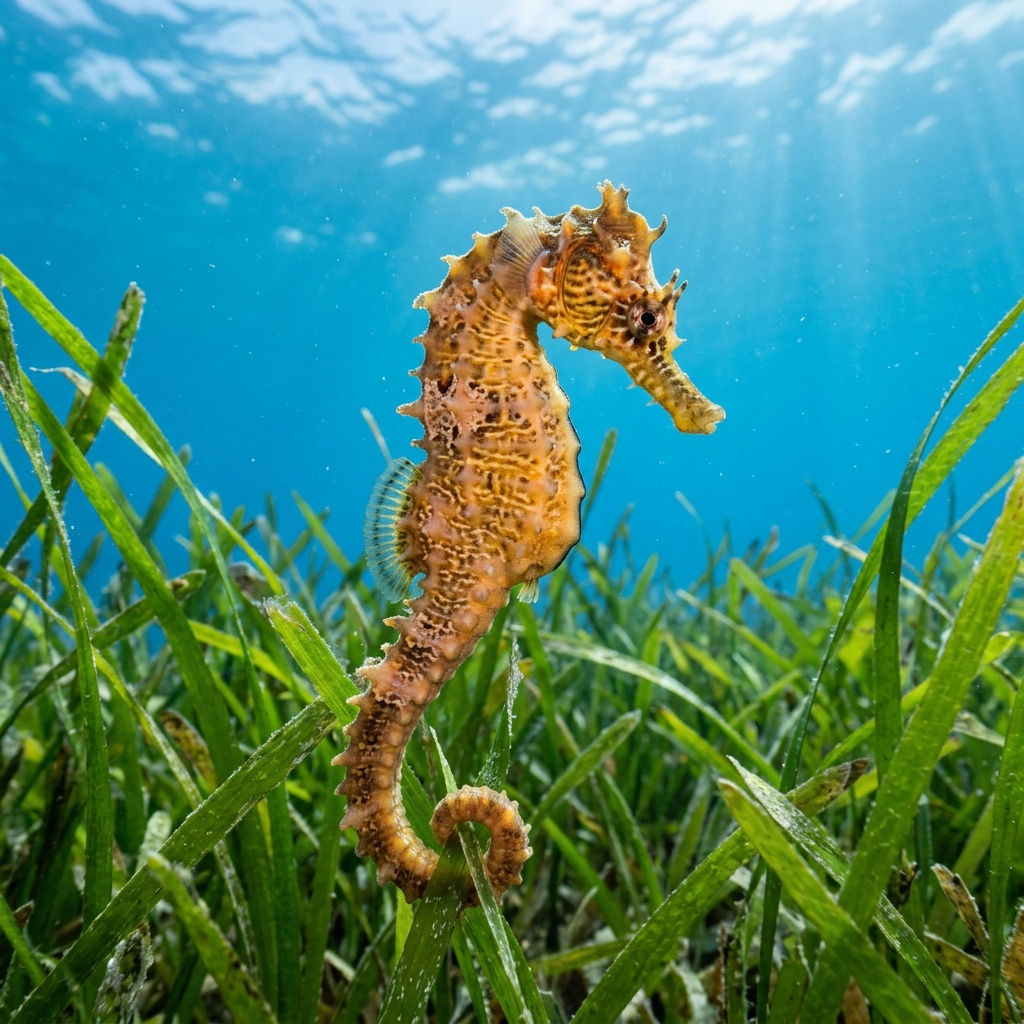
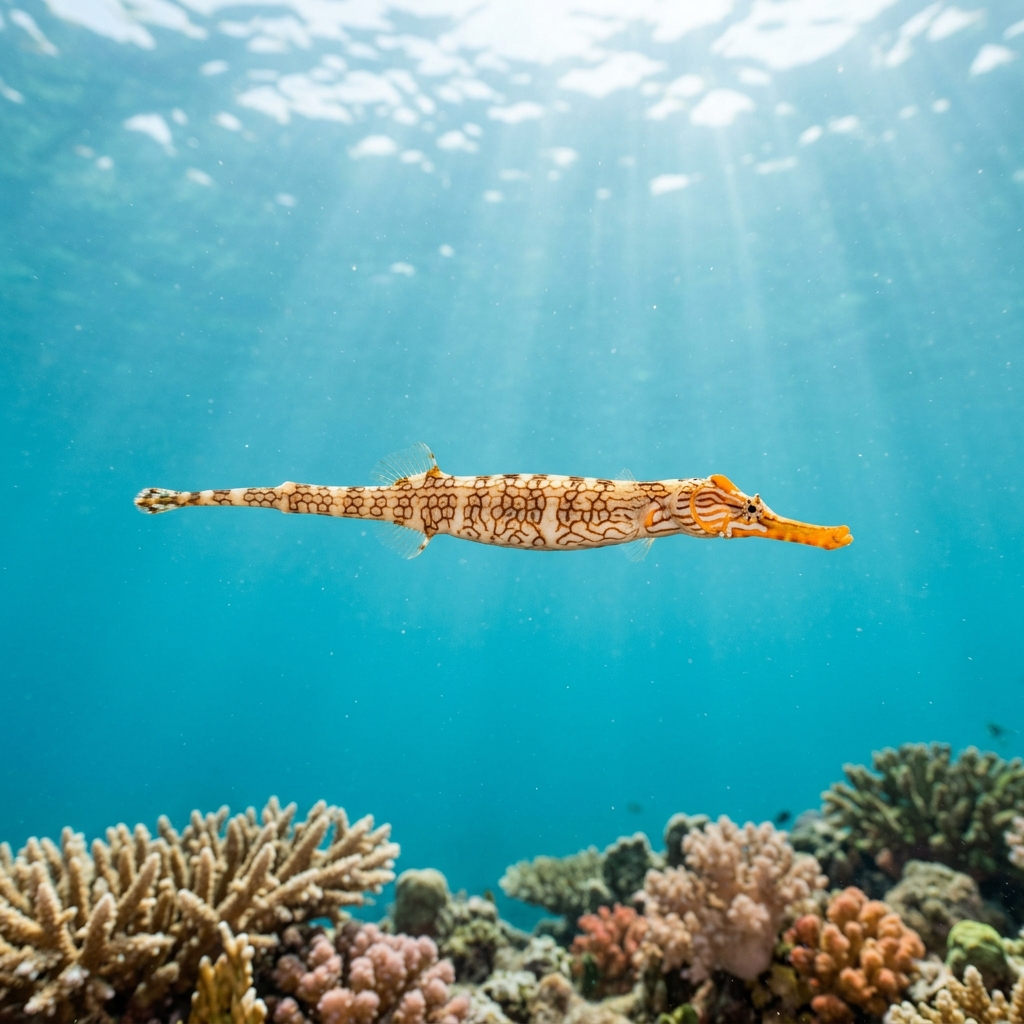
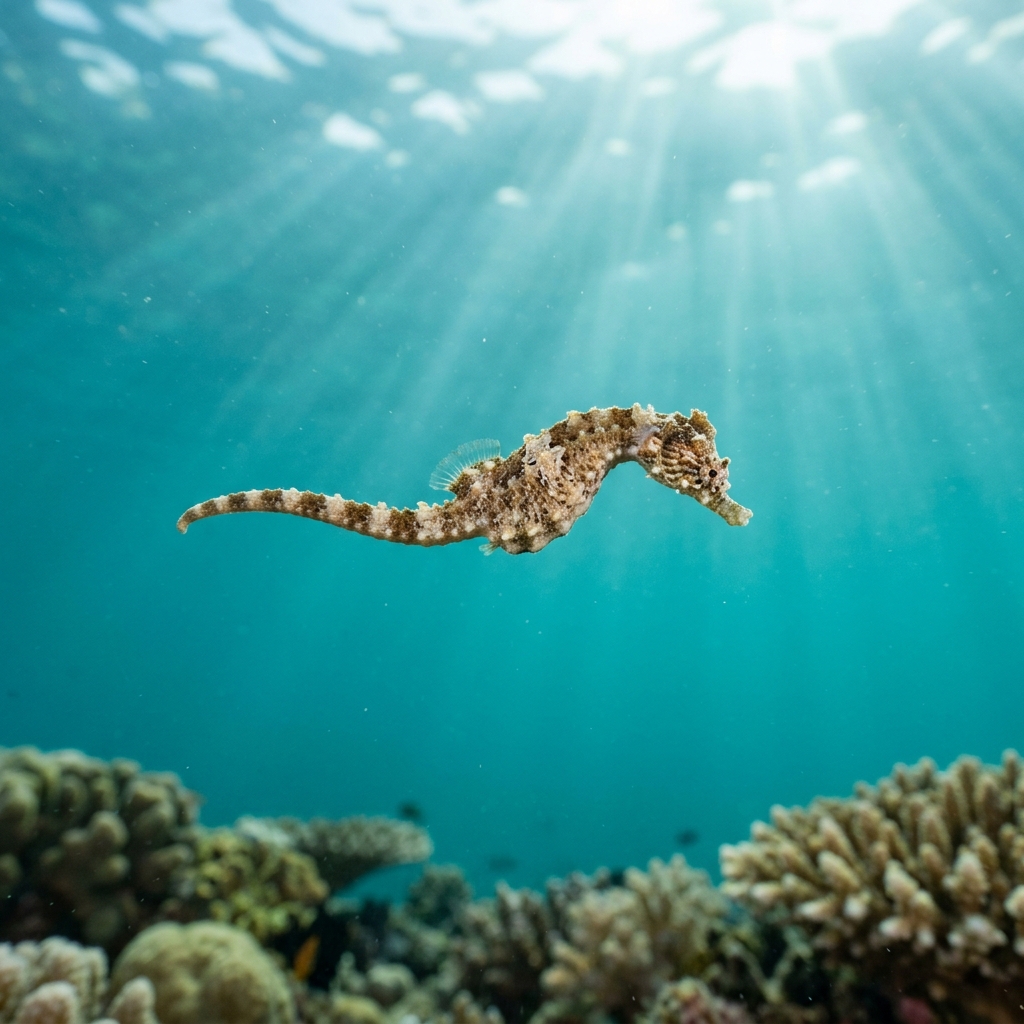
A tiny, twig-like creature that sits somewhere between a seahorse and a pipefish, with a slightly curled prehensile tail it uses to grip substrate and a slender, segmented body covered in warty skin flaps that break up its outline. Colouration tends toward muted browns, tans, and ochres, blending almost perfectly with the algae, rubble, or soft coral it clings to. Look for the upright or angled resting posture and the absence of the obvious dorsal sail of larger pipefishes, at first glance it can look more like a scrap of debris than a fish.
Dwarf pipehorses are sedentary ambush-style animals; when you find one it is almost always gripping a piece of substrate with its tail, holding still and relying on camouflage rather than fleeing. They are slow movers and rarely bolt, but they can pivot behind a strand of algae or a coral branch if a diver gets too close. Scanning rubble slopes, seagrass edges, and algae-encrusted reef at a slow pace with a torch during a muck dive gives you the best chance of picking one out.
Like other syngnathids (the seahorse and pipefish family), it is the male that carries and broods the eggs, he holds them in a specialised pouch or brood patch on his trunk until they hatch.
No clear seasonal peak has emerged from the available data, so it can be treated as a year-round resident on the tropical reefs where it lives, which sit comfortably in the 24 to 29°C range.
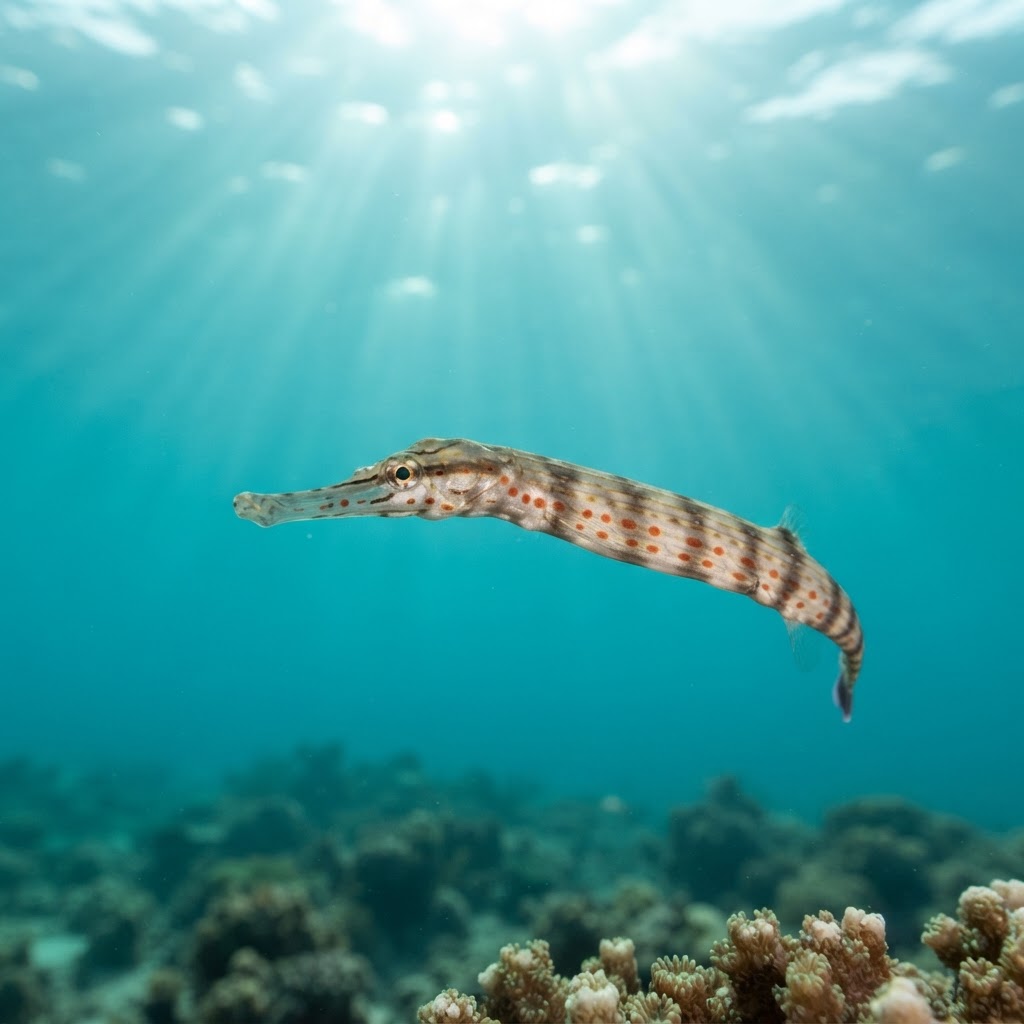
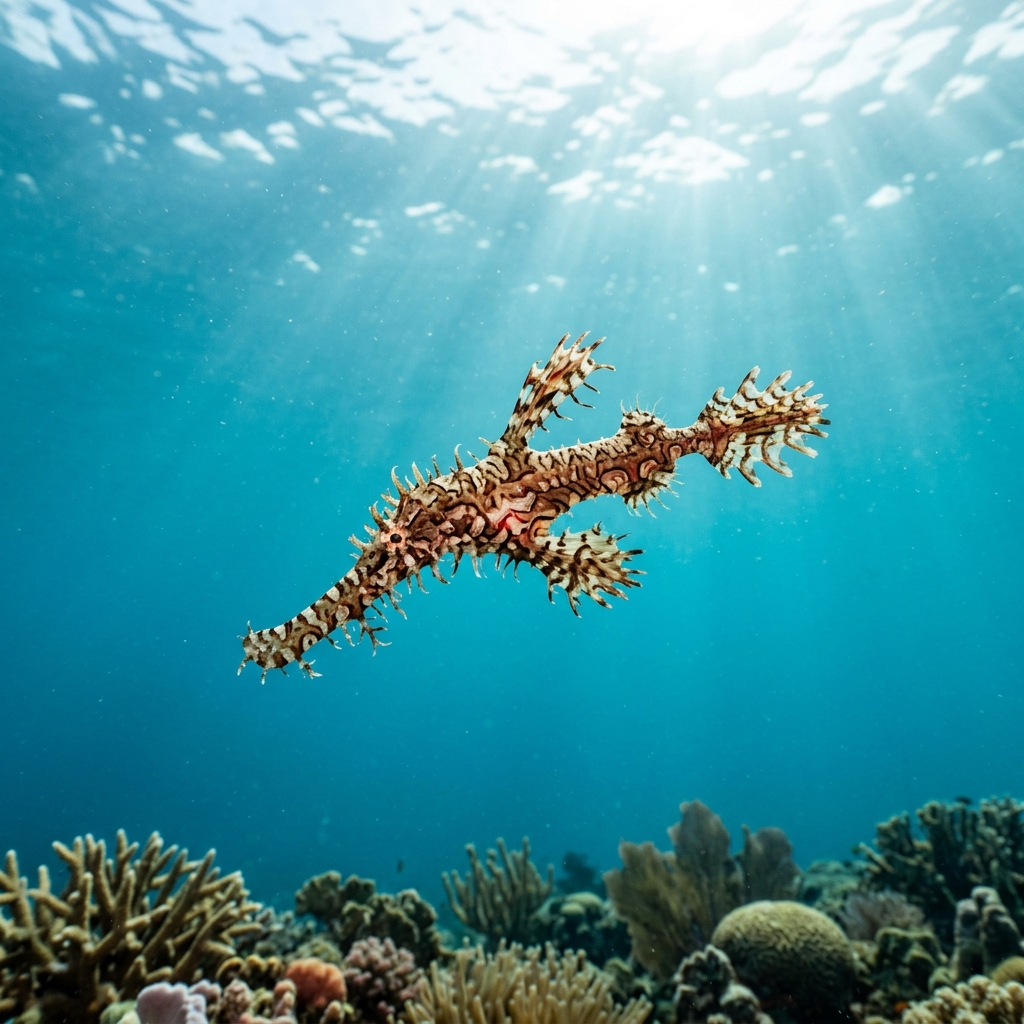
Reef neighbours a diver could mistake it for. Use the identification notes above to tell them apart.
Most sightings are concentrated in the Philippines, particularly across the Visayas East and North, which accounts for the great majority of logged observations. Timor-Leste, especially the Dili and North Coast region, is the second-strongest area. There is also a single logged record from Bali, Lombok and Java in Indonesia.
Mapping where Dwarf Pipehorse is logged…
The Philippines is the top destination, with most records coming from the Visayas East and North. Timor-Leste's Dili and North Coast is the second-best area. A small number of sightings have also been logged in Bali and Java in Indonesia.
There is no strong seasonal signal in the data, so they appear to be present year-round on reefs in their range. Water temperatures between 24 and 29°C suit them, which is typical of the tropical Indo-Pacific throughout the year.
Look for a very small, twig-like creature with a curled gripping tail and warty skin flaps that disrupt its outline. It rests nearly motionless on algae or rubble in browns and tans. The curled tail separates it from most true pipefishes, while its slender body separates it from chunky pygmy seahorses.
Precise size data for this species is limited, but members of the pipehorse group are generally very small, in the range of a few centimetres. Expect something easily overlooked against a rubble or algae background.
It is rated rare at the large majority of sites where it has been recorded, and uncommon at only a handful. A slow, methodical muck dive in the Visayas or around Dili gives the best odds, but a sighting is never guaranteed.
Site and sighting data is aggregated from diver logs, iNaturalist and GBIF. For taxonomy and conservation status:
Seahorse
1,346 sites