Corythoichthys flavofasciatus
Spot Network Pipefish in the Red Sea and Indo-Pacific. Most commonly logged around Sharm el Sheikh and Marsa Alam in warm 22-29 °C reef shallows.
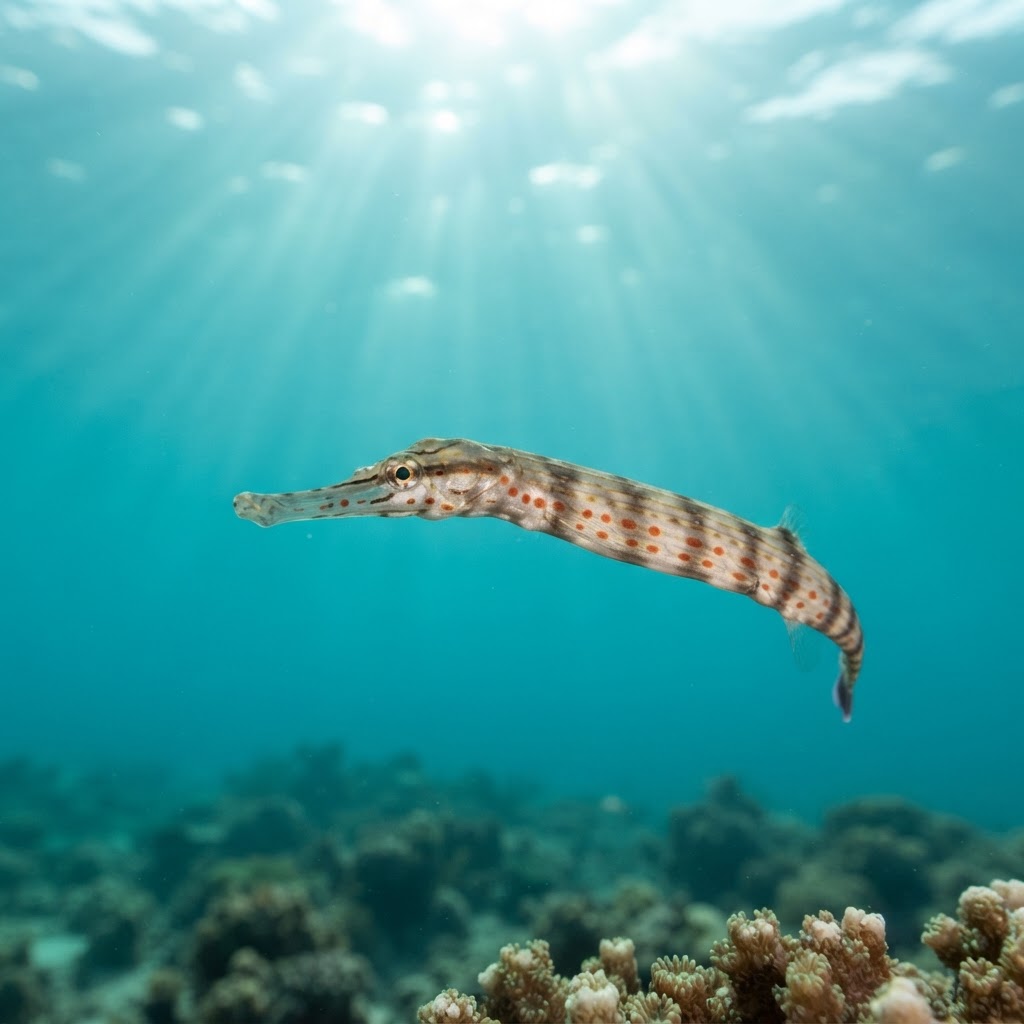
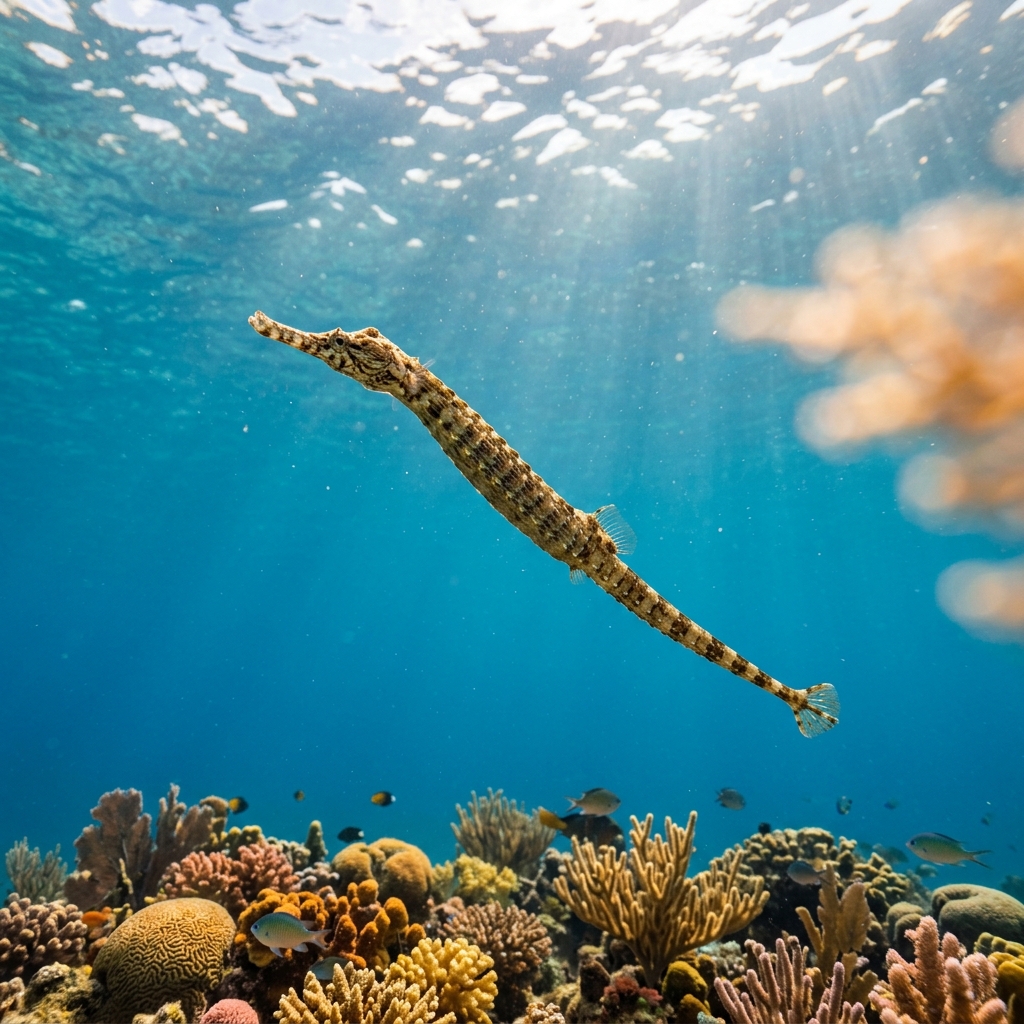
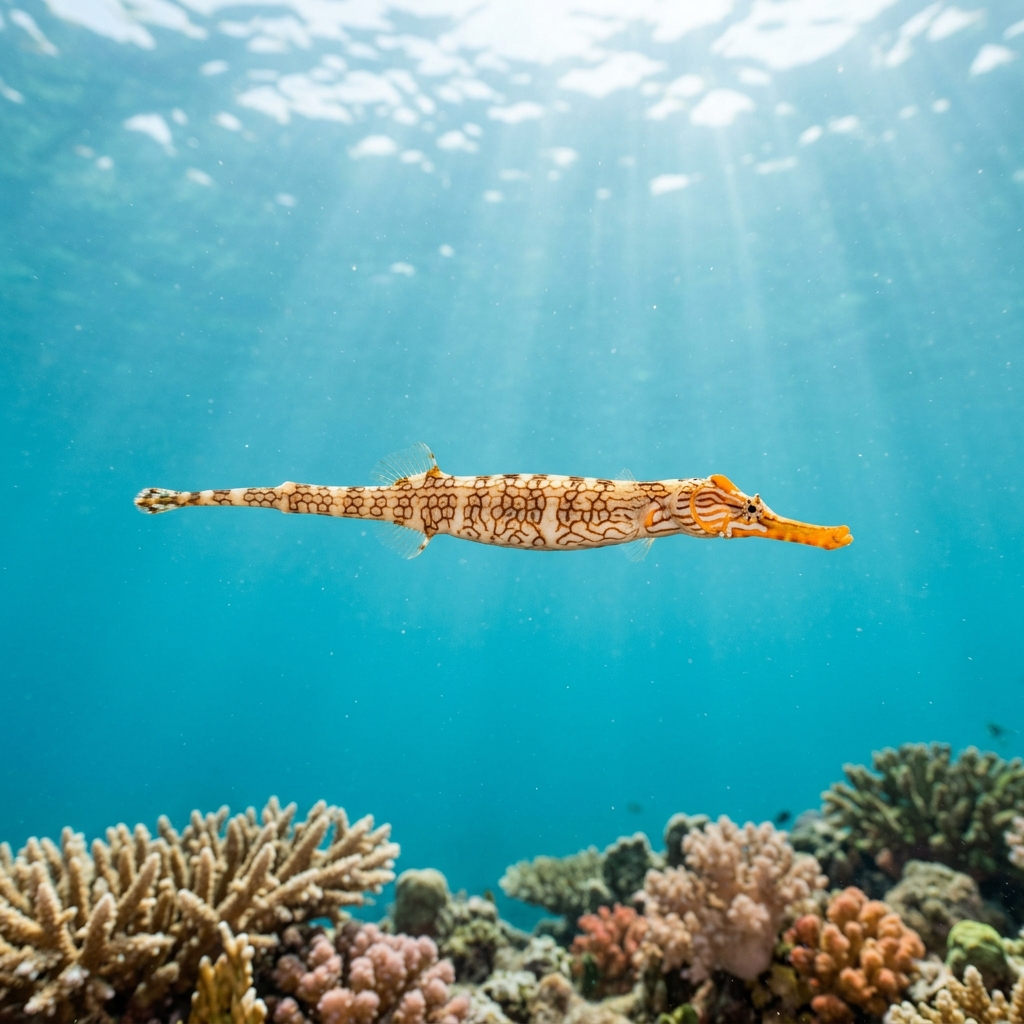
A slender, tube-snouted pipefish covered in a fine brown reticulated (net-like) pattern over a pale yellowish or cream background, the network markings are the key field feature and the source of its name. In the water it moves with subtle, rippling fin beats, holding itself nearly horizontal among coral rubble or algae-covered substrate. It is a small species, easy to overlook against a busy reef background, so slow down and scan low.
Expect to find it close to the reef floor, tucked in coral rubble, weedy patches, or the base of coral heads rather than swimming openly in the water column. It tends to hold still when approached, relying on its cryptic colouring rather than fleeing, which makes patient searching at low depth more productive than drifting. Like other pipefish, it is usually solitary or encountered as a loose pair.
As in all syngnathids (the pipefish and seahorse family), it is the male that carries and broods the fertilised eggs in a specialised brood pouch until they hatch, females transfer eggs to the male during mating.
In Northern Hemisphere destinations such as the Red Sea and Philippines, sightings concentrate from May through January. In Southern Hemisphere locations like Réunion, the busiest window runs September through March.
Egypt dominates the records by a wide margin, with Sharm el Sheikh and Marsa Alam the most reliable Red Sea spots, followed by Safaga and Hurghada. Outside Egypt, strong populations are also logged in Jordan's Aqaba and Israel's Eilat, both part of the northern Red Sea system, plus the Philippines (particularly the Central Visayas), Réunion, and French Polynesia for divers in the Indo-Pacific.
Mapping where Network Pipefish is logged…
The Red Sea is by far the best-documented region, with Sharm el Sheikh and Marsa Alam topping the charts. Aqaba in Jordan and Eilat in Israel are also reliable Northern Red Sea options. Further afield, the Central Visayas in the Philippines, Réunion, and French Polynesia all have solid records.
In Red Sea and other Northern Hemisphere sites, May through January is the peak window for sightings. For Southern Hemisphere destinations like Réunion, aim for September through March. The species lives in warm water between roughly 22 and 29 °C, so tropical reefs hold it year-round, but those months reflect when divers most consistently encounter it.
Look for the distinctive brown net-like (reticulated) markings over a pale cream or yellowish body, that mesh pattern is the clearest field mark. It rests nearly horizontal close to the reef floor and is small enough to blend into rubble, so search slowly along the substrate rather than scanning the water column.
Males carry the eggs. After mating, the female deposits eggs into the male's brood pouch, where he fertilises and incubates them until they hatch. This male pregnancy is shared by all members of the Syngnathidae family, which includes seahorses and seadragons.
Site and sighting data is aggregated from diver logs, iNaturalist and GBIF. For taxonomy and conservation status:
Seahorse
1,346 sites