Corythoichthys spp.
Banded and easy to miss, messmate pipefish lie flat on rubble in the Maldives and Philippines year-round in warm 24-29C water.
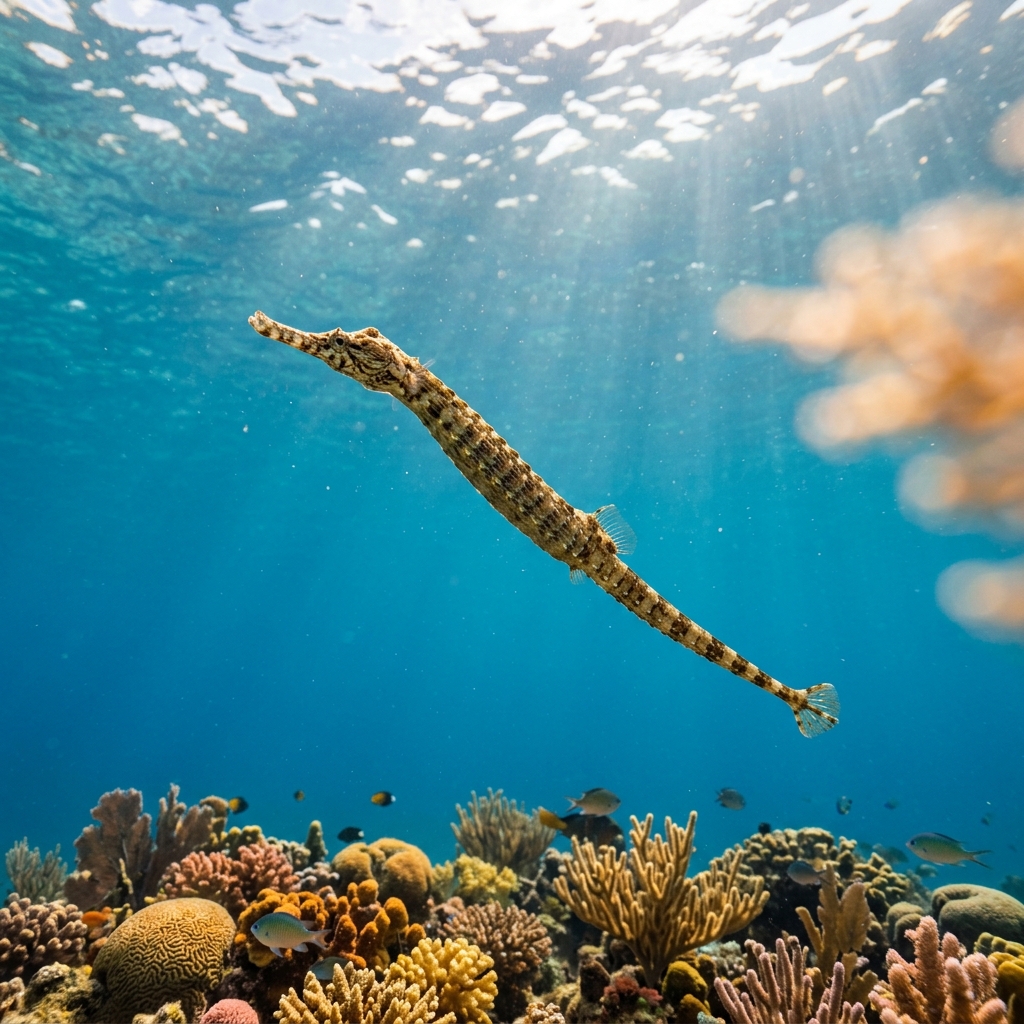
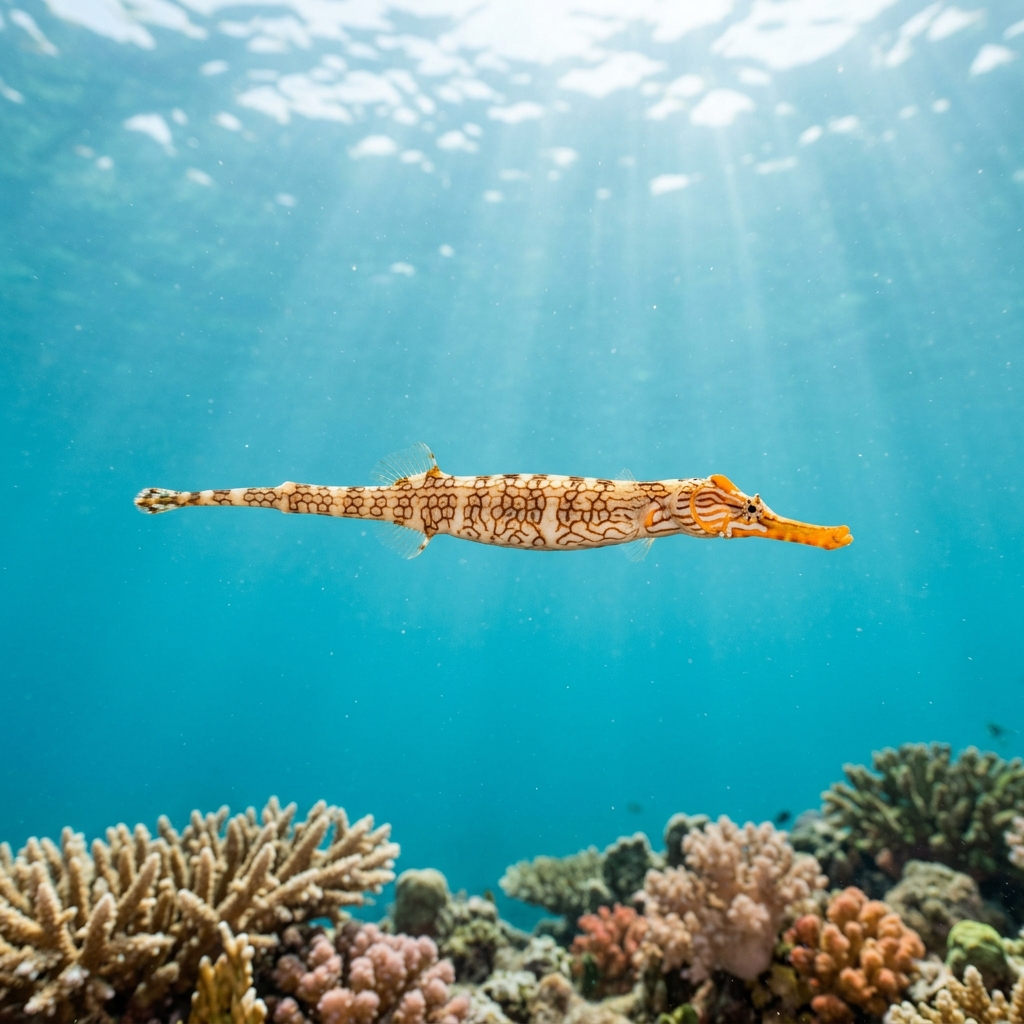
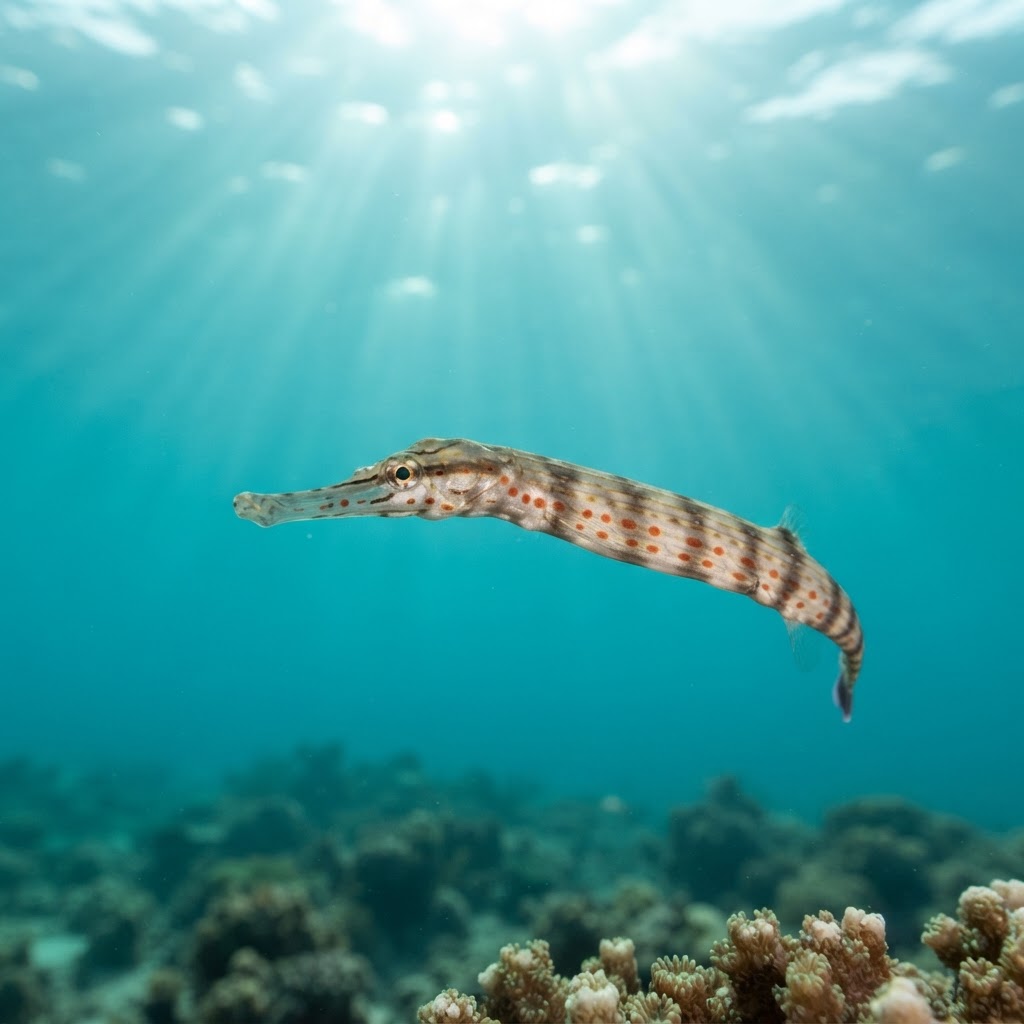
Slender, elongated body around 14 cm long, held straight and rigid against the substrate rather than swimming freely in the water column. Look for a series of pale rings or bands running down a brownish body, which breaks up its outline against rubble and sand. The snout is long and tubular, typical of the pipefish shape, and the whole animal often sits so still it reads as part of the reef debris until it moves.
Expect to find it lying motionless against rubble, coral debris or sandy reef flats rather than cruising in open water, using its banded pattern to disappear into the clutter. When divers approach it tends to sit tight instead of bolting, which rewards a slow fin kick and a careful scan of the substrate rather than a search through the water column.
Pipefish in this genus carry their eggs externally on the male's belly rather than in a fully enclosed pouch like their seahorse relatives, so a close look at a resting individual can sometimes reveal a visible egg patch.
No clear seasonal pattern shows up in the data, and with a comfortable range of 24.4 to 29.5C it's present on tropical reefs all year round. Any month works as well as any other for a dive trip targeting this genus.
Reef neighbours a diver could mistake it for. Use the identification notes above to tell them apart.
Most reliably logged across the Maldives, particularly the Northern, Central and Southern Atolls, with strong numbers also coming out of Indonesia's Sulawesi, the Philippines (Visayas, Luzon and Palawan) and Queensland in Australia. Thailand, Malaysia, Egypt and Saudi Arabia round out the range, so this is a genus you can reasonably look for on rubble patches and reef flats across most of the Indo-Pacific and Red Sea.
Mapping where Messmate Pipefish is logged…
The Maldives is the strongest bet, especially the Northern and Central Atolls, followed by Sulawesi in Indonesia and the Visayas, Luzon and Palawan regions of the Philippines. Queensland in Australia and parts of the Red Sea also turn up regular sightings.
There's no strong season in the sighting data, and it tolerates a wide warm-water range of roughly 24 to 29.5C, so it's a year-round find on tropical reefs rather than a seasonal target.
Look for a slender, rigid body about 14 cm long lying flat on rubble or sand, marked with pale bands along a brownish base colour and a long tubular snout. It rarely swims into open water, so scan the substrate rather than the reef itself.
Around 14 cm long, which combined with their thin shape and camouflage makes them easy to overlook even on reefs where they're present.
No. They have no venom or defensive behaviour of concern to divers and simply rely on staying still and camouflaged rather than fleeing or attacking.
Like other pipefish, males carry the fertilised eggs externally on their belly rather than the female doing so, a role reversal shared with their seahorse relatives in the same family.
Site and sighting data is aggregated from diver logs, iNaturalist and GBIF. For taxonomy and conservation status:
Dwarf Pipehorse
1,191 sites