Dunckerocampus spp.
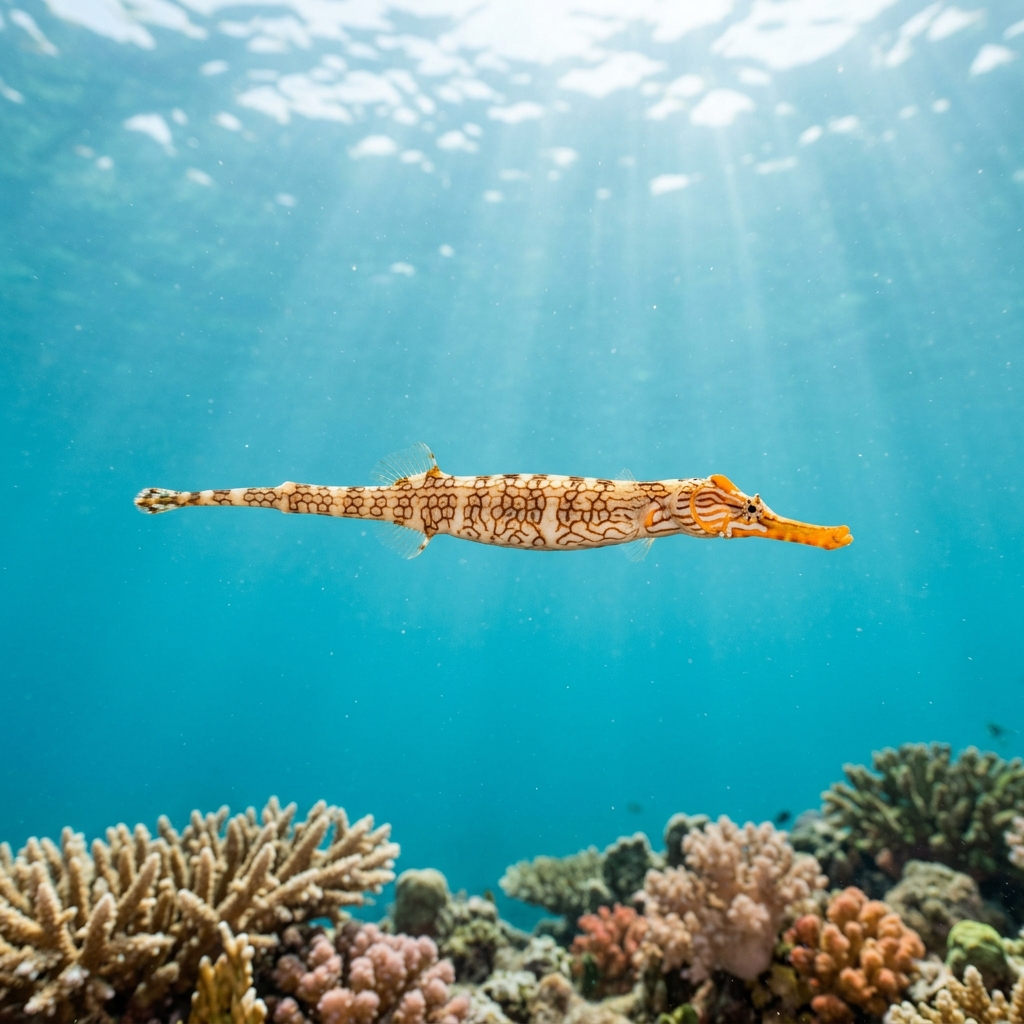
Banded, wire-thin pipefish often hovering in pairs near overhangs. Reliable in Sulawesi and the Visayas in warm 26-30C water.
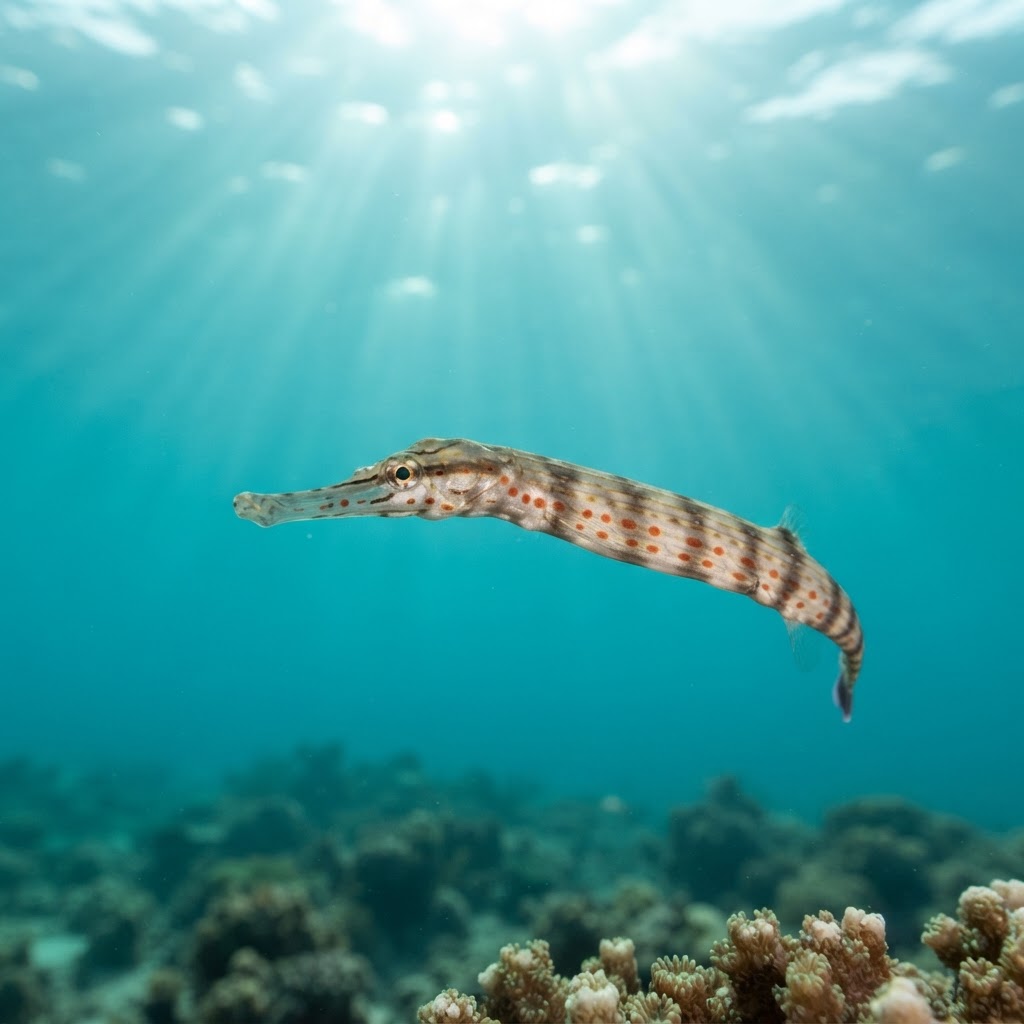
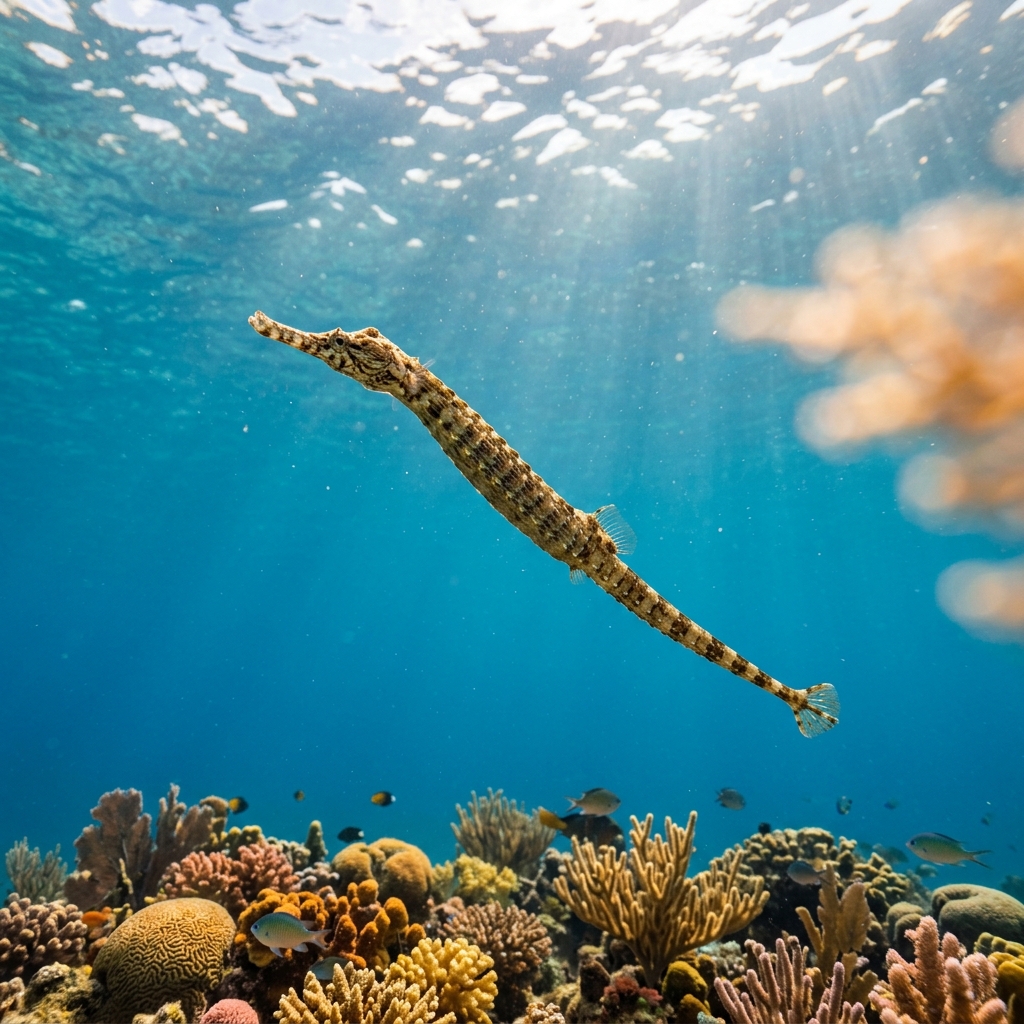
Long, thin, wire-bodied fish with bold red or orange bands ringing a pale body, and a distinctive forked, flag-like tail fin that gives the group its name. Divers usually spot them hovering nose-down or tail-down near a crevice or overhang rather than swimming in open water. Most individuals encountered are only a few centimetres to perhaps 15cm long, and pairs are often found close together within a body length or two of each other.
Look for it hovering almost motionless in a vertical, head-down posture tucked into a crevice, overhang or under a ledge rather than out over open reef. Pairs are commonly seen holding station close together, and they tend to hold their ground rather than bolt when a diver approaches slowly, making them a good subject for a careful, patient look rather than a chase.
Like all pipefish, males rather than females carry the developing eggs, brooding them on the underside of the tail until they hatch.
No clear seasonal pattern shows up in the data, and with a comfortable range of roughly 25.6 to 29.5C on the reefs where it's found, it's effectively a year-round sighting across its Indo-Pacific range.
Reef neighbours a diver could mistake it for. Use the identification notes above to tell them apart.
Most reliably logged across Indonesia and the Philippines, with strong numbers of sites in Sulawesi, Luzon, Palawan, Mindanao and the Visayas. Australia (especially Queensland), Thailand's Pattaya area, Malaysia's Sabah, Micronesia, Japan and Vietnam also turn up regular sightings for divers who check overhangs and crevices on reef walls.
Mapping where Flagtail Pipefish is logged…
They turn up most consistently in Indonesia and the Philippines, particularly Sulawesi, Luzon, Palawan and the Visayas, with further sightings in Queensland, Sabah, Thailand and Micronesia.
There's no strong season in the sighting data, and warm reef water in the 25.6 to 29.5C range means they're seen year-round rather than during a particular month.
Look for a thin, elongated body with bold red or orange banding and a fanned, flag-shaped tail fin, usually hovering nose-down near a crevice or ledge rather than out in the open.
No. They have no venom or defensive behaviour of concern to divers and simply hold still or retreat slightly into cover if approached too quickly.
Exact size data isn't confirmed for this group, but divers typically encounter individuals a few centimetres up to around 15cm long, distinctly thinner than a pencil.
As with seahorses and other pipefish relatives, the males carry the fertilised eggs on the underside of their tail until the young hatch, reversing the typical parenting roles.
Site and sighting data is aggregated from diver logs, iNaturalist and GBIF. For taxonomy and conservation status:
Seahorse
1,346 sites