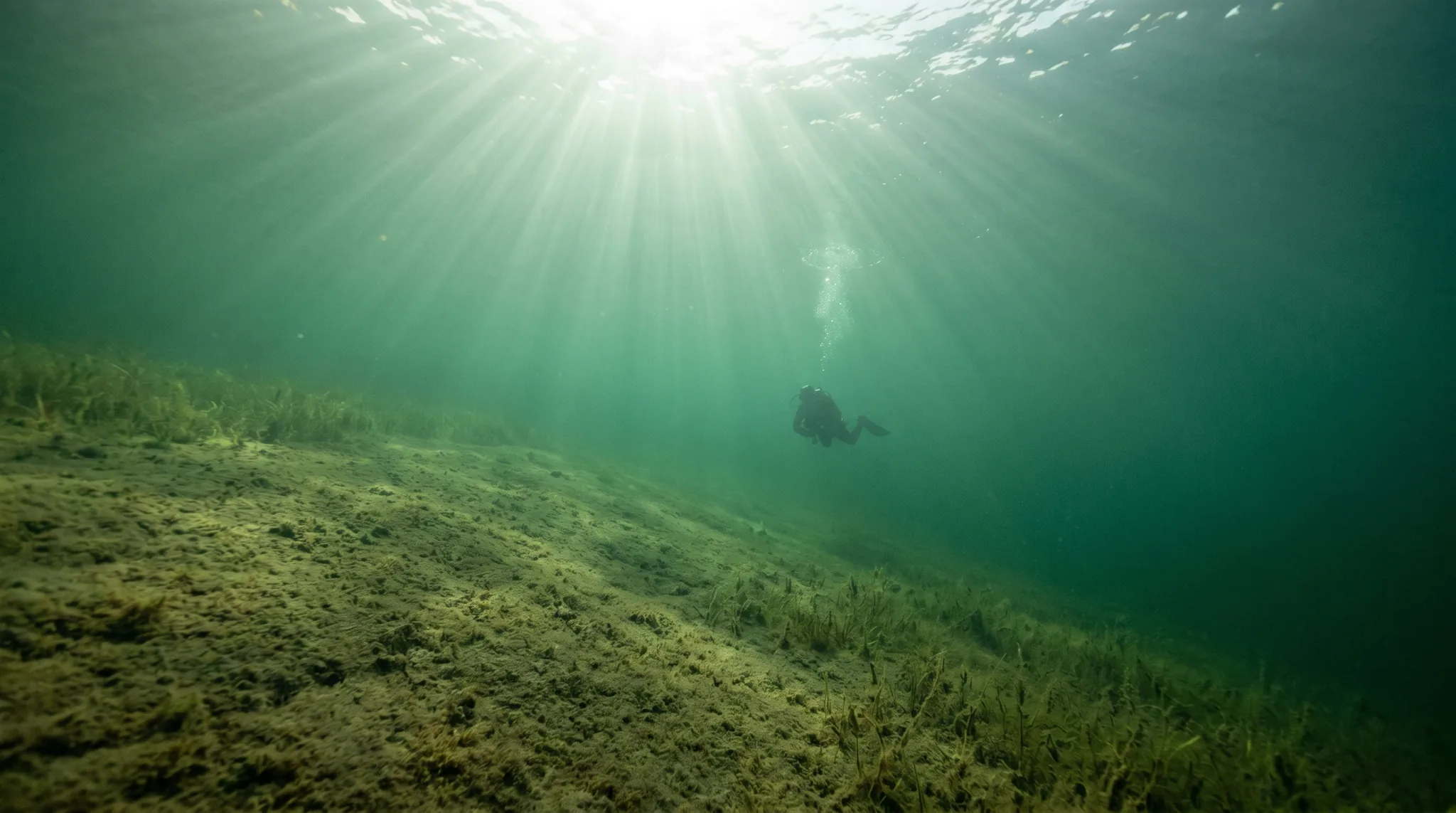
Best for beginner divers, 1-5m, shore entry, mild current.
Lynde Shores Conservation Area offers a shallow freshwater snorkelling experience where Lynde Creek meets Lake Ontario. The site features a reef-like environment with depths ranging from 1 to 5 metres, averaging 3 metres. Entry is via the shore, with the primary area located approximately 10 metres from the shoreline. Conditions are variable, with visibility typically between 2 and 6 metres and mild currents. Water temperatures fluctuate significantly throughout the year, ranging from 4C in winter to 21C in August. Due to the cold water and low visibility, this site is best suited for beginners who are prepared for freshwater conditions. Typical sessions last around 30 minutes.
43.84100, -78.97450
Non-motorized boats are permitted in Lynde Marsh from July 15 to September 15 only.
The canoe and kayak launch is located off the main parking lot at the Victoria Street entrance.
Recorded nearby, within 20km
Depth
Up to 5m
Visibility
2-6m
Skill Level
Beginner
Entry
Shore
Water Temp
4-21°C
Current
Mild
Typical Dive
30 min
Best Time
Jul, Aug, Sep
Yes, the site is suitable for beginners, though snorkellers should be prepared for cold water and low visibility conditions.
The depth ranges from 1 to 5 metres, with an average depth of 3 metres.
This is a shore entry site located approximately 10 metres from the shoreline.
The primary hazards are cold water temperatures and low visibility.
The conservation area provides parking and toilets for visitors.
A drysuit recommended is recommended for diving at Lynde Shores Conservation Area in Whitby. Water temperatures range from 4°C to 21°C.
The best months to visit Lynde Shores Conservation Area in Whitby are July, August, and September. Conditions outside these months can still be good but are less predictable.
Lynde Shores Conservation Area in Whitby typically has mild currents that most divers can handle comfortably.
Visibility at Lynde Shores Conservation Area in Whitby typically ranges from 2 metres to 6 metres. Conditions vary with weather, tides, and seasons.