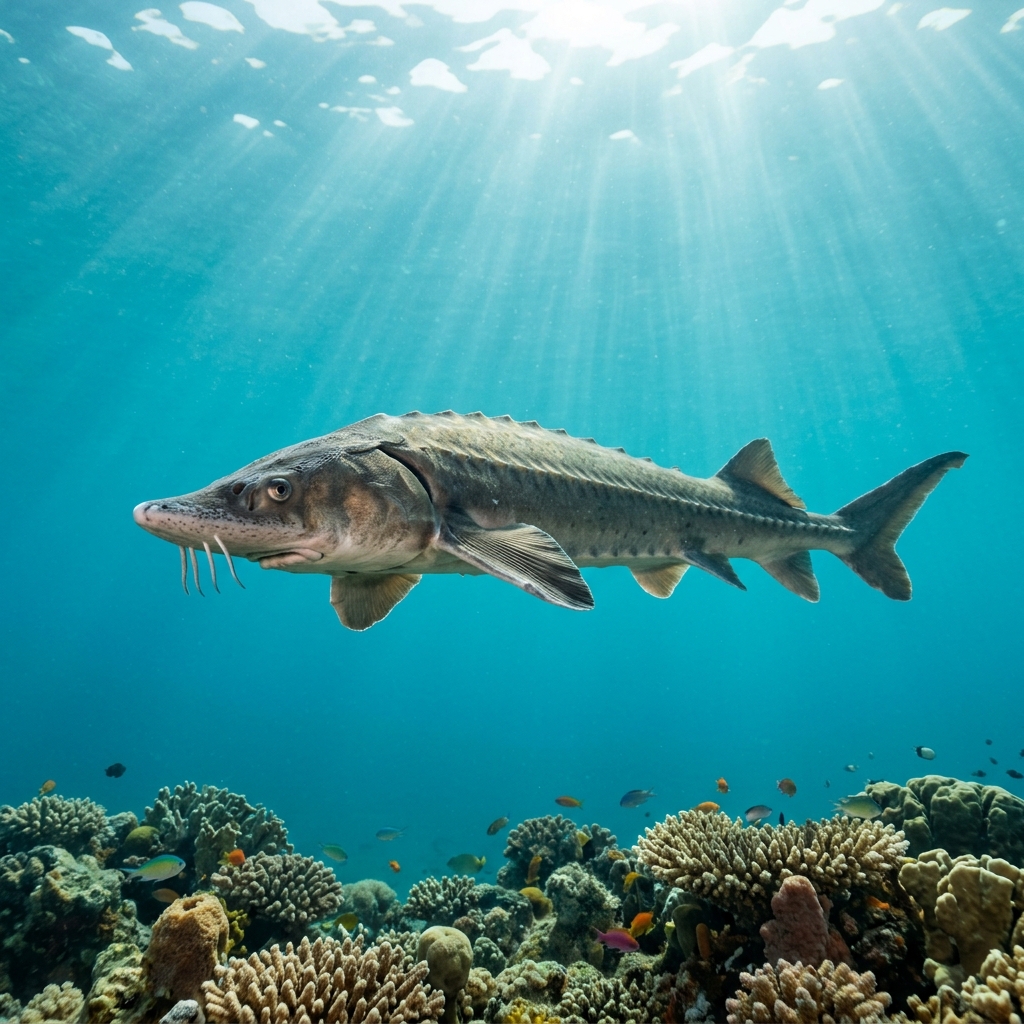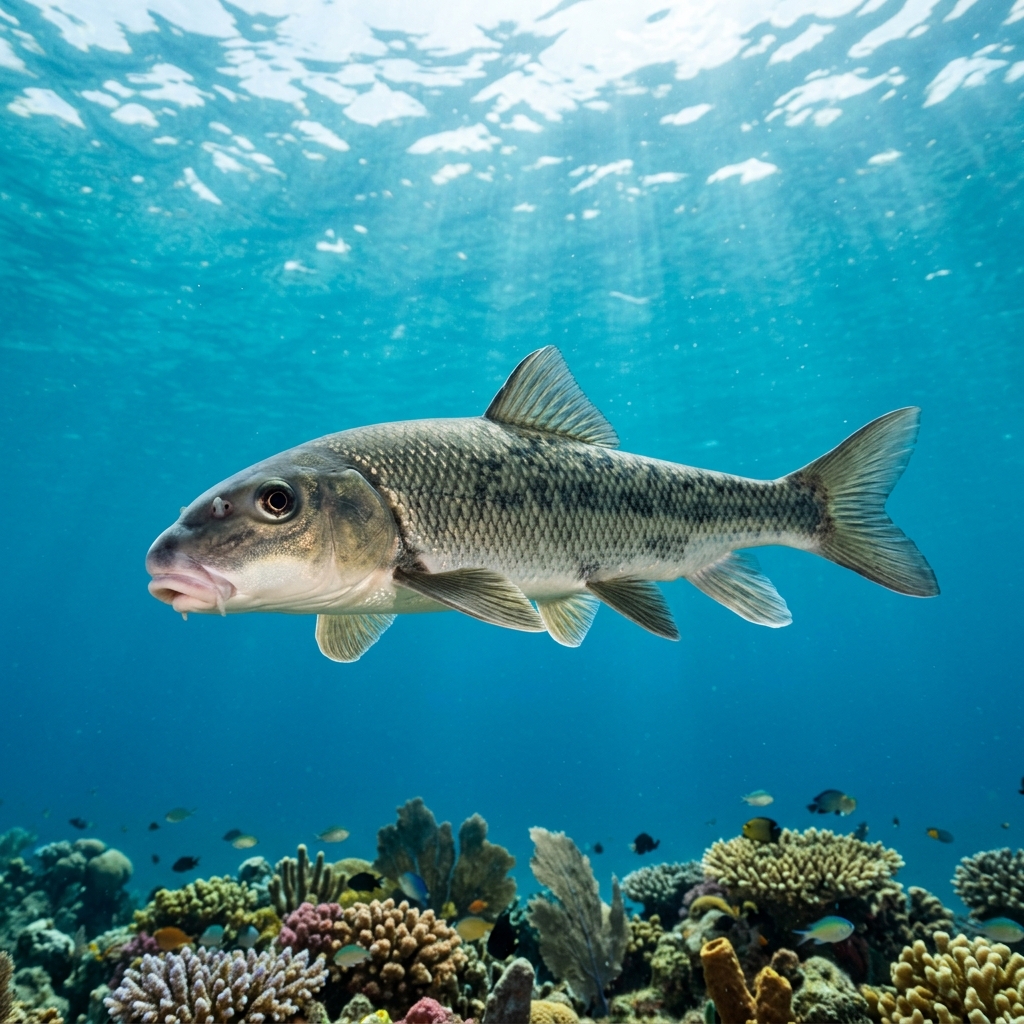
Catostomus commersonii
Spot white sucker across the Great Lakes and Ontario in cold water as low as 2°C. Here's how to identify one and where divers most commonly log them.
A cylindrical, torpedo-shaped fish with a distinctly downward-facing mouth set beneath a rounded snout, that subterminal (underslung) mouth is the single easiest field mark. Colouration is a muted olive-grey to bronze-brown on the back, fading to pale cream or white on the belly. Scales are large and visible, and the body lacks any bold patterning, which helps separate it from more ornate freshwater fish. During spring spawning, males develop a rosy lateral stripe and small tubercles (rough bumps) along the body.
White suckers are bottom-oriented fish, typically seen nosing along gravel, sand, or rocky substrates as they vacuum up organic debris and small invertebrates with that distinctive downward mouth. They tend to be unfazed by slow-moving divers and will often continue feeding within a metre or two if approached calmly. In spring, large aggregations gather in shallower rivers and lake margins to spawn, which can produce unusually close and prolific encounters.
Each spring, white suckers migrate from lakes into tributary streams in large spawning runs, sometimes in the thousands, and these events are among the most reliable times to find them in the shallows in numbers.
There is not enough monthly sighting data to pin down a peak season, so treat it as a year-round possibility. Observed water temperatures range from just above freezing to around 21°C, meaning divers in Canadian freshwater sites can encounter it in late spring through autumn with cold-water gear.
Almost all logged sightings come from Canada, with the overwhelming concentration in the Great Lakes and Ontario region, making it by far the most reliable place to look. A small number of sightings have also been recorded in the Great Lakes and Northeast United States, pointing to the same interconnected freshwater system on both sides of the border.
Mapping where White Sucker is logged…
White suckers are most commonly logged by divers in the Great Lakes and Ontario region of Canada, with a handful of sightings from the Great Lakes and Northeast United States. This freshwater species lives in lakes, rivers, and streams, so all encounters occur in inland dive sites rather than the ocean.
There is no clearly defined peak season in the available data, so encounters are possible year-round for divers willing to handle cold water. Spring spawning runs bring large numbers into shallow areas, making that period a particularly good bet for sightings. Water temperatures observed at sighting sites range from around 2°C to just over 21°C, so appropriate thermal protection is essential.
The easiest mark is the downward-facing, subterminal mouth positioned clearly beneath the snout, it looks built for vacuuming the bottom, because it is. The body is plain olive-grey to bronze-brown above and pale on the belly, with no bold spots or stripes except in spawning males, who show a faint rosy side stripe. Large, clearly visible scales complete the picture.
White suckers typically reach 30 to 50 cm in length as adults, though larger individuals approaching 60 cm are recorded. In the water they appear as a moderately sized, thickset freshwater fish, noticeably heavier-bodied than a trout of similar length.
No. White suckers pose no threat to divers whatsoever. They are docile bottom-feeders that typically ignore or slowly move away from approaching divers.
White suckers are highly tolerant of cold, low-oxygen, and even mildly polluted water, a resilience that makes them one of the most widespread freshwater fish in North America. They are also known to hybridise with closely related sucker species where ranges overlap, which can make some individuals tricky to identify with certainty.
Site and sighting data is aggregated from diver logs, iNaturalist and GBIF. For taxonomy and conservation status:
Sun Perch
2,182 sites