Neogobius melanostomus
Spot round goby in the Great Lakes and Zeeland's lakes in summer. Cold-water divers find them common at sites across Canada and the Netherlands.
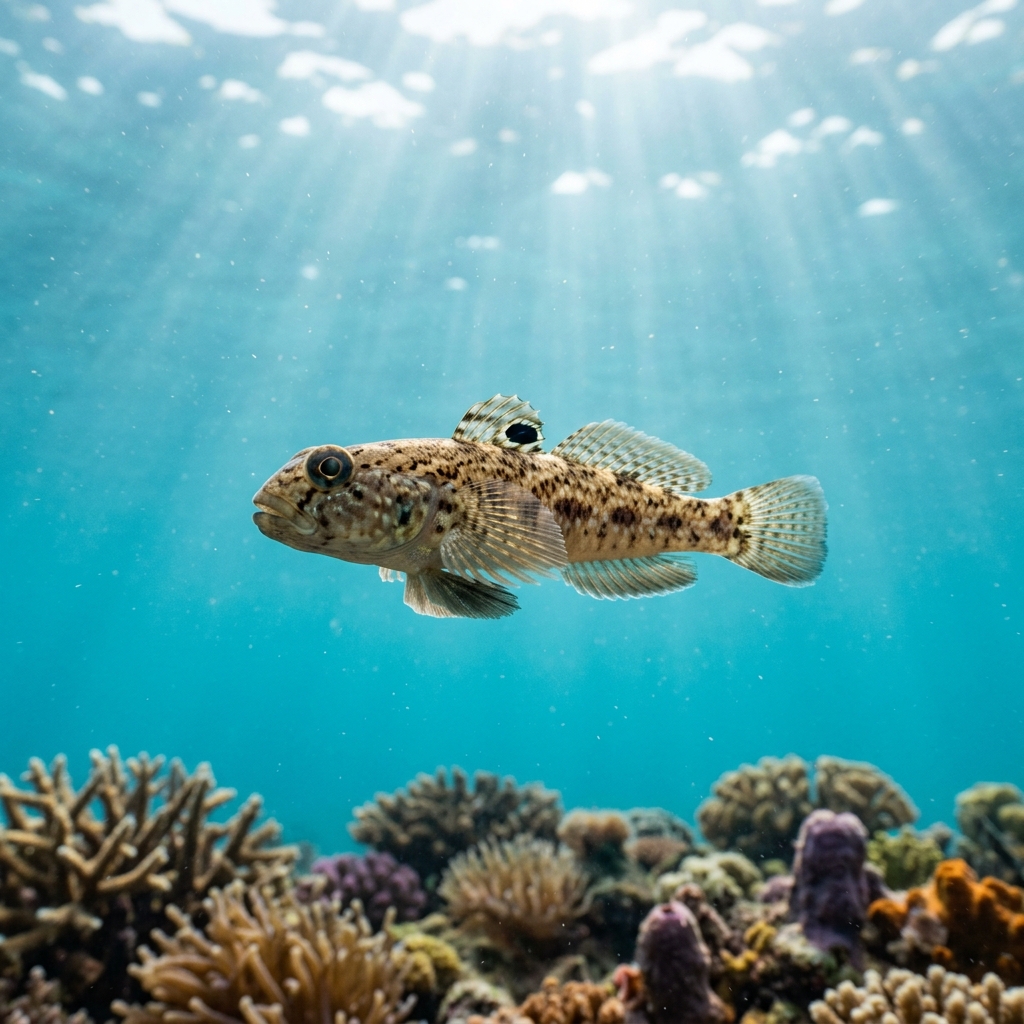
A stocky, mottled grey-brown fish with a broad, rounded head and distinctively large, bulging eyes set high on the skull. The fused pelvic fins (joined beneath the belly to form a small suction disc) are a reliable field mark that separates gobies from superficially similar small fish. Males develop a noticeably darker colouration during the breeding season, particularly around the head and throat. Typically encountered sitting motionless on hard substrate rather than swimming in open water.
Round gobies spend most of their time perched on rocky or sandy bottoms, using their pelvic suction disc to hold position even in mild current. They tend to be bold around divers, often staying put rather than fleeing, which makes close observation easy. During summer, males actively defend small territories around nest sites in crevices or beneath rocks, so you may catch them posturing at rivals.
Round goby are highly invasive outside their native Black and Caspian Sea basin, having spread through the Great Lakes and European waterways via ballast water. They reproduce rapidly, with males guarding multiple clutches from different females in a single season, which helps explain how quickly they establish dense populations at new sites.
Based on logged observations, sightings concentrate in June and July in the Northern Hemisphere, aligning with the species' active breeding season in warmer months. Water temperatures at observation sites range from 2 to 19 °C, so this is firmly a cool and cold-water encounter year-round.
Most commonly logged in Canada's Great Lakes and Ontario region, which accounts for the vast majority of recorded sites. A strong secondary population is documented across the Netherlands, particularly in Zeeland's tidal waterways and the Limburg Lakes. Isolated sightings are also on record from the northeastern United States and Denmark.
Mapping where Round Goby is logged…
The Great Lakes and Ontario region of Canada is the most reliable place to find them, with a large spread of logged dive sites. The Netherlands is a strong second choice, especially the tidal sites in Zeeland and the inland Limburg Lakes. Smaller numbers of sightings come from the northeastern United States and Denmark.
Logged sightings peak in June and July across Northern Hemisphere sites. This coincides with breeding activity, when males are territorial and conspicuous. Outside midsummer they are still present but logged less frequently.
Look for a stocky, mottled grey-brown fish with a large rounded head, prominent high-set eyes, and a habit of sitting still on the bottom. The fused pelvic fins, which form a disc beneath the body, are the key anatomical feature. Breeding males are noticeably darker than females.
Round goby typically reach around 15 to 25 cm in length, though size varies across populations. In dense invasive populations such as those in the Great Lakes, individuals on the larger end of that range are not unusual.
No. Round goby pose no threat to divers. They are small, non-venomous, and generally bold enough to sit still and be observed at close range.
Round goby are one of the most widespread invasive fish in the Great Lakes, introduced via ballast water in the late 1980s. They outcompete native bottom-dwellers for food and nesting sites and have spread to nearly every part of the system, which is why divers encounter them so reliably across the region.
Site and sighting data is aggregated from diver logs, iNaturalist and GBIF. For taxonomy and conservation status:
Sun Perch
2,182 sites