Alosa pseudoharengus
Divers log alewife as common to very common across the Great Lakes region of Canada, in cold water from 3 to 20 °C. Here's where and how to find them.
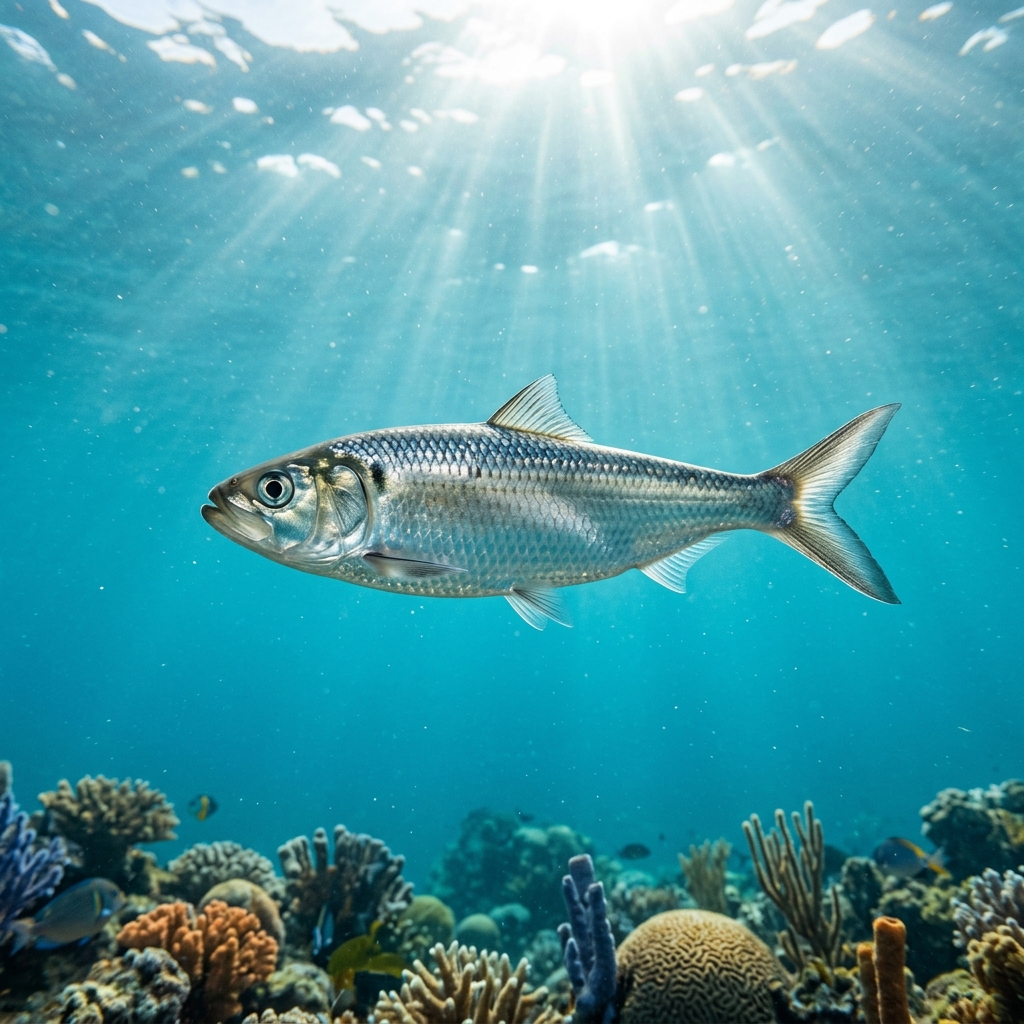
A slim, laterally compressed fish with bright silvery flanks and a slightly bluish-green back, the alewife looks much like a small herring and is most easily picked out by its notably large eye relative to its head size. A single dark shoulder spot just behind the gill cover is a useful field mark. In the water, alewife nearly always appear in schools, which makes the flash of many silver bodies at once the first thing a diver notices.
Alewife are open-water schooling fish, so you are most likely to encounter a loose or tight shoal moving through mid-water rather than a single fish sitting on structure. Schools can shift quickly when a diver approaches, peeling away as a group. Near shore they can be found at shallower depths, particularly during warmer months when they move inshore.
Alewife are native to the Atlantic coast but became established in the Great Lakes after gaining access through canal systems, and their population booms and crashes in those lakes have shaped the entire freshwater ecosystem, leading to large-scale introductions of Pacific salmon specifically to control them.
There is not enough monthly sighting data to point to a particular season, so treat it as a year-round possibility. The species tolerates a wide temperature range from roughly 3 to 20 °C, consistent with the cold-to-mild conditions of the Great Lakes through all seasons.
All verified diver sightings come from Canada, concentrated entirely in the Great Lakes and Ontario region. Sightings are rated common to very common across a strong spread of sites in that area, making it one of the more reliably encountered freshwater schooling fish for divers exploring those lakes.
Mapping where Alewife is logged…
All logged dive sightings are from Canada, specifically within the Great Lakes and Ontario region. Divers exploring the lakes report them as common to very common across multiple sites, making the Great Lakes the go-to destination for encountering this species underwater.
There is no clear seasonal peak from available sighting data, so alewife can be encountered year-round in the Great Lakes region. They tolerate water temperatures from about 3 to 20 °C, which covers the full range of conditions those lakes see across the seasons.
Look for a slender, silvery fish with a bluish-green back, a large eye, and a distinctive dark spot just behind the gill cover. They almost always appear in schools, so the sight of many small silver fish flashing together is often your first clue. The oversized eye is the most reliable single feature to distinguish them from other small schooling fish.
Alewife are a small fish, typically reaching around 25 to 38 cm in length as adults, though Great Lakes populations can be somewhat smaller than their coastal counterparts. In the water they read as a slim, modestly sized herring-type fish.
Alewife are native to the North American Atlantic coast but colonised the Great Lakes through canal systems by the early 20th century. With few natural predators, their numbers exploded, causing major ecological disruption. Pacific salmon were later introduced to the lakes partly to keep alewife populations in check, fundamentally changing the Great Lakes fishery.
Site and sighting data is aggregated from diver logs, iNaturalist and GBIF. For taxonomy and conservation status:
Sun Perch
2,182 sites