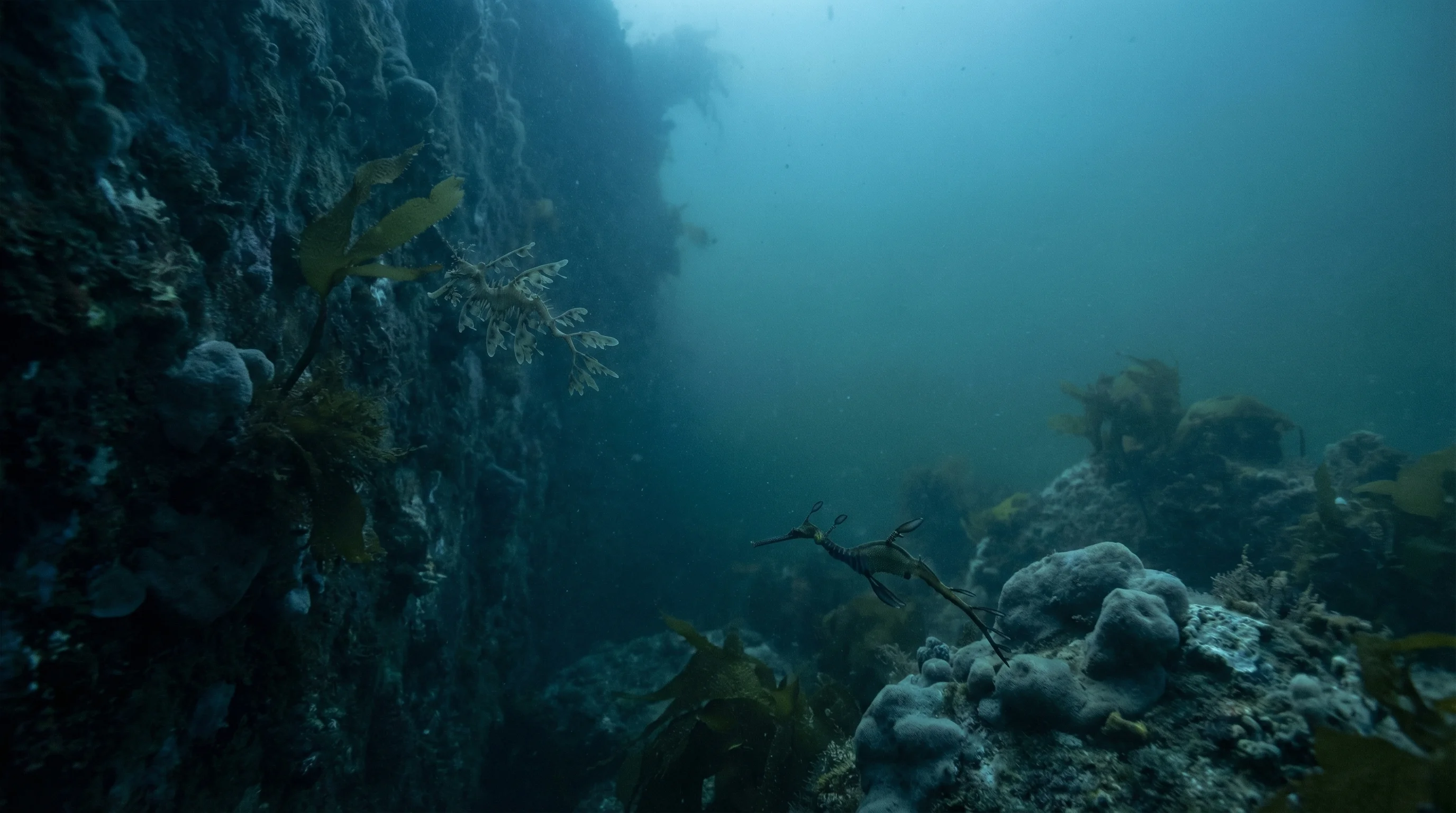
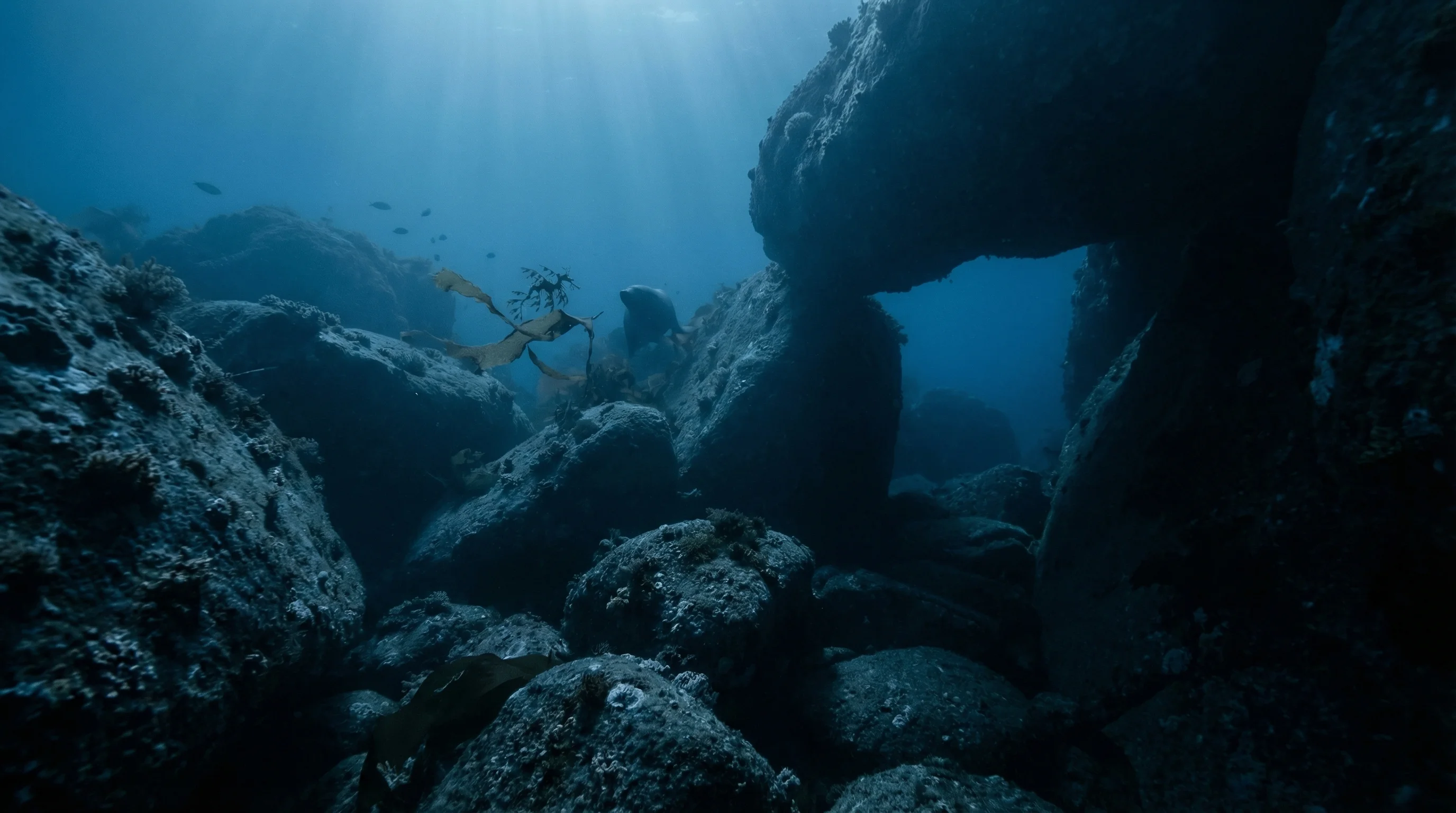
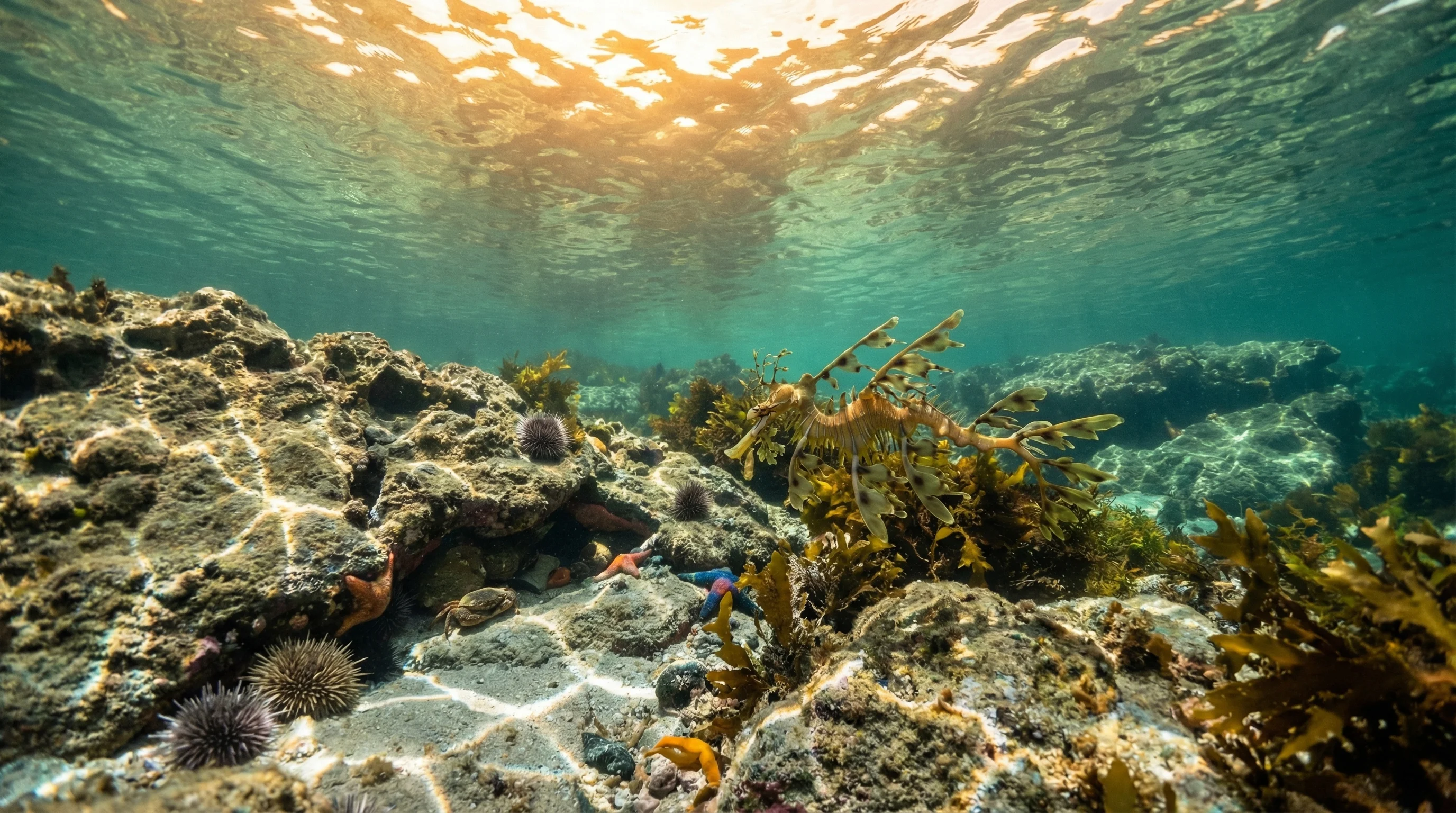
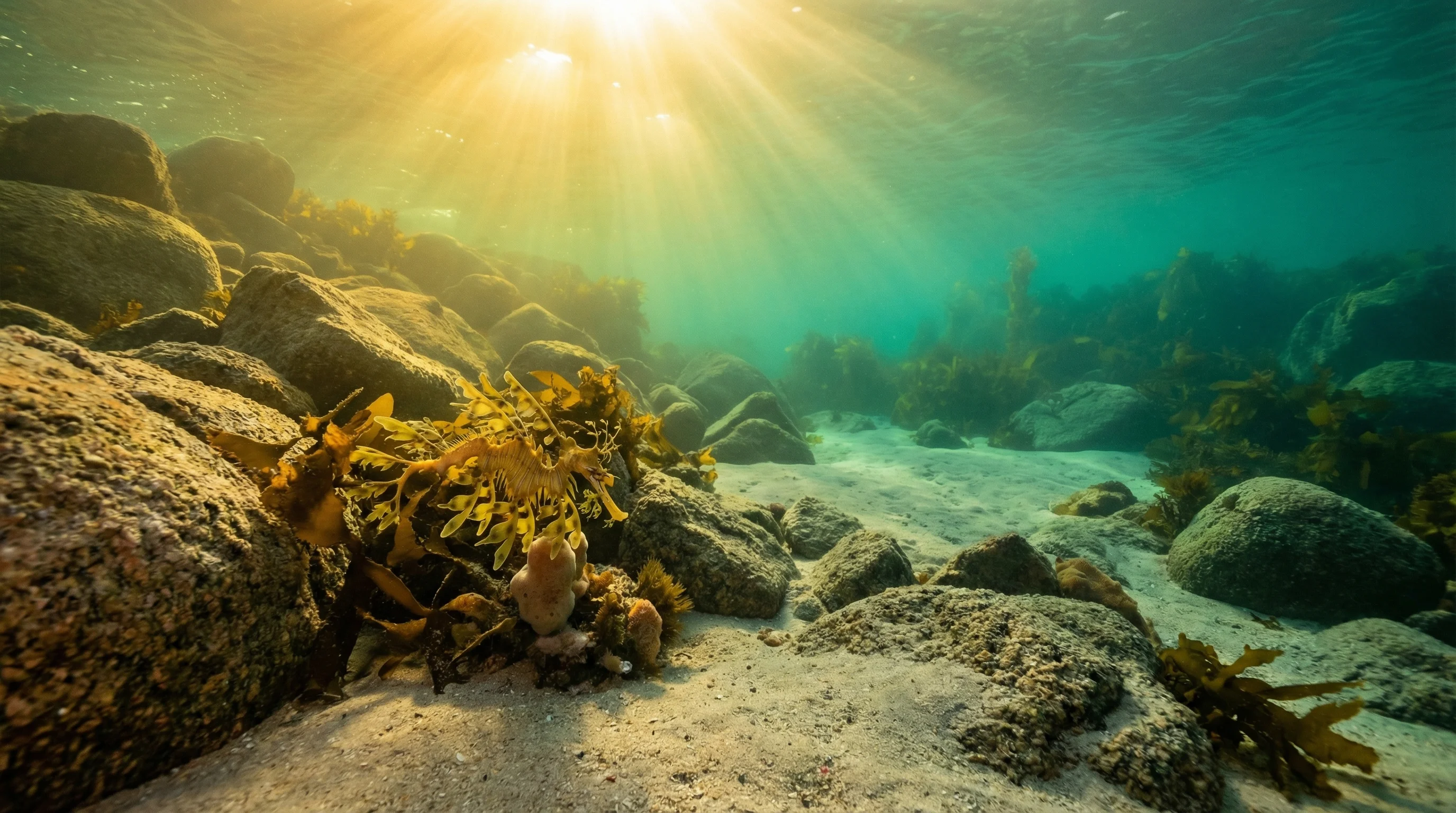
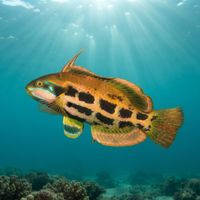
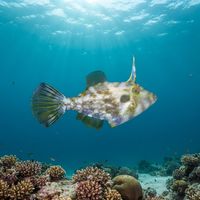
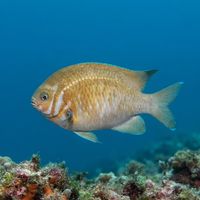
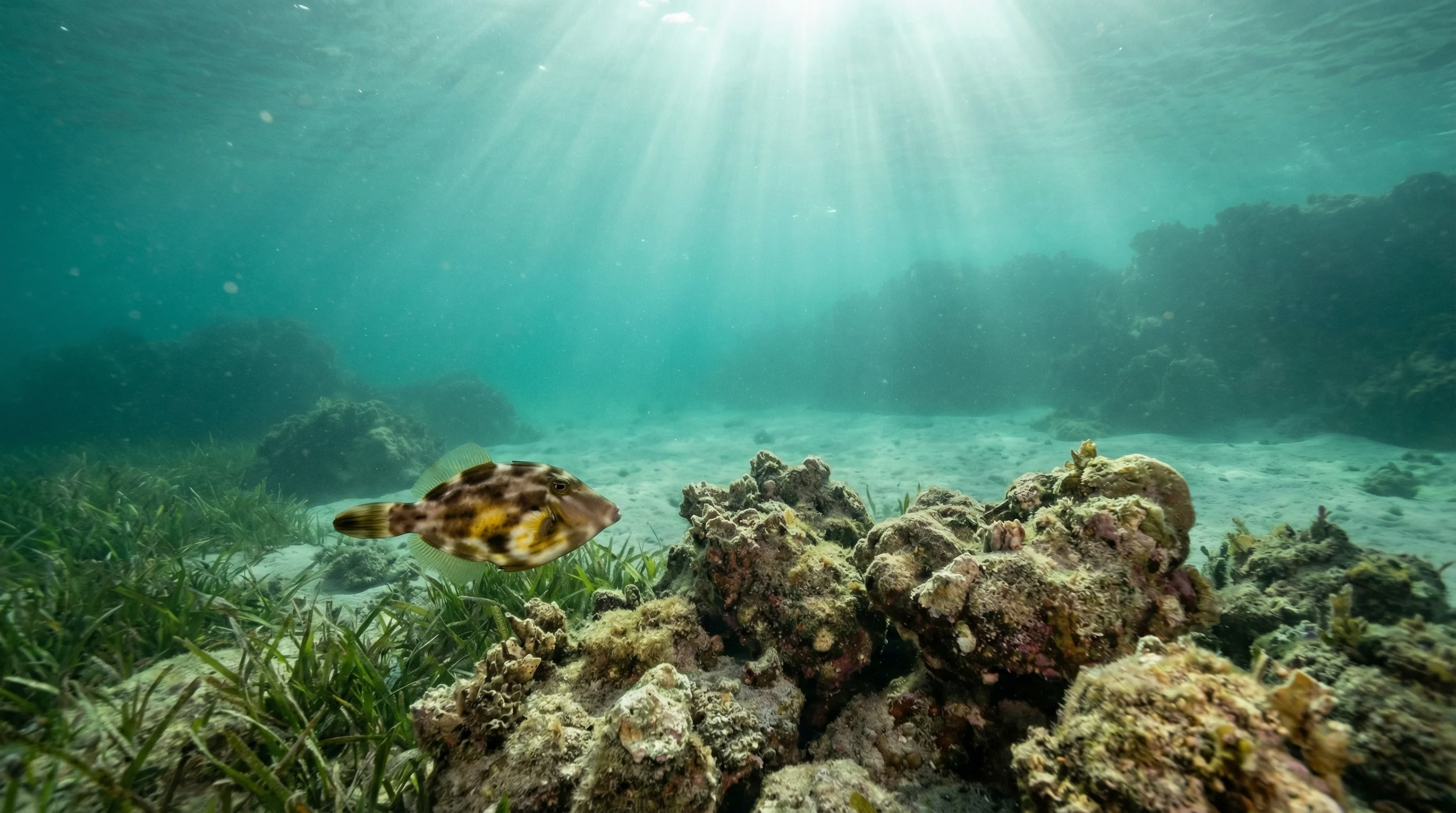
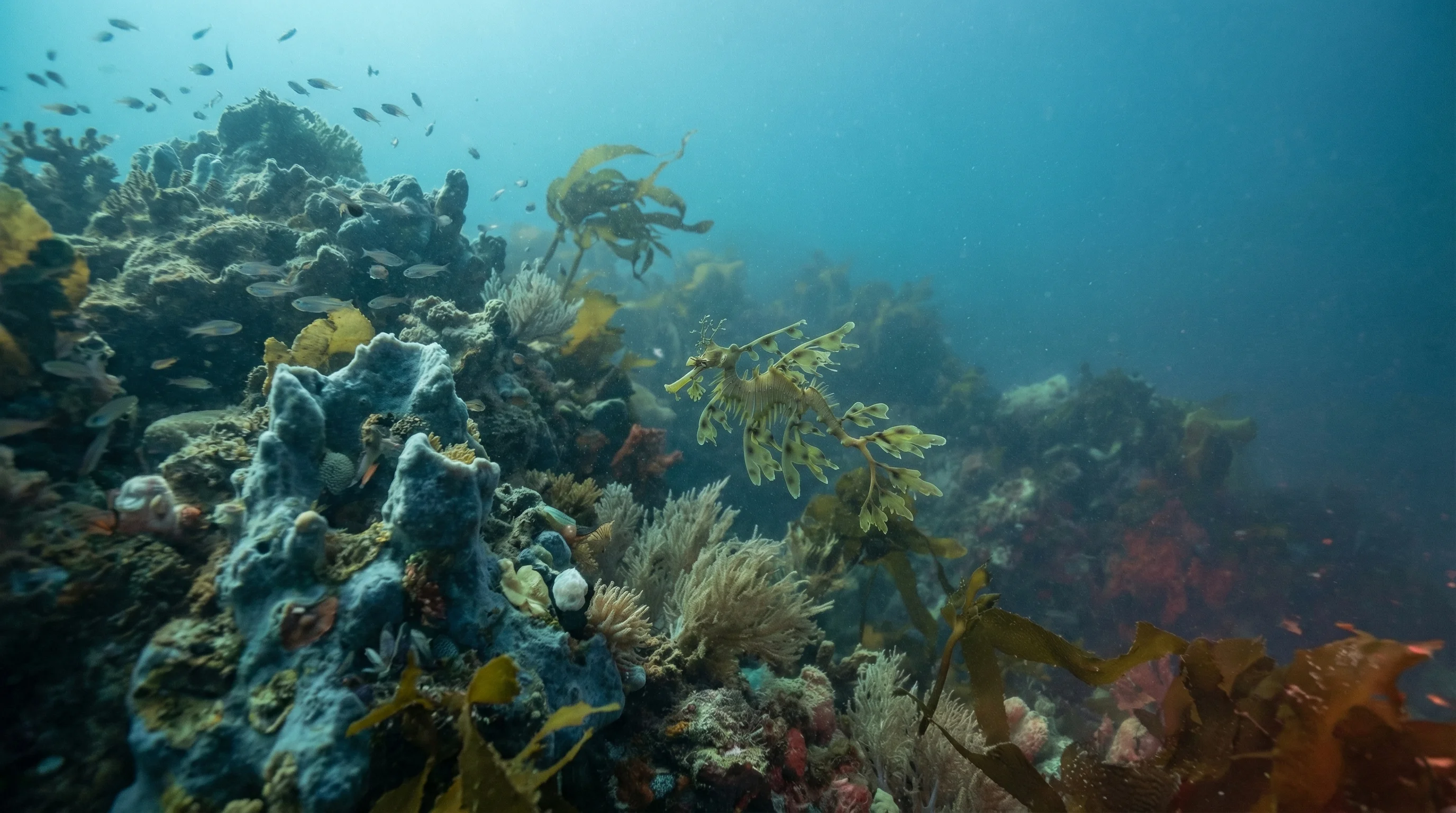
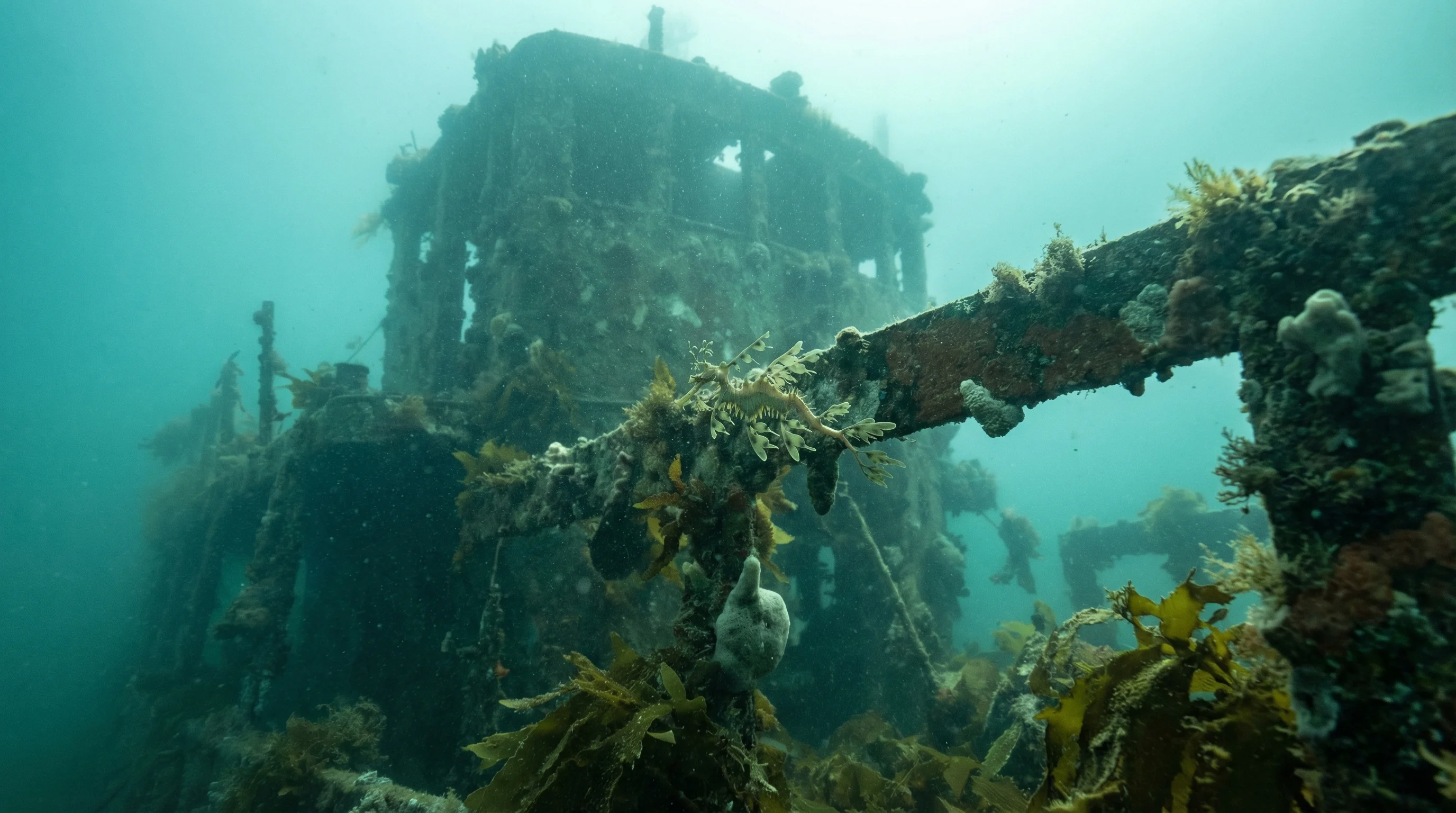
Victor Harbor sits on the Fleurieu Peninsula in South Australia, where the Southern Ocean drives the conditions. Sites cover reef, wall, canyon, seagrass, and drift diving, with depth options ranging from the shallow Port Elliot Jetty out to the deeper Boulders site. Water is consistently cold, dropping to its lowest in mid-winter and reaching a modest peak in summer, so a thick wetsuit or drysuit is appropriate through much of the year. Recorded species include eagle rays, bluespotted fantail rays, long-nosed fur seals, epaulette sharks, fiddler rays, and a range of wrasses and leatherjackets. Some sites are shore-accessible; others, including Wright Island, require a boat. Currents and exposure to southerly weather mean conditions must be chosen carefully.
1 areas
Monthly water temperature across Victor Harbor's sites, from satellite sea-surface data corrected for depth. The band shows the site-to-site spread.
Water is coldest from mid-winter into early spring and warmest in midsummer, though even the warmest months remain cool by Australian standards. A thick wetsuit is sensible for most of the year, and a drysuit suits winter. Winter conditions can bring improved visibility despite the chill.
Water temperature around Victor Harbor ranges from about 14°C in July to 20°C in January, based on satellite sea-temperature data for its dive sites.
In the warm season (about 20°C) a 5mm suit is comfortable in Victor Harbor; in the coldest months (about 14°C) step up to a 7mm or semi-dry suit.
Fin maps 5 sites in Victor Harbor (5 scuba diving sites and 3 snorkelling spots, with some suited to both).
4 more sites to explore