Pseudogoniistius nigripes
Black and white banded reef fish logged on cool-water reefs from Victoria to South Australia, mostly seen as an uncommon find at depth.
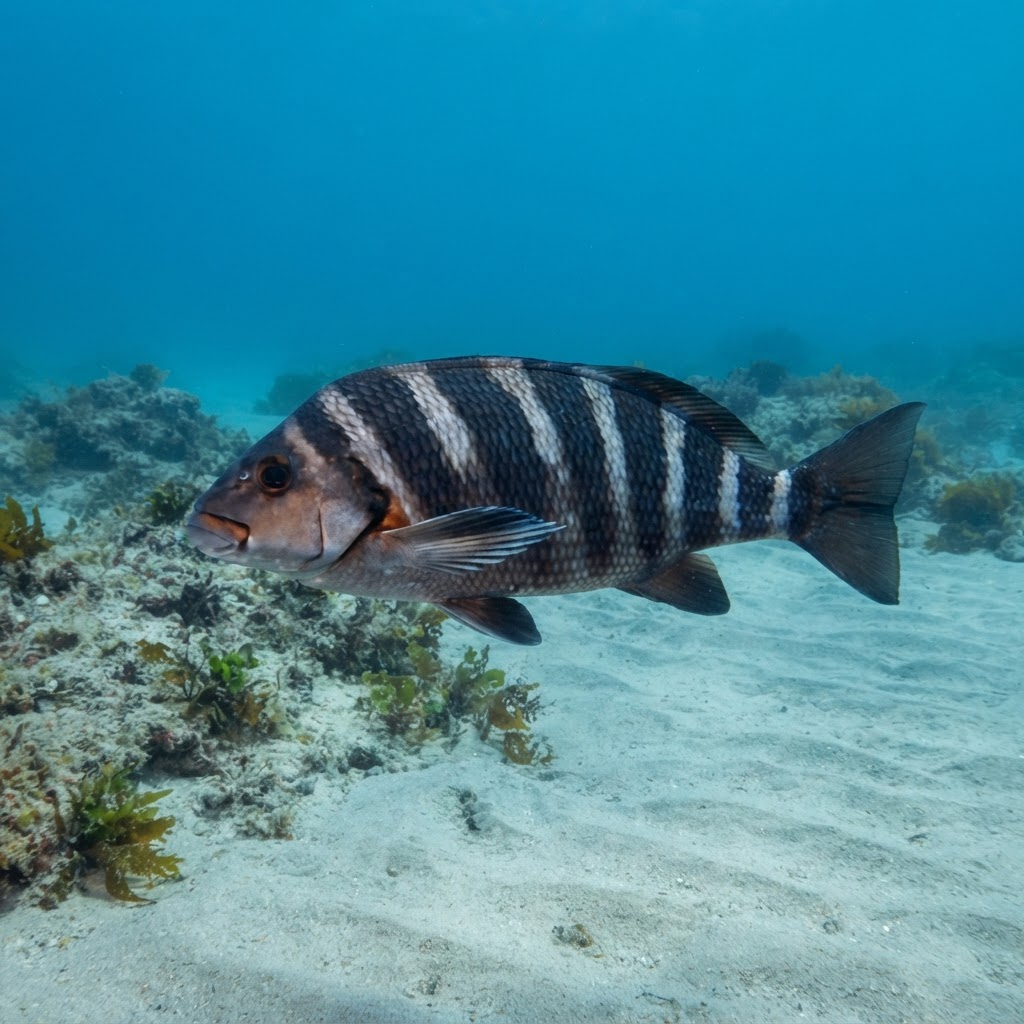
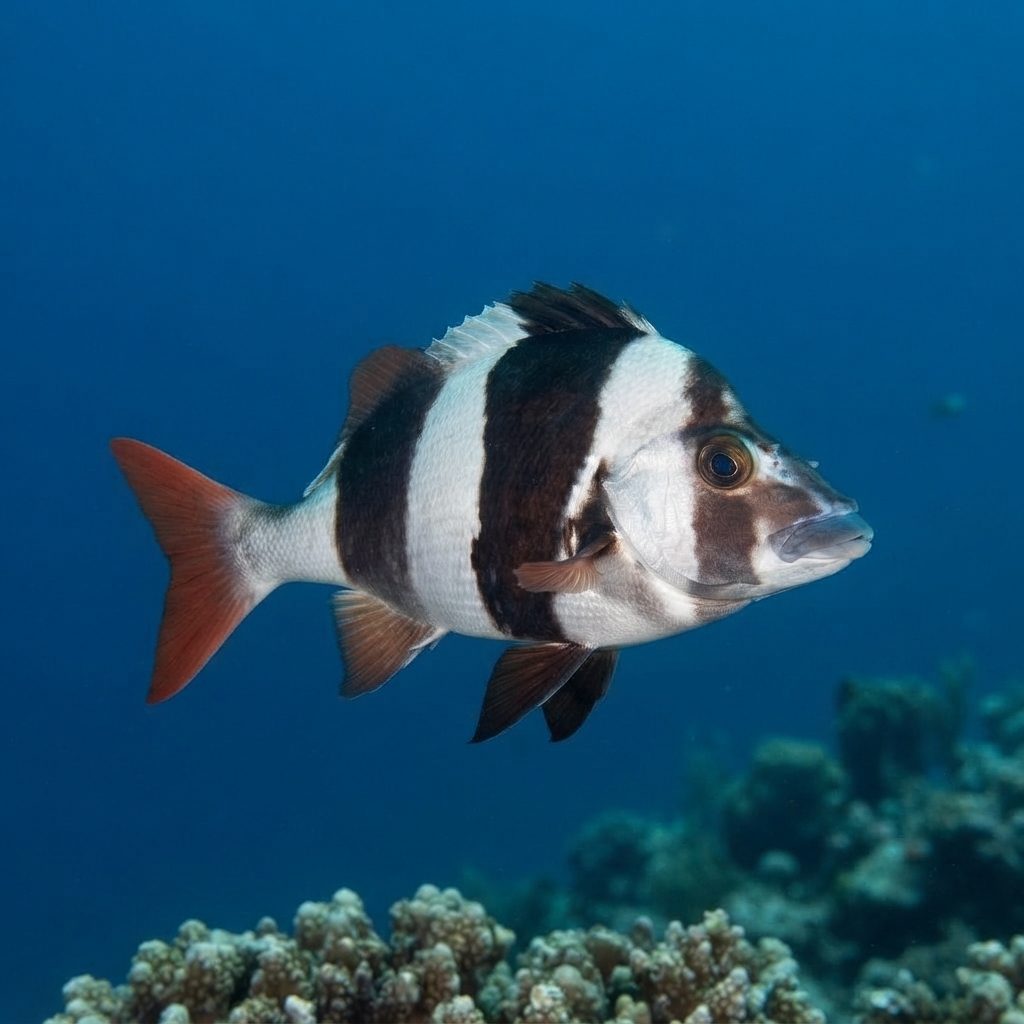
Look for a compact, deep-bodied fish around 28 cm with bold black and white banding running across a pale body, giving it the magpie-like pattern that names it. The snout is blunt and slightly downturned, suited to picking at the reef, and the dorsal fin often shows a dark blotch near the front. It tends to sit close to rock or reef structure rather than swim in open water, which helps separate it from faster-moving reef fish nearby.
Divers usually find it hovering or resting near rock ledges and reef crevices rather than out in open water, often solo or in loose small groups. It tends to hold its ground rather than bolt when a diver approaches slowly, making it a reasonably approachable subject for a careful look or a photo. Most sightings come from deeper, cooler sections of reef in the 25 to 65 m range, so it's more of a deep-reef encounter than a shallow one.
Its banded black and white pattern is unusual among temperate reef fish and likely helps break up its outline against dappled rock and kelp shadow rather than serving as pure decoration.
Sighting records don't show a strong seasonal pattern, so treat it as a year-round find on the temperate reefs where it lives. Its comfort range of 15 to 18.6 C matches the cooler, stable water typical of southern Australian and New Zealand reefs across most of the year.
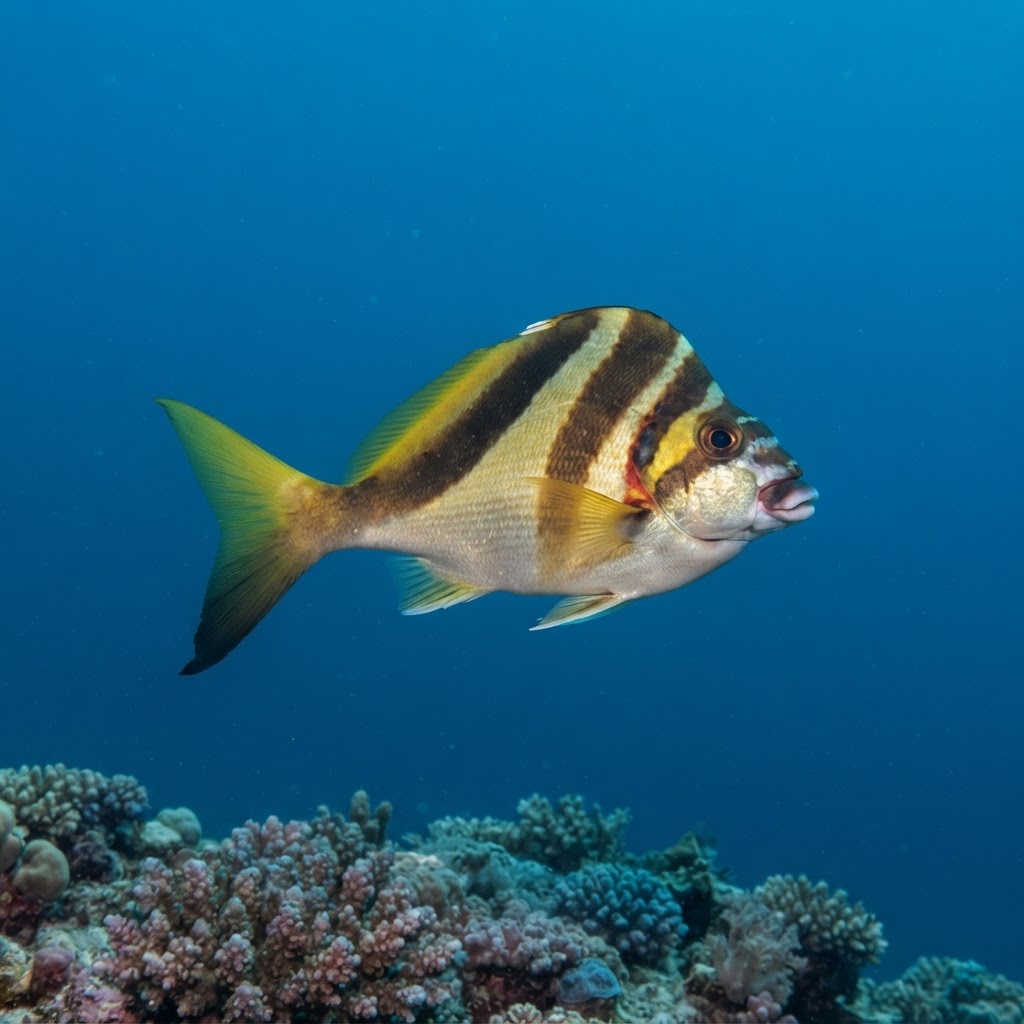
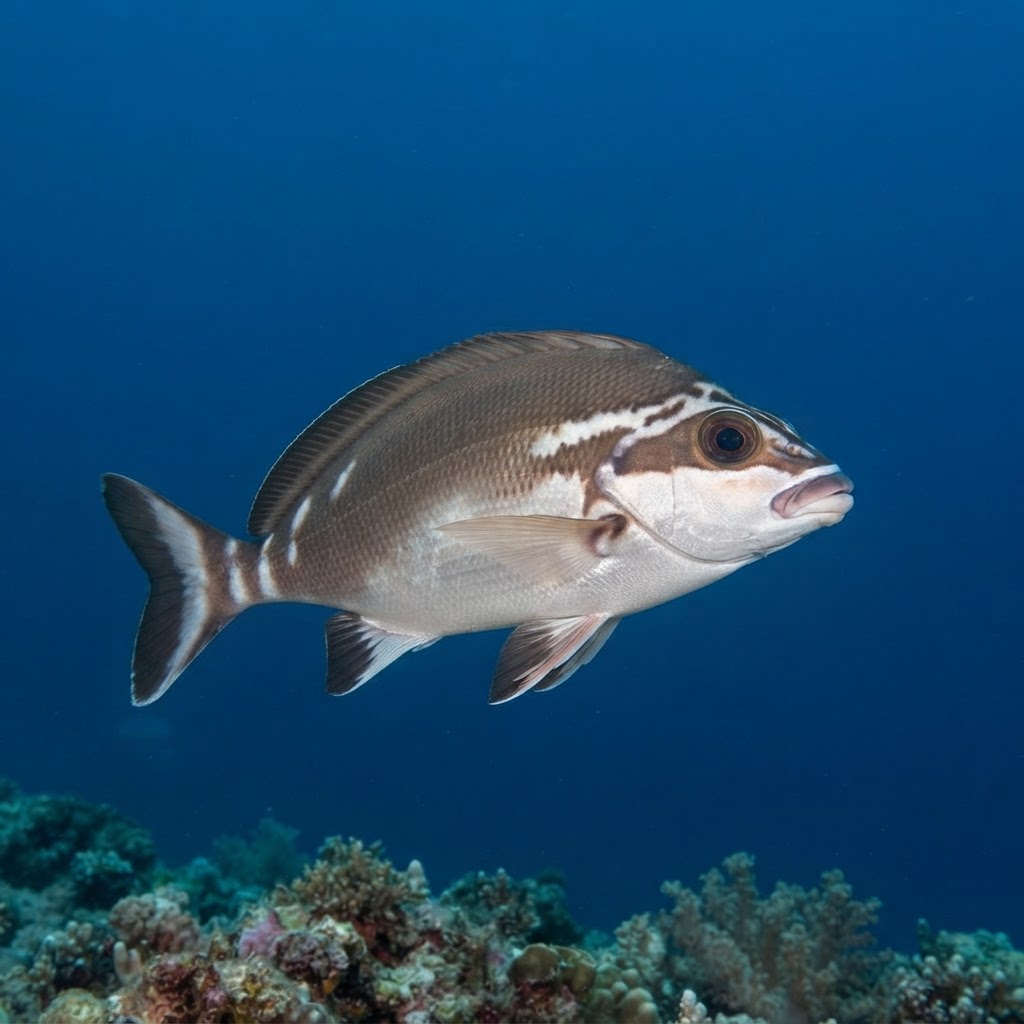
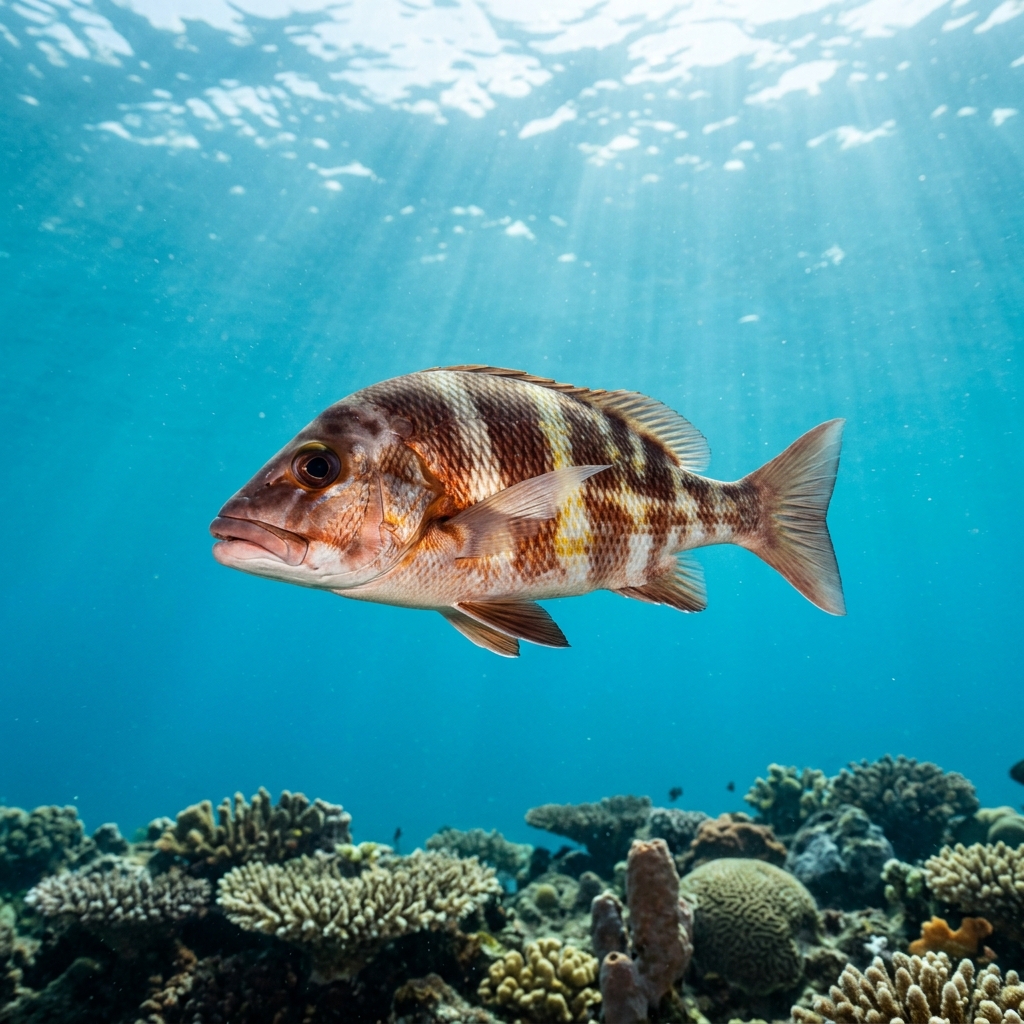
Reef neighbours a diver could mistake it for. Use the identification notes above to tell them apart.
Most reliably found in Victoria, Australia, which accounts for the bulk of logged sightings, with a solid secondary presence in South Australia. Smaller numbers turn up in Tasmania and New South Wales, and it has also been recorded on reefs off New Zealand's North Island.
Mapping where Magpie Perch is logged…
Victoria, Australia has the strongest run of sightings, followed by South Australia, with smaller numbers in Tasmania, New South Wales and New Zealand's North Island.
There's no clear seasonal spike in sightings, so it's considered a year-round species on the cool temperate reefs it inhabits.
Check for a stocky body around 28 cm with strong black and white banding and a blunt snout, usually seen resting near reef structure rather than swimming in open water.
They typically reach around 28 cm in length, a modest size that keeps them tucked close to reef structure rather than out in open water.
No, they pose no threat to divers and are generally calm, approachable fish around reef structure.
Site and sighting data is aggregated from diver logs, iNaturalist and GBIF. For taxonomy and conservation status:
Crested Morwong
172 sites