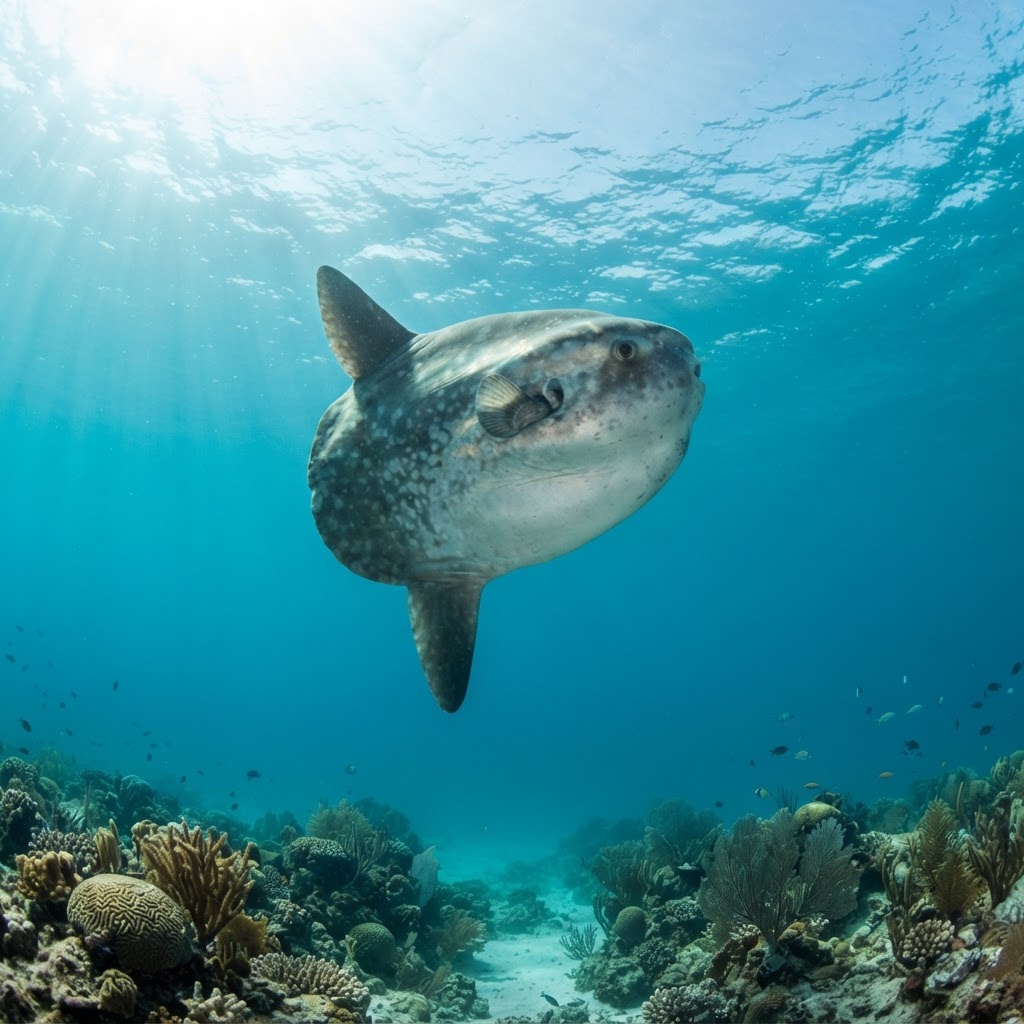
Mola alexandrini
Bali is the world's most reliable spot for Bumphead Sunfish, logged year-round in waters from 17 to nearly 30C.
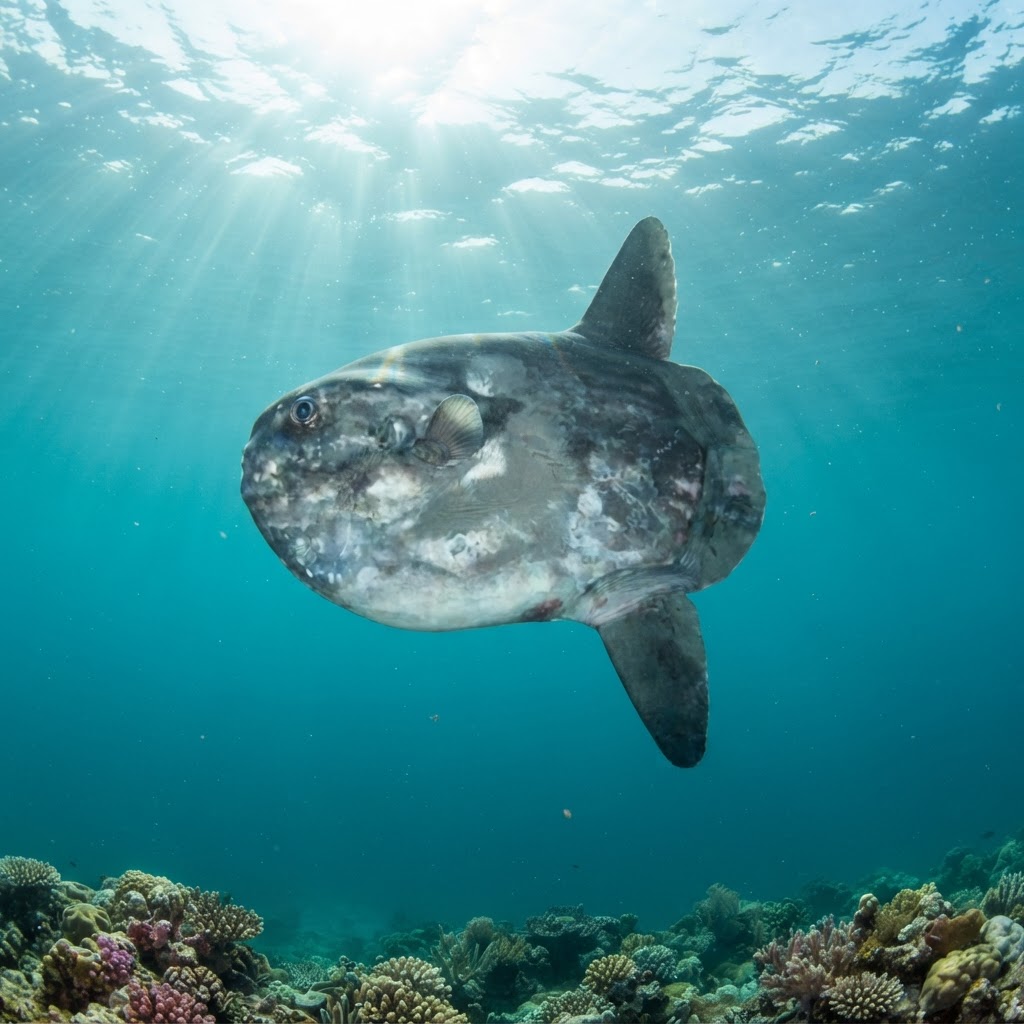
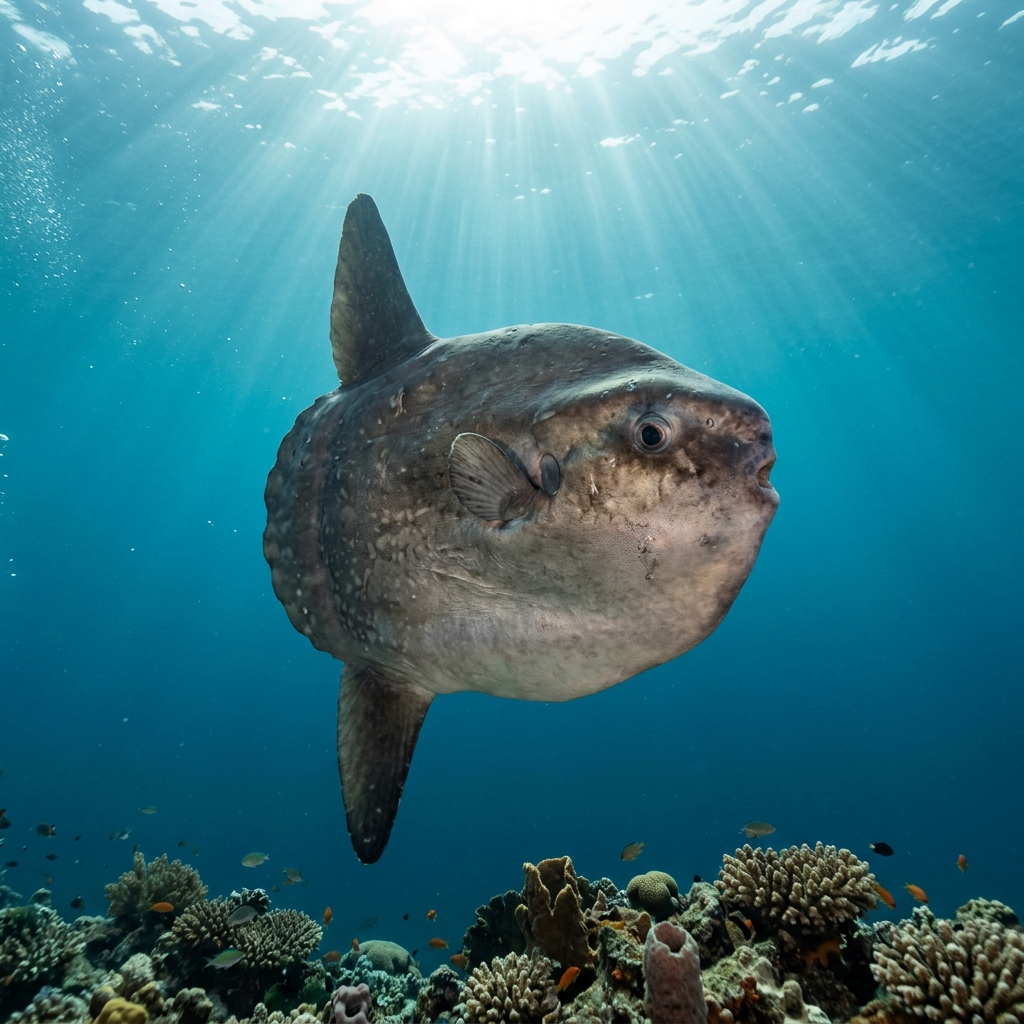
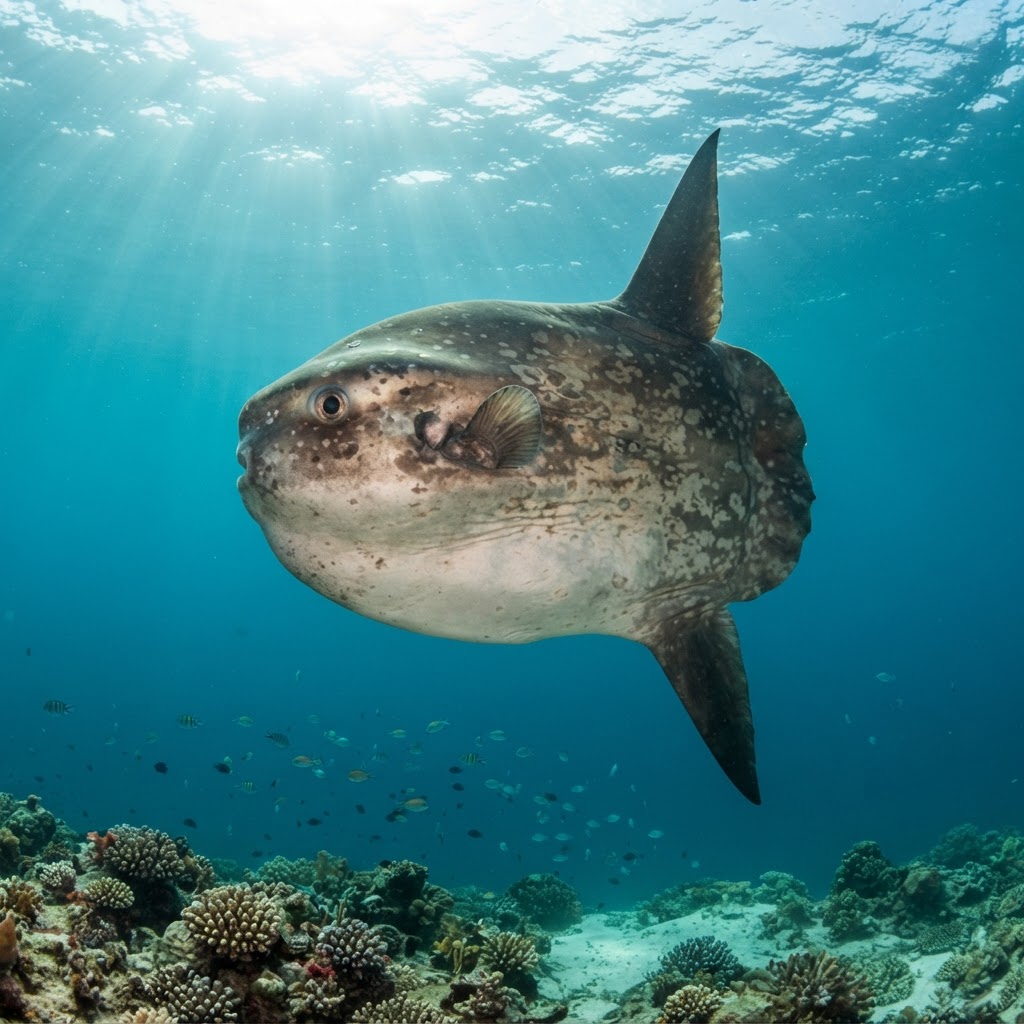
A grey to brownish disc-shaped body with no proper tail, just a rudder-like clavus at the back, and an enormous size that can push past 2 metres. The forehead carries a distinctive bony bump, more pronounced on larger adults, which is where the common name comes from. Skin often looks patchy or scarred, and the fish tends to hang almost motionless in open water or against a slope, giving divers plenty of time to size it up.
Divers most often find them drifting or hovering in mid-water, sometimes near cleaning stations where smaller fish pick parasites off their skin. They are typically unbothered by divers, holding position or moving off slowly rather than bolting, which makes for long, calm encounters rather than fleeting ones. Many sightings happen along deeper walls or slopes where the fish seems to pause before continuing into open water.
This is one of the heaviest bony fish in the ocean, and its bump grows larger and more pronounced with age, making big old individuals unmistakable once you know what to look for.
Sightings show no clear seasonal pattern, and the wide temperature range logged for this species, from 16.9 to 29.5C, means it turns up year-round rather than on a schedule tied to warm water. Plan around known aggregation sites like Bali rather than a particular month.
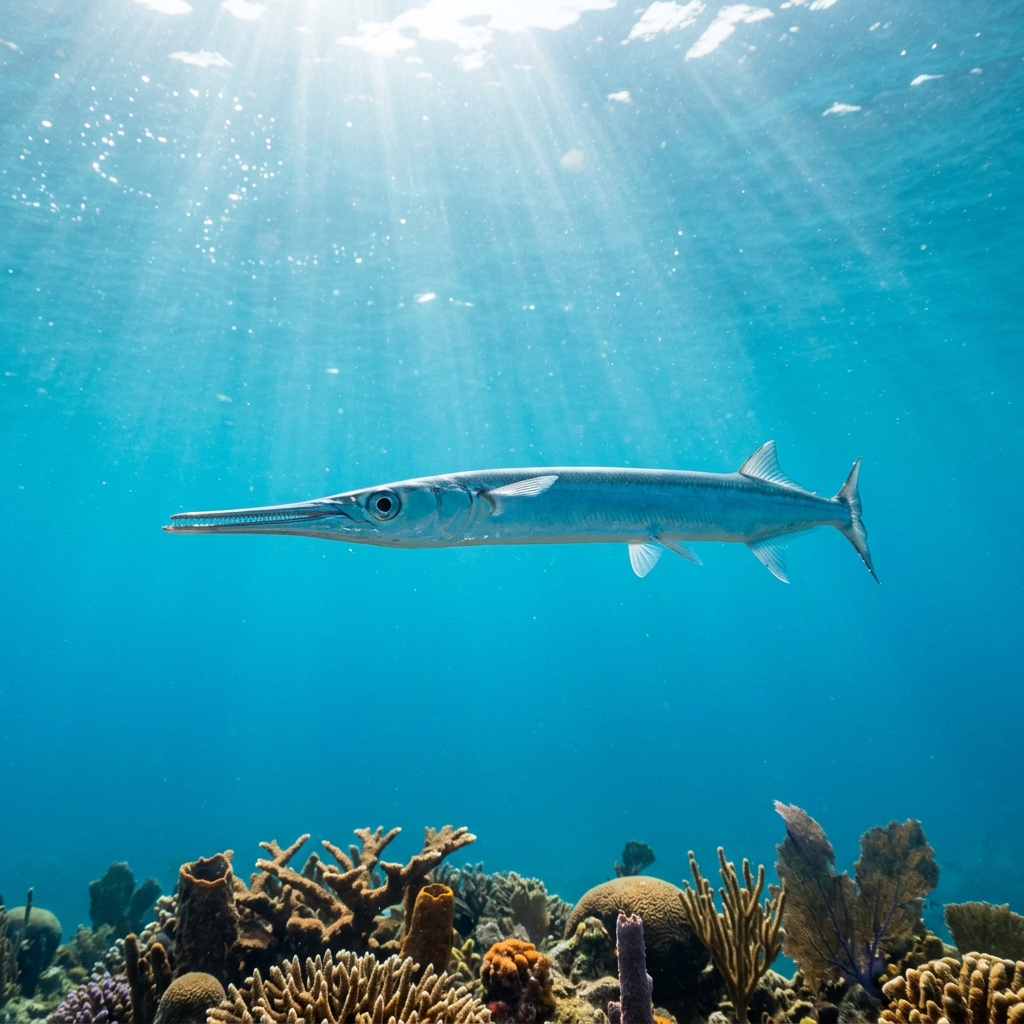
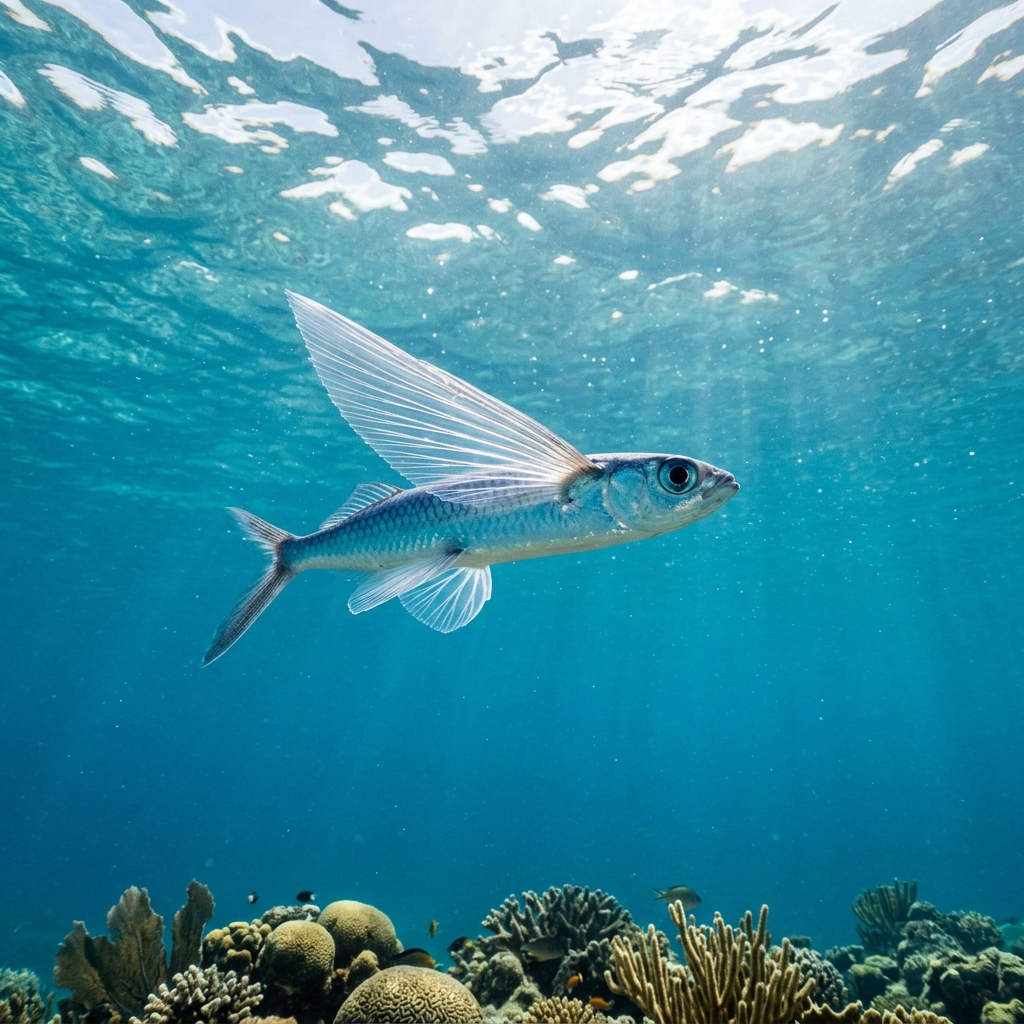
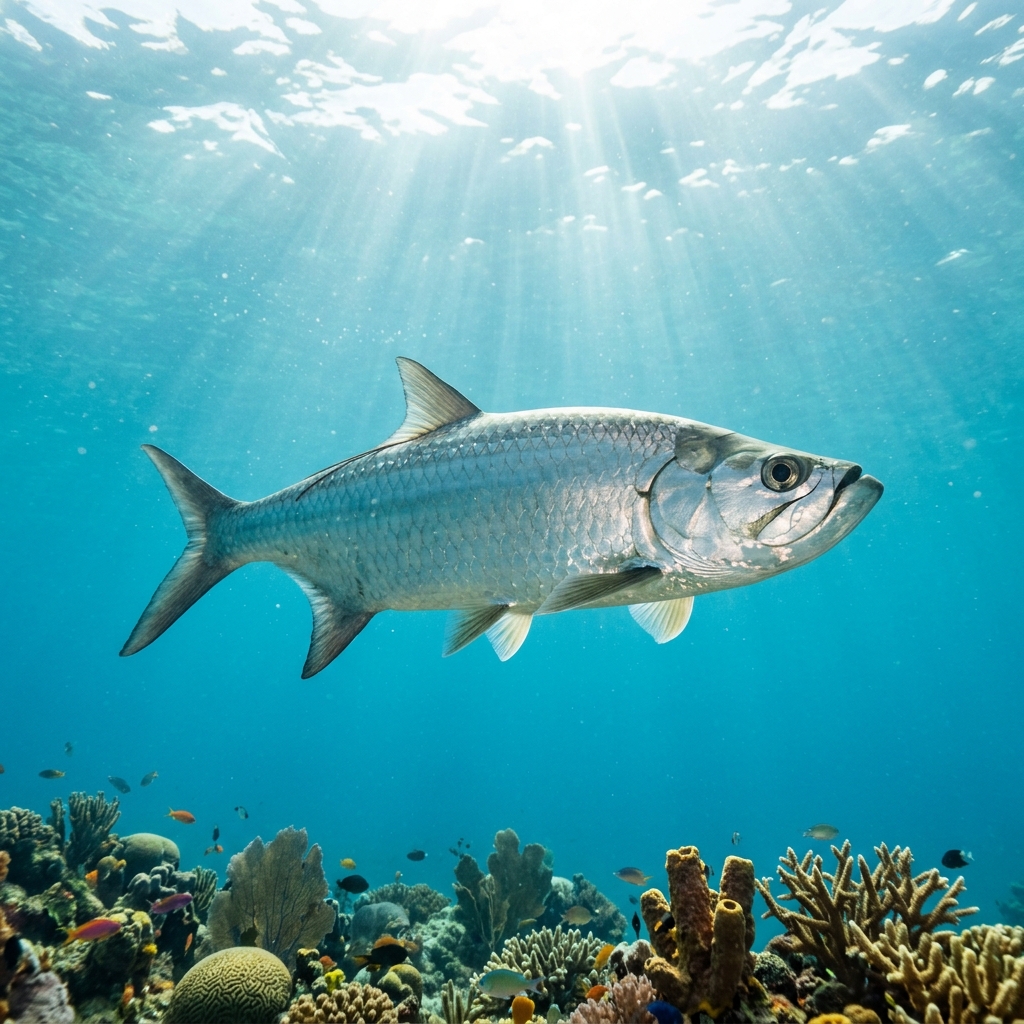
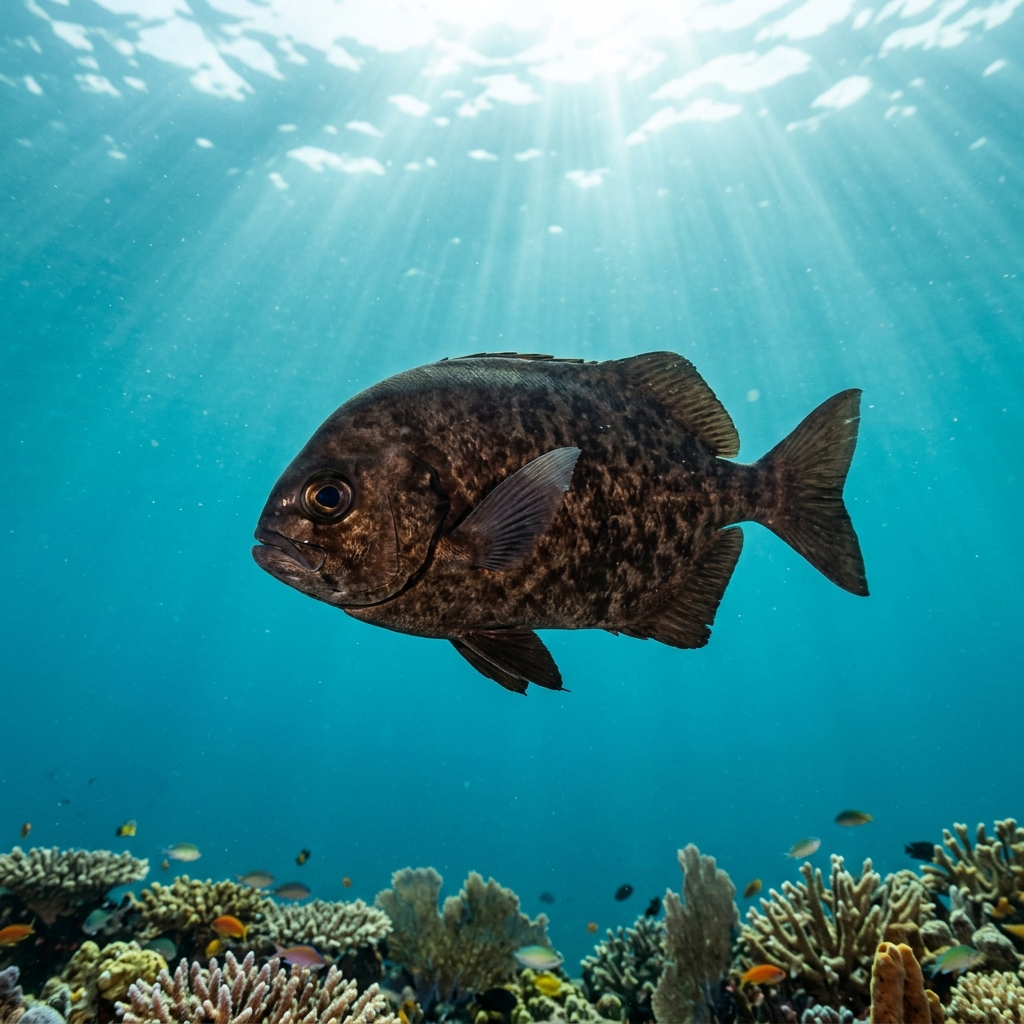
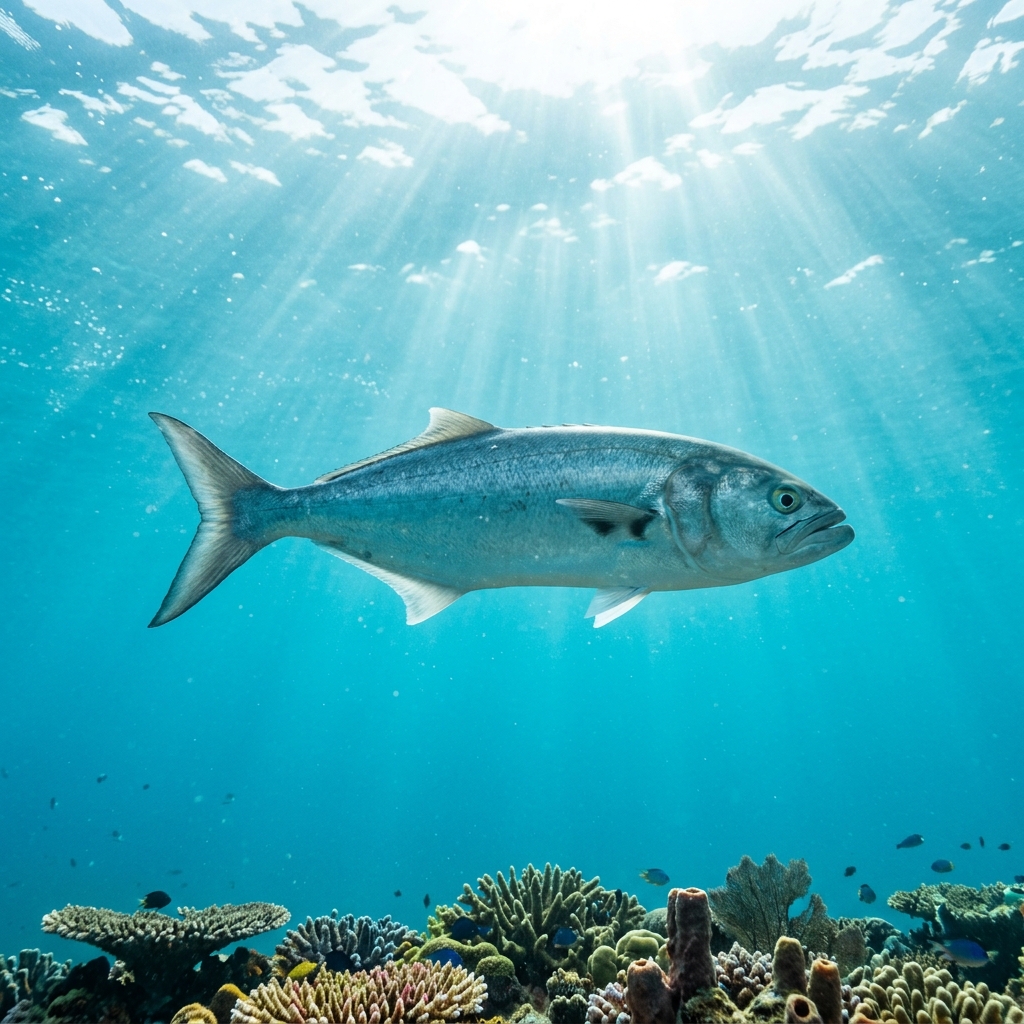
Reef neighbours a diver could mistake it for. Use the identification notes above to tell them apart.
Bali in Indonesia is by far the most reliable place to log this species, with sightings spread across sites there far outnumbering anywhere else. Smaller but consistent numbers turn up around Faial and Sao Jorge in the Azores and along South Australia, with occasional reports from New South Wales.
Mapping where Bumphead Sunfish is logged…
Bali in Indonesia is the standout location, with far more logged sightings than anywhere else. The Azores, around Faial and Sao Jorge, and South Australia also produce regular sightings.
There is no strong seasonal pattern in the sightings, and the species has been logged across a wide temperature range from 16.9 to 29.5C. It is effectively a year-round encounter at reliable sites like Bali.
Look for a large grey disc-shaped body with no tail fin, just a stubby rudder at the back, and a bony bump on the forehead that grows more obvious with age. They tend to hover motionless rather than swim actively, which helps separate them from faster open-water fish.
They typically reach around 231 cm, making them one of the largest bony fish divers will ever encounter on a reef or wall.
No, they are not considered dangerous. They are slow-moving and generally indifferent to divers, so encounters are calm rather than risky.
Site and sighting data is aggregated from diver logs, iNaturalist and GBIF. For taxonomy and conservation status:
Butterfish
1,423 sites