Heteroscarus acroptilus
Look for Rainbow Cale on cool-water reefs in New South Wales and Western Australia, 15 to 21C, year-round and usually uncommon.
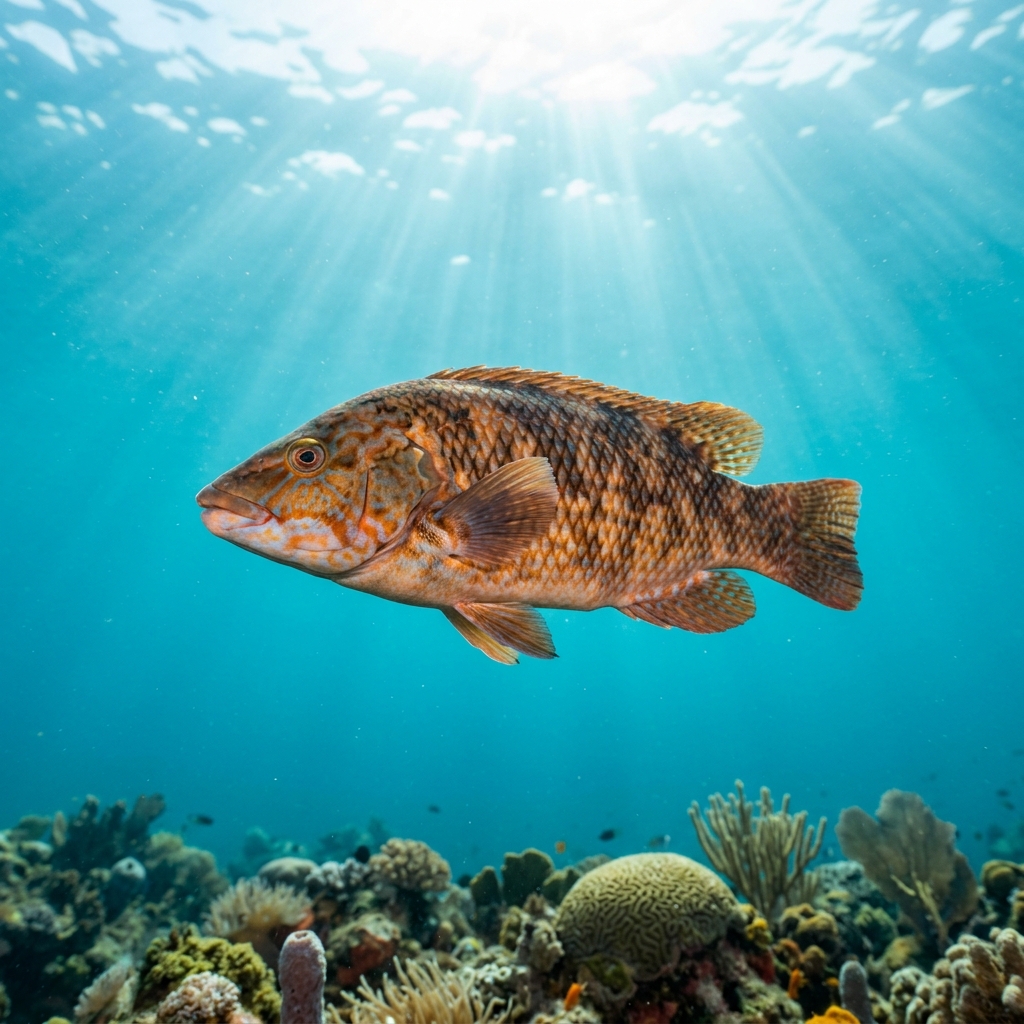
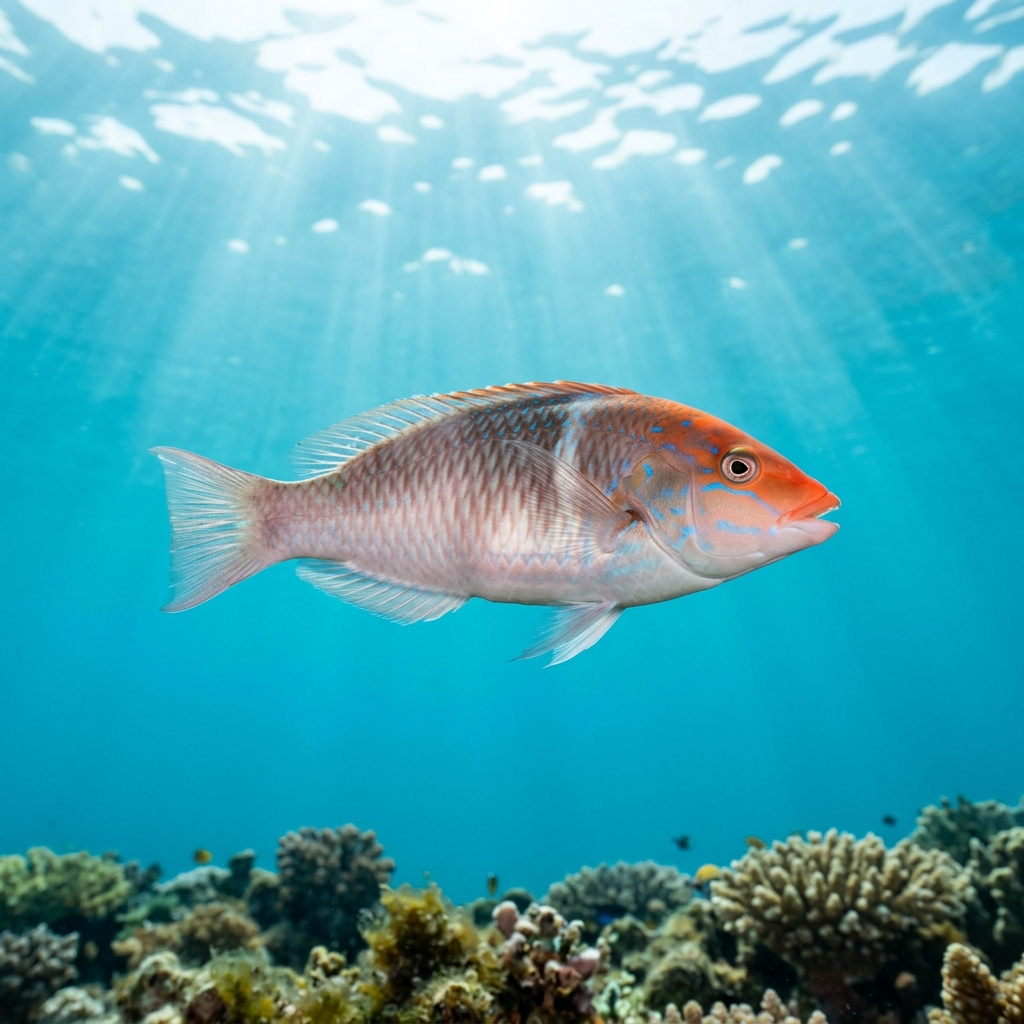
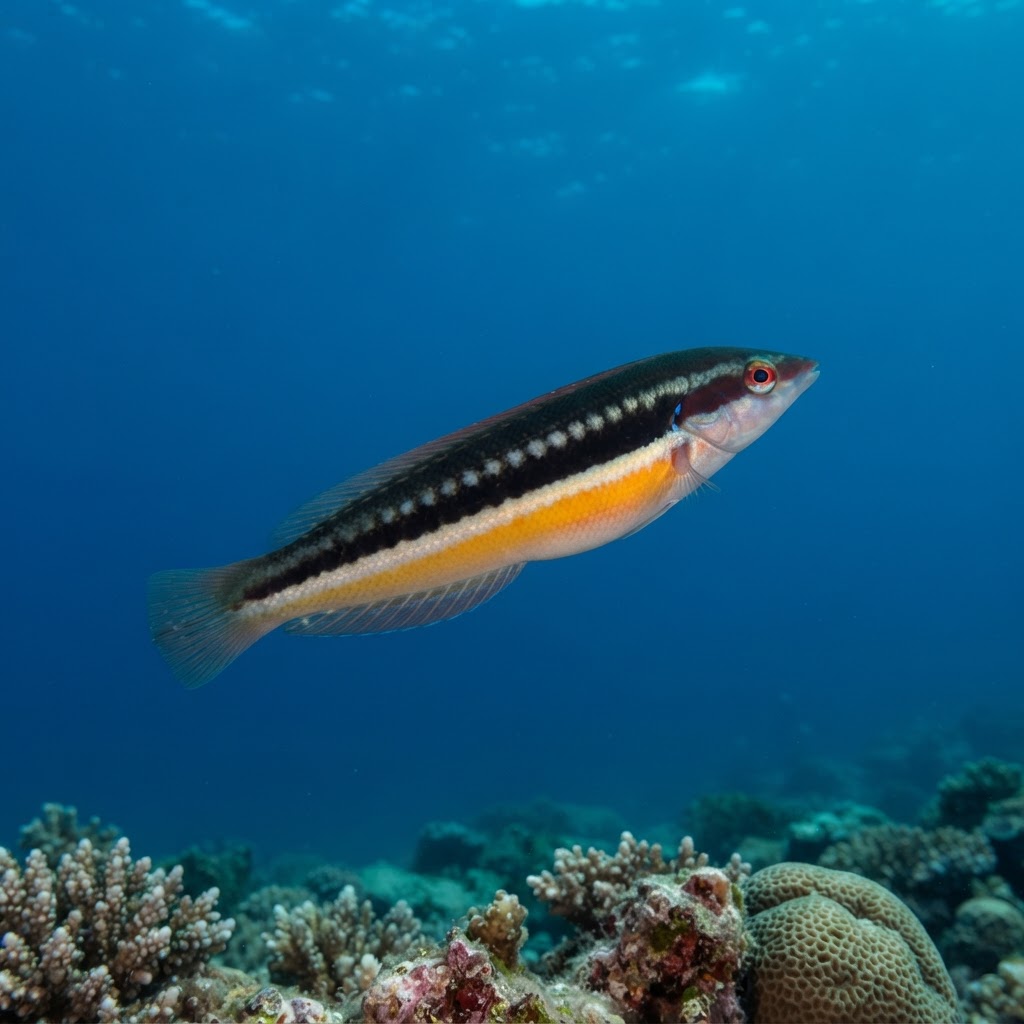
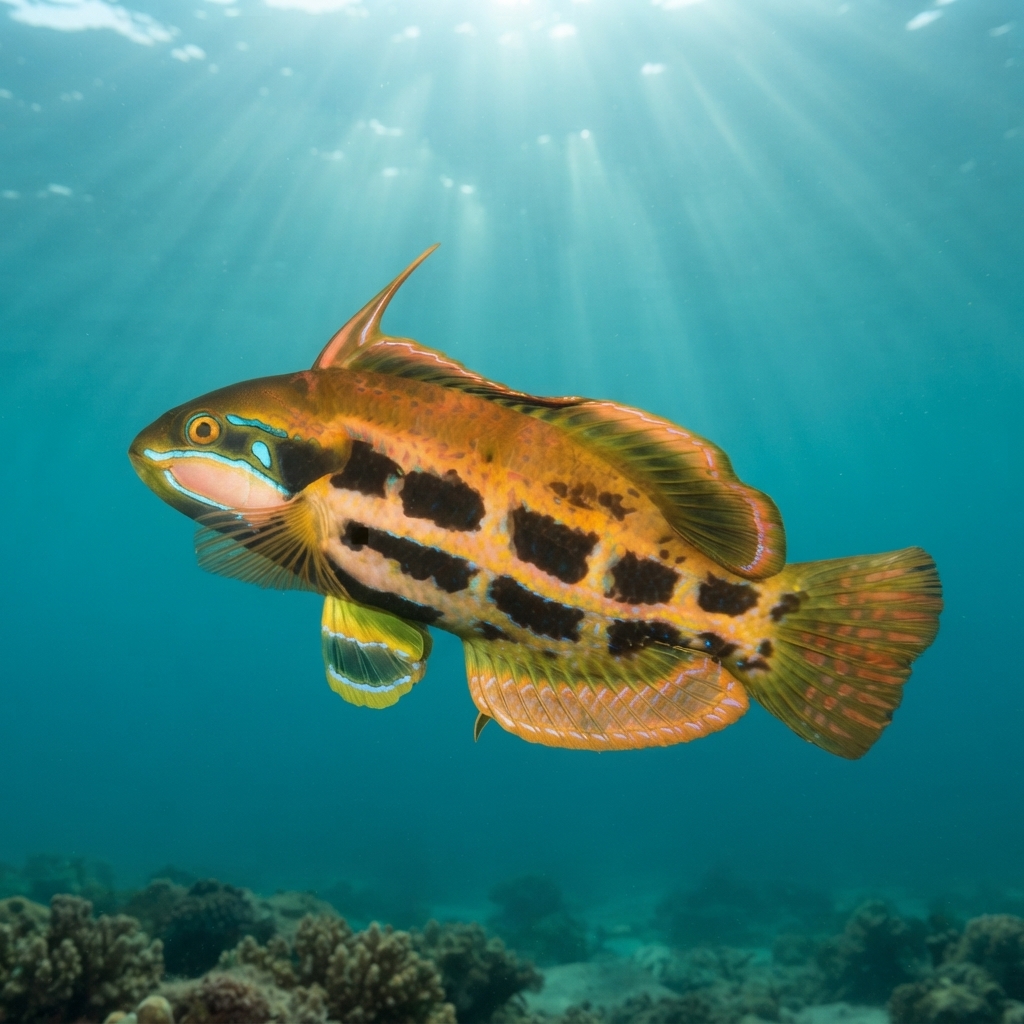
A slender, small wrasse topping out around 16 cm, easy to overlook against weedy rock reef because its mottled green, brown and orange patterning breaks up its outline. Look for a long, low dorsal fin running most of the body length and a pointed snout it uses to pick at algae and encrusting growth. It swims with a low, hovering motion close to the substrate rather than darting in open water.
Divers most often find Rainbow Cale grazing low over rocky reef and weed beds, picking at algae and small invertebrates rather than schooling or patrolling open water. It tends to stay close to cover and can be shy, easing off into crevices or kelp if approached too fast, so a slow, low approach gives the best look. Most logs describe it as uncommon rather than abundant, so it rewards a patient scan of ledges and weedy patches rather than a quick swim-by.
As a labrid, Rainbow Cale likely shares the family's habit of shifting diet and colour pattern with age and reef position, using its beak-like teeth to graze algae and small invertebrates off rock surfaces rather than hunting in open water.
Sightings show no clear seasonal pattern, and the species sits comfortably in a 15.2 to 20.8C range typical of southern Australian temperate reefs year-round, so there is no need to time a trip around a season.
Rainbow Cale is a temperate reef specialist logged almost entirely in Australian waters, with the strongest showing by far in New South Wales. Western Australia is the next most reliable region, followed by South Australia and, less often, Victoria, so divers working the cooler rocky reefs down Australia's southern coastline have the best odds.
Mapping where Rainbow Cale is logged…
It is most reliably logged on temperate rocky reefs in New South Wales, with further sightings in Western Australia, South Australia and Victoria. All confirmed records so far come from Australian coastal dive and snorkel sites.
There is no strong seasonal pattern in the sighting data, and it occupies a cool 15 to 21C range year-round, so it can turn up on southern Australian reefs at any time of year.
Look for a small, slender wrasse around 16 cm with mottled green, brown and orange colouring and a long low dorsal fin. It hugs the reef and weed line closely rather than swimming in open water, which helps separate it from more conspicuous reef fish.
They stay small, typically reaching around 16 cm, making them one of the more modestly sized wrasses divers encounter on temperate reefs.
No, they pose no threat to divers. They are shy grazers that tend to retreat into cover rather than approach or interact with people.
Their conservation status has not been formally assessed, so there is currently no listing indicating they are threatened.
Site and sighting data is aggregated from diver logs, iNaturalist and GBIF. For taxonomy and conservation status:
Bird Wrasses
3,632 sites