Scyllarus arctus
Look for its flattened, shovel-like body wedged in crevices along the Lisbon Coast and Catalonia in 14-20C water, year-round.
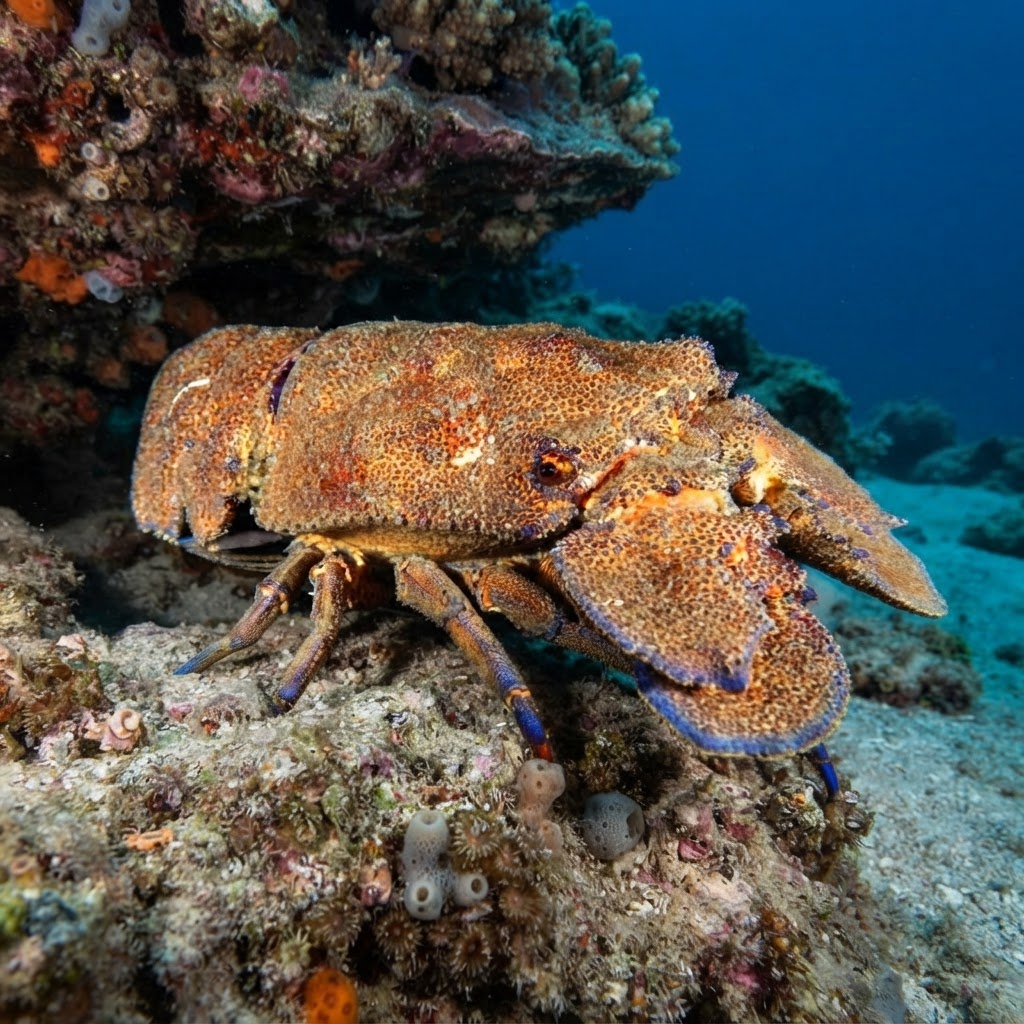
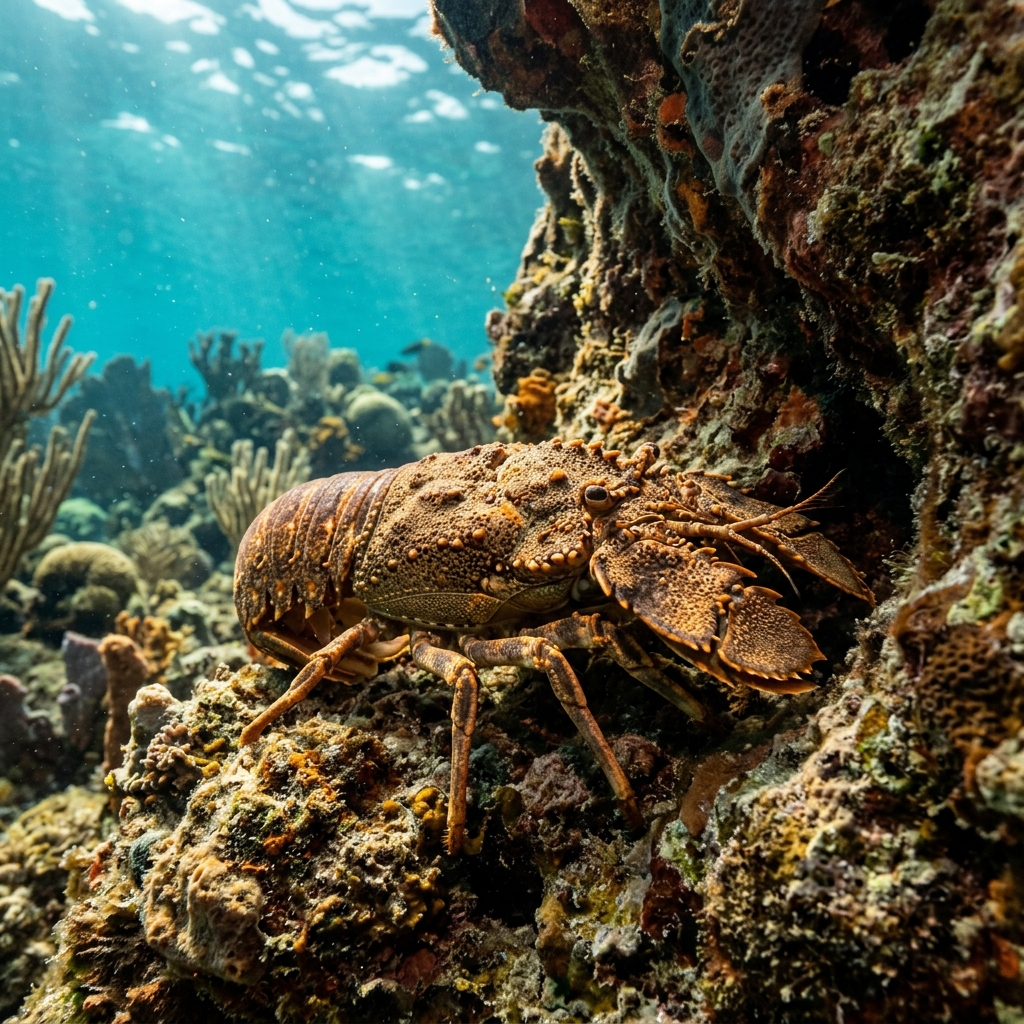
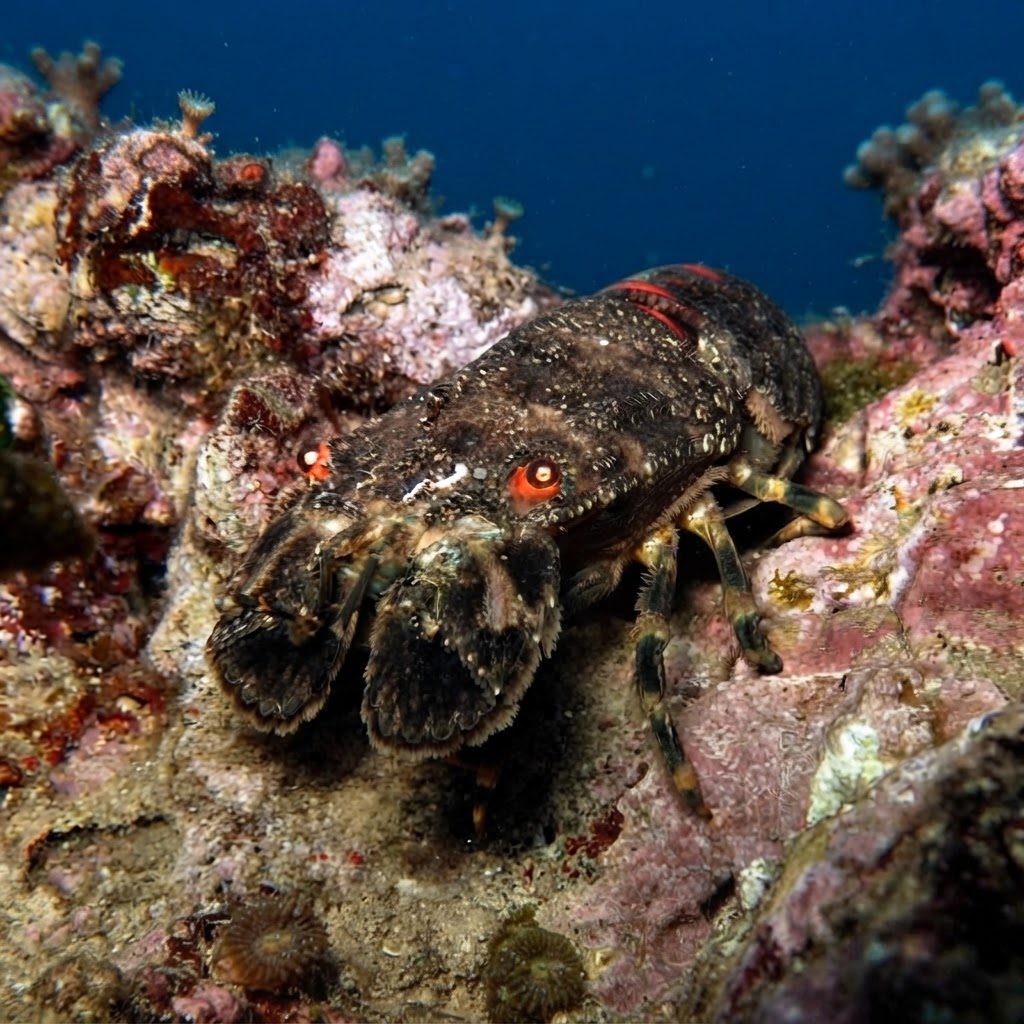
Recognisable by a flattened, shield-shaped body with no long antennae, giving it a shovel-like outline unlike any true lobster. It grows to around 11 cm, is mottled brown to reddish across the carapace, and sits low and wedged into rock crevices rather than out in the open. The broad, plate-like antennal flaps over the head are the single best tell if you get a clear look.
Divers usually find it tucked into a crevice or under a rocky ledge by day, staying still and low against the substrate rather than roaming in the open. It is not shy so much as inconspicuous, relying on its flattened shape and dull colouring to blend into the rock rather than fleeing when approached. Most sightings come from a careful look under overhangs on rocky and mixed reef rather than from open swimming encounters.
Those broad flaps on its head are modified antennae, flattened into digging and defensive tools instead of the long whip-like feelers you see on spiny lobsters.
No clear seasonal pattern shows in the data, so treat it as a year-round find on these Atlantic and Mediterranean coasts, where it sits comfortably in the observed 14 to 20C range.
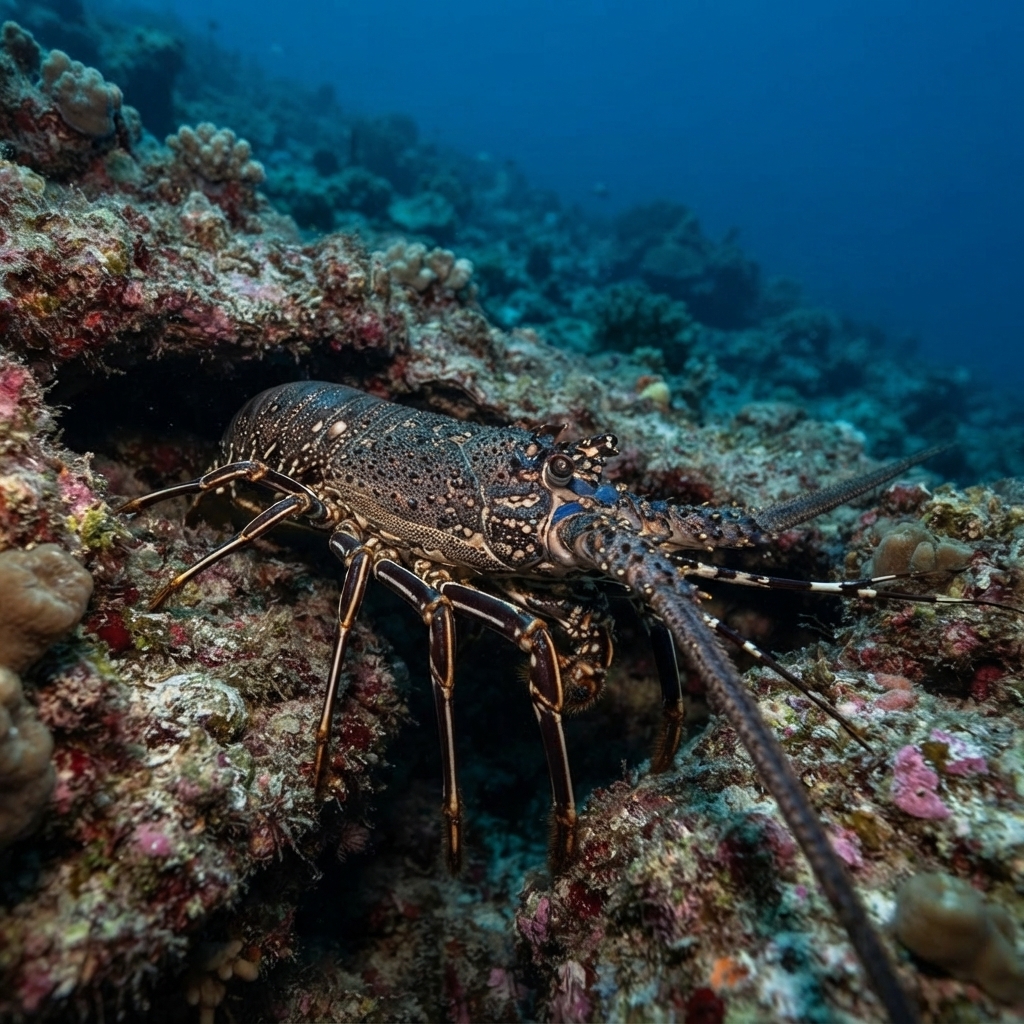
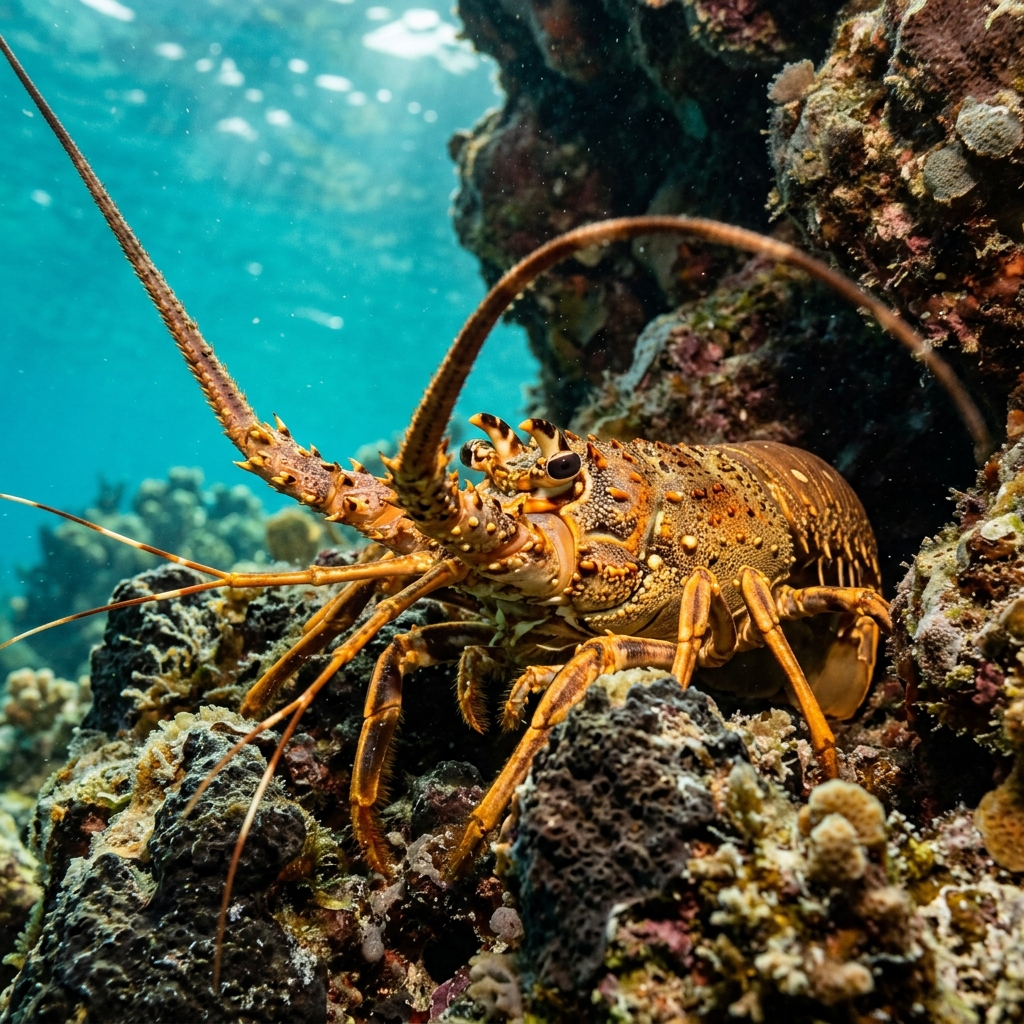
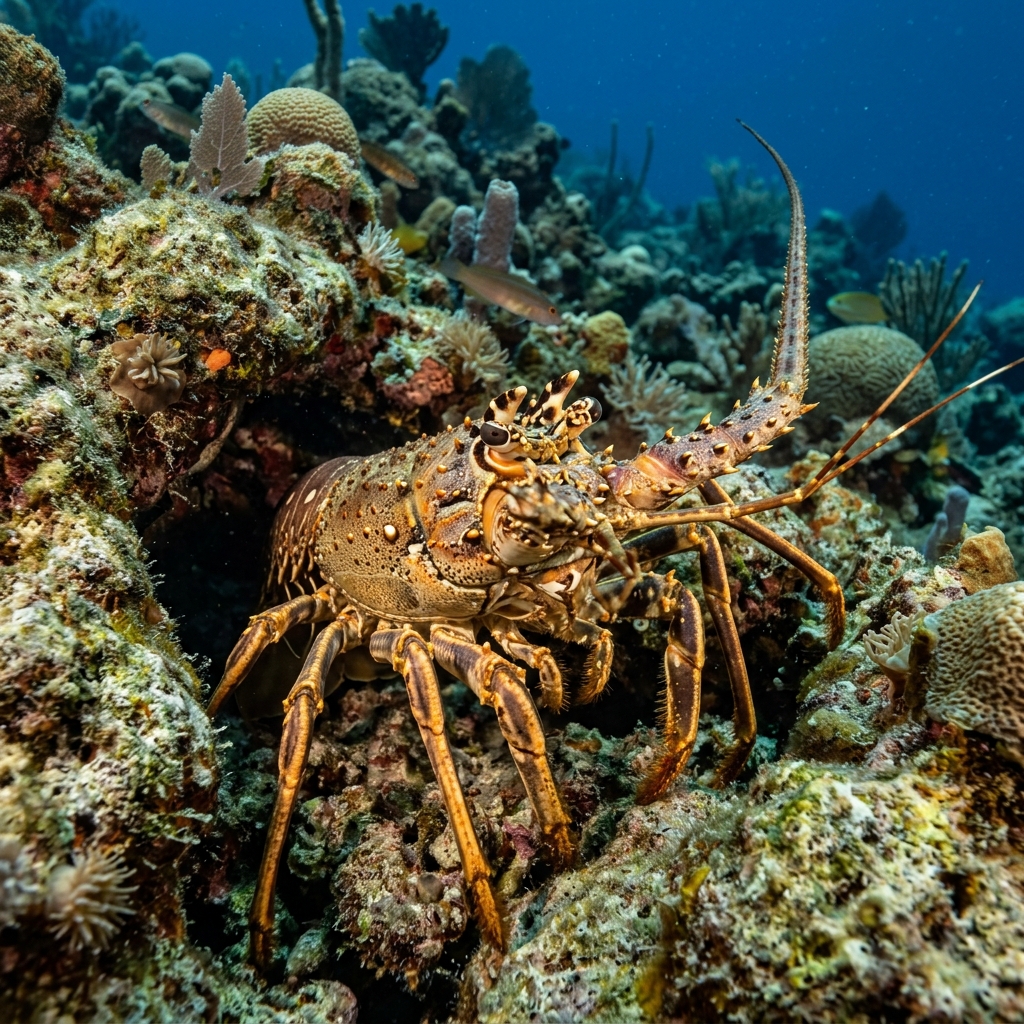
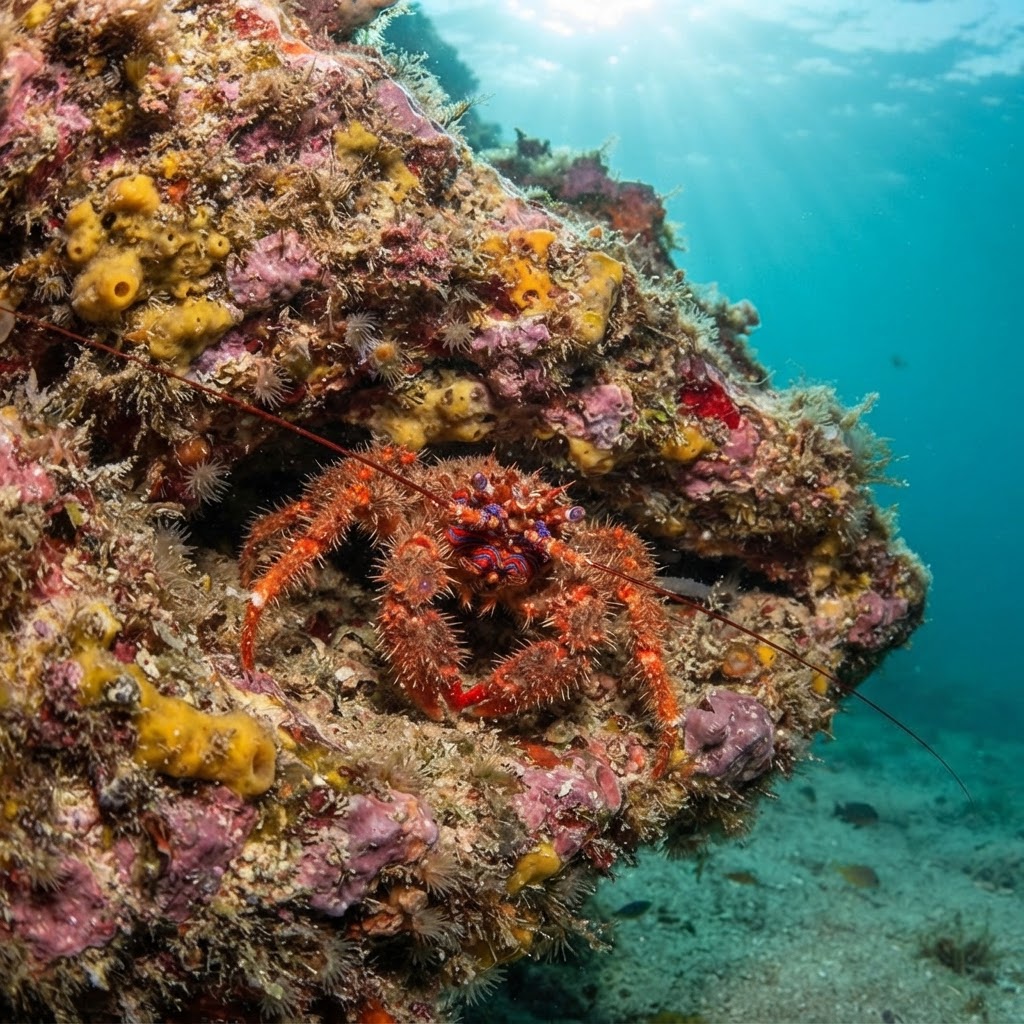
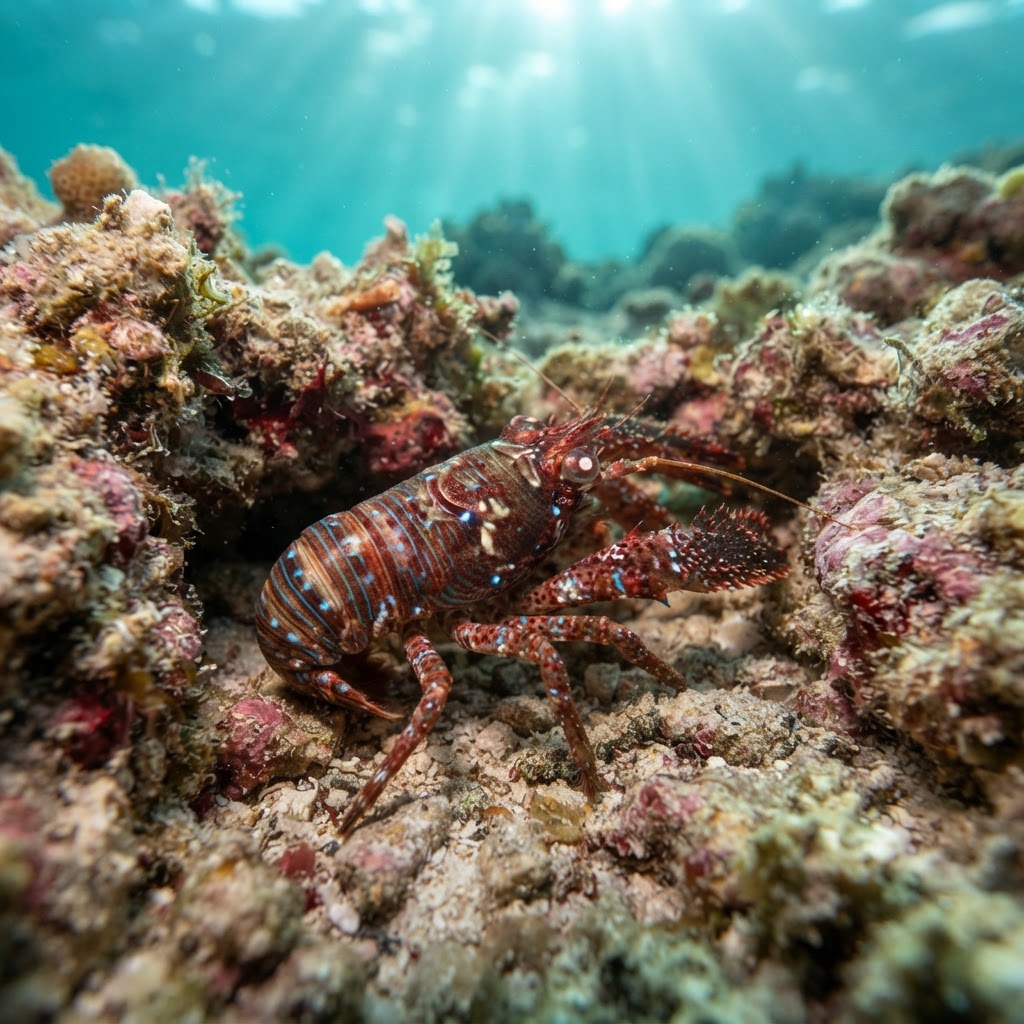
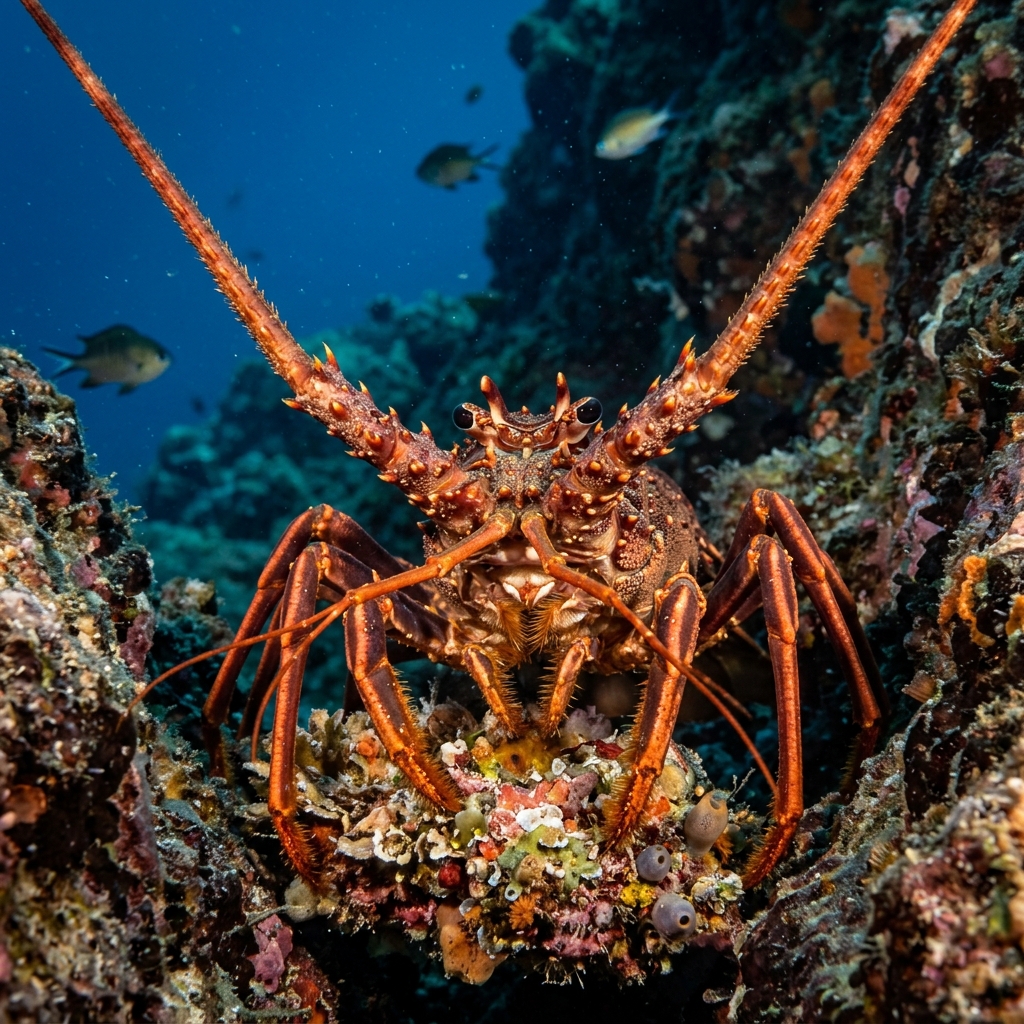
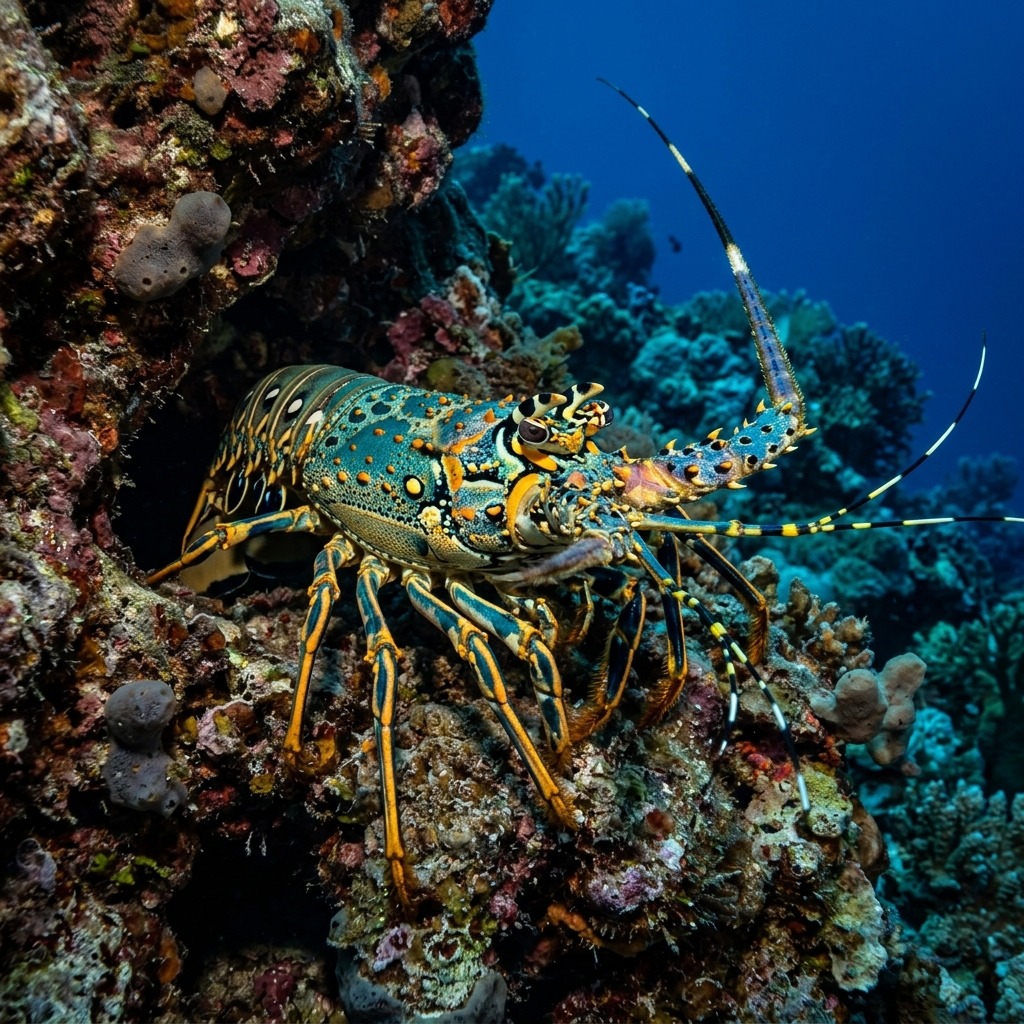
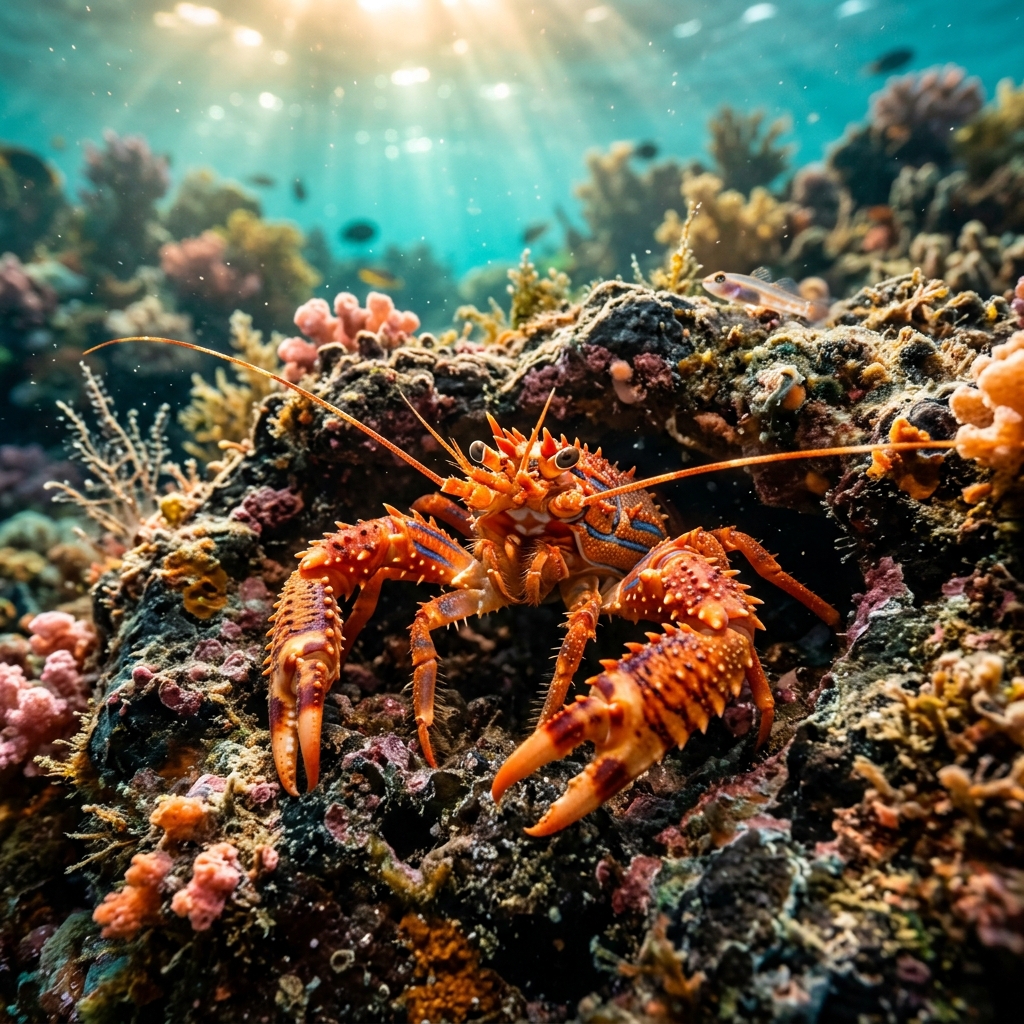
Reef neighbours a diver could mistake it for. Use the identification notes above to tell them apart.
Most reliably logged along the Lisbon Coast in Portugal, with strong numbers also in Catalonia and the Cantabrian Coast in Spain and the French Riviera and Provence in France. Portugal and Spain between them account for most sightings, with further records from Croatia's Kvarner region and the Azores.
Mapping where Slipper Lobster is logged…
The strongest sightings come from Portugal's Lisbon Coast and Spain's Catalonia and Cantabrian Coast, with further records from the French Riviera and Provence and Croatia's Kvarner region.
There is no strong seasonal pattern in the data, so it is considered a year-round sighting in the 14 to 20C water it favours along Atlantic and Mediterranean coasts.
Look for a flattened, shield-shaped body around 11 cm long with no long antennae, mottled brown colouring, and broad flat plates over the head instead of feelers. It sits low in crevices rather than swimming in open water.
They reach around 11 cm in length, making them a small, easy-to-overlook find tucked into rocky crevices.
No, they pose no danger to divers. They are slow-moving, crevice-dwelling animals with no venom or aggressive defence beyond staying hidden.
Their antennae are flattened into broad plates rather than the long whip-like feelers seen on spiny lobsters, giving them a shovel-shaped head used for digging and shielding themselves in crevices.
Site and sighting data is aggregated from diver logs, iNaturalist and GBIF. For taxonomy and conservation status:
Galatheidae spp.
Caribbean Spiny Lobster
2,209 sites