Scyllarides latus
Flattened, armour-plated and easy to miss under a Balearic Islands ledge at 16-22°C: here's how to spot it and where it's most reliably logged.
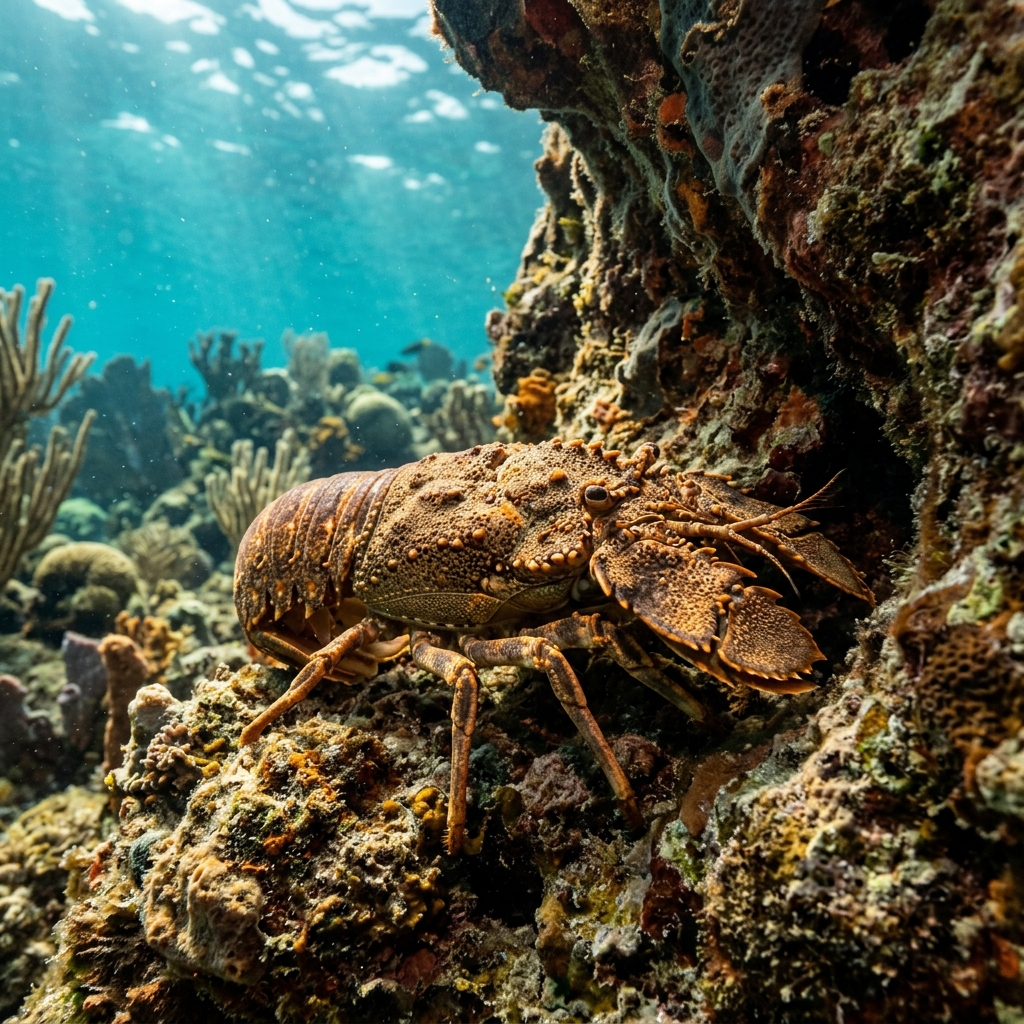
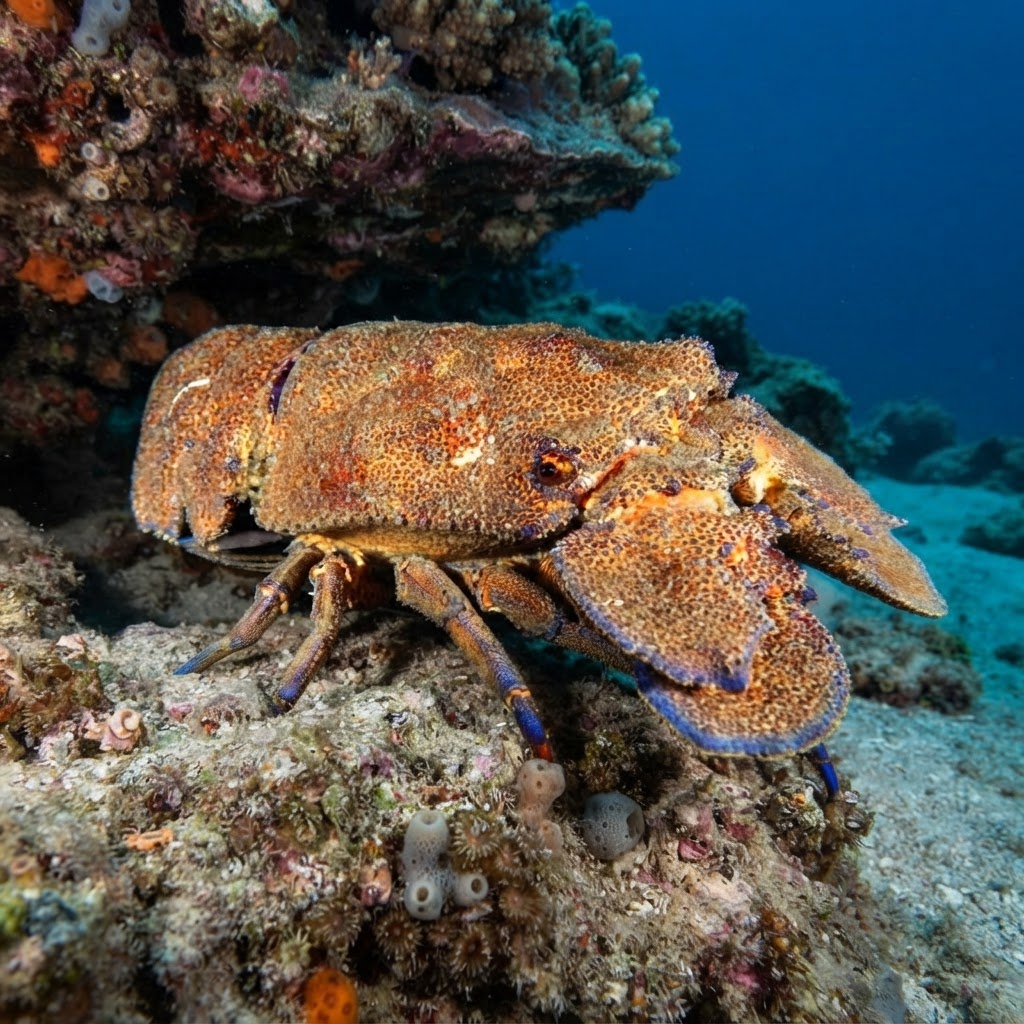
Flattened, shield-shaped body with no visible claws and short antennae reduced to broad flattened plates over the eyes, unlike any clawed lobster. Colour is a mottled brown to purplish-grey that blends into rock and rubble, growing to around 31 cm. Look for it tucked tight under ledges or in crevices during the day, with only the edge of that armoured, plate-like carapace showing.
Expect it wedged motionless under an overhang or deep in a crevice by day, often with just the rear of its shell visible, since it's a nocturnal forager that hides up during daylight hours. It rarely bolts when a torch passes over it, relying on staying still and blending into the rock rather than fleeing, so a slow scan of ledges and swim-throughs is how most divers actually find one.
It feeds mainly on molluscs at night, using specialised mouthparts to prise open snail and small clam shells that most other reef predators can't crack open.
Sightings are logged year-round with no strong seasonal pattern, consistent with a niche of 16 to 22.6°C that covers most of the diveable season in these regions. Any month you're diving rocky reef in the Balearics, Canaries or Sardinia is worth a careful look under the ledges.
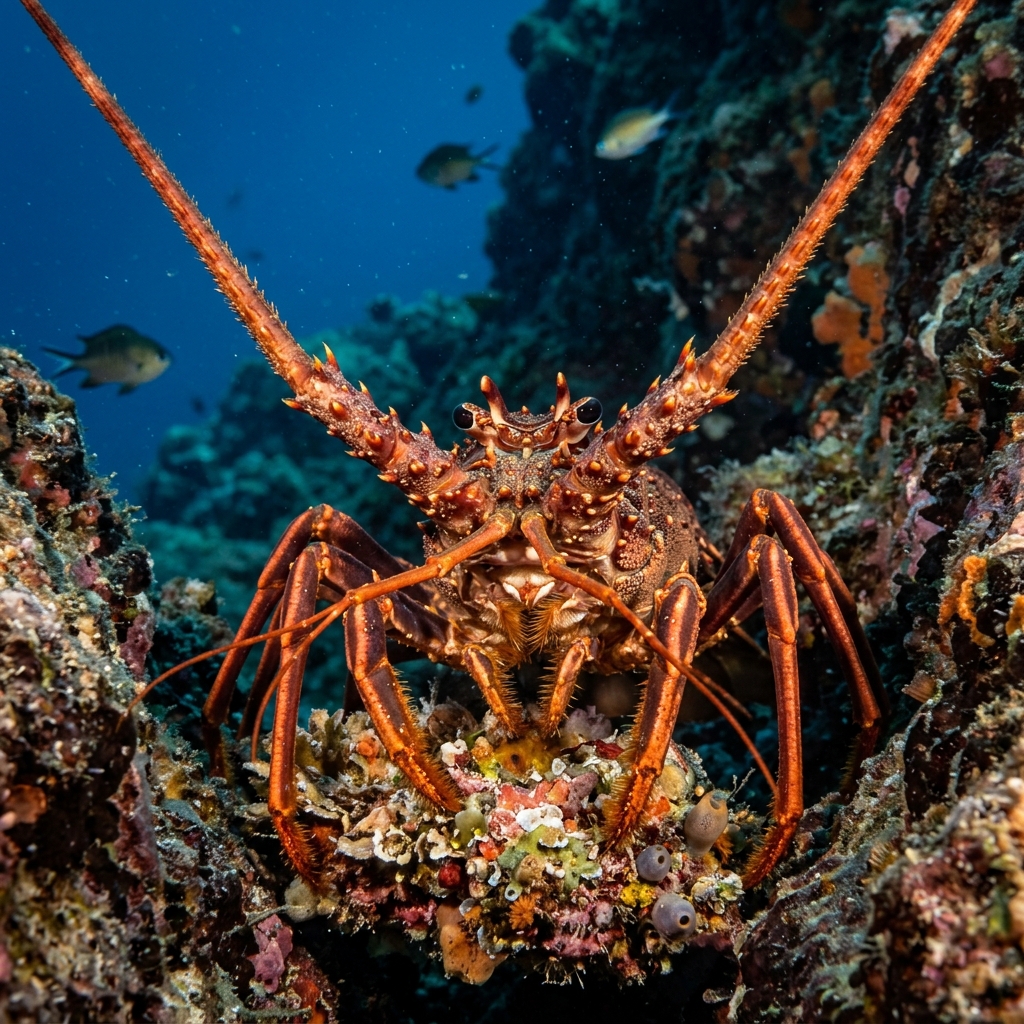
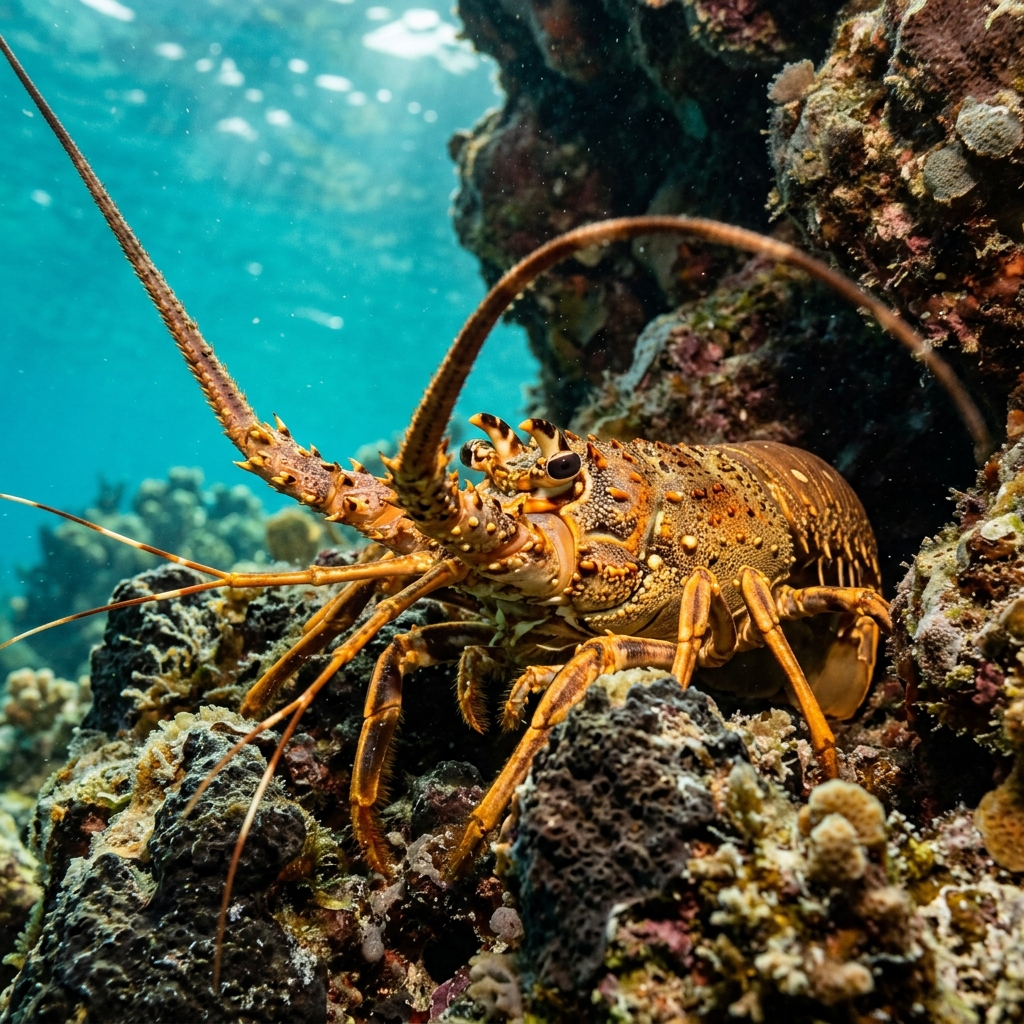
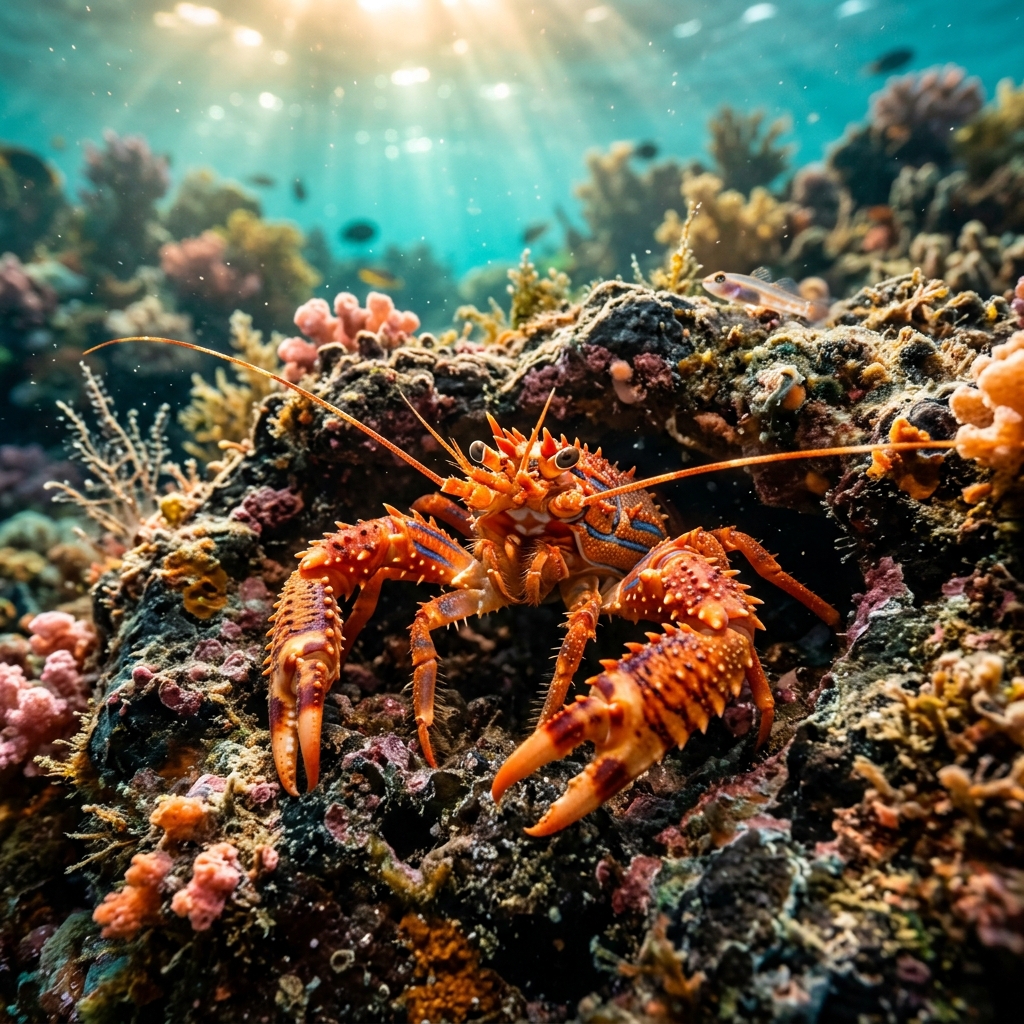
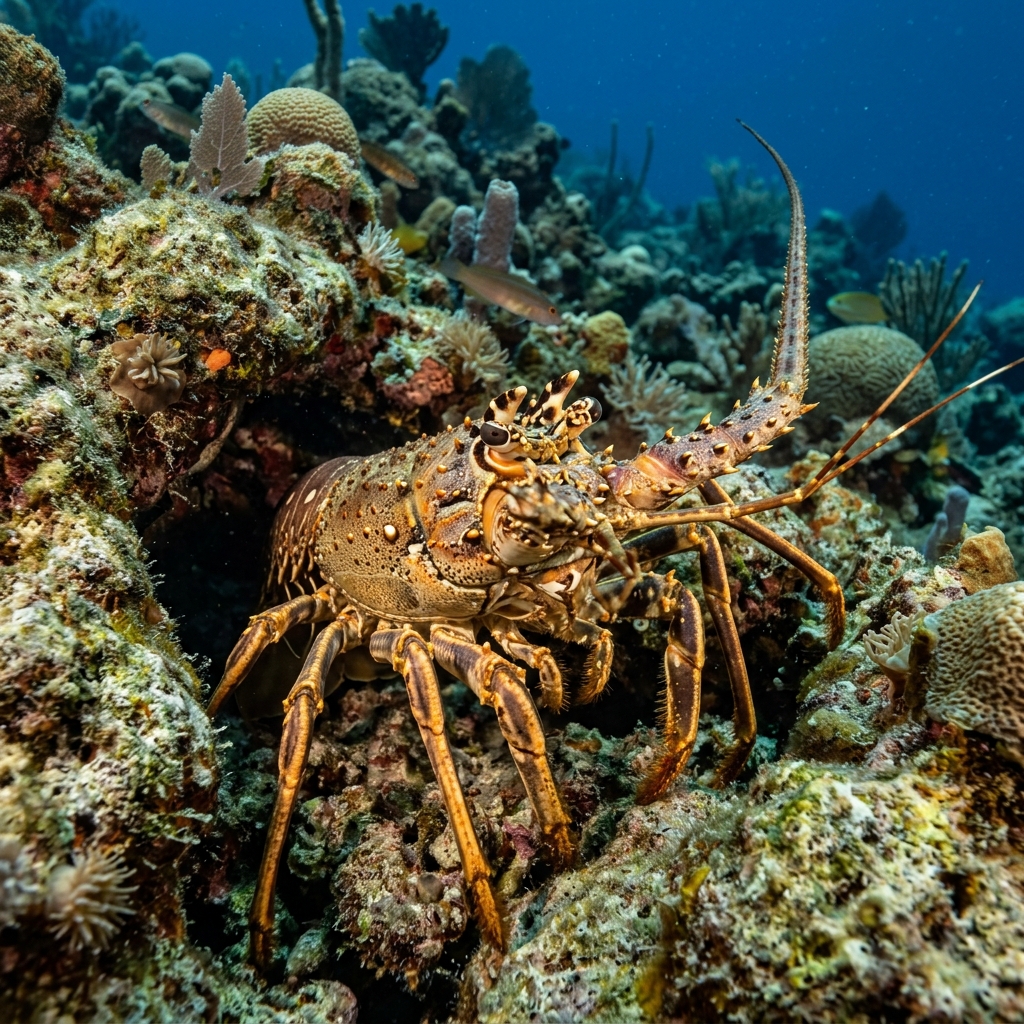
Reef neighbours a diver could mistake it for. Use the identification notes above to tell them apart.
Most reliably logged around Spain, especially the Balearic Islands and Valencia, and in strong numbers across the Canary Islands, particularly Lanzarote and El Hierro. Italy (Sardinia), Greece (Crete), Madeira and Malta's Gozo also produce steady sightings, so ledges and crevice-rich rocky reefs across the western and central Mediterranean plus the Macaronesian islands are the places to search.
Mapping where Mediterranean Slipper Lobster is logged…
Spain's Balearic Islands and Valencia region are the most consistent spots, alongside Lanzarote and El Hierro in the Canary Islands. Sardinia, Crete, Madeira and Gozo also turn up regular sightings on rocky, crevice-rich reef.
There's no clear seasonal pattern in sightings, so it's logged year-round. Its comfortable range of roughly 16 to 22.6°C spans most of the Mediterranean and Canary Islands dive season.
Look for a flattened, shield-like brown or purplish-grey body with no visible claws, tucked under a ledge with broad flattened plates covering the eye area instead of long antennae. It looks more like an armoured tile than a typical lobster.
They reach around 31 cm in length, making them one of the larger crustaceans you'll find wedged into a Mediterranean rock crevice.
It has no claws at all and uses flattened, plate-like antennae instead of the long feelers seen on spiny lobsters. It hunts snails and clams at night, cracking their shells with specialised mouthparts.
No, they pose no threat to divers. They have no claws or spines to worry about and simply sit still under ledges when approached.
Site and sighting data is aggregated from diver logs, iNaturalist and GBIF. For taxonomy and conservation status:
Caribbean Spiny Lobster
2,209 sites