Panulirus penicillatus
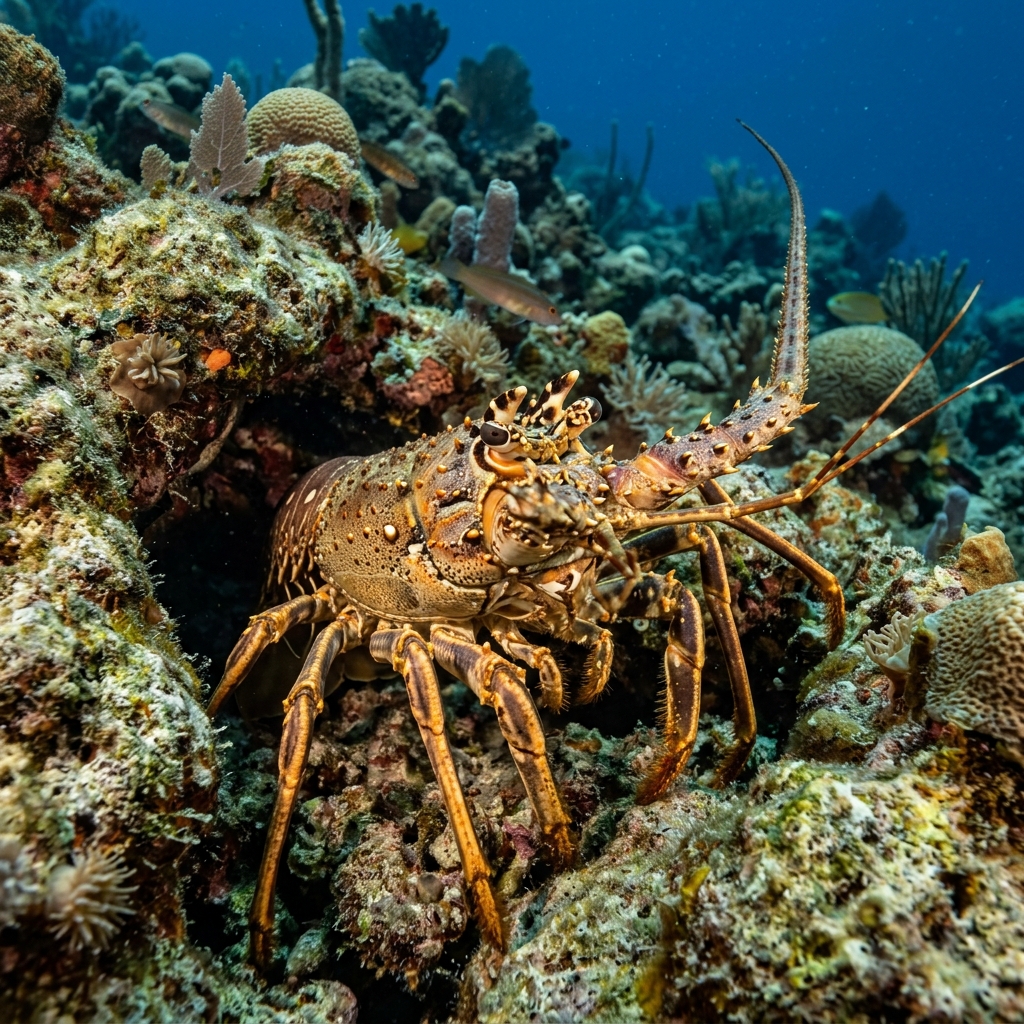
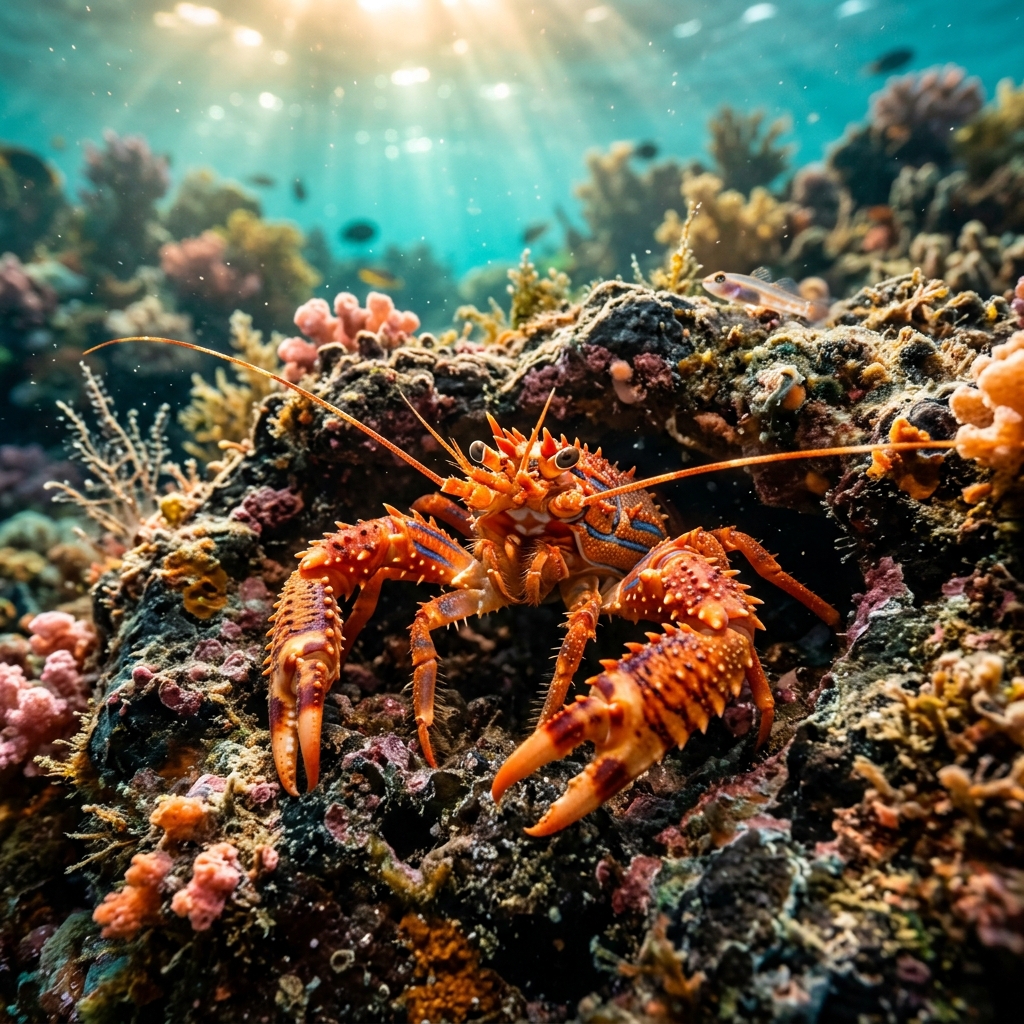
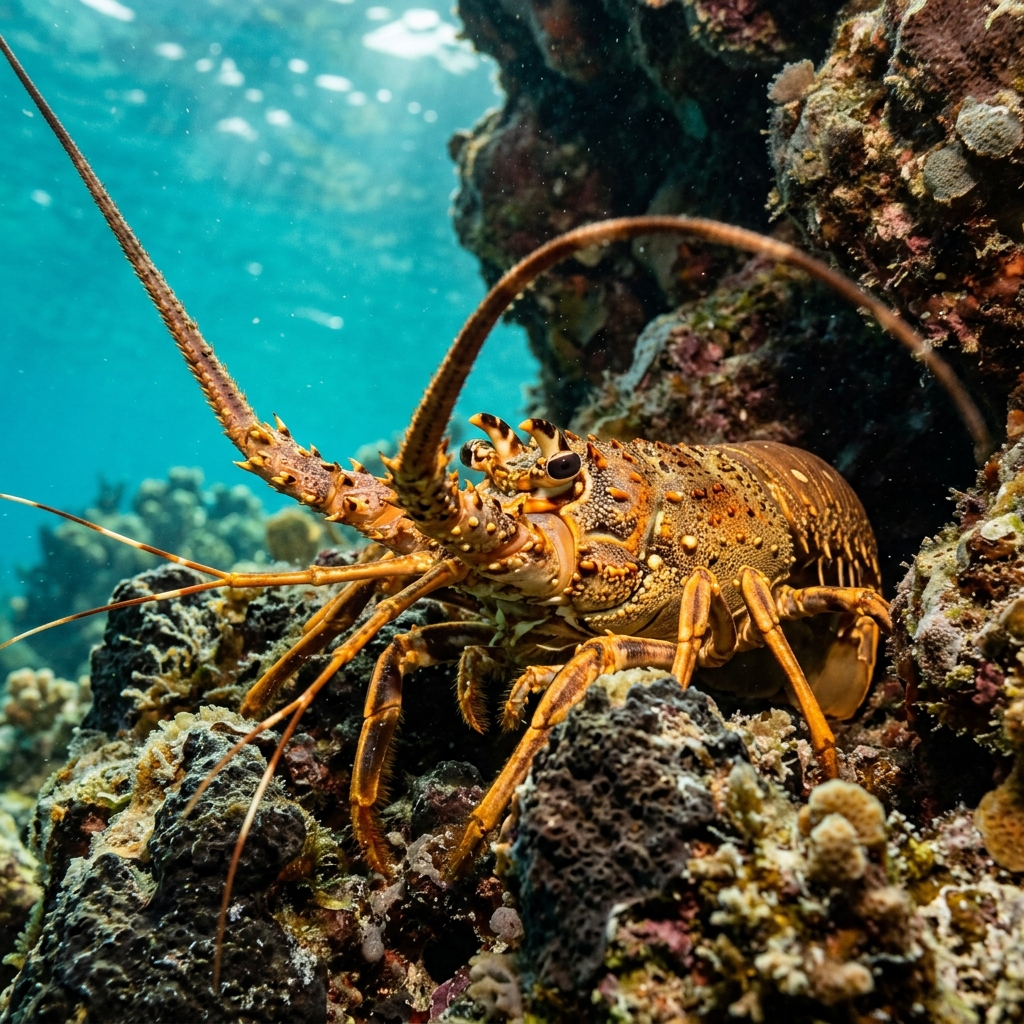
Long spiky antennae poking from a Galápagos crevice. Spiny lobster turns up year-round on reefs from Cocos Island to Hawaii in warm 22-28C water.
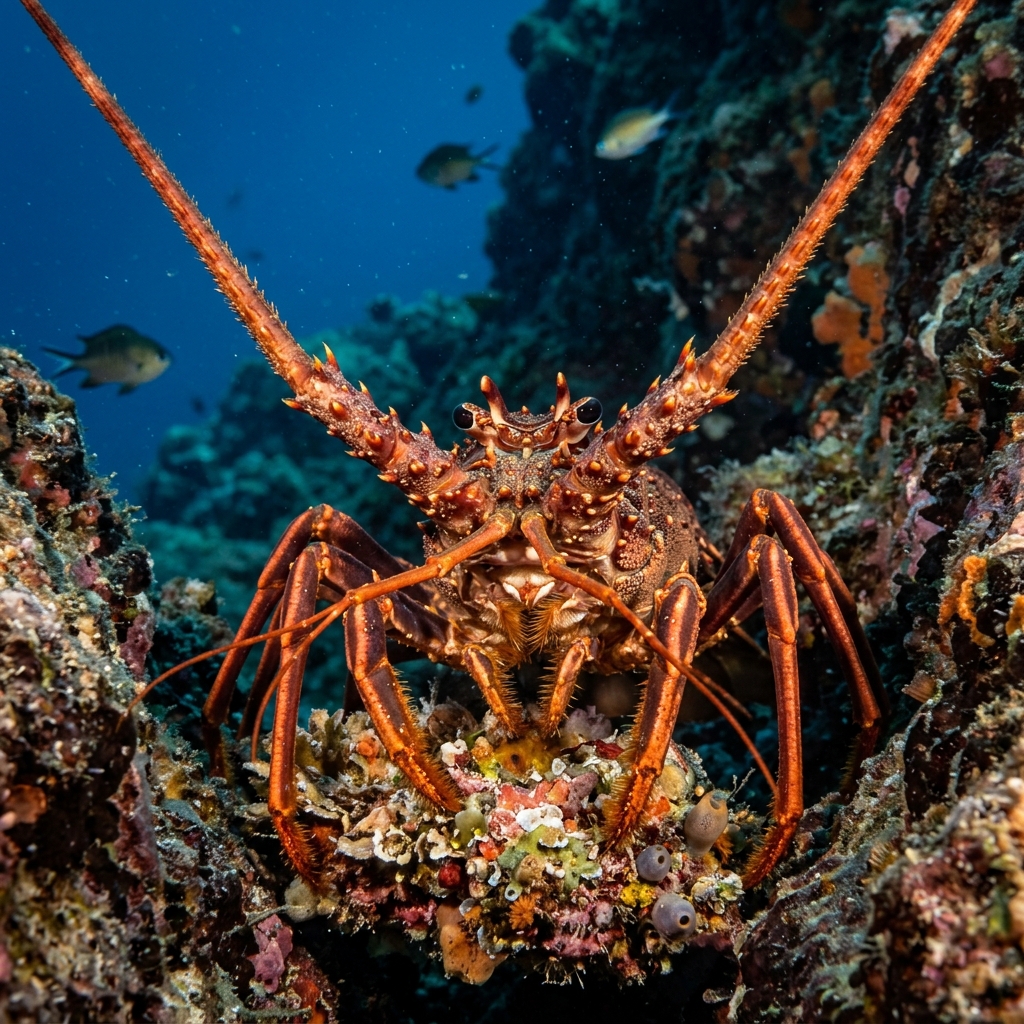
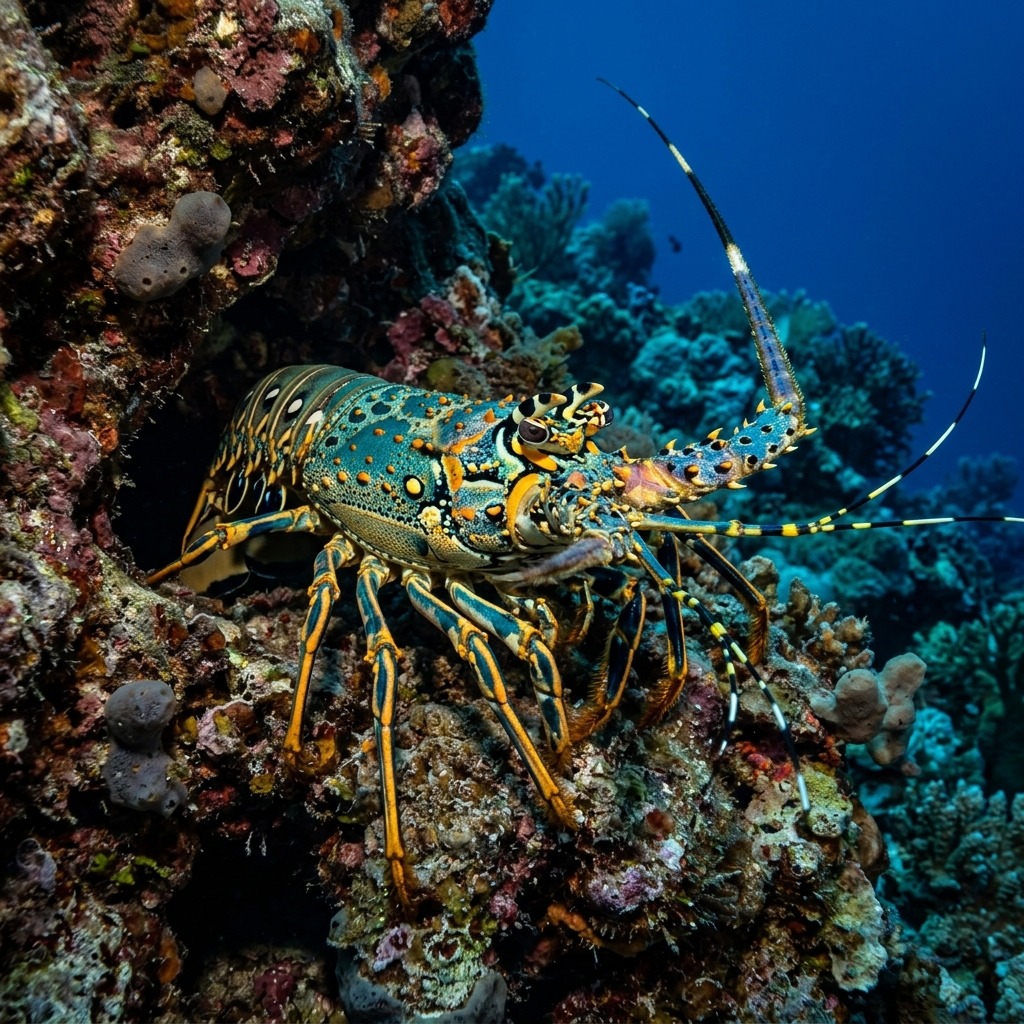
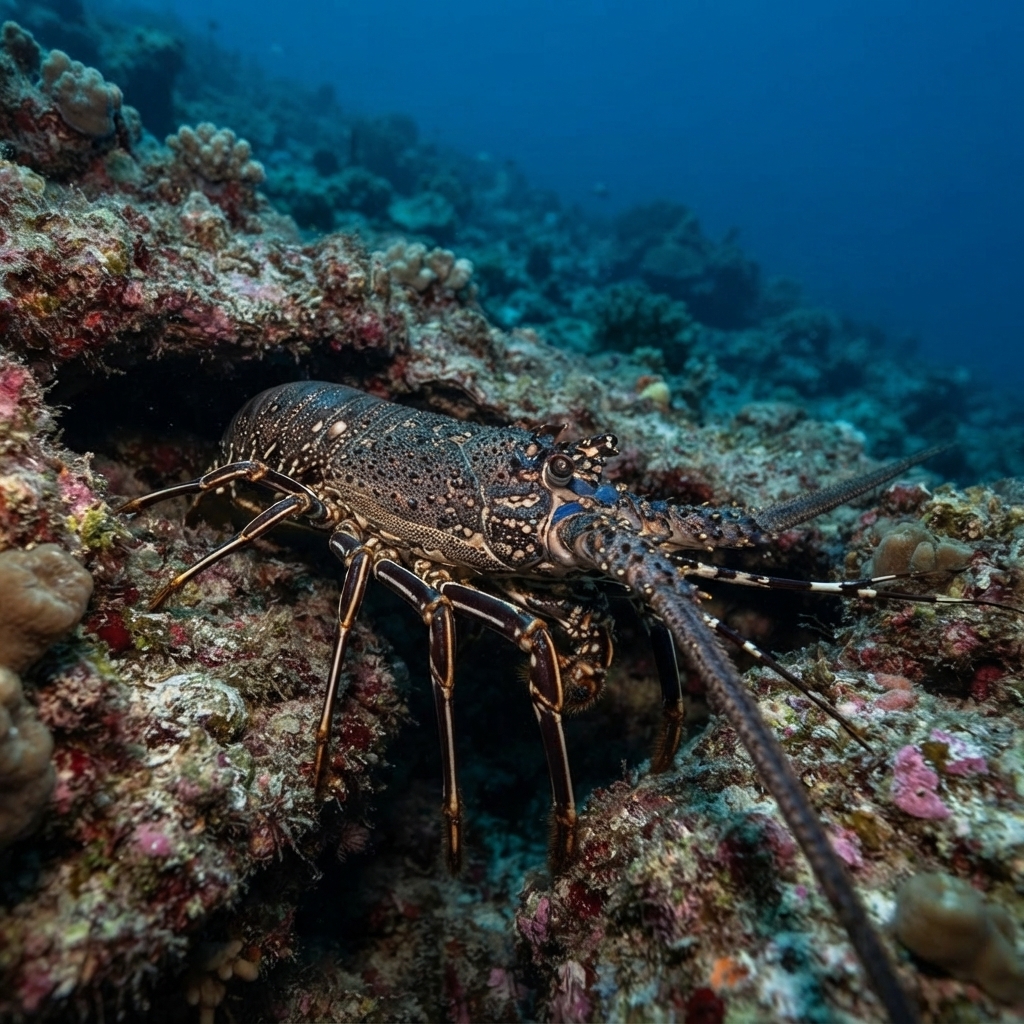
Look for a pair of thick, heavily spined antennae sweeping out of a crevice before you ever see the body. The carapace is brownish to reddish and covered in short spines, with no large claws, unlike true lobsters. It grows to around 28 cm and usually sits tucked into a hole or under a ledge with just the antennae and eyestalks showing by day.
Expect it wedged into a crevice or under a coral ledge during the day, antennae waving out as it senses the water around it. It is a nocturnal forager, coming out after dark to hunt over the reef and retreating to cover well before sunrise, so daytime sightings mean spotting the antennae rather than the whole animal. It generally ignores divers and simply withdraws deeper into its hole if you get too close.
It has no big claws to defend itself with, so its main trick is that spiny carapace and a powerful tail flick that can shoot it backwards out of reach in an instant.
Sightings show no clear seasonal pattern, and with a comfortable range of 22 to 28C it stays active on these reefs all year round. Plan around the destination's general dive season rather than a lobster-specific one.
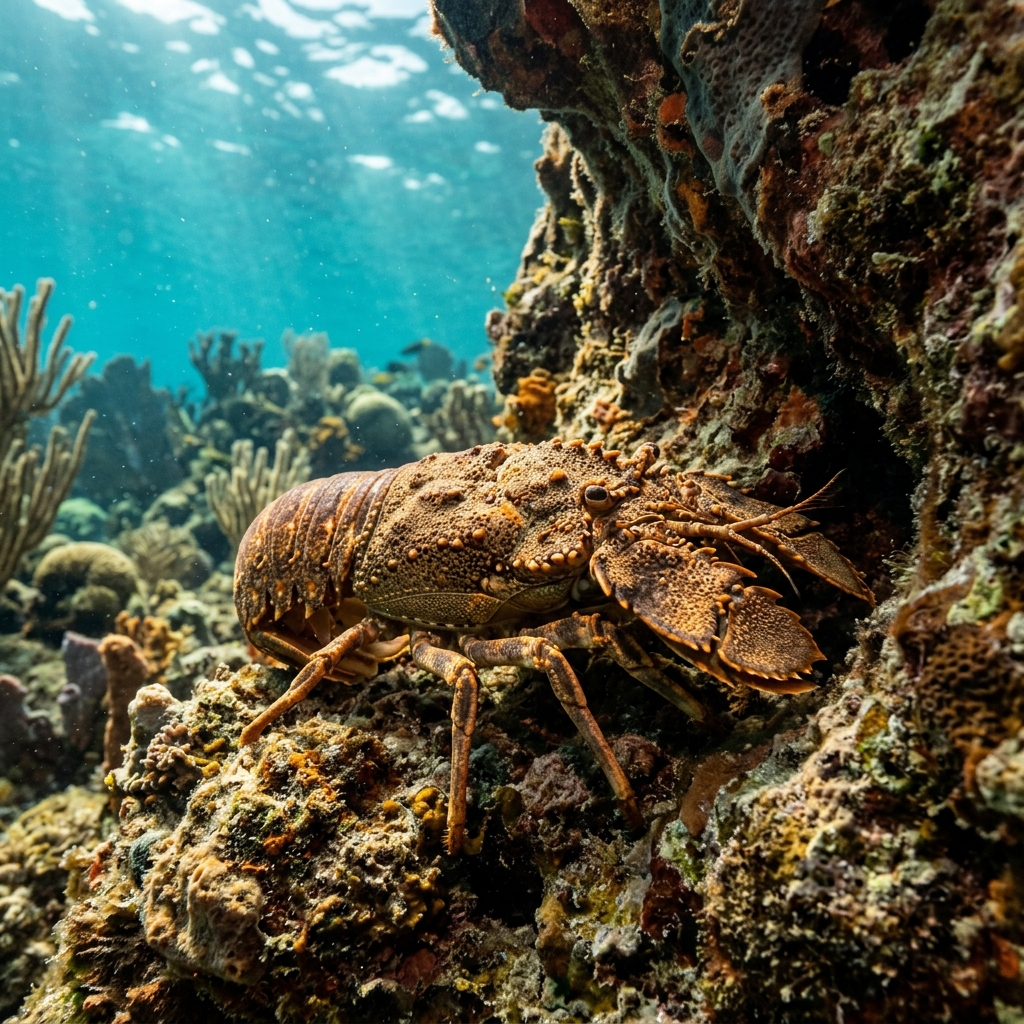
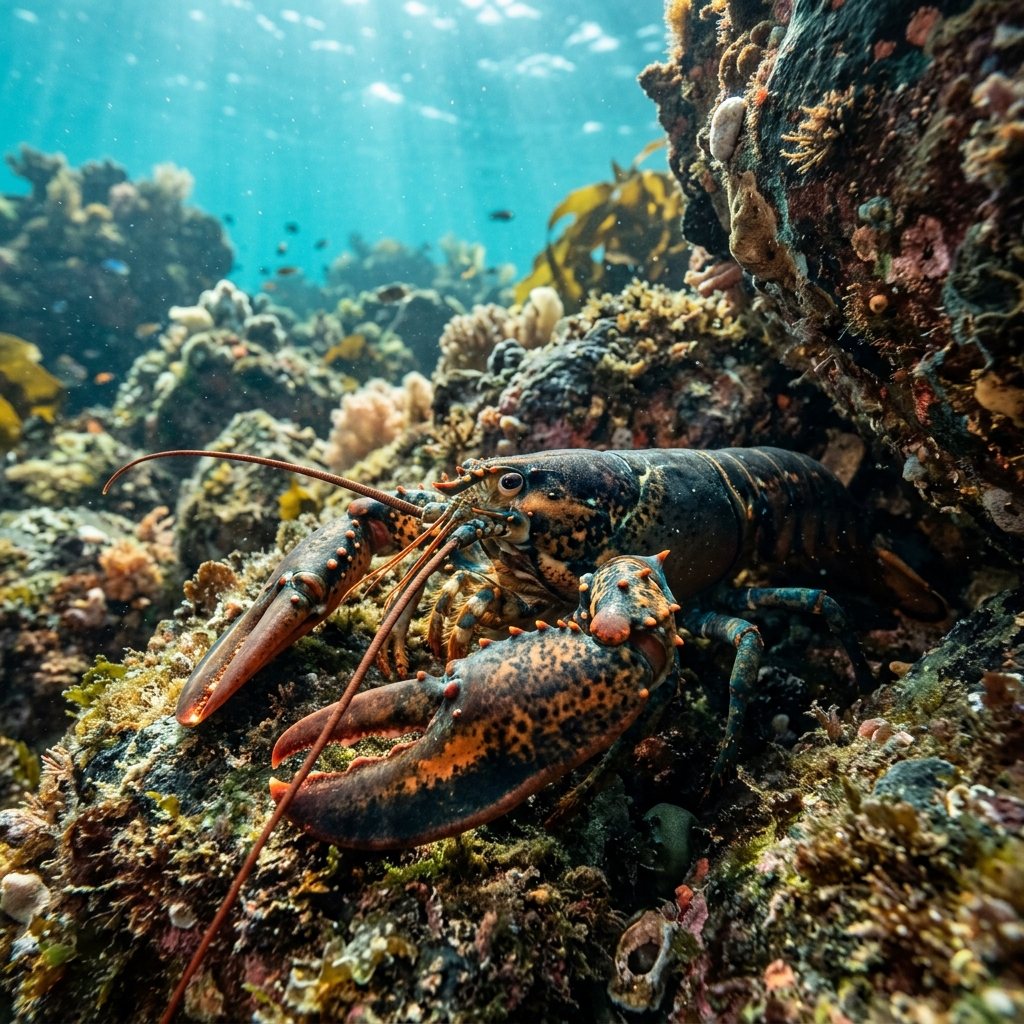
Reef neighbours a diver could mistake it for. Use the identification notes above to tell them apart.
Most reliably logged around the Galápagos Islands in Ecuador, with strong numbers also reported in Hawaii and at Cocos Island in Costa Rica. Divers also log it around Alofi in Niue, with smaller counts from Saint-Paul in Reunion and the Red Sea Riviera in Egypt.
Mapping where Spiny Lobster is logged…
The Galápagos Islands in Ecuador turn up the most sightings, with Hawaii and Cocos Island in Costa Rica also strong. Alofi in Niue and Reunion's Saint-Paul area produce sightings too.
There is no strong seasonal pattern in sightings, and it tolerates a wide 22 to 28C range, so it is a year-round find rather than a seasonal one.
Look for long, heavily spined antennae poking out from a reef crevice, attached to a spiny brown-red carapace with no large claws. Most of the time you will spot the antennae first, with the body tucked well back in a hole.
They typically reach around 28 cm in length, measured from the front of the carapace to the tip of the tail, not including the antennae.
No. They have no claws and simply retreat into their crevice if approached, so there is no real risk to divers who leave them alone.
They are strictly nocturnal foragers that hide by day and only emerge from their crevices after dark to hunt, relying on a powerful tail-flick escape rather than claws for defence.
Site and sighting data is aggregated from diver logs, iNaturalist and GBIF. For taxonomy and conservation status:
Caribbean Spiny Lobster
2,209 sites