Palinurus elephas
Spot European Spiny Lobster in the Mediterranean and Atlantic, from Brittany to Sardinia. Nocturnal and shy, here's where and how to find one.
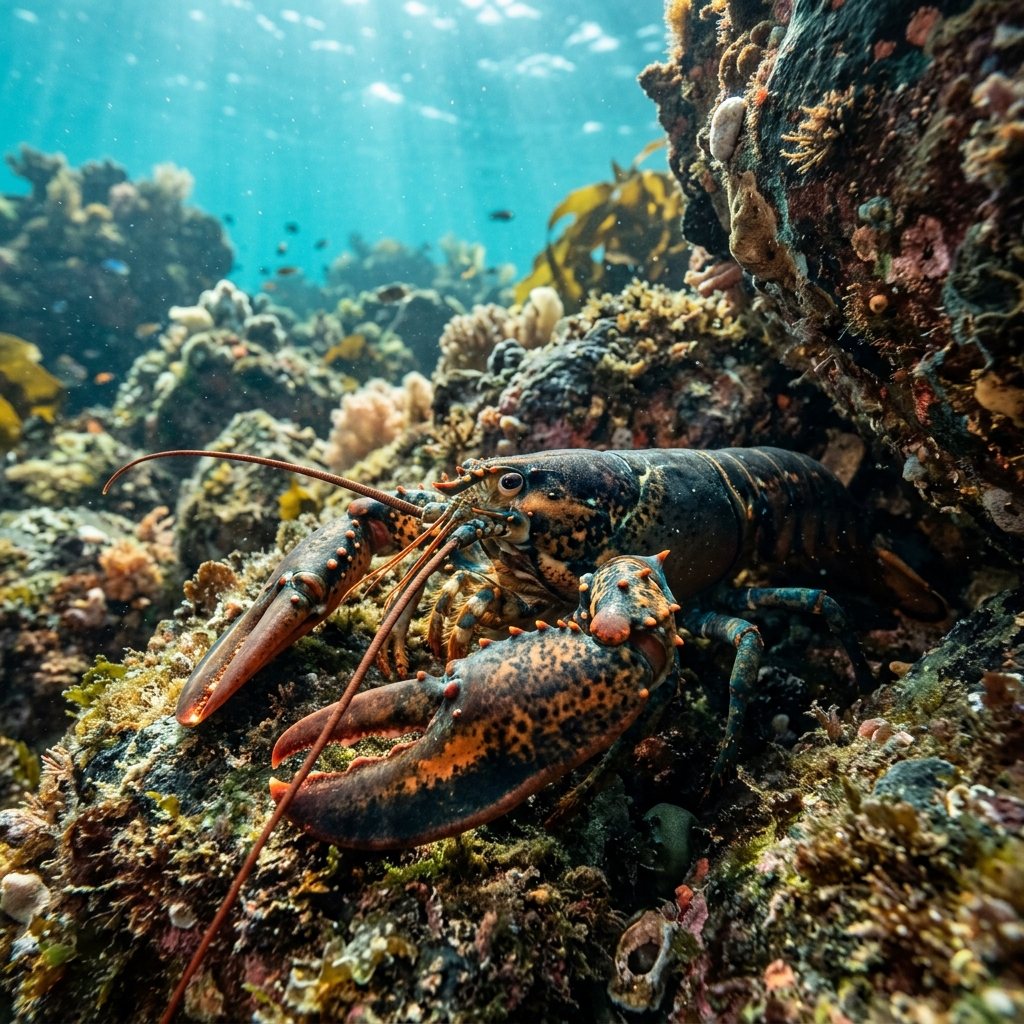
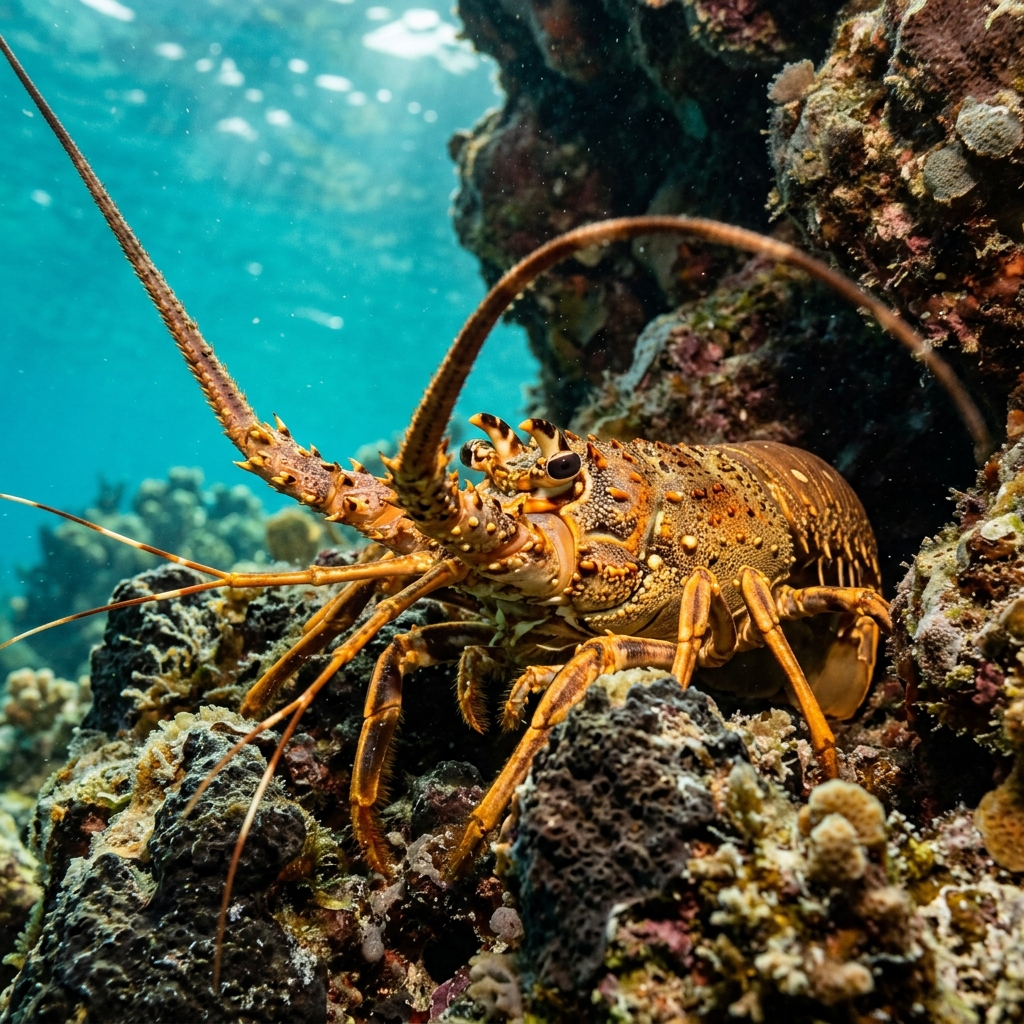
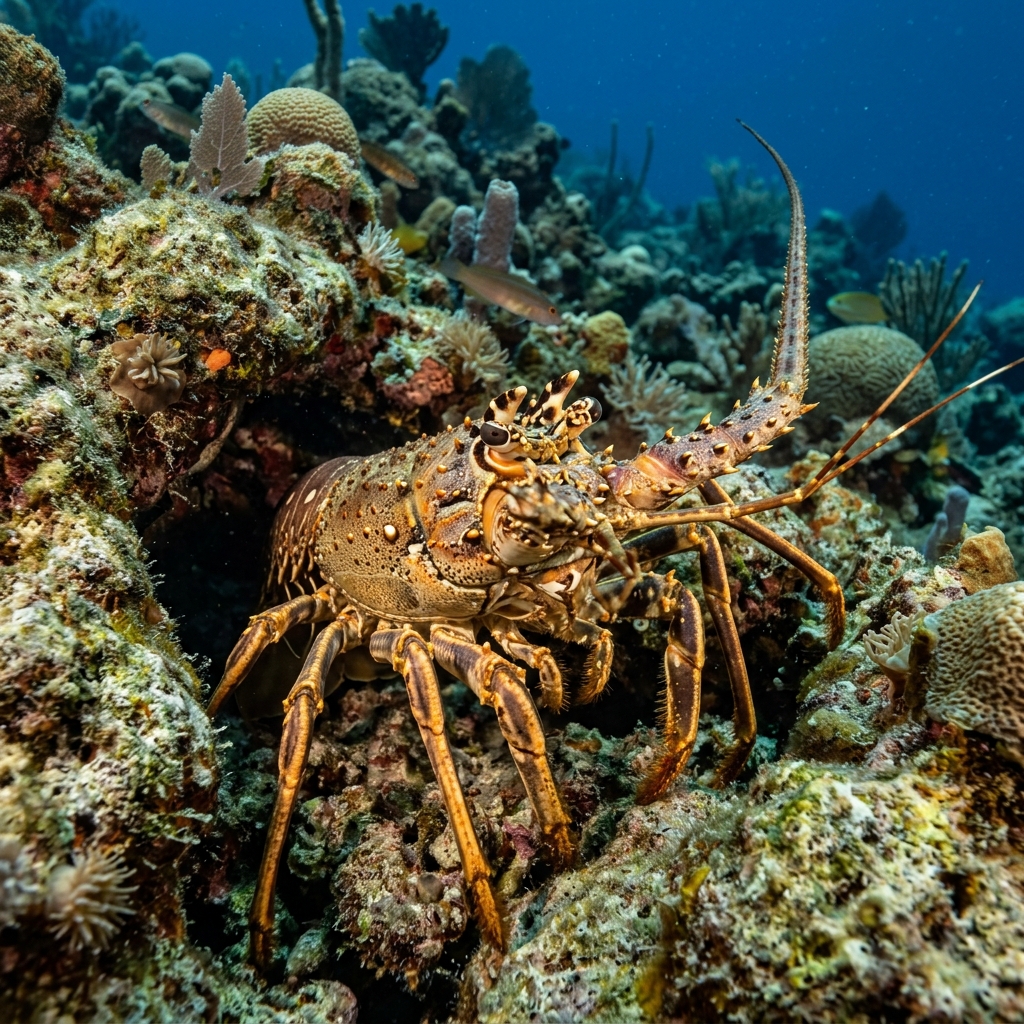
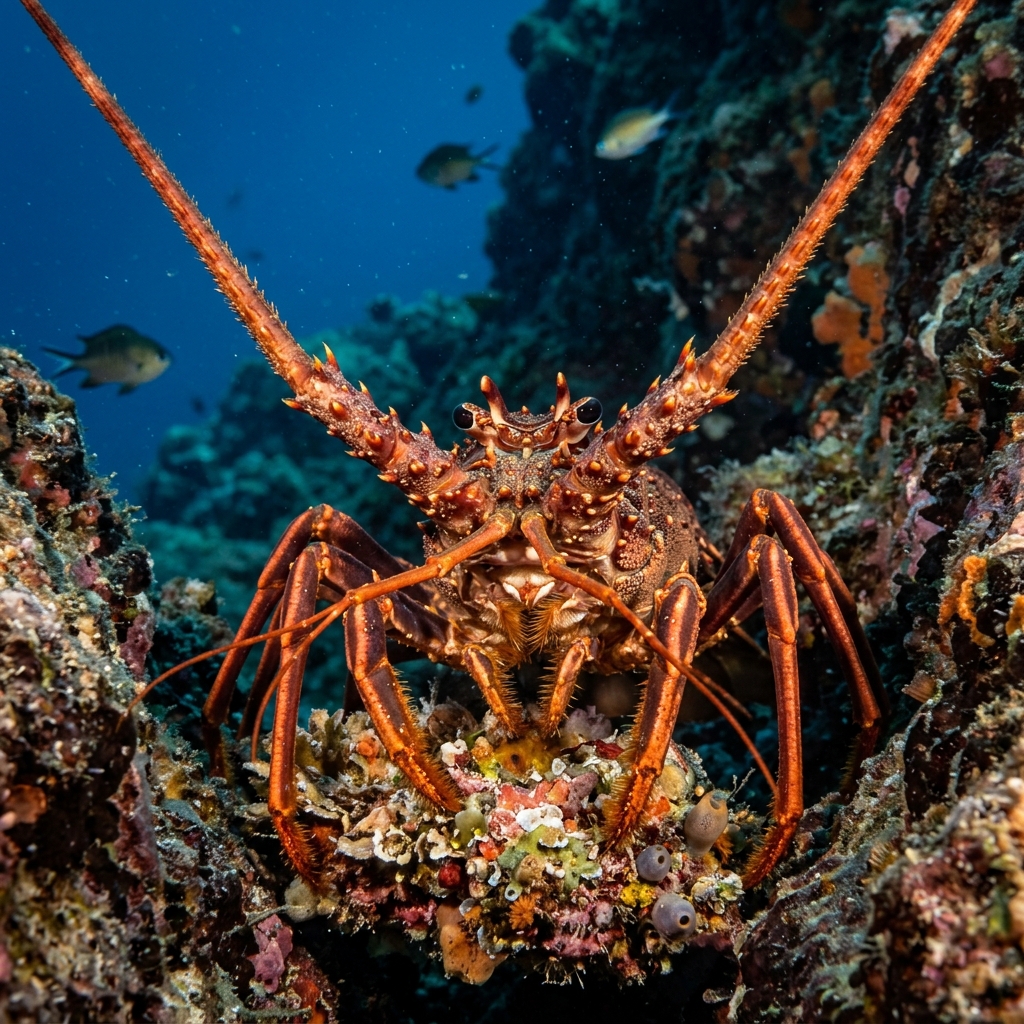
Reaching around 35 cm, this is a large, heavily built lobster covered in a reddish-brown to orange carapace (the hard upper shell) studded with forward-pointing spines. The most eye-catching feature is the pair of extremely long, banded antennae that can exceed body length. Unlike the Common Lobster, it lacks large crushing claws; the legs are slender and the front pair ends in simple points. Females have a noticeably broader tail fan and small feathery pleopods visible on the underside of the abdomen.
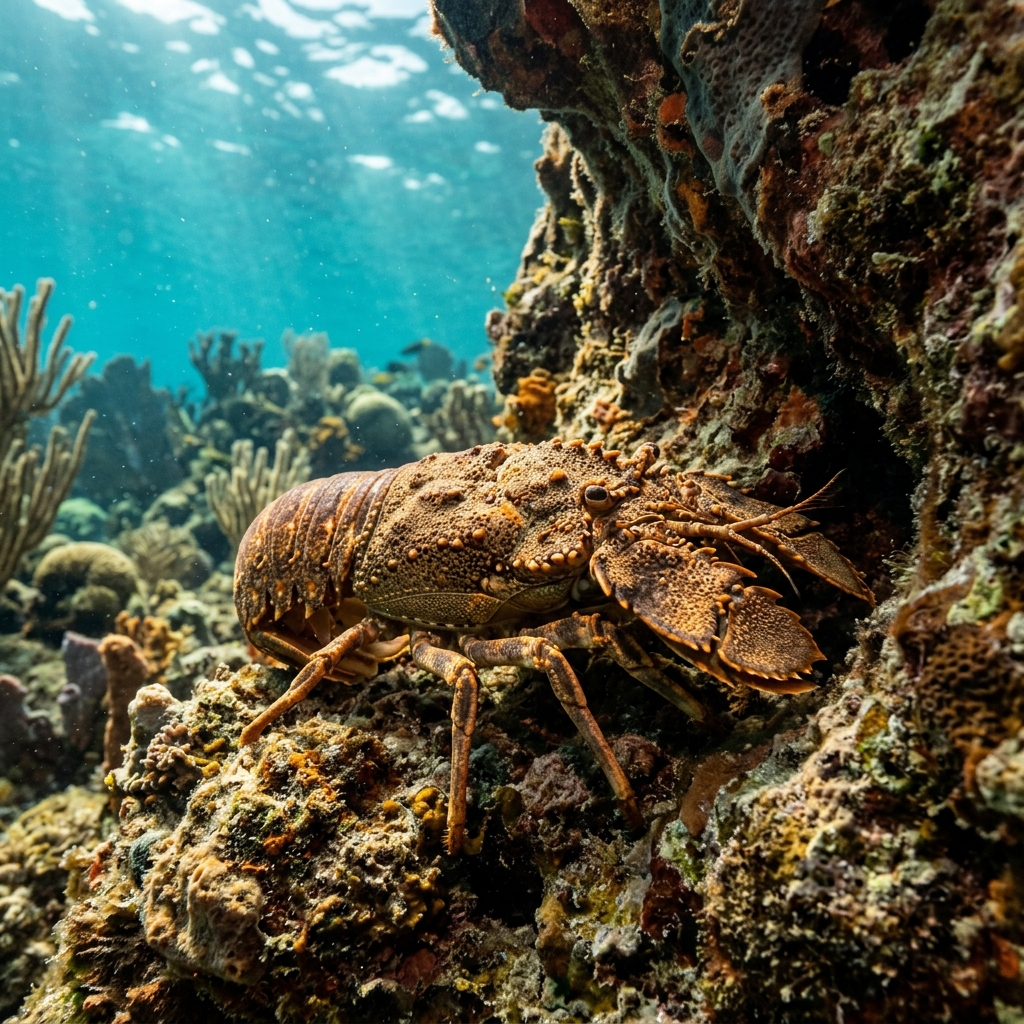
Shy by nature, spiny lobsters spend daylight hours tucked into caves, under boulders, or wedged into reef crevices with their antennae poking out as the main visible sign. Night dives offer the best chance of watching them move slowly across open rock, using those long antennae to probe for prey in gaps. If approached too closely they will reverse quickly and raise their antennae defensively, so keep a low profile, avoid cornering them, and resist the urge to shine a torch directly at them.
When threatened, spiny lobsters can produce a rasping sound by rubbing the base of their antennae against a rough patch on the carapace, a technique called stridulation. It requires no claws and serves as an audible warning to predators.
Sighting data does not show a clear seasonal peak, so encounters appear possible year-round wherever suitable rocky habitat exists. The species tolerates water temperatures from around 11 °C to nearly 24 °C, which covers the full seasonal range of its Atlantic and Mediterranean haunts.
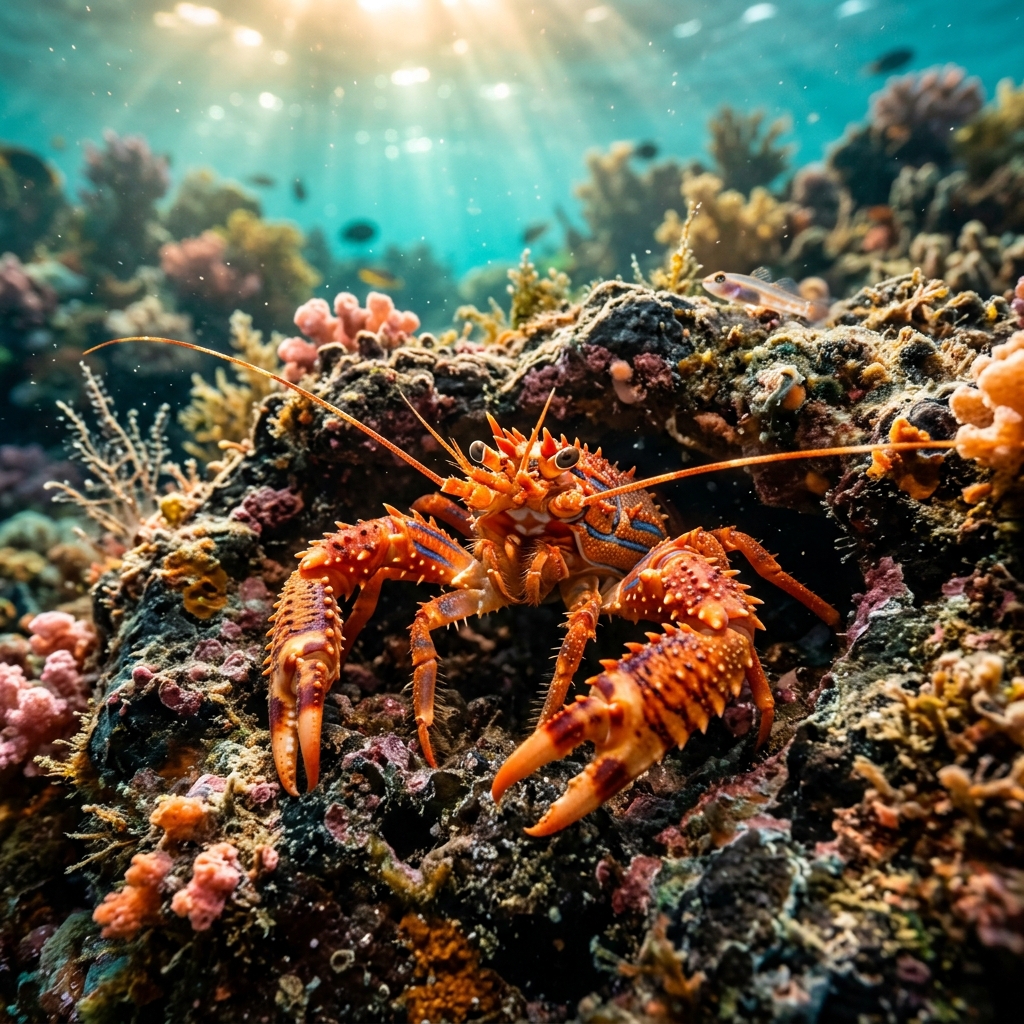
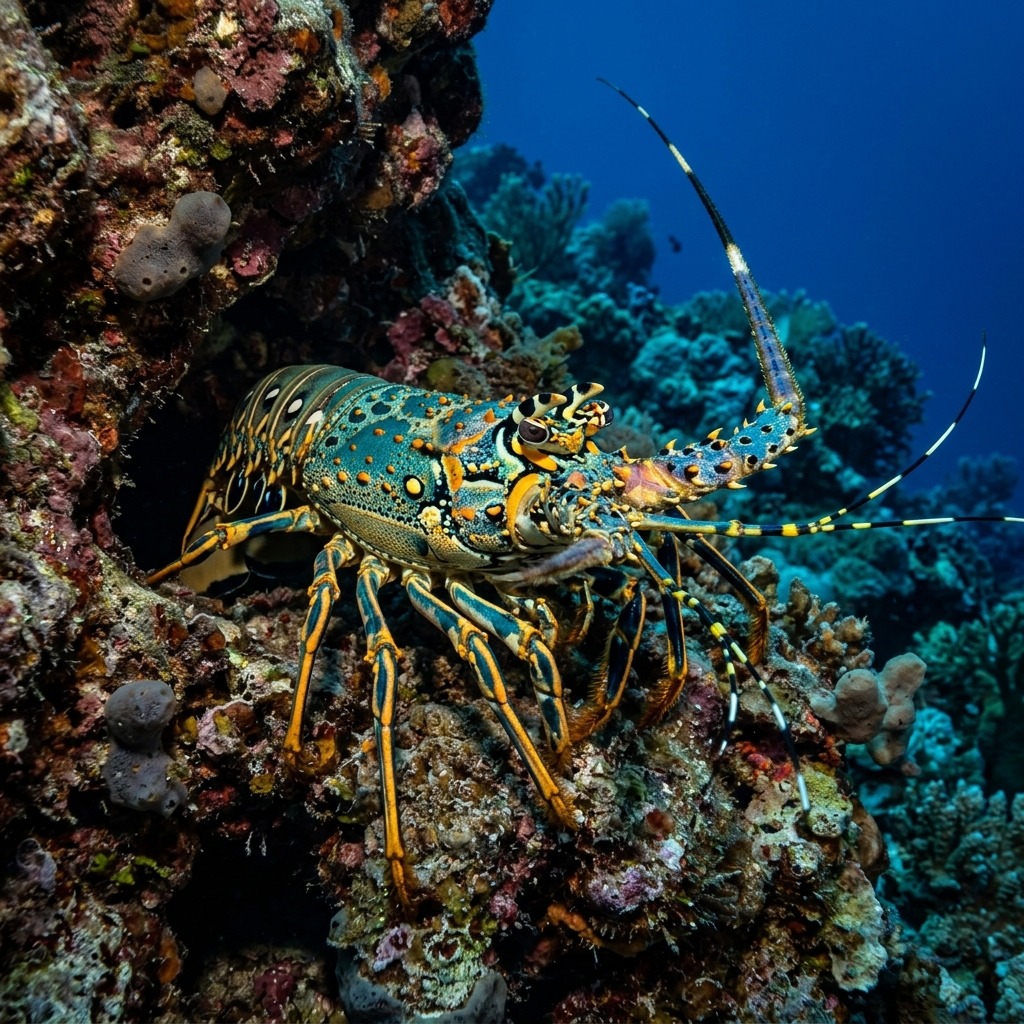
Reef neighbours a diver could mistake it for. Use the identification notes above to tell them apart.
Most logged across the Mediterranean and northeastern Atlantic, with the strongest presence in Italy, Greece, France, Spain, and the United Kingdom. Top regions for encounters include Brittany and Normandy in France, the Southwest Coast of Ireland, the South Coast of England, and the waters around Sardinia, Sicily, and Attica in Greece. Croatia and Turkey's Aegean Coast also sit high in the range.
Mapping where European Spiny Lobster is logged…
The species is found across a wide stretch of the northeastern Atlantic and Mediterranean. Top countries include Italy, Greece, France, the United Kingdom, Spain, and Ireland. Reliable regions include Brittany and Normandy, the Southwest Coast of Ireland, South Coast England, Sardinia, Sicily, and Attica in Greece.
There is no clearly defined peak season in the sighting data, suggesting encounters are possible year-round. The species is active across a temperature range of roughly 11 °C to 24 °C, covering the full annual swing of Atlantic and Mediterranean waters. Night dives consistently offer the best odds of seeing one out in the open.
Look for a large, reddish-brown lobster covered in spines with extraordinarily long, banded antennae and no large front claws. The absence of claws is the quickest separator from the Common Lobster, which has prominent crusher and cutter claws. The spiny, rough carapace and those antennae together make it distinctive at a glance.
A typical adult measures around 35 cm in body length, though larger individuals exist. Their antennae can extend well beyond body length, making the animal appear much larger in the water than the body measurement alone suggests.
No, they pose no real danger. They have no crushing claws and will retreat rather than advance when a diver approaches. The spiny antennae can cause a minor scratch if an animal is cornered, so give them space and avoid reaching into crevices where one is sheltering.
They are listed as Vulnerable on the IUCN Red List, meaning populations have declined enough to warrant concern. Decades of fishing pressure are the primary cause. Divers can help by logging sightings to support population monitoring and by choosing dive operators who follow no-take marine reserve guidelines.
The European Spiny Lobster is listed as vulnerable by the IUCN. Observe from a distance, avoid touching or feeding it, and report sightings to local marine research organisations.
Listed as Vulnerable on the IUCN Red List, populations have declined significantly through overfishing and habitat pressure. If you encounter one, observe without touching, and report the sighting through Fin to contribute to population monitoring.
Site and sighting data is aggregated from diver logs, iNaturalist and GBIF. For taxonomy and conservation status:
Caribbean Spiny Lobster
2,209 sites