Galathea strigosa
Bright red-and-blue squat lobster tucked under ledges from Croatia's Kvarner to France's Riviera, best found with a torch in cool water.
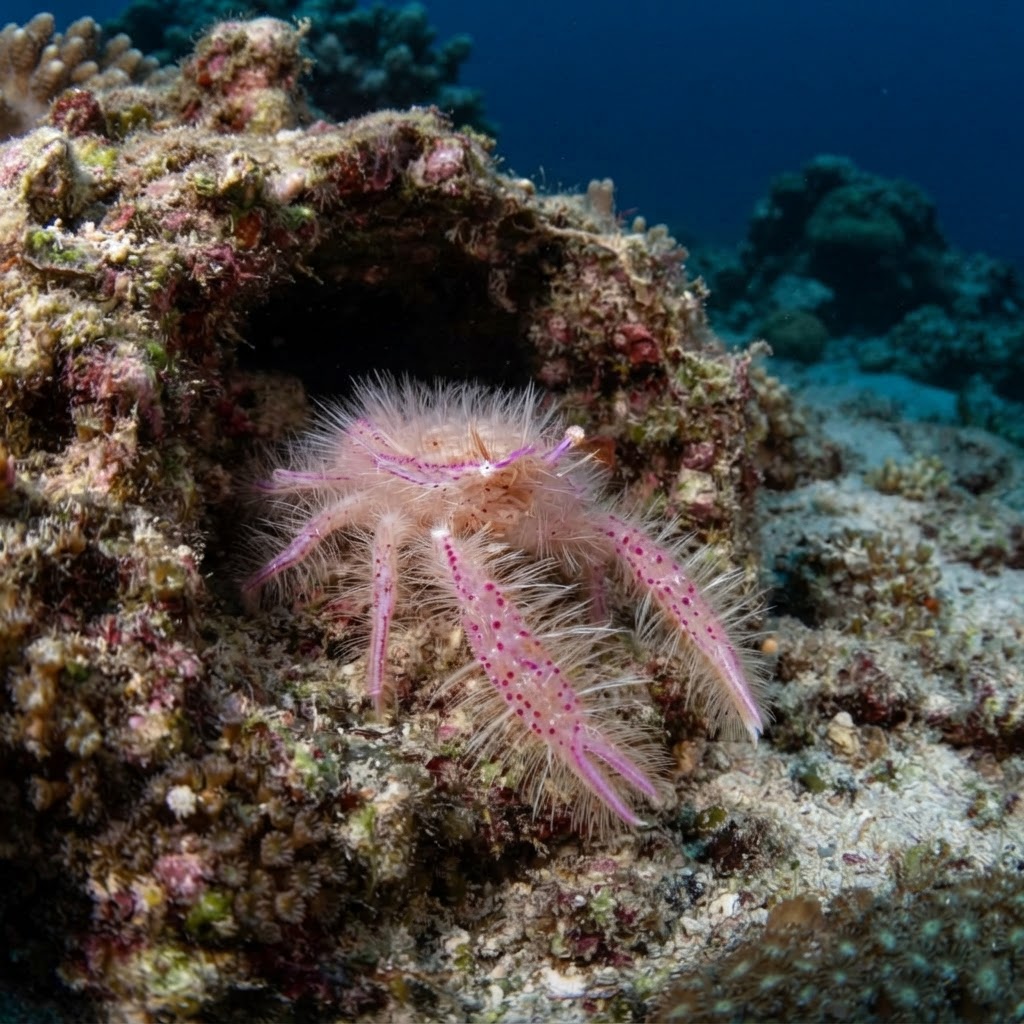
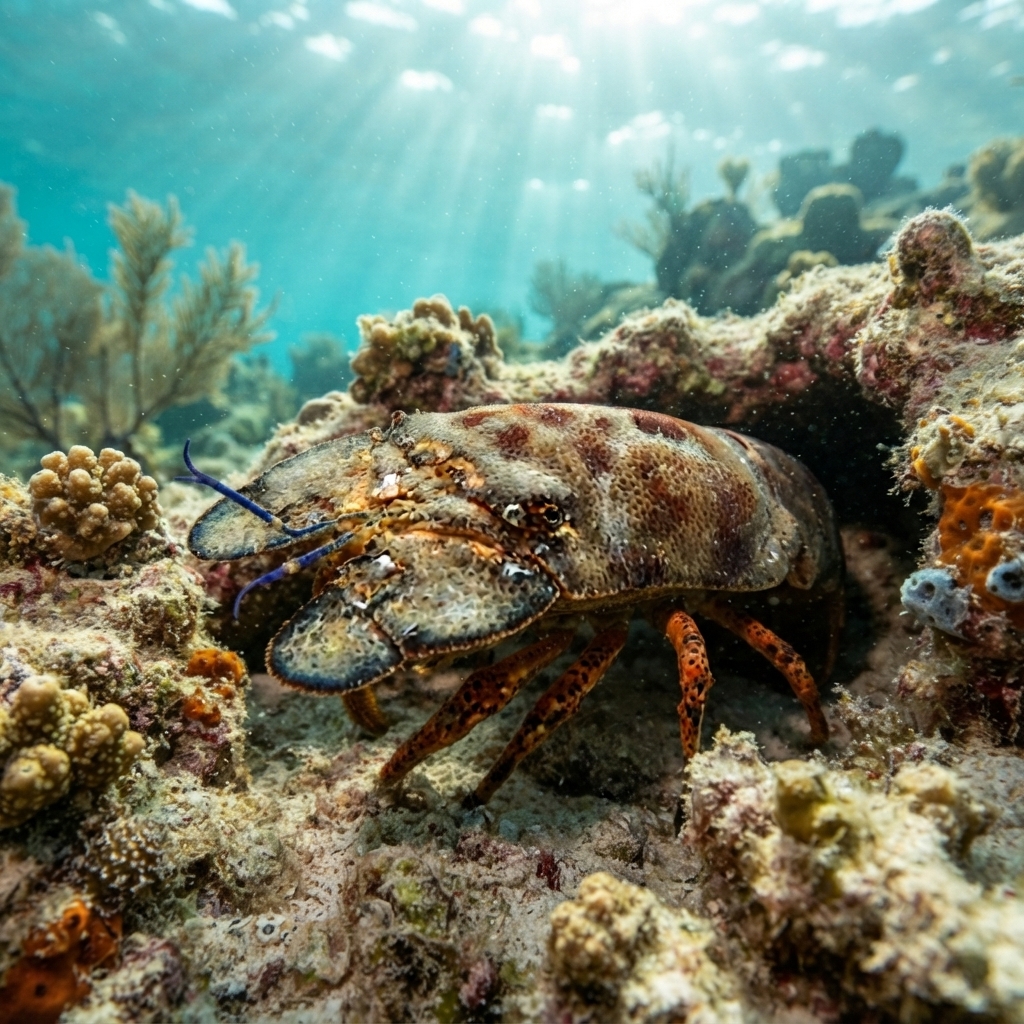
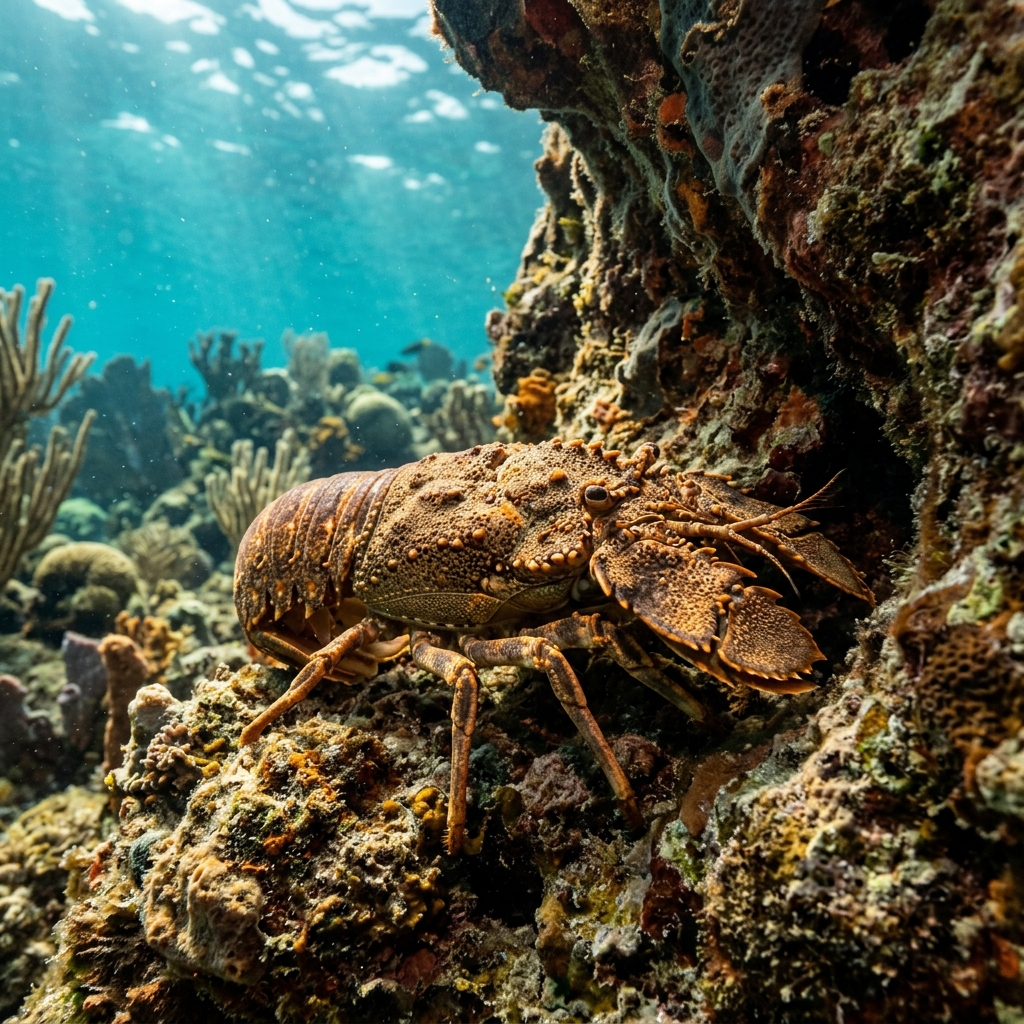
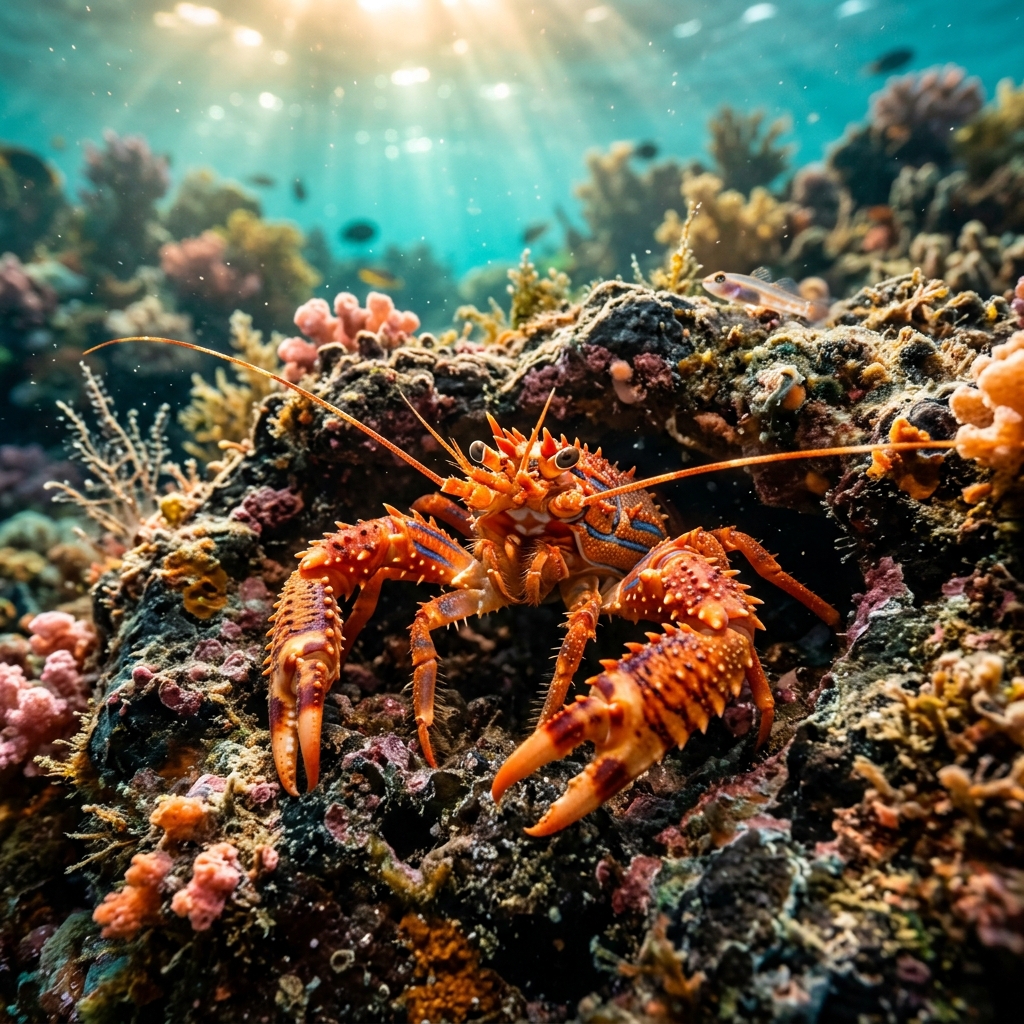
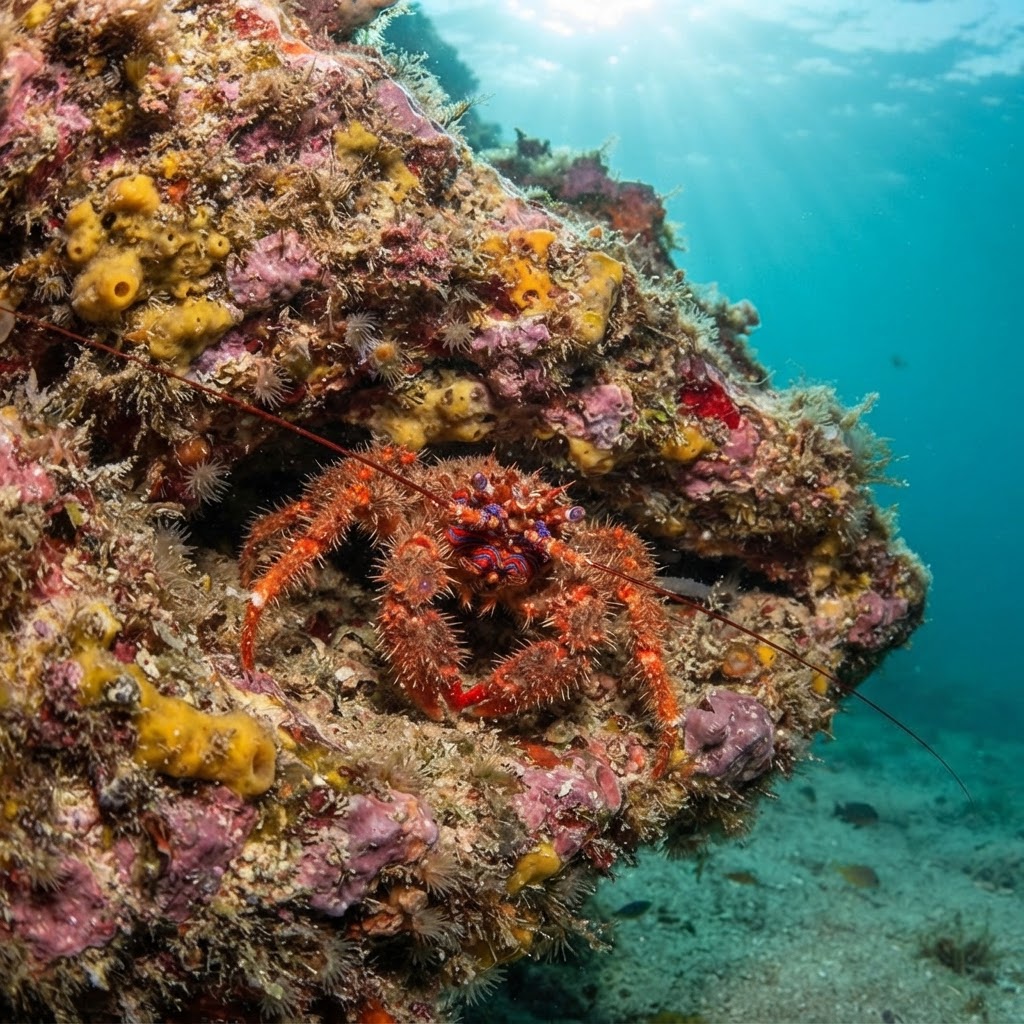
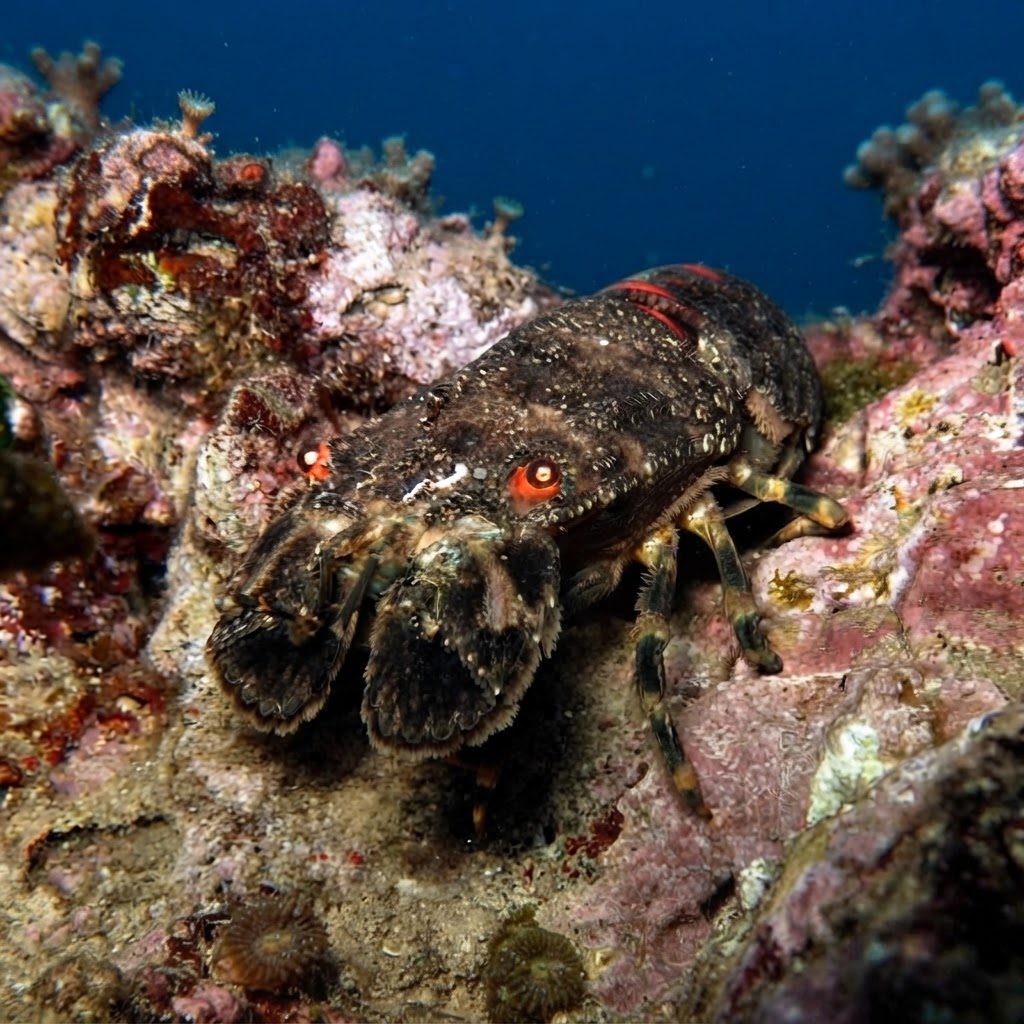
Deep red to orange-brown body with scattered iridescent blue-white spots, tucked into a squat, flattened shape with a curled-under tail rather than a straight lobster body. Long, spiny claws (chelae) with blue banding are usually the first thing you notice poking out from a crevice. Most individuals sit crab-like under ledges with only the claws and eyestalks visible, rather than swimming or walking in the open.
Spends the day wedged backwards into rock crevices, wrecks, and under ledges with just its banded claws and eyestalks showing, becoming more active and easier to see on night dives. Divers who shine a torch into likely-looking holes rather than swim past them tend to log it far more often, which fits why it comes up as uncommon to rare at most sites rather than something you spot cruising open reef. It will often retreat deeper into its hole if a light or hand gets too close, but does not bolt or flee the area entirely.
That curled-under tail is a giveaway it is not a true lobster at all but more closely related to hermit crabs, which is why it scuttles backwards into holes rather than walking forward like a spiny or common lobster.
Logged year-round with no strong seasonal pattern, consistent with its cool-water niche of roughly 11 to 18 C, so overhangs and crevices are worth checking on any dive rather than a particular month.
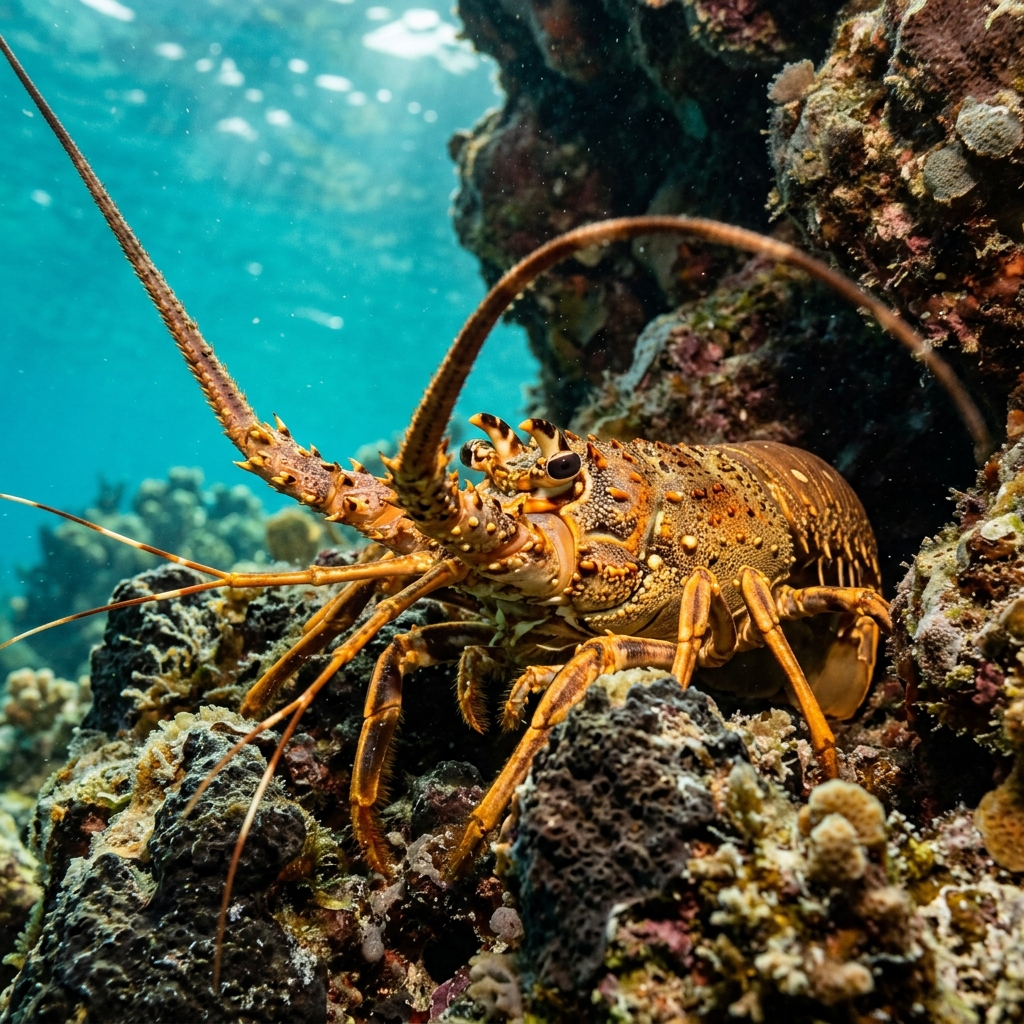
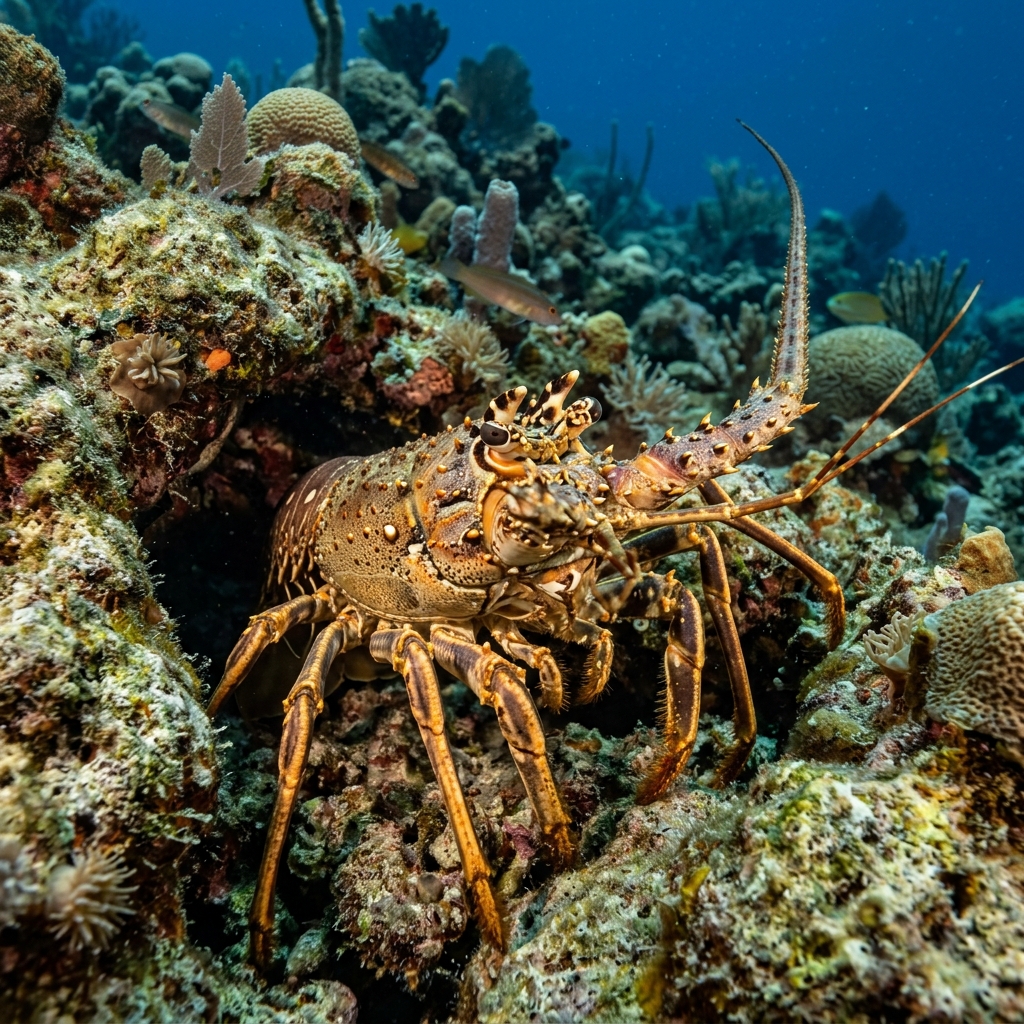
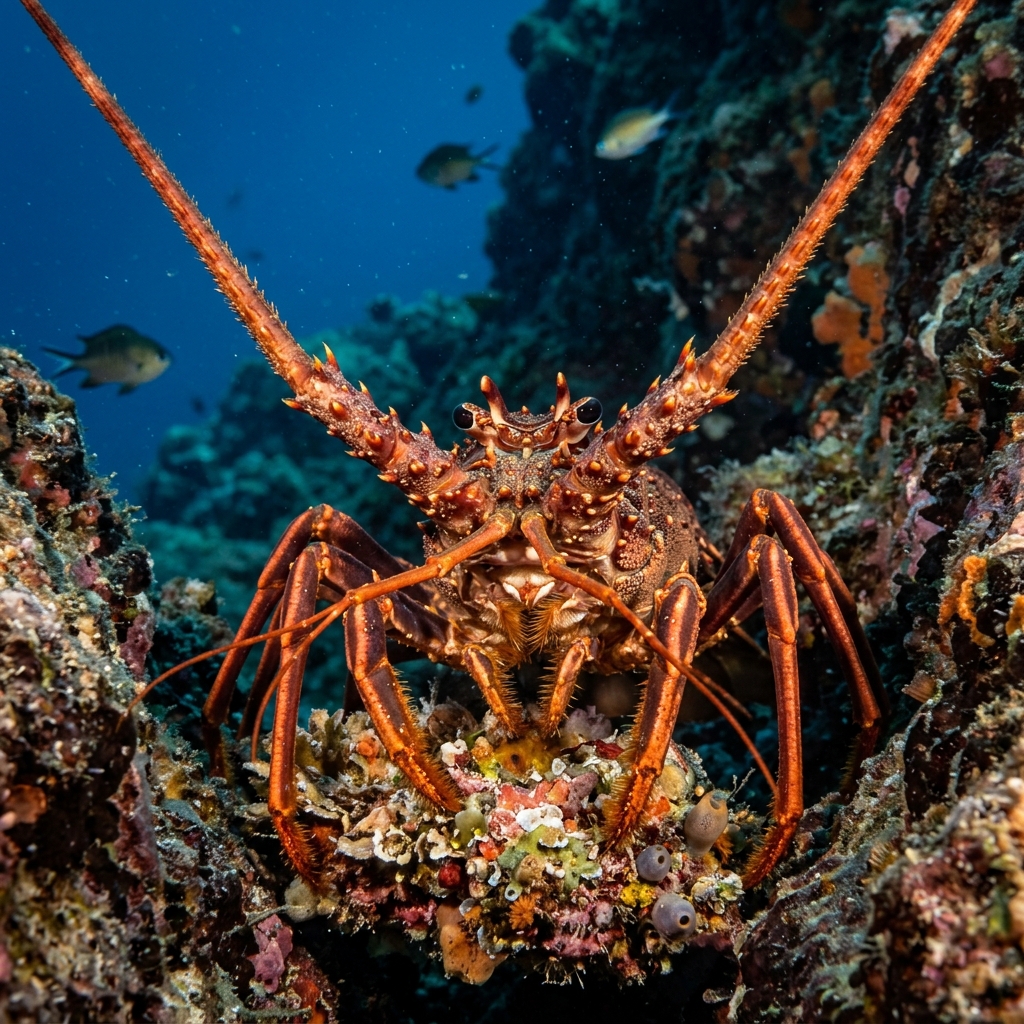
Reef neighbours a diver could mistake it for. Use the identification notes above to tell them apart.
Most commonly logged along the French coast, especially the French Riviera and Provence and the Bay of Biscay, and a reliable find across Croatia's Kvarner and Istria regions. Also well recorded on the Lisbon Coast in Portugal, in Galicia in Spain, and around Northern Ireland and the wider UK, giving it one of the broadest European ranges of any reef crustacean on Fin.
Mapping where Squat Lobster is logged…
France is the strongest area, particularly the French Riviera and Provence and the Bay of Biscay, with Croatia's Kvarner and Istria regions and Portugal's Lisbon Coast also reliable. It also turns up around Galicia in Spain and Northern Ireland in the UK.
There is no clear seasonal pattern, so it can be found year-round in its cooler water range of roughly 11 to 18 C. Night dives generally improve your odds since it is more active after dark.
Look for a red-orange body dotted with blue-white spots, tucked under a ledge with only the blue-banded claws and eyestalks visible. The tail is curled under the body rather than trailing straight, giving it a squat, crab-like outline rather than a classic lobster shape.
No, they pose no threat to divers and simply retreat into their crevice if disturbed. They are safe to observe closely with a torch as long as you avoid poking into their hiding spot.
Not really: its curled-under tail and body shape mean it is more closely related to hermit crabs than to true lobsters like the common or spiny lobster. This is also why it shuffles backwards into holes instead of walking forward.
Site and sighting data is aggregated from diver logs, iNaturalist and GBIF. For taxonomy and conservation status:
Scyllarus arctus
Caribbean Spiny Lobster
2,209 sites