Zebrida adamsii
Spot the Zebra Urchin Crab in the Visayas and Luzon, Philippines. A rare find in warm 27-29°C waters, most often logged Dec, Mar.
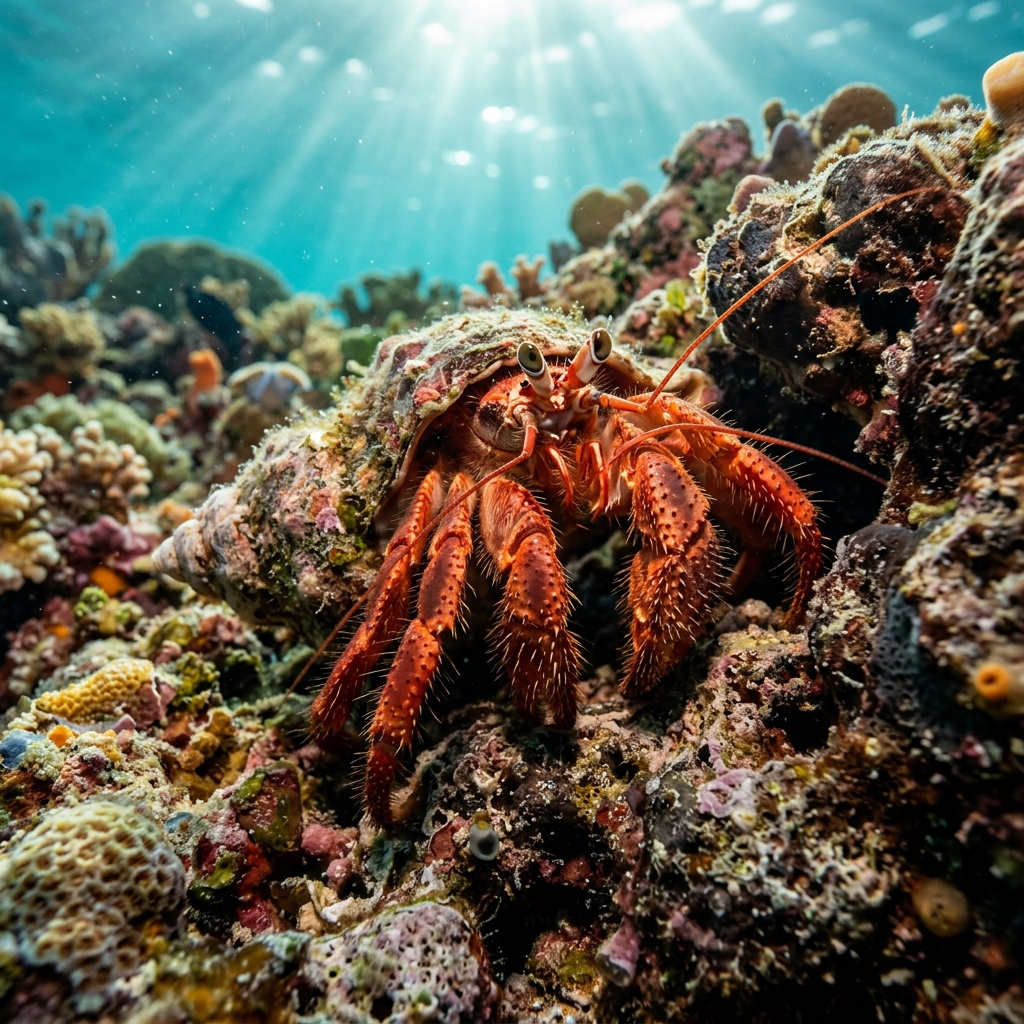
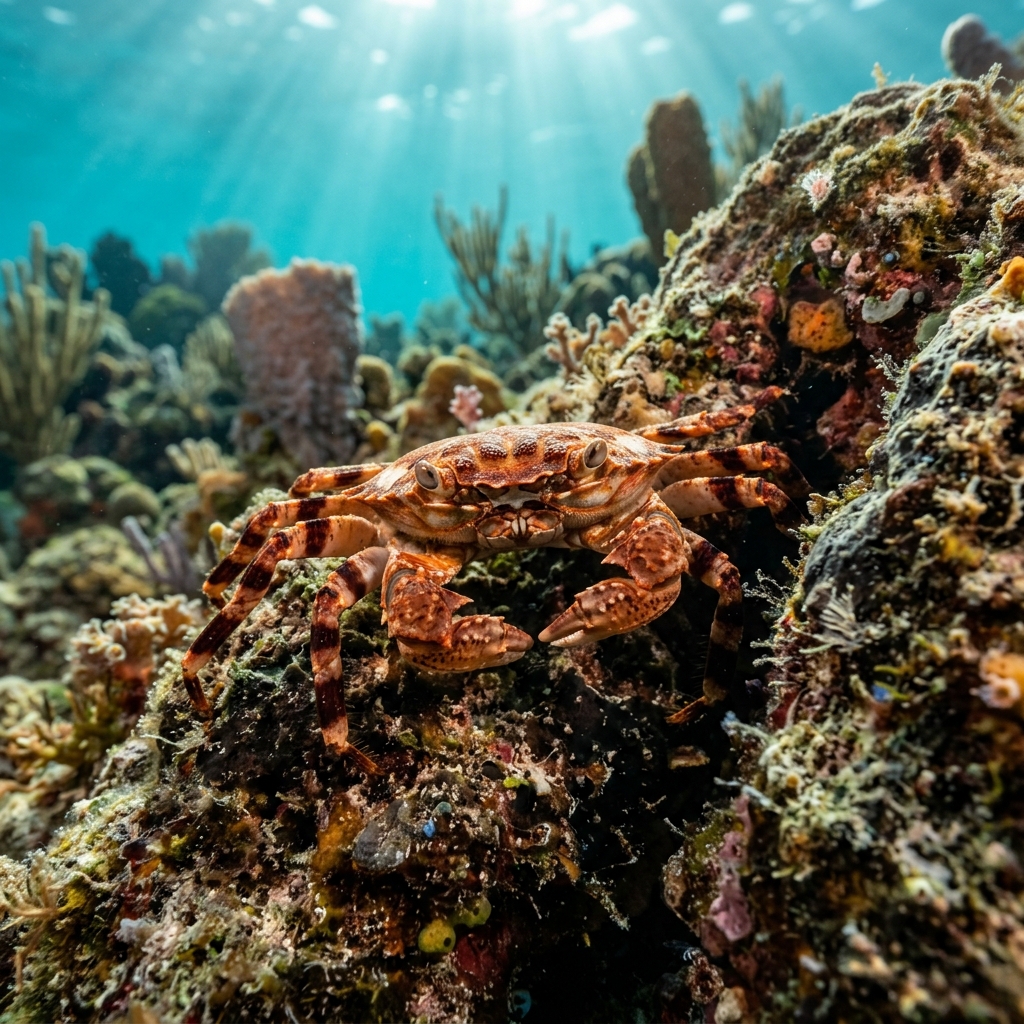
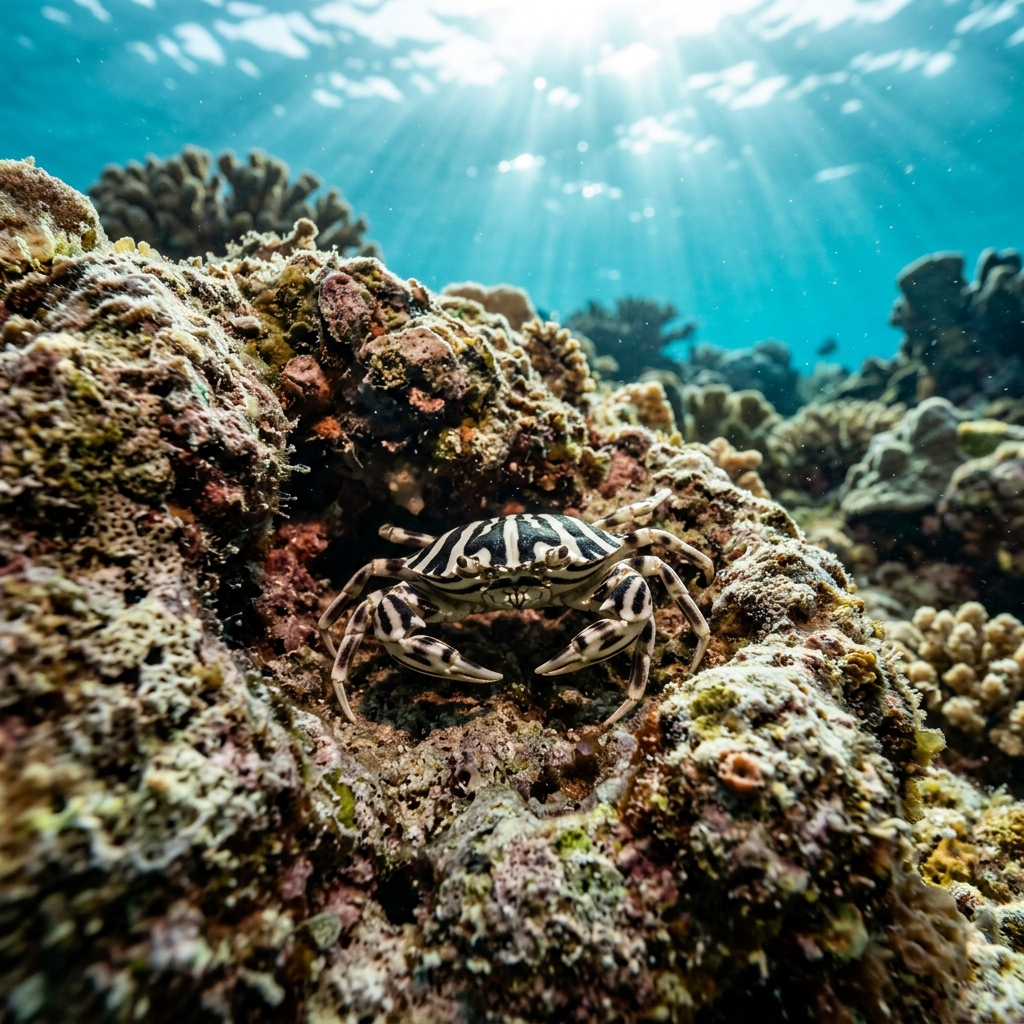
Bold black-and-white banding on the legs gives this small crab its name and makes it the most distinctive crab you are likely to encounter on a sea urchin. The body itself is compact and pale, often pressed flat against the urchin's spines, which serve as both camouflage and protection. Look directly at the urchin's test (the hard shell) rather than searching the water column, this crab rarely leaves its host.
Almost every encounter involves the crab sitting motionless among the spines of a sea urchin, using the host as a living fortress. It tends to shuffle around to the far side of the urchin when a diver approaches, so move slowly and circle around rather than coming straight in. Sightings are typically on sandy or rubble slopes where long-spined urchins are common, and the crab is just as likely to be found in daylight as at night.
This crab is an obligate symbiont, it lives exclusively on sea urchins, particularly long-spined species, and depends on the host not just for shelter but likely for scraps of food. Finding the right urchin species dramatically increases your odds of a sighting.
Northern Hemisphere sightings concentrate between December and March, so planning a Philippine or Indonesian trip during those months gives you the best chance. Water temperatures at observation sites run 27 to 29°C, so the habitat itself stays warm year-round.
Most sightings come from the Philippines, particularly the Visayas East and North region and Luzon, making those areas the strongest bet for an encounter. Indonesian waters, especially Maluku and Papua, and Nusa Tenggara and the Banda Sea, also produce regular records. The species appears across the Coral Triangle broadly, but the Philippine sites account for the large majority of documented sightings.
Mapping where Zebra Urchin Crab is logged…
The Philippines is the top destination, with the Visayas East and North and Luzon regions producing the most logged sightings. Indonesia is a strong secondary option, particularly in Maluku, Papua, and Nusa Tenggara. Both countries sit within the Coral Triangle, where warm water and abundant sea urchins support the species.
Recorded sightings in the Philippines and Indonesia concentrate from December through March. Water temperatures at observation sites stay between 27 and 29°C year-round, so the timing may reflect dive tourism patterns as much as the crab's biology, but the Dec, Mar window is where the data points.
Look for the striking black-and-white striped legs, which stand out even against the spines of a sea urchin. The crab is small and holds itself flat on the urchin's surface. The combination of bold zebra banding and the sea urchin host makes misidentification unlikely once you know what to look for.
It sits firmly in the uncommon-to-rare category across all logged sites. Even in hotspot regions like the Visayas, a sighting is a highlight rather than a certainty. Searching urchins methodically on sandy and rubble slopes gives you the best odds rather than hoping to stumble across one in open water.
Site and sighting data is aggregated from diver logs, iNaturalist and GBIF. For taxonomy and conservation status:
European Green Crab
2,469 sites