Diogenidae spp.
Spot red hermit crabs year-round from the Florida coast to the Philippines. Tips on where to look, how to ID them, and top dive regions worldwide.
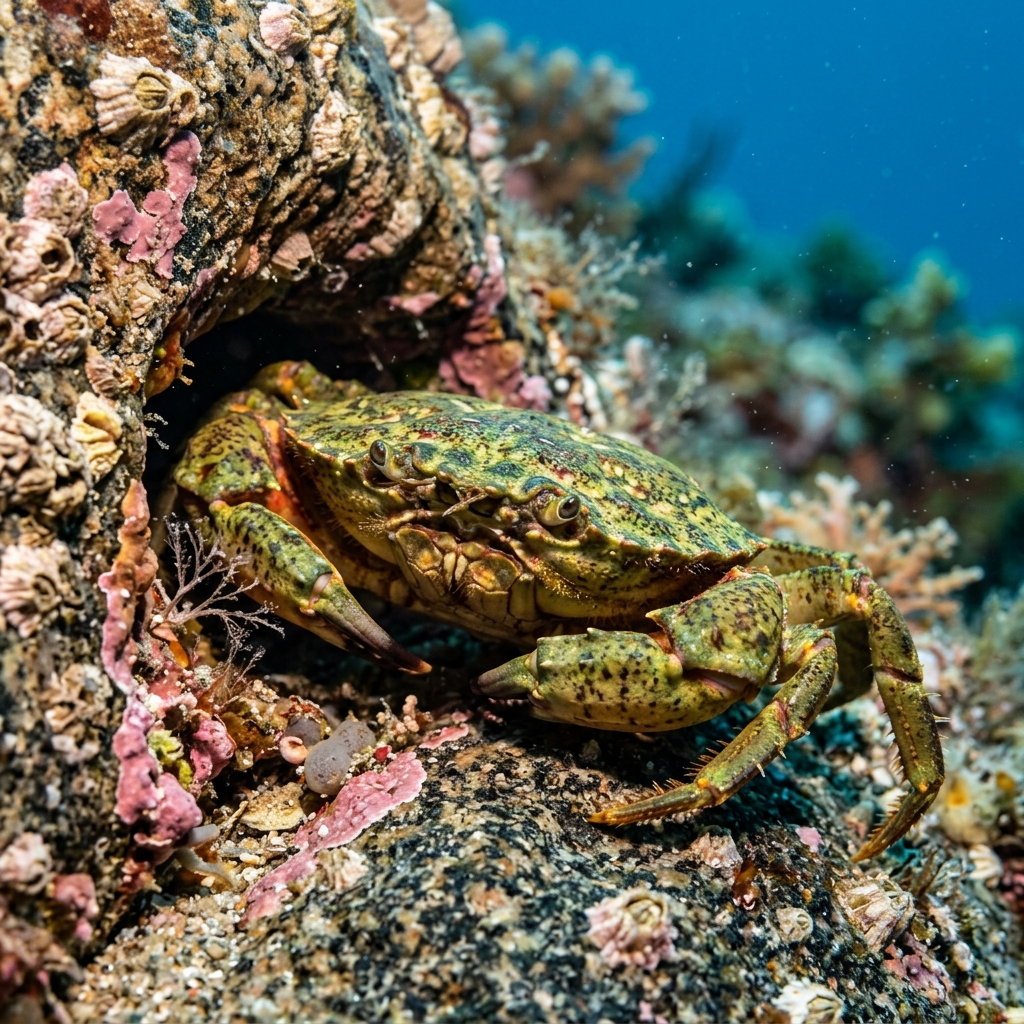
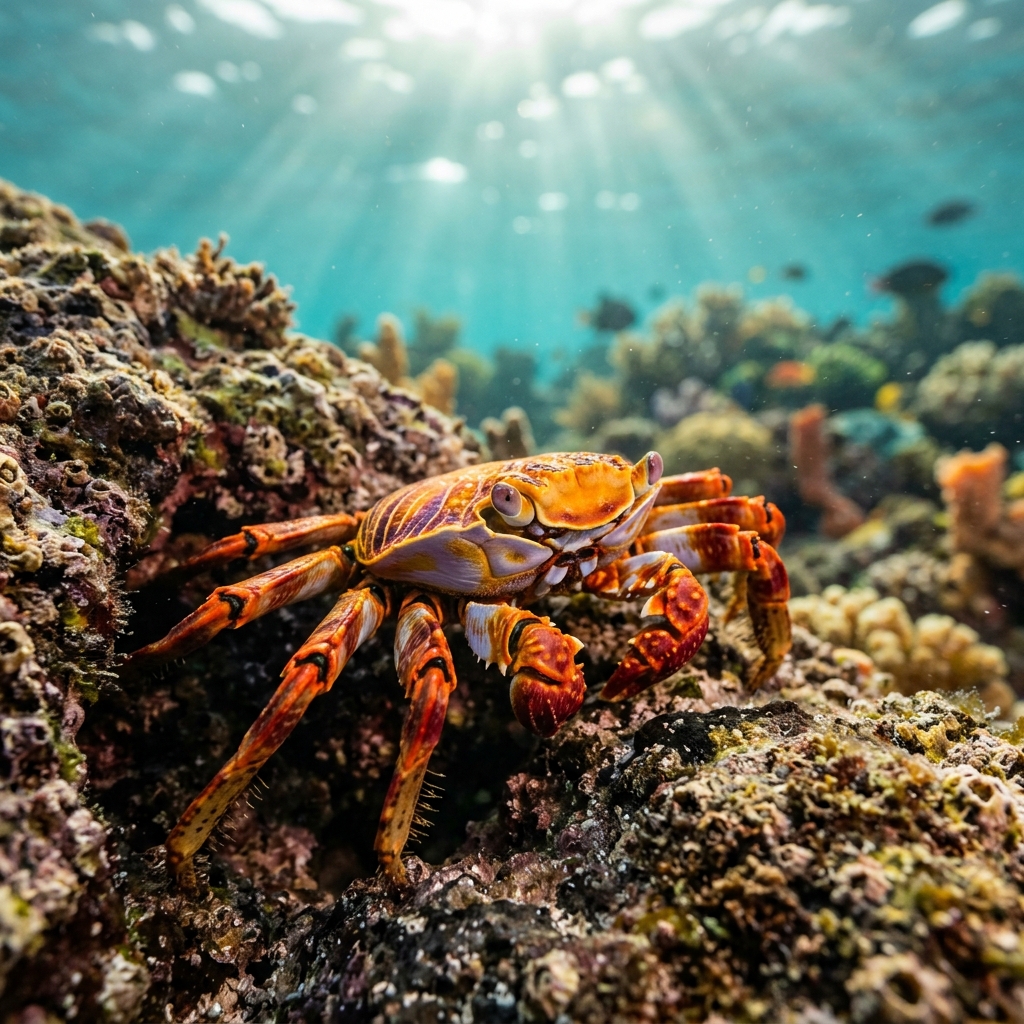
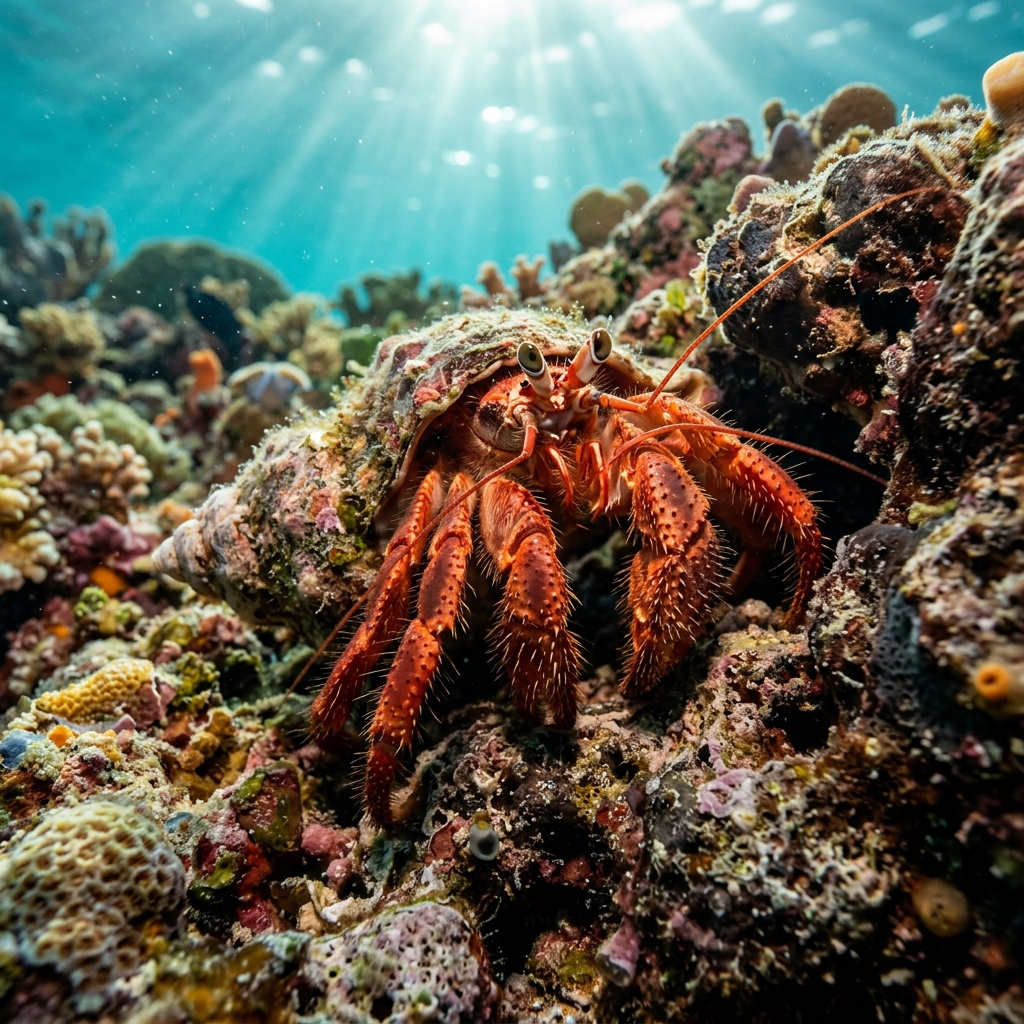
Red hermit crabs are recognised underwater by their vivid reddish to orange-red legs and claws protruding from a borrowed gastropod shell, which they carry everywhere. The left claw (cheliped) is typically noticeably larger than the right, a key trait of the Diogenidae family. Body size varies considerably across the group, but the bright colouration against the drab shell makes them easier to pick out than most small crustaceans. Look at the legs and the asymmetric claws rather than the shell itself, which can be almost anything.
You'll most often see them trundling slowly across sandy patches, rubble, or reef base with their shell rocking from side to side, foraging for organic debris and algae. When a diver approaches, they typically retract into their shell and go still for a few seconds before resuming movement, so patience pays off. Shallow rubble zones and the sandy margins of reefs are the most productive places to look, and they are active during the day.
The whole point of a hermit crab's life is finding a better shell. Groups of them will sometimes gather to trade shells in a chain, one crab vacates for a slightly larger one, triggering a rapid sequence of swaps among several individuals. If you see two hermit crabs facing each other and apparently wrestling, a shell exchange is likely underway.
This group is present year-round in both hemispheres with no concentrated season, which matches their tolerance for a wide water-temperature range of roughly 12 to 29 °C. Whether you're diving warm tropical reefs or cooler Mediterranean waters in winter, you have a reasonable chance of an encounter.
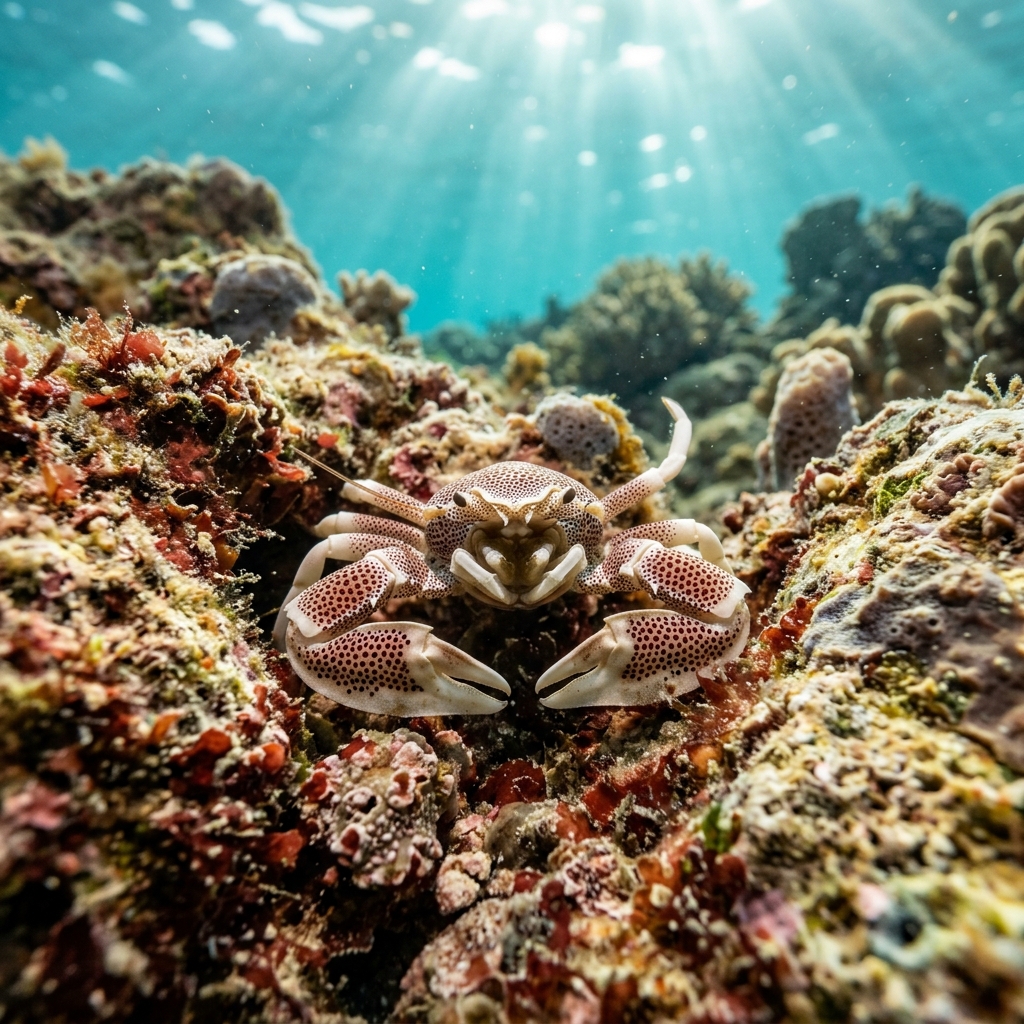
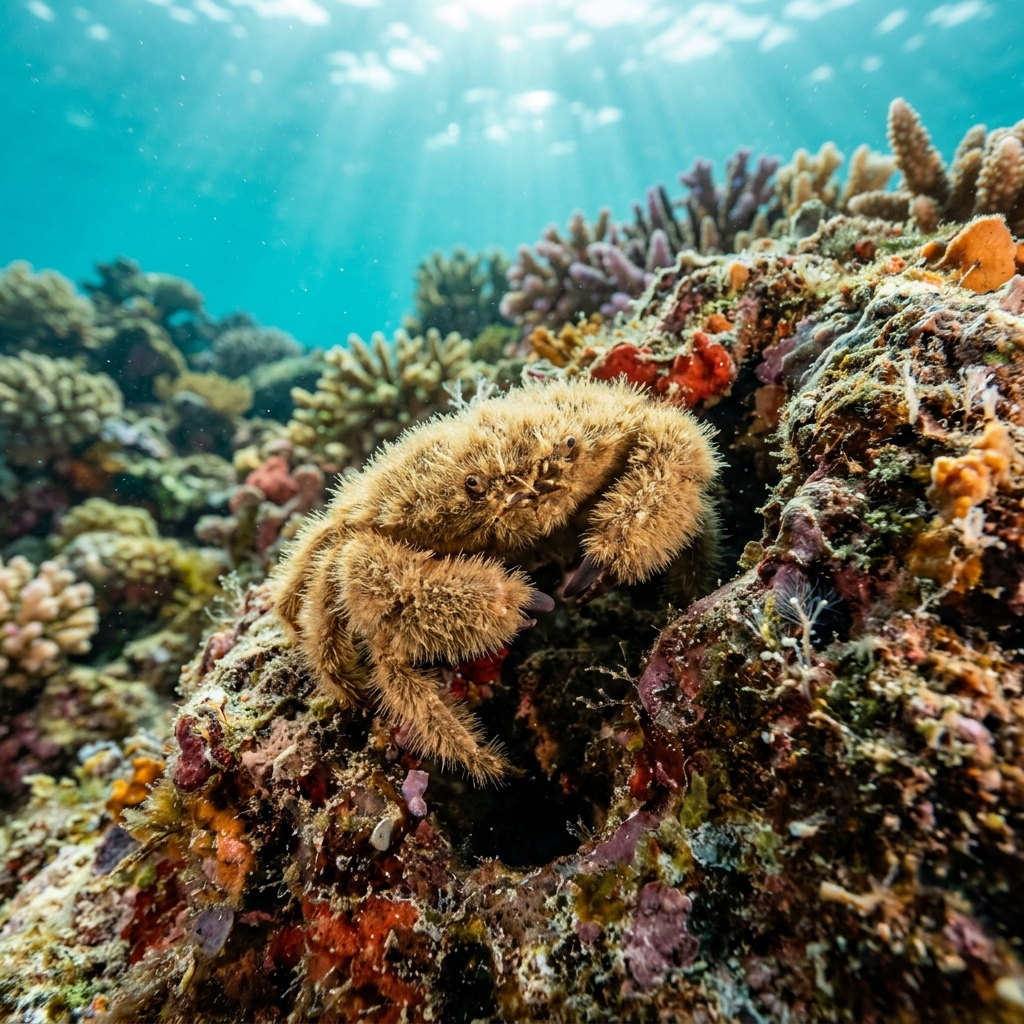
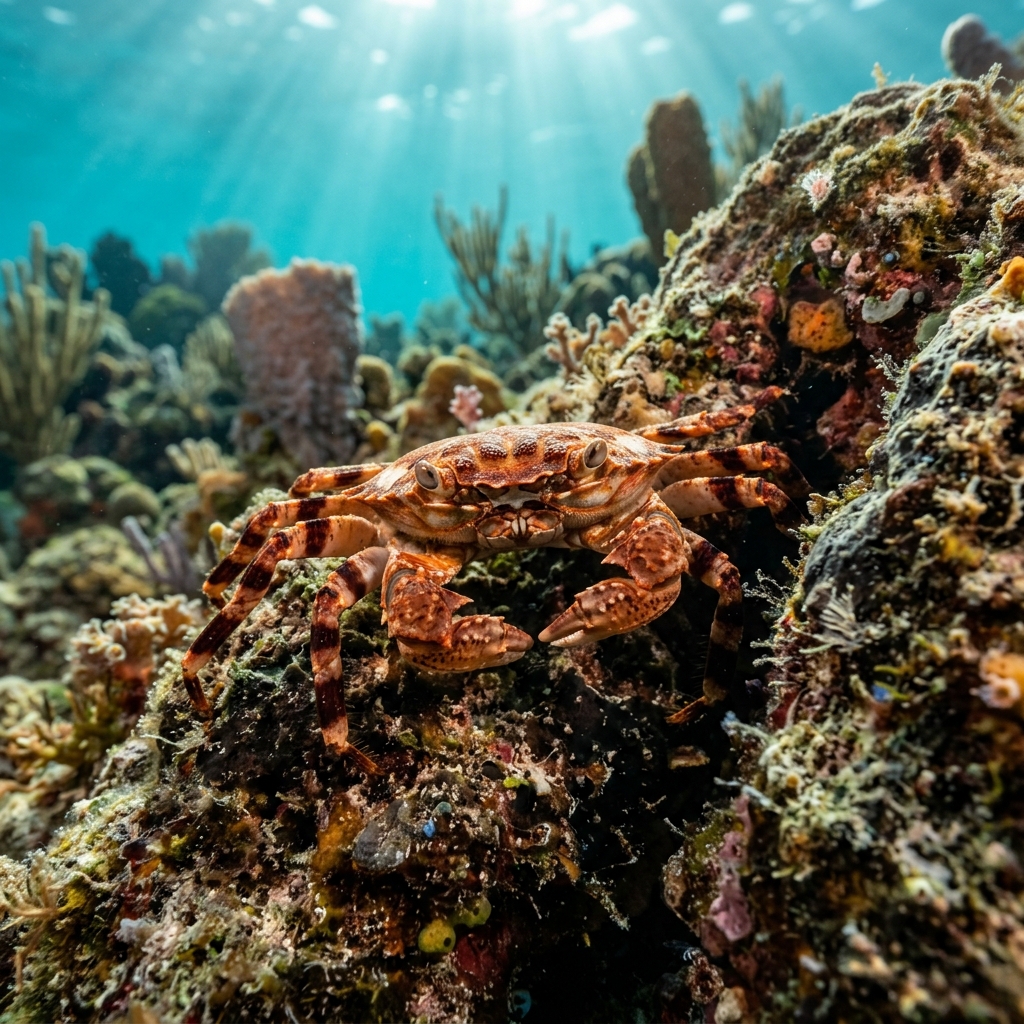
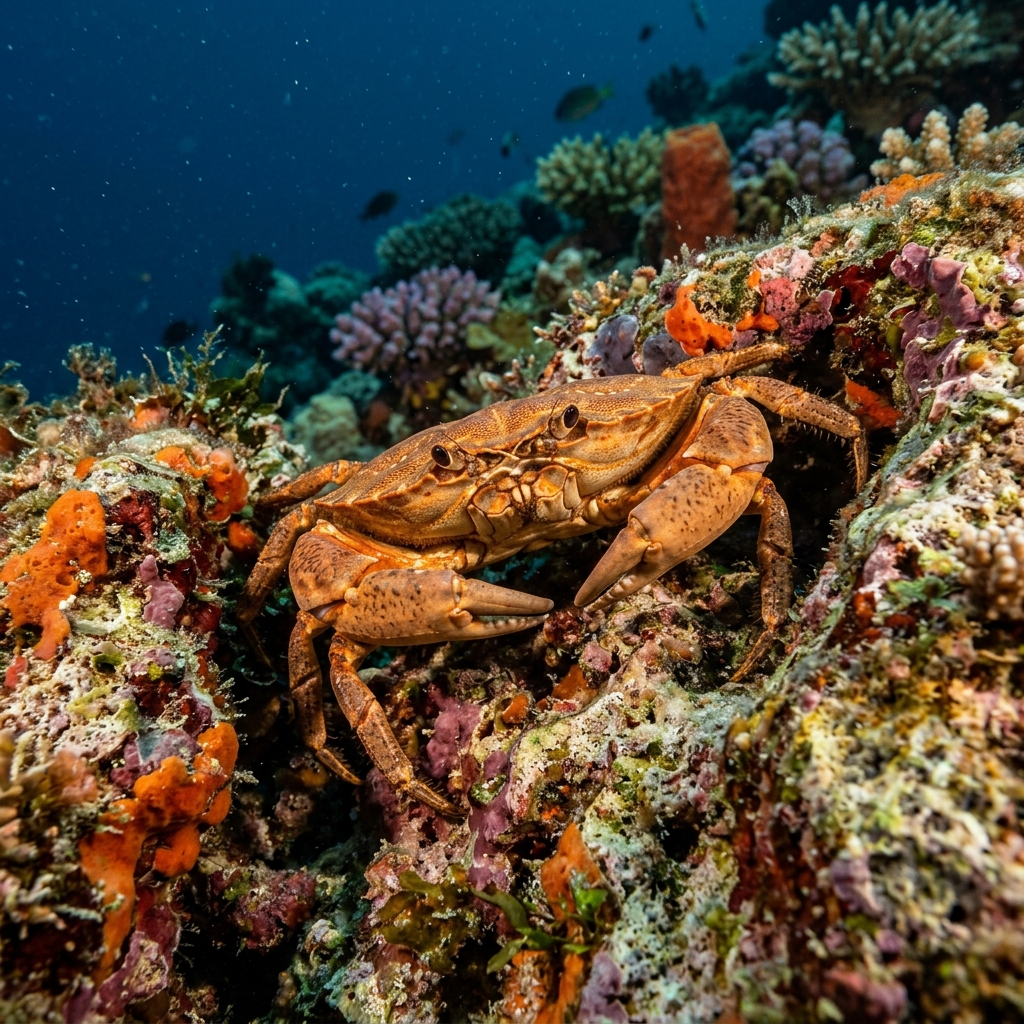
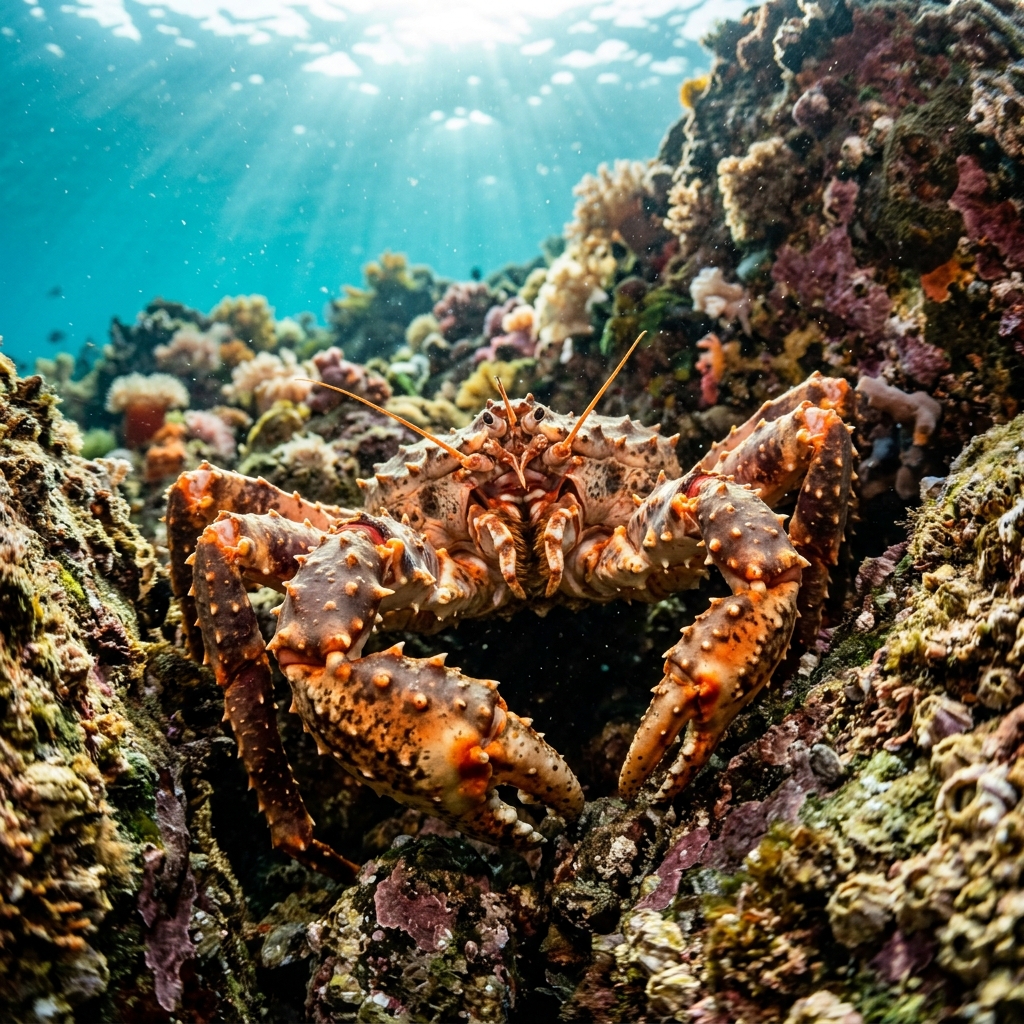
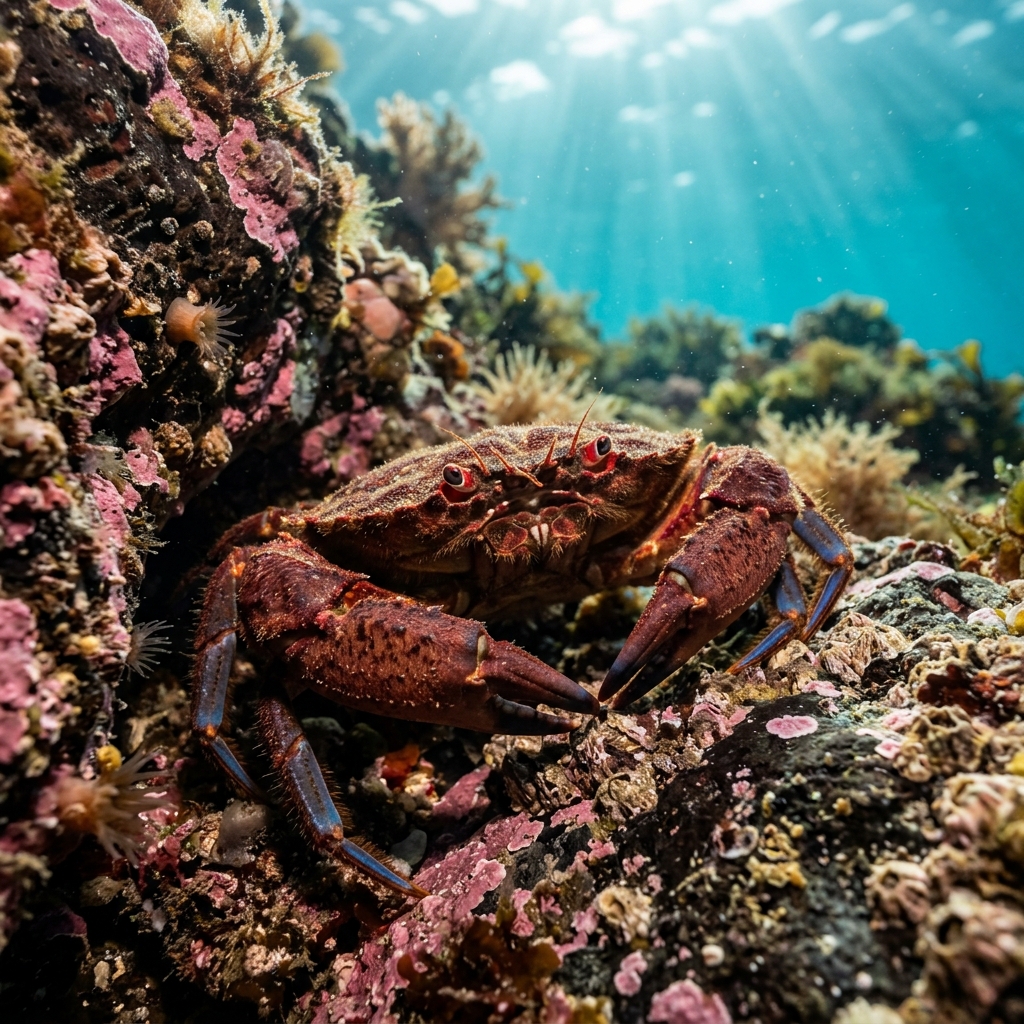
Reef neighbours a diver could mistake it for. Use the identification notes above to tell them apart.
Red hermit crabs are logged across an enormous range, with the strongest concentrations of dive-site records in Spain, France, the Philippines, the United States, and Indonesia. In terms of specific regions, the Florida and Southeast coast, the French Riviera, the Yucatán Peninsula, and the Central Visayas in the Philippines all show reliable sightings. Australia, Italy, and the Maldives also contribute strong numbers, reflecting how widely distributed this family is.
Mapping where Hermit Crab is logged…
They are logged at dive sites across a huge number of countries worldwide. The most common regions in the data include the Florida coast, the French Riviera, the Yucatán Peninsula, the Central Visayas in the Philippines, and Sardinia. They also appear regularly in the Maldives, Indonesia, and Australia, making them one of the most geographically widespread crustaceans divers encounter.
They are present year-round in both the Northern and Southern Hemisphere, with no seasonal peak in sightings. Their tolerance for water temperatures from around 12 °C up to nearly 30 °C means they're active on both cold-water and tropical reefs throughout the year.
Focus on the legs and claws rather than the shell. Members of this family have distinctly reddish to orange-red colouration on their legs and claws, and the left claw is larger than the right, the opposite of most other hermit crab families. The shell itself is borrowed and highly variable, so it's not a reliable ID feature.
Size varies considerably across the Diogenidae family, from tiny species under a centimetre that occupy small snail shells to larger ones whose borrowed shells can reach the size of a fist. When you see one underwater, the visible body, just the legs, claws, and head, is usually only a few centimetres across regardless of shell size.
As a hermit crab grows, its shell becomes too small and it must find a larger one. They will investigate and try on new shells regularly. Sometimes several crabs gather and trade shells in a chain, each moving into the next available one. This behaviour is occasionally observed by divers and looks like a slow-motion wrestling match between two crabs touching shells.
No. Red hermit crabs pose no risk to divers. Their claws can pinch if you place a finger in front of them, but they are far too small and defensive in nature to cause any real harm. The standard advice applies: look, don't touch, and let them go about their business.
Site and sighting data is aggregated from diver logs, iNaturalist and GBIF. For taxonomy and conservation status:
Sally Lightfoot Crab
2,422 sites