Polydectus cupulifer
Meet the teddy-bear crab, a warm-water species observed in 24-29 °C tropical seas. Learn how to spot and identify it on your next reef dive.
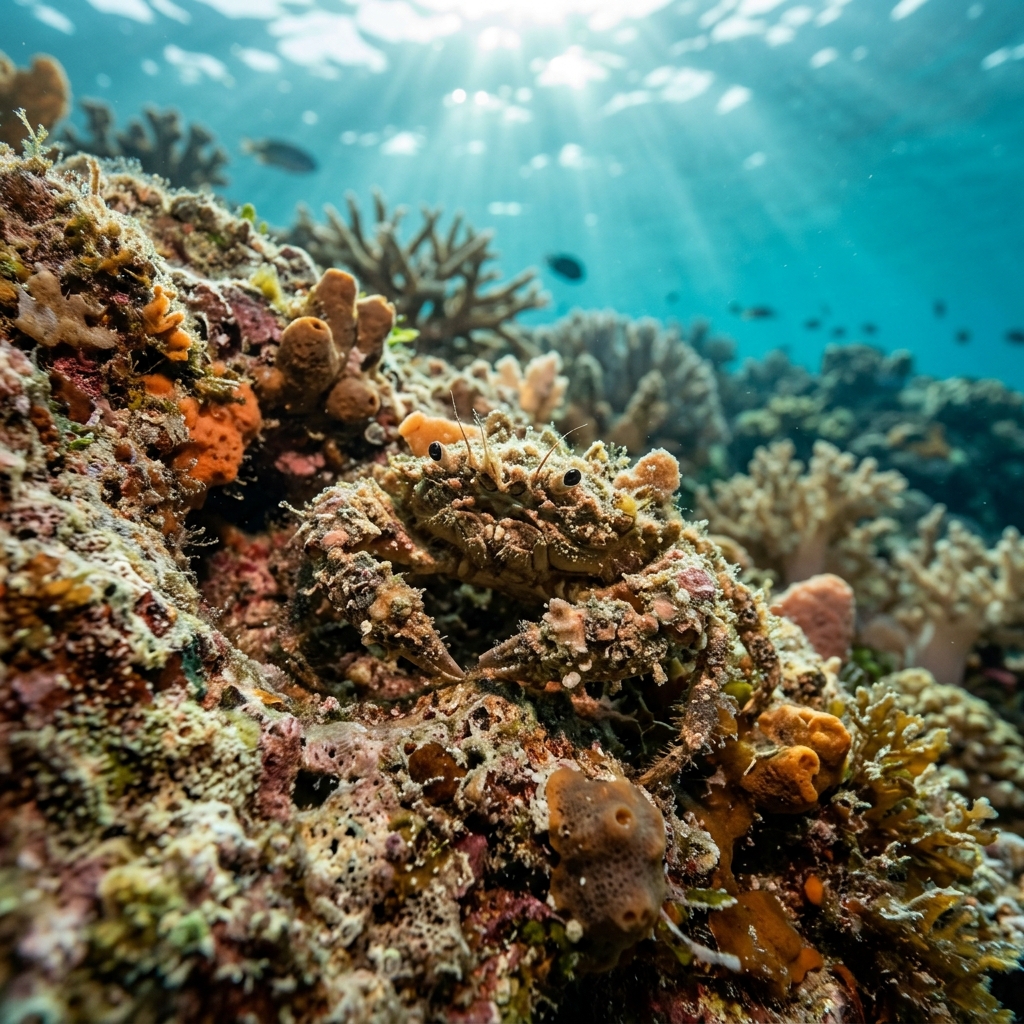
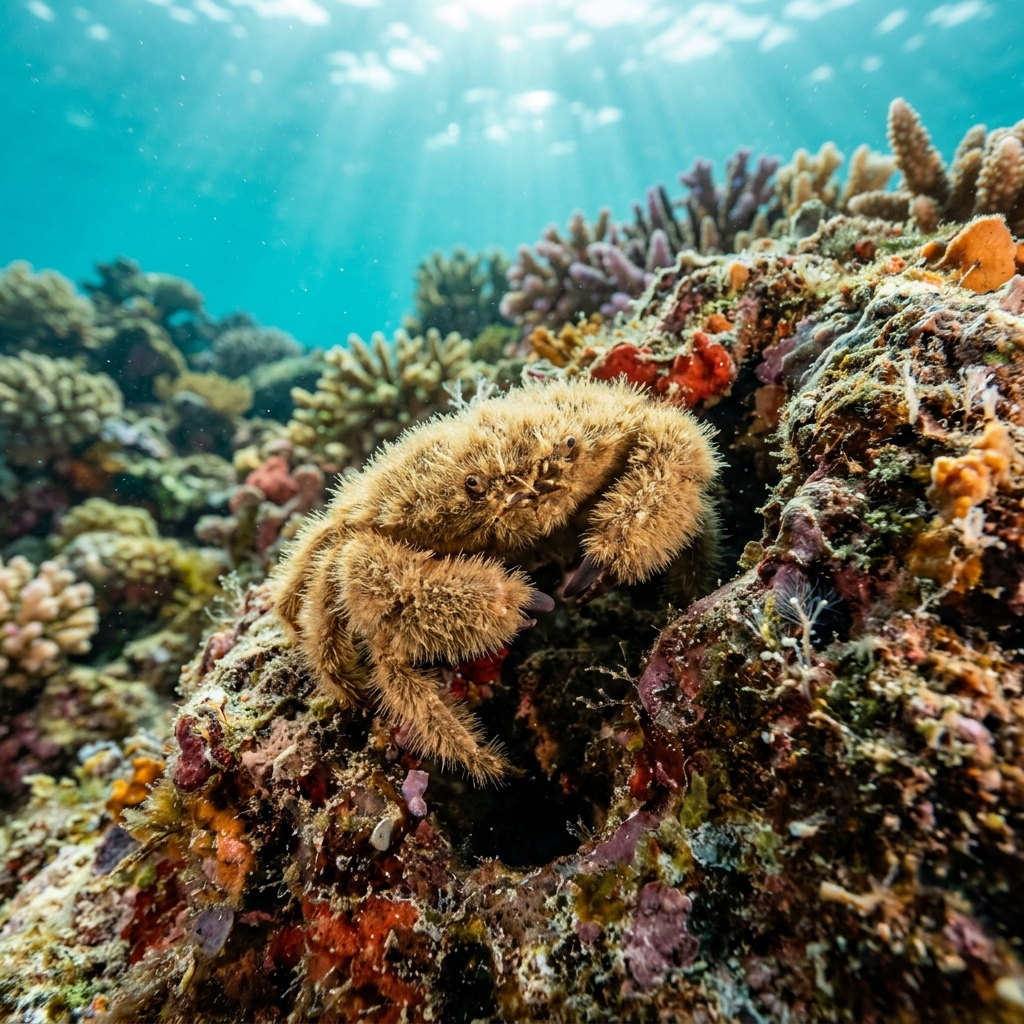
The teddy-bear crab is named for the dense, fur-like setae (hair-like bristles) that cover its carapace and legs, giving it a soft, plush appearance unlike almost any other crab on the reef. Colouration is typically reddish-brown to orange-tan, and the rounded body is small enough to fit in the palm of your hand. The heavily textured coat often traps bits of algae and debris, helping it blend into encrusting reef surfaces. Look for it pressed low against the substrate, motionless and easy to overlook.
Teddy-bear crabs are cryptic by nature, spending most of their time wedged into crevices or pressed against rubble and encrusting coral where their furry coat makes them nearly invisible. When approached by a diver they tend to stay still rather than flee, relying on camouflage as their first line of defence. Searching slowly at night with a torch is likely your best chance of catching one in the open.
The dense coat of setae is more than decoration: the crab actively holds sea anemones in its claws as a living shield, using the stinging tentacles to deter predators. This habit places it among a small group of crabs that use live cnidarians as portable weaponry.
No seasonal pattern has emerged from existing sighting data, so encounters can reasonably be expected at any time of year in suitable warm-water habitat. The species' observed temperature range of 24 to 29 °C points to stable tropical conditions rather than a defined seasonal window.
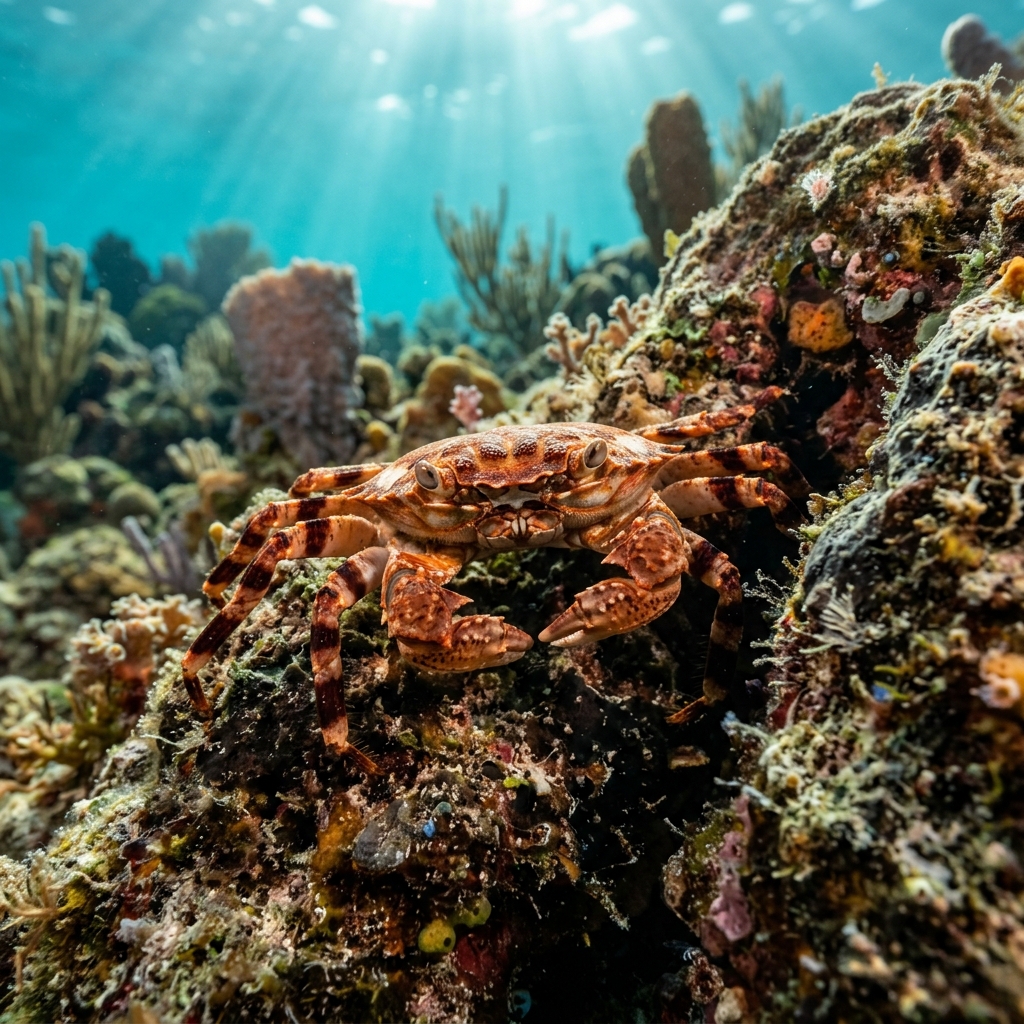
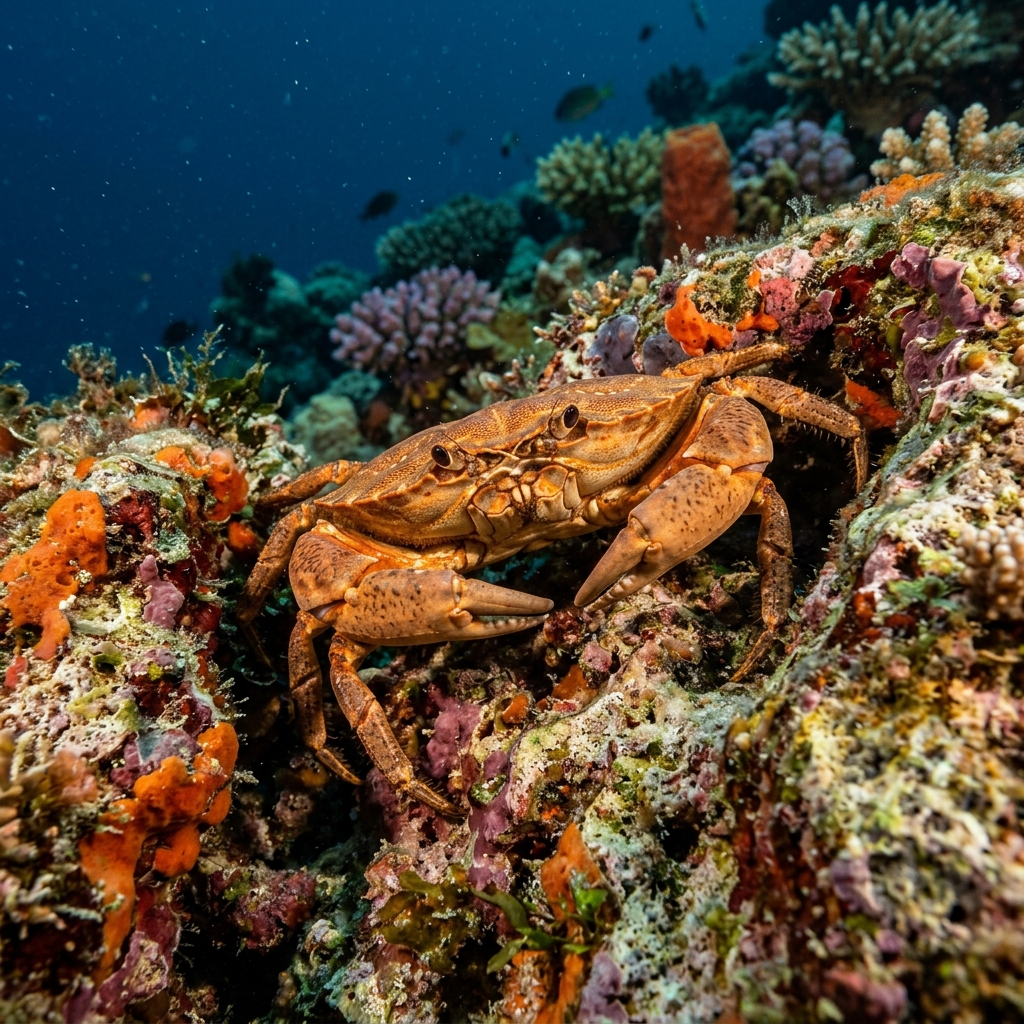
Reef neighbours a diver could mistake it for. Use the identification notes above to tell them apart.
Diver sighting records for this species are sparse, so no specific regions or sites can be highlighted with confidence. Based on the observed water-temperature range of 24 to 29 °C, encounters are most plausible on shallow tropical Indo-Pacific reefs where those temperatures prevail year-round.
Mapping where Teddy-bear Crab is logged…
Look for a small, rounded crab completely covered in dense reddish-brown bristles that make it look furry. That distinctive 'plush' texture sets it apart from most other reef crabs. It often sits completely still, so scan slowly along encrusting surfaces and rubble.
It is one of the few crabs known to hold live sea anemones in its claws as a defence mechanism, wielding the stinging tentacles against would-be predators. This behaviour is shared with pom-pom crabs and makes the teddy-bear crab a notable find for macro-focused divers.
Confirmed diver sightings are limited, so no specific hotspot regions can be named yet. The species' observed temperature range suggests it inhabits shallow tropical Indo-Pacific reefs. Macro dive sites known for cryptic crustaceans in warm waters are your best starting point.
There is no defined season in the available data. On tropical reefs within the 24 to 29 °C temperature band the species favours, conditions are relatively stable year-round. Night dives tend to be more productive for spotting cryptic crabs like this one.
Exact size data for this species is limited, but they are considered a small crab, typically small enough to sit comfortably in the palm of your hand. Their compact size and cryptic colouring mean they are easily missed without a careful, slow search.
Site and sighting data is aggregated from diver logs, iNaturalist and GBIF. For taxonomy and conservation status:
European Green Crab
2,469 sites