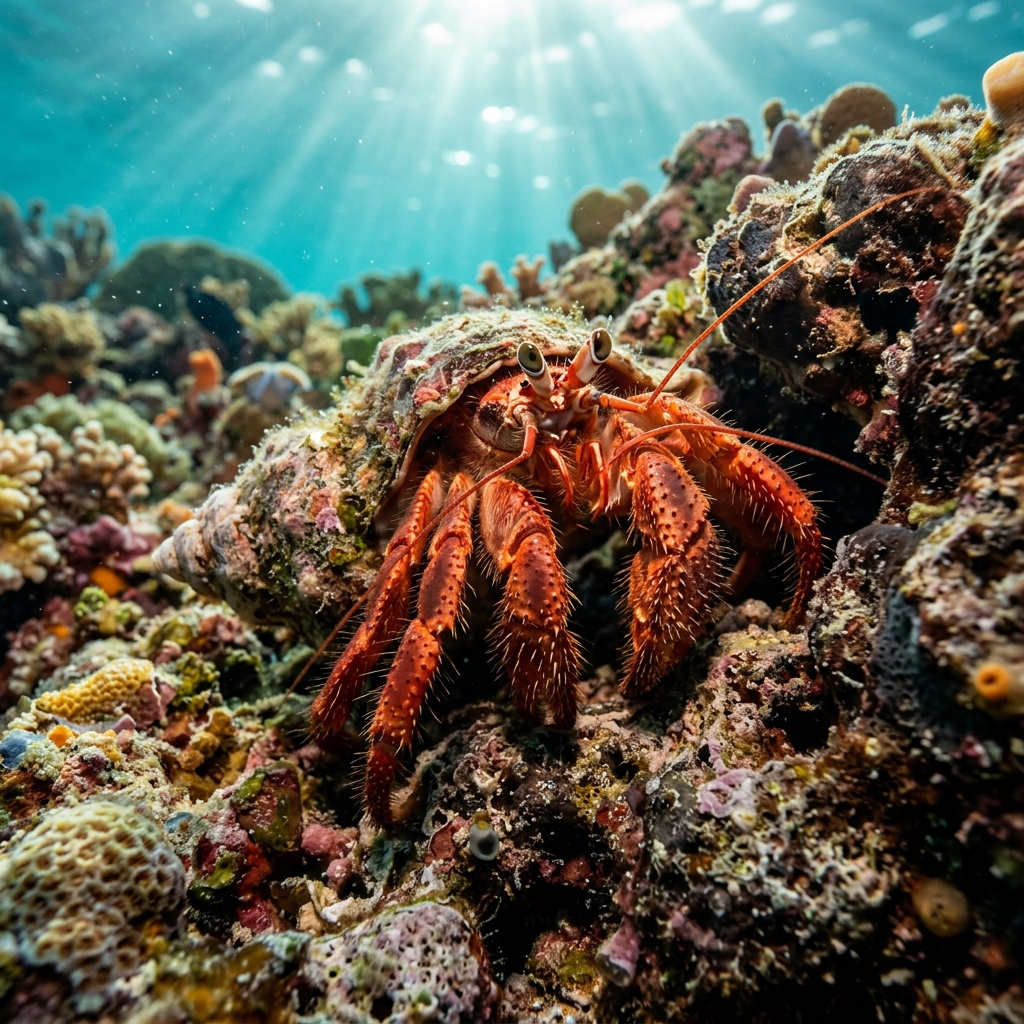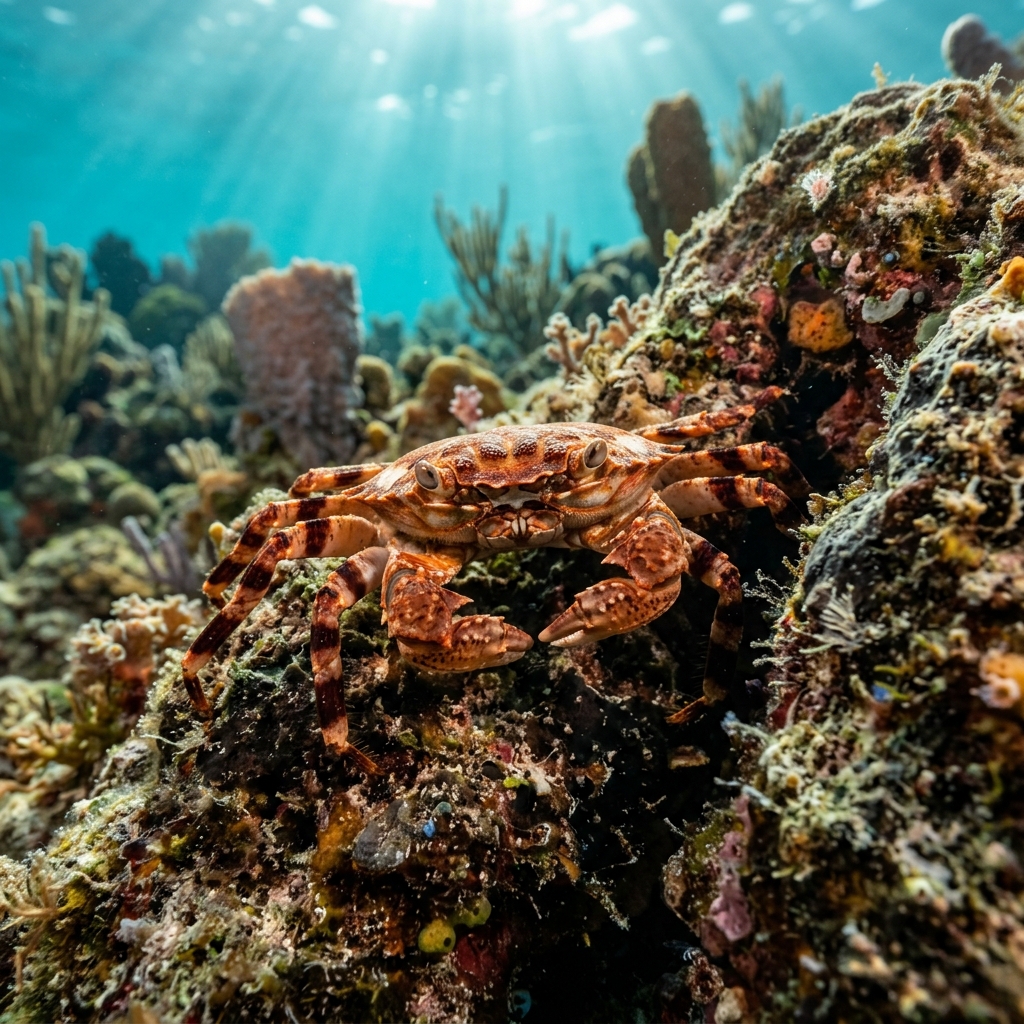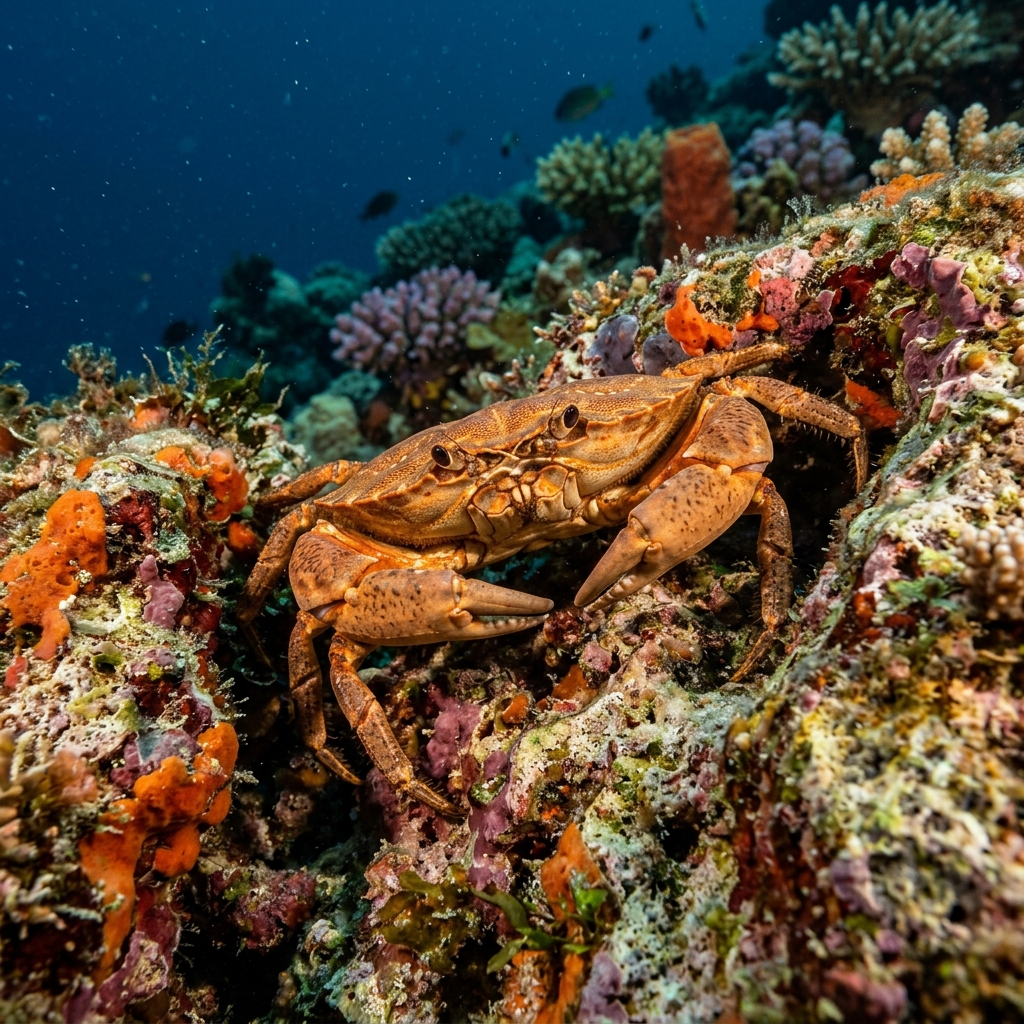
Hoplophrys oatesii
Spot the colour-matching Candy Crab in the Philippines' Visayas and Bali reefs. Here's when, where, and how to find this camouflaged soft-coral specialist.
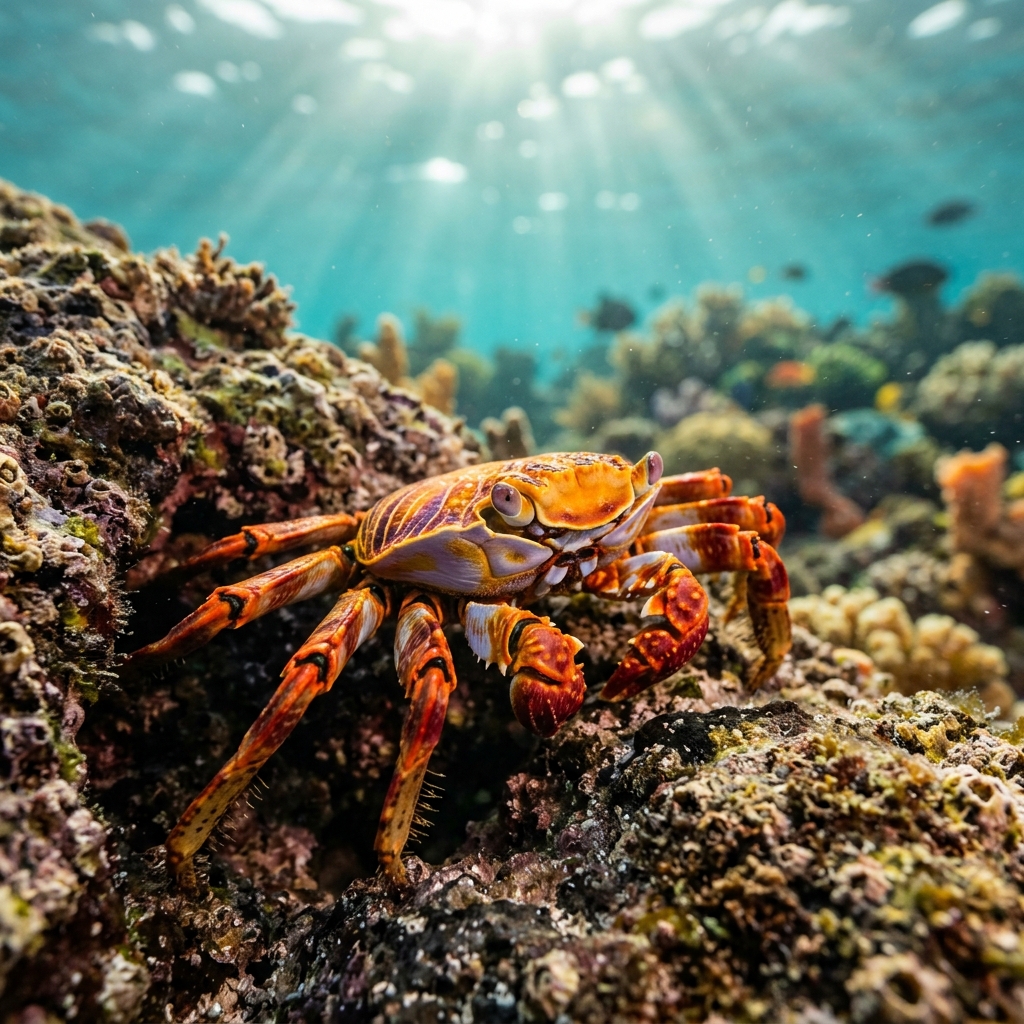
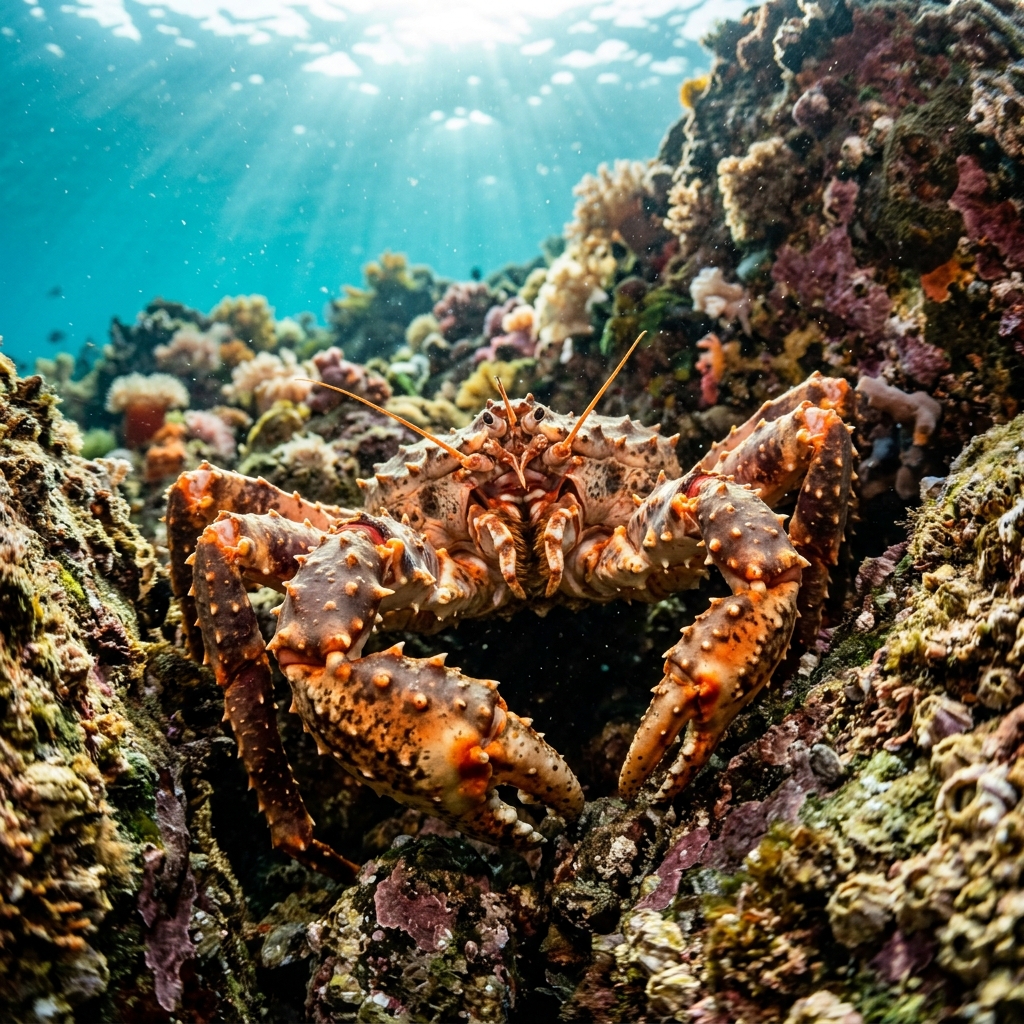
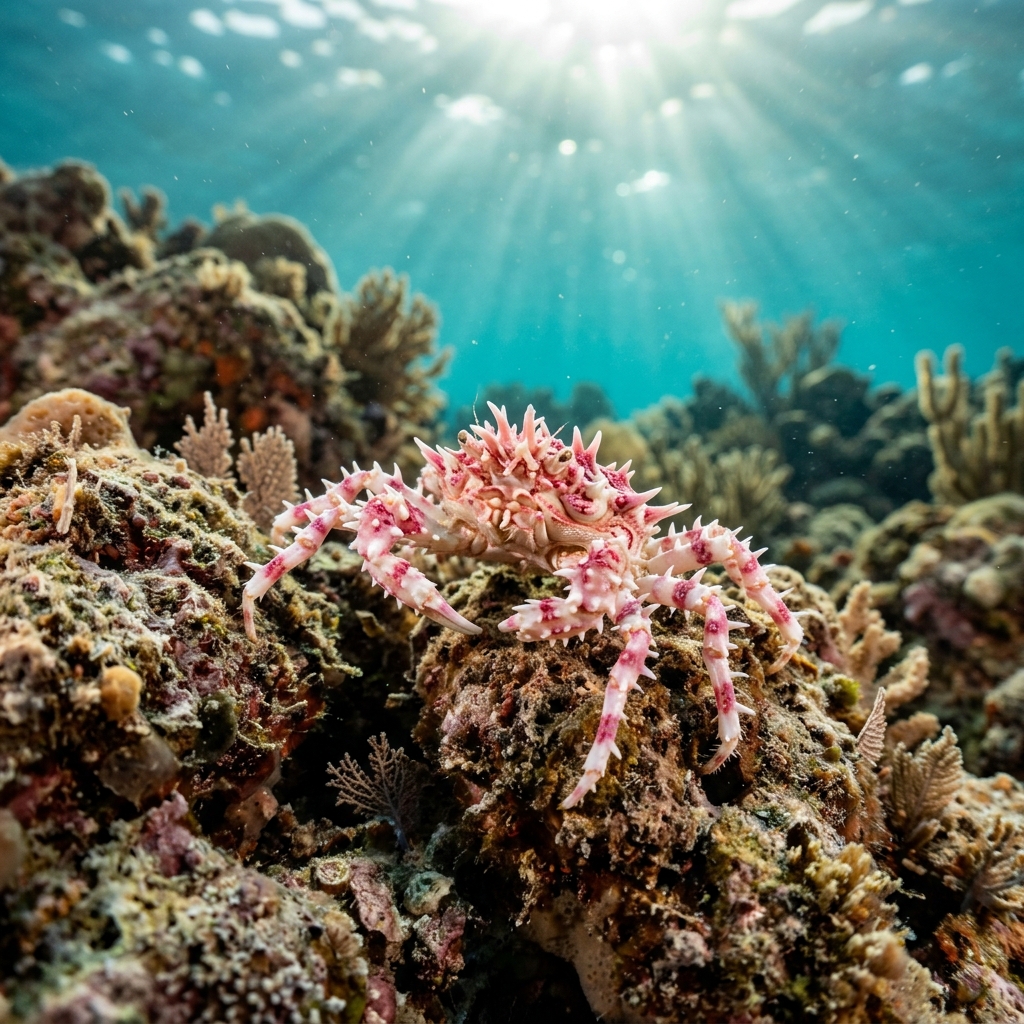
Small and ornately textured, this crab presses itself flat against soft corals, matching the host's colour almost perfectly, from white to yellow, orange, or pink, complete with polyp-mimicking bumps (tubercles) across its body. The giveaway is the crab's outline: a compact, spiny carapace (upper shell) with legs that grip the coral branches in a characteristic hugging posture. Look for a slight asymmetry in colour saturation between the crab and the coral, and the tell-tale eyes peeking above the branches.
You will almost never spot one in open water; it stays clamped to a soft coral or dendrophylliid coral head, often wedged into the centre of the colony where the branches are densest. It is slow-moving and relies almost entirely on camouflage, so it tends to freeze rather than flee when a diver approaches. Patient macro photographers who scan each coral branch methodically are the ones who find it.
This crab can change its body colour over time to match a new host coral, a process thought to involve selective feeding on coral pigments, meaning individuals on different coral species often look like different animals entirely.
Northern Hemisphere sightings concentrate in November through March, which aligns with the cooler, calmer dive season across the Philippines and much of Southeast Asia. Observed water temperatures sit between 27 and 29 degrees Celsius, so warm tropical reefs support it year-round, but that November to March window produces the most logged encounters.
Most sightings come from the Philippines, particularly the Central, East, and North Visayas, and Western Visayas, making it one of the most reliably logged crabs in the country. Indonesia is the next best bet, with records across Bali, Lombok, Sulawesi, and Maluku, and there are smaller but consistent clusters in Sipadan and East Sabah in Malaysia.
Mapping where Candy Crab is logged…
The Philippines, especially the Visayas islands, is by far the best-documented location, with sightings spread across many dive sites in the Central, Eastern, Northern, and Western Visayas. Indonesia, including Bali, Sulawesi, and Maluku, comes second, followed by Sipadan and East Sabah in Malaysia.
Northern Hemisphere sightings peak between November and March. This coincides with the prime dive season across the Philippines and much of Southeast Asia, when seas tend to be calmer and visibility good. The species lives in warm water between 27 and 29 degrees Celsius, so it is present on suitable reefs throughout the year.
Look for a small, spiny crab hugging a soft coral branch so closely that it nearly disappears into the colony. The body is covered in rounded tubercles that mimic the coral's own polyps, and the colour, whether white, yellow, orange, or pink, matches the host. The eyes and the slightly stiffer outline of the carapace are usually the only reliable giveaways.
Candy Crabs are very small animals, typically only a centimetre or two across the carapace, which is part of what makes them so hard to spot. Their compact size lets them nestle deep within coral branches and remain hidden even when a diver is looking directly at them.
It is thought to acquire its colour partly by feeding on its host coral, incorporating the coral's pigments into its own body. This means a crab living on a pink coral looks pink, and one on a yellow coral looks yellow. If it moves to a differently coloured coral, it can gradually shift colour to match the new host.
Site and sighting data is aggregated from diver logs, iNaturalist and GBIF. For taxonomy and conservation status:
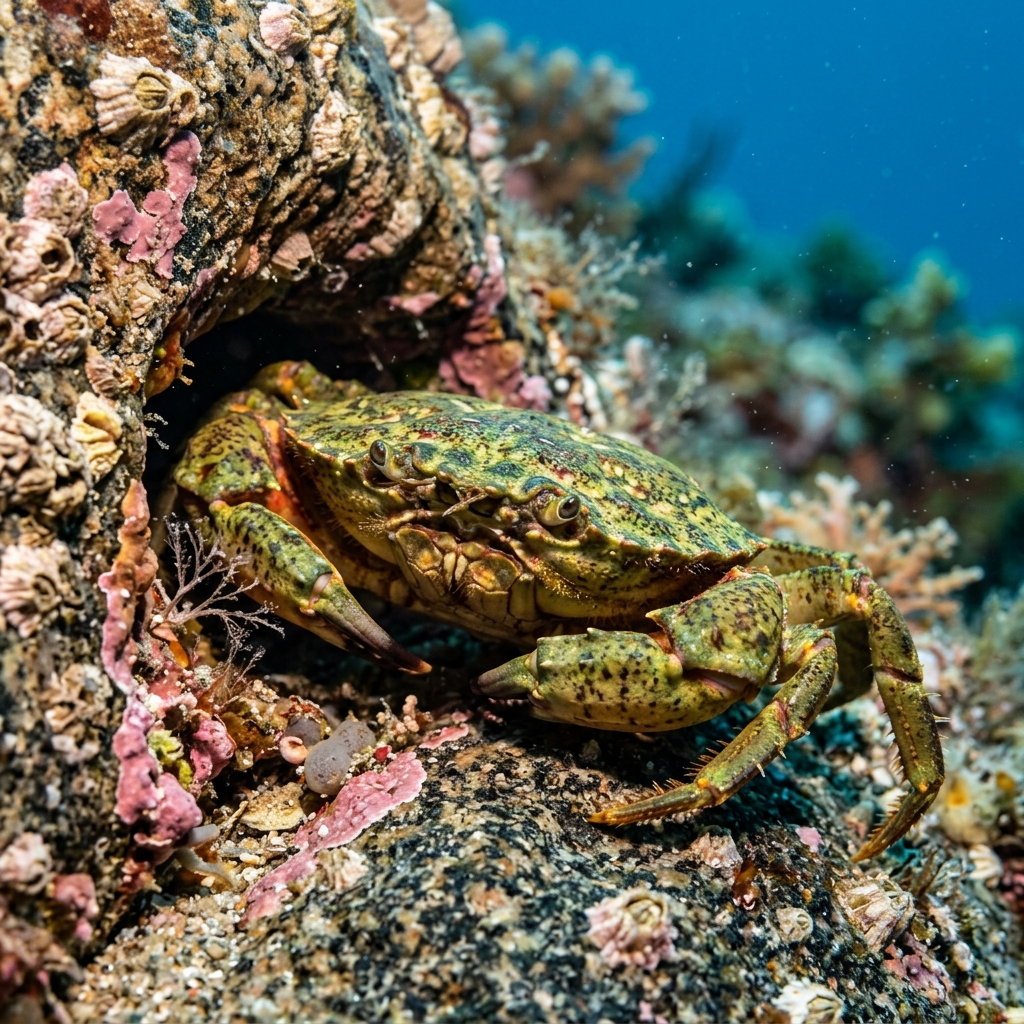
European Green Crab
2,469 sites