Cyclocoeloma tuberculatum
Spot Reef Decorator Crab in the warm waters of the Visayas, Philippines. Learn how to ID this master of disguise and where it hides on shallow reefs.
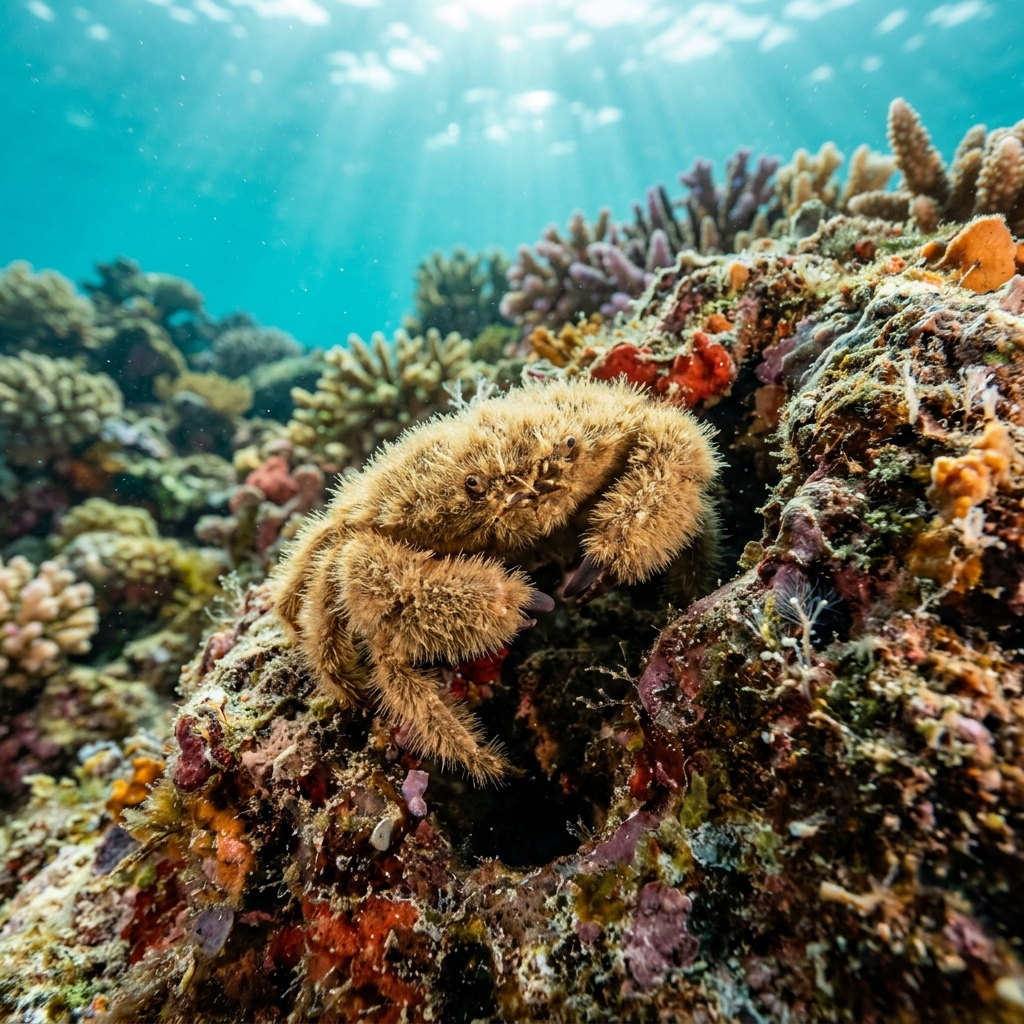
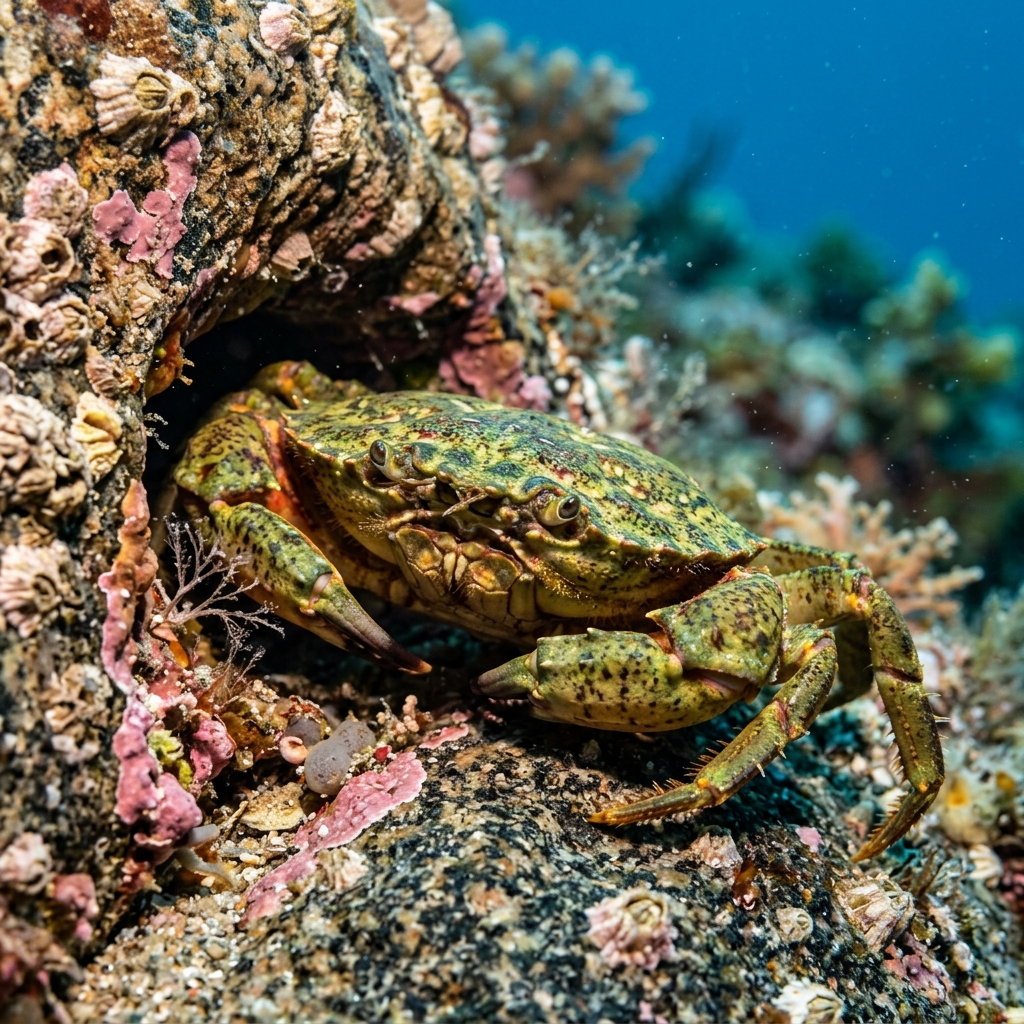
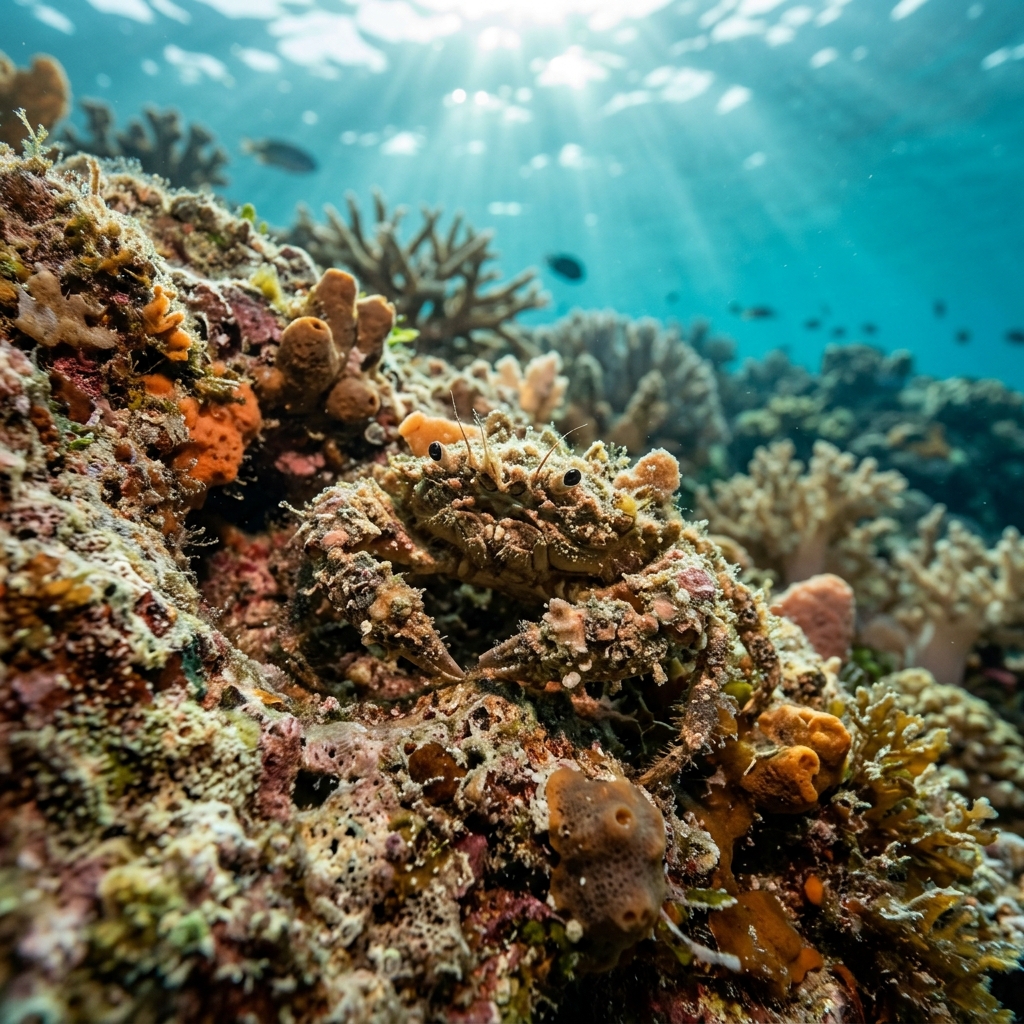
Small and slow-moving, this crab is almost impossible to spot until you know what you are looking for: it deliberately attaches living sponges, algae, and other reef debris to hooked hairs covering its body, creating a convincing lump of reef that walks. The underlying shell is broad and heavily tuberculated (covered in raised bumps), which helps the decorations grip. Look down near rubble edges and coral heads in shallow water and train your eye to spot something that looks slightly out of place, because the crab itself rarely gives the game away.
You will almost always find it stationary or moving extremely slowly across rubble, coral heads, or sponge-covered surfaces in very shallow water, typically within the top ten metres. When approached it tends to freeze rather than flee, trusting its camouflage completely. Night dives can make spotting easier when torchlight catches the texture of decorations that look subtly wrong against the surrounding reef.
The decoration behaviour is not cosmetic. This crab actively selects and maintains its cover, trimming and rearranging living organisms on its shell as they grow or change. Because the decorations stay alive and keep growing, the crab is effectively wearing a miniature reef.
No clear seasonal pattern has emerged from the data, so it can be treated as a year-round resident on tropical reefs. Its observed water temperature range of roughly 27 to 29 °C fits the consistently warm conditions of its core range across the Philippines and Melanesia.
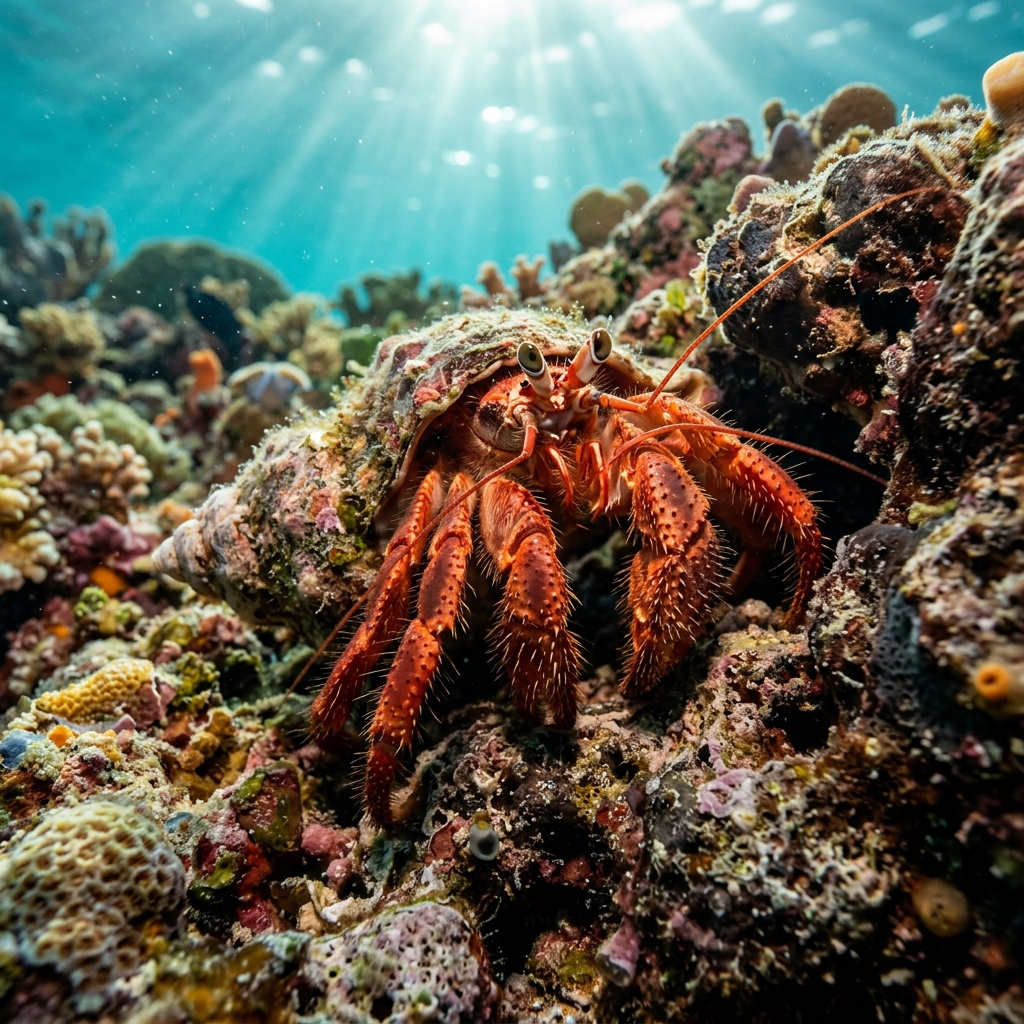
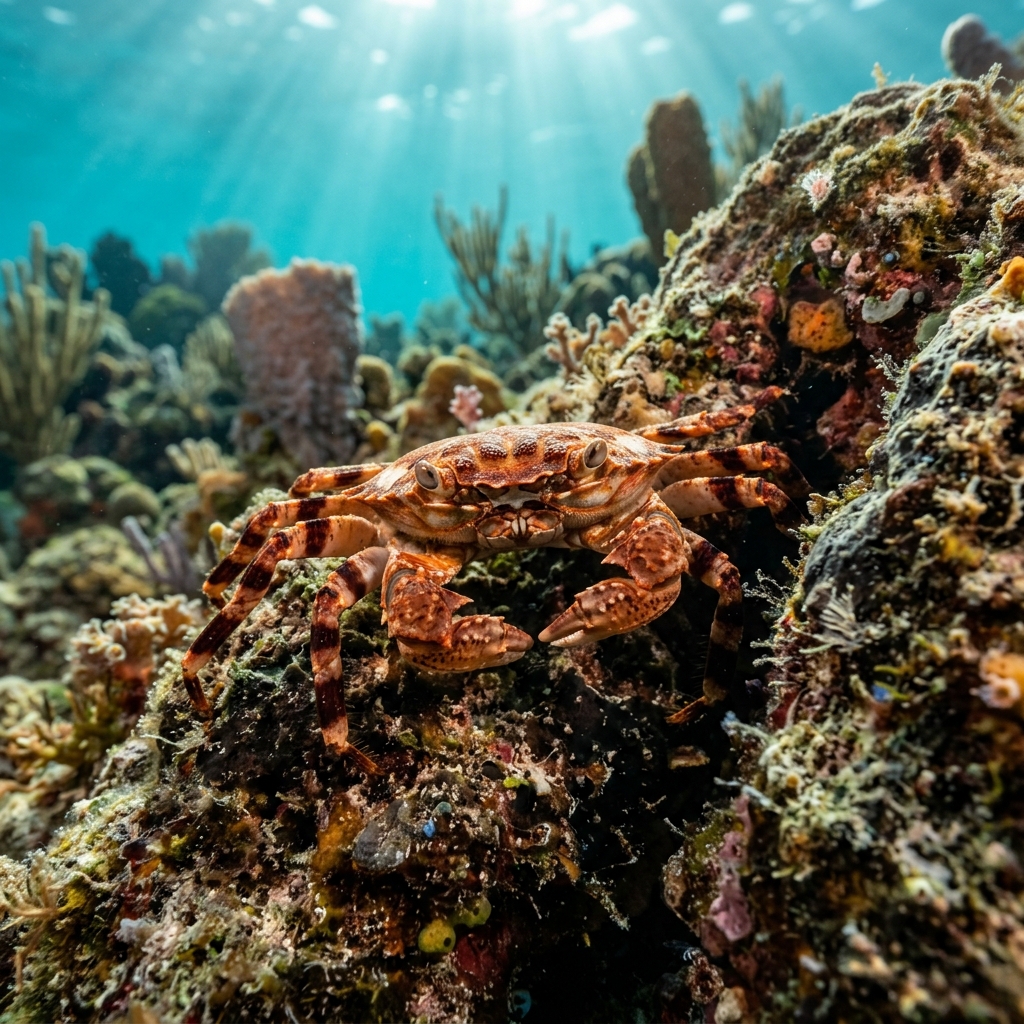
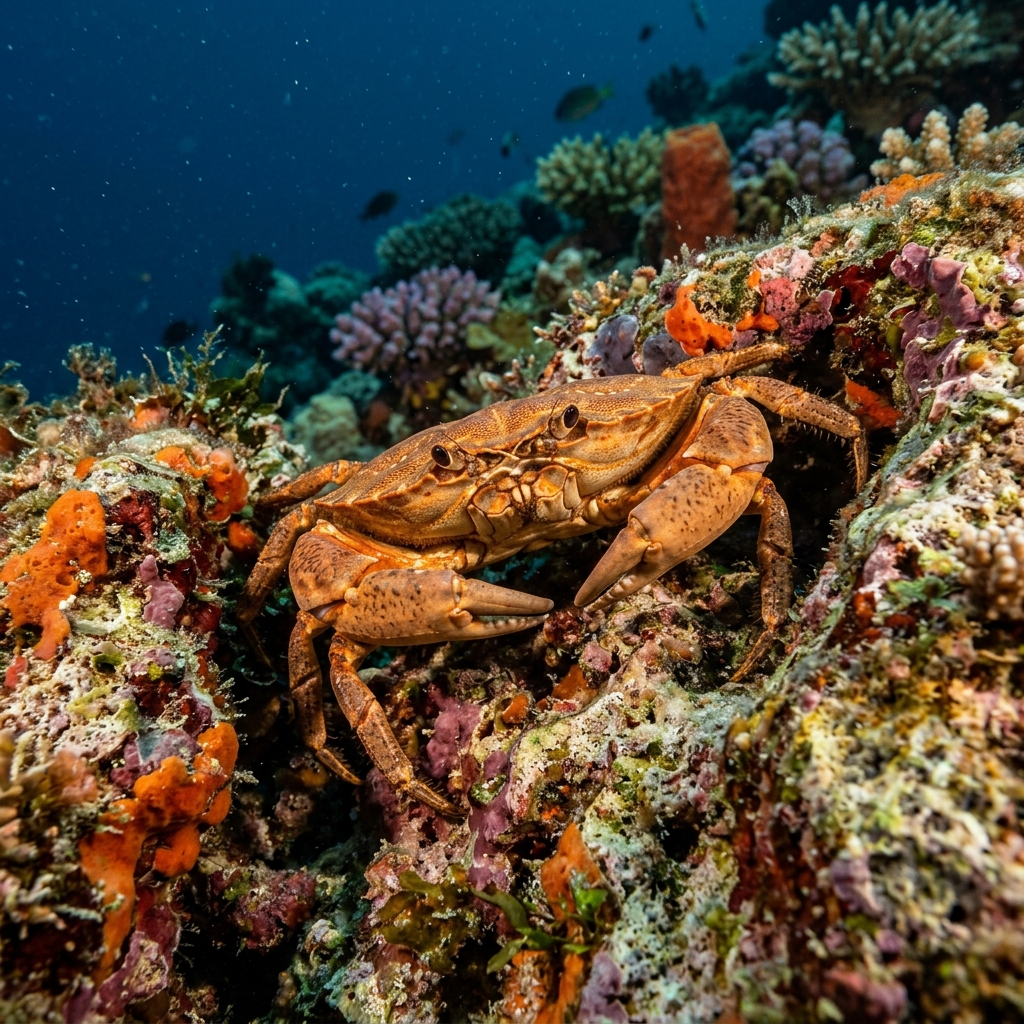
Reef neighbours a diver could mistake it for. Use the identification notes above to tell them apart.
The overwhelming majority of sightings come from the Philippines, particularly the Central Visayas region, which accounts for most logged encounters. The northern Philippines and East and North Visayas also contribute notable records. Beyond the Philippines, Papua New Guinea waters around Tufi and Kimbe Bay, along with the Solomon Islands, round out the places where divers have reliably found this species.
Mapping where Reef Decorator Crab is logged…
Your best chances are in the Philippines, especially the Central Visayas where most logged sightings originate. The northern Philippines and East Visayas are secondary hotspots. Papua New Guinea sites around Tufi and Kimbe Bay, and a handful of Solomon Islands locations, also produce regular records.
There is no data pointing to a specific season, so it can be treated as a year-round target. Its warm-water niche of around 27 to 29 °C matches the stable tropical conditions across its range throughout the year.
Look for a small, lumpy object on rubble or coral that seems oddly textured compared to its surroundings. The crab covers itself in live sponges and algae attached to hooked hairs, making it resemble a piece of reef. Movement, or the slight regularity of its body outline, is usually the only giveaway.
No. This is a small, slow-moving crab that poses no threat to divers. It relies entirely on camouflage for defence and is more likely to sit still and wait for you to move on than to respond to your presence at all.
Camouflage is the primary driver. The crab uses specialised hooked hairs called setae to attach living organisms to its shell, blending with the reef so effectively that predators and divers alike can look directly at it without recognising it as a crab. The attached organisms stay alive and continue growing, keeping the disguise fresh.
Site and sighting data is aggregated from diver logs, iNaturalist and GBIF. For taxonomy and conservation status:
European Green Crab
2,469 sites