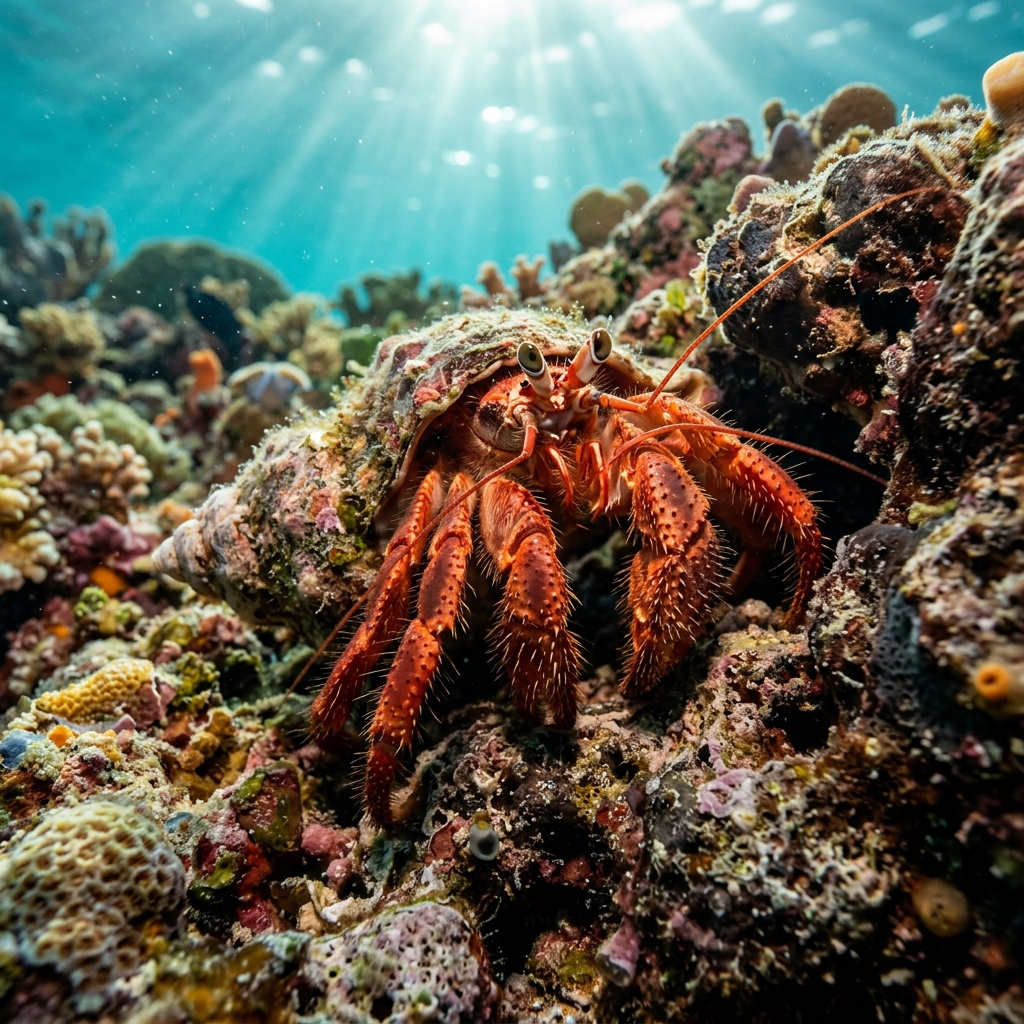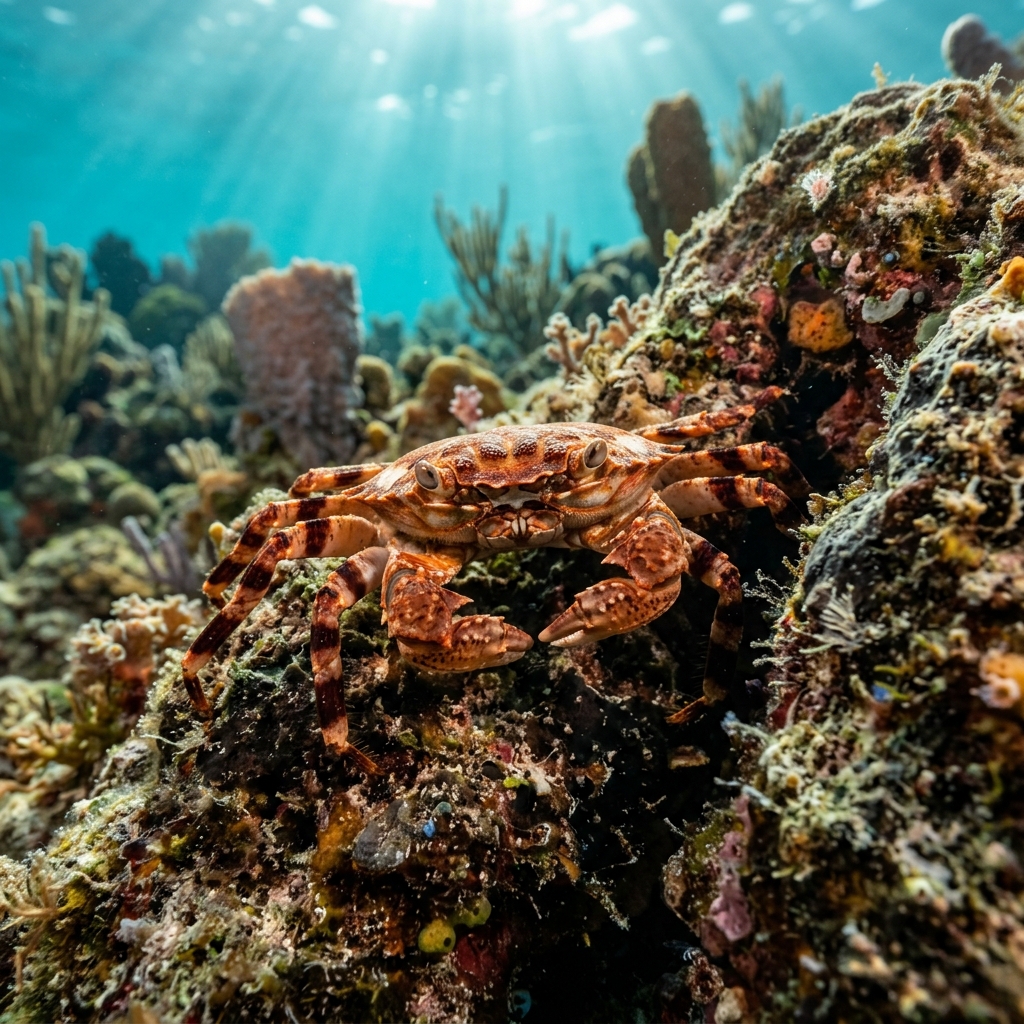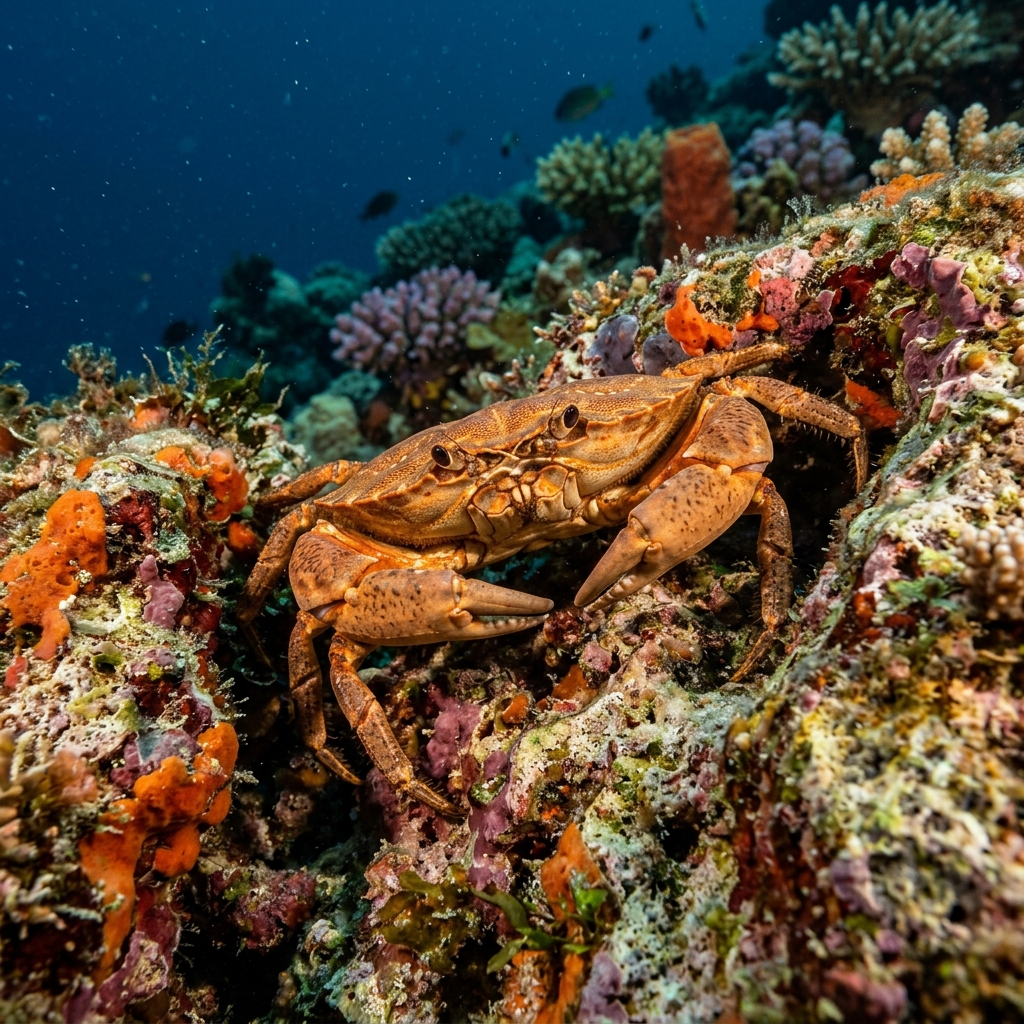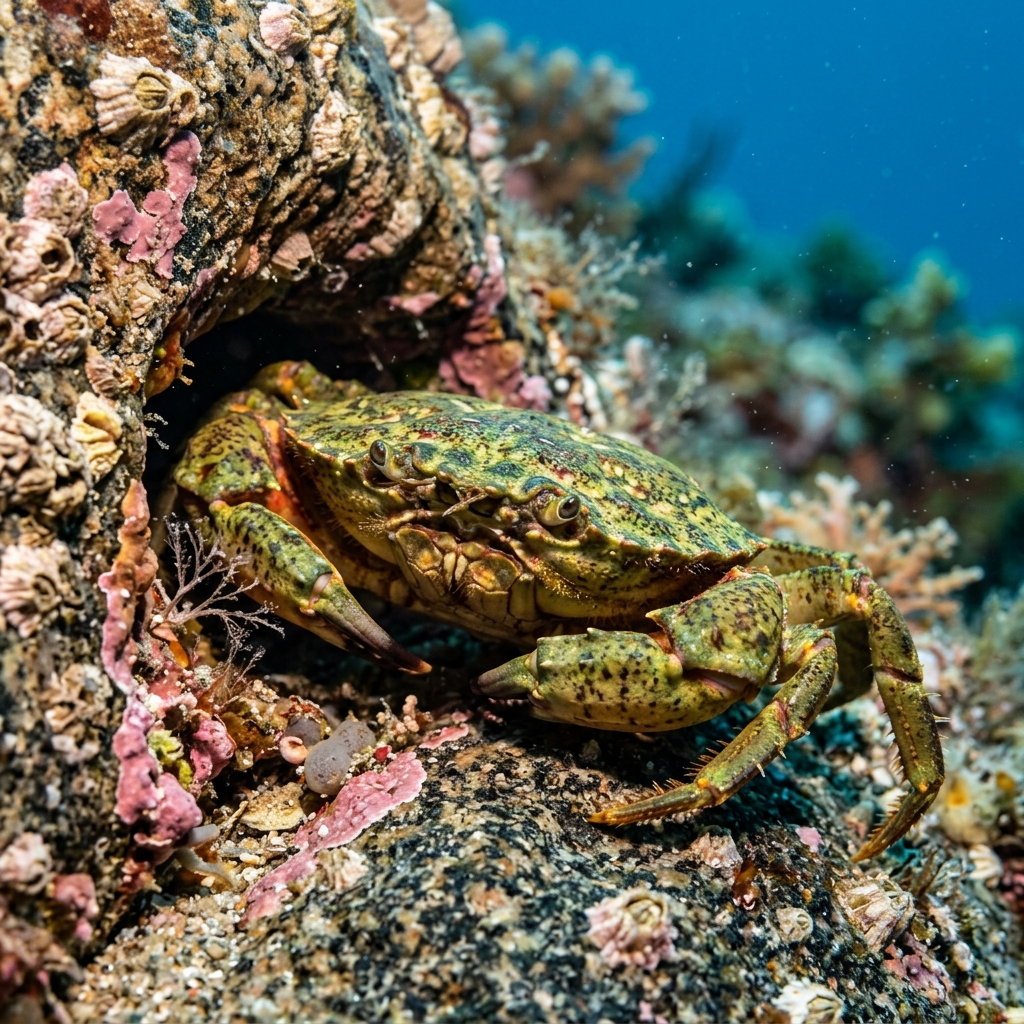
Polybiidae spp.
Find velvet swimming crabs in cold waters off the UK, France, and Canada. Learn how to spot them in 7-17°C seas year-round.
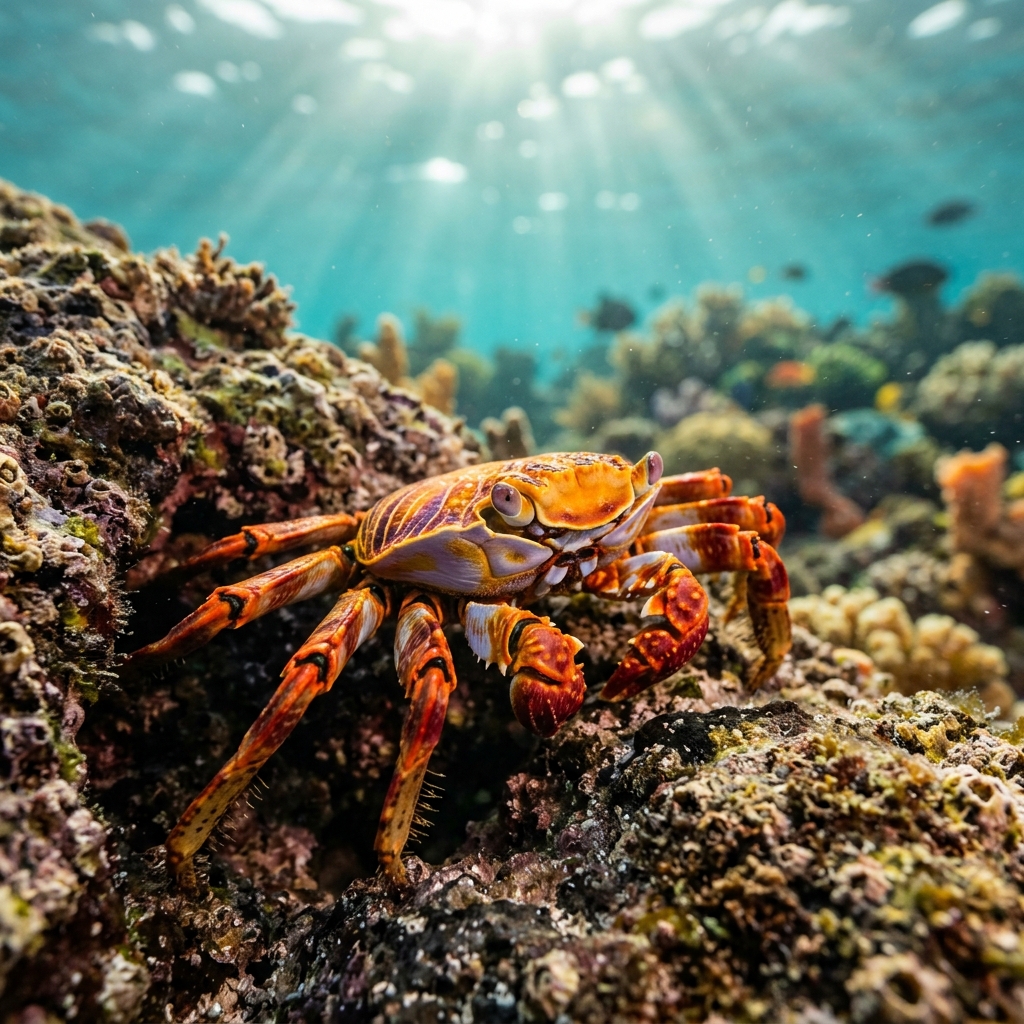
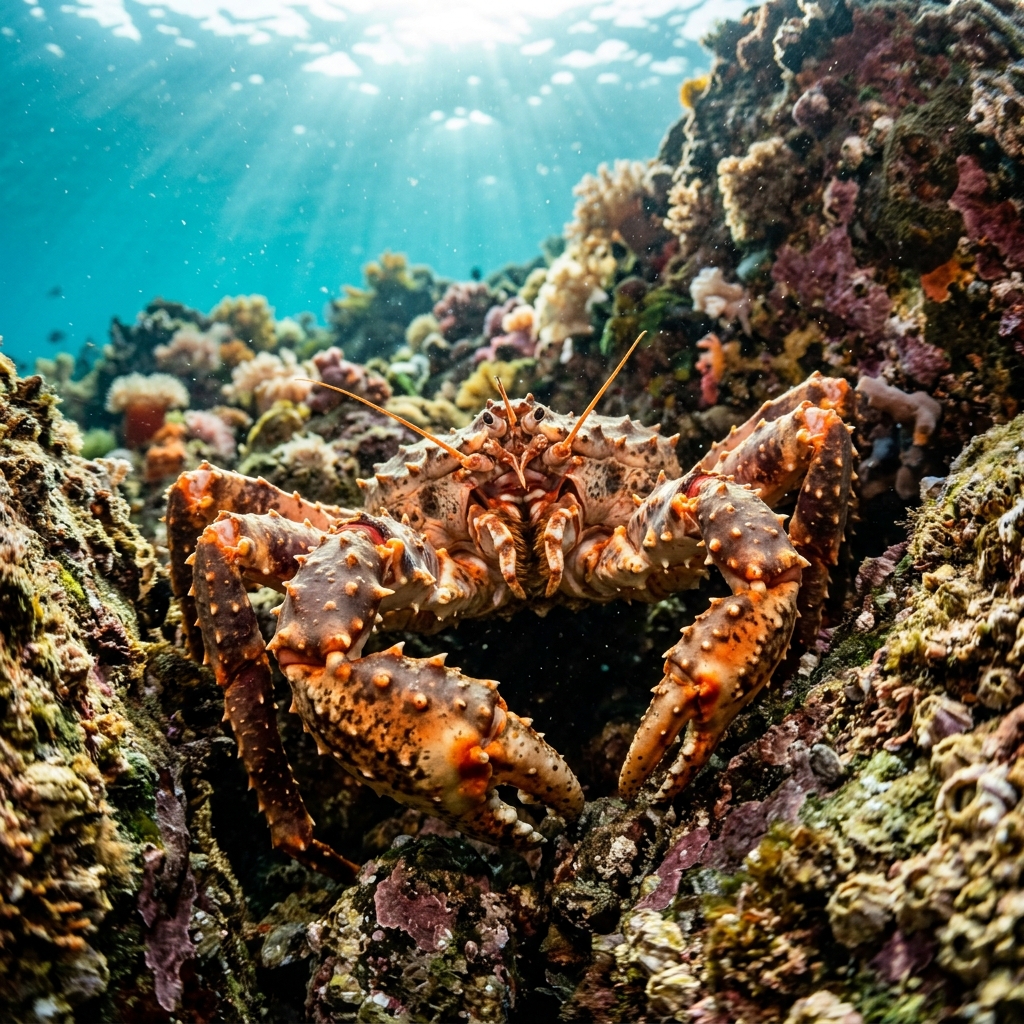
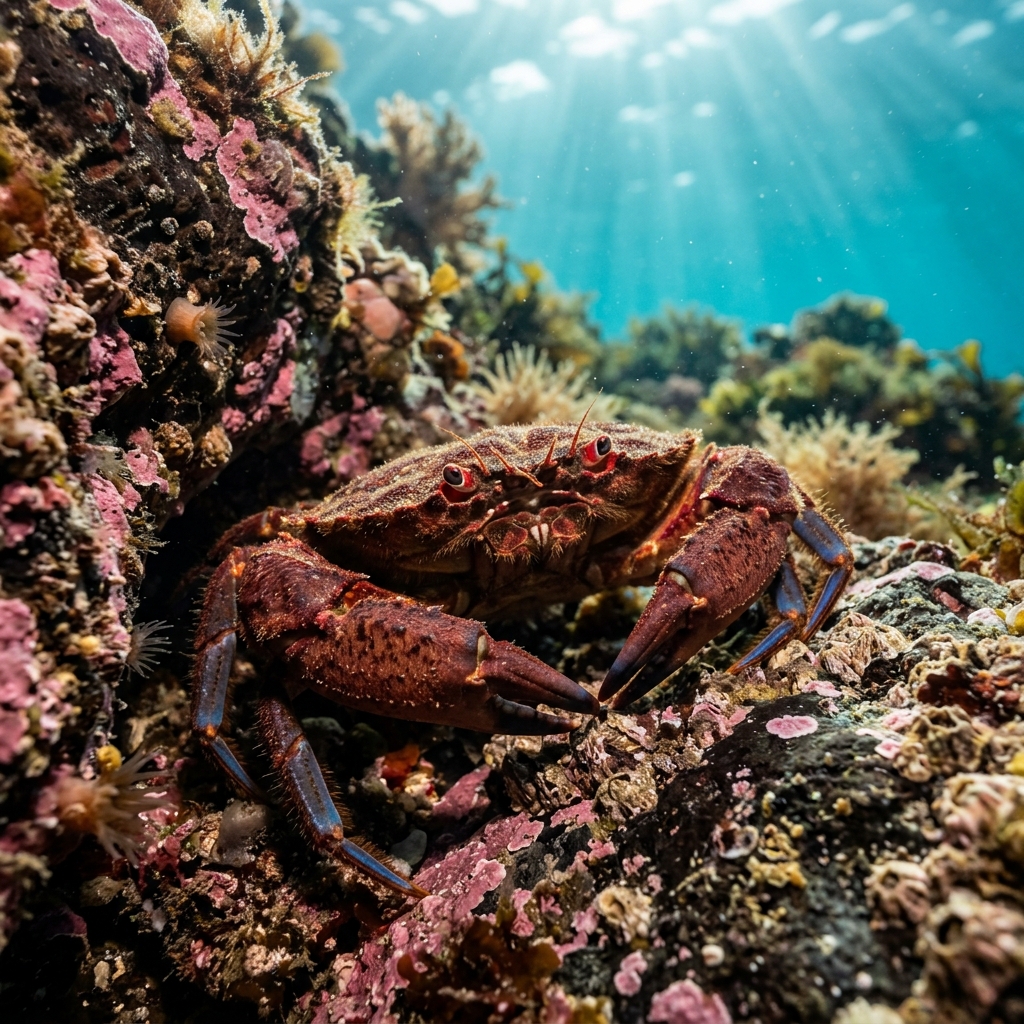
These crabs are named for the dense, velvety hair (setae) that covers their dark brown to reddish carapace, giving them a distinctly furry look underwater. The rear pair of legs are flattened into paddle-shaped swimming appendages, the feature that sets swimming crabs apart from other crabs at a glance. Look for vivid red eyes and a spiny front edge to the shell. Females carry a noticeably broader, rounder abdomen folded beneath the body, while males show a narrower, more pointed one.
Velvet swimming crabs tend to shelter in rocky crevices, under boulders, and among kelp holdfasts, emerging to scavenge or hunt on the reef. When approached they often stand their ground rather than flee, raising their front claws in a defensive posture that makes them easy to observe closely. Encounters are just as likely on daytime dives as at night, though they can be more active after dark.
Unlike most crabs that can only shuffle sideways across the seabed, velvet swimming crabs can swim short distances using their paddle-like rear legs, which lets them make quick escapes or ambush prey in open water.
Sighting data does not point to a defined season, so these crabs appear to be encountered year-round wherever conditions suit them. Their observed temperature range of roughly 8 to 17°C ties them firmly to temperate and cool-water dive destinations, so plan accordingly.
Velvet swimming crabs are most consistently logged across the United Kingdom, France, and Ireland, with particularly strong coverage around South Coast England, Scotland's west coast, and Brittany and Normandy. Canada rounds out the top tier, especially in Nova Scotia and the Bay of Fundy. They also appear along Scandinavian coasts in Sweden and Norway.
Mapping where Swimming Crab is logged…
The strongest coverage is around the United Kingdom, France, and Ireland. Top spots include South Coast England, Scotland's west coast, and Brittany and Normandy in France. Nova Scotia and the Bay of Fundy in Canada are also reliable locations, as are parts of Norway and Sweden.
There is no clear seasonal peak in the sighting data, so they can be encountered at any time of year. Their comfort zone of roughly 8 to 17°C means you are most likely to find them on temperate dives in the North Atlantic and similar cool-water destinations.
Look for a dark, hairy carapace with a furry texture, bright red eyes, and distinctly paddle-shaped rear legs. The spiny front edge of the shell and the crab's habit of raising its claws in defence are also good field marks. No other common crab in its range combines all three of these features.
Yes. Their hindmost pair of legs are flattened into paddles, allowing them to swim short distances through open water. This is the defining trait of swimming crabs as a group, and it makes their movements look quite different from the sideways scuttle of most other crabs.
They are not considered dangerous. When cornered they will raise their claws and look threatening, but the risk to a diver is negligible. Give them space and they will usually settle back down without incident.
Site and sighting data is aggregated from diver logs, iNaturalist and GBIF. For taxonomy and conservation status:
European Green Crab
2,469 sites