Halichoeres hortulanus
Spot the Checkerboard Wrasse across the Maldives, Egyptian Red Sea, and Philippines. Present year-round in warm tropical waters from 23-29°C.
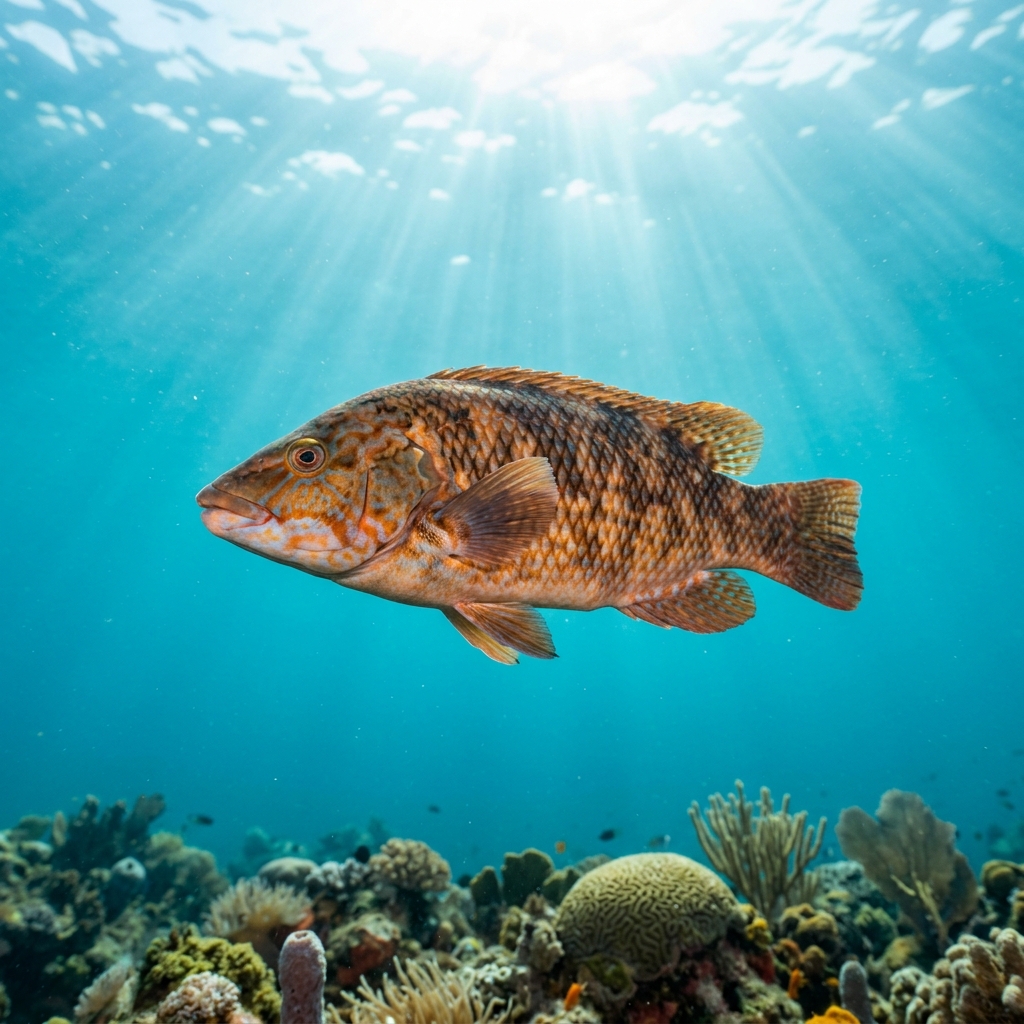
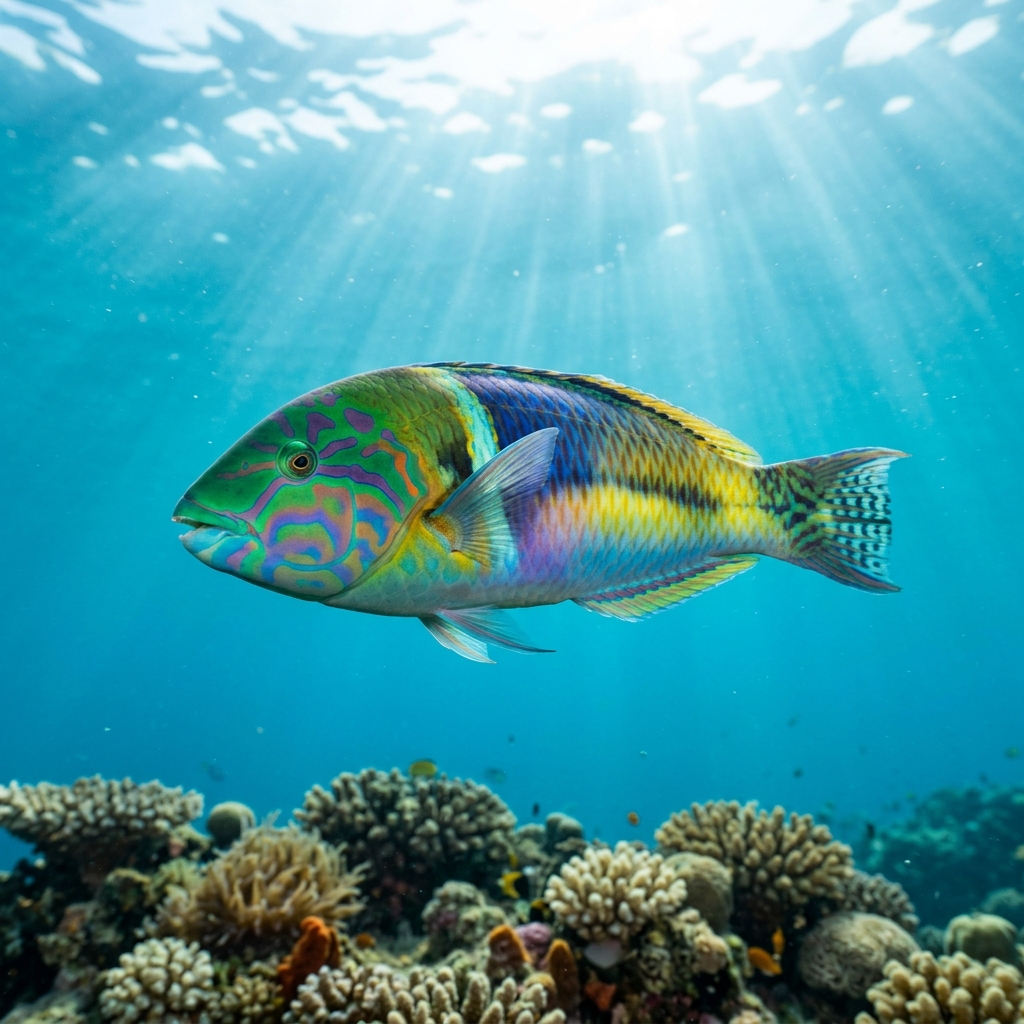
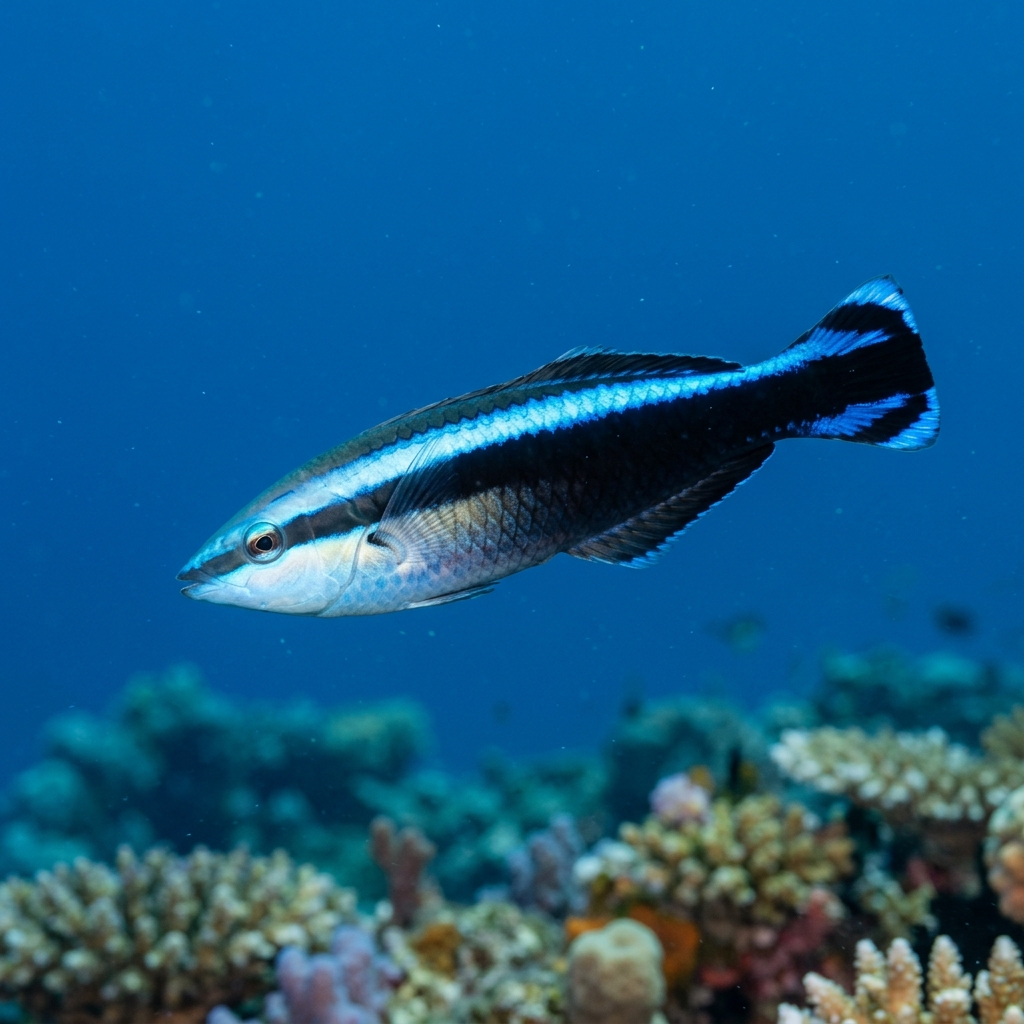
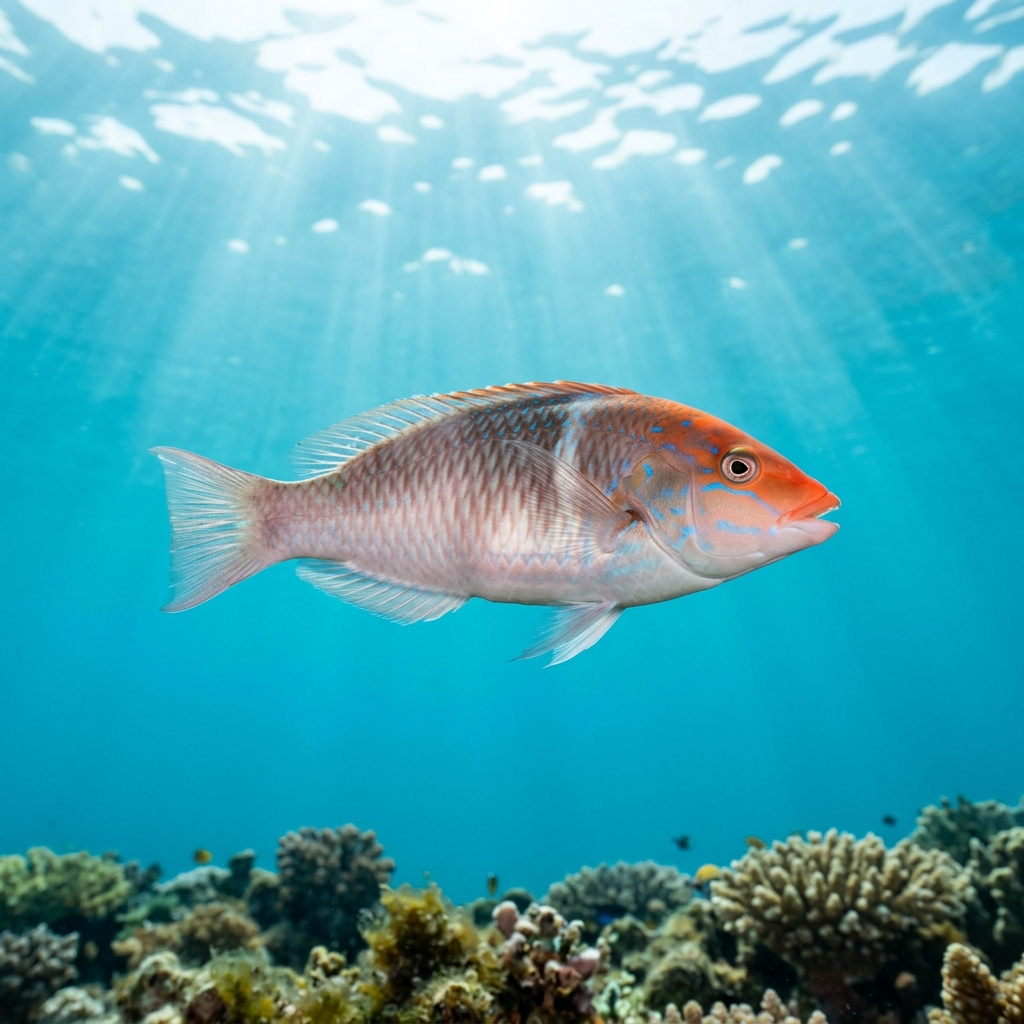
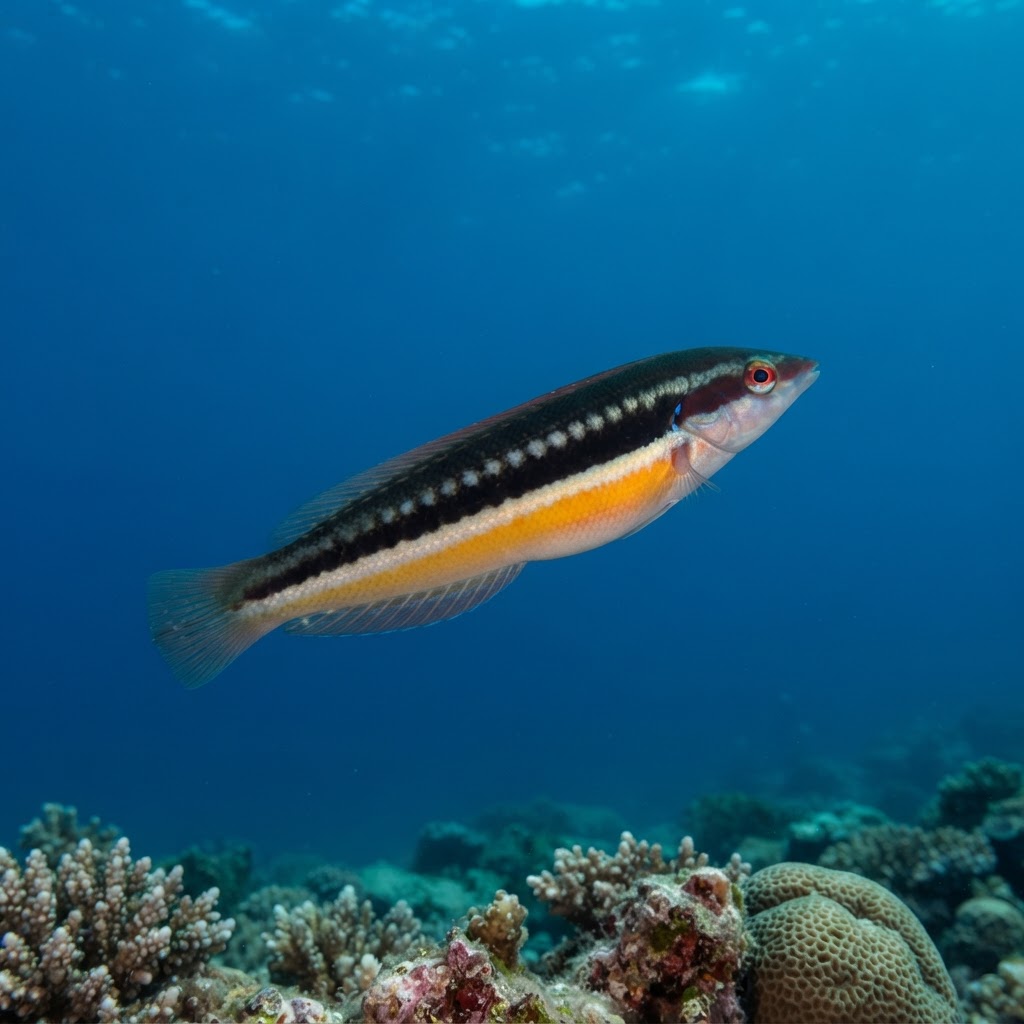
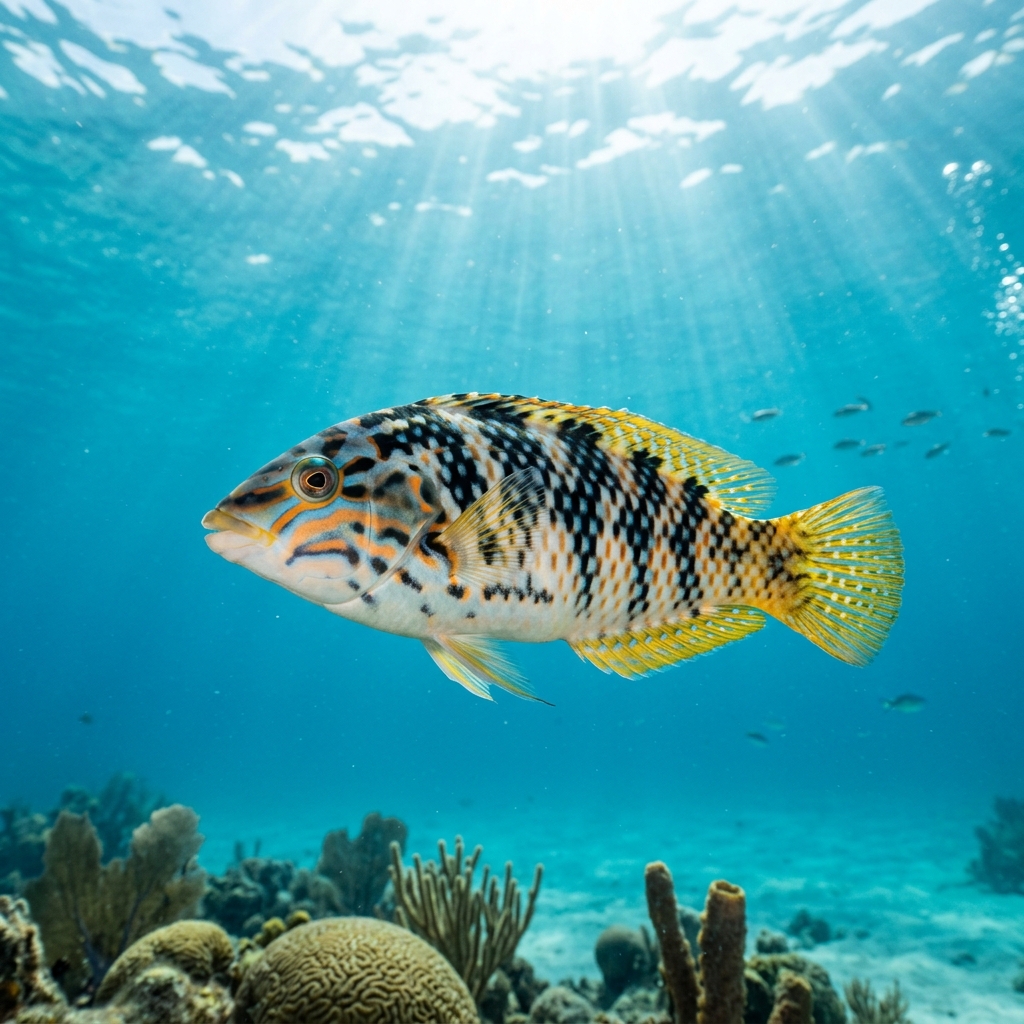
Look for the bold black-and-white chequered (grid-like) pattern across the body flanks, it is unlike almost anything else on a tropical reef. The head carries a striking mix of green, orange, and pink lines radiating from the eye, making the face almost painted in appearance. Juveniles look dramatically different: they are white with large black spots and an orange-edged dorsal fin, resembling an entirely different fish. Adult females and initial-phase males share similar colouring, while terminal-phase males develop richer, deeper greens across the head.
You will usually find one foraging alone across rubble, sand patches, or mixed reef, flipping small stones and picking through debris for invertebrates, a classic wrasse hunting style. It tends to be moderately wary of divers and will move away at a measured pace rather than bolt, giving you a reasonable window to observe. Sightings are most common in the shallower reef zones where foraging substrate is available.
Like all wrasses, the Checkerboard Wrasse is a protogynous hermaphrodite, females can transition to fully functional males. This is why you may notice the striking difference between juvenile, initial-phase, and terminal-phase individuals: they are all the same species at different life stages.
Checkerboard Wrasse is present year-round in both the Northern and Southern Hemisphere, with no concentrated season detected in the data. Its comfort in water temperatures from 23 to 29°C means it is reliably found on tropical reefs regardless of the time of year you visit.
Most commonly logged in the Maldives and the Egyptian Red Sea, with particularly strong sighting records around Sharm el Sheikh and Marsa Alam, and across the Male and Ari Atolls. It is also a reliable sighting throughout Indonesia, the Philippines, and Thailand, with Central Visayas and Bali among the standout regions. French Polynesia, Malaysia, Australia, and the Seychelles round out a wide Indo-Pacific range.
Mapping where Checkerboard Wrasse is logged…
The Checkerboard Wrasse is most commonly logged in the Maldives, the Egyptian Red Sea (especially Sharm el Sheikh and Marsa Alam), Indonesia, and the Philippines. Thailand, French Polynesia, and the Seychelles also have strong records. It has one of the widest Indo-Pacific distributions of any wrasse.
Any time of year works. Data from both hemispheres shows no concentrated season, and the species is comfortable across the 23-29°C water temperatures typical of Indo-Pacific tropical reefs throughout the year.
The chequered black-and-white grid pattern on the body flanks is the key marker and is essentially unique. Pair that with the vividly striped face in greens, oranges, and pinks, and there is very little else on a reef you could confuse it with. Juveniles are white with black spots and an orange-edged dorsal fin.
They are a medium-sized reef wrasse, typically reaching around 25-27 cm in length, though some individuals can approach 30 cm. In the water they feel like a robust, solid fish rather than a slender one.
Yes. Like most wrasses, they are protogynous hermaphrodites, meaning females can transition into males. This explains why juveniles, females, and mature males all look so different from each other, they are the same species at different life stages.
Site and sighting data is aggregated from diver logs, iNaturalist and GBIF. For taxonomy and conservation status:
Bird Wrasses
3,632 sites