Best for beginner divers, 5-22m, shore & boat entry, mild current.
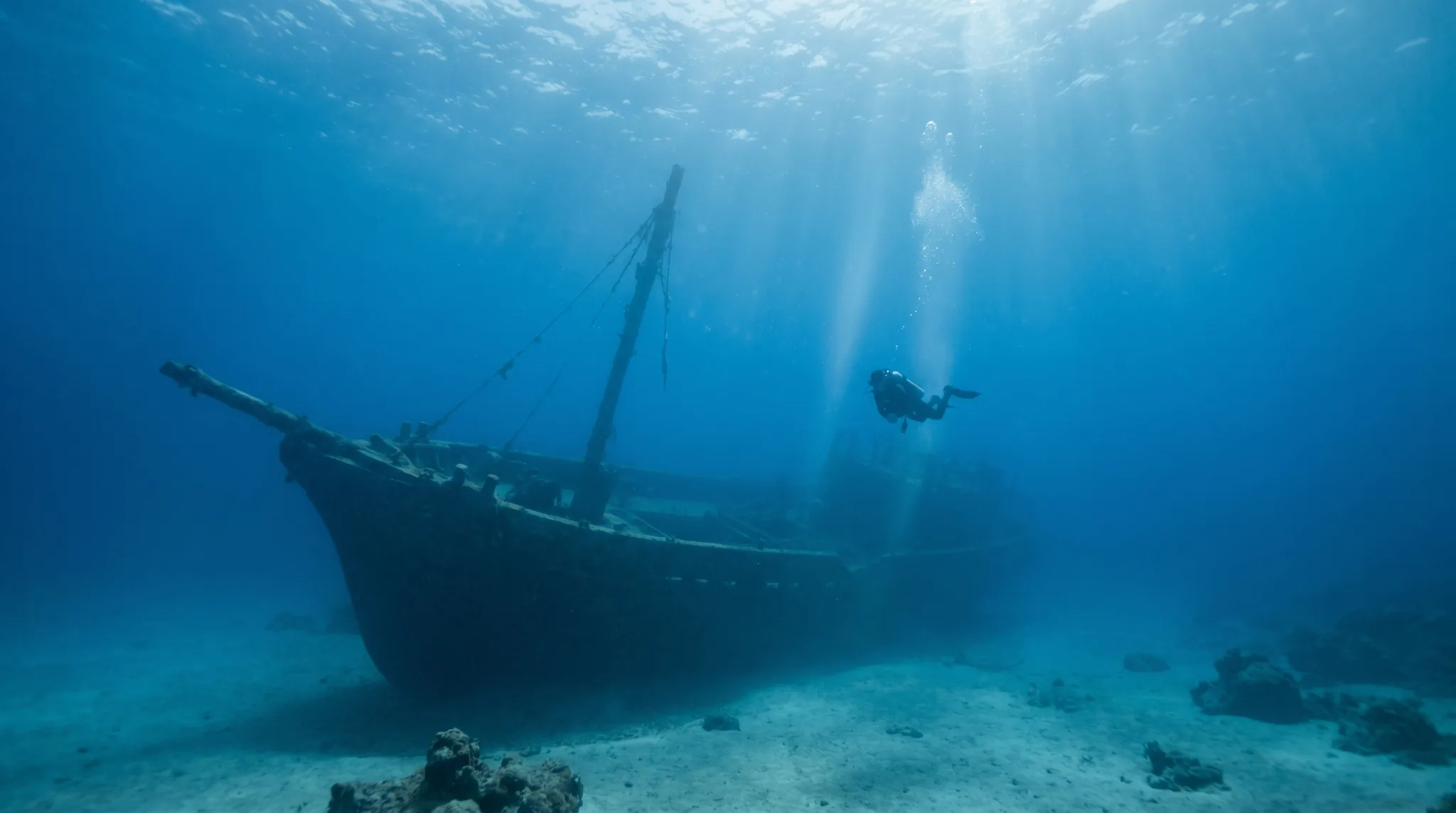
Skeleton Wreck is a small fishing boat located at Coron Island that sits on a slant. The structure begins at a depth of 4 metres, with the vessel's ribs remaining as the primary feature after the rest of the boat weathered away. This site is suitable for beginners and is also popular for snorkelling due to its shallow profile. Divers and snorkellers can access the site by boat or from the shore. Conditions are generally mild with visibility ranging from 10 to 25 metres and water temperatures between 28 and 30 degrees Celsius. Hazards at this site include potential entanglement and sharp coral.
11.94123, 120.19182
Often combined with Lusong Gunboat for a full shallow diving day.
Boat ride from Coron Town typically ranges from 20-60 minutes.
Recorded nearby, within 20km
Depth
5-22m
Visibility
10-25m
Skill Level
Beginner
Entry
Shore & Boat
Water Temp
28-30°C
Current
Mild
Best Time
Jan, Feb, Mar, Apr, May, Oct, Nov, Dec
Yes, the site is considered suitable for beginners due to its shallow depth and mild conditions.
The wreck lies on a slant, starting at 4 metres and reaching a maximum depth of 22 metres, with an average depth of 15 metres.
Yes, the shallow depth of the wreck makes it a popular location for snorkellers.
The site is located 1000 metres from the shore and allows for both boat and shore access.
Diving at Skeleton Wreck in Coron Town requires the following certifications: Open Water. Always dive within your training limits.
A rashguard or 2mm shorty is recommended for diving at Skeleton Wreck in Coron Town. Water temperatures range from 28°C to 30°C.
The best months to visit Skeleton Wreck in Coron Town are January, February, March, April, May, October, November, and December. Conditions outside these months can still be good but are less predictable.
Skeleton Wreck in Coron Town typically has mild currents that most divers can handle comfortably.
Visibility at Skeleton Wreck in Coron Town typically ranges from 10 metres to 25 metres. Conditions vary with weather, tides, and seasons.