Thalassoma lunare
Spot moon wrasse year-round across the Philippines, Malaysia and the Maldives. Colourful, fast-moving, and found from 23-29 °C tropical reefs.
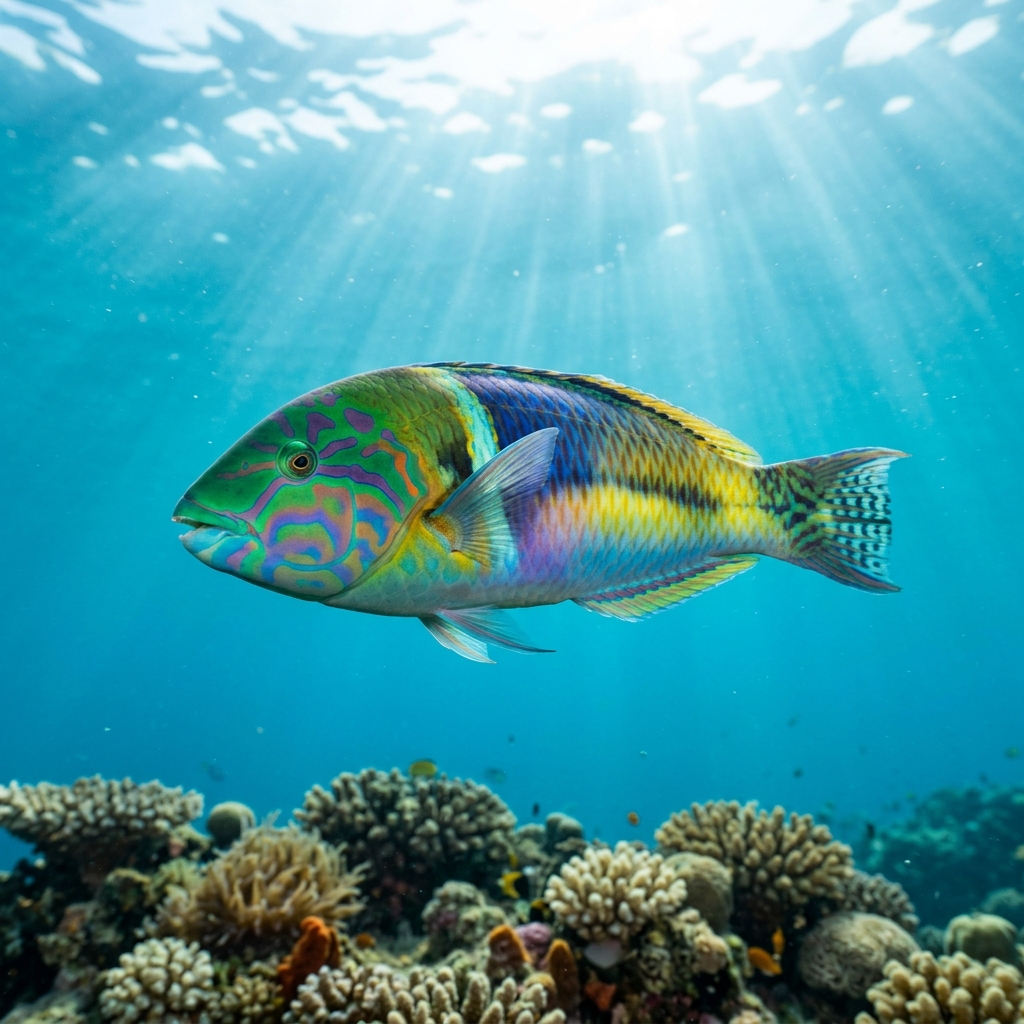
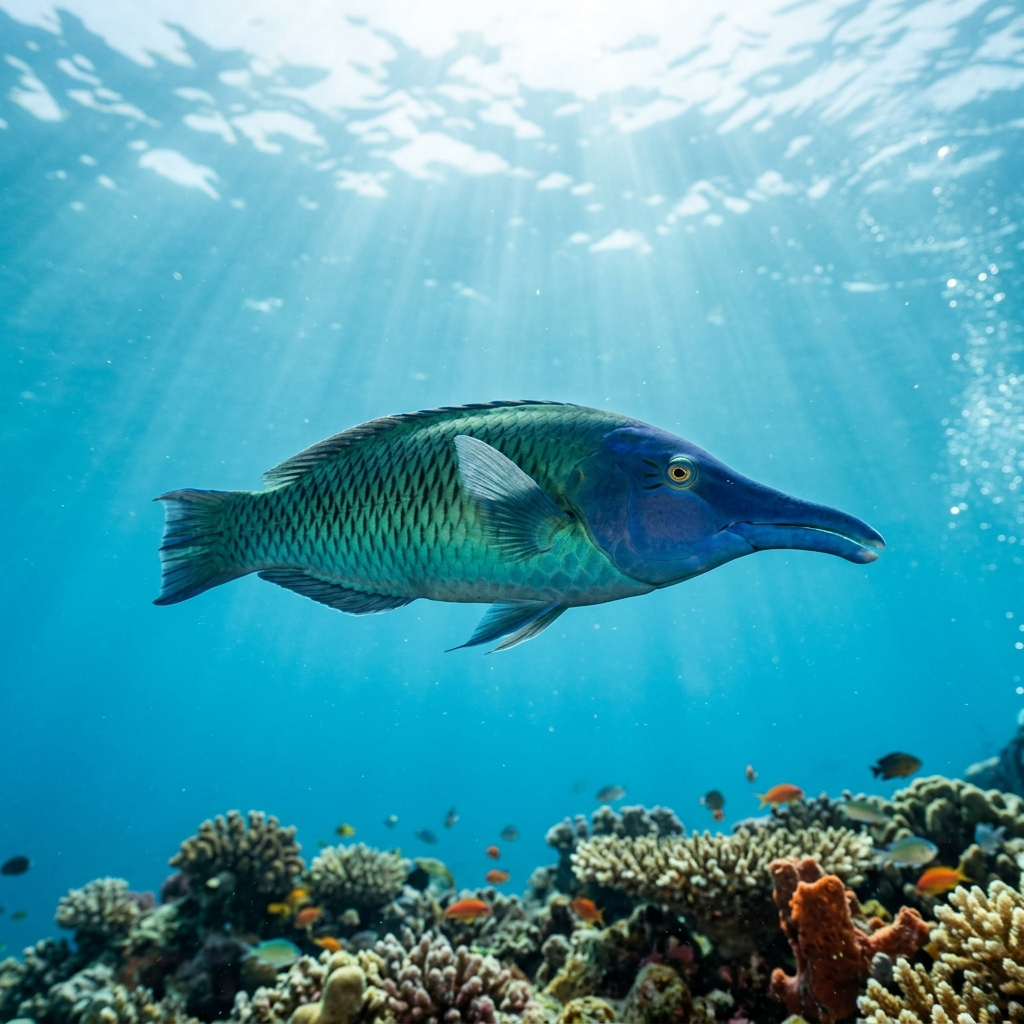
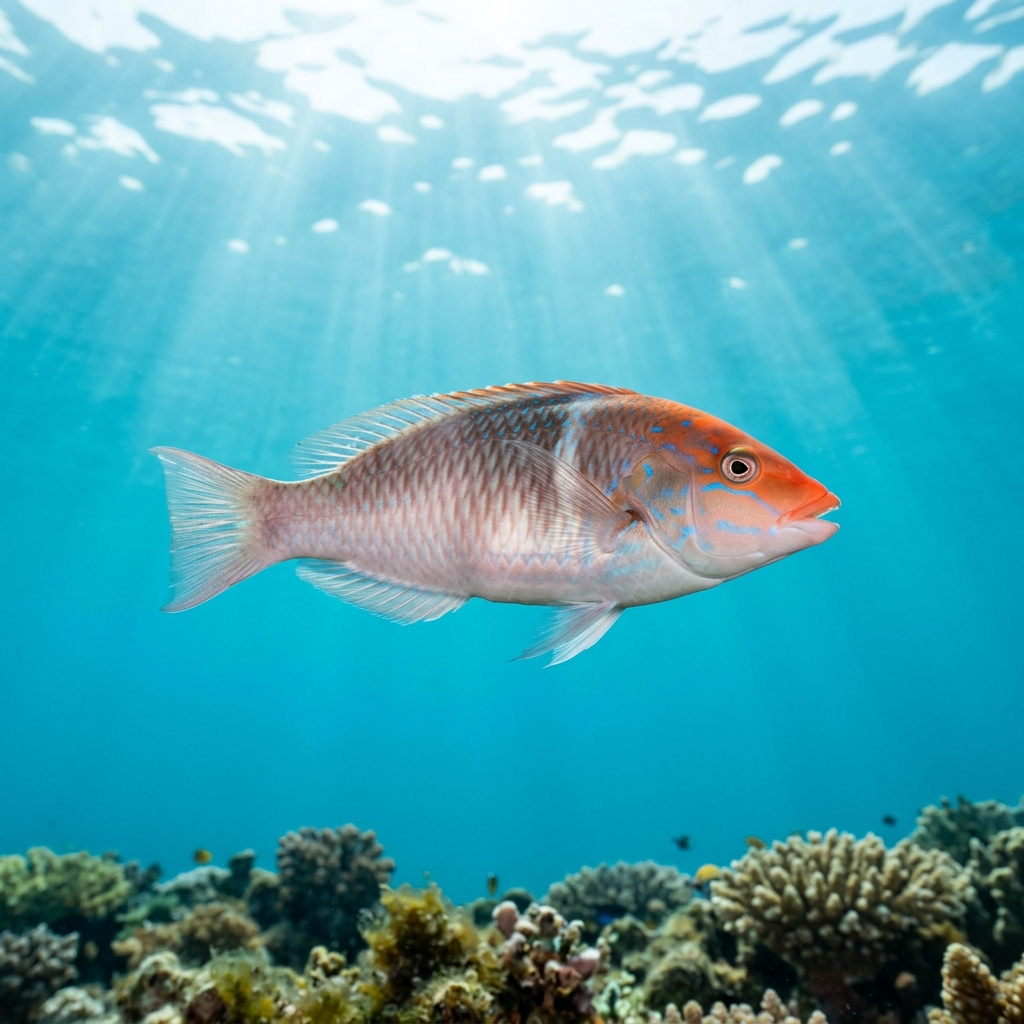
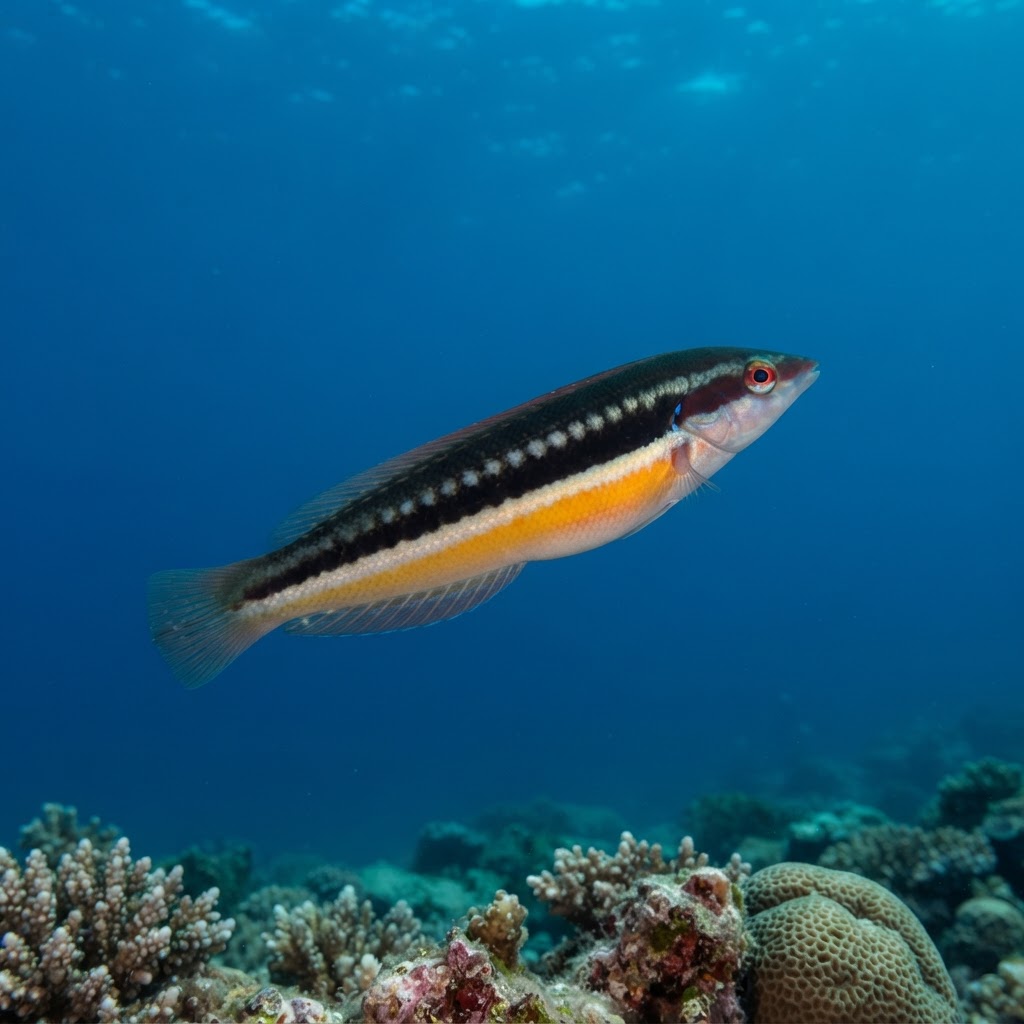
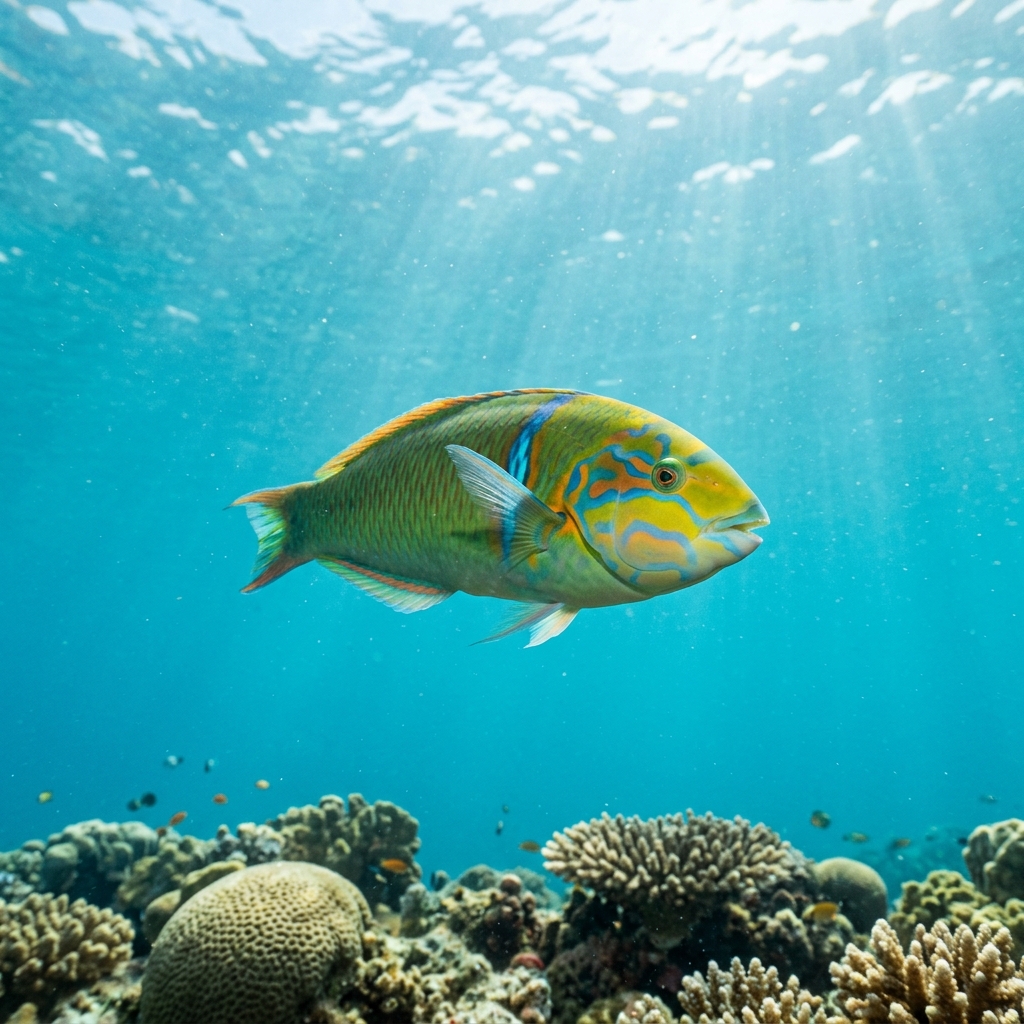
A mid-sized wrasse with a vivid green body overlaid with pink-to-purple wavy facial markings and a distinctive yellow crescent on the tail, that yellow tail-patch is the quickest field mark. Terminal-phase (mature male) fish are the brightest, while initial-phase fish (females and younger males) tend towards duller greens and browns with a dark spot near the tail base. It moves with the fast, pectoral-fin-rowing action typical of wrasses, rarely holding still for long.
You'll typically spot moon wrasse darting energetically over the upper reef and rubble zones, often alone but sometimes loosely alongside other wrasse species. They're curious enough to approach briefly but rarely linger, so quick observation is the norm. Divers most often see them actively foraging over the reef during daylight hours, picking small invertebrates and fish off the substrate.
Moon wrasse are protogynous hermaphrodites, meaning females can transition into males. When a dominant male is removed from a group, a large female will change sex and colour within weeks to take his place.
Present year-round in both hemispheres, with no concentrated season detected in the data. Its comfort in water temperatures from 23 to 29 °C keeps it active on tropical and subtropical reefs throughout the year.
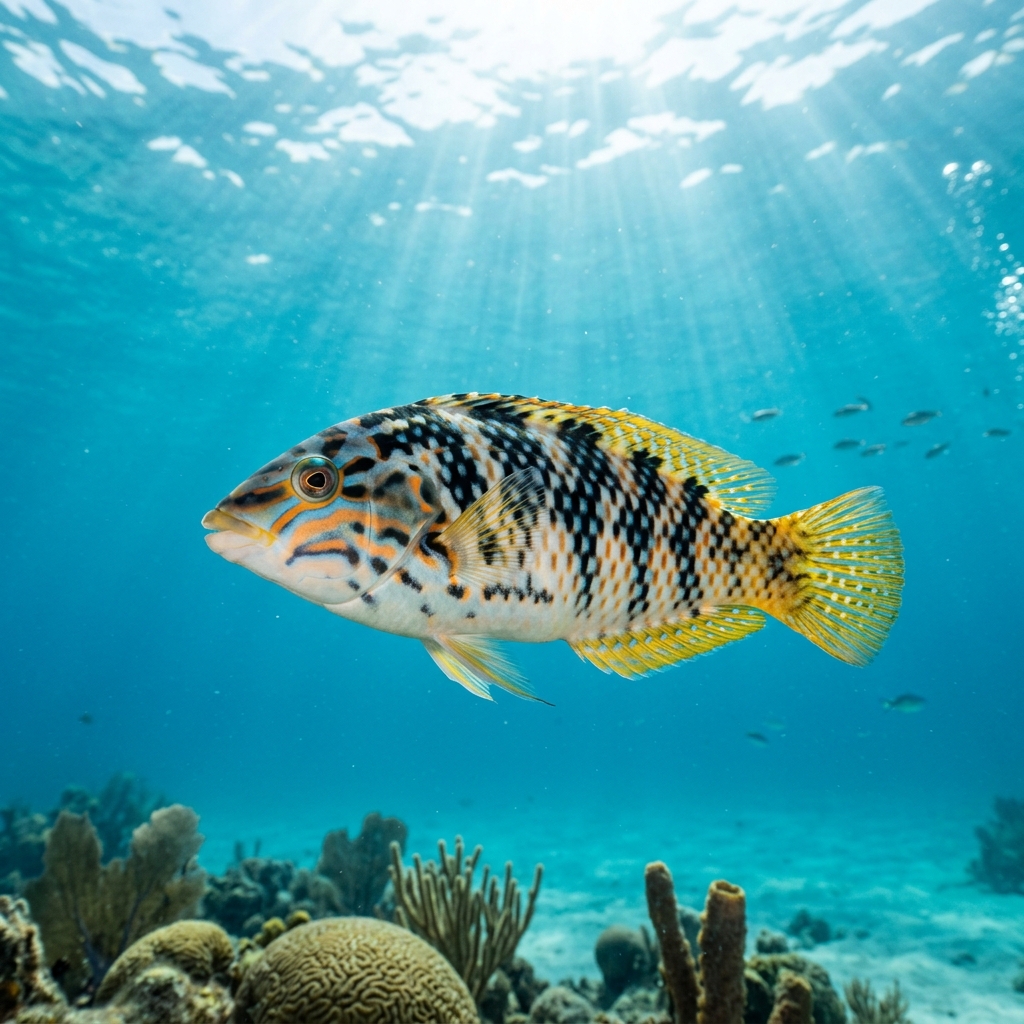
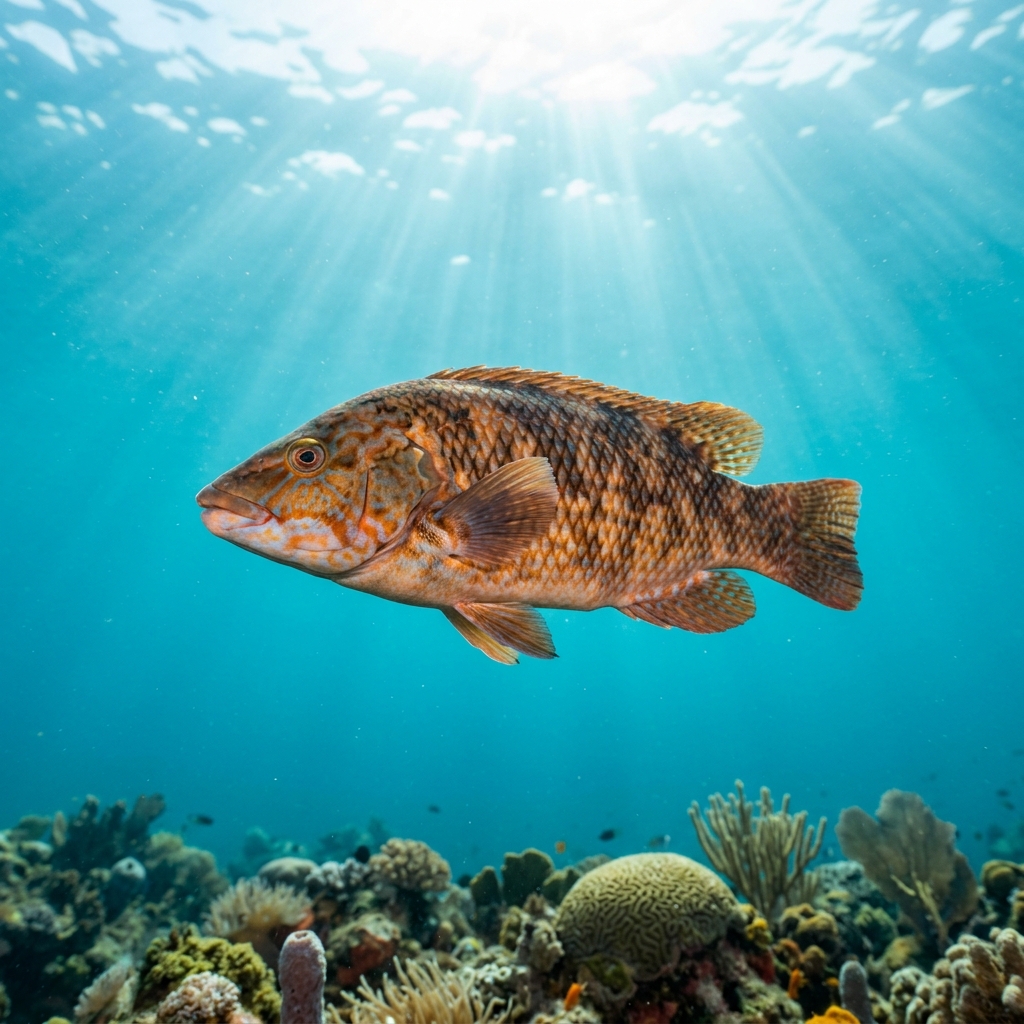
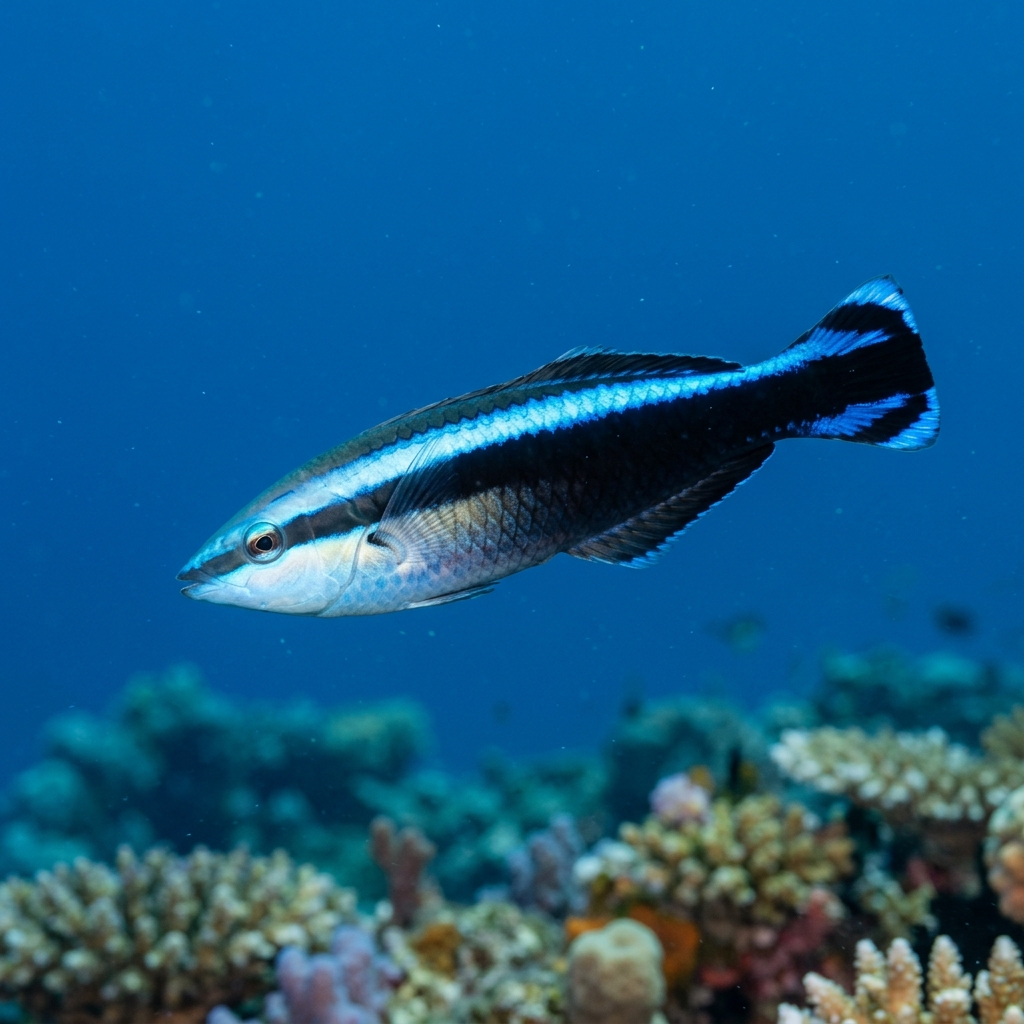
Reef neighbours a diver could mistake it for. Use the identification notes above to tell them apart.
Most consistently logged across the Philippines, Malaysia, and Thailand, with the Visayas in the central Philippines, the Perhentian and Redang islands of Malaysia, and Phuket and Phi Phi in Thailand being particularly strong. Strong populations are also well-documented across the Maldives, especially the Male and Ari Atolls, and along Queensland's reef systems in Australia.
Mapping where Moon Wrasse is logged…
Moon wrasse are most reliably logged in the Philippines (especially the Visayas), Malaysia (Perhentian and Redang, Tioman), Thailand (Phuket and Phi Phi), the Maldives, and Queensland in Australia. They're also regularly sighted in Indonesia, Oman, and South Africa, making them one of the more widespread Indo-Pacific wrasses.
Any time of year works. Sighting data from both hemispheres shows no seasonal peak, moon wrasse are present year-round on tropical reefs, consistent with their preference for water temperatures between 23 and 29 °C.
Look for the yellow crescent on the tail, that's the quickest clincher. Mature males add a bright green body with swirling pink and blue markings on the face. They move fast using a rowing pectoral-fin action, typical of wrasses, rarely pausing on the reef.
Moon wrasse typically reach around 25-30 cm in length, though size can vary. In the water they read as a medium-sized, slender-bodied fish, noticeably larger than cleaner wrasse but much smaller than tuskfish or hogfish.
Yes. Moon wrasse are protogynous hermaphrodites, fish start life capable of being female and dominant individuals transition into males. The colour change is dramatic: drab initial-phase fish transform into the vivid green and pink terminal-phase males over the course of weeks.
Site and sighting data is aggregated from diver logs, iNaturalist and GBIF. For taxonomy and conservation status:
Bird Wrasses
3,632 sites