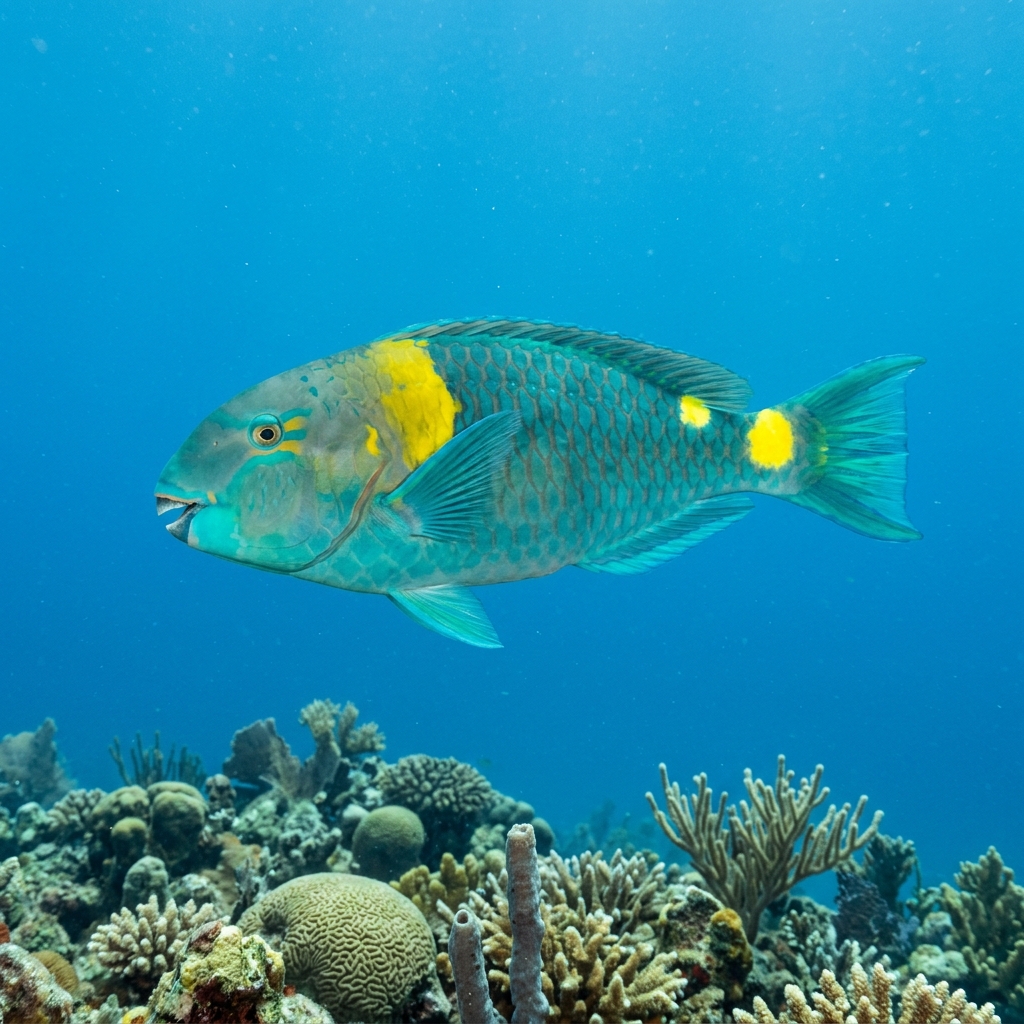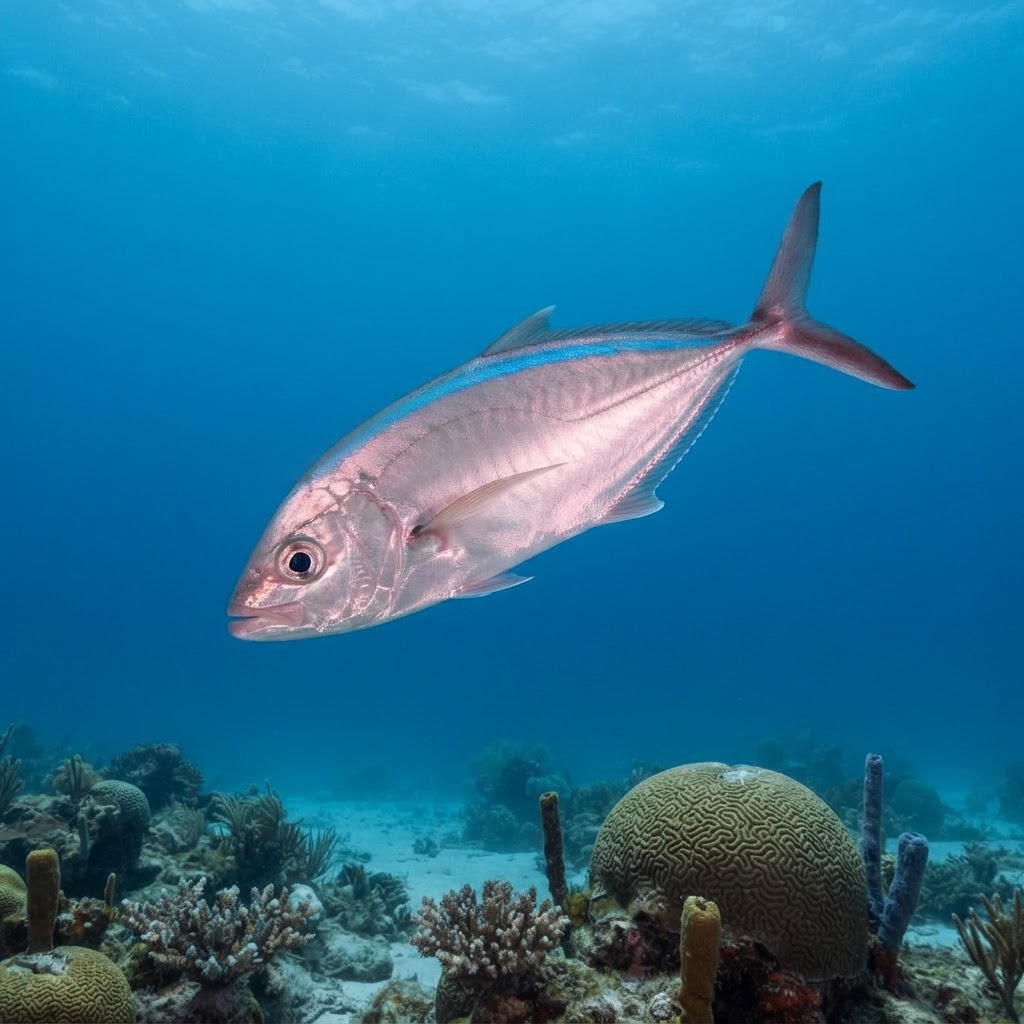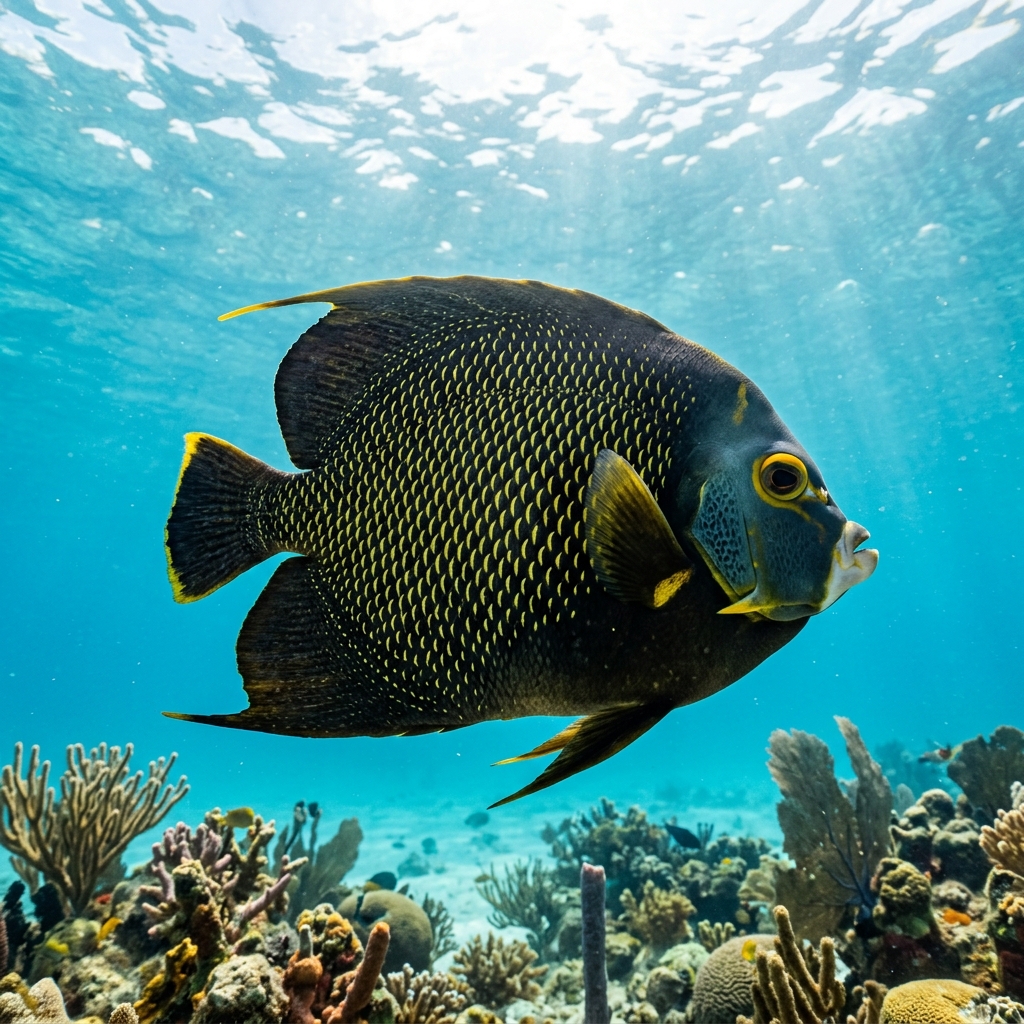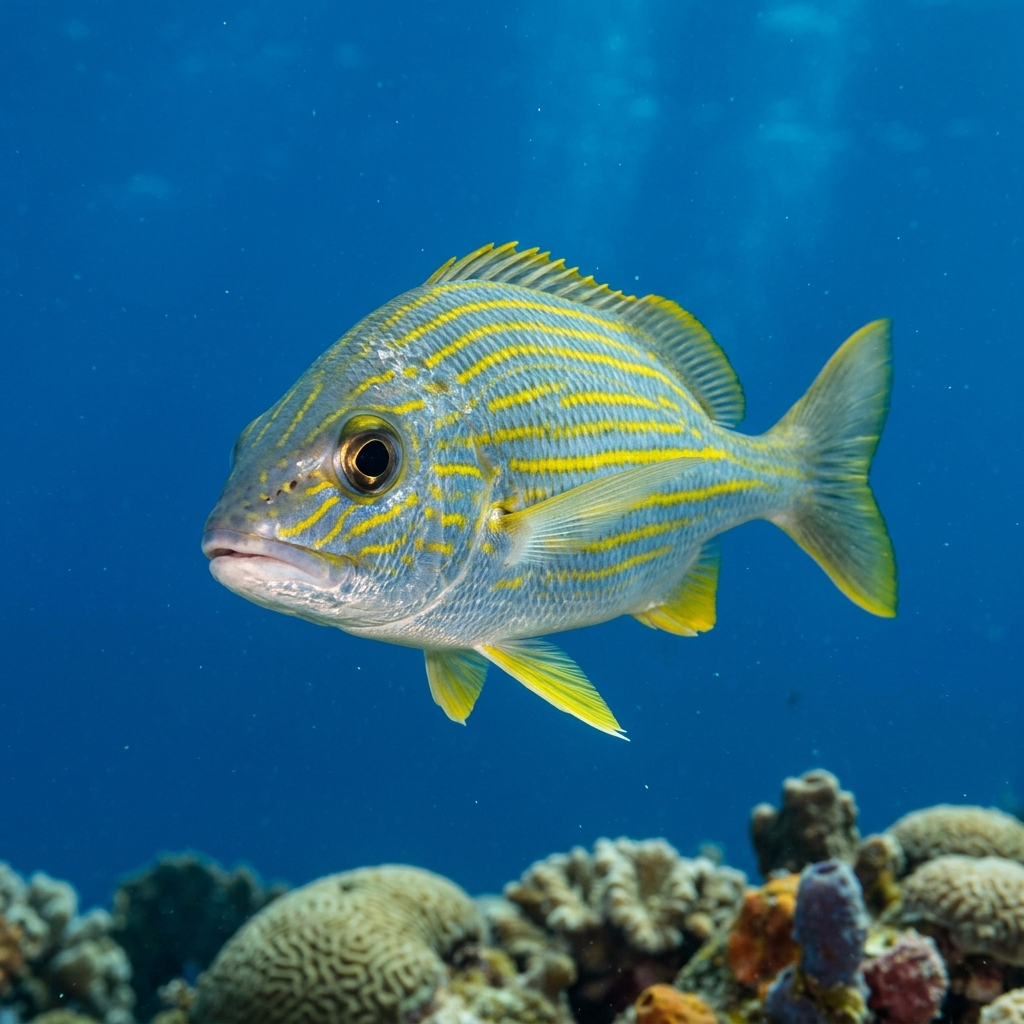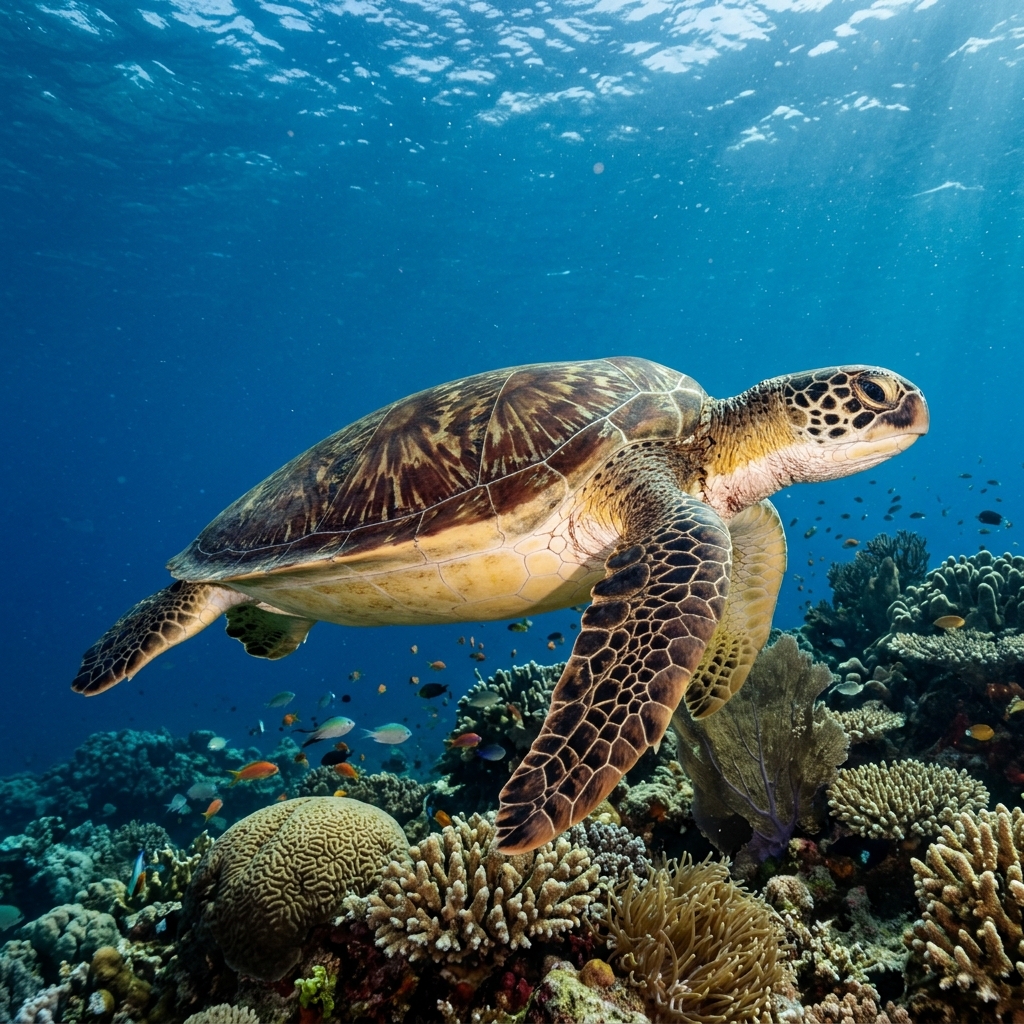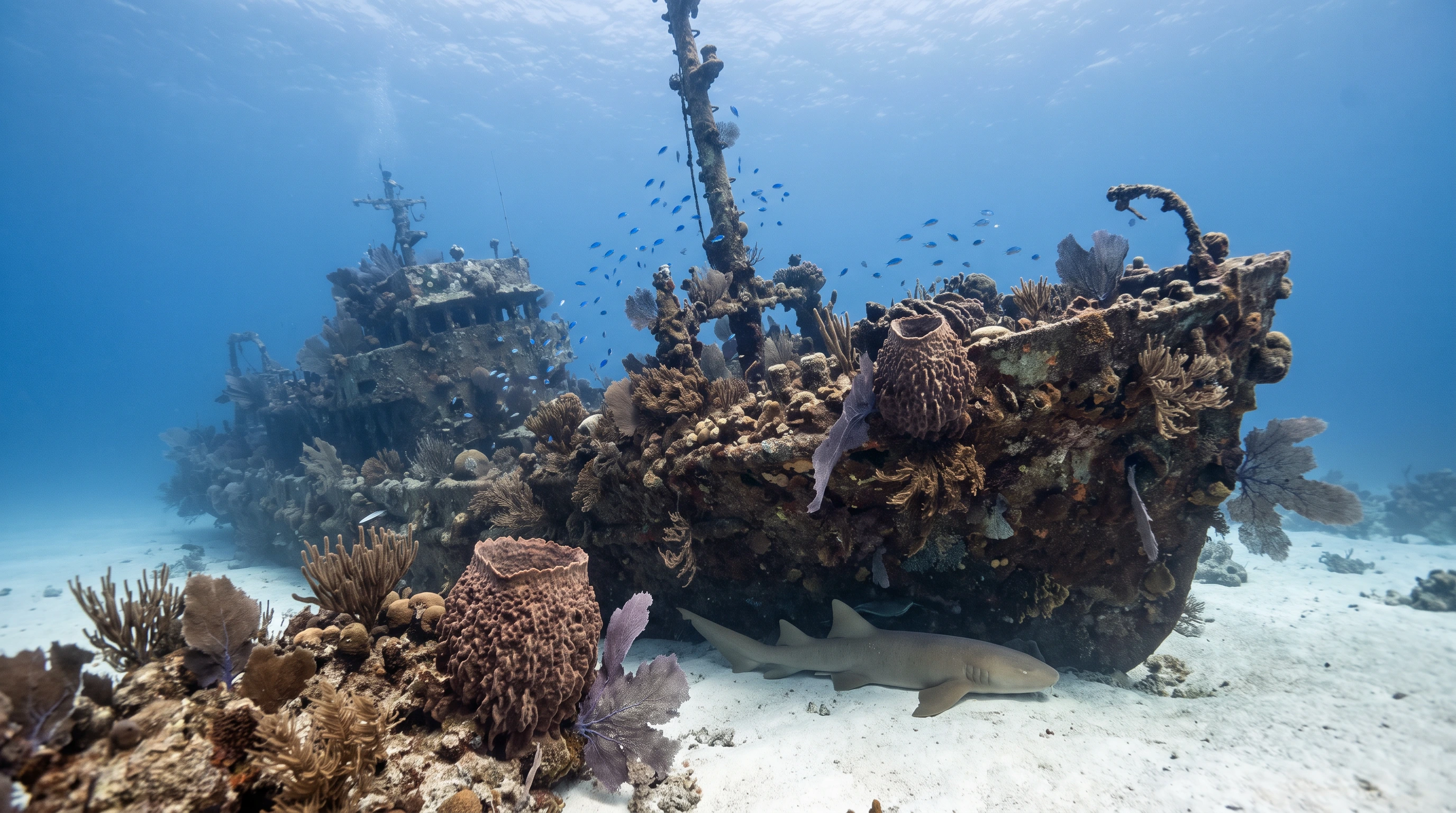
Blue Peter Reef, located off West Bay and Seven Mile Beach, is a shallow marine site with a recorded depth of approximately 8 metres. Divers can expect to encounter a variety of marine life, including common species such as Blue Tang, Purple Sea Fan, Mutton Snapper, Whiptail Stingray, wrasses, and Stoplight Parrotfish. Less frequently, divers may spot Indian Lionfish, French Angelfish, Nurse Shark, Green Moray, Great Barracuda, Scrawled Filefish, Hogfish, and Atlantic Spadefish. Conditions at this site are variable, with water temperatures ranging from 27C to 30C throughout the year. This site is suitable for divers seeking shallow, accessible reef exploration in Grand Cayman.
19.38290, -81.32180
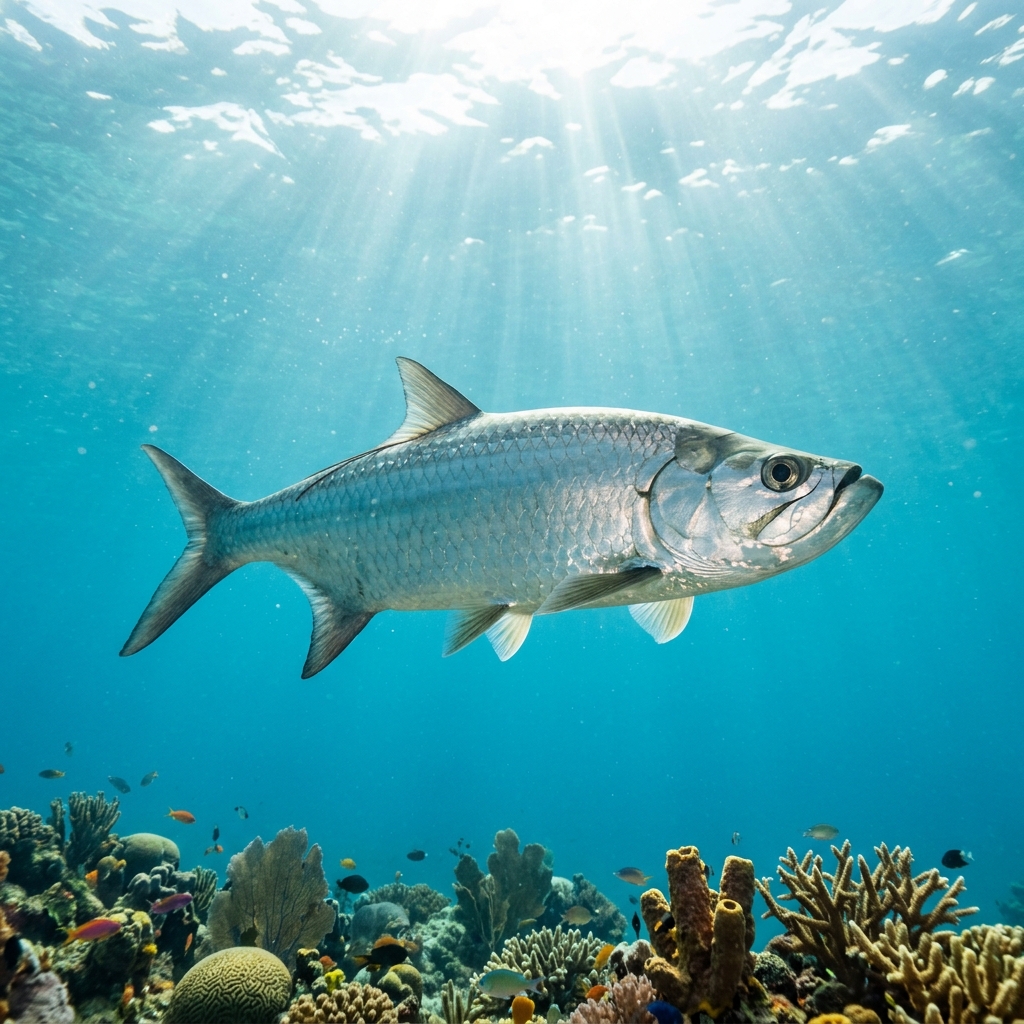
Position yourself in sandy clearings and remain motionless to observe tarpon training behaviour as movement disperses the schools.
The site is accessible by boat, with proximity to Seven Mile Beach.
Recorded at this site
Depth
8m
Entry
Boat
Boat required
Water Temp
27-30°C
Best Time
May
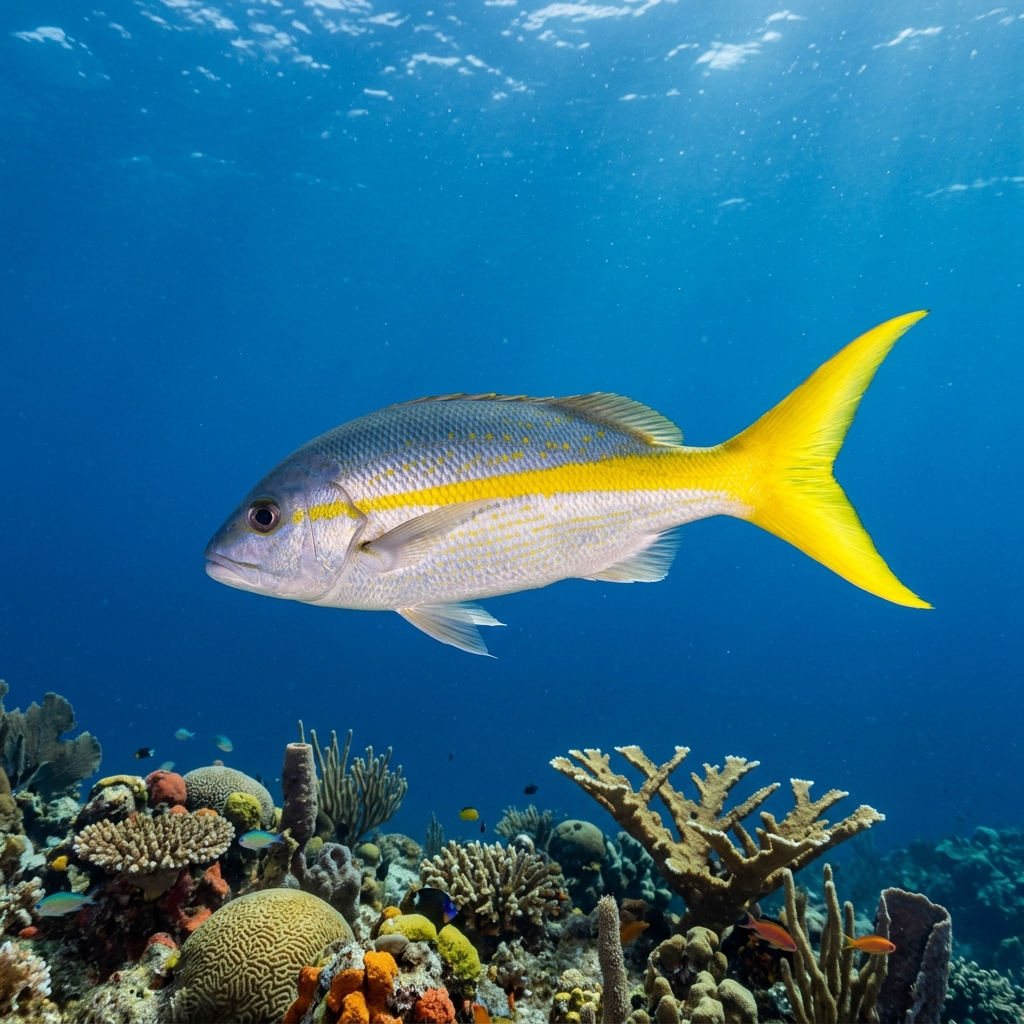
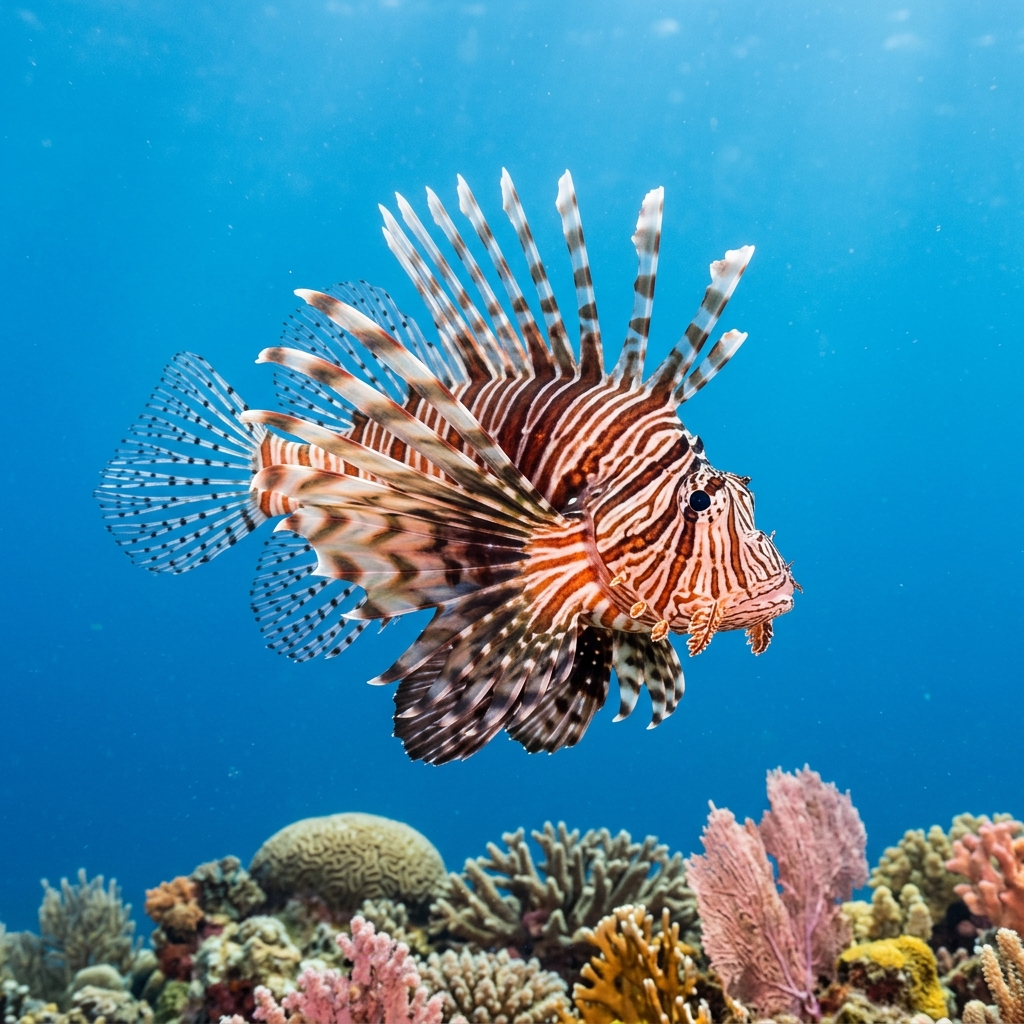
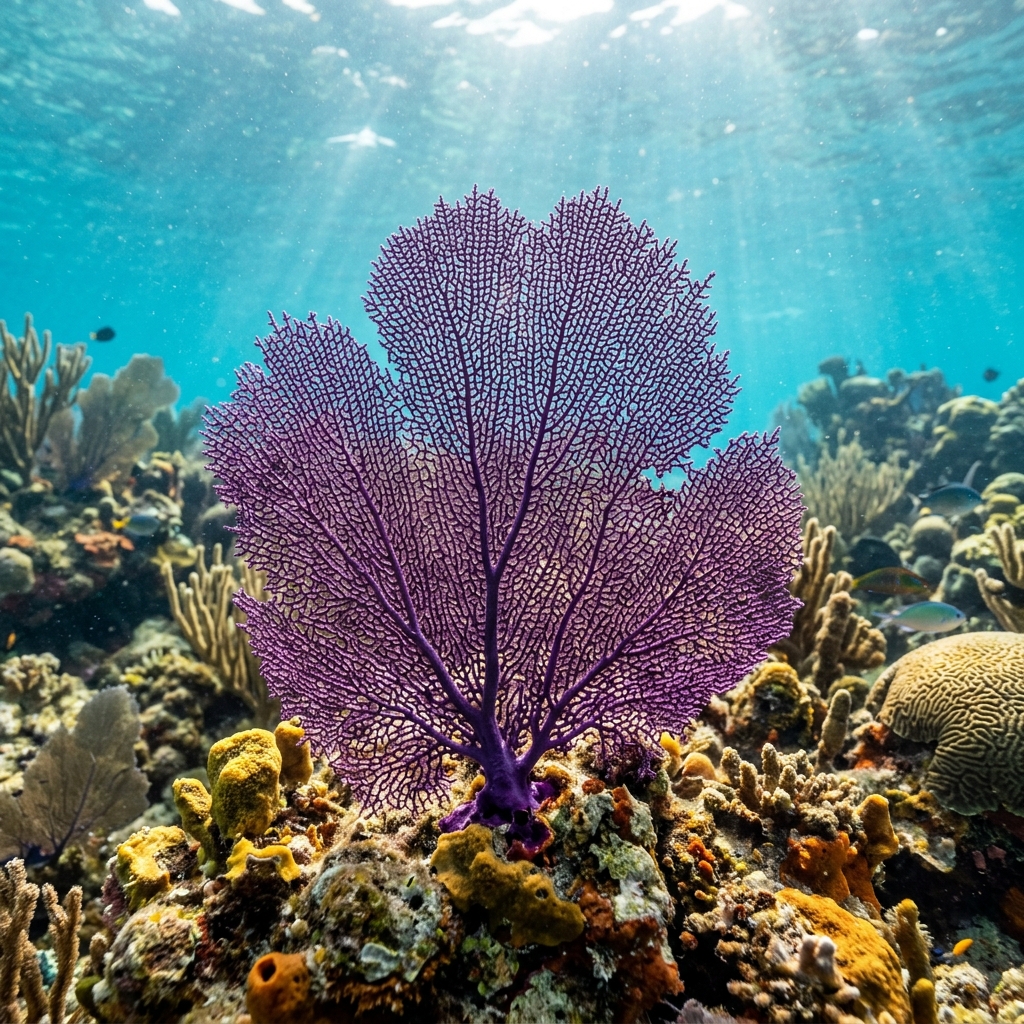
Divers commonly encounter Blue Tang, Purple Sea Fan, Mutton Snapper, Whiptail Stingray, wrasses, and Stoplight Parrotfish. Uncommon sightings include Indian Lionfish, French Angelfish, Nurse Shark, Green Moray, Great Barracuda, Scrawled Filefish, Hogfish, and Atlantic Spadefish.
The site has a recorded depth of approximately 8 metres.
With a shallow depth of 8 metres, the site is generally accessible for divers of various skill levels, though conditions can vary.
Given the shallow depth of 8 metres, the site is suitable for snorkelling.
Yes, Blue Peter Reef in Grand Cayman is a boat-access-only dive site. You will need to book with a local dive operator or charter a boat to reach it.
Diving at Blue Peter Reef in Grand Cayman requires the following certifications: Open Water. Always dive within your training limits.
A rashguard or 2mm shorty is recommended for diving at Blue Peter Reef in Grand Cayman. Water temperatures range from 27°C to 30°C.
The best months to visit Blue Peter Reef in Grand Cayman are May. Conditions outside these months can still be good but are less predictable.