Ocyurus chrysurus
Spot yellowtail snapper across Florida, the Yucatán and Roatán year-round. Learn the bold yellow stripe that makes ID instant underwater.
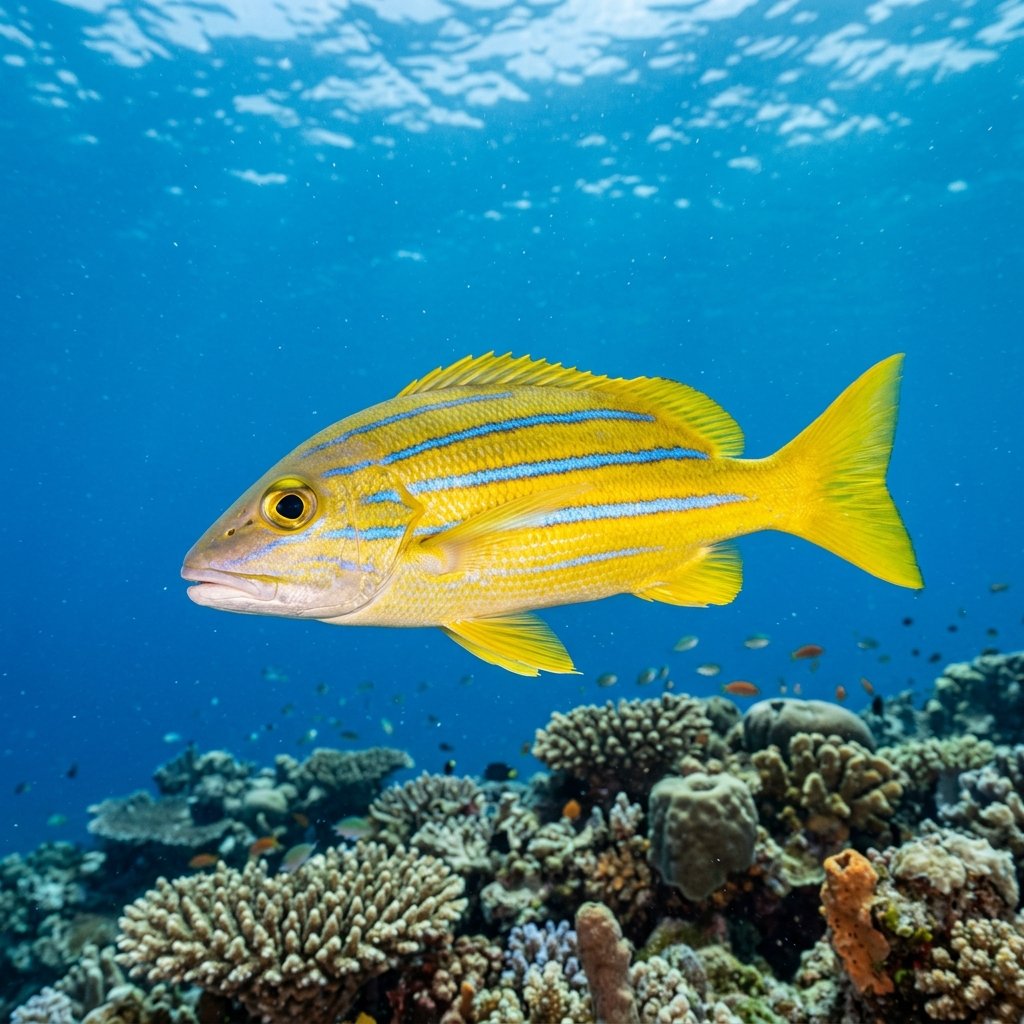
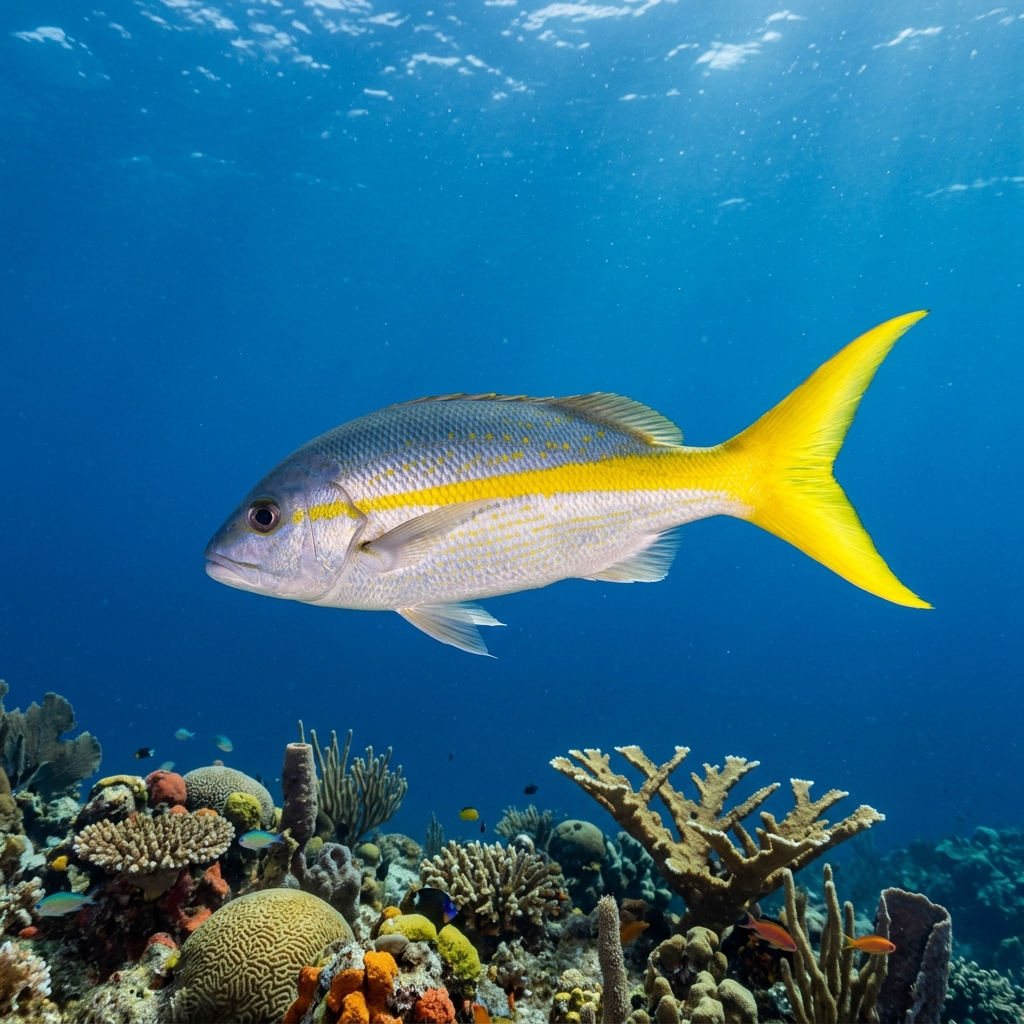
A bright, unbroken yellow stripe running from the snout to the deeply forked, entirely yellow tail is the instant field mark, nothing else on a Caribbean reef looks quite like it. The body above the stripe is pale blue-grey with faint yellow spotting, while the belly is white. At around 60 cm these are mid-sized fish, slim and torpedo-shaped, sitting noticeably smaller than a mutton snapper but larger than a schoolmaster.
Yellowtail snappers are among the more diver-friendly reef fish you will encounter, curious without being pushy, they often drift over to investigate you, particularly if you are poking around the reef. Most sightings are of loose schools or small groups patrolling coral formations mid-water during the day, occasionally darting to pick off small prey. Watch a school carefully and you may catch subtle dominance interactions or coordinated feeding sweeps.
Yellowtail snappers are known to form spawning aggregations (large seasonal gatherings specifically for reproduction) at predictable reef sites, sometimes drawing hundreds of individuals to a single location, a very different sight from the small groups you normally encounter.
Northern Hemisphere sighting data concentrates from November through September, suggesting only a modest mid-summer dip rather than a true off-season. Given its comfort in water temperatures between roughly 22 and 28 °C, resident Caribbean populations are present on the reef for most of the year.
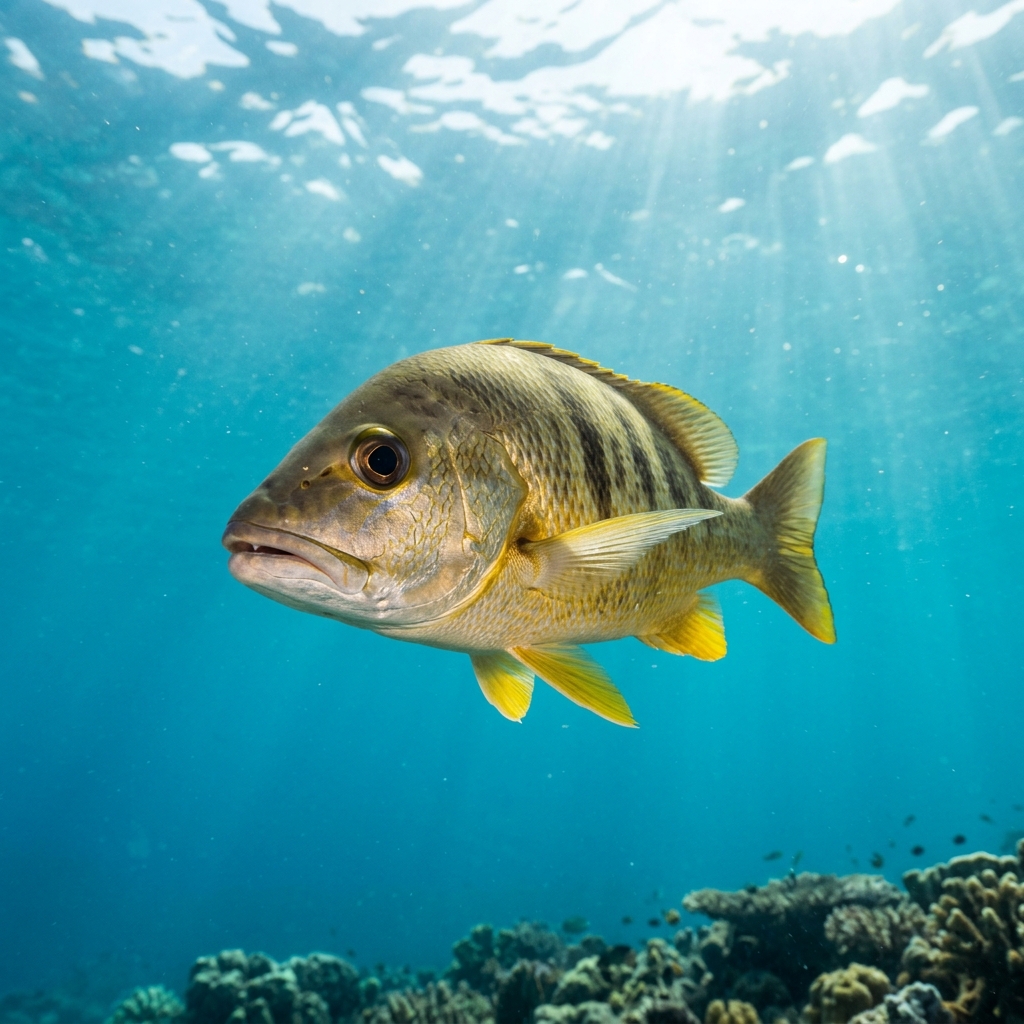
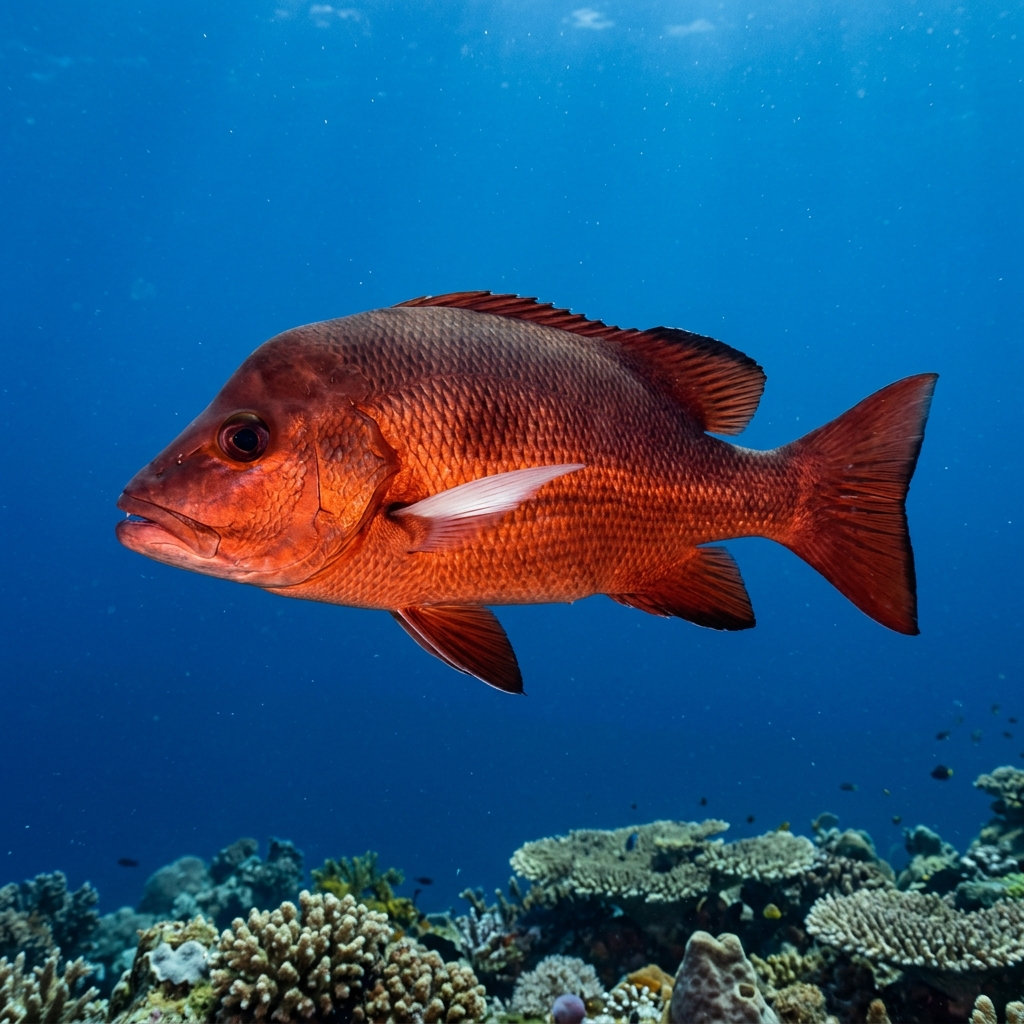
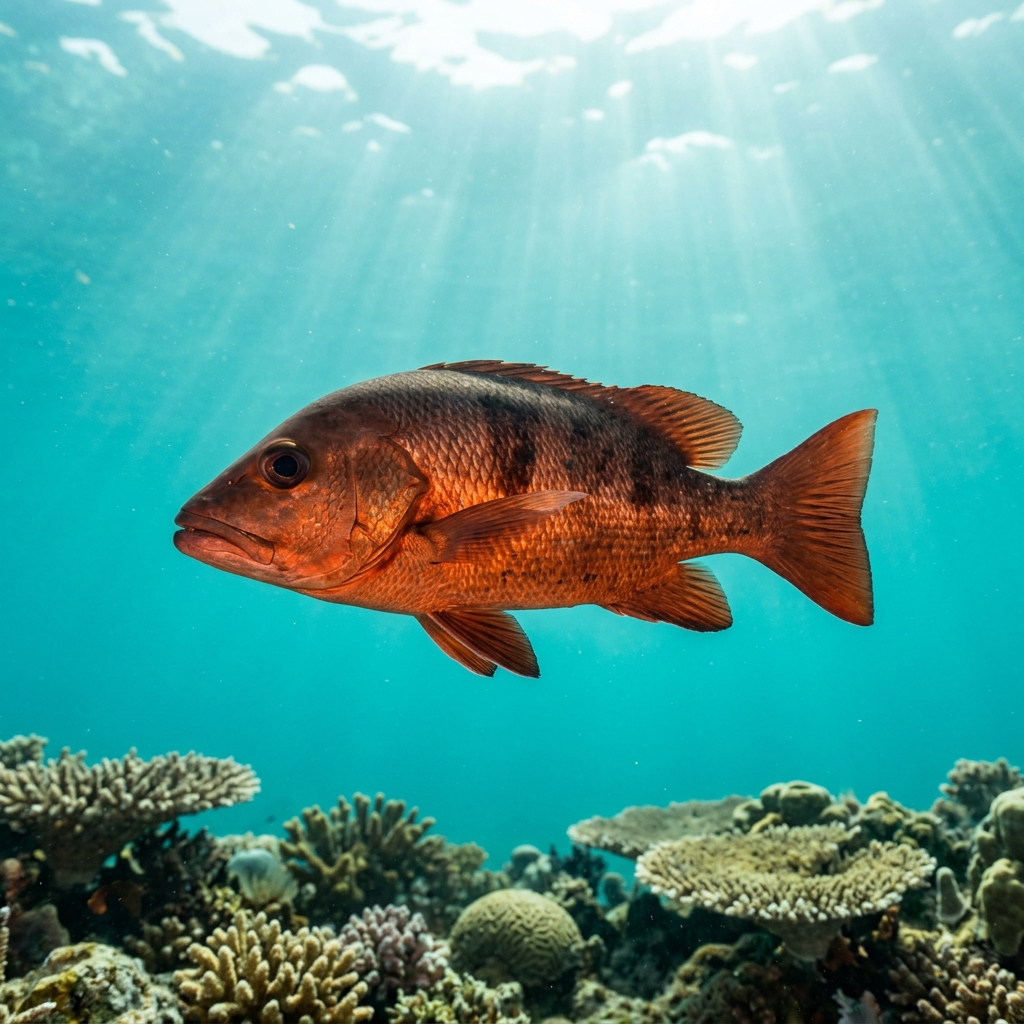
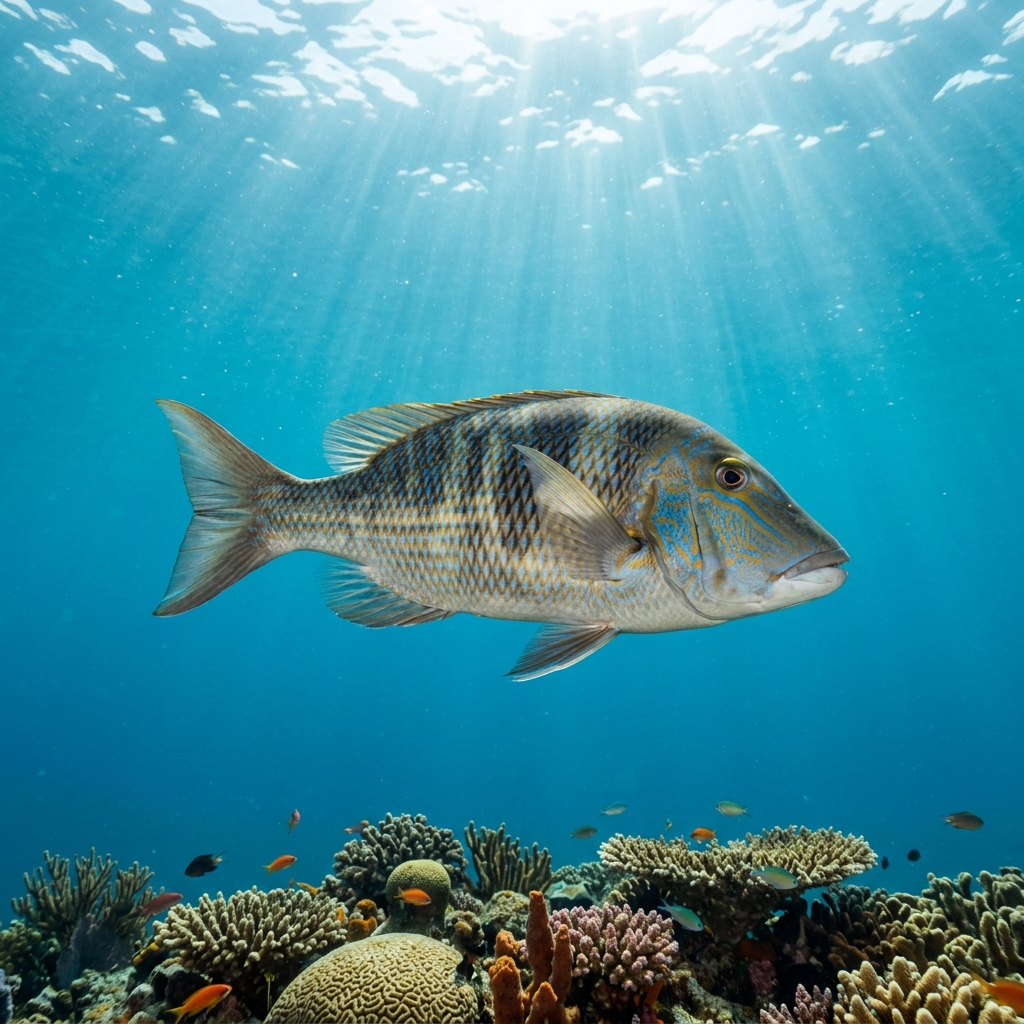
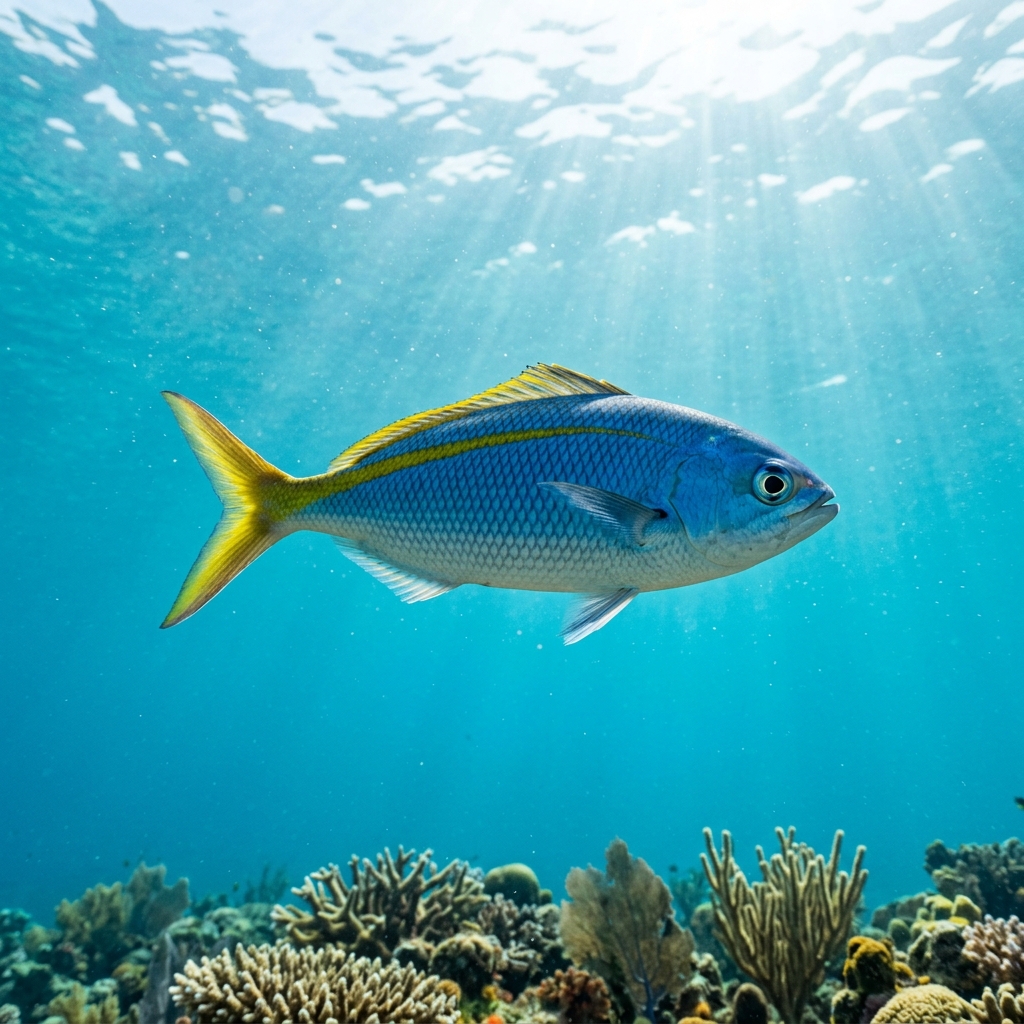
Reef neighbours a diver could mistake it for. Use the identification notes above to tell them apart.
This is overwhelmingly a western Atlantic species, and the data reflects that clearly: the strongest sighting records come from Florida and the wider Southeast United States, the Yucatán Peninsula in Mexico, and Roatán in Honduras. The Caribbean is the core range, with reliable sightings also logged across the Cayman Islands, Grenada, the Bahamas, and the British Virgin Islands.
Mapping where Yellowtail Snapper is logged…
They are most commonly logged across the Caribbean and tropical western Atlantic. Florida and the broader Southeast US lead the records, followed closely by the Yucatán Peninsula in Mexico and Roatán in Honduras. Strong populations are also well documented in the Cayman Islands, Grenada, the Bahamas, and the British Virgin Islands.
Sighting data from the Northern Hemisphere concentrates between November and September, so there is no clear hard off-season. Caribbean destinations like the Cayman Islands and Roatán offer reliable sightings for most of the year, with water temperatures staying comfortably within the species' preferred range.
Look for the unbroken bright yellow stripe running from the tip of the snout all the way back to a fully yellow forked tail, it is visible from a considerable distance and diagnostic. The rest of the body is pale grey-blue above with faint yellow spotting, and white below. No other common Caribbean snapper shares that complete snout-to-tail stripe.
A typical adult runs around 60 cm in length. They are a slim, streamlined fish, so they can look a little smaller than that length suggests in the water. Very large individuals occasionally exceed this, but encounters with fish noticeably bigger than 60 cm are not the norm.
No. They pose no threat to divers whatsoever. They are naturally curious and will often approach you on the reef, but they keep a comfortable distance and move off if you get too close.
Site and sighting data is aggregated from diver logs, iNaturalist and GBIF. For taxonomy and conservation status:
Bluestriped Snapper
2,054 sites