Haemulon flavolineatum
French Grunts school in dense formations across the Yucatán Peninsula, Caribbean, and Florida reefs year-round. Here's how to spot and ID them.
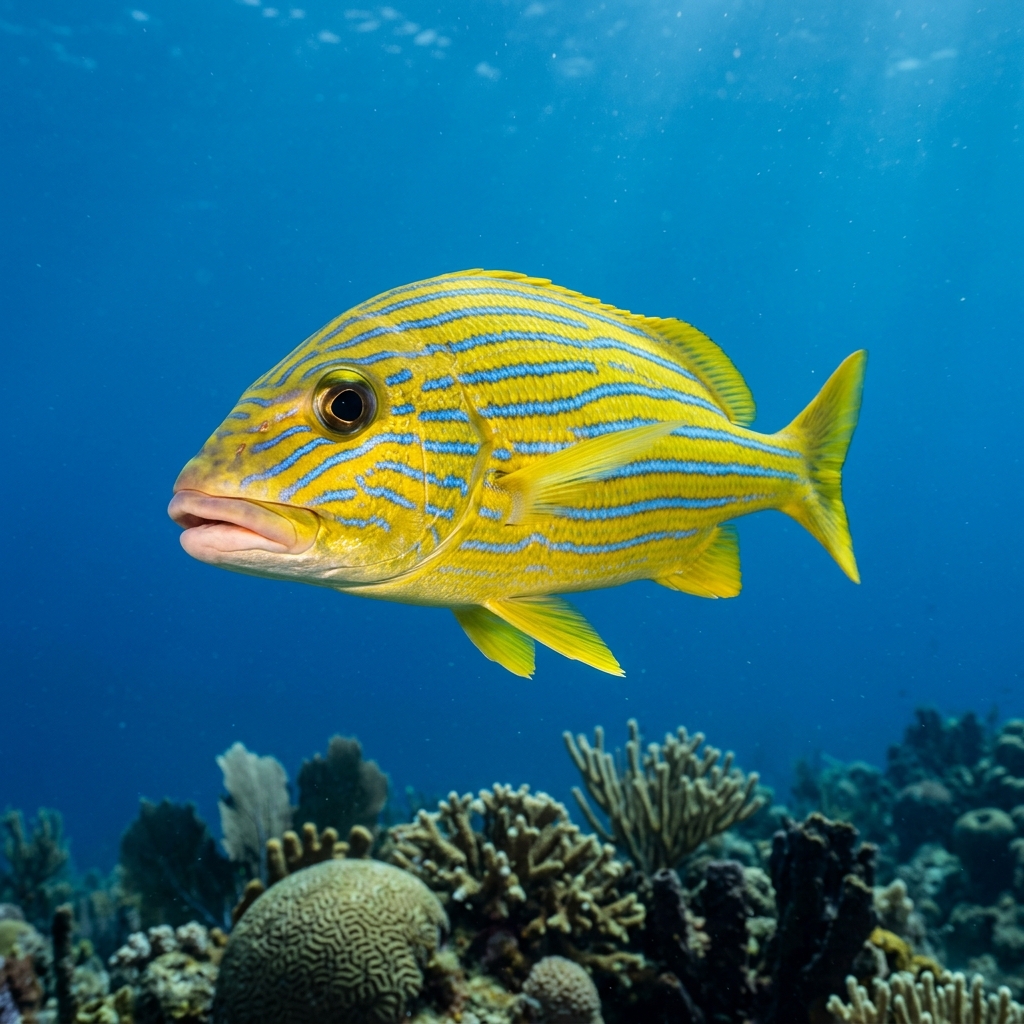
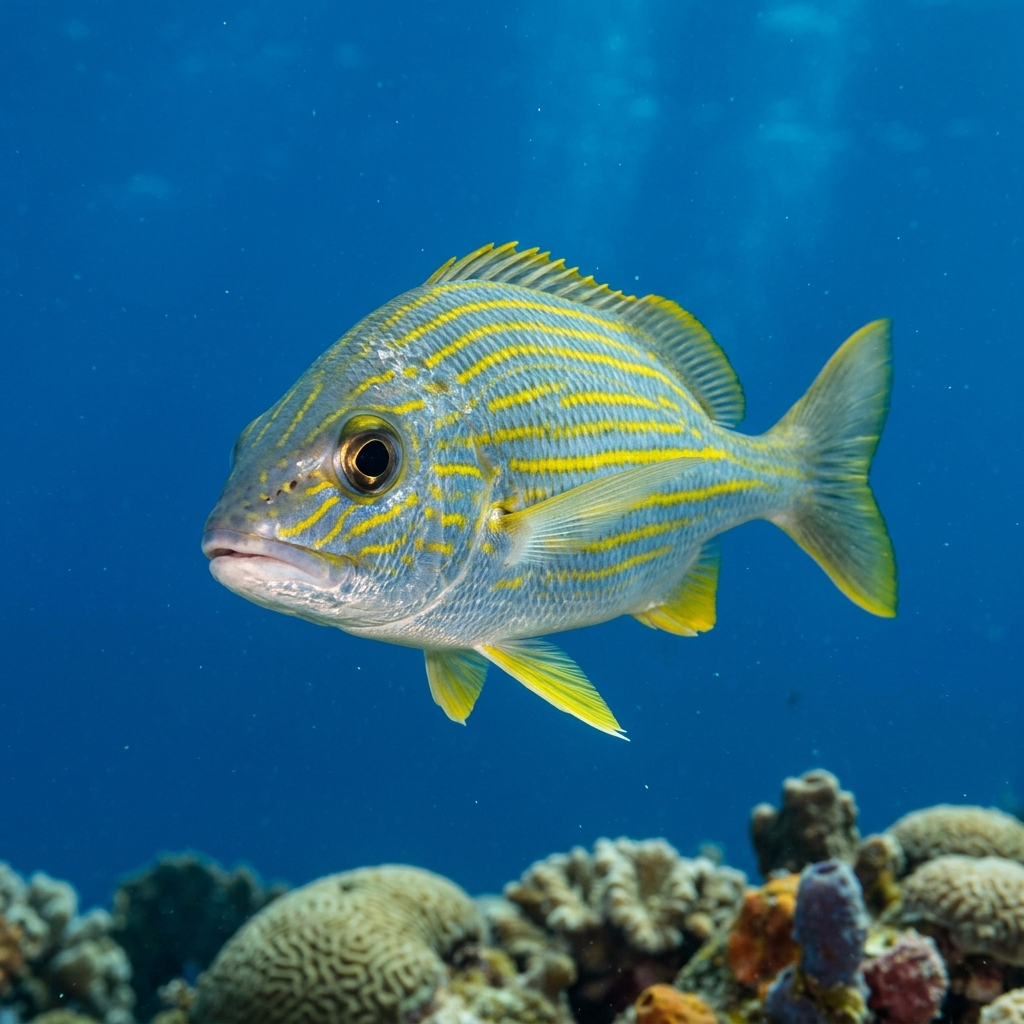
Bold yellow stripes running horizontally across a white-to-silver body make this fish one of the more recognisable reef fish at around 20 cm long. The stripes above the lateral line (the faint sensory line along a fish's flank) run at a slight diagonal, while those below run straight, a useful detail when you get a close look. The inside of the mouth is red-orange, briefly visible when the fish opens its mouth. Most often seen packed tightly into large, hovering schools just above the reef.
During the day, French Grunts gather in large, dense schools that hover close to the reef structure, often barely moving, this is when divers encounter them most reliably. They are unfazed by divers and will allow very close approach, making them easy to observe and photograph. After dark they scatter, foraging individually or in smaller groups for small crustaceans and invertebrates across the reef.
The common name comes from the sound these fish produce by grinding their teeth together (pharyngeal teeth in the throat) and amplifying it through the swim bladder, a grunt you can sometimes hear underwater if conditions are quiet.
Present year-round with no concentrated season recorded. The species sits comfortably in water temperatures of around 25 to 28 °C, meaning tropical Caribbean and Gulf reefs hold them through every month.
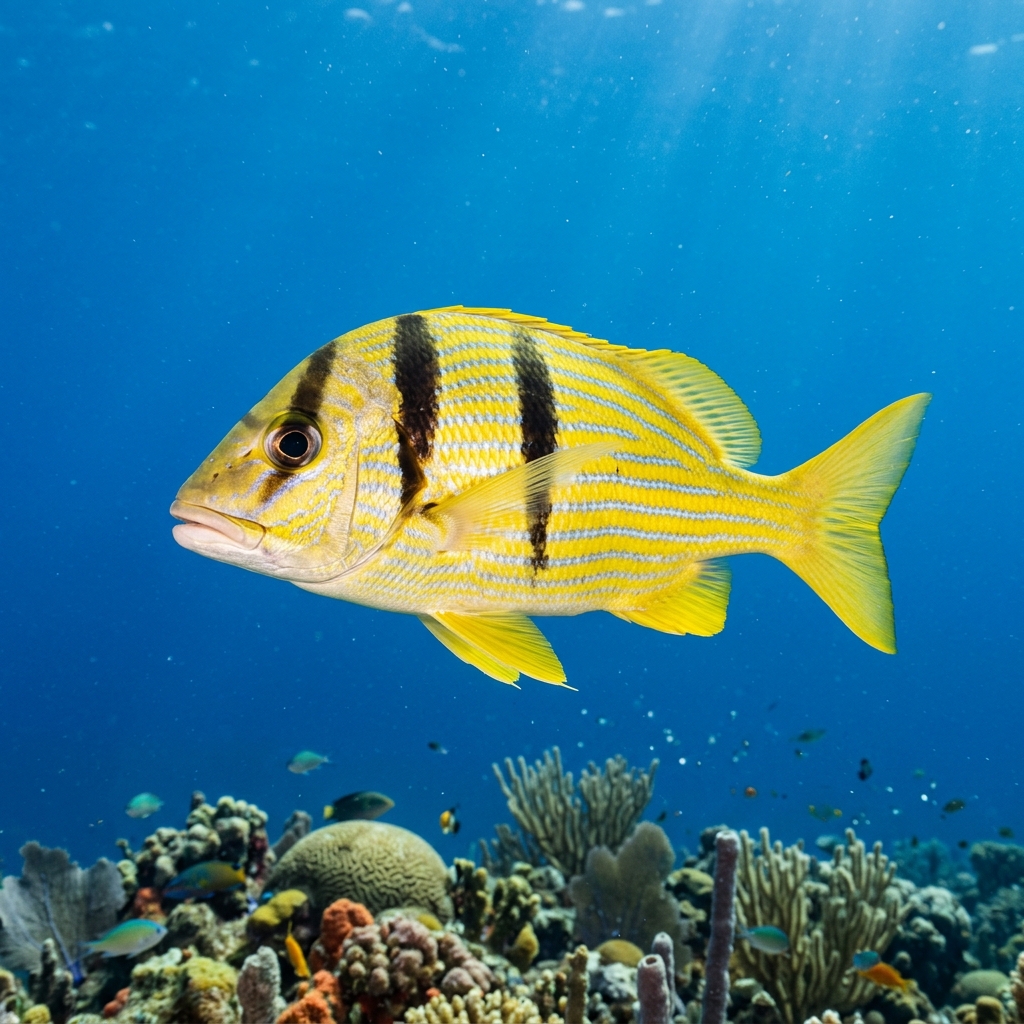
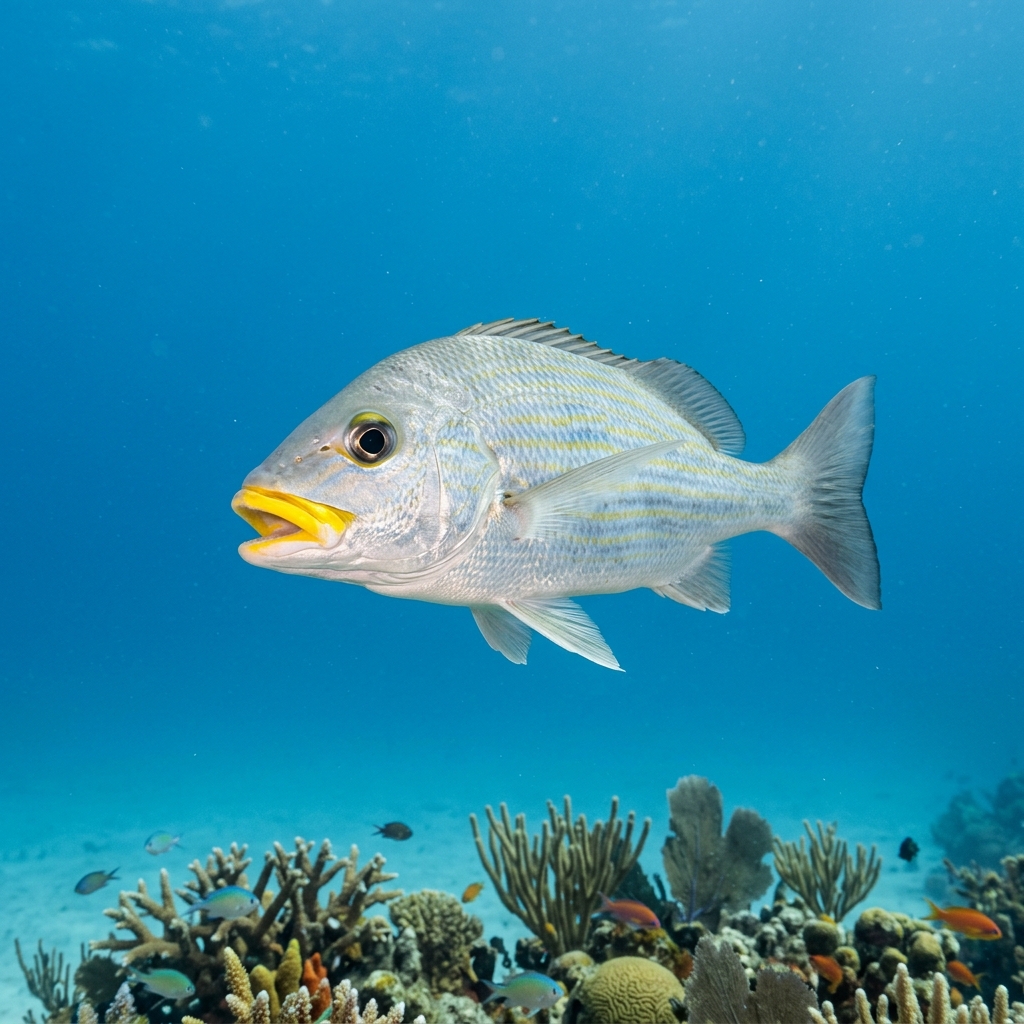
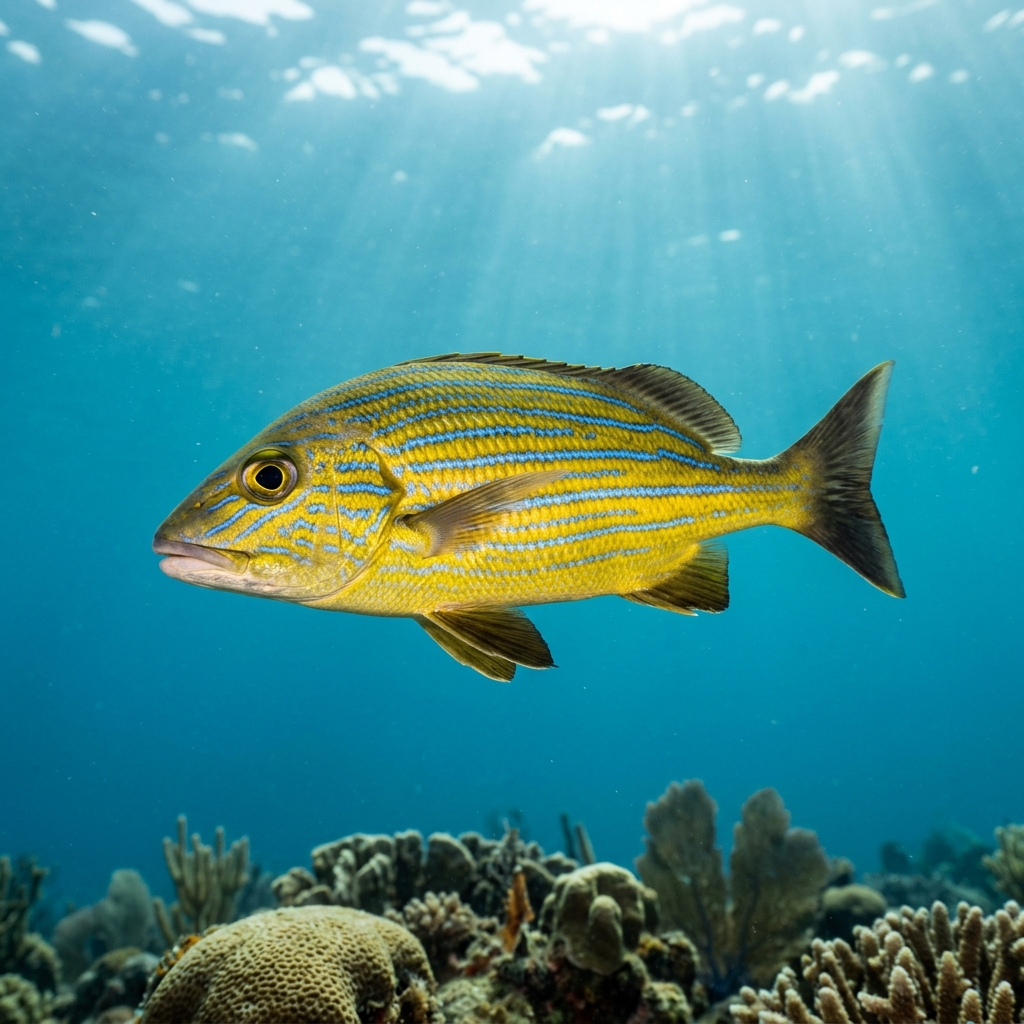
Reef neighbours a diver could mistake it for. Use the identification notes above to tell them apart.
Most commonly logged across the Caribbean and the Gulf of Mexico, with the Yucatán Peninsula in Mexico and Florida standing out as the strongest regions in the data. The Cayman Islands, Bahamas, Bonaire, Roatán in Honduras, and Curaçao all show strong populations, and sightings extend across the wider Caribbean including the British Virgin Islands and US Virgin Islands. Colombia and Grenada also feature prominently, reflecting just how broadly distributed this fish is throughout tropical Atlantic and Caribbean reefs.
Mapping where French Grunt is logged…
French Grunts are widespread across Caribbean and tropical Atlantic reefs. The Yucatán Peninsula, Florida, the Cayman Islands, Bahamas, Bonaire, Roatán, and Curaçao are among the most reliable regions. They are also well logged in Colombia, Grenada, and the Virgin Islands.
Any time of year. French Grunts show no seasonal peak in the data and are present year-round on Caribbean and Gulf reefs, which stay within their preferred water temperature range throughout the year.
Look for a 20 cm fish with sharp yellow and white horizontal stripes and a noticeably red-orange mouth interior. The stripes above the lateral line angle diagonally, while those below run straight, a quick separator from similar grunt species. They almost always appear in schools hovering near the reef.
Most individuals divers encounter are around 20 to 21 cm long. They are a small to medium reef fish, roughly the size of your hand, and their schooling habit can make them look larger in aggregate than any individual fish actually is.
They grind specialised teeth located in their throat (pharyngeal teeth) together, and the swim bladder amplifies the vibration into an audible grunt. It's the trait that names the entire Haemulidae family. On a calm dive you can occasionally hear it when a school is close by.
Site and sighting data is aggregated from diver logs, iNaturalist and GBIF. For taxonomy and conservation status:
White Grunt
1,680 sites