Vanderhorstia phaeosticta
Uncommon but reliable in Luzon's sandy flats: find the Yellowfoot Shrimpgoby hovering over its burrow in 27-29C water year-round.
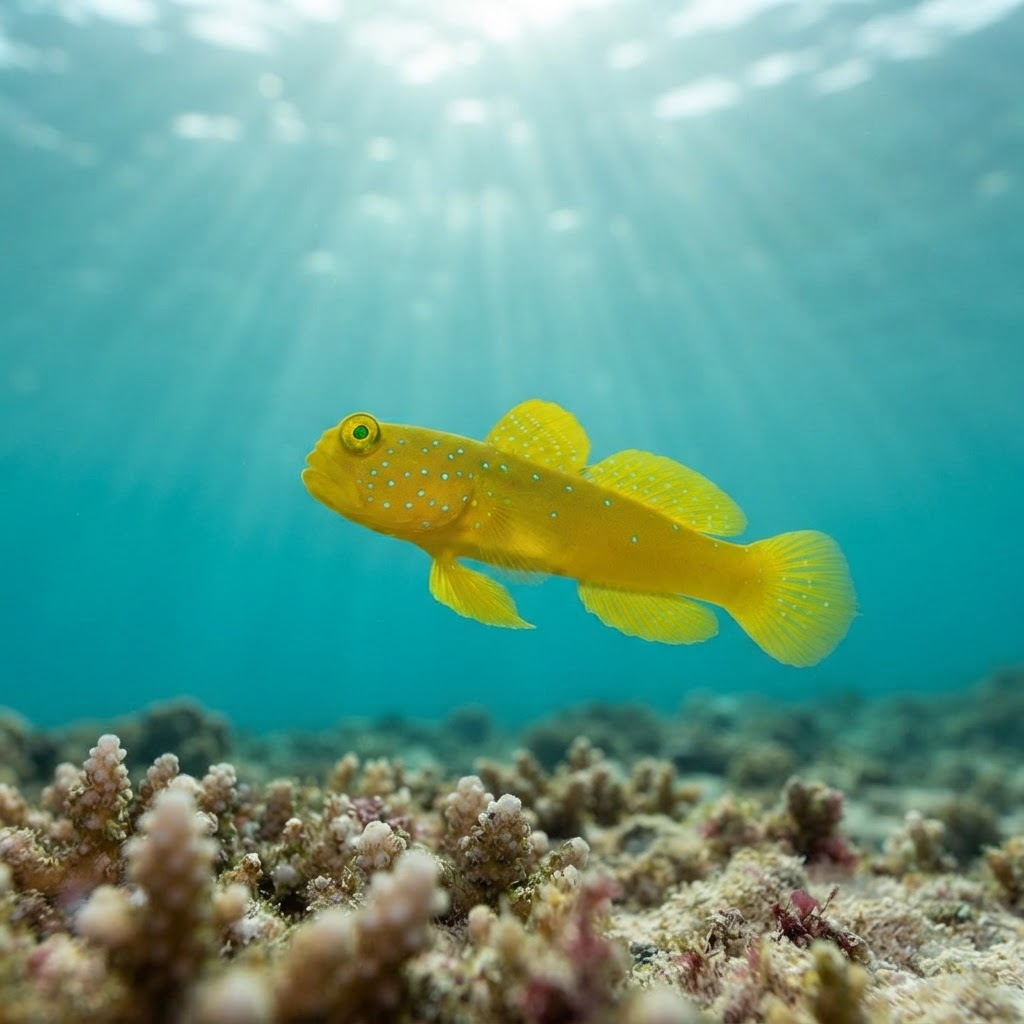
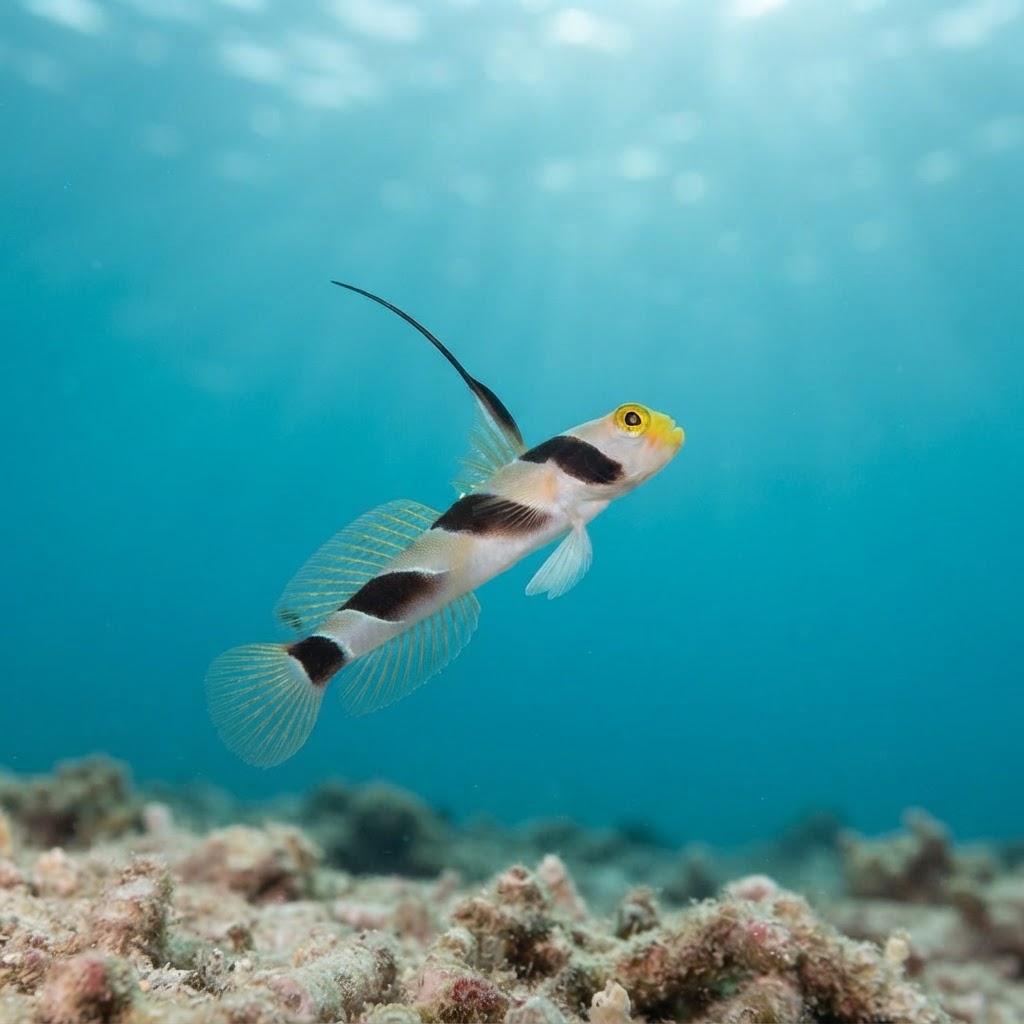
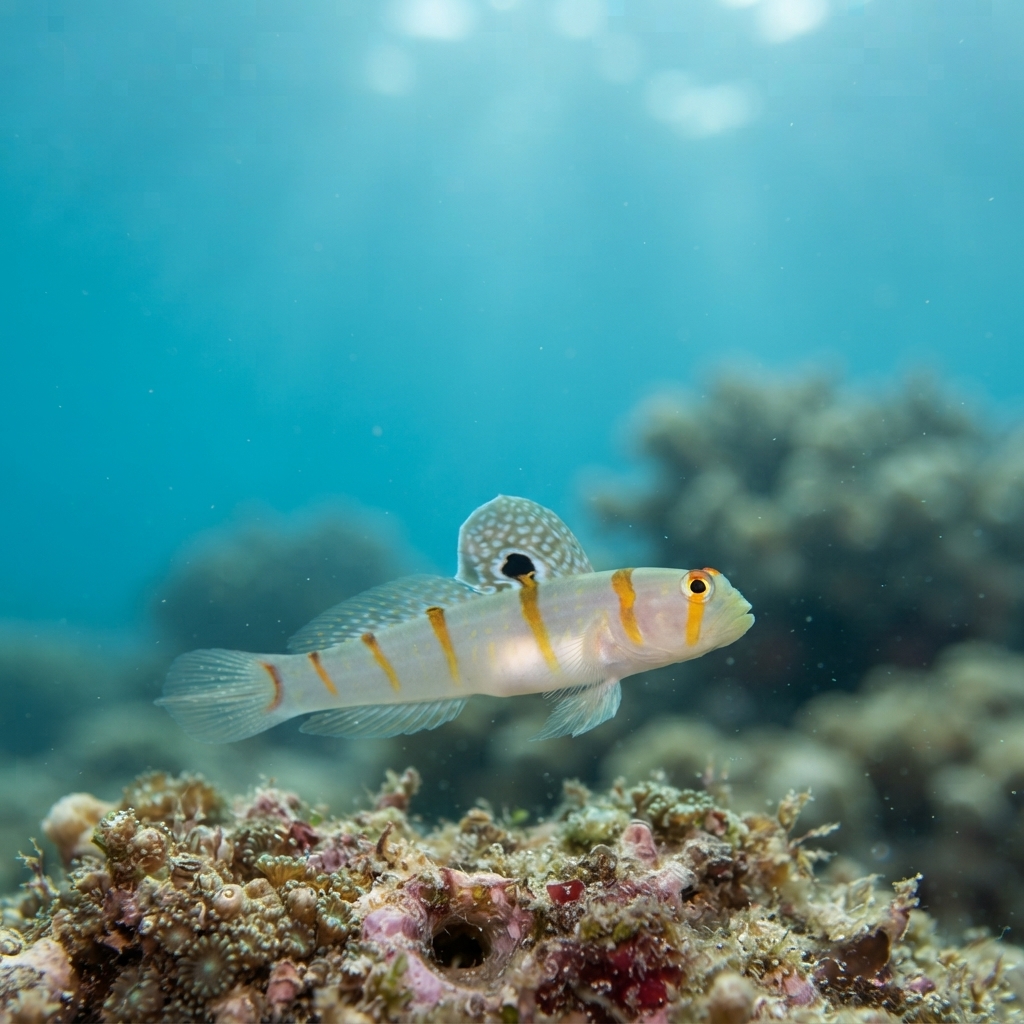
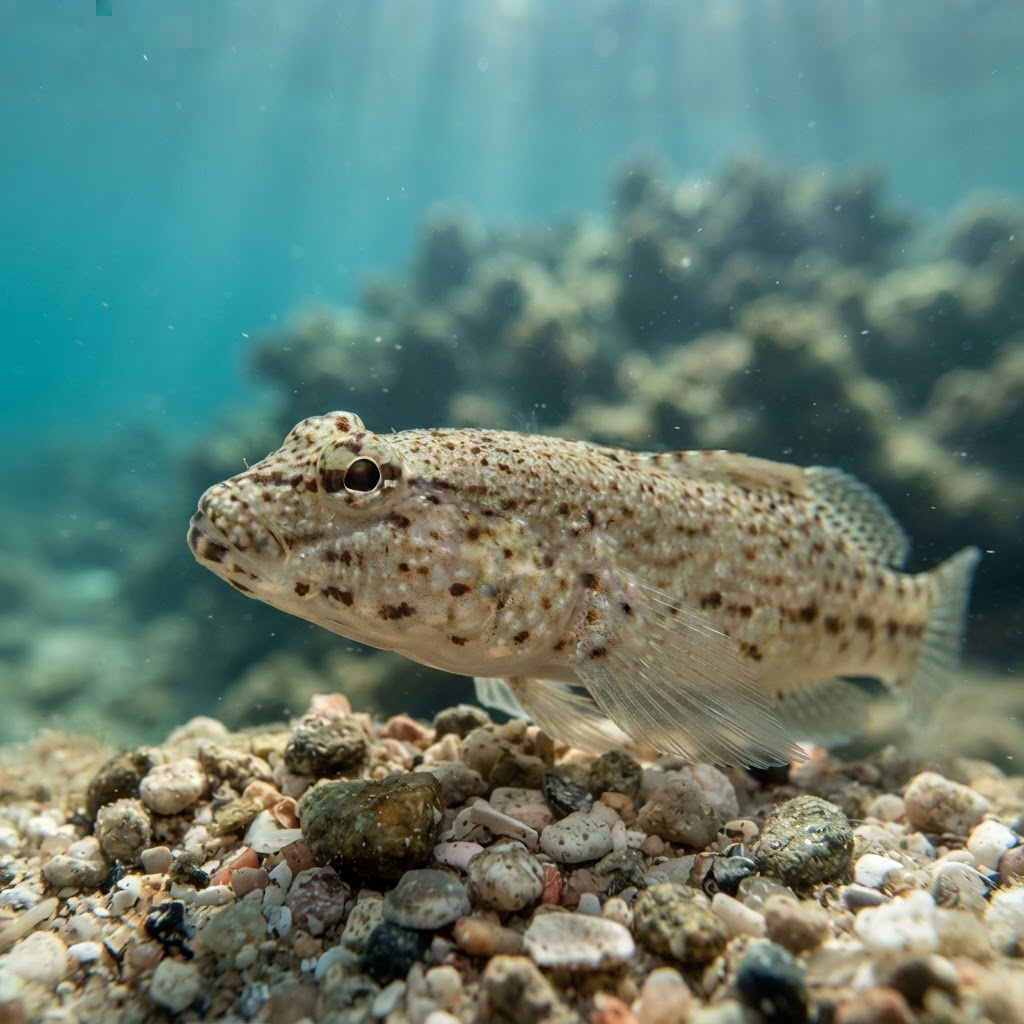
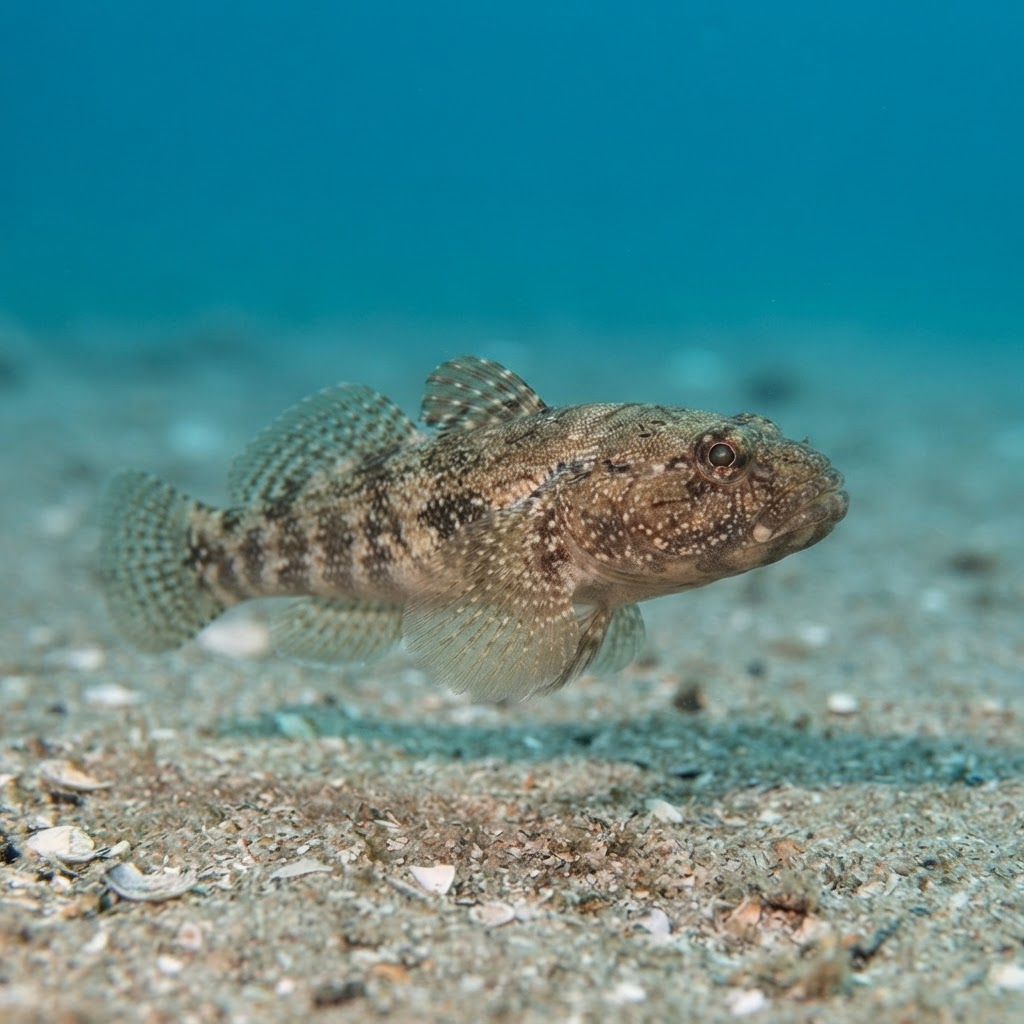
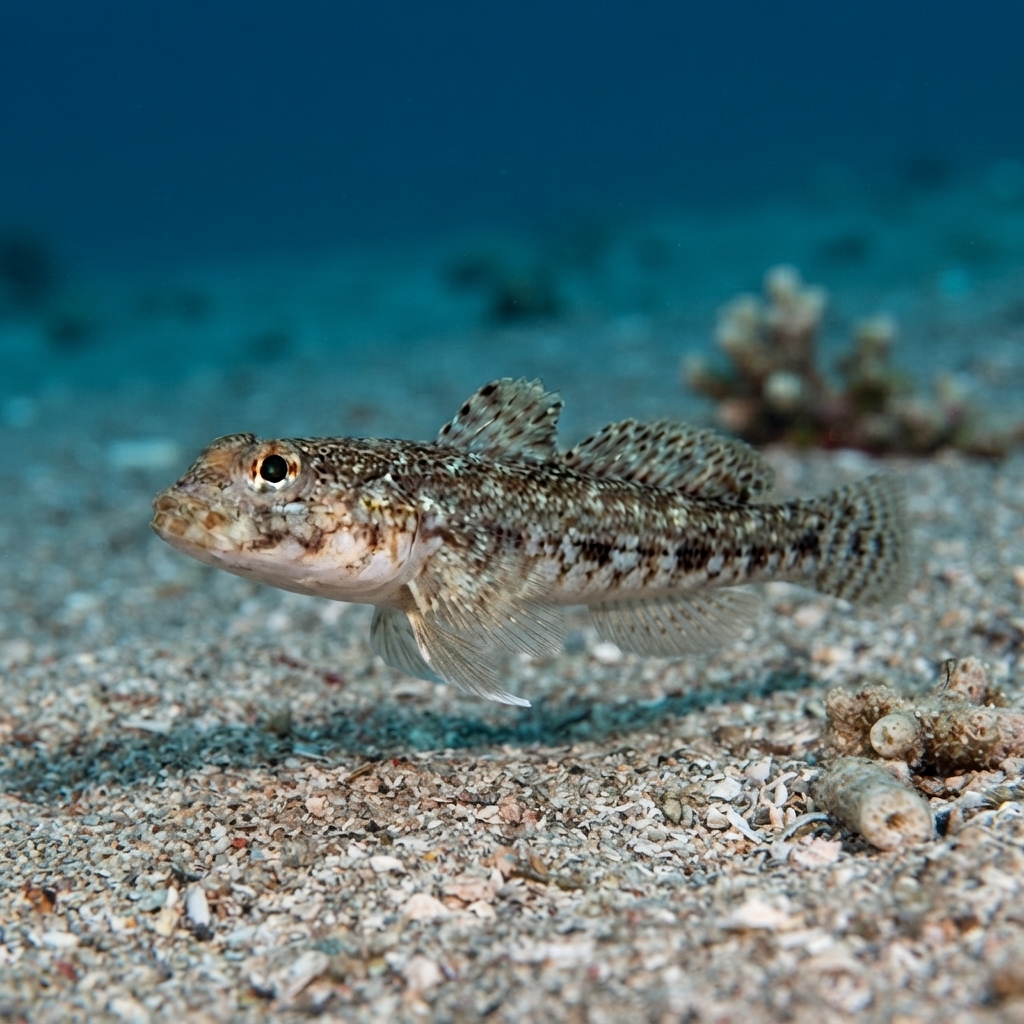
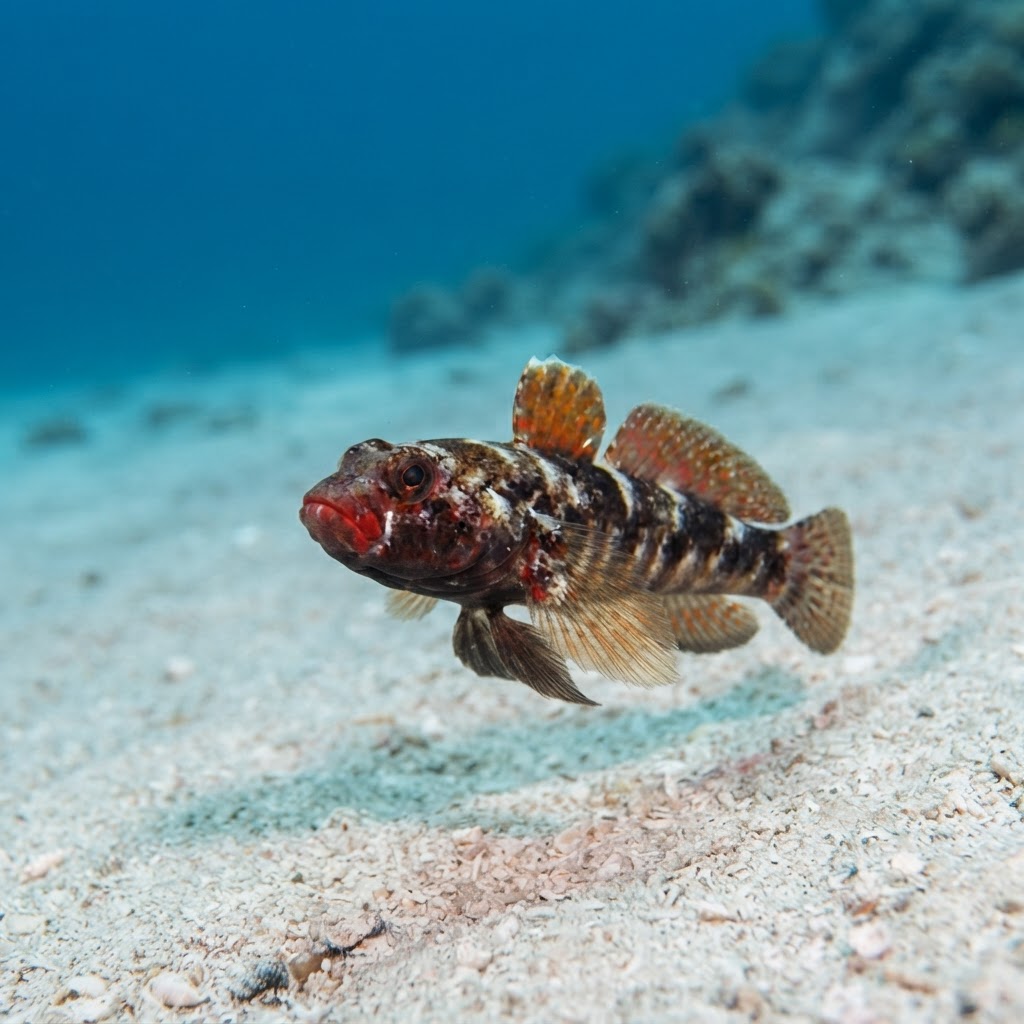
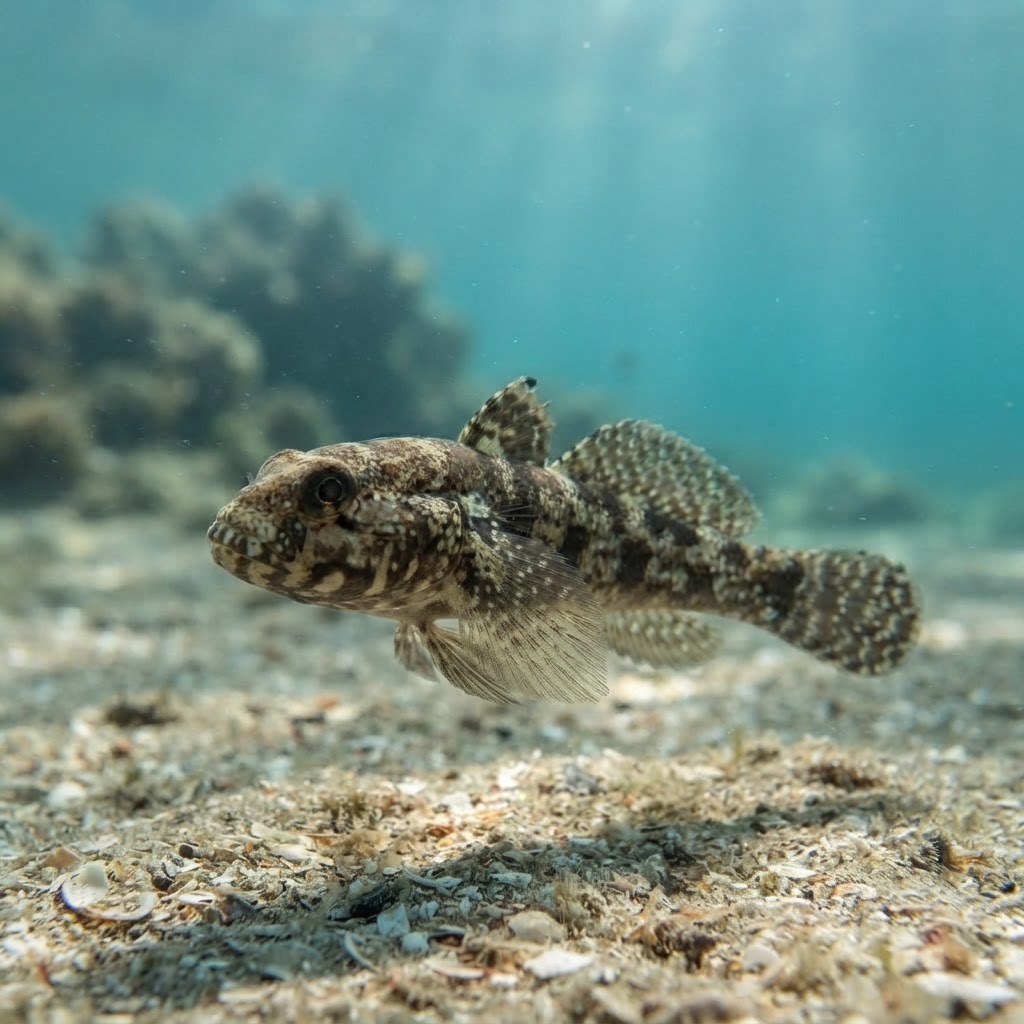
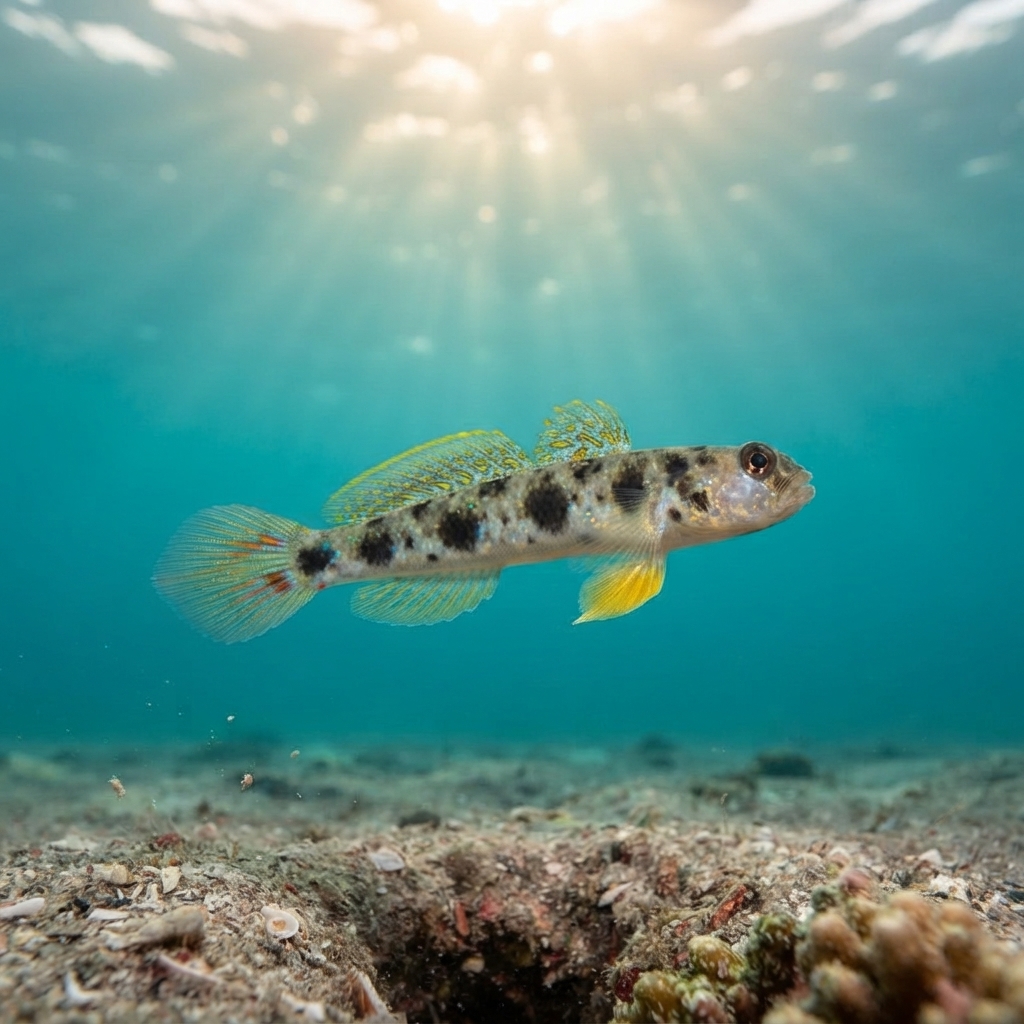
A small, slender goby that hovers just above its burrow entrance rather than sitting flat on the sand. Look for a pale, translucent grey-brown body with faint rows of speckled dusky spots along the flank and a yellowish tint low on the fins, giving the tail and pelvic area a mustard cast. It rarely strays more than a body length or two from its hole, tail flicking constantly as it watches the water above.
Watch for it perched at the mouth of a burrow it shares with a snapping shrimp, which does the digging while the goby keeps lookout for predators. It stays close to home and drops tail-first into the burrow at the first sign of a diver getting too close, popping back up once things settle. Best found by slowly scanning open sand and rubble patches rather than the reef structure itself, since it favours these flatter, more exposed stretches of seabed.
Like other shrimpgobies, it maintains a partnership with a burrowing shrimp: the shrimp digs and maintains the shared burrow while the goby, with far better eyesight, signals danger with a flick of its tail that the shrimp feels through touch.
No clear seasonal pattern shows up in the sightings data, and its comfort range of 26.7 to 29.4C matches warm tropical reef water year-round, so any month is fair game at these sites.
Reef neighbours a diver could mistake it for. Use the identification notes above to tell them apart.
Most reliably logged on sandy and rubble slopes in Luzon, Philippines, which accounts for the bulk of recorded sightings. Smaller but consistent populations turn up in Queensland, Australia, and around Dili, Timor-Leste, so it is worth checking sand-flat sections on dives in any of these three regions.
Mapping where Yellowfoot Shrimpgoby is logged…
It is most consistently found in Luzon, Philippines, with additional sightings in Queensland, Australia, and around Dili, Timor-Leste. Look on sandy or rubble slopes rather than coral structure.
There is no strong seasonal signal in the sightings, and its warm-water niche of roughly 27 to 29C holds year-round at its known sites, so it can be found across the calendar.
Look for a small, pale grey-brown goby with faint speckled spots along the sides and a yellowish wash on the lower fins, hovering just above a burrow entrance on sand or rubble. It rarely wanders far from its hole and dives in tail-first when approached.
Exact size data is not confirmed, but like most shrimpgobies it stays small, typically only a few centimetres long, making close, slow approaches necessary for a good look.
Yellowfoot Shrimpgobies share their burrow with a snapping shrimp in a mutual arrangement: the shrimp excavates and maintains the tunnel while the goby stands guard, flicking its tail to warn the shrimp of approaching danger.
No, they pose no threat to divers. They are shy and retreat into their burrow when approached rather than showing any defensive behaviour toward people.
Site and sighting data is aggregated from diver logs, iNaturalist and GBIF. For taxonomy and conservation status:
Slender Goby
806 sites