Amblyeleotris randalli
Sandy-slope goby paired with a shrimp, most reliably found across the Visayas at 25.5 to 28.7 C. Here's where to look.
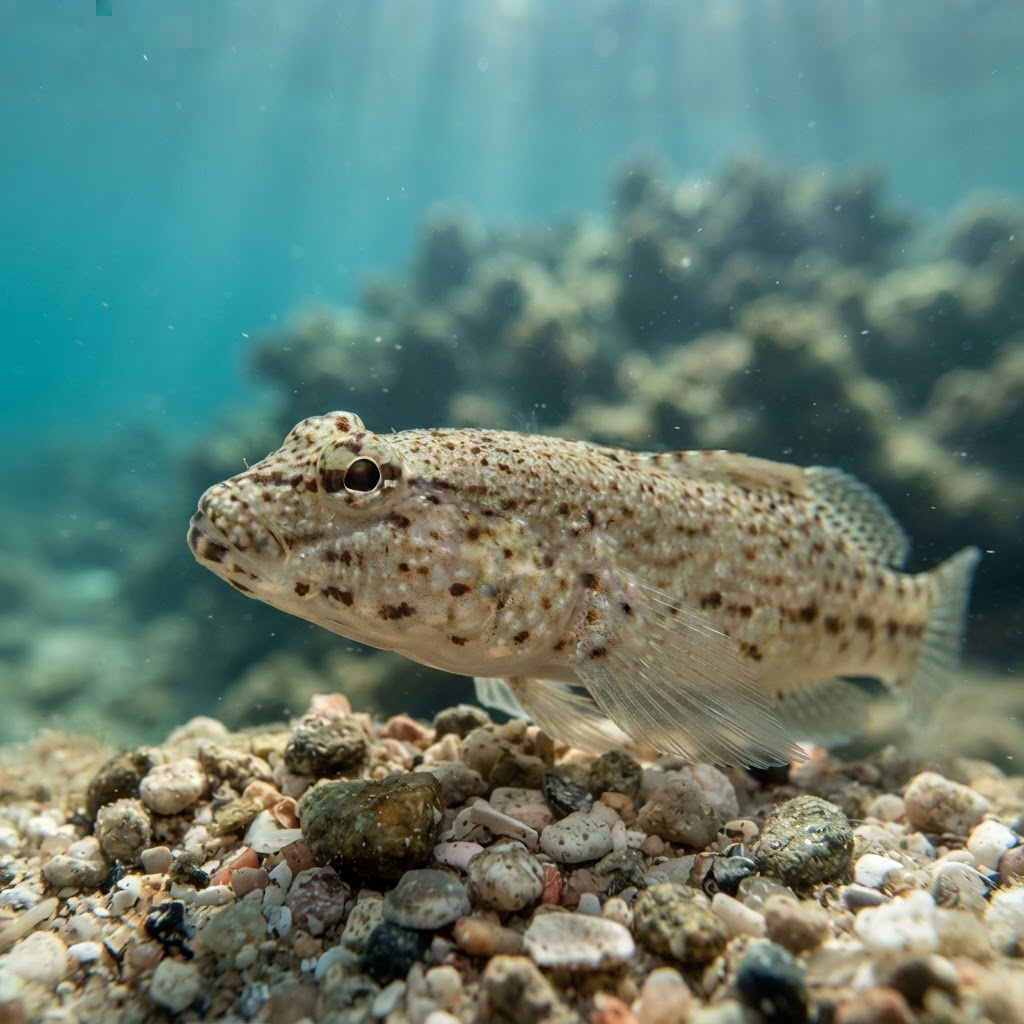
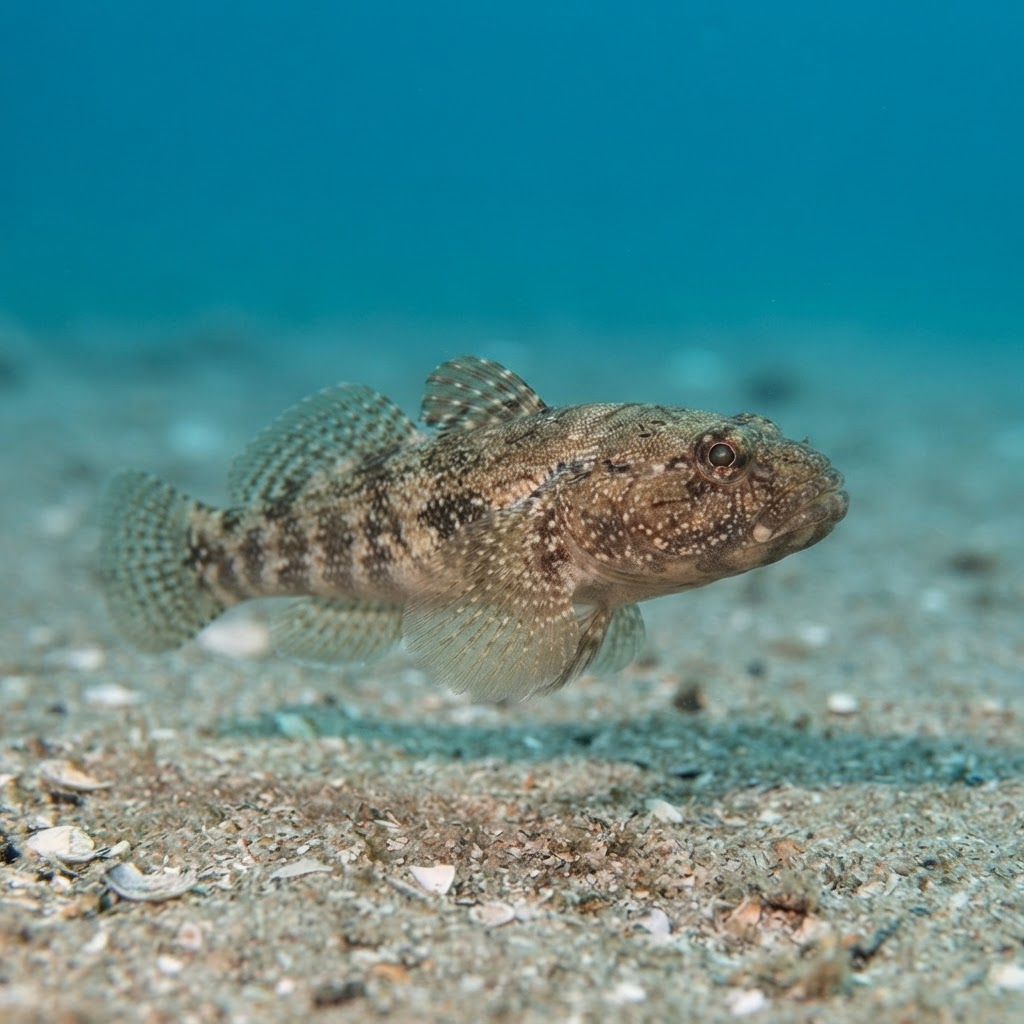
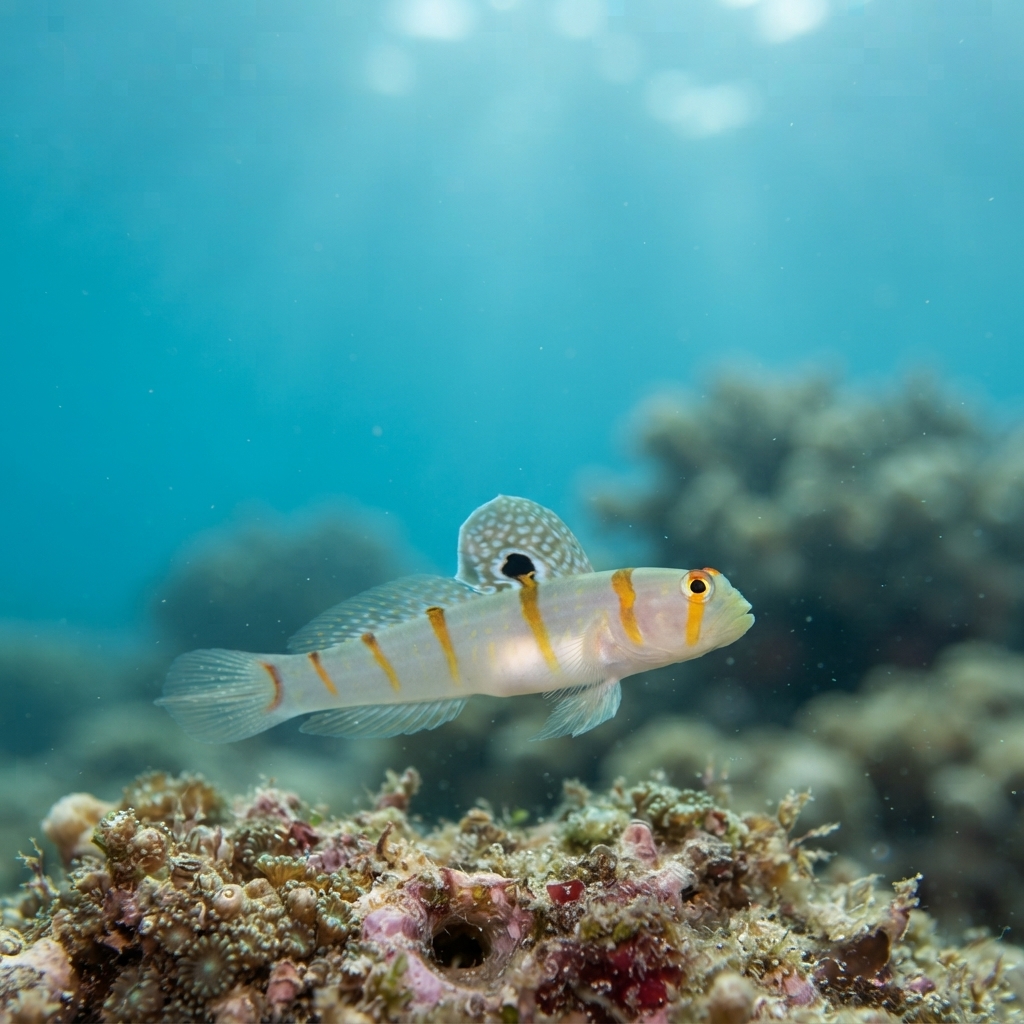
Small, slender goby around 8 cm, pale grey to white with bold orange-brown bars running down the body and a distinctive black spot ringed in blue on the front dorsal fin. Sits propped on extended pectoral fins just above a burrow entrance in sand or rubble, rarely straying more than a body length from the hole. Often paired with a shrimp partner that keeps the burrow clear, so look for a hovering fish with a much smaller crustacean fussing at the sand nearby.
Spends most of the dive hovering at the mouth of its burrow, dipping down out of sight if you approach too fast and popping back up once you settle. Shares its burrow with a partner shrimp that shovels sand out while the goby keeps watch, flicking down at the first sign of a shadow or sudden movement. Best approached slowly and from a slight distance, staying still long enough for it to relax back into view.
It lives in a real working partnership with a burrowing shrimp: the shrimp digs and maintains the shared burrow almost blind, while the goby stands guard and signals danger with a tail-flick the shrimp can feel through its antennae.
Sightings show no detectable season, and with a water-temperature niche of 25.5 to 28.7 C typical of year-round tropical reef conditions, it's reasonable to expect this goby on the sand at any time of year.
Reef neighbours a diver could mistake it for. Use the identification notes above to tell them apart.
Most reliably logged across the Visayas region of the Philippines, which accounts for the bulk of recorded sightings, with additional populations in Sulawesi, Indonesia and a scattering of records from Dili, Timor-Leste. Look for it on sandy or rubble-strewn slopes near reef edges at sites in these regions rather than on hard coral structure.
Mapping where Randall's Prawn-goby is logged…
It's most consistently found across the Visayas region of the Philippines, with smaller populations reported in Sulawesi, Indonesia, and around Dili in Timor-Leste. Look on sandy slopes and rubble patches rather than reef structure.
There's no strong seasonal pattern in the data, and it sits comfortably in water from 25.5 to 28.7 C, so it's a fair bet on tropical reef dives throughout the year.
Look for a small pale grey fish with orange-brown bars and a black, blue-ringed spot on its front dorsal fin, hovering just above a burrow in sand. A partner shrimp working the sand nearby is a strong confirming clue.
They're small, reaching around 8 cm in length, which is typical for prawn-gobies sharing burrows with shrimp partners.
It lives in a true partnership with a burrowing shrimp: the shrimp digs and maintains the burrow while the goby watches for predators, warning its half-blind housemate with a flick of its tail.
Site and sighting data is aggregated from diver logs, iNaturalist and GBIF. For taxonomy and conservation status:
Slender Goby
806 sites