Gobius cobitis
Chunky, rock-hugging goby found across Catalonia and the Balearics, comfortable in 14 to 20C water and logged year-round.
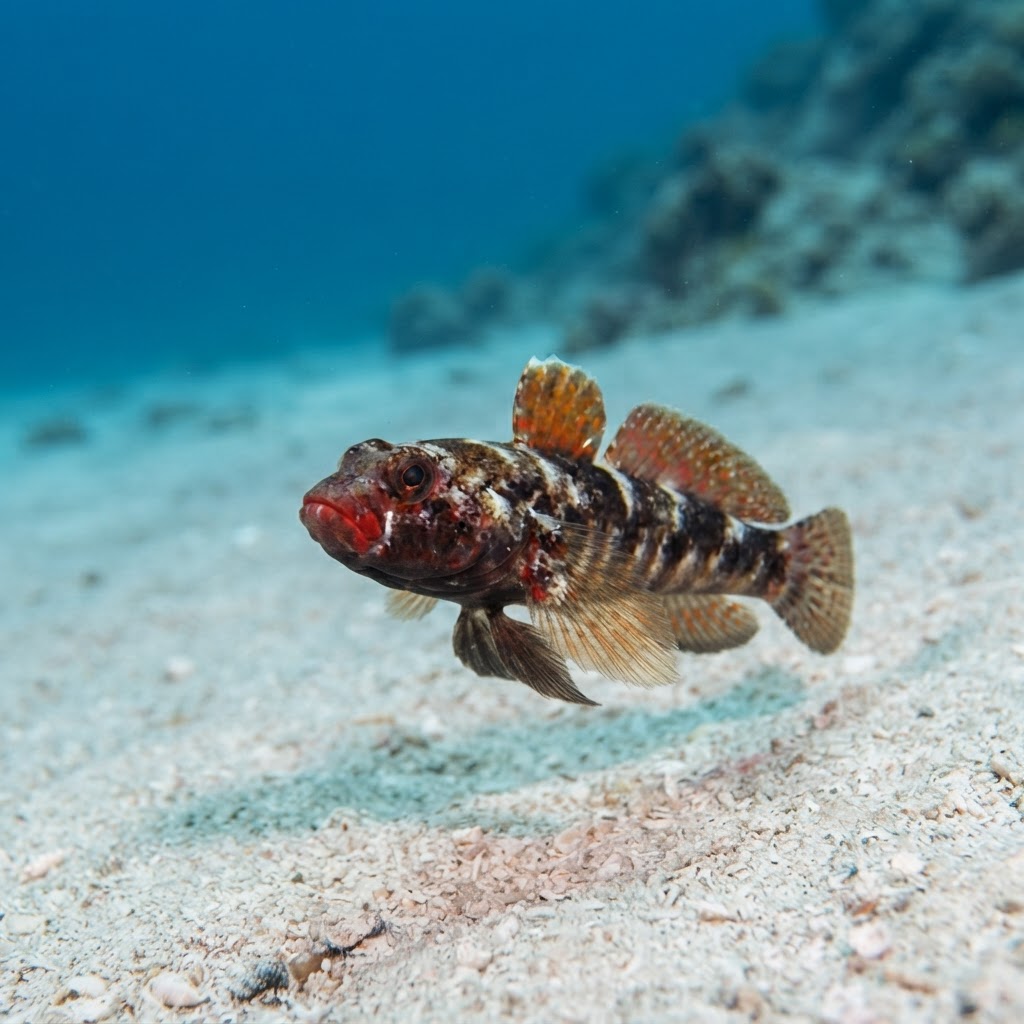
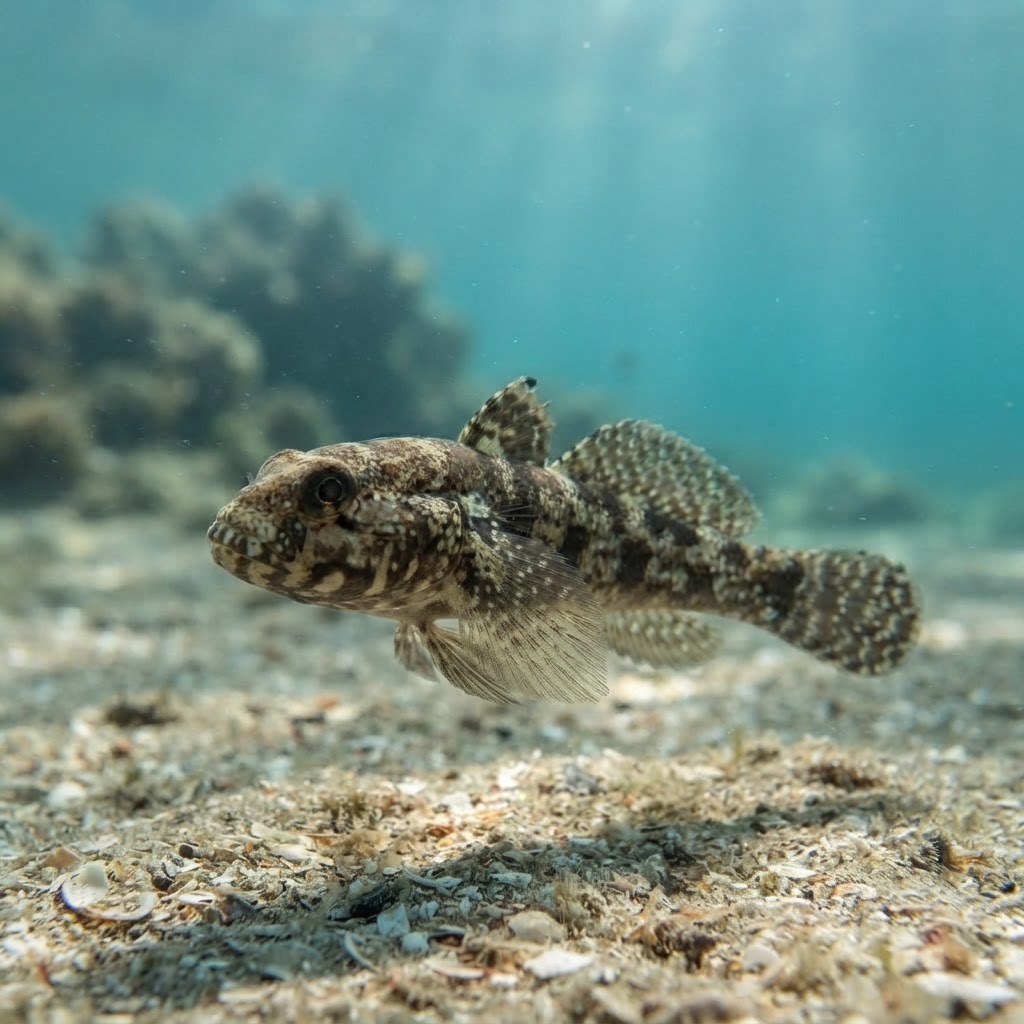
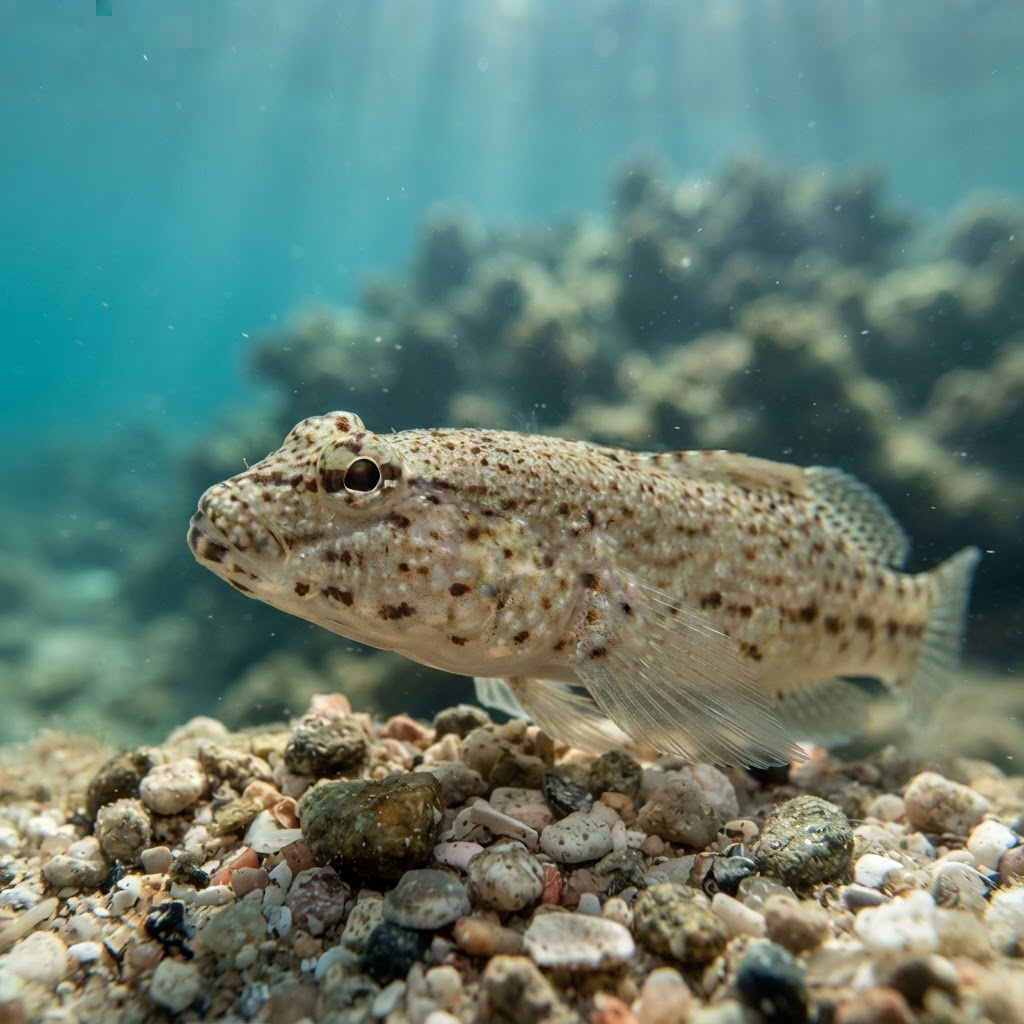
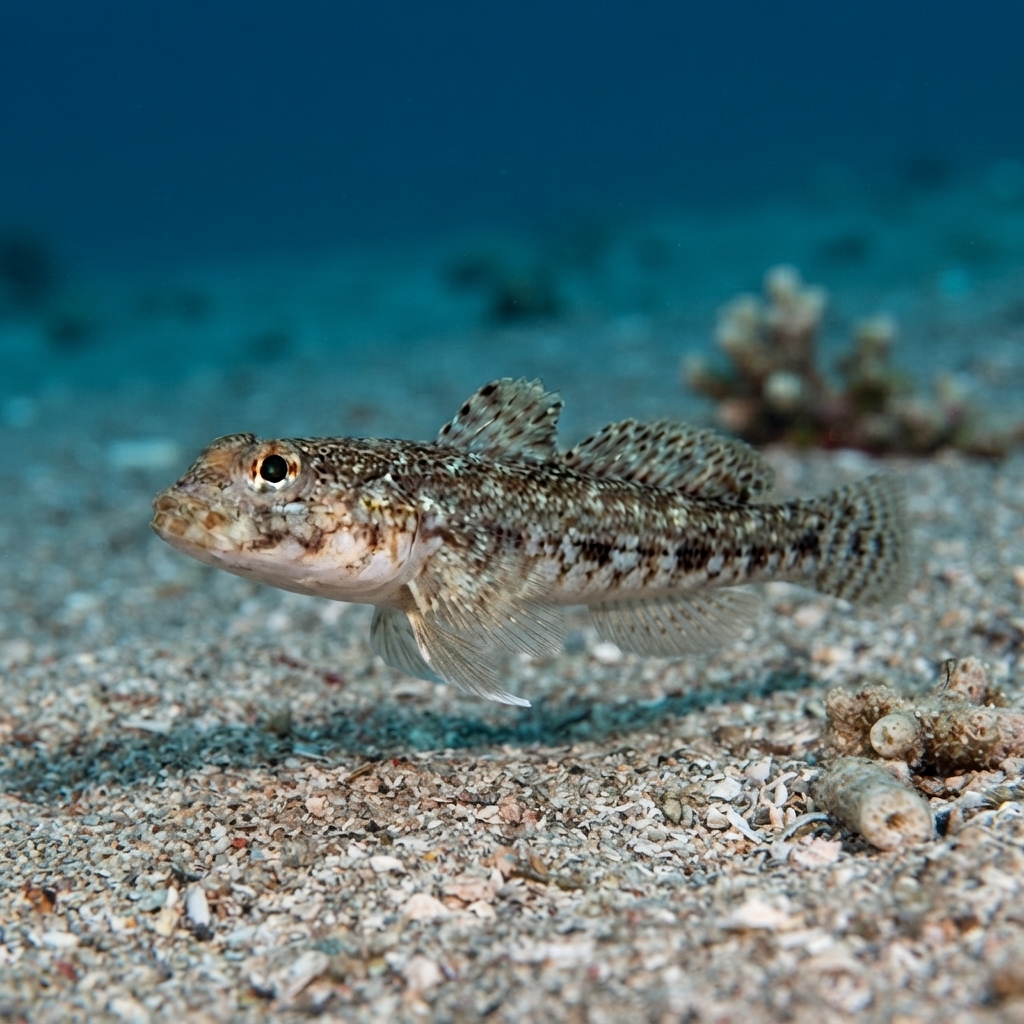
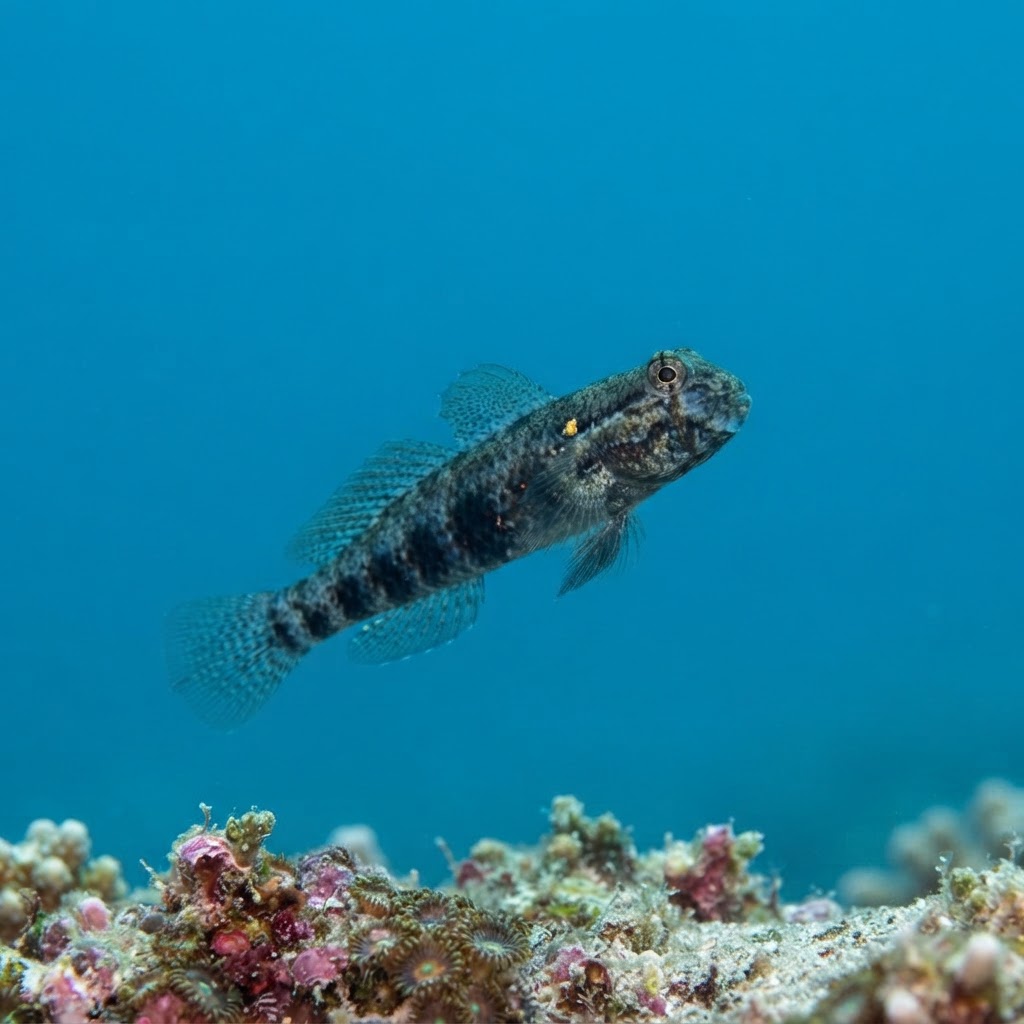
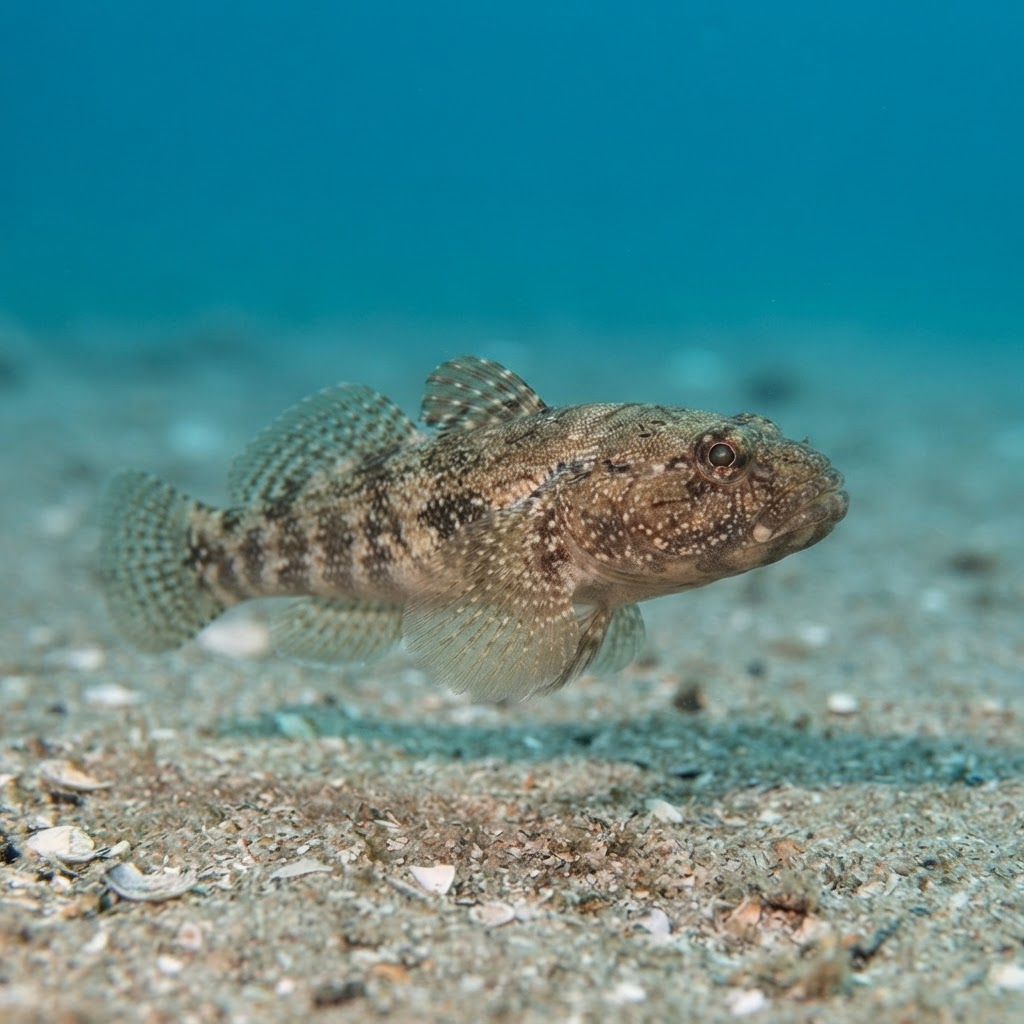
Bulky for a goby, reaching around 10cm with a thick-set, almost frog-like head and a mottled brown-grey to olive body that blends into rock. Look for the fused pelvic fins forming a small sucker disc underneath, which it uses to grip rock in the surge zone, and a blunt, rounded snout rather than a pointed one. It tends to sit still on ledges and boulders rather than hover, which helps separate it from smaller, more mobile gobies nearby.
Usually found parked motionless on a rock ledge or wedged into a crevice in shallow, surge-exposed water, relying on camouflage rather than flight when a diver approaches. It will hold its ground at close range and only dart for cover if you get too close or reach toward it, using that sucker-like pelvic disc to lock onto the rock. Most sightings come from shallower sections of a dive, from around 10 metres down to the rockier, current-swept parts of a site.
It is the largest goby species found in European waters, dwarfing most of its rock-pool relatives despite still being a modest 10cm fish.
No clear seasonal pattern shows up in the data, and its temperature niche of roughly 14 to 20C spans much of the Mediterranean and Atlantic diving calendar, so it is worth watching for on any dive within its range.
Reef neighbours a diver could mistake it for. Use the identification notes above to tell them apart.
Spain is the strongest bet, especially Catalonia and the Balearic Islands, alongside Galicia on the Atlantic side. Croatia's Istria and Kvarner regions, Brittany in France, and Portugal's Algarve are all solid follow-ups, with further sightings logged in Italy, Greece, Cyprus and Malta.
Mapping where Giant Goby is logged…
Spain logs the most sightings, particularly Catalonia and the Balearic Islands, with Croatia's Istria and Kvarner regions and Brittany in France close behind. Portugal's Algarve, Italy, Greece, Cyprus and Malta also turn them up.
There is no strong seasonal signal in diver logs, and its comfort range of about 14 to 20C covers most of the diving year across its Mediterranean and Atlantic range, so sightings happen throughout the year.
Look for a thick-bodied, mottled brown-grey goby around 10cm long sitting motionless on rock rather than swimming in open water. Its blunt head and larger size compared with nearby gobies are the key clues.
Around 10cm on average, which still makes it the largest goby species recorded in European waters.
No, they pose no threat to divers. They hold still on rock and will only retreat into a crevice if approached too closely.
Site and sighting data is aggregated from diver logs, iNaturalist and GBIF. For taxonomy and conservation status:
Red-mouthed Goby
773 sites