Nemateleotris magnifica
Spot the vivid red-and-white Fire Dartfish across the Maldives, Indonesia and Philippines. Tips on when, where and how close you can get.
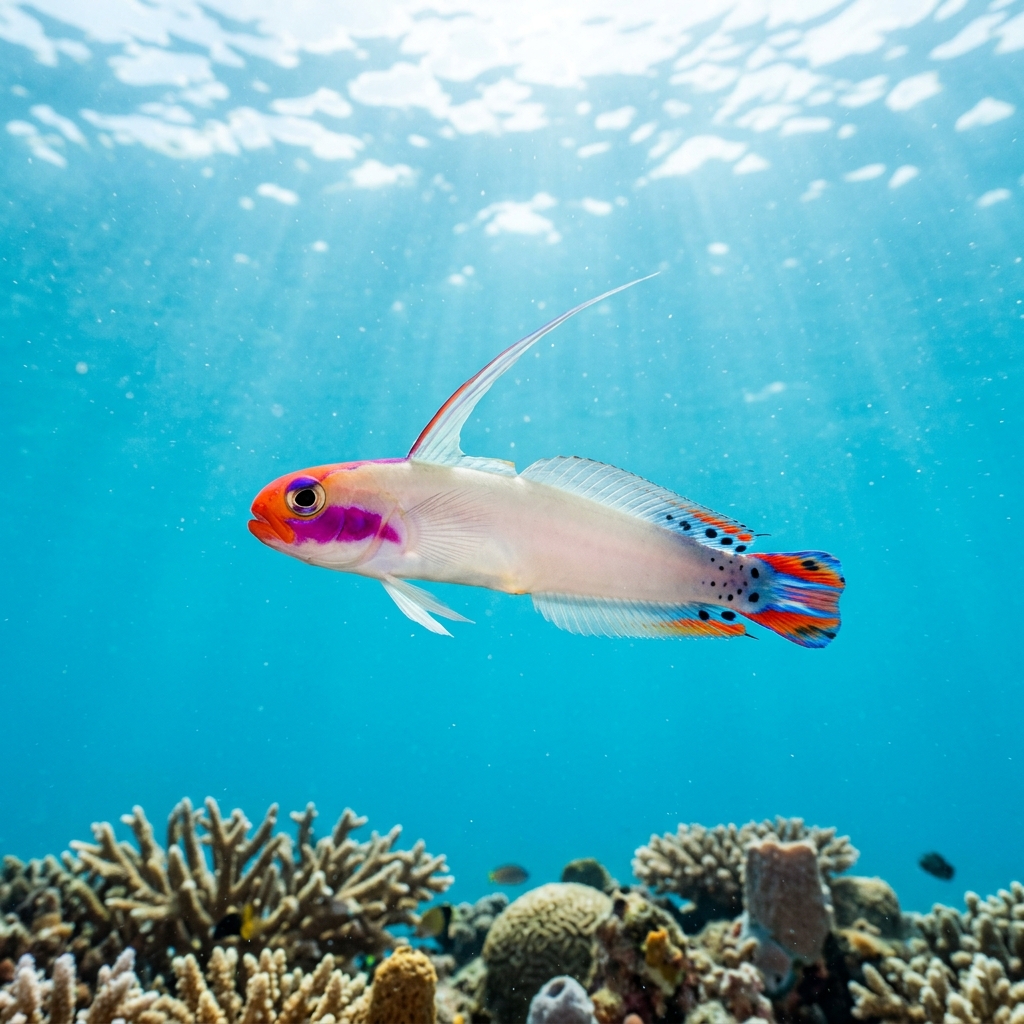
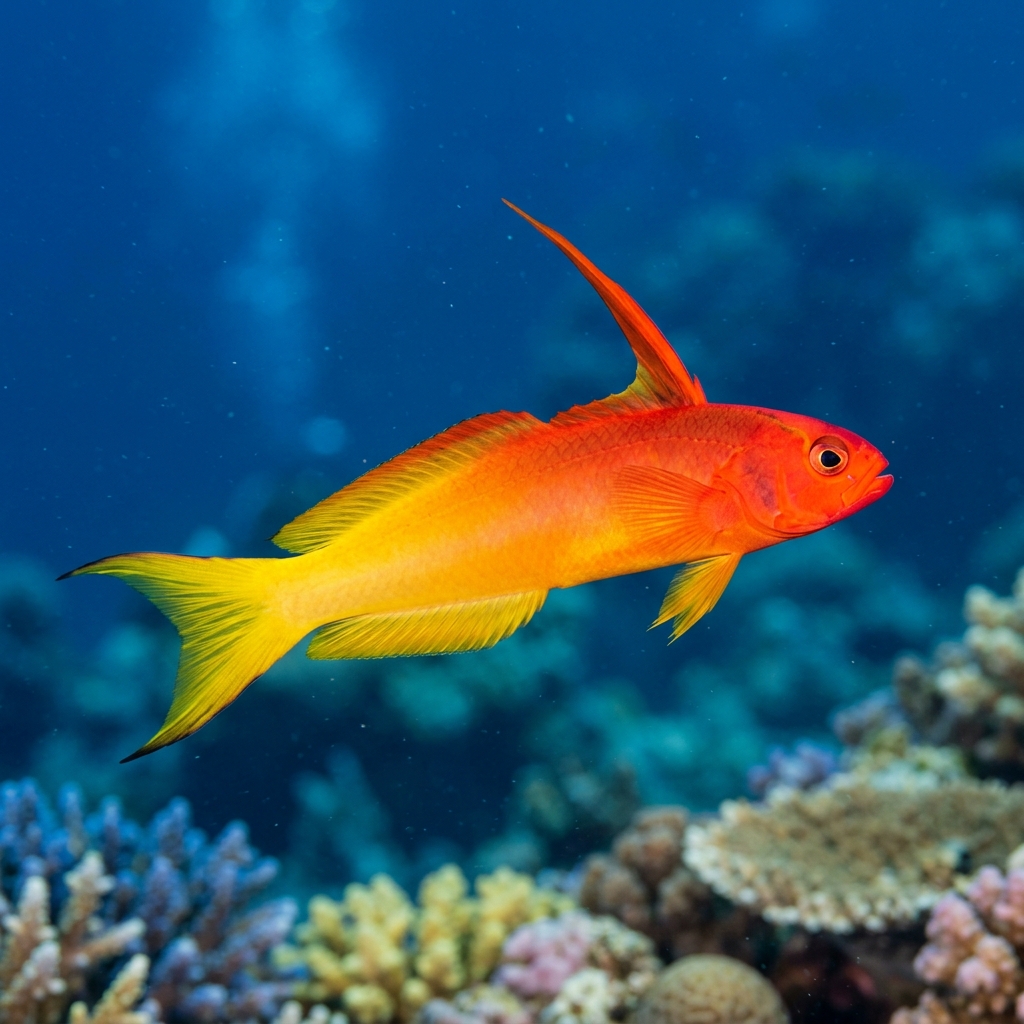
At around 6 cm, fire dartfish are finger-length fish with an instantly recognisable two-tone body: the front half is creamy white and the rear half grades into a fiery red-orange, deepening towards the tail. A single elongated first dorsal spine (the tall spike at the front of the back fin) is the key field mark that sets it apart from most other small reef fish. Watch for the characteristic hovering posture just above the reef, facing into the current with the body held almost vertically, before it flicks back down into a burrow.
Typically seen hovering a body-length or two above the reef, facing into the current and snapping up tiny planktonic organisms as they drift past, this mid-water feeding station is where you will usually spot one. Fire dartfish are diurnal (active by day) and retreat into a burrow or crevice the moment they feel threatened, so slow, deliberate approaches are essential. They may posture and flare their fins at neighbouring individuals of the same species, but pay little attention to divers until you get too close.
Fire dartfish are often found in bonded pairs that share a single burrow, and pairs have been observed coordinating their retreat into the burrow simultaneously when a threat appears, watch for two fish hovering close together near the same hole.
In the Southern Hemisphere, sightings concentrate between October and March, which covers the austral summer across Indonesia, Australia and French Polynesia. Northern Hemisphere sites show peak activity from August through December; the species' preferred water temperature of roughly 25 to 29 °C means tropical reef destinations can produce sightings year-round, with those seasonal peaks reflecting higher diver activity as much as fish behaviour.
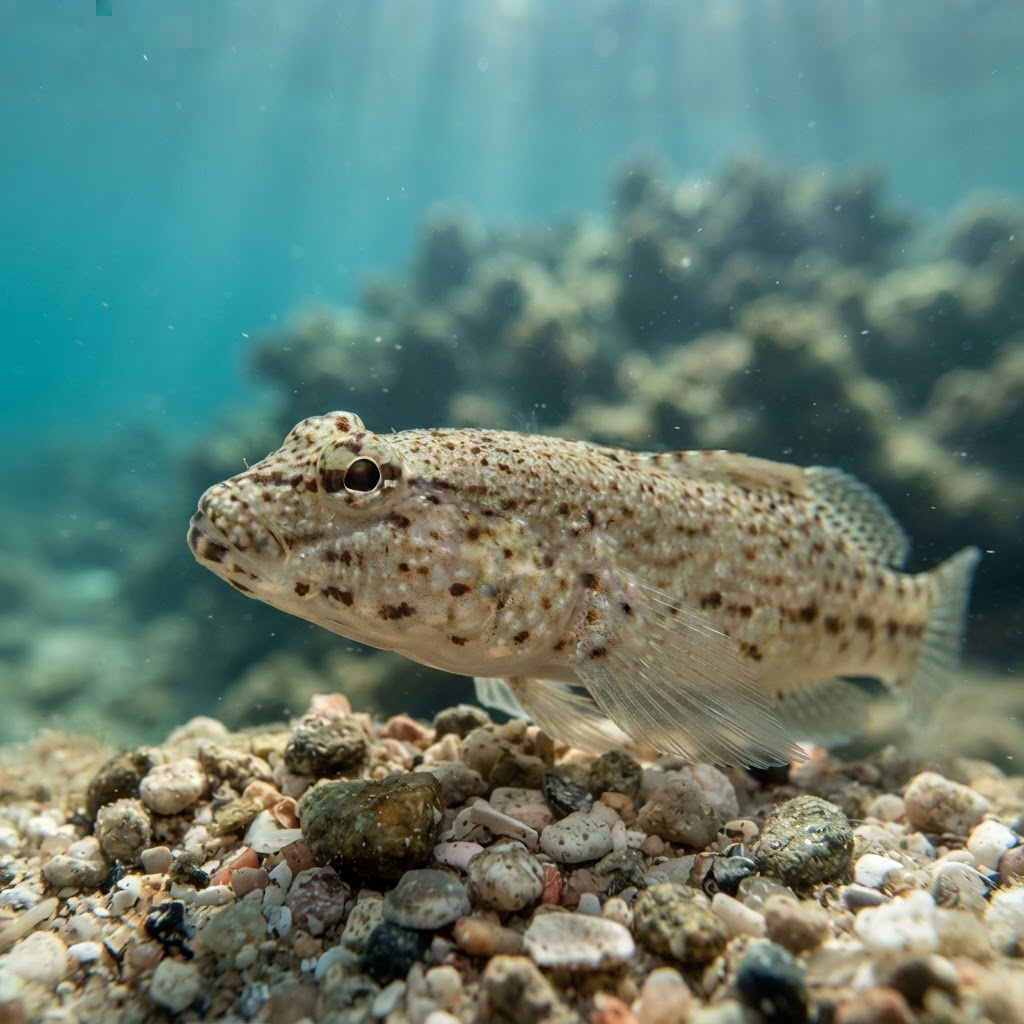
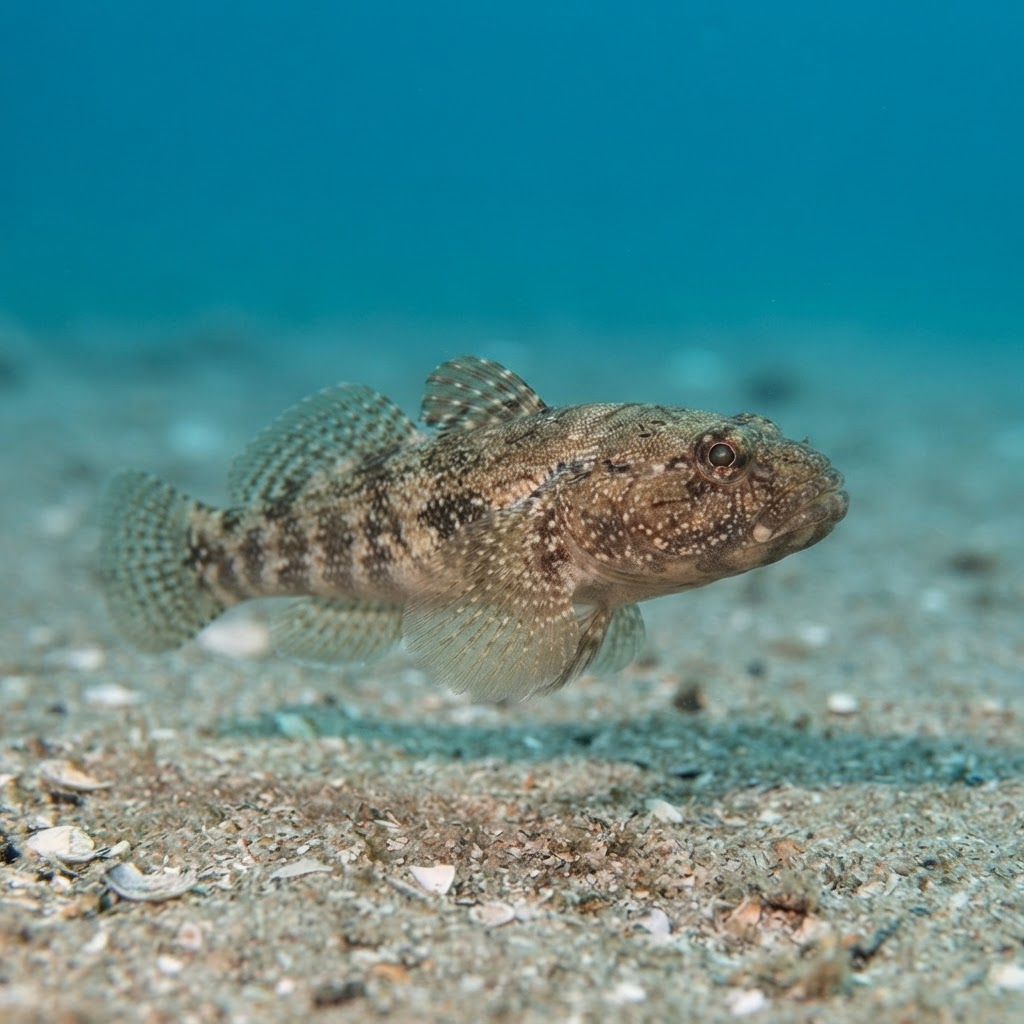
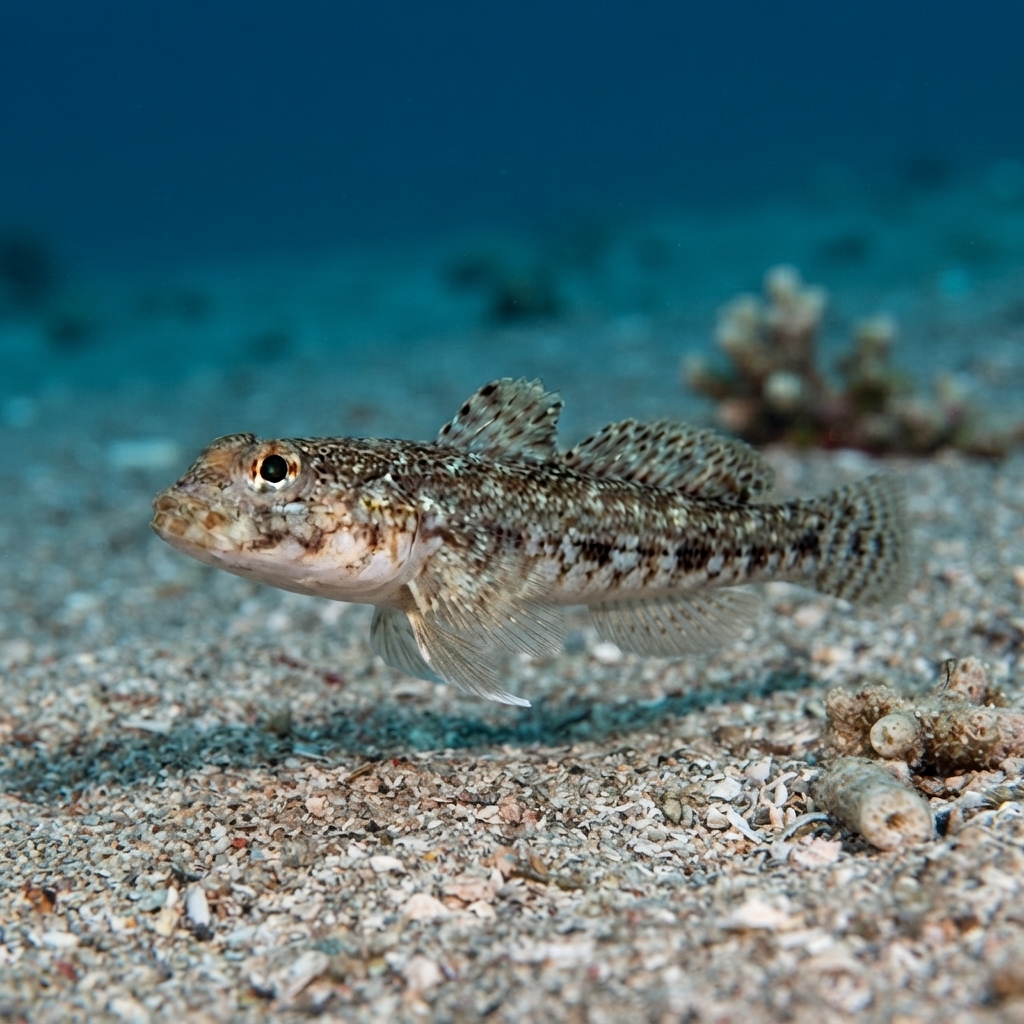
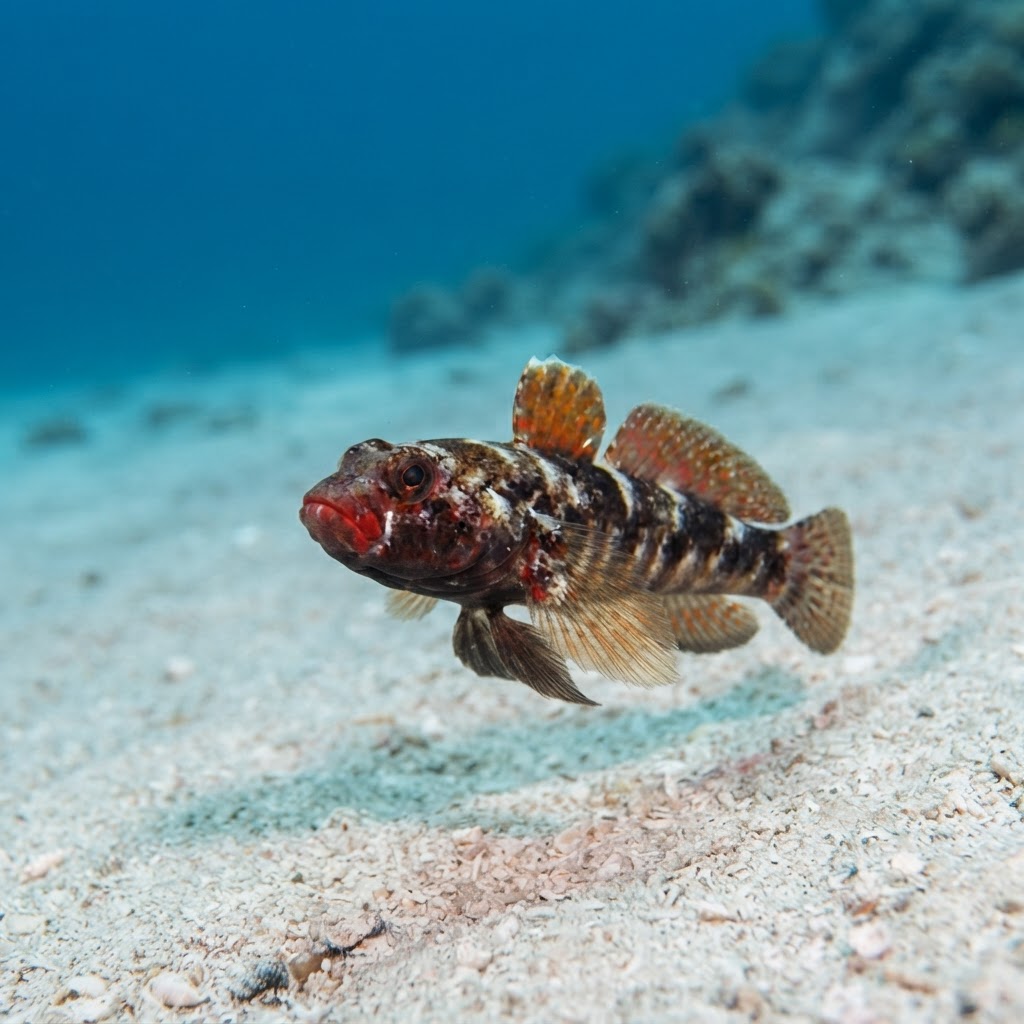
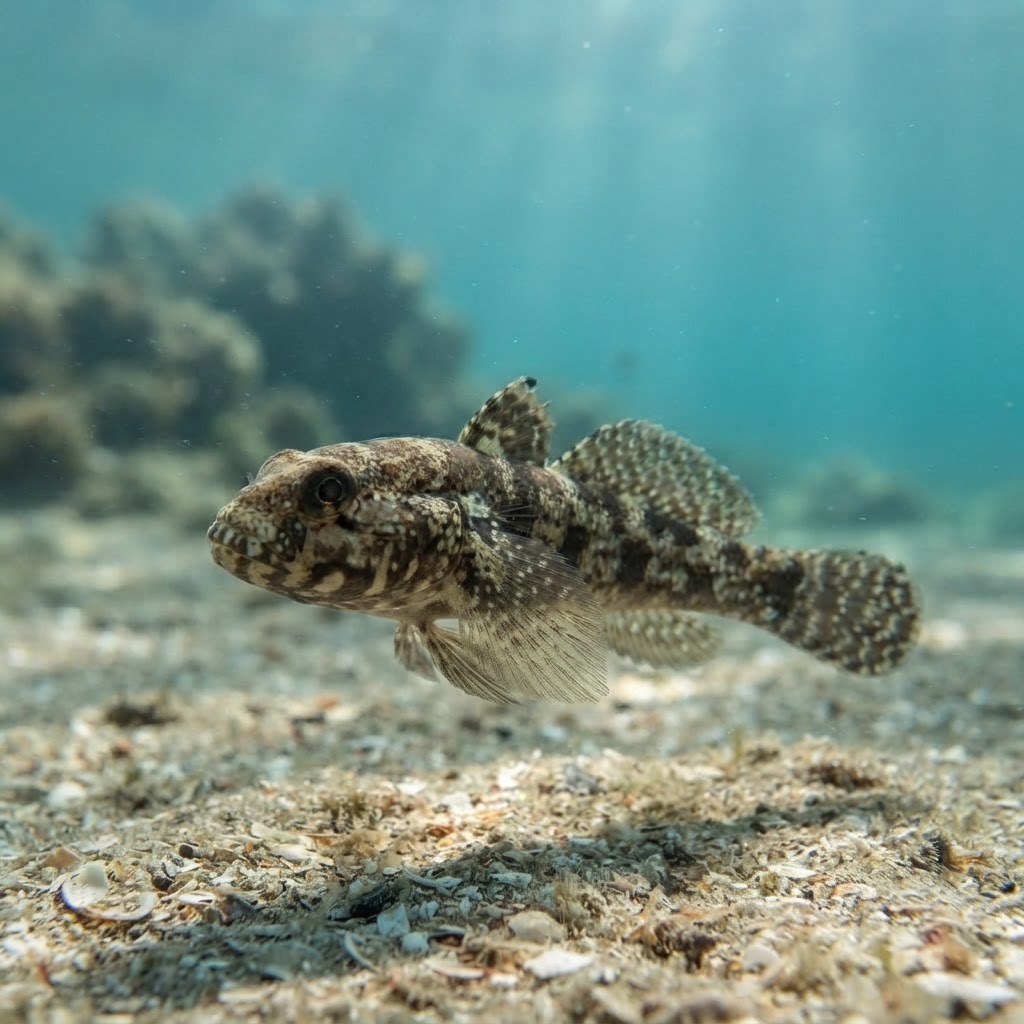
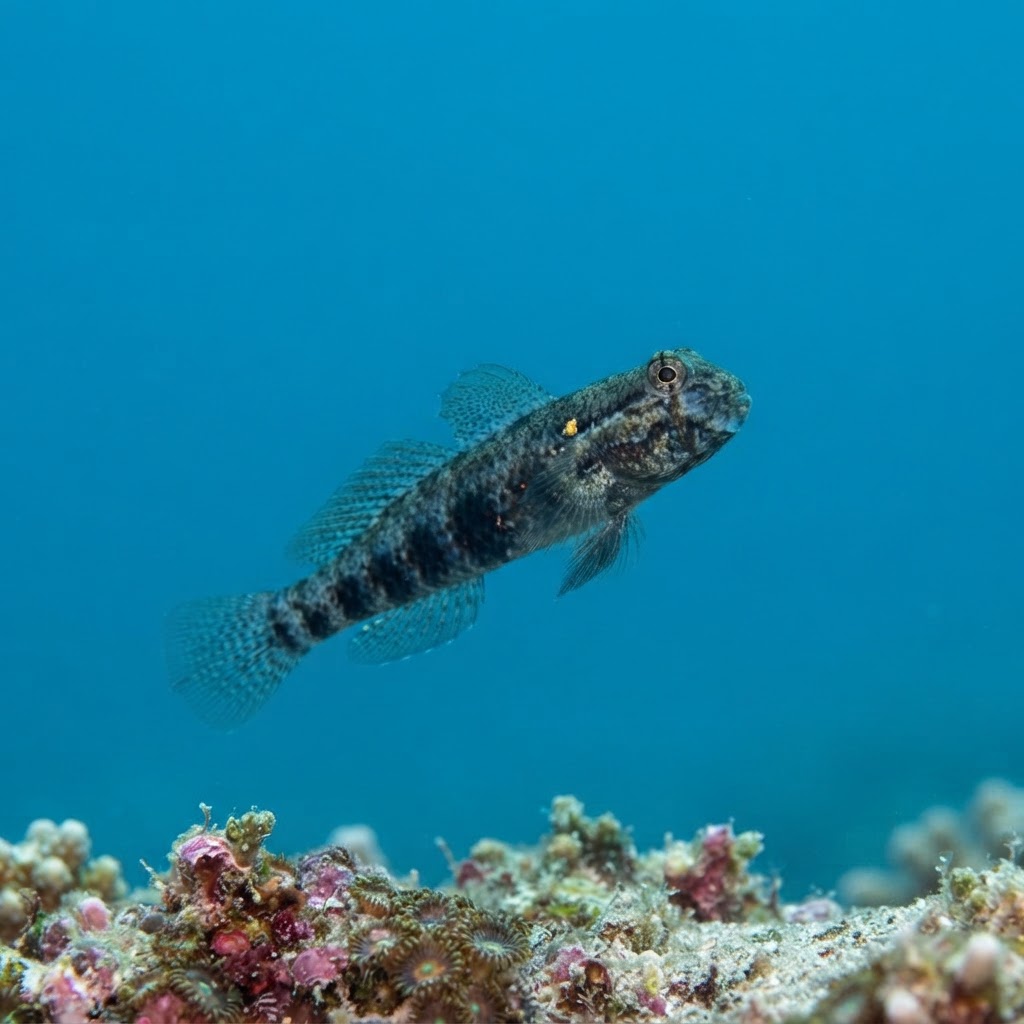
Reef neighbours a diver could mistake it for. Use the identification notes above to tell them apart.
Most commonly logged in the Maldives, where the North and Central Atolls and the Malé and Ari Atolls both show strong populations, and across the Indonesian archipelago with Bali particularly well represented. The Philippines, especially Luzon in the north and the Palawan area, round out the top three countries, with further sightings across Malaysia, Australia's Queensland coast, Japan, and Thailand.
Mapping where Fire Dartfish is logged…
The Maldives leads as the most frequently logged location, with the North and Central Atolls and the Malé and Ari Atolls being particularly productive. Indonesia (especially Bali) and the Philippines (Luzon and Palawan) are close behind, and the species is also logged across Malaysia, Queensland in Australia, Japan, Thailand, and French Polynesia.
Southern Hemisphere destinations such as Indonesia and Australia see the most sightings between October and March. For northern sites including the Maldives and the Philippines, August through December is the peak window. Because the species lives in warm tropical water, a sighting is possible year-round at most sites.
Look for a small fish, about the length of your finger, with a white front half that fades into vivid red-orange towards the tail. The tall, spike-like first dorsal spine and the habit of hovering almost upright just above the reef are the two features to lock onto. It is one of very few reef fish with that specific white-to-red gradient.
Adults typically reach around 6 cm in length, roughly the size of an adult thumb. Their small size means you can easily overlook them if you are not scanning close to the reef substrate, especially near rubble patches and crevices where they favour hovering.
At most sites where they are recorded, fire dartfish are logged as uncommon rather than common, so a sighting is a nice find rather than a certainty. Slow movement, time spent hovering near rubble slopes and sandy patches at the base of the reef, and a bit of patience give you the best chance of watching one before it darts away.
Site and sighting data is aggregated from diver logs, iNaturalist and GBIF. For taxonomy and conservation status:
Red-mouthed Goby
773 sites