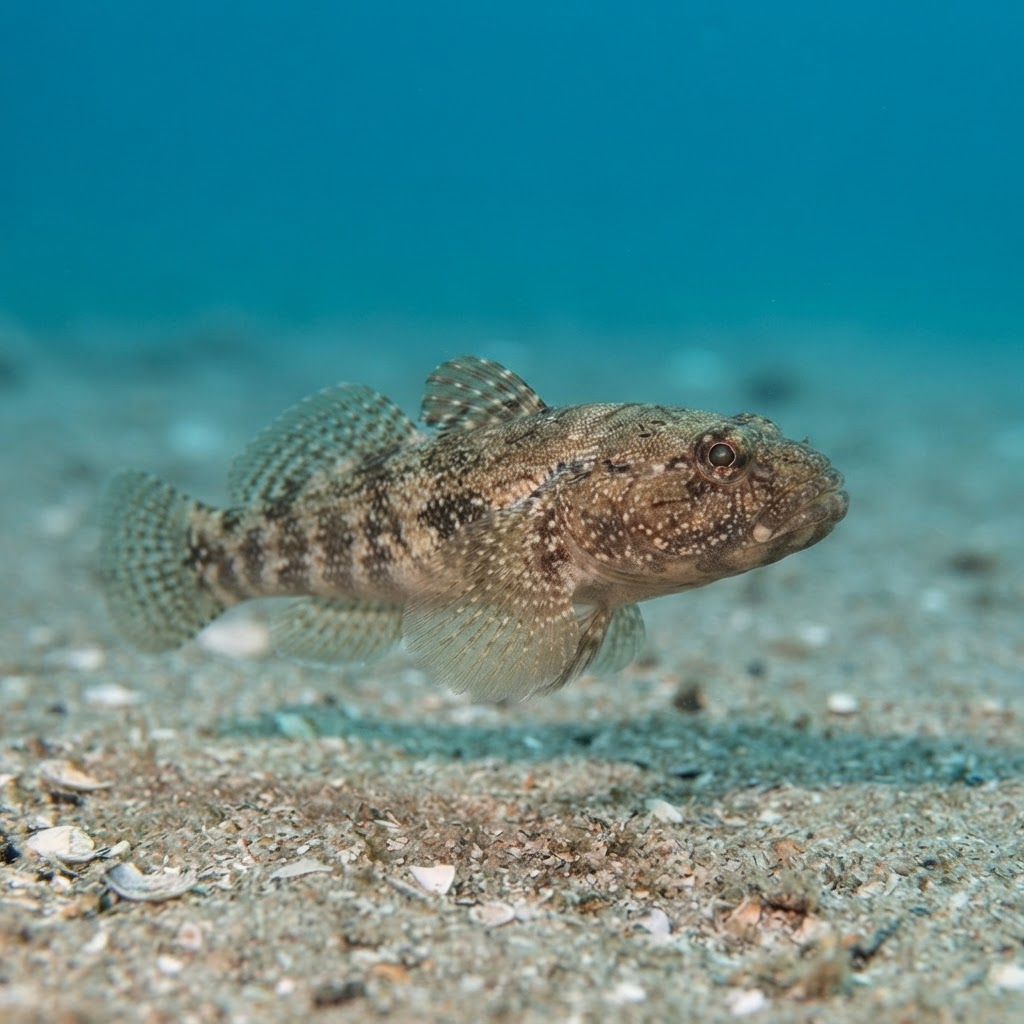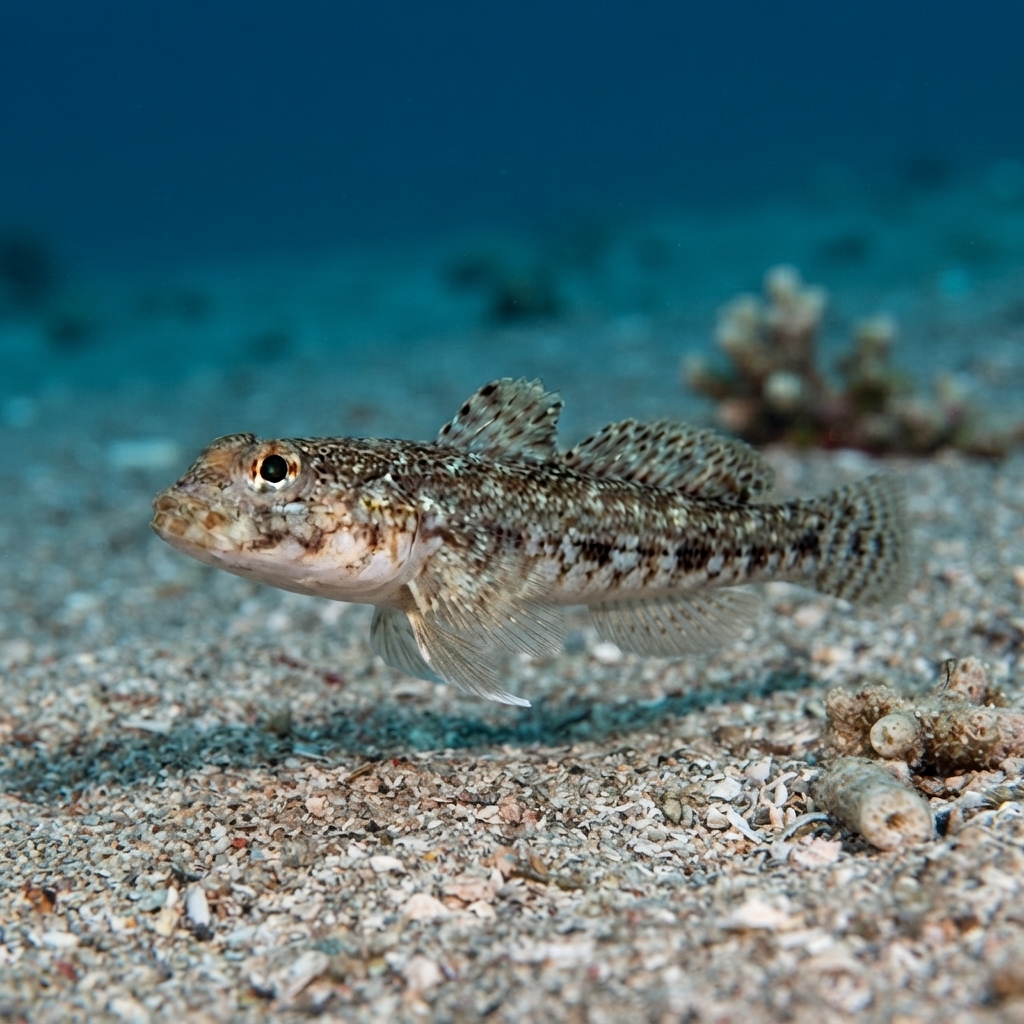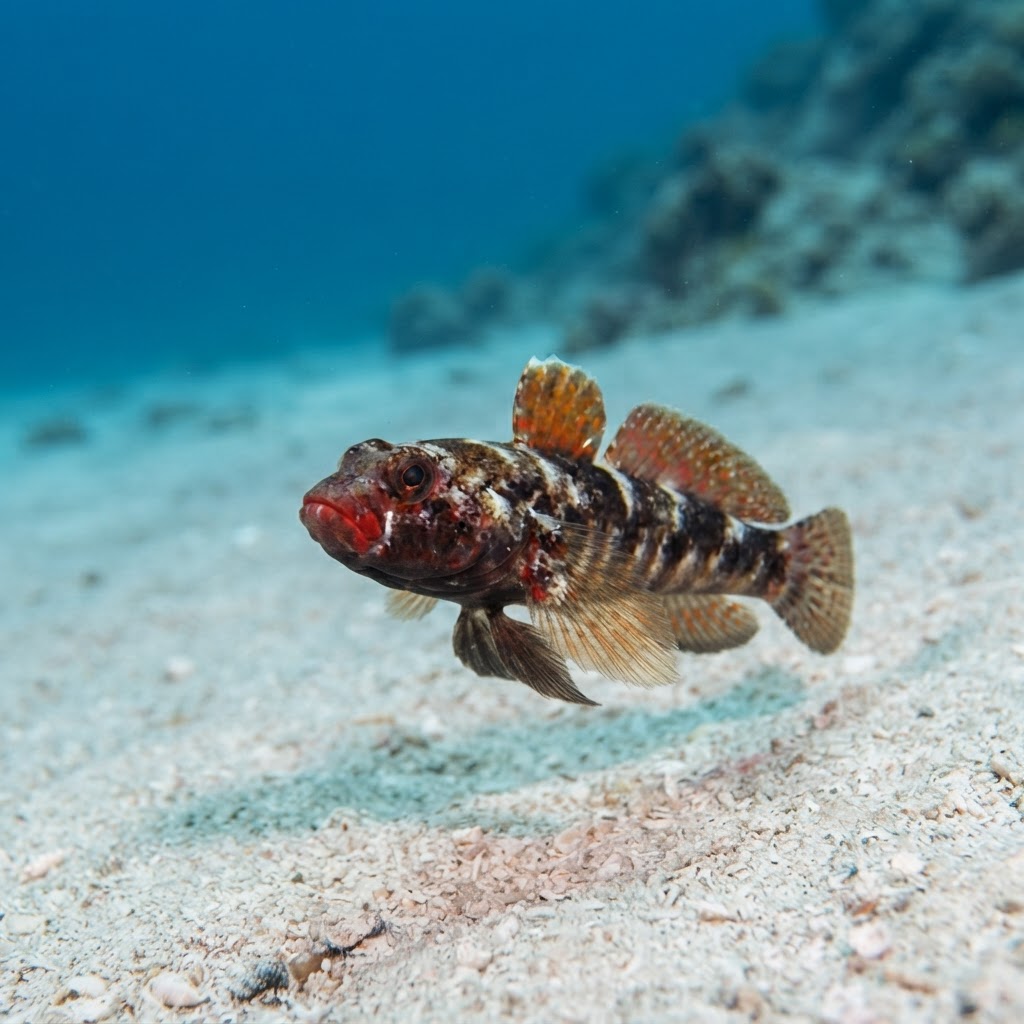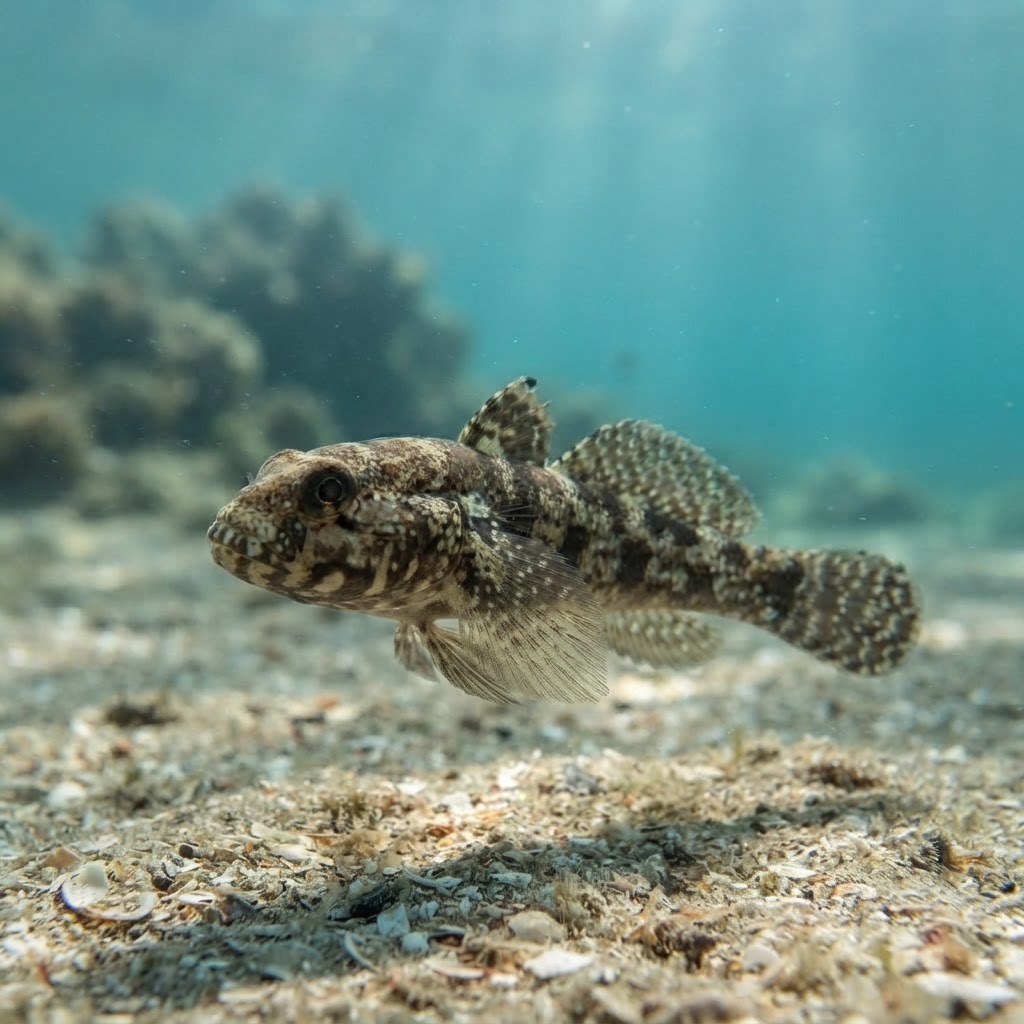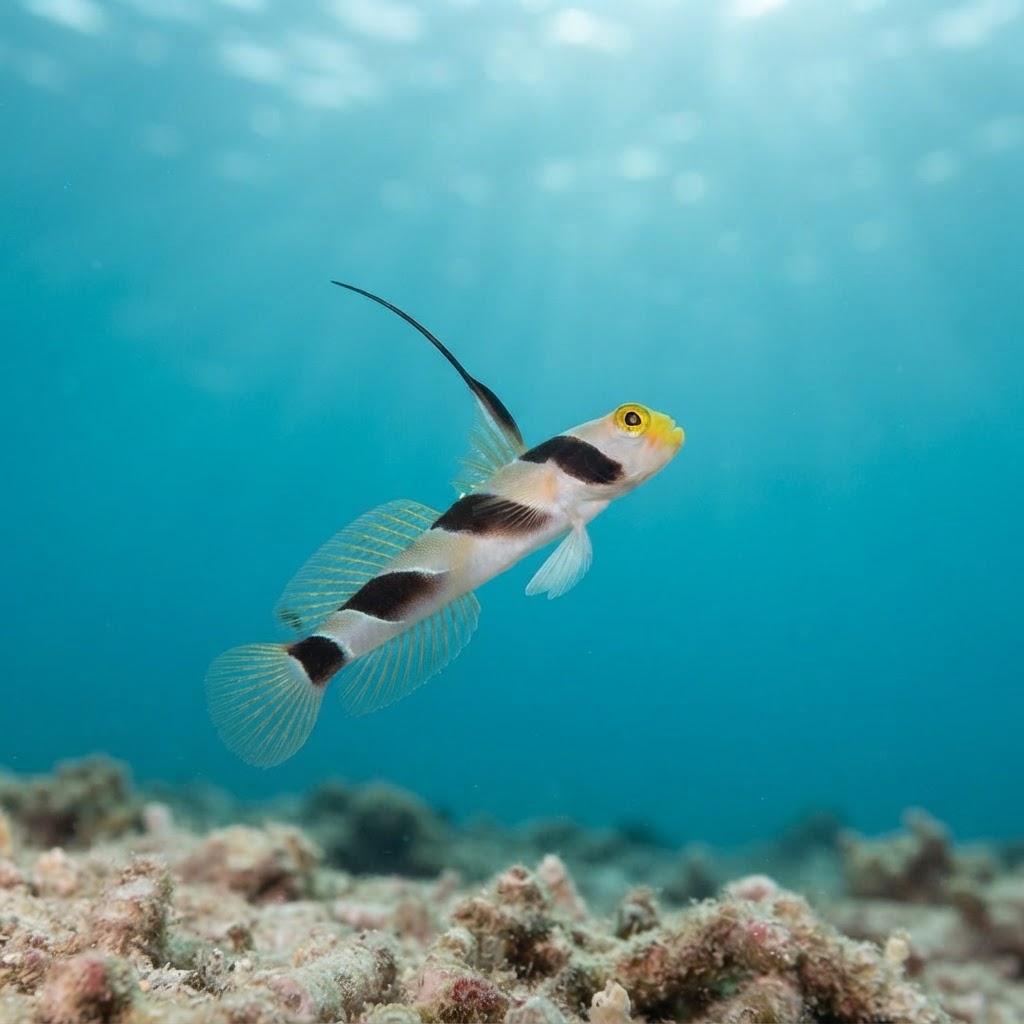
Stonogobiops nematodes
Spot this pale 4cm goby hovering over its shrimp burrow on reef sand in Nha Trang, Vietnam, in warm 27.5-29C water year-round.
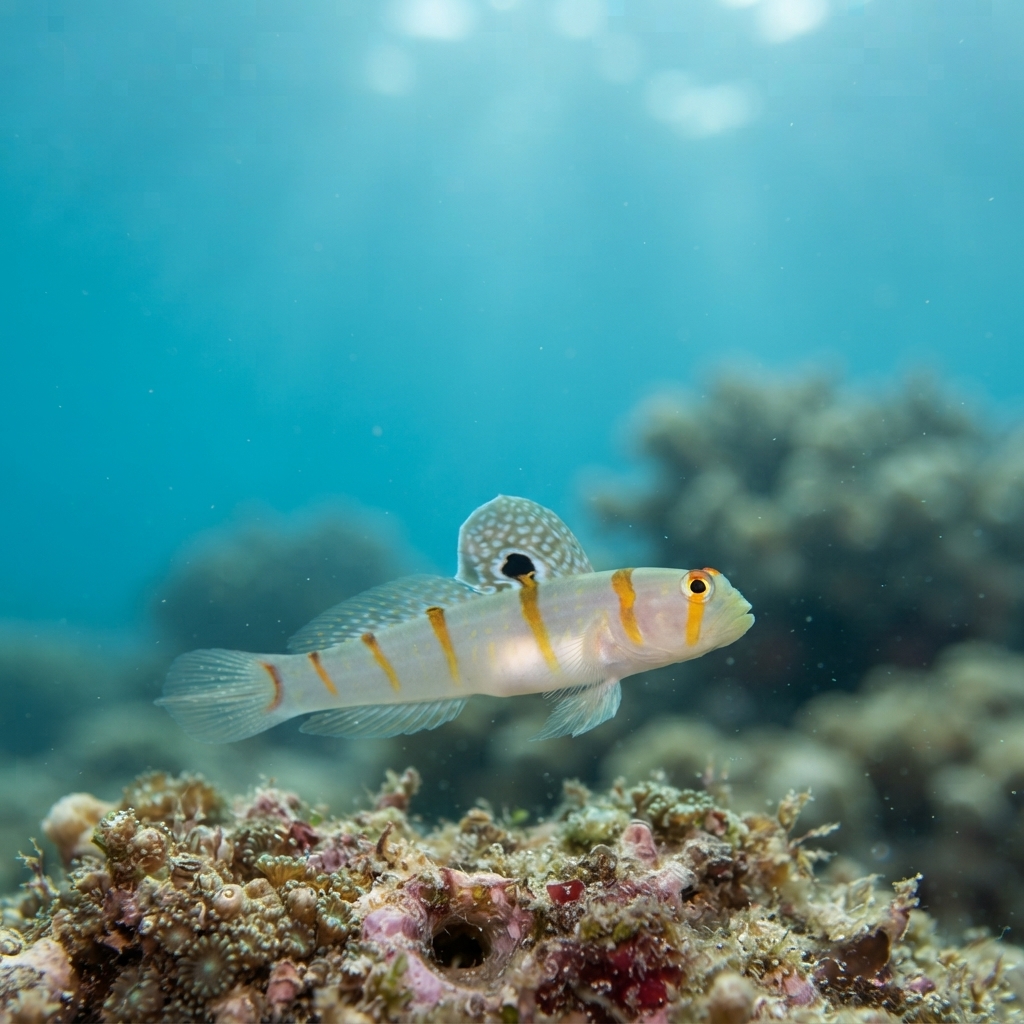
A slender, near-translucent white to pale body only about 4cm long, with a tall first dorsal fin marked by a single dark ray that gives the species its name. It hovers just above a burrow opening on sand or rubble rather than darting across open reef, and its narrow build and pale colouring make it easy to miss against bright sand. It shares its burrow with a partner shrimp that constantly shovels sediment out the entrance.
Look for it perched with its head up and tail low at the mouth of a burrow dug into sand or rubble, usually on gentle slopes rather than vertical reef. It shares the burrow with a shrimp that keeps antennae on the goby at all times, and the pair reacts to divers by slipping backward into the hole rather than fleeing across open ground. Slow, low approaches from a distance give the best chance of watching it linger in the open before it retreats.
It lives in an obligate partnership with a burrowing shrimp: the shrimp digs and maintains the shared tunnel while the goby stands guard, flicking its tail to warn of danger the shrimp cannot see.
No clear seasonal pattern shows up in the sightings, and its warm 27.5 to 29C niche is available year-round on these tropical reefs, so any season works.
Reef neighbours a diver could mistake it for. Use the identification notes above to tell them apart.
Most reliably logged around Nha Trang in Vietnam, with further sightings across Luzon in the Philippines, Sai Kung in Hong Kong, and Sulawesi in Indonesia. Vietnam currently holds the strongest concentration of logged sites, making Nha Trang's sandy slopes a solid bet for a dedicated search.
Mapping where Black-rayed Shrimpgoby is logged…
It's most consistently found around Nha Trang in Vietnam, with additional sightings in Luzon in the Philippines, Sai Kung in Hong Kong, and Sulawesi in Indonesia. Look on sandy or rubble patches rather than hard coral reef.
There's no strong seasonal signal in the sightings, and it favours warm water between 27.5 and 29C year-round, so it can turn up on any dive at the right sites.
Look for a slender, translucent to pale white body around 4cm long hovering near a burrow entrance on sand, with a tall dorsal fin showing one dark ray. It rarely strays far from its burrow and retreats into it when approached.
They stay small, reaching only about 4cm in length, which along with their pale colouring makes them easy to overlook on open sand.
It shares its burrow with a burrowing shrimp in a mutualism: the shrimp digs and clears the tunnel while nearly blind, and the goby stands guard, flicking its tail to signal danger so both can retreat together.
Site and sighting data is aggregated from diver logs, iNaturalist and GBIF. For taxonomy and conservation status:
Slender Goby
806 sites