Gobius cruentatus
A rocky-reef regular in Catalonia and the French Riviera, this small goby sits tight on ledges from 15 to 40m year-round.
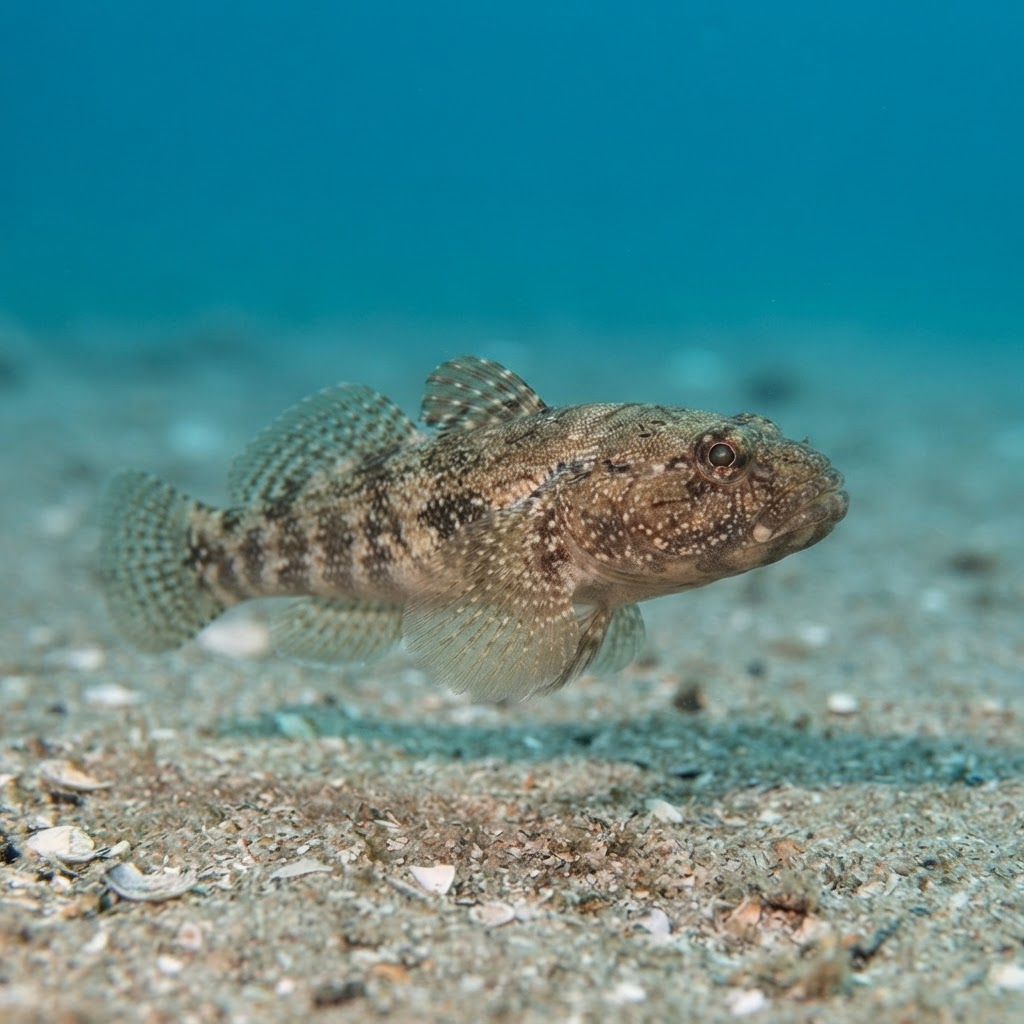
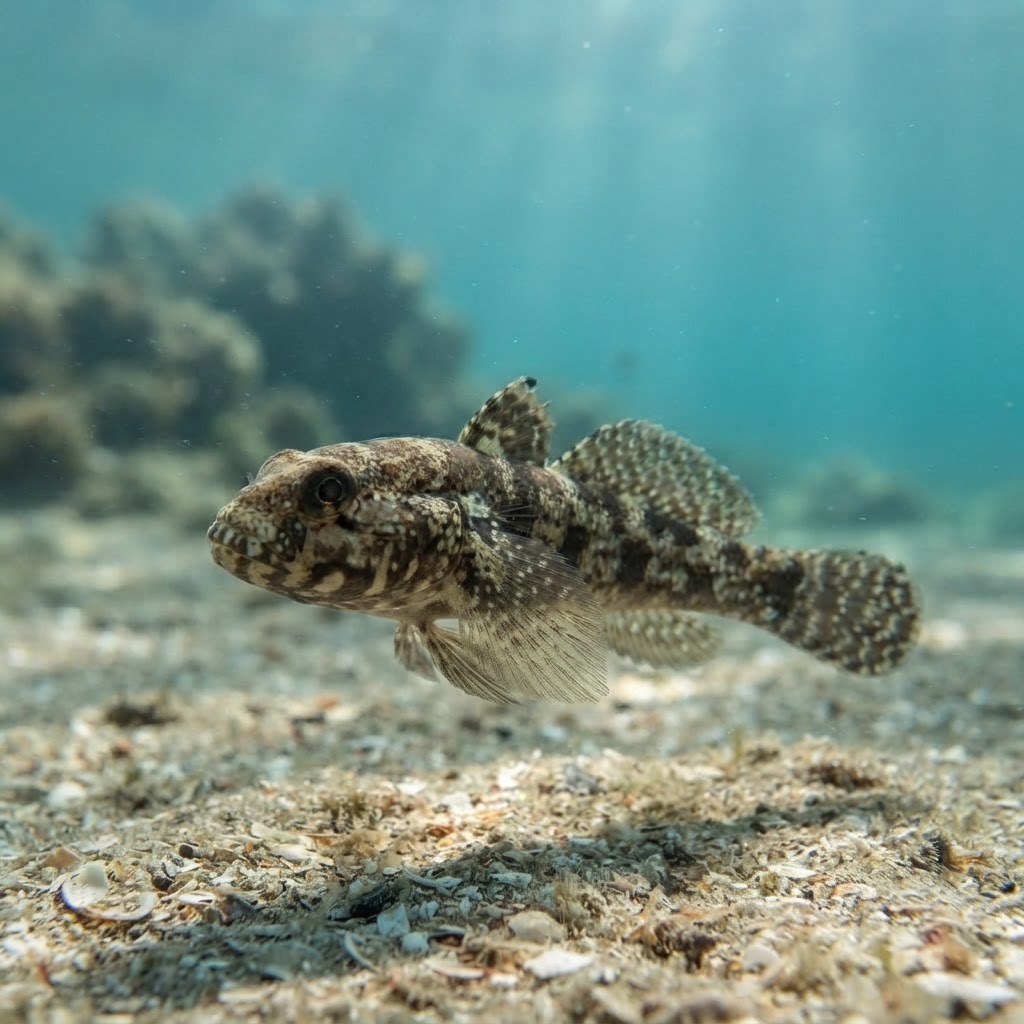
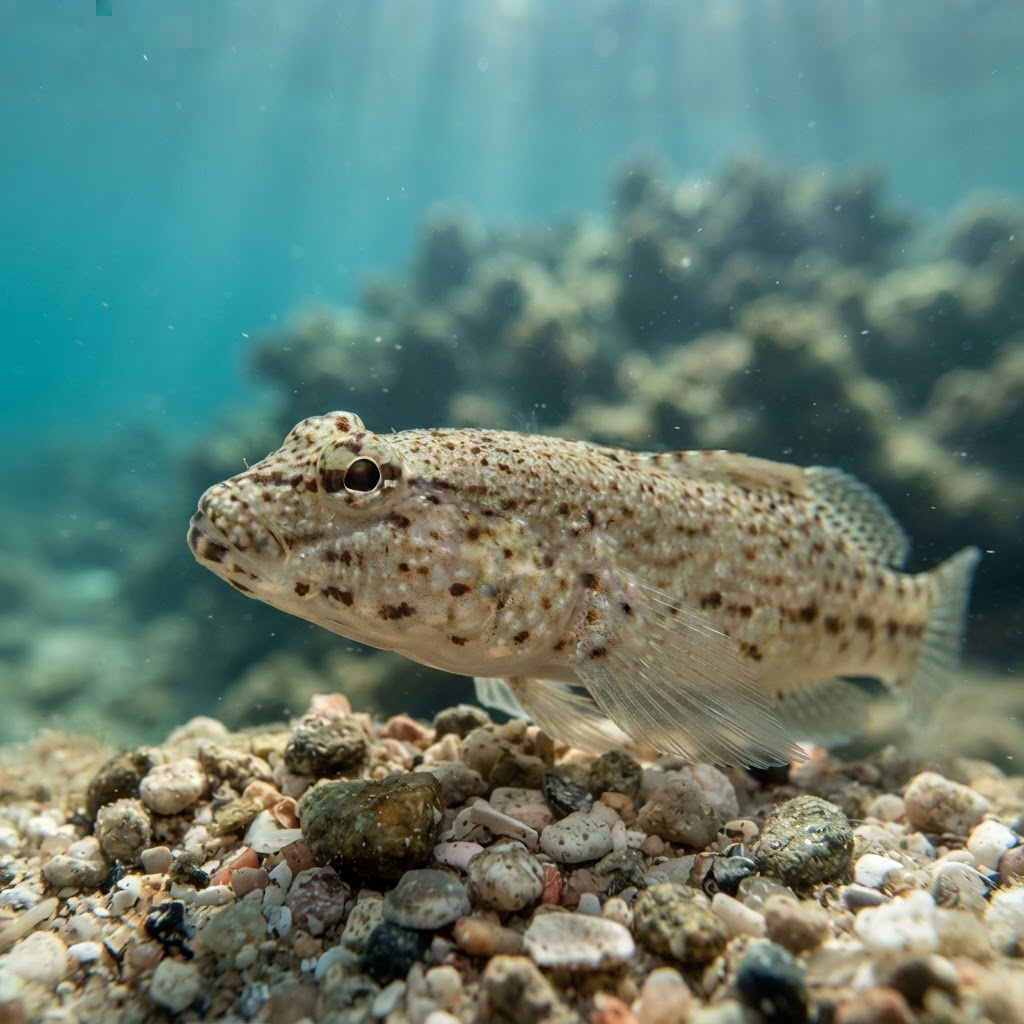
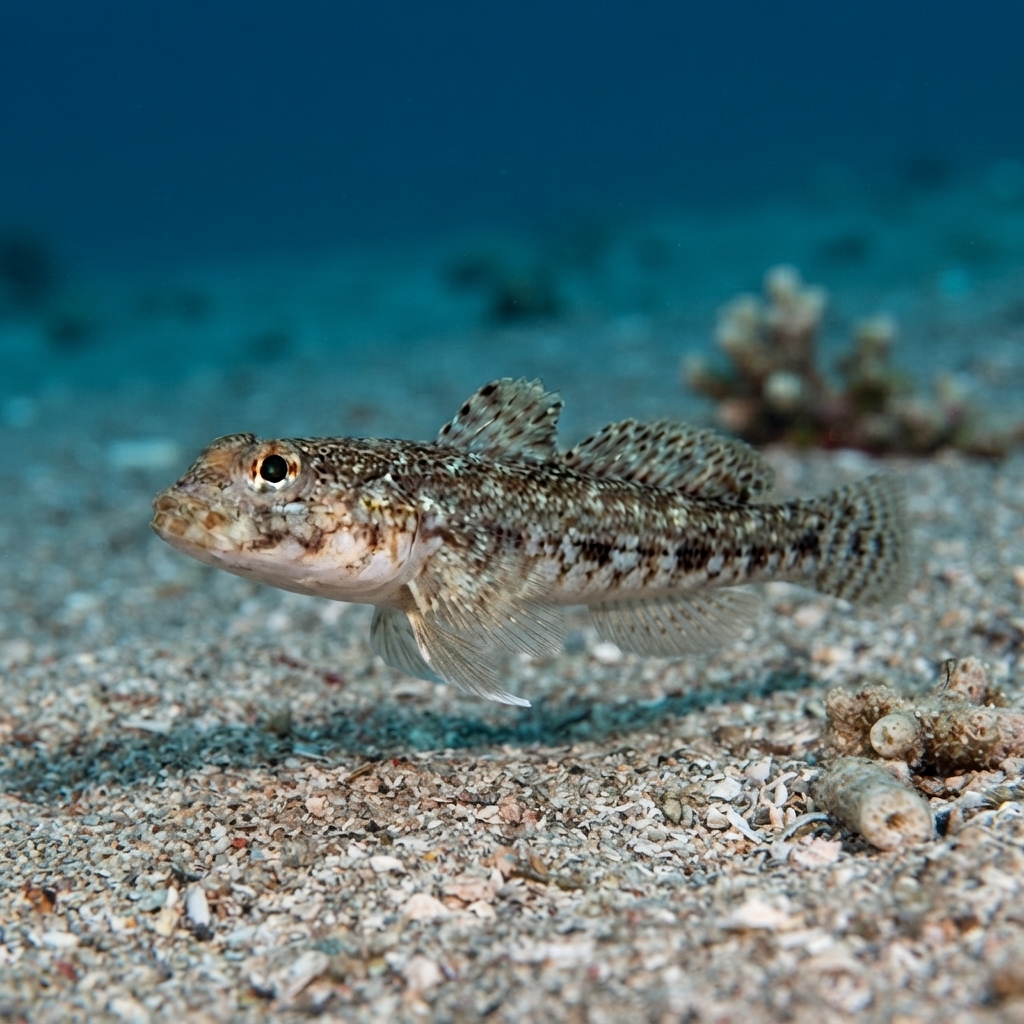
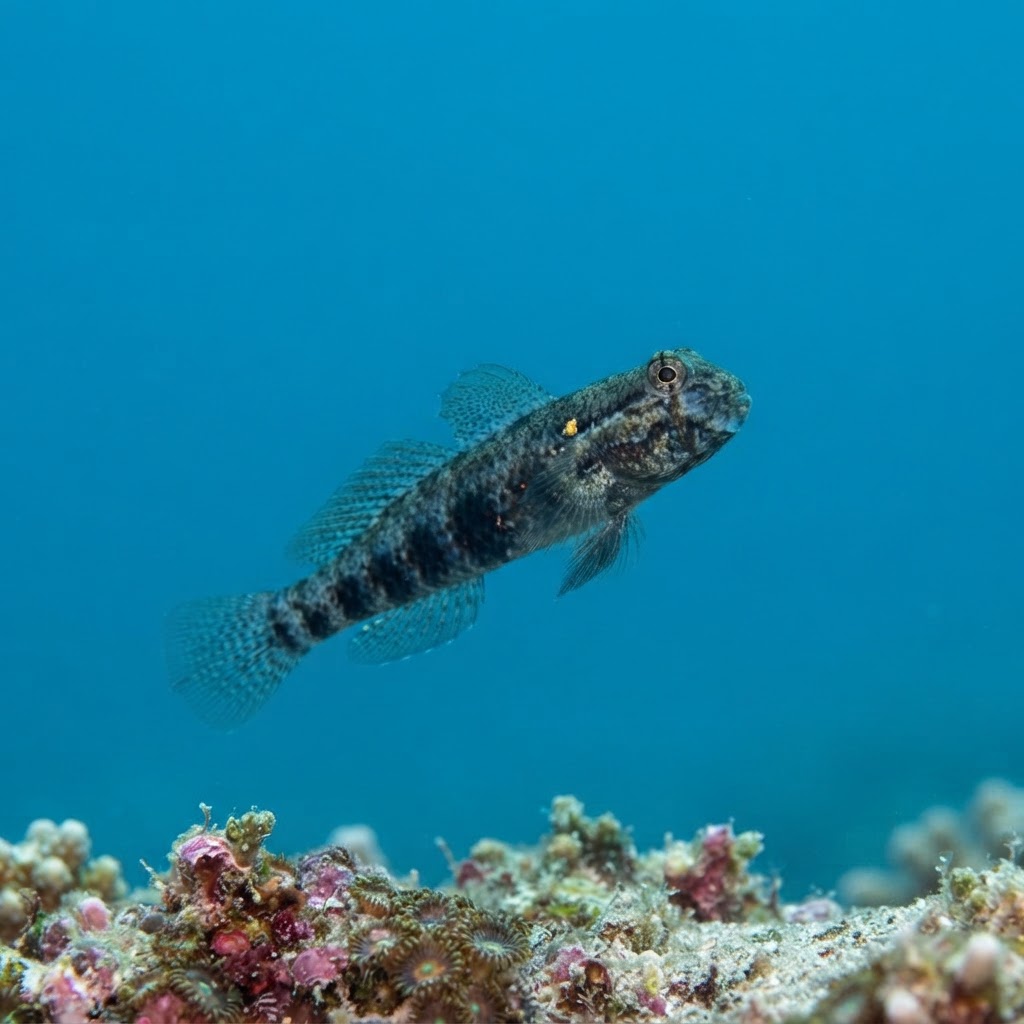
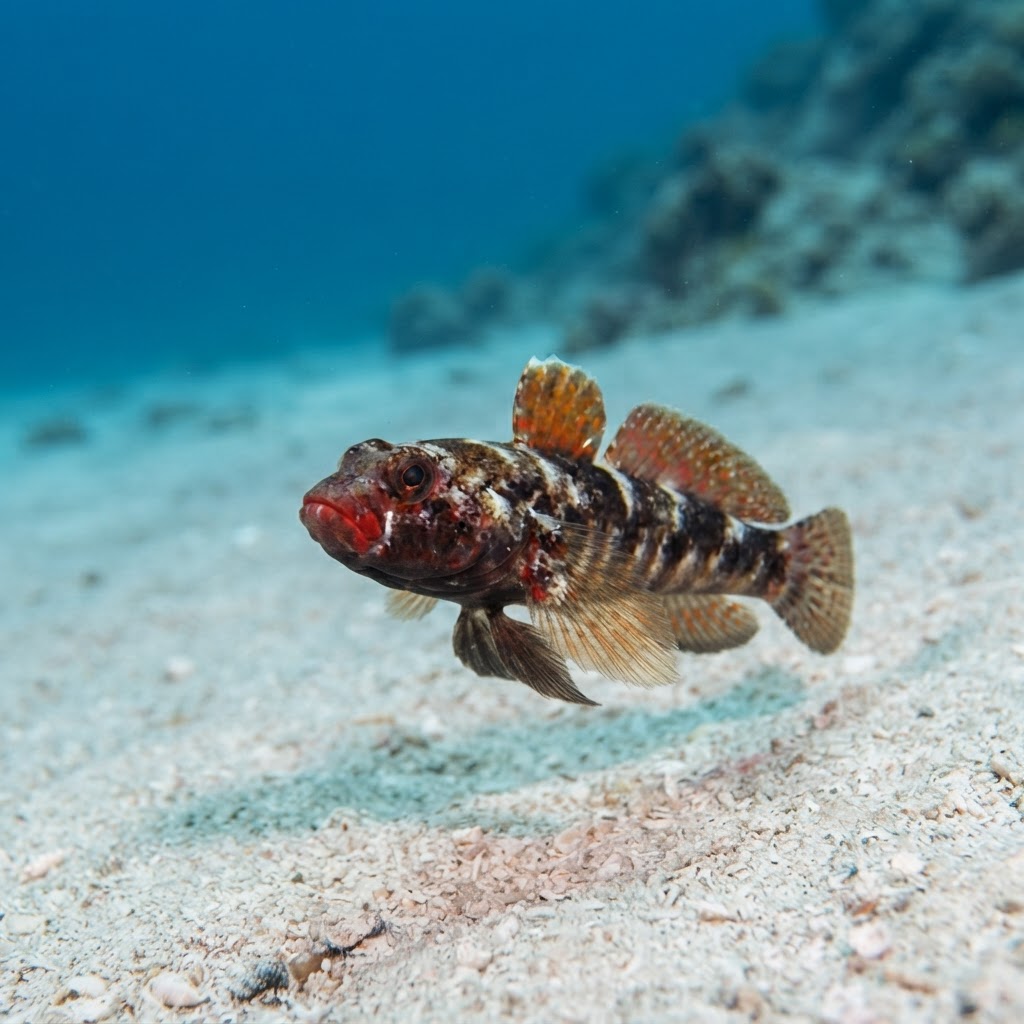
A small, elongate fish around 12 cm, mottled brown and grey with a body pattern that blends into rock and rubble. The giveaway is the mouth itself: a reddish-orange interior and lip line that shows when it faces you or gapes, distinct from the paler mouths of most similar-sized gobies. It perches propped on its pelvic fins rather than swimming freely, staying close to a crevice or ledge on rocky and mixed reef.
Look for it wedged into a rock crevice or resting on a ledge between 15 and 40 metres, usually still and easy to miss until you get close. It holds its ground rather than bolting when a diver approaches slowly, which makes it a good macro subject if you take time scanning rubble and rocky overhangs rather than swimming past. Most sightings come from divers working slow, close searches of rocky reef rather than open water or sand.
Like other gobies it lacks a swim bladder, so it never hovers in midwater and instead rests directly on the substrate, propped on fused pelvic fins that work almost like a small tripod.
Sightings run year-round with no strong seasonal peak, matching its wide comfort range of roughly 11.6 to 21C, which covers the Mediterranean's winter chill and summer warm-up alike. Any month works, so plan around good visibility at your chosen site rather than a calendar season.
Reef neighbours a diver could mistake it for. Use the identification notes above to tell them apart.
Most reliably logged along the Mediterranean coasts of Spain and France, with Catalonia and the French Riviera and Provence standing out as strongholds, plus dense records around Kvarner and Istria in Croatia. It also turns up along the Lisbon Coast in Portugal, in Tuscany and elsewhere in Italy, and in smaller numbers in Malta, Slovenia and Greece.
Mapping where Red-mouthed Goby is logged…
Spain and France carry the strongest records, especially Catalonia and the French Riviera and Provence, with Croatia's Kvarner and Istria regions also reliable. Portugal's Lisbon Coast and parts of Italy, including Tuscany, add further sightings.
There is no clear seasonal peak, so it is considered a year-round sighting. Its observed temperature range of roughly 11.6 to 21C spans the Mediterranean's full annual cycle, so timing your trip around visibility and conditions matters more than the month.
Look for a mottled brown, rock-coloured fish around 12 cm long resting propped on ledges or in crevices rather than swimming in open water. The clearest tell is the reddish-orange colour inside the mouth, visible when it faces you or gapes.
They typically reach around 12 cm, making them a small, easy-to-overlook reef fish best spotted with a slow, close search of rocky ledges and crevices.
No, they pose no danger to divers. They simply rest on rock and rubble and have no venom, spines or aggressive behaviour to worry about.
Site and sighting data is aggregated from diver logs, iNaturalist and GBIF. For taxonomy and conservation status:
Slender Goby
806 sites