Gobius geniporus
A small, easy-to-miss goby common along the French Riviera and Catalonia in mild 17.6-21.2C water, year-round.
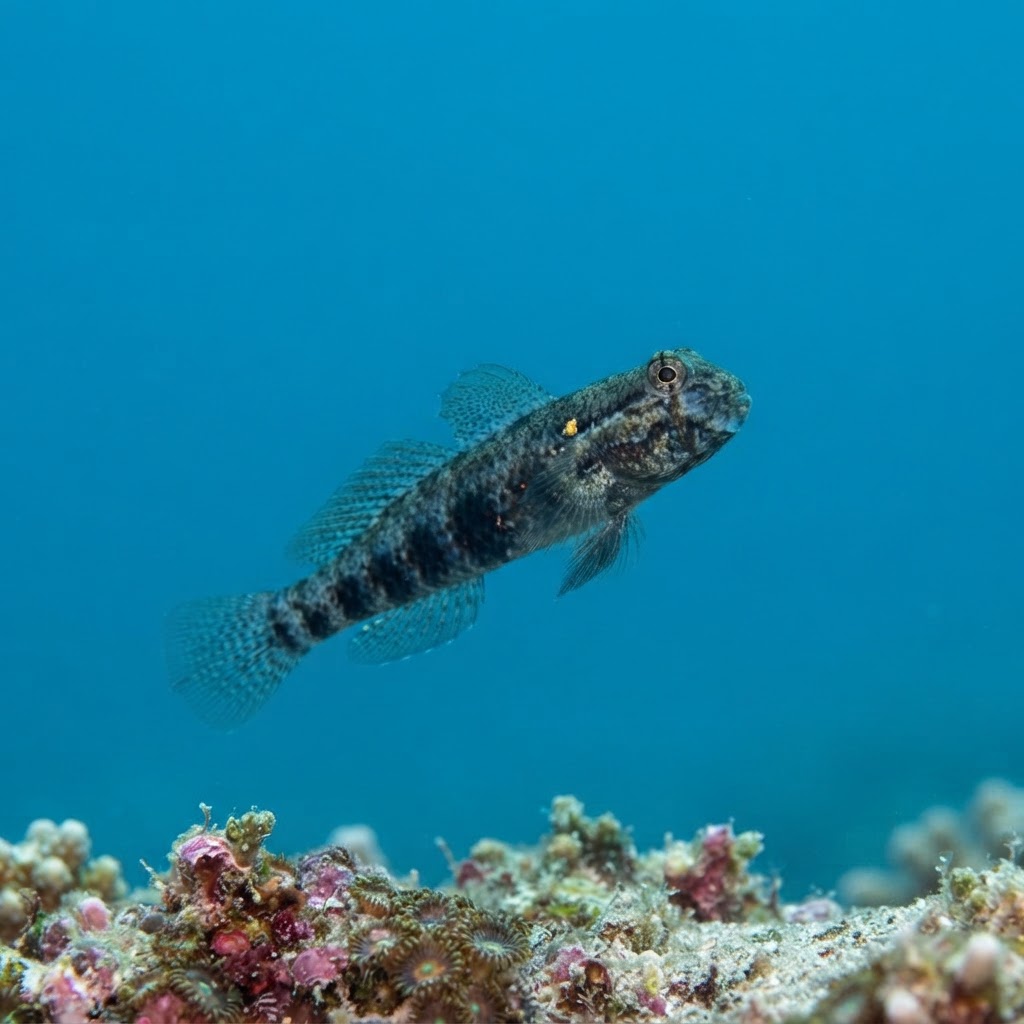
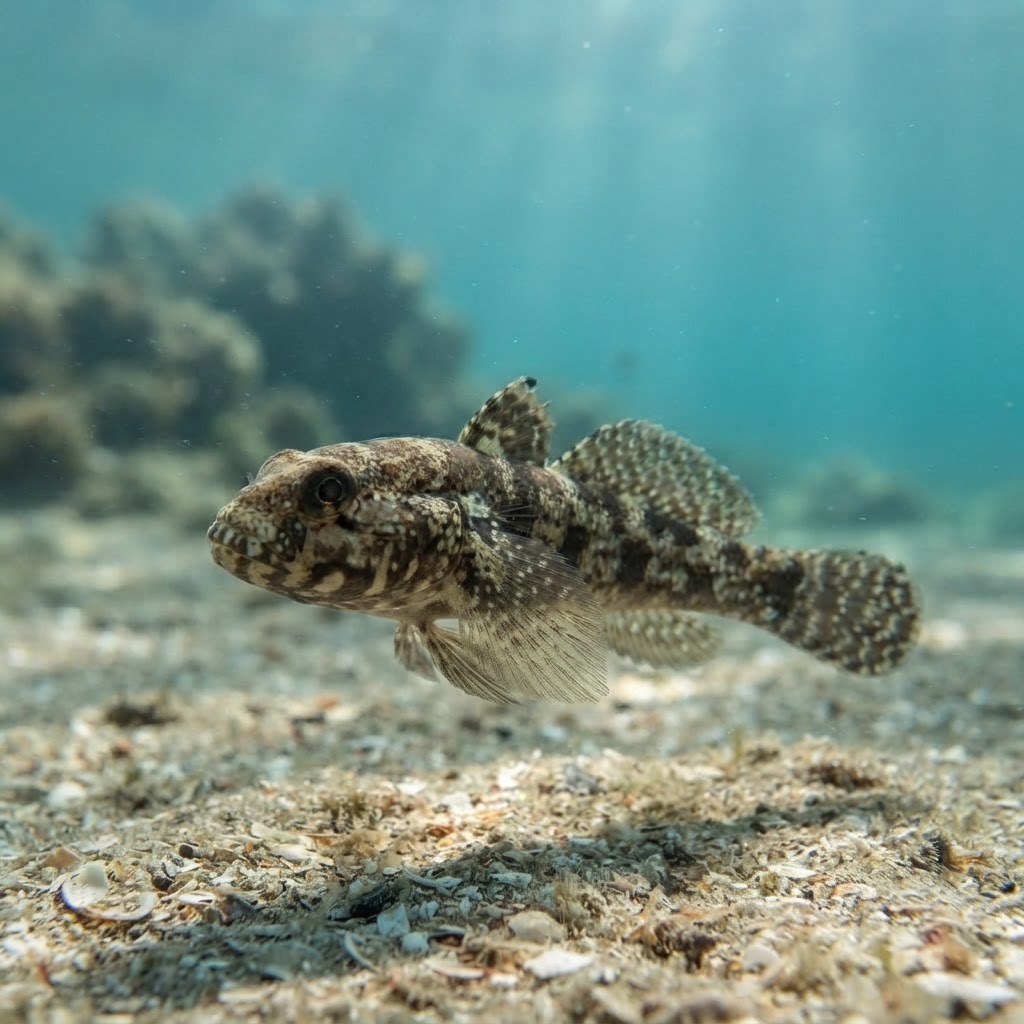
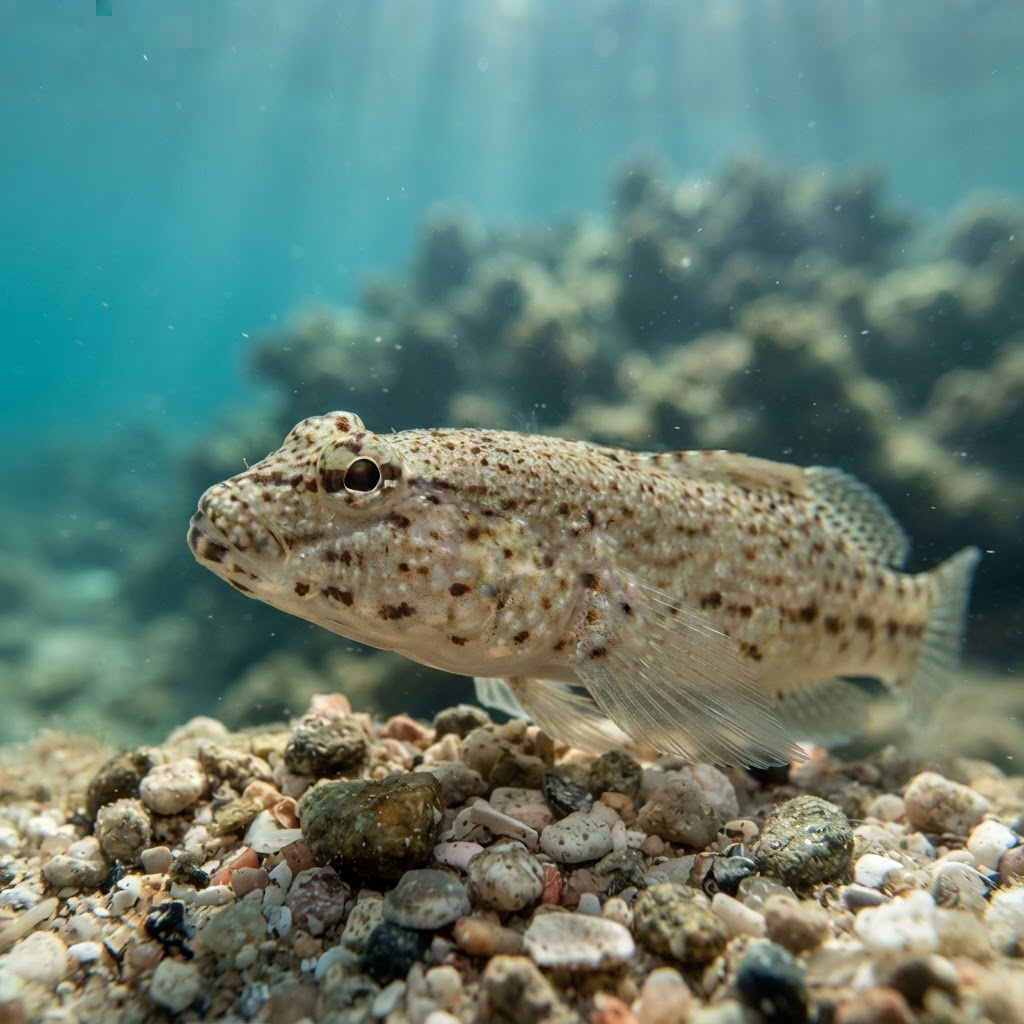
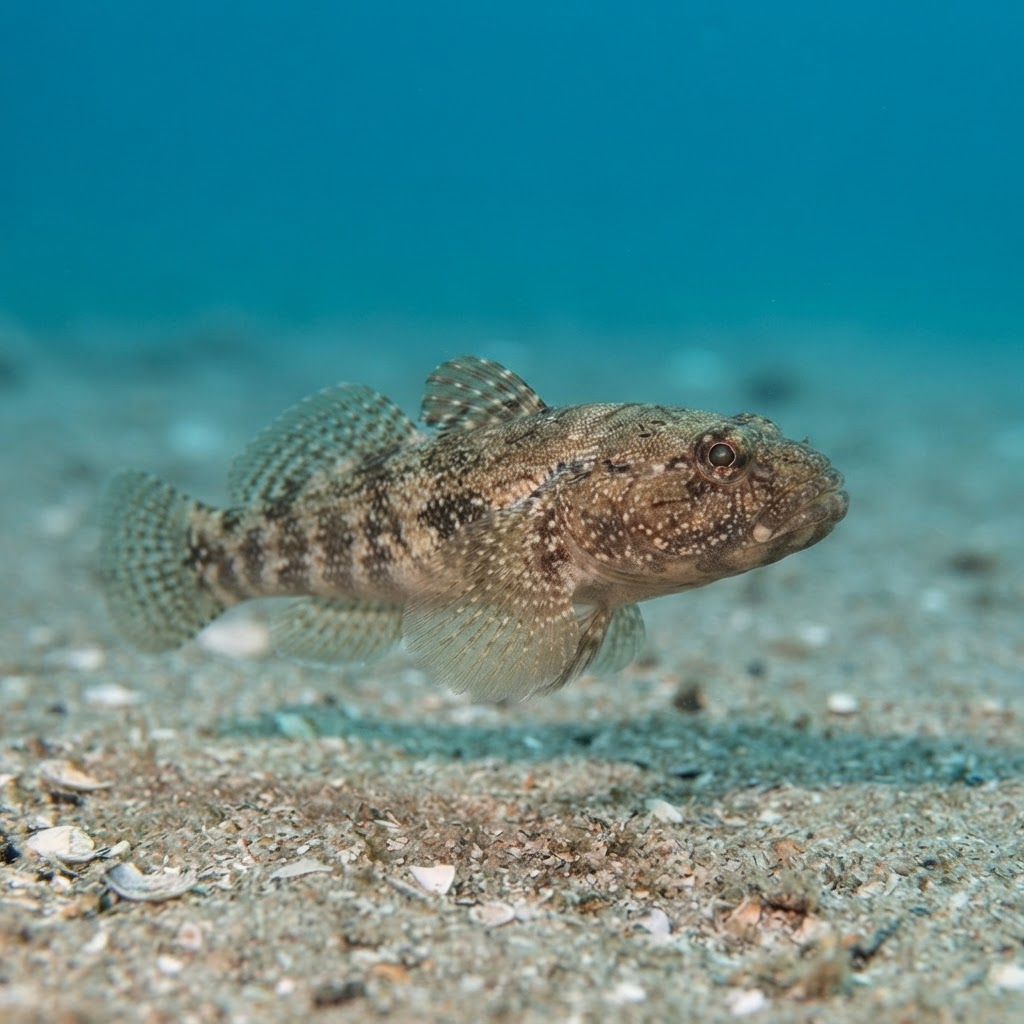
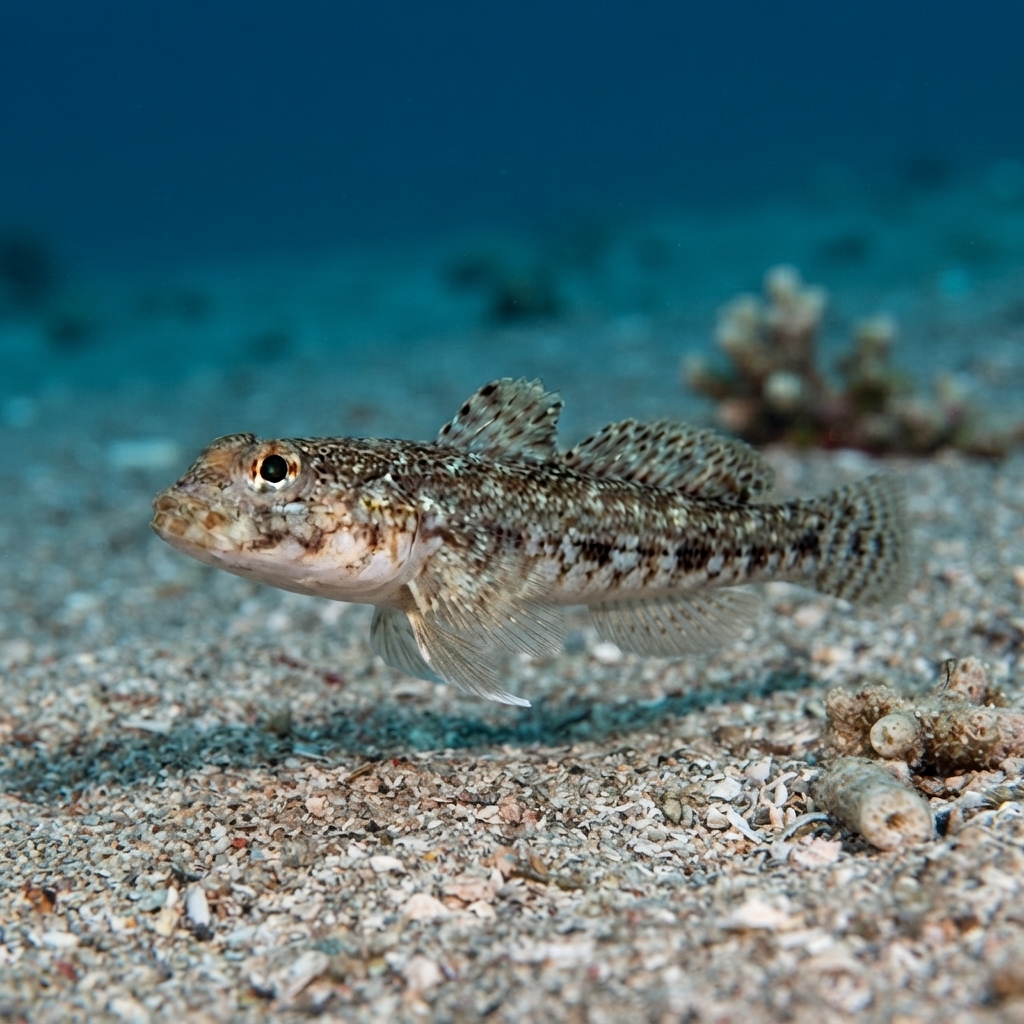
A slim, elongated body around 11 cm long, pale sandy to greyish-brown with faint mottled speckling that breaks up its outline against rock and sediment. It rests propped on its pelvic fins rather than swimming freely, with a slightly pointed snout and a body shape noticeably more slender than the average reef goby. No strong colour markings to key on, so shape and posture on the bottom are the main giveaway.
Spends most of its time perched motionless on rock, rubble, or sand rather than swimming in open water, using its pelvic fins as a prop while it watches for small prey. Divers usually spot it by scanning the substrate closely rather than the water column, and it tends to hold still or make short darting retreats rather than fleeing far when approached. Most sightings come from typical Mediterranean rocky-reef and seagrass-edge terrain rather than deep wall or open sand habitat.
Like other demersal gobies it lacks a swim bladder, which is exactly why it sits and rests on the bottom instead of hovering the way many reef fish do.
No clear seasonal pattern in the sightings data, so treat it as a year-round find. Its observed range of 17.6 to 21.2C covers much of the Mediterranean diving season from spring through autumn.
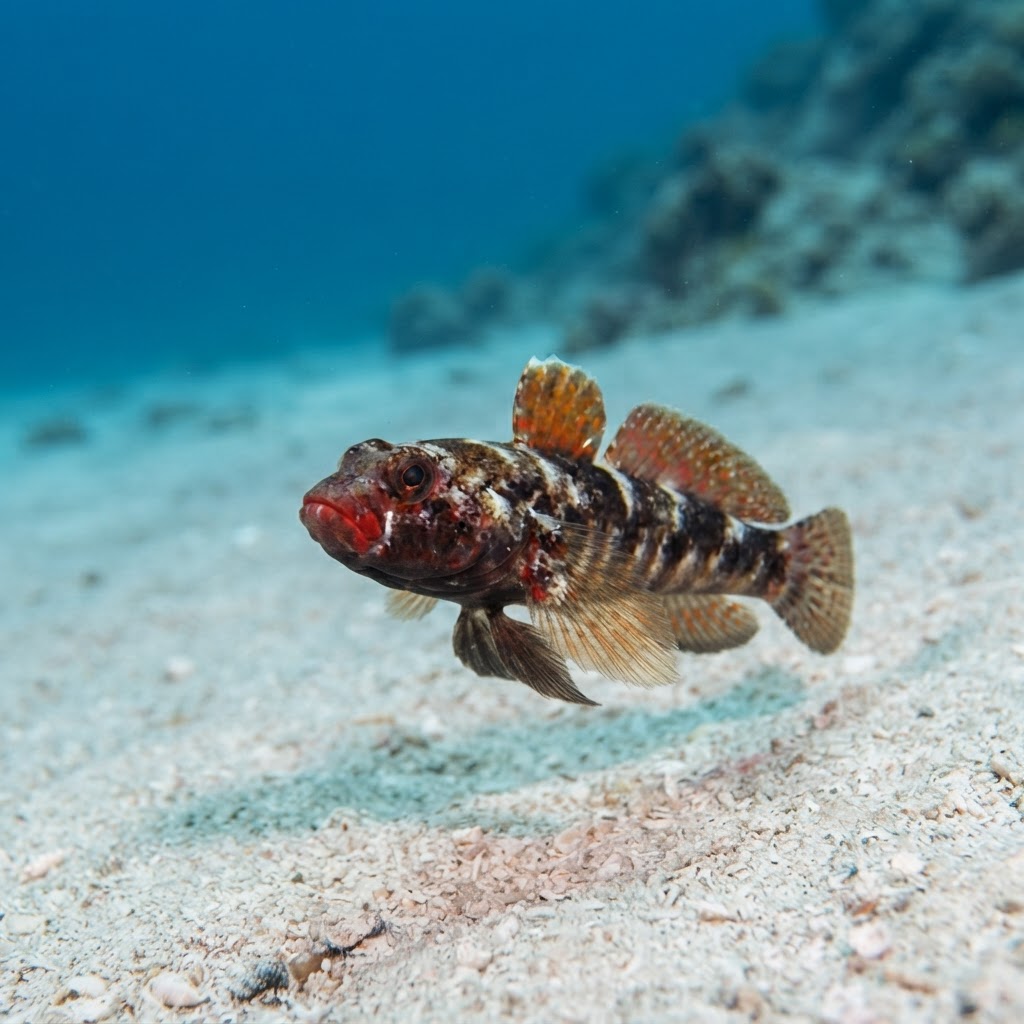
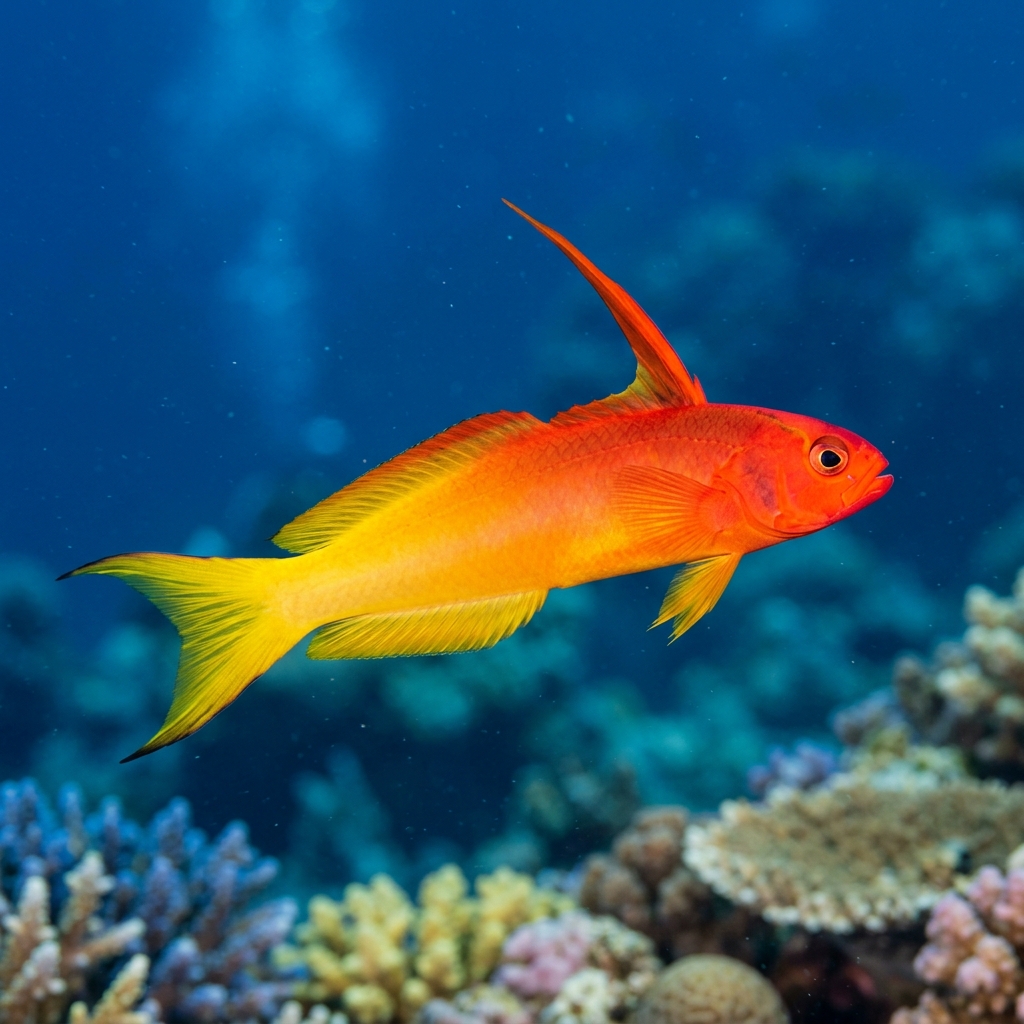
Reef neighbours a diver could mistake it for. Use the identification notes above to tell them apart.
Most reliably logged along the French Riviera and Provence and around Corsica and Occitanie in France, with strong numbers in Catalonia and Valencia in Spain too. Also a regular find in Croatia's Kvarner region, plus sites in Italy (Sardinia), Greece, and Cyprus around Ayia Napa and Protaras.
Mapping where Slender Goby is logged…
It turns up most often along the French Riviera and Provence, Corsica, and Occitanie in France, and in Catalonia and Valencia in Spain. It is also logged regularly in Croatia's Kvarner region and around Cyprus's Ayia Napa and Protaras coast.
There is no strong seasonal signal in the sightings, so it is considered a year-round sighting wherever it occurs. It has been recorded in water between 17.6 and 21.2C, which spans most of the Mediterranean dive season.
Look for a slim, pale to greyish-brown fish around 11 cm long resting on rock, rubble, or sand rather than swimming in the open. It has a slender build and mottled speckling that breaks up its outline, with no bold colour pattern to rely on.
It stays small, typically reaching around 11 cm in length, which is fairly average for a Mediterranean goby.
No. It is a small, harmless bottom-dwelling fish that poses no risk to divers and will simply retreat a short distance if approached.
It has no swim bladder, so unlike many reef fish it cannot hover in the water column and instead rests propped on its pelvic fins on the seabed.
Site and sighting data is aggregated from diver logs, iNaturalist and GBIF. For taxonomy and conservation status:
Red-mouthed Goby
773 sites