Cryptocentrus cinctus
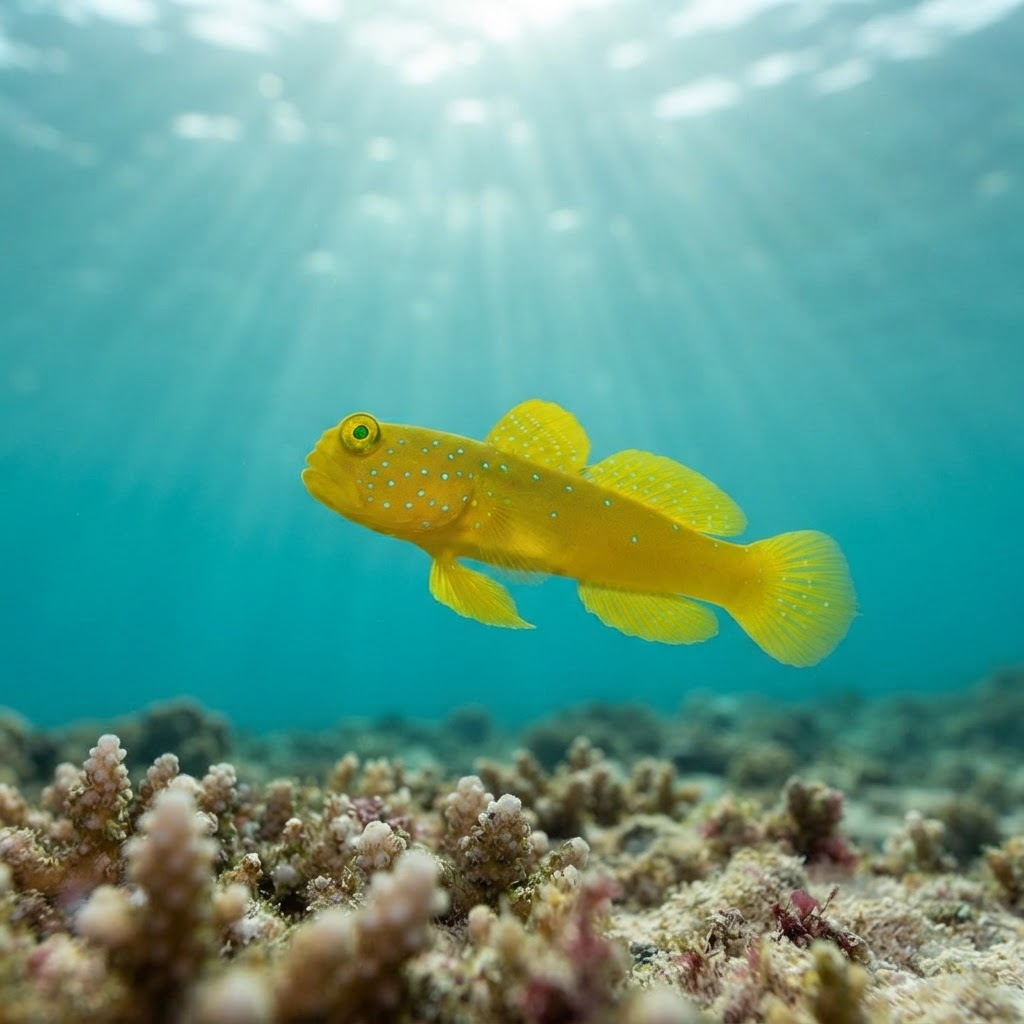
Yellow-orange goby with pale bands, hovering by its shrimp burrow on sand flats in Palau and Koh Tao, water 26 to 29 C, seen year-round.
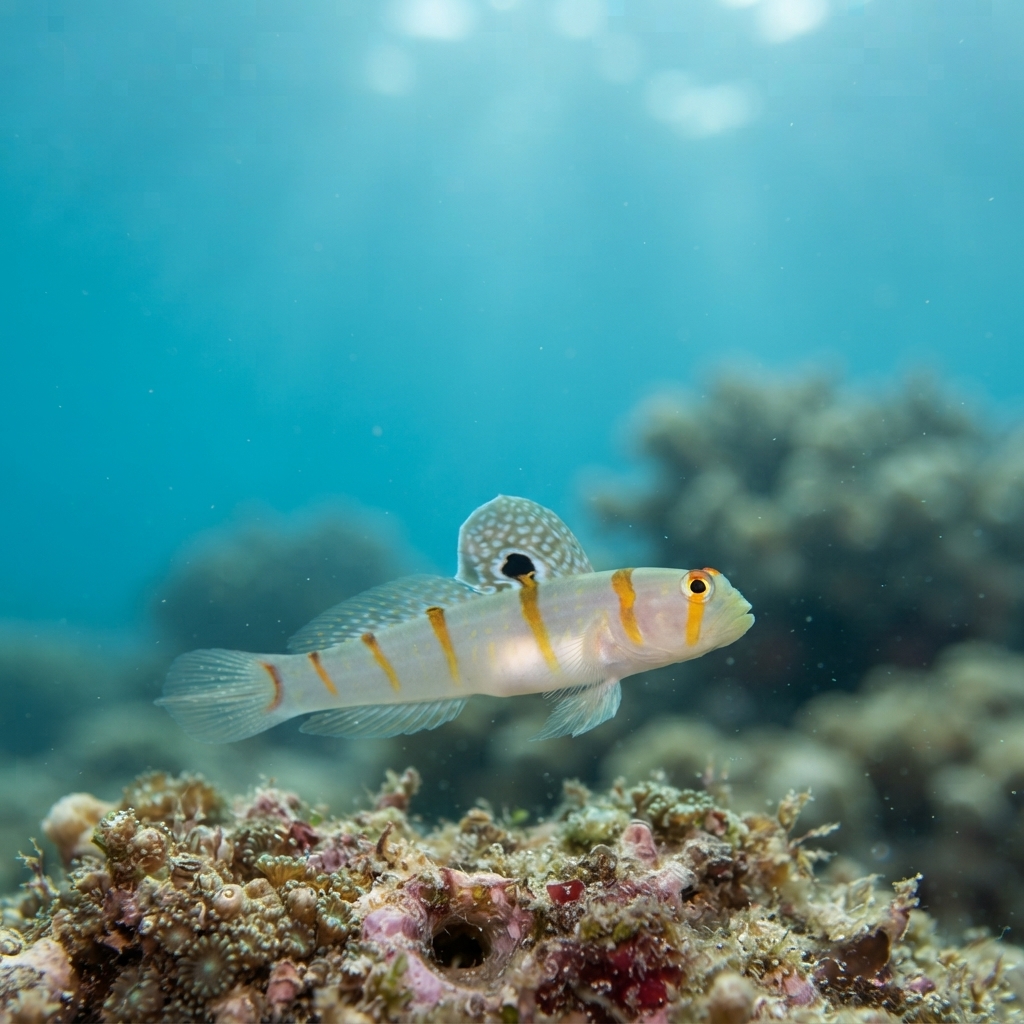
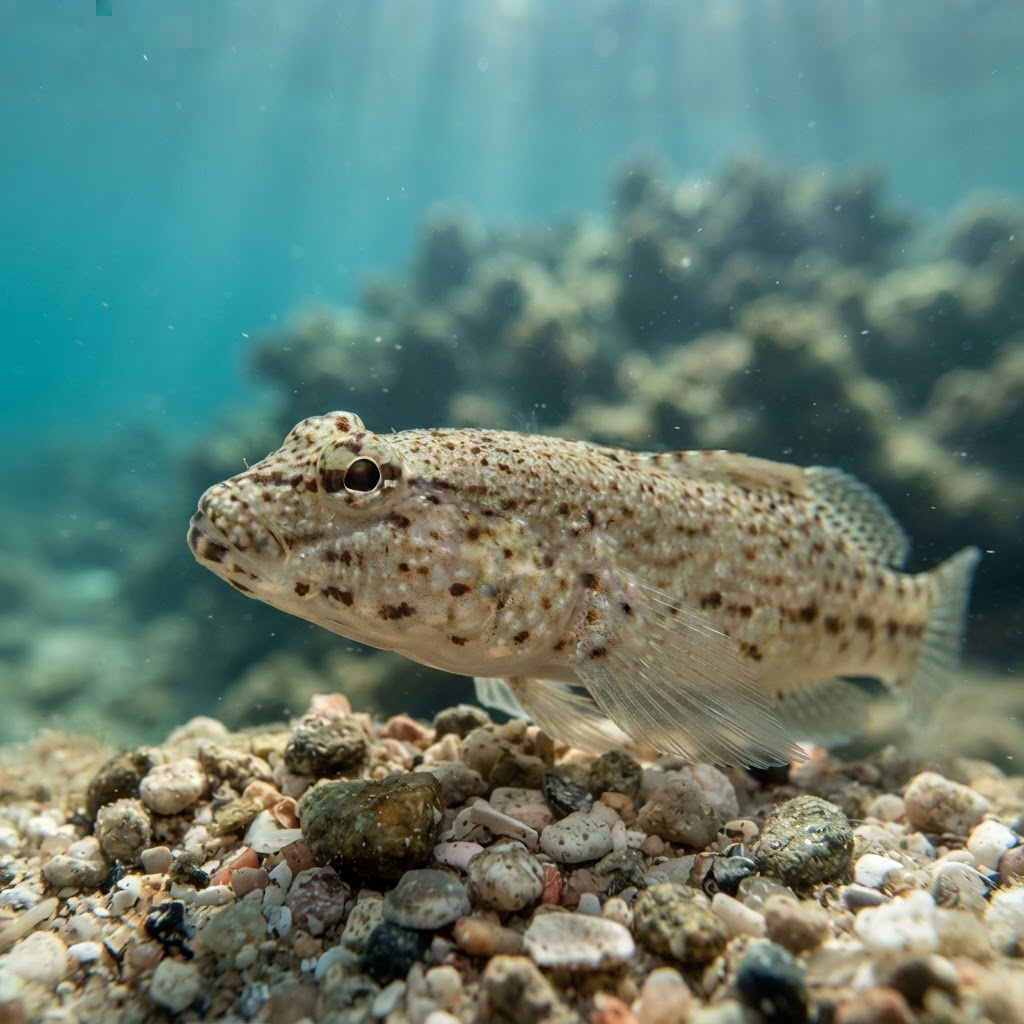
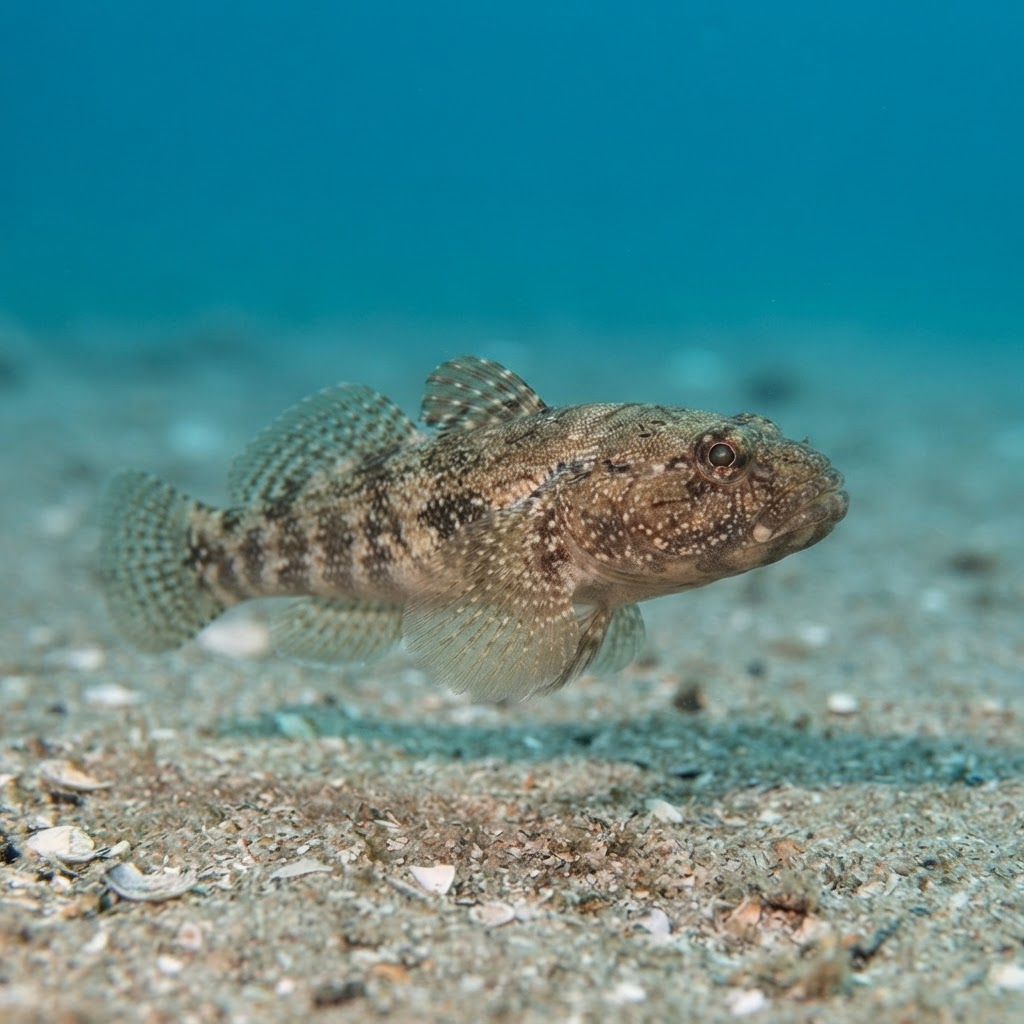
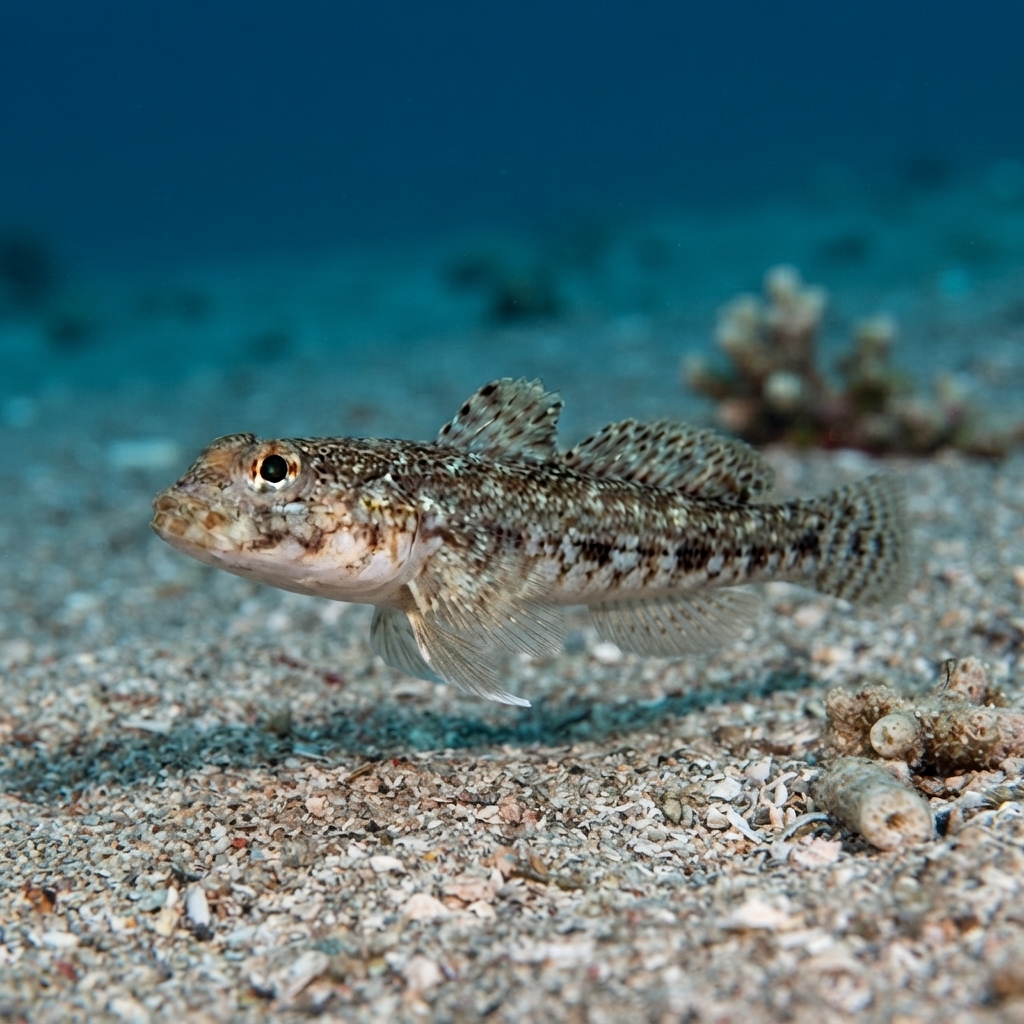
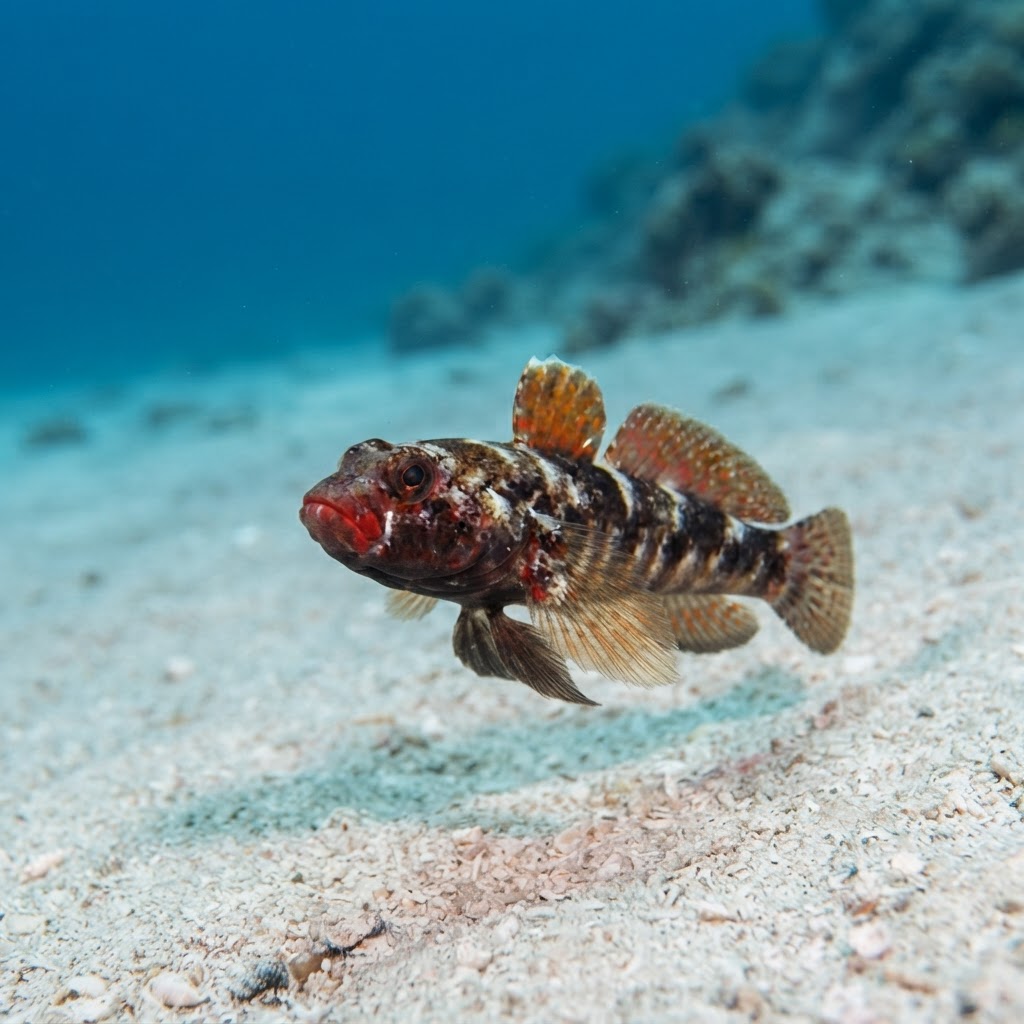
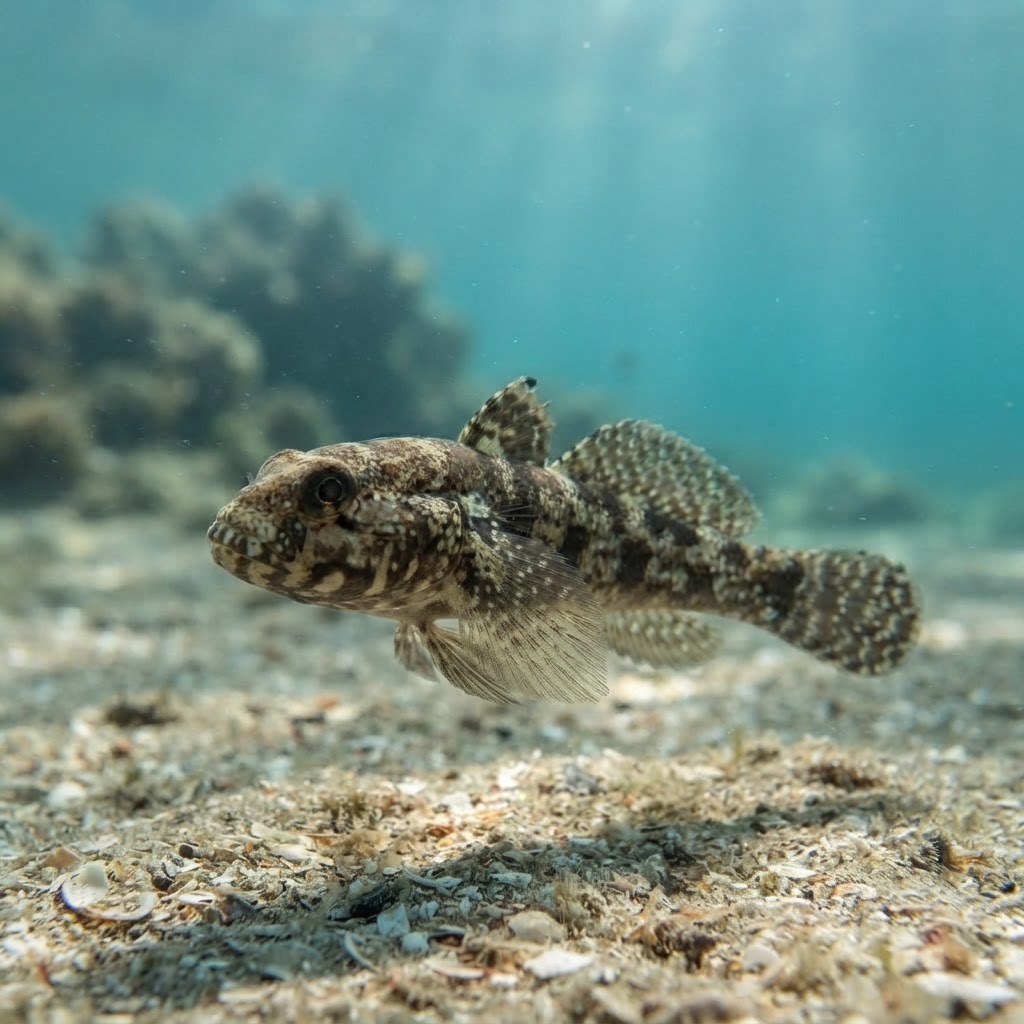
A small, slender goby around 7 cm long, coloured orange to yellow-brown with a series of pale blue-white bands crossing the body and a spotted, sail-like first dorsal fin it flicks upright when alert. It hovers just above the sand rather than sitting flat on it, tail angled down toward a burrow entrance it shares with a pistol shrimp. The banding and upright fin display are the two things to key on, since most similar sand-dwelling gobies sit lower and lack the same fin flick.
Watch for it hovering at the mouth of a shared burrow, darting back inside at the first sign of danger while its resident pistol shrimp keeps digging just below. It rarely strays far from the hole and tends to freeze or retreat rather than flee across open sand, so a slow, low approach and some patience usually gets you a good look. Most sightings come from shallow sandy patches near reef edges rather than deep water.
It shares its burrow with a nearly blind pistol shrimp in a partnership where the shrimp does the digging and the goby, with its far better eyesight, keeps watch and flicks its tail to warn of approaching threats.
No clear seasonal pattern shows up in the sightings, and with a comfortable range of 26.3 to 29.1 C it stays active on these tropical sand flats all year round.
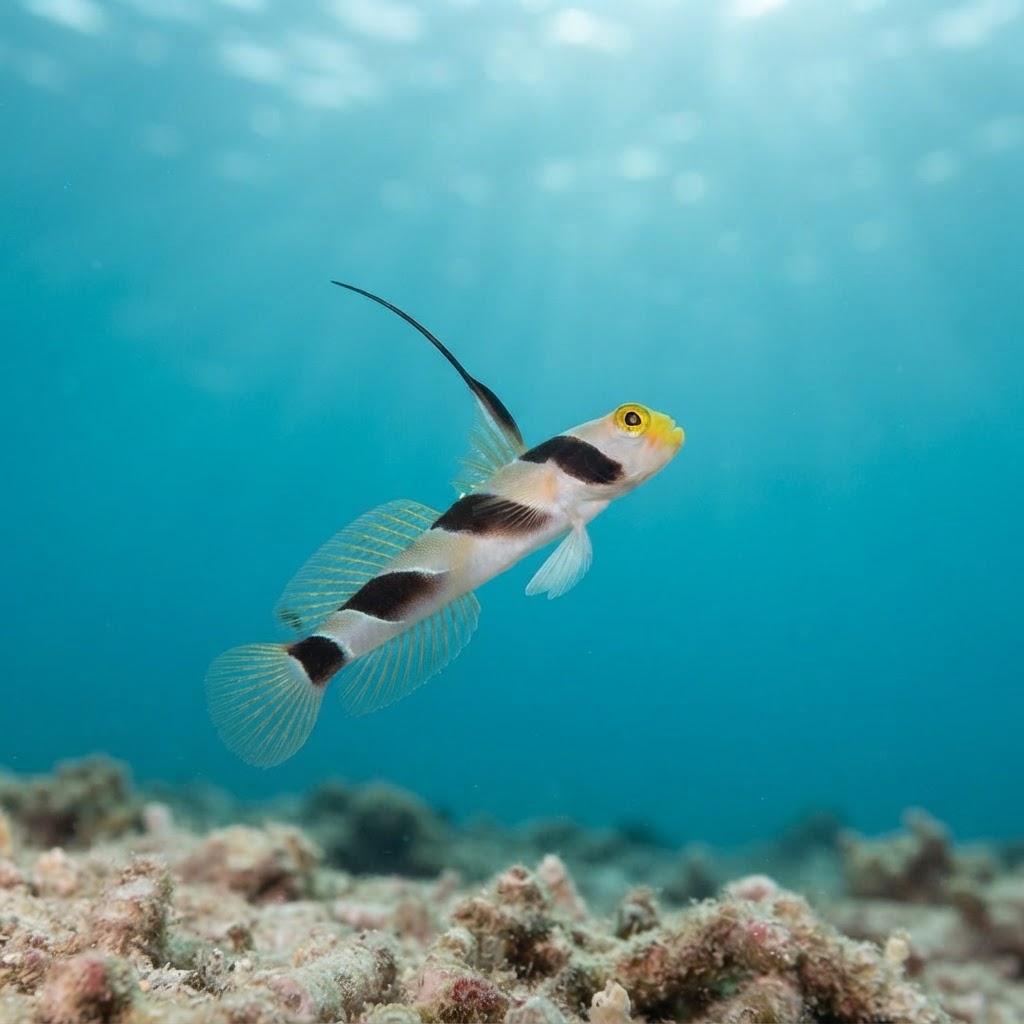
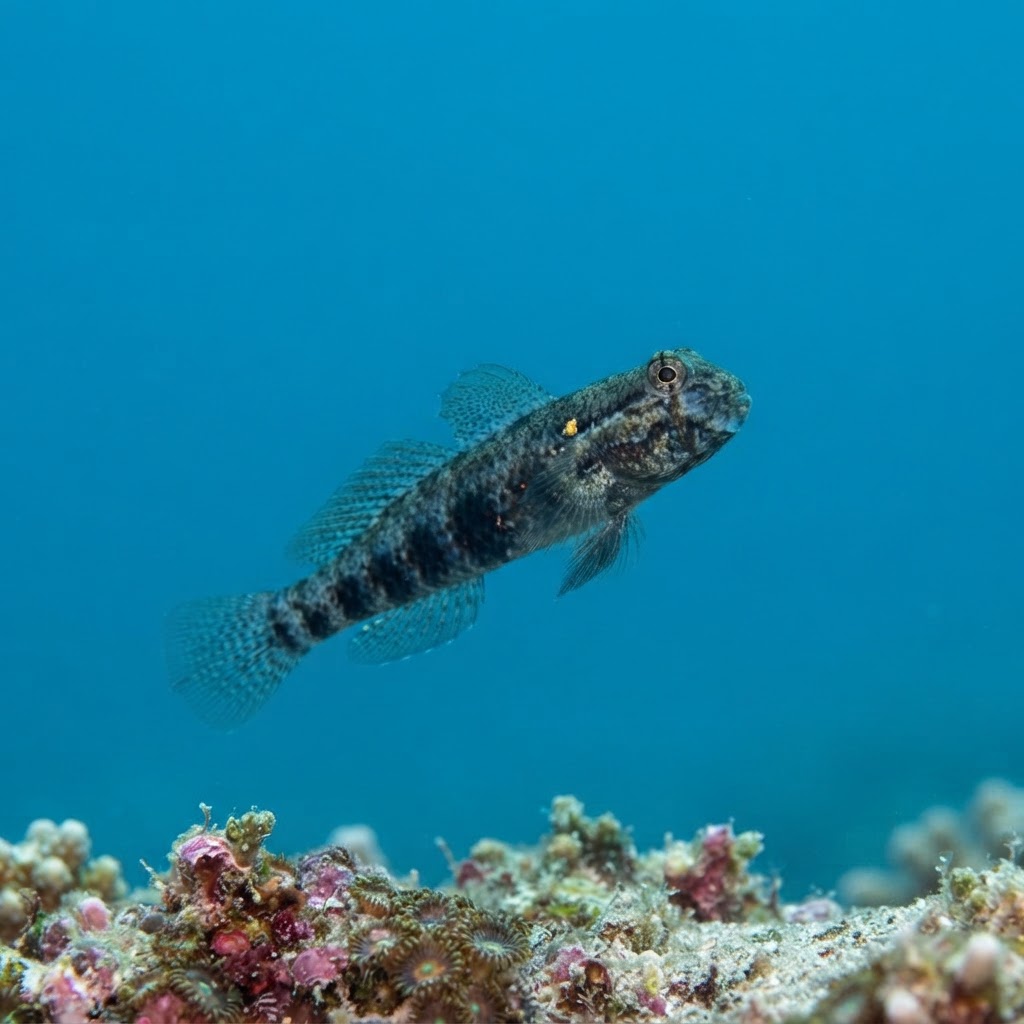
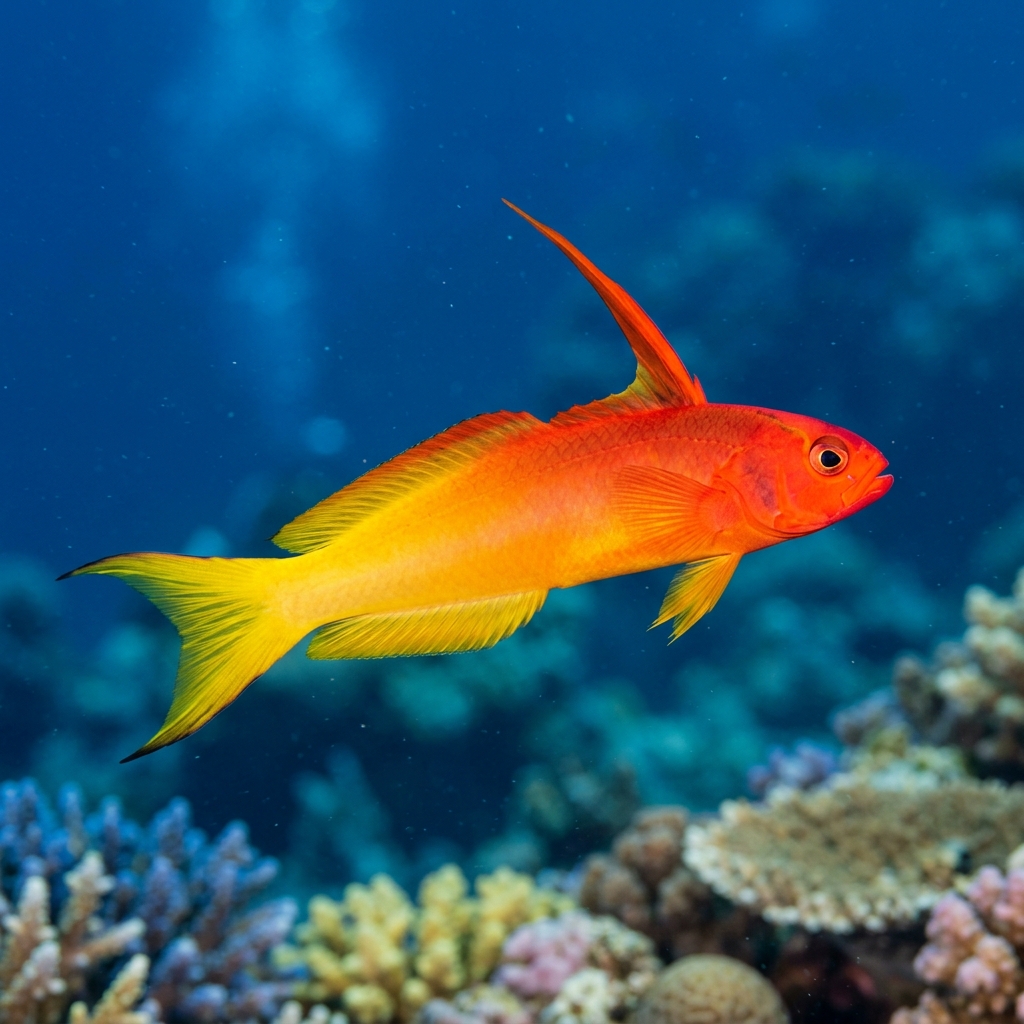
Reef neighbours a diver could mistake it for. Use the identification notes above to tell them apart.
Most reliably logged in Palau, especially around Koror & Malakal, and a strong presence on the sand flats and house reefs of Koh Tao in Thailand. Also turns up regularly in Queensland, Australia and Sabah, Malaysia, with occasional sightings off Guadalcanal in the Solomon Islands.
Mapping where Banded Prawn Goby is logged…
Palau's Koror & Malakal area and Koh Tao in Thailand are the most reliable spots, with good numbers also reported from Queensland in Australia and Sabah in Malaysia.
There's no strong season in the sightings data, and the warm 26 to 29 C water it favours is present year-round on these reefs, so any time of year works.
Look for a small orange-yellow goby with pale blue bands, hovering near a sandy burrow and flicking its spotted dorsal fin upright when it senses movement nearby.
They stay small, typically around 7 cm long, which is fairly typical for shrimp-associated gobies on sand flats.
It lives in a burrow it shares with a pistol shrimp: the shrimp digs and maintains the hole while the goby watches for predators and signals danger with quick tail flicks.
No, they pose no risk to divers. They're shy and retreat into their burrow rather than approach, so the main challenge is getting close enough for a photo.
Site and sighting data is aggregated from diver logs, iNaturalist and GBIF. For taxonomy and conservation status:
Slender Goby
806 sites