Haemulon album
Silvery grunts common on Yucatán and Bahamas reefs year-round in 21-28C water. Here's where divers actually log White Margate.
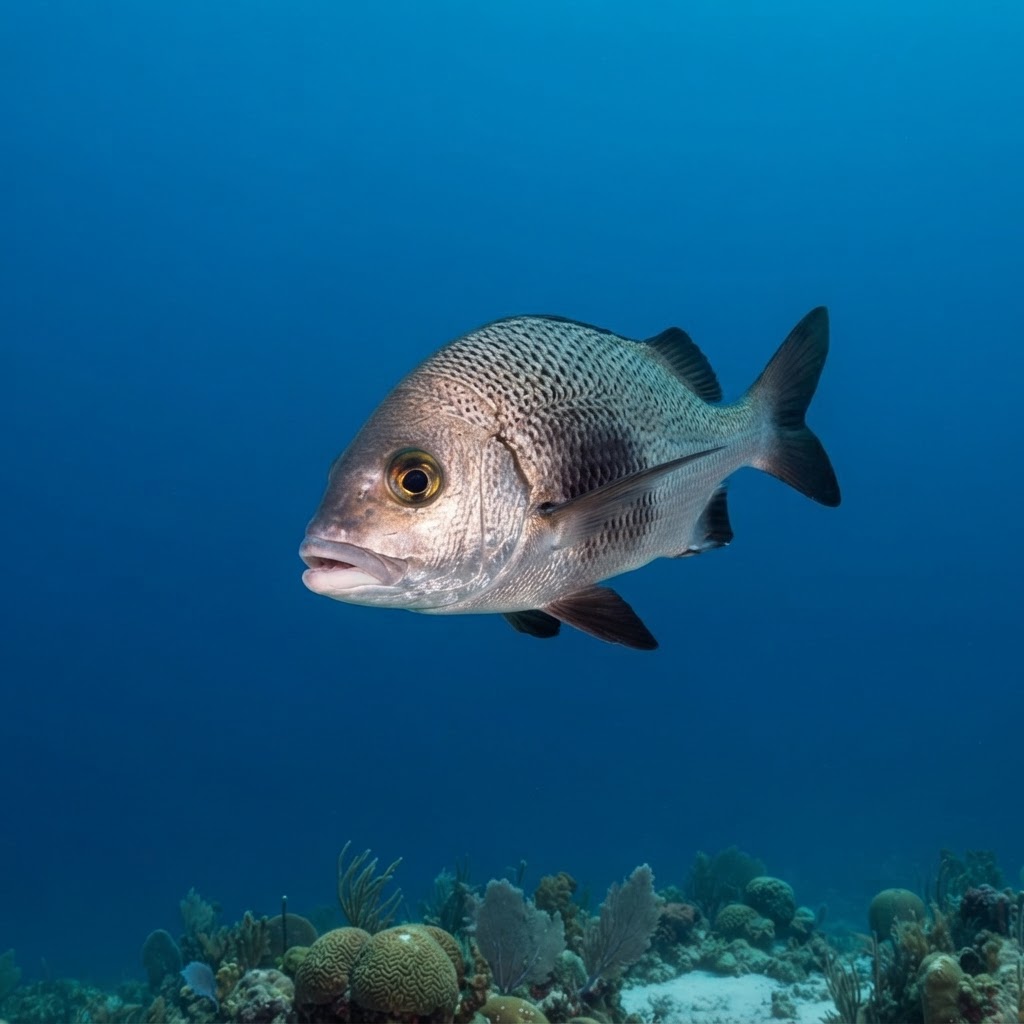
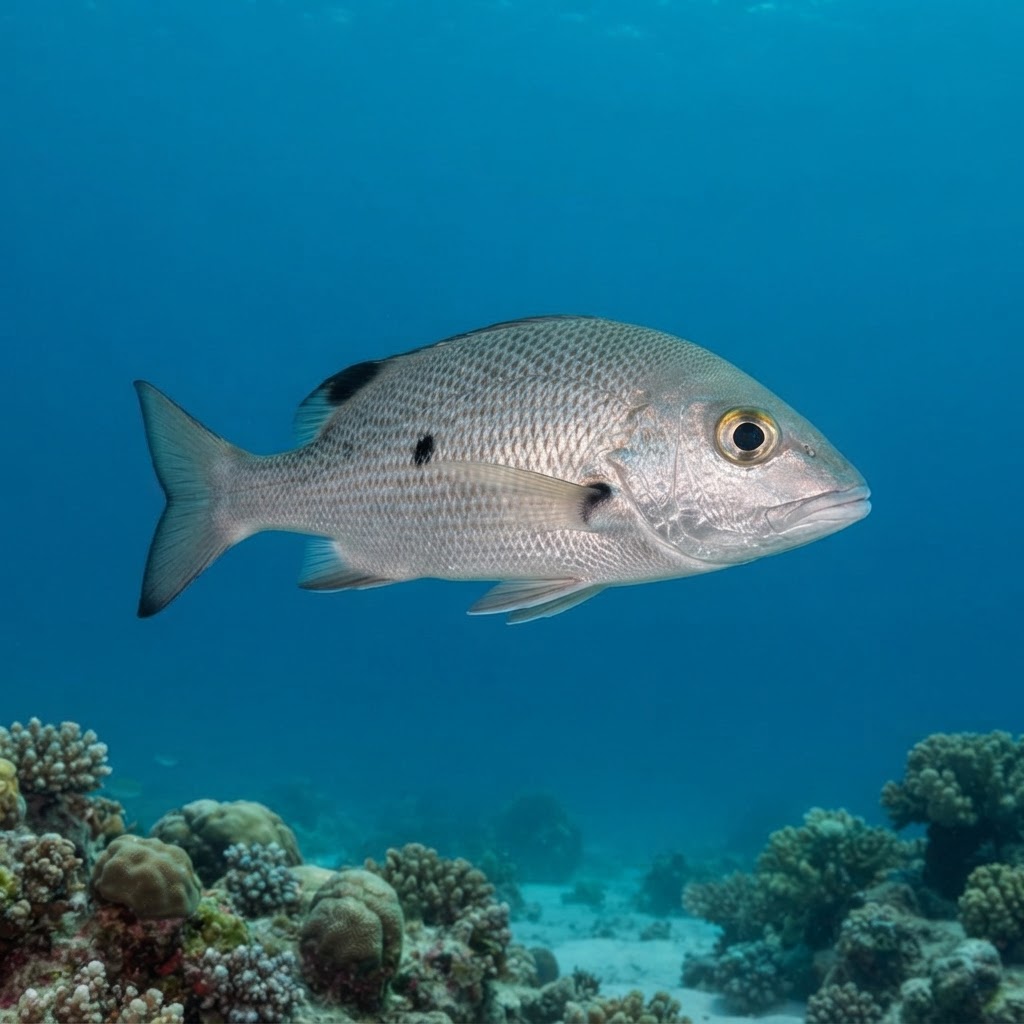
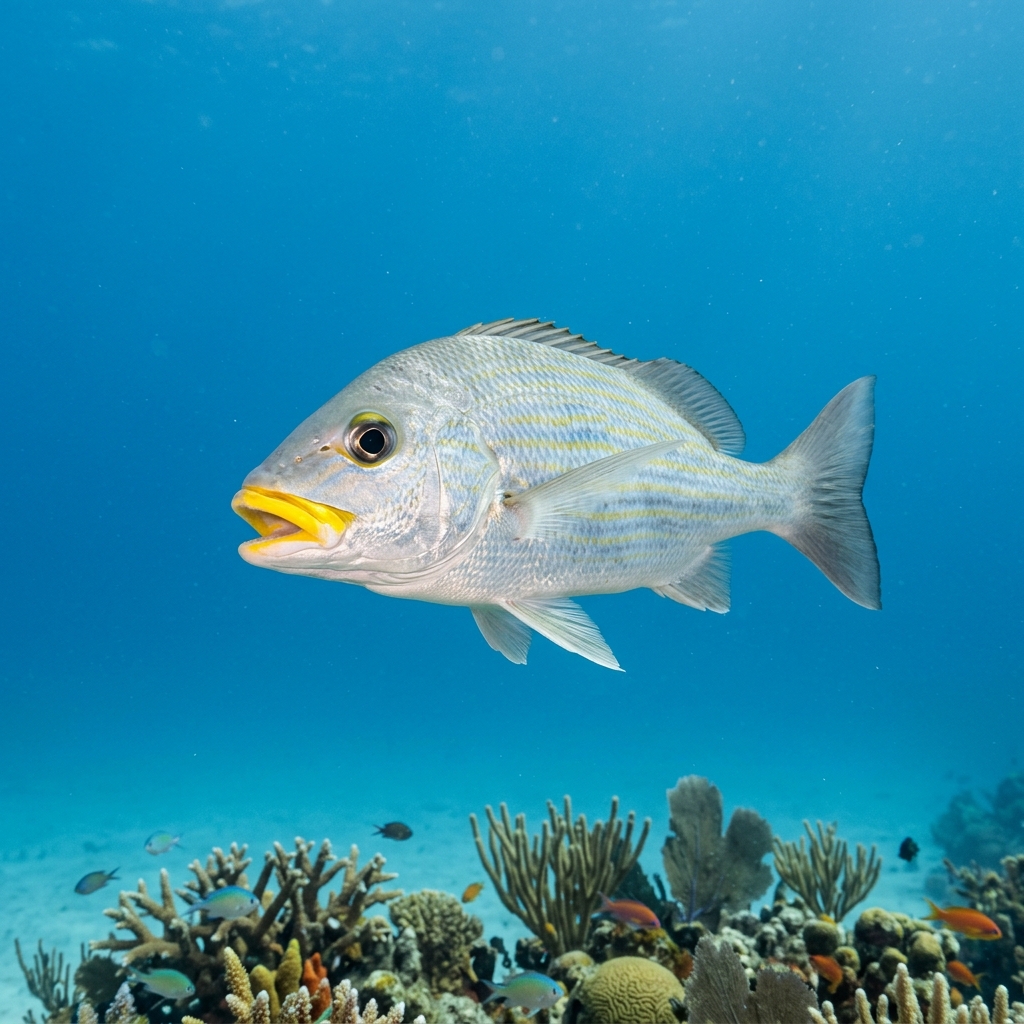
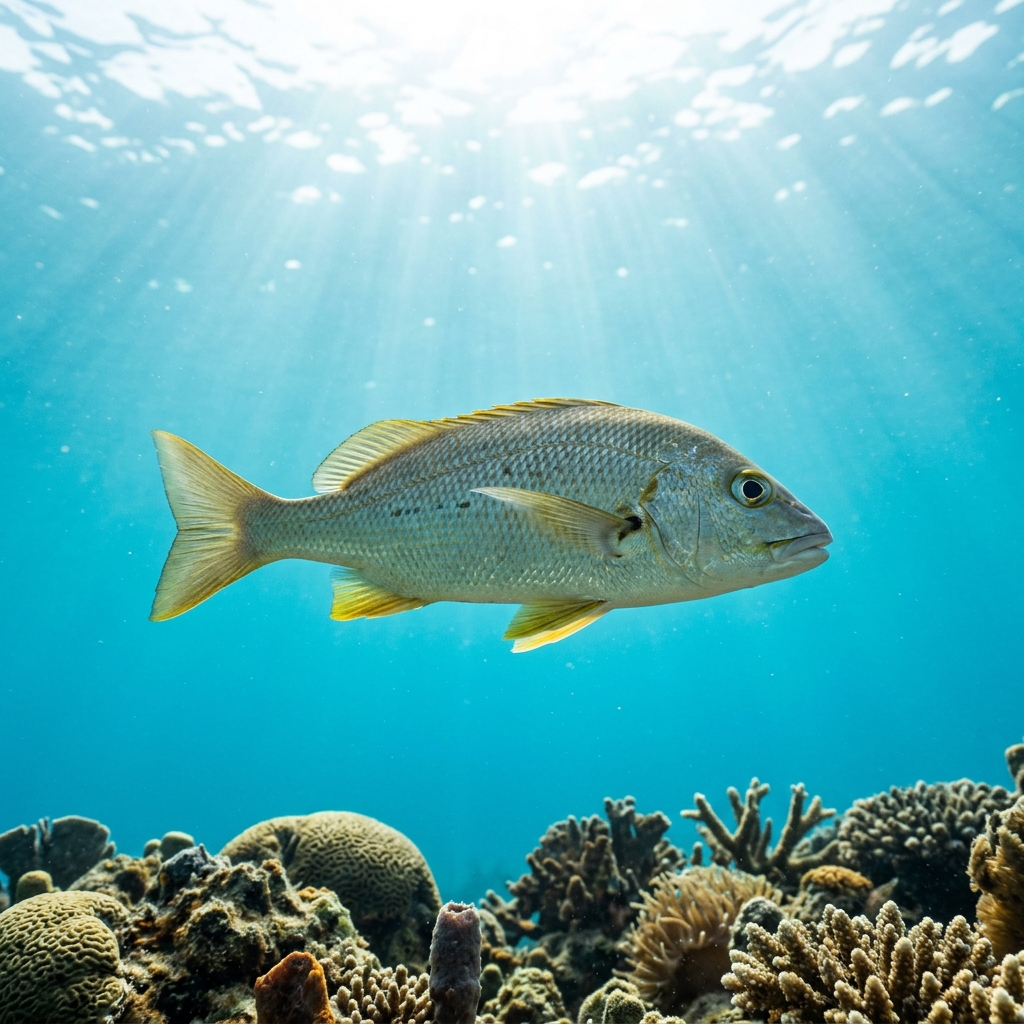
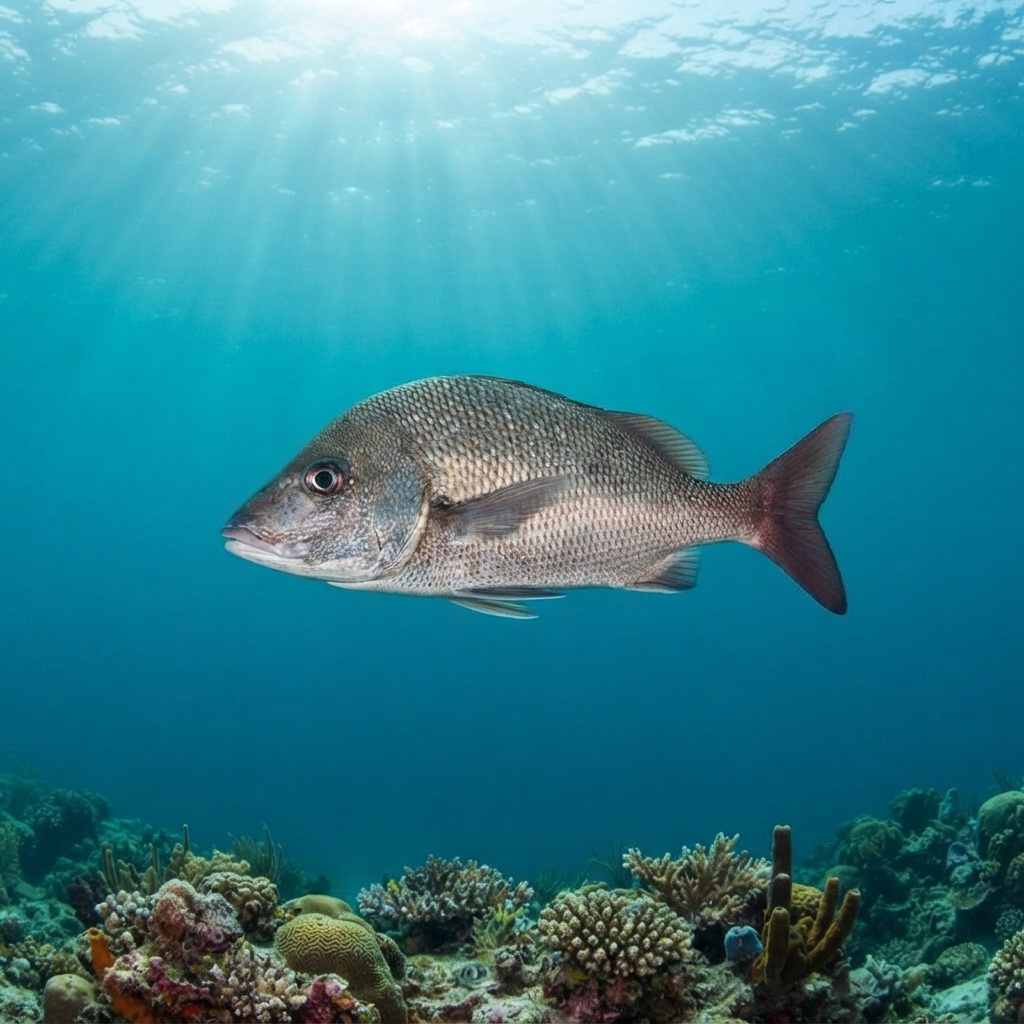
Look for a deep-bodied, silvery-grey grunt around 55 cm with a faint yellowish sheen along the back and dark-margined fins. The head is fairly blunt with a large eye, and the body lacks any bold stripes or spots, which is itself the giveaway against its more patterned relatives. It often hangs at a slight head-down angle when resting under ledges, a posture typical of grunts.
Divers most often find White Margate loafing in loose groups under overhangs, ledges or around wrecks during the day, saving their feeding runs over sand and rubble for after dark. They are generally unbothered by divers, holding position or drifting off slowly rather than bolting, which makes for easy close looks. On most dives they show up as a background presence rather than the main event, usually logged as uncommon rather than a guaranteed sighting.
Like other grunts, it can produce an audible grunting sound by grinding its pharyngeal teeth, amplified by the swim bladder, most often when stressed or handled.
No clear season shows up in the sightings, and with a comfortable range of 21.1 to 27.6C, reefs across its range stay within that window most of the year, so it is effectively a year-round sighting wherever it occurs.
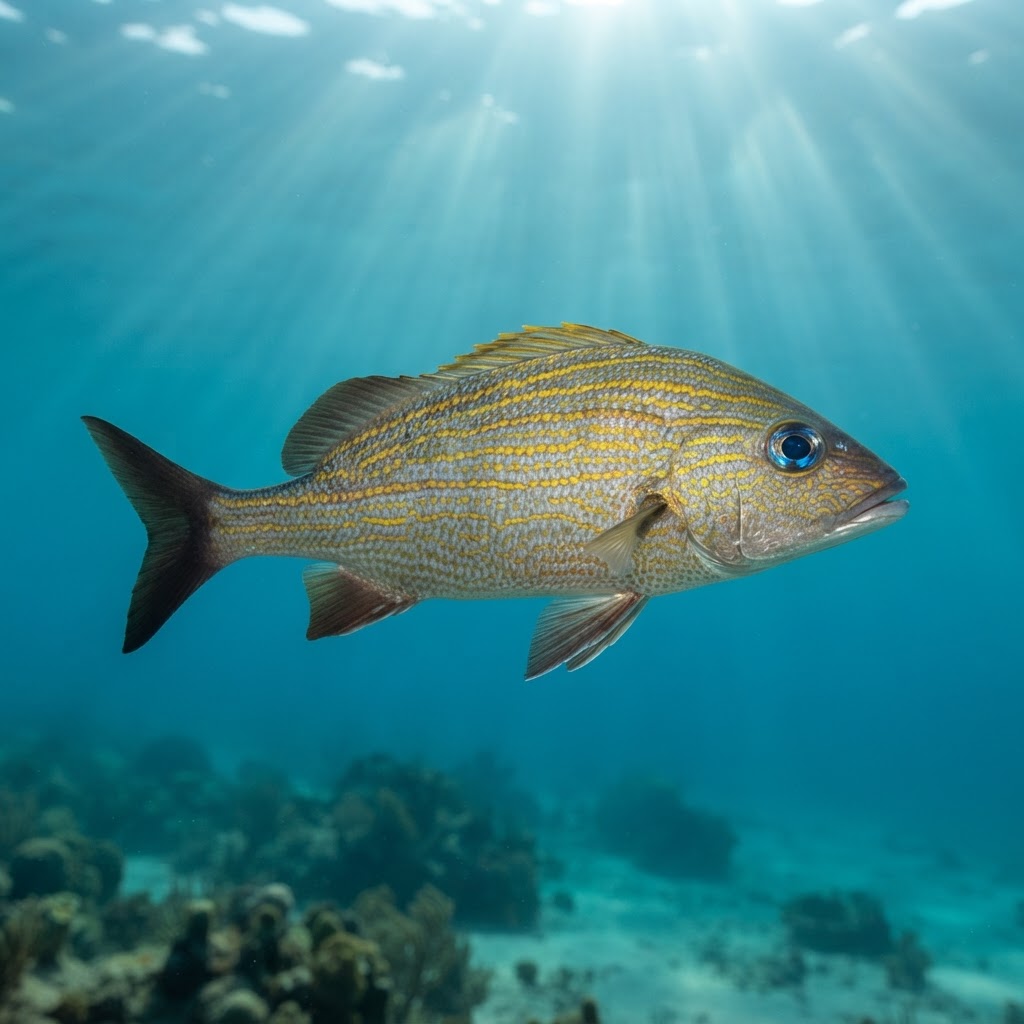
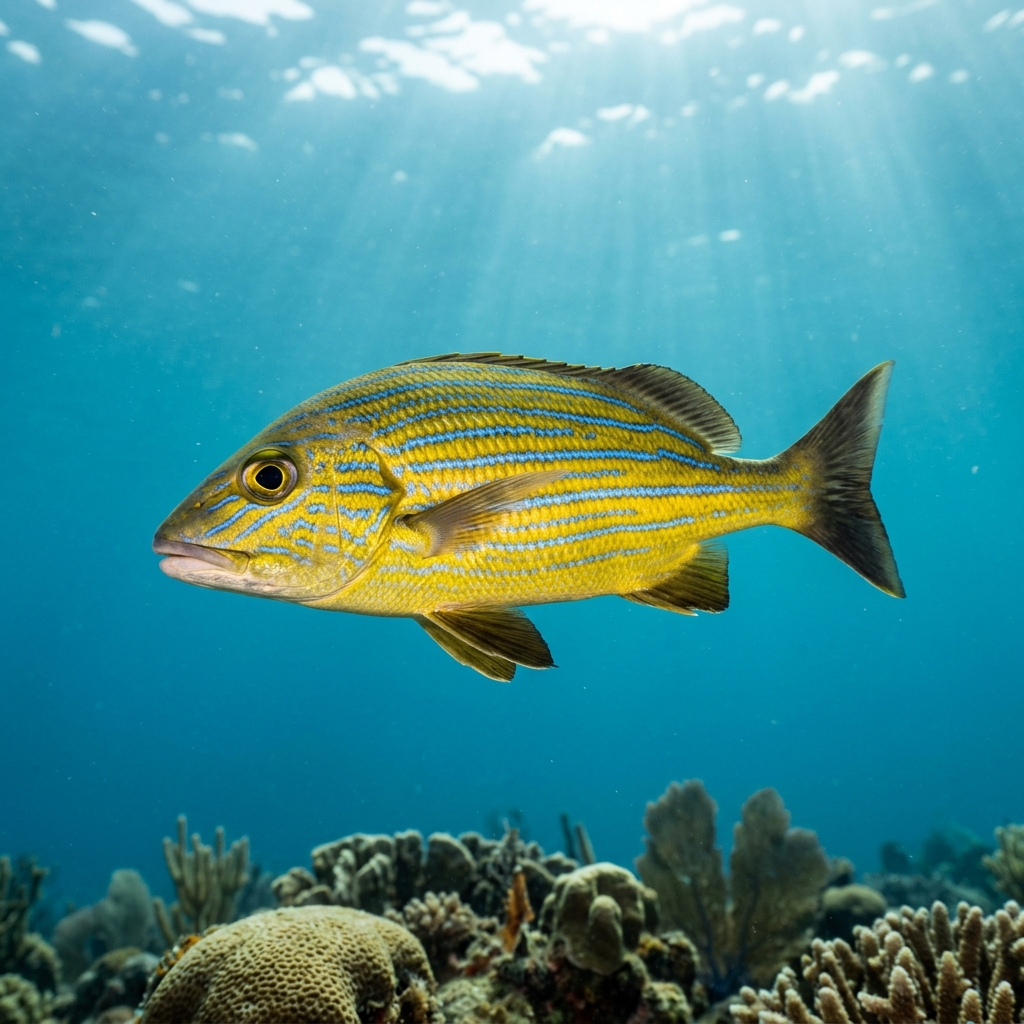
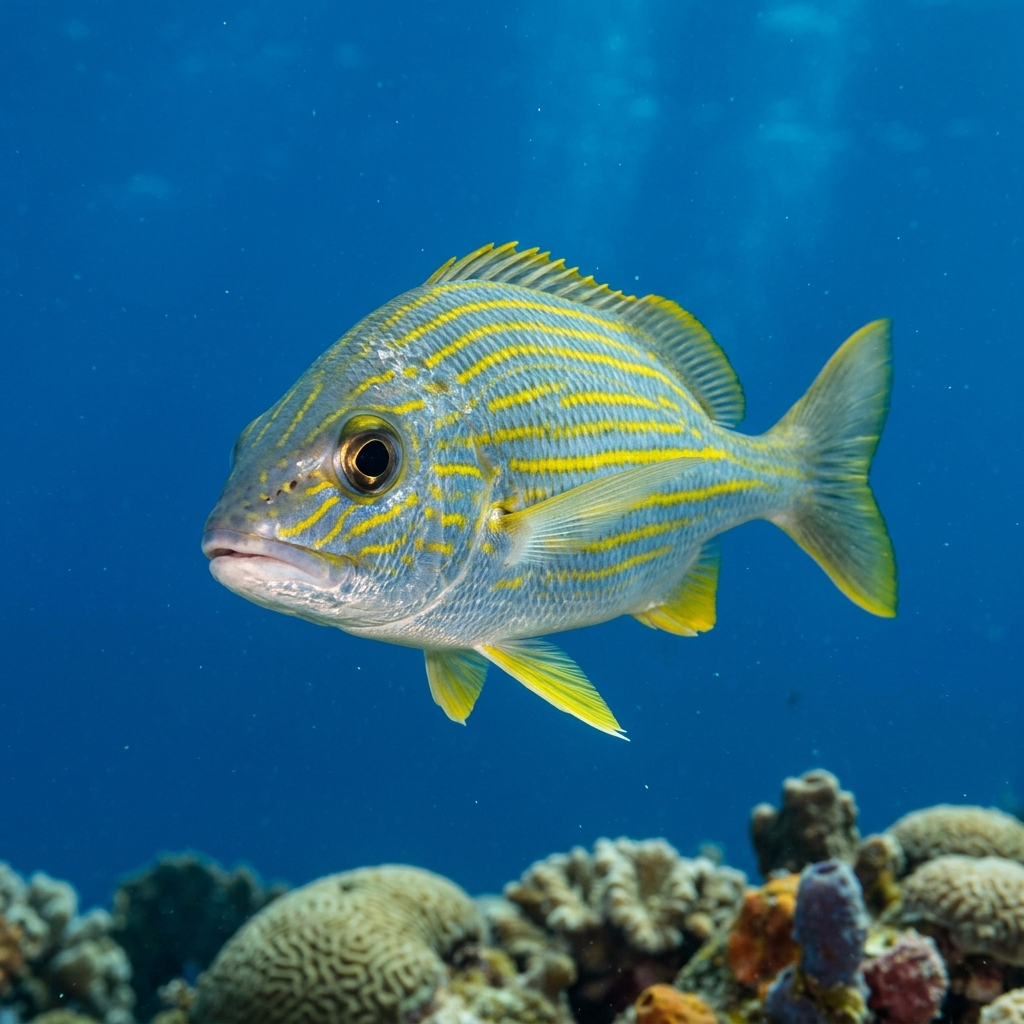
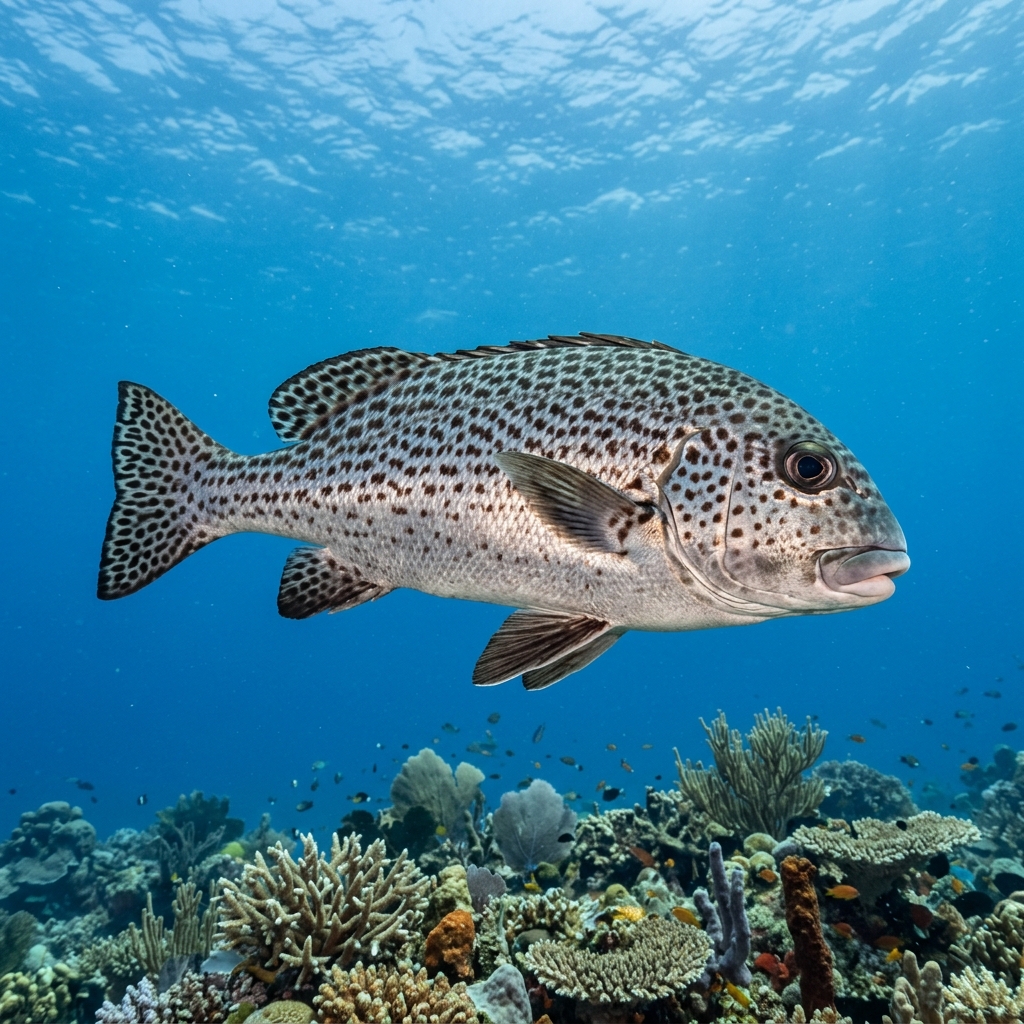
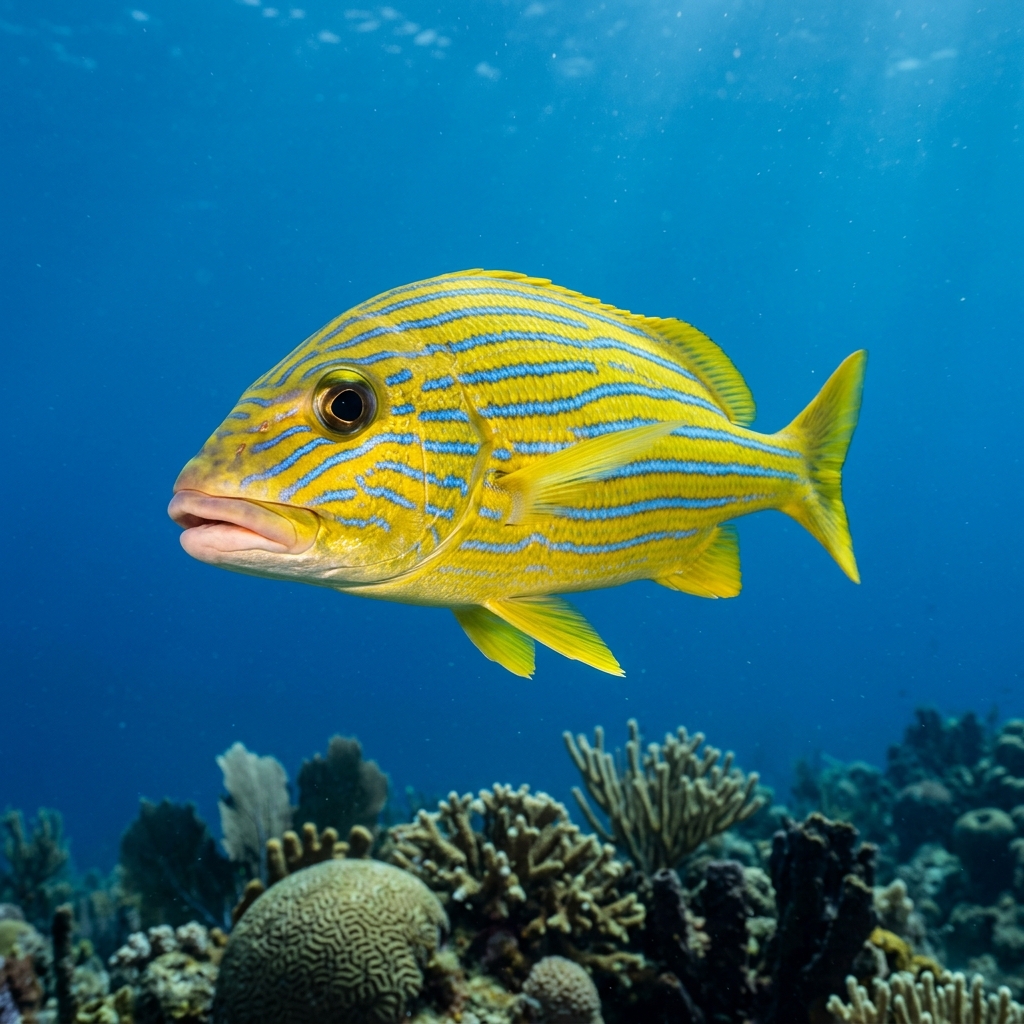
Reef neighbours a diver could mistake it for. Use the identification notes above to tell them apart.
Most reliably logged around Mexico's Yucatán Peninsula, with strong numbers also out of New Providence and Bimini in the Bahamas. Florida, western Cuba and Cayman Brac in the Cayman Islands are other solid bets, with smaller but steady sightings around Anguilla and Saba's Tent Reef.
Mapping where White Margate is logged…
Best odds are around Mexico's Yucatán Peninsula and the Bahamas, particularly New Providence and Bimini. Florida, western Cuba and Cayman Brac also produce regular sightings, though it's usually logged as uncommon rather than guaranteed.
There's no strong seasonal pattern in the sightings, and the species tolerates a wide temperature band from about 21 to 28C, so it's seen on reefs across its range throughout the year.
Check for a silvery-grey, deep-bodied grunt around 55 cm with dark-edged fins and no bold stripes or spots. It often rests under ledges at a slight head-down tilt, which helps separate it from more patterned grunts and sweetlips.
They typically reach around 55 cm in length, making them one of the larger grunts you'll come across on a reef dive.
No, they pose no threat to divers and generally hold their position or move away slowly rather than reacting defensively.
Site and sighting data is aggregated from diver logs, iNaturalist and GBIF. For taxonomy and conservation status:
Bluestriped Grunt
1,907 sites