Haemulon plumierii
White Grunt form large schools on reefs from Florida to Brazil. Here's where to find them, when to go, and how to tell them apart from French Grunt.
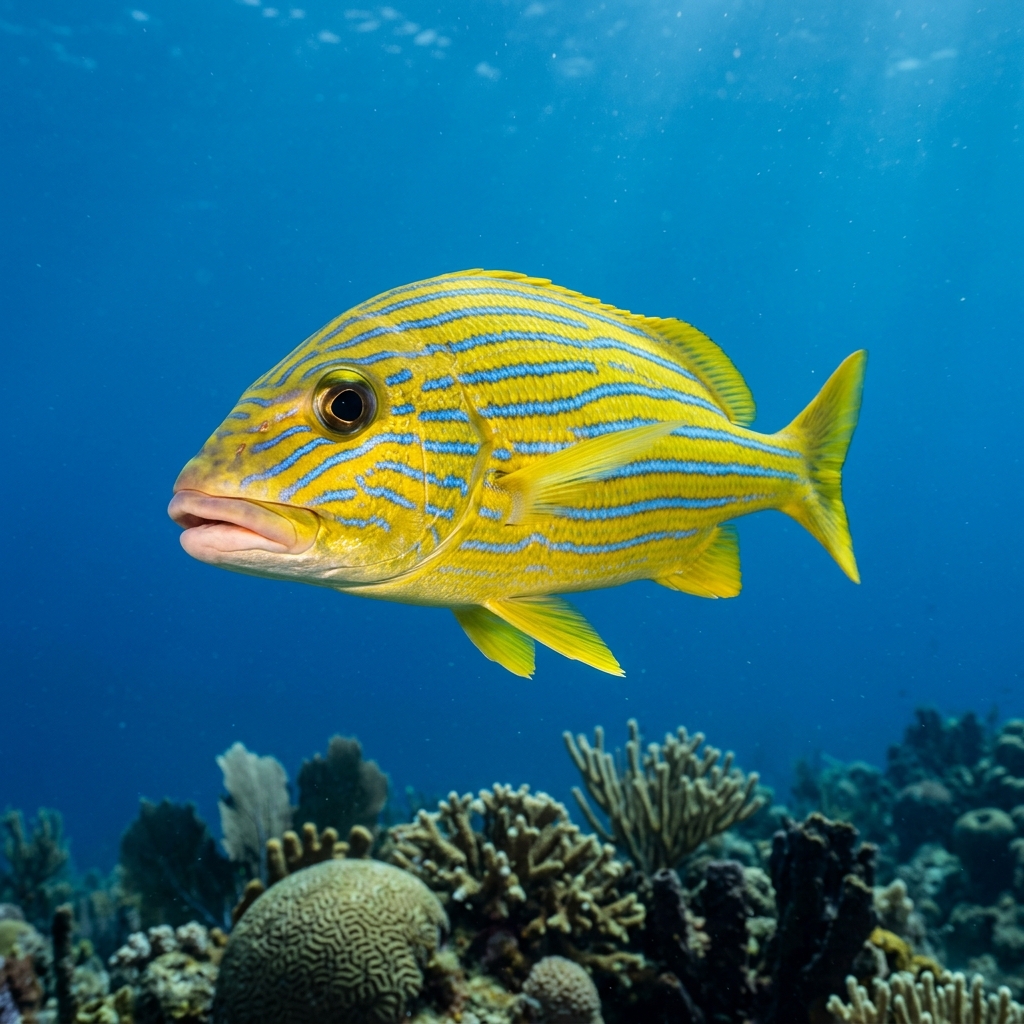
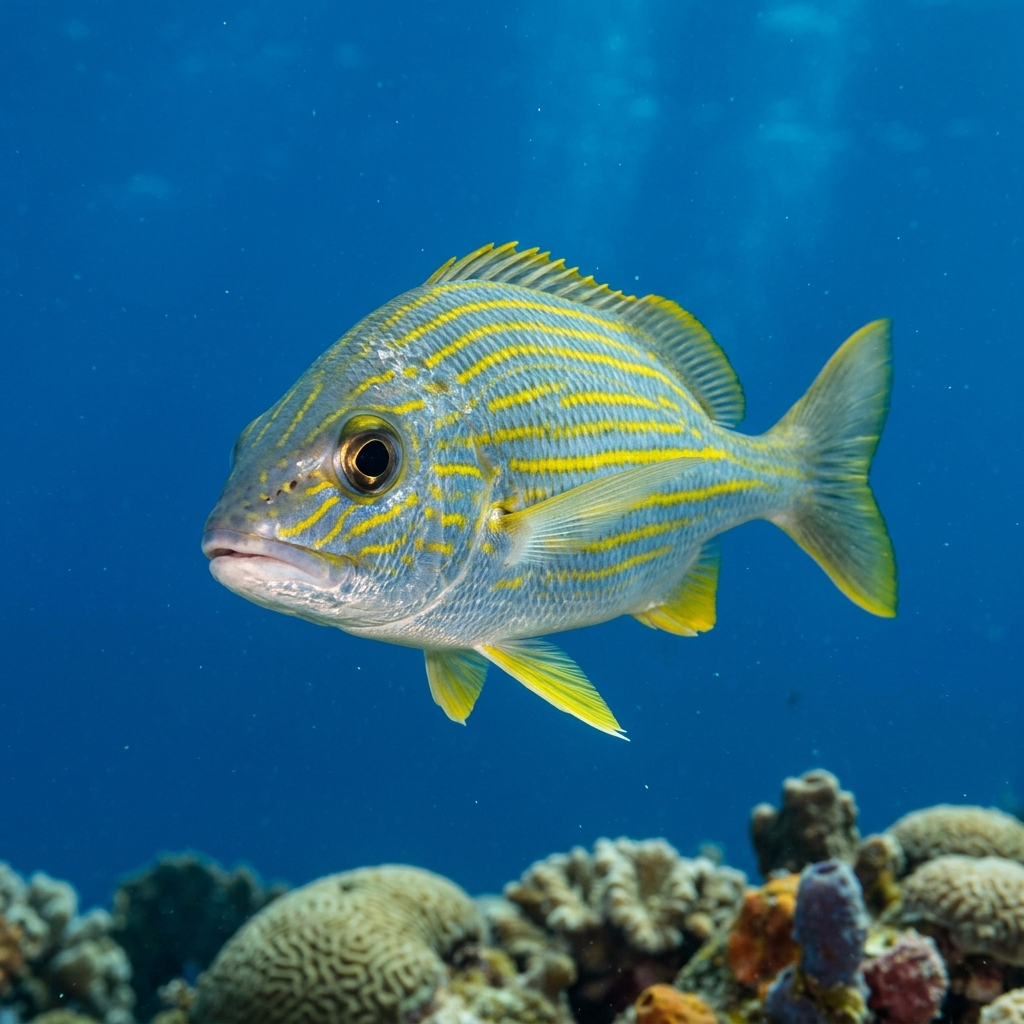
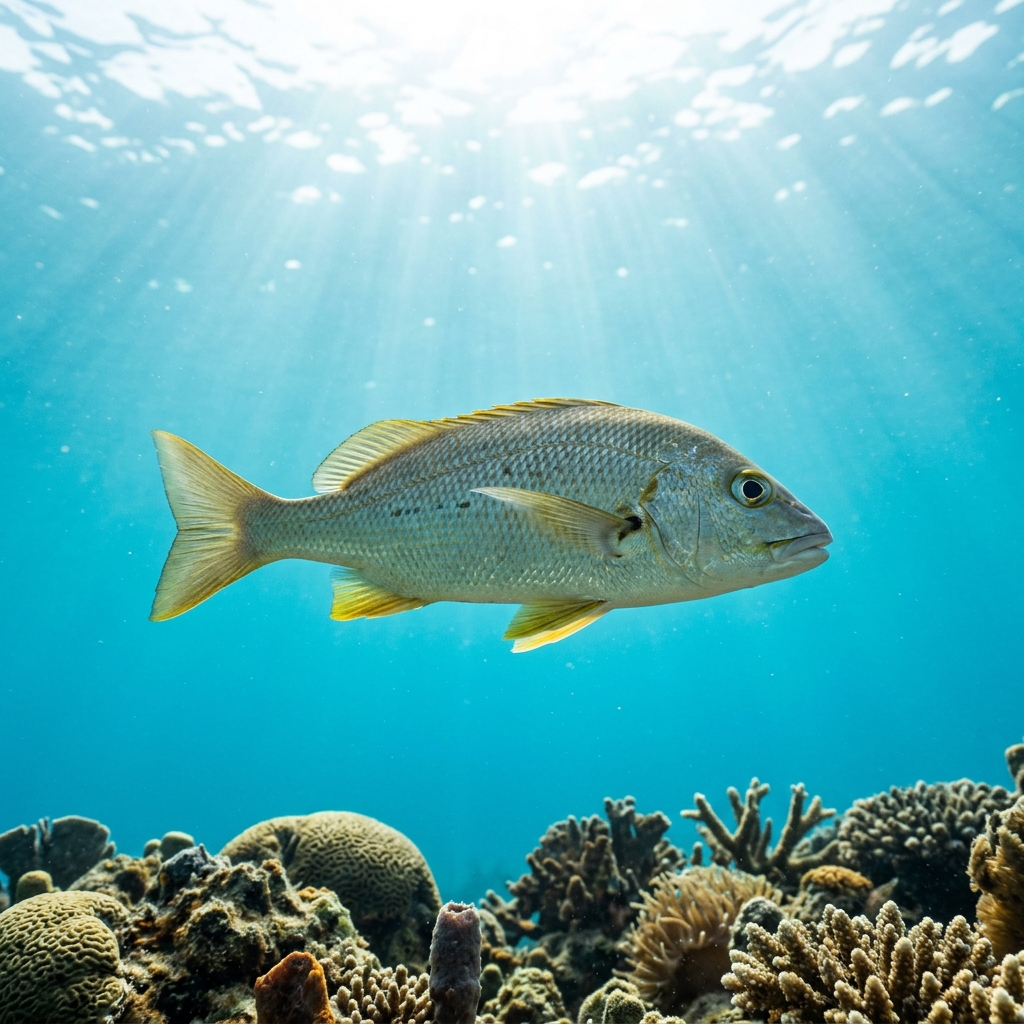
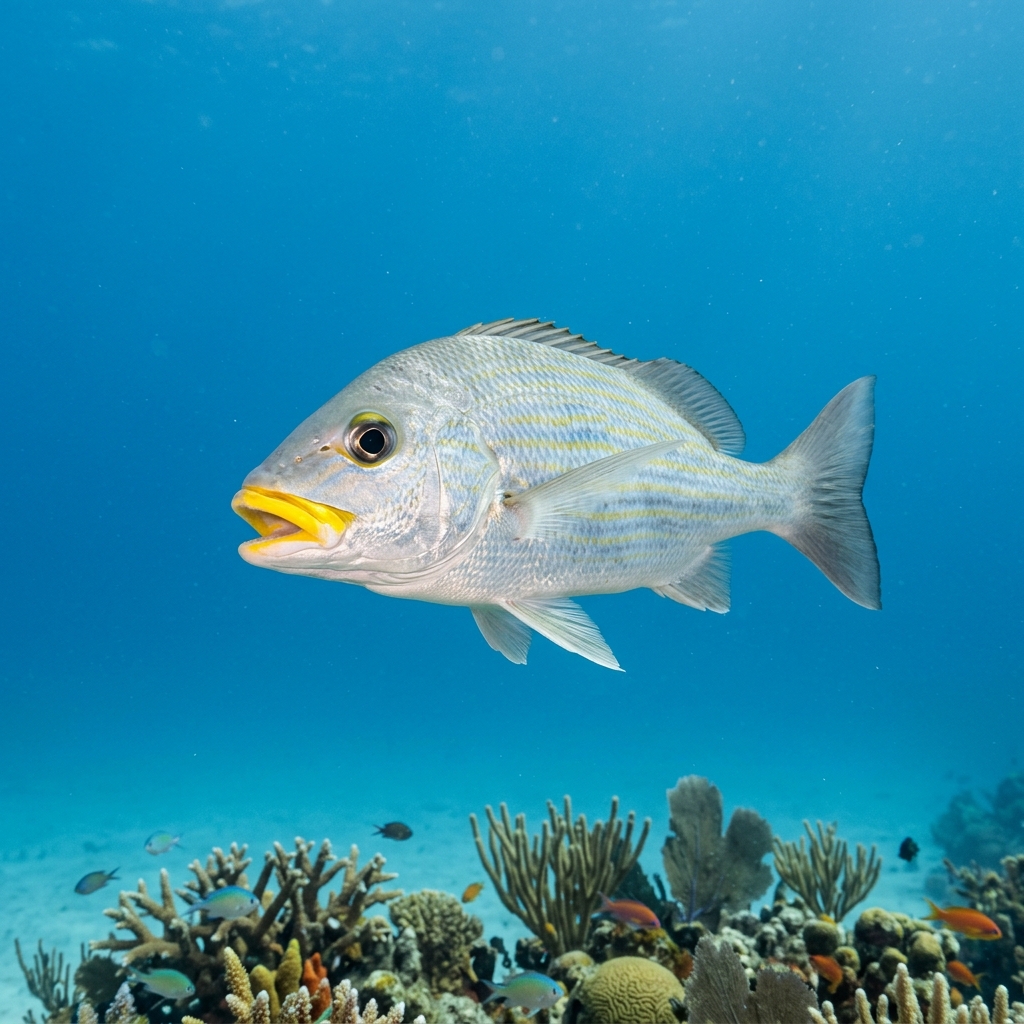
A medium-sized reef fish, typically around 35 cm, with a silvery-blue body covered in rows of yellow-edged scales that give it a faintly striped look from a distance. The face is the clincher: vivid blue and yellow horizontal stripes running from the snout back past the eye, a pattern no other common Atlantic grunt shares. The inside of the mouth is bright red, briefly visible when the fish gapes or 'grunts'. Schools tend to hang motionless in mid-water or tight against structure, which makes observation easy.
You'll typically encounter them hovering in dense, stationary schools near coral structure or rocky outcrops, often completely unbothered by a diver's approach. Activity picks up at dawn and dusk, when schools break up to forage over sandy or rubble areas and then reassemble to rest. Listen closely inside a large school and you may hear the low, froggy grunt that gives the family its name, produced by grinding pharyngeal teeth (tooth plates in the throat) together.
The 'kissing' behaviour sometimes seen between two white grunts is actually a ritualised mouth-to-mouth pushing contest, thought to be a form of territorial or dominance display rather than anything affectionate.
In the northern hemisphere, white grunt are present year-round, which matches their preference for warm tropical and subtropical water in the 23 to 28 °C range found across Caribbean reefs. In the southern hemisphere, sightings concentrate between January and May.
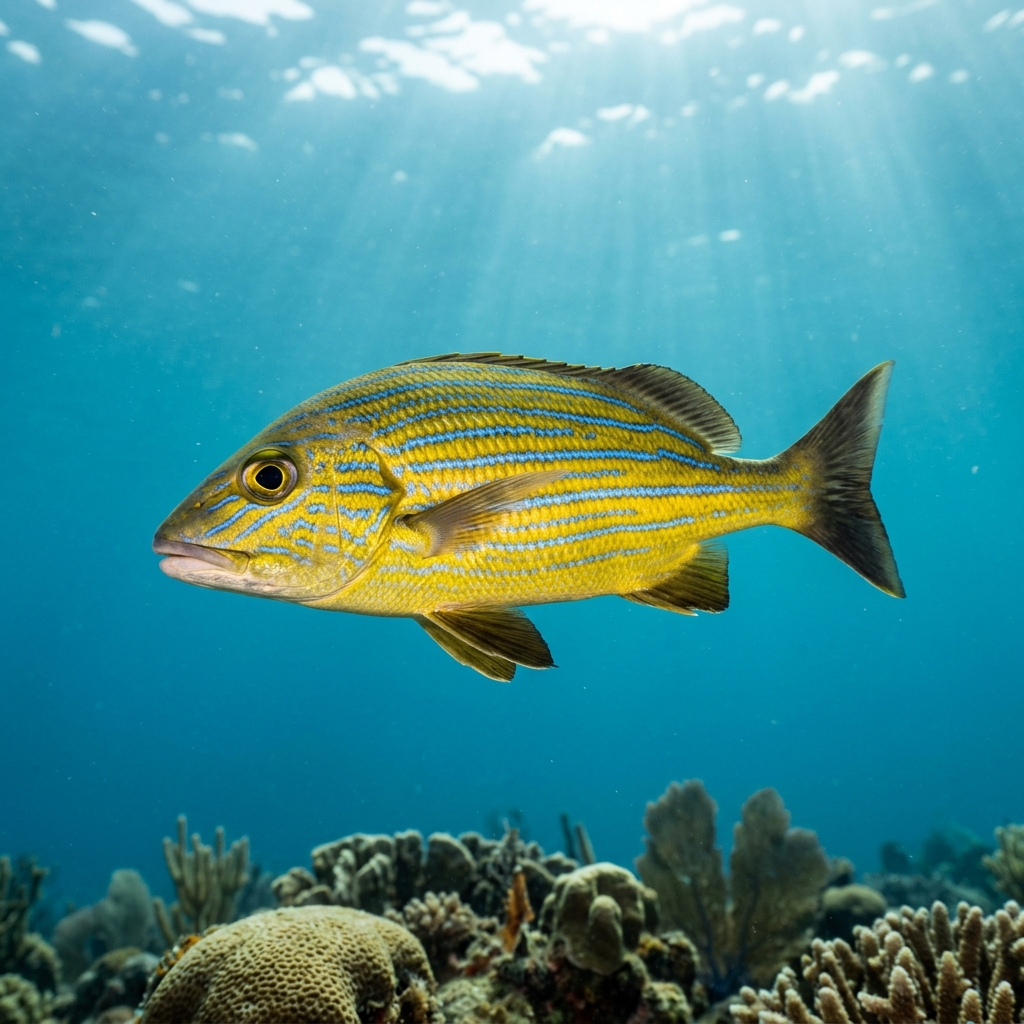
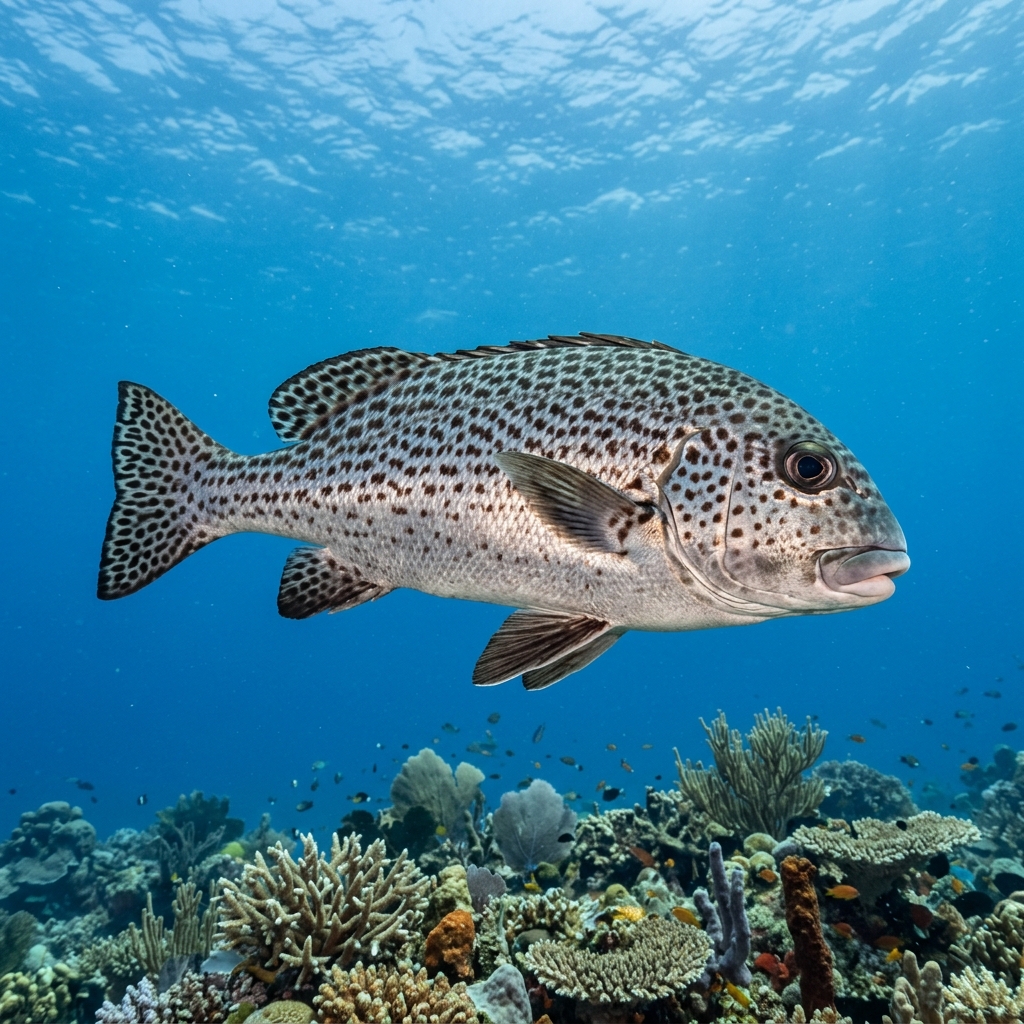
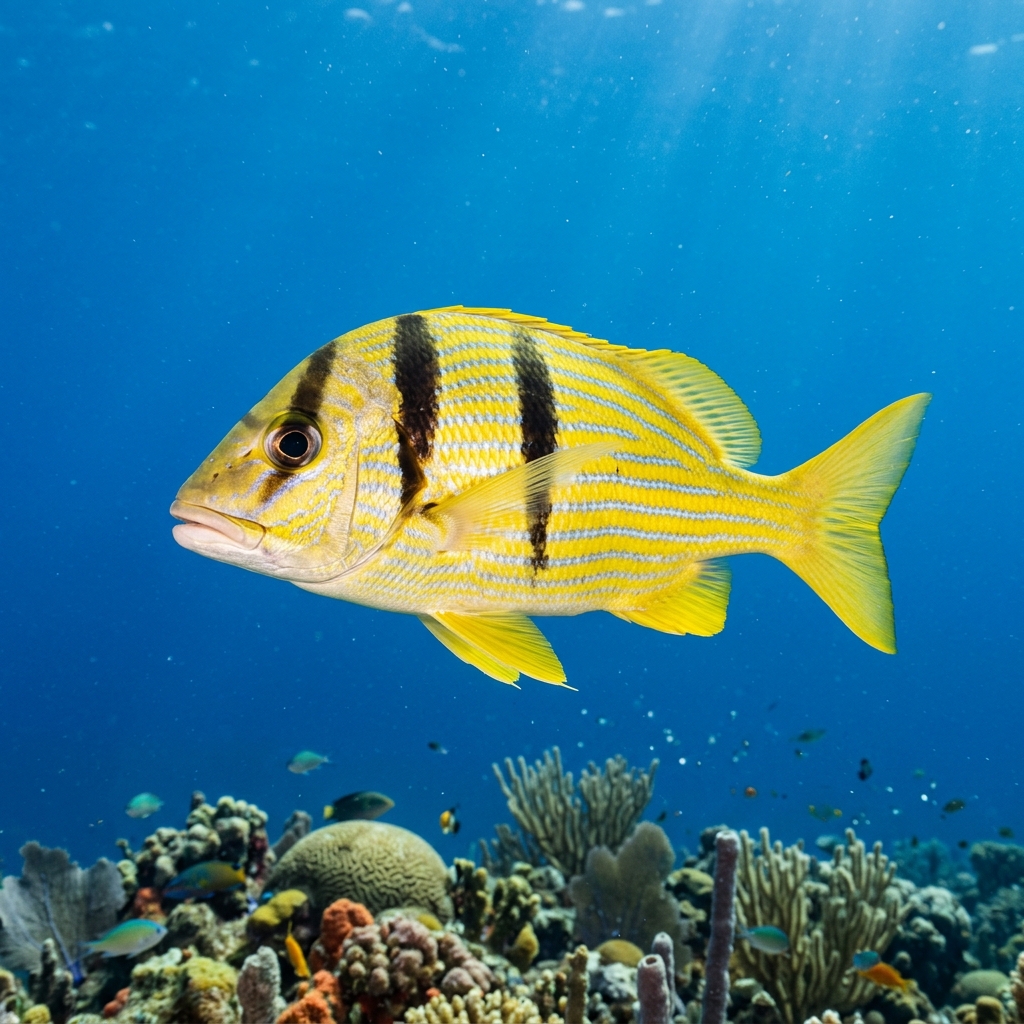
Reef neighbours a diver could mistake it for. Use the identification notes above to tell them apart.
Most commonly logged across the wider Caribbean and the western Atlantic, with the strongest diver coverage in Florida and the US Southeast, the Yucatán Peninsula in Mexico, and the coast around Rio de Janeiro and São Paulo in Brazil. Roatán in Honduras, Grand Cayman, and the Bahamas also deliver reliable sightings, as do Cuba and Belize.
Mapping where White Grunt is logged…
White grunt are widespread across the Caribbean and western Atlantic. The best-documented dive sites are in Florida, the Yucatán Peninsula in Mexico, and the Brazilian coast around Rio de Janeiro and São Paulo. Strong populations also appear around Roatán, the Bahamas, Grand Cayman, Cuba, and Belize.
In the Caribbean and Florida, white grunt are present year-round on suitable reefs. In the southern hemisphere, such as along the Brazilian coast, sightings are most concentrated between January and May.
Look for the vivid blue and yellow stripes on the face, which are the clearest field mark. The body is silvery-blue with rows of scales that have yellow edges, and the interior of the mouth is red. Schools hover fairly still near reef structure, making it easy to get a close look.
A typical adult is around 35 to 37 cm in length, roughly the size of a large hand span. They are a solidly built fish, so they appear larger in the water than their length suggests, especially when a school is packed tightly together.
They grind specialised pharyngeal teeth, tooth plates located in the throat, against each other to produce a low grunt. The sound is amplified by the swim bladder. You can sometimes hear it clearly when hovering near a large, undisturbed school, particularly at dusk.
Site and sighting data is aggregated from diver logs, iNaturalist and GBIF. For taxonomy and conservation status:
Bluestriped Grunt
1,907 sites