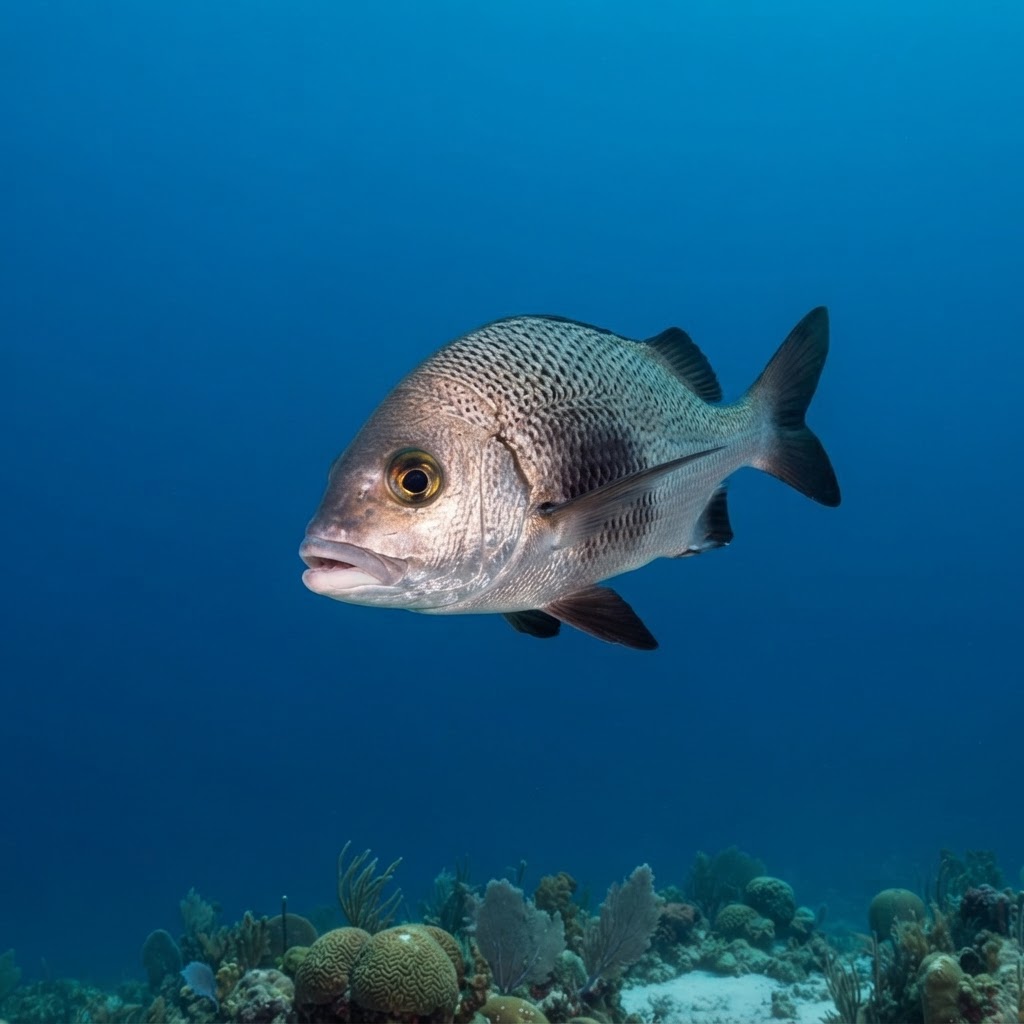
Anisotremus surinamensis
Chunky black-and-white grunt seen on reefs from Bonaire's Leeward Coast to Florida, comfortable year-round in 24-26C water.
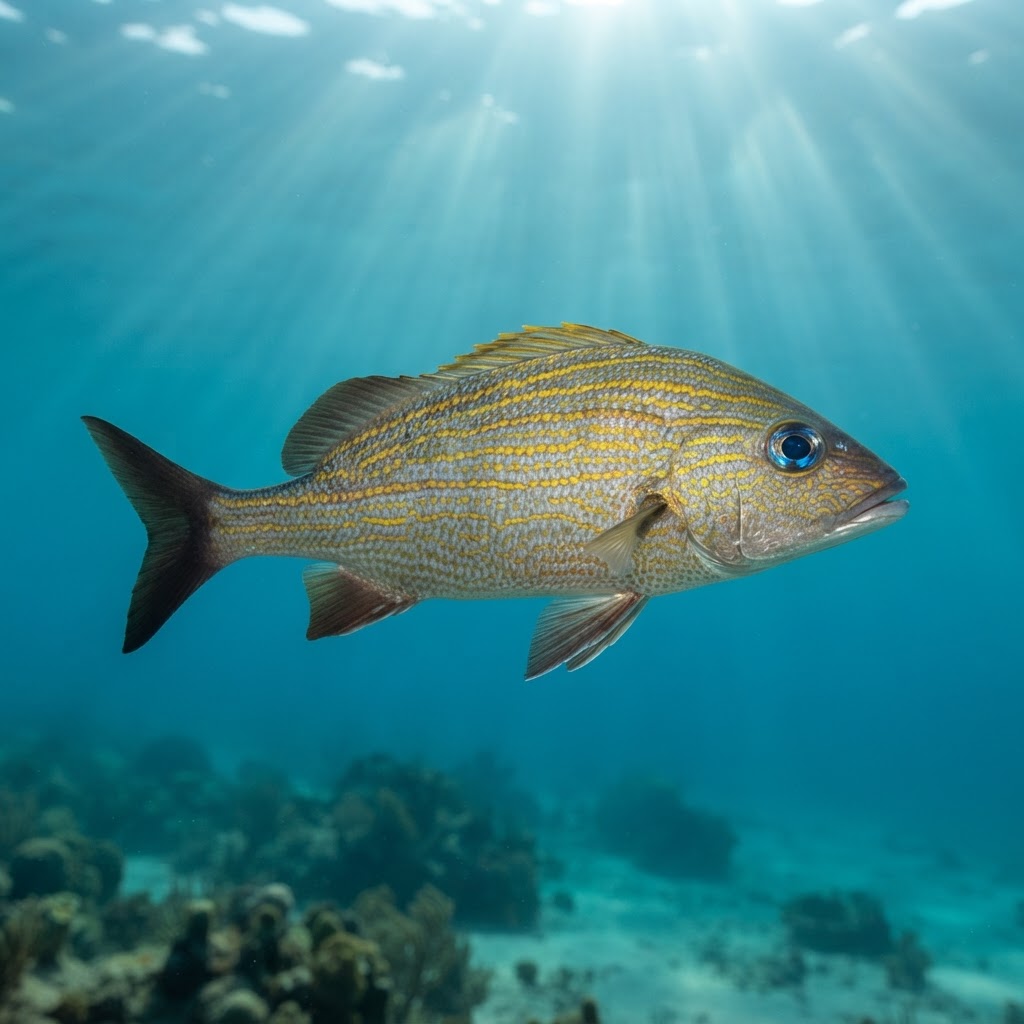
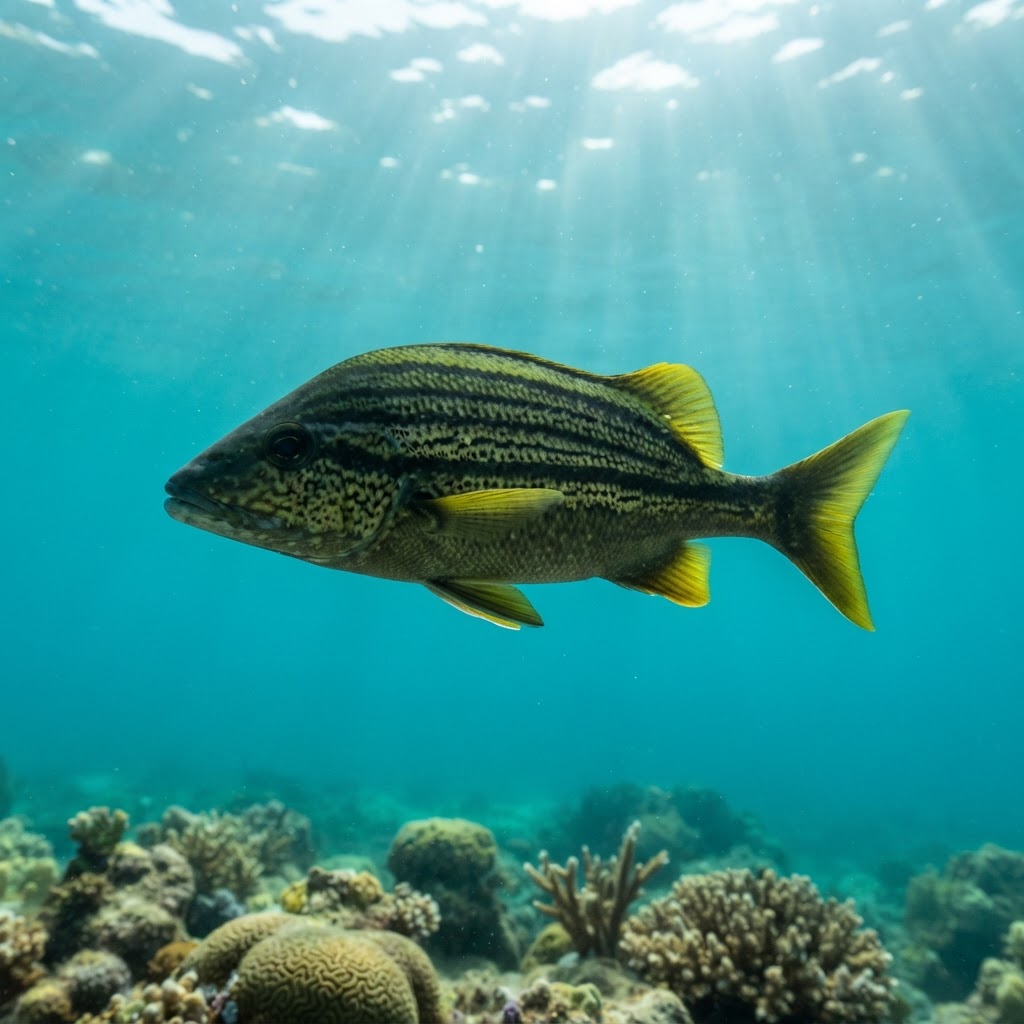
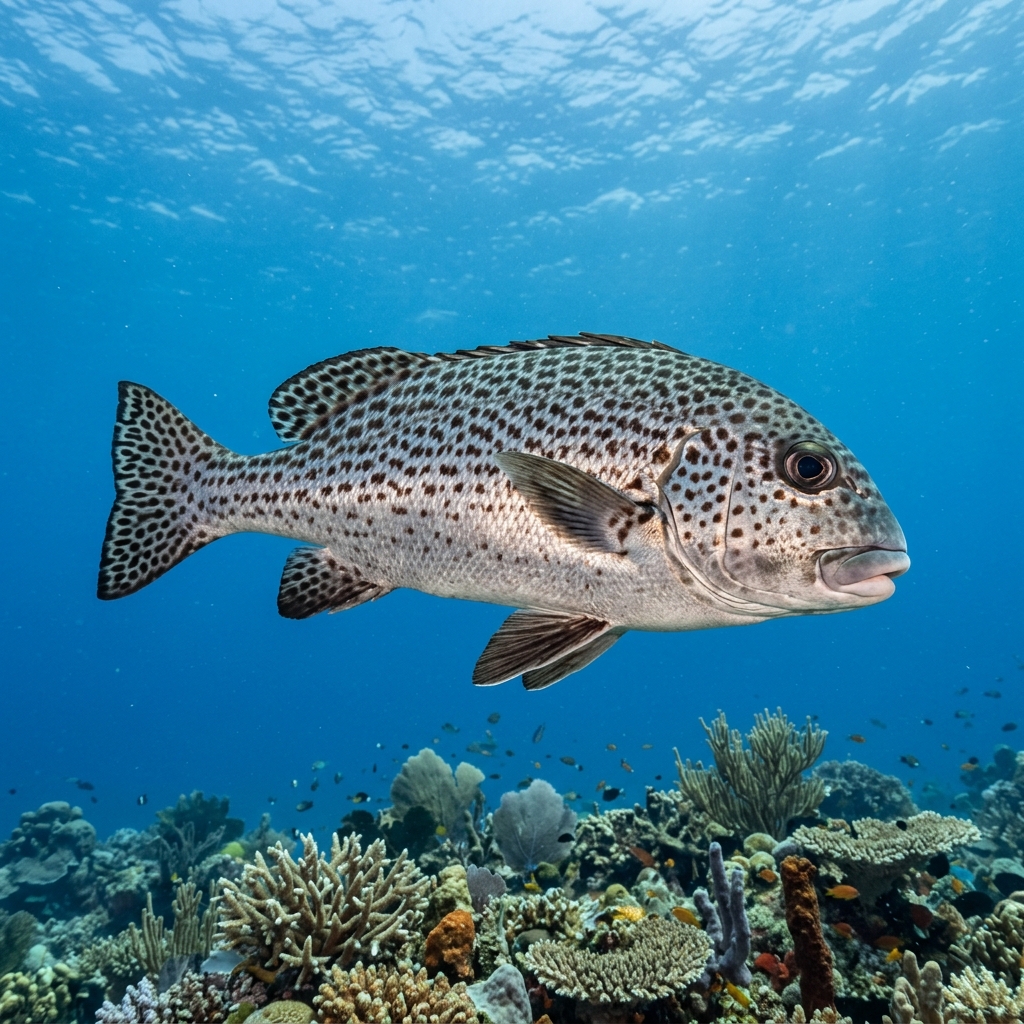
Deep-bodied and heavy-set for a grunt, growing to over half a metre, with a dark grey to blackish upper body that fades to a paler, silvery-white belly. The thick, fleshy lips and steep-sloped head are the giveaway, along with a single dark saddle-like patch that some individuals show near the tail. It often hangs nose-down or angled under ledges rather than swimming openly across the reef.
Usually spotted tucked under ledges, in cave mouths, or hovering close to reef structure rather than out in the open, often solo or in loose small groups. It tends to hold its ground or drift off slowly rather than bolt, giving divers a decent look before it eases back into cover. Most sightings are on daytime dives along reef walls and rubble edges where it can duck for shelter.
Those thick lips aren't just for show, they help it crush and pick at hard-shelled reef invertebrates like crabs and urchins that most other grunts can't tackle.
No clear season shows up in the sightings data, and with a comfortable range of 24 to 26C it stays on reef year-round, so any month is a fair bet where it is known to occur.
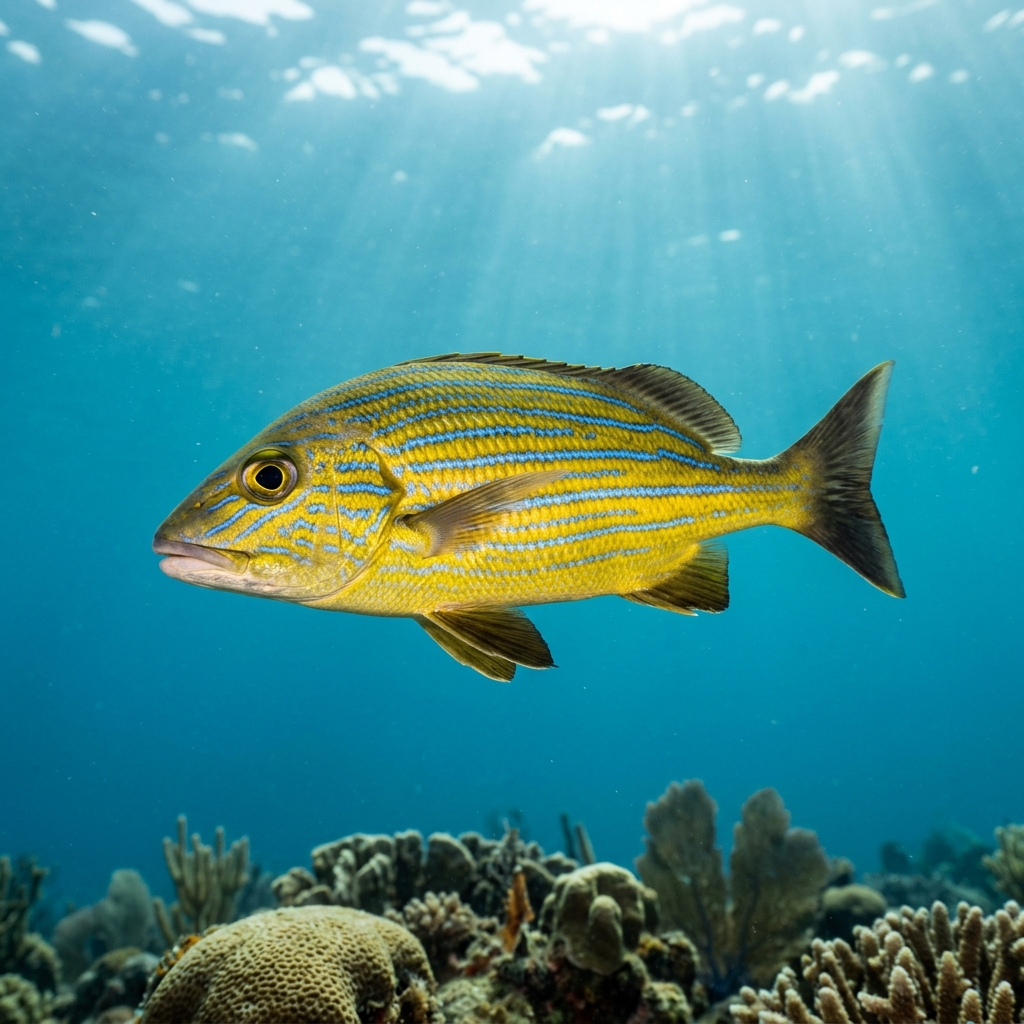
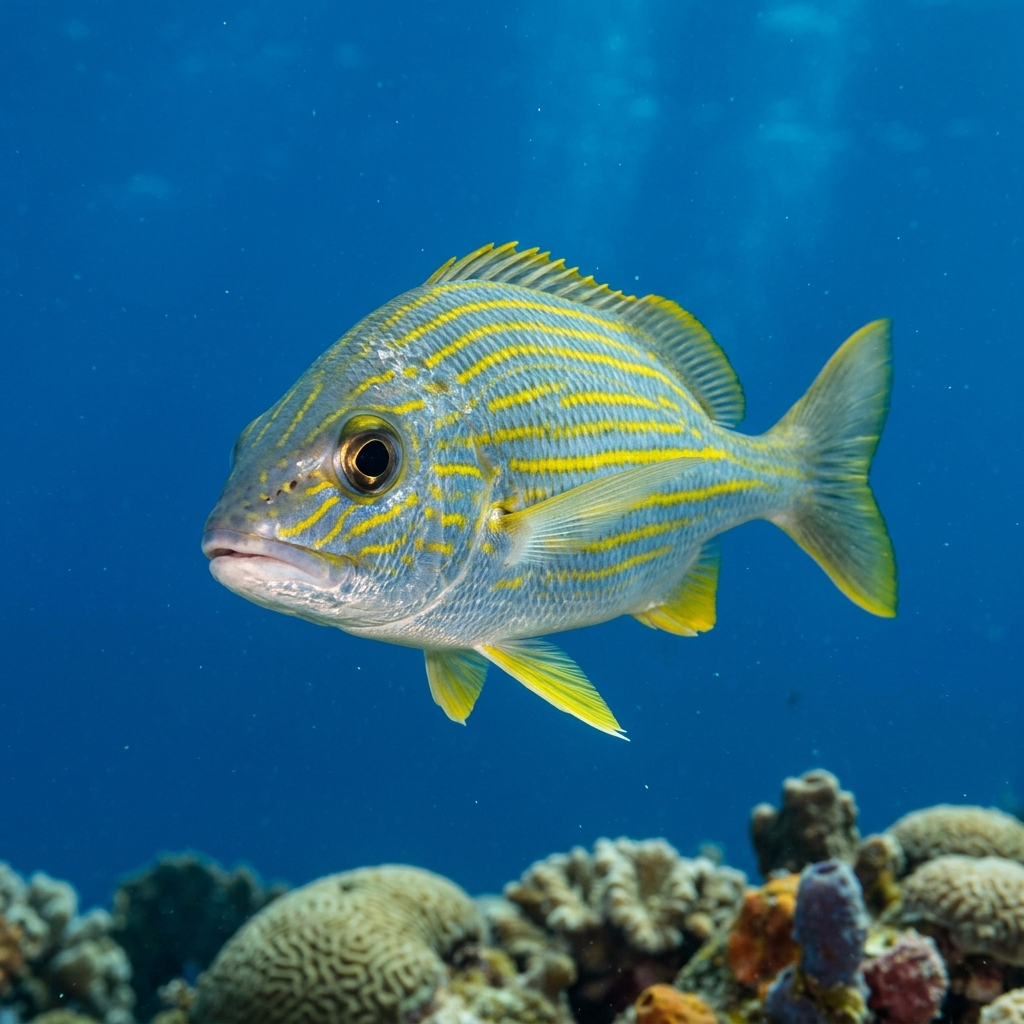
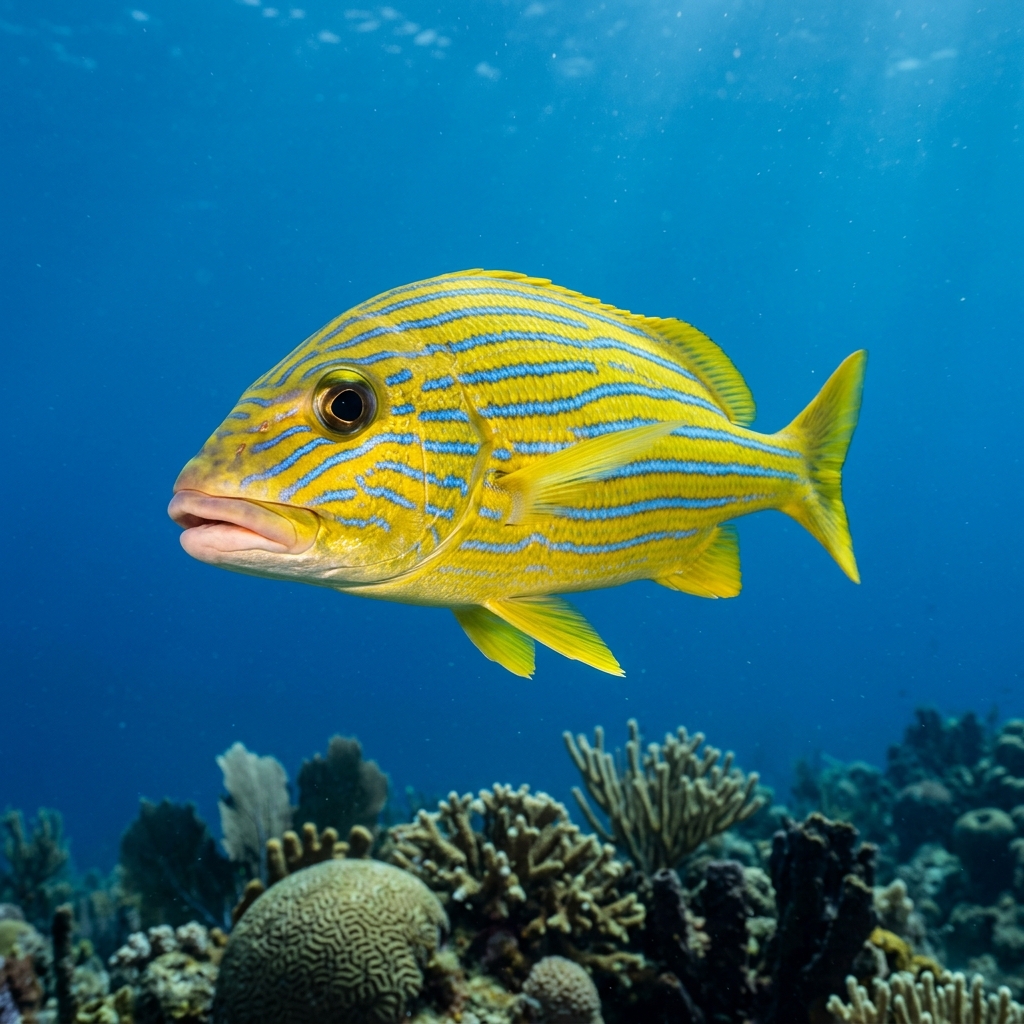
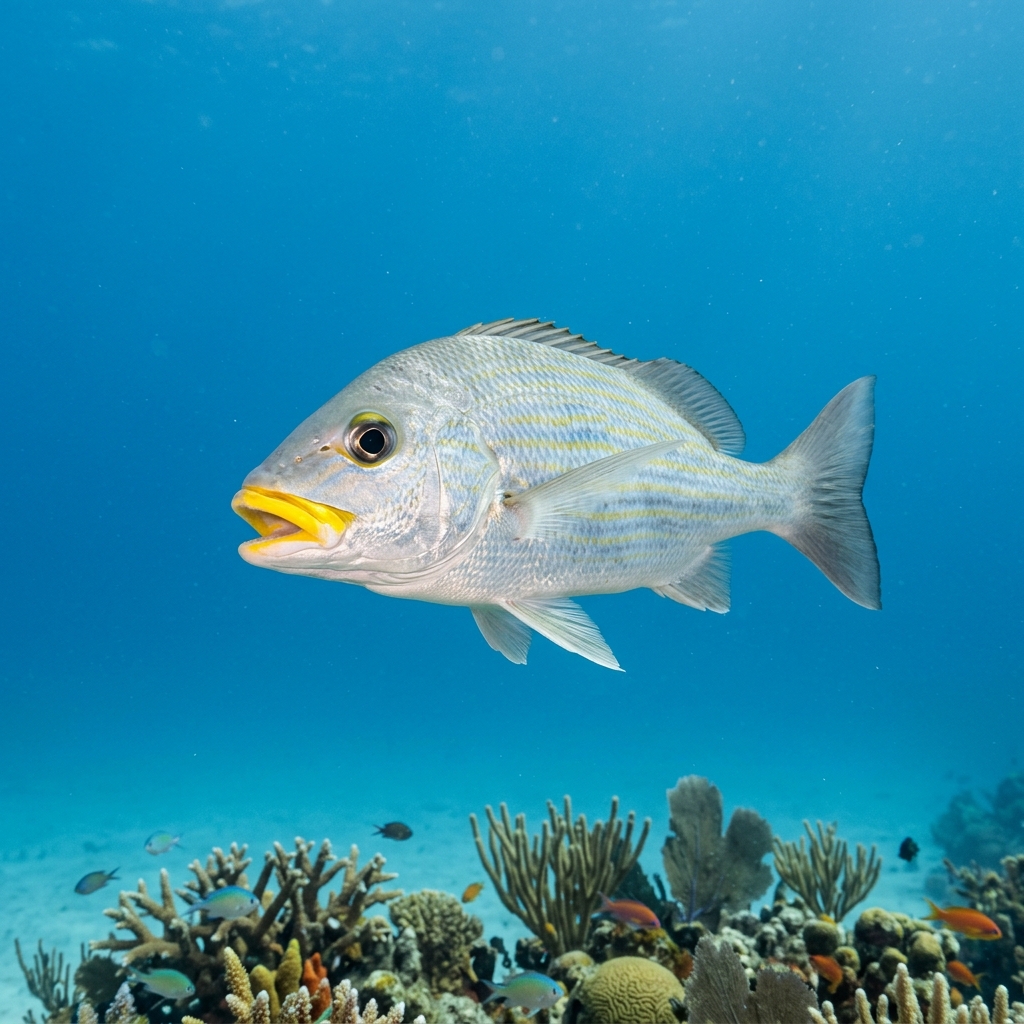
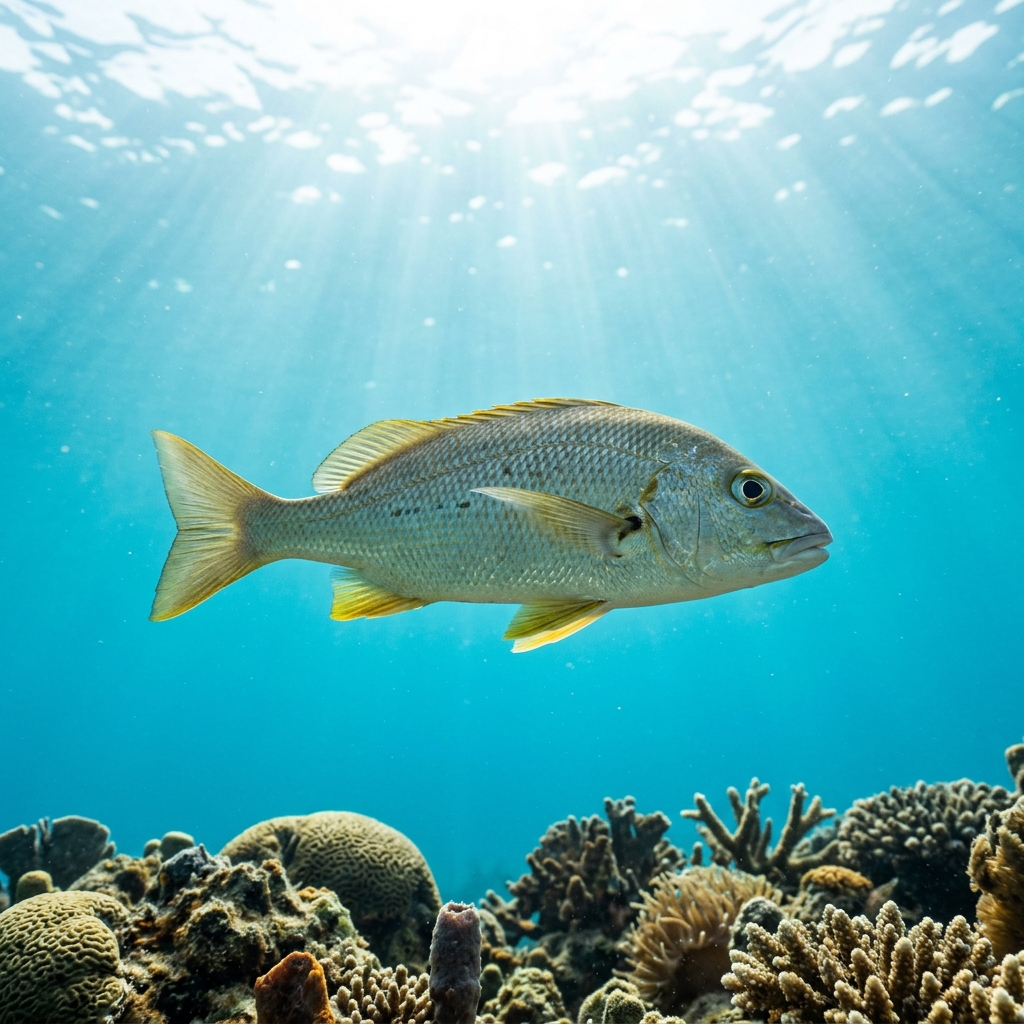
Reef neighbours a diver could mistake it for. Use the identification notes above to tell them apart.
Most reliably logged in Florida, on Bonaire's Leeward and East Coasts, and around Fernando de Noronha in Brazil, with steady sightings across the Yucatán Peninsula in Mexico, Sint Maarten, the British Virgin Islands, and Ambergris Caye in Belize. It shows up across a wide swathe of the Caribbean and western Atlantic, though divers should expect an uncommon encounter rather than a guaranteed one at most of these sites.
Mapping where Black Margate is logged…
Best logged in Florida, Bonaire's Leeward and East Coasts, and Fernando de Noronha in Brazil, with regular sightings in the Yucatán Peninsula, Sint Maarten, the British Virgin Islands, and Belize's Ambergris Caye. It turns up across a broad stretch of the Caribbean and western Atlantic but is uncommon at most sites rather than a sure thing.
There's no strong seasonal pattern in the sightings, and it tolerates a steady 24 to 26C, so it's present on reef year-round wherever it's found.
Look for a deep-bodied, dark grey to blackish fish with a pale belly, thick fleshy lips, and a steep head profile, typically hovering near ledges or cave mouths rather than swimming in open water.
They reach around 53cm, making them one of the larger, chunkier members of the grunt family you'll see on a reef.
No, they pose no threat to divers and typically hold near cover rather than approach, allowing a calm, close look if you move slowly.
Site and sighting data is aggregated from diver logs, iNaturalist and GBIF. For taxonomy and conservation status:
Bluestriped Grunt
1,907 sites