Haemulon parra
Silvery grunt logged from Florida to the Yucatán, most often spotted as an uncommon reef find in 25.6 to 28.2 C water.
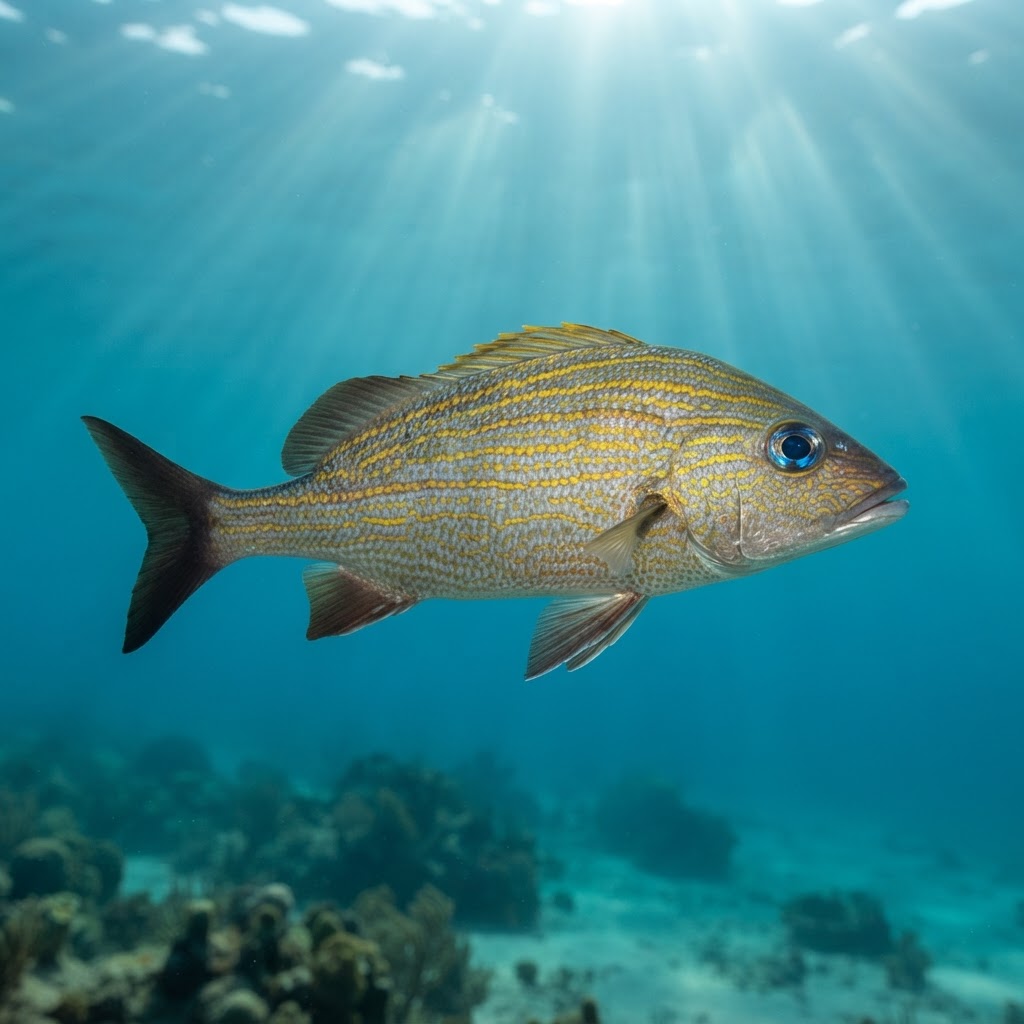
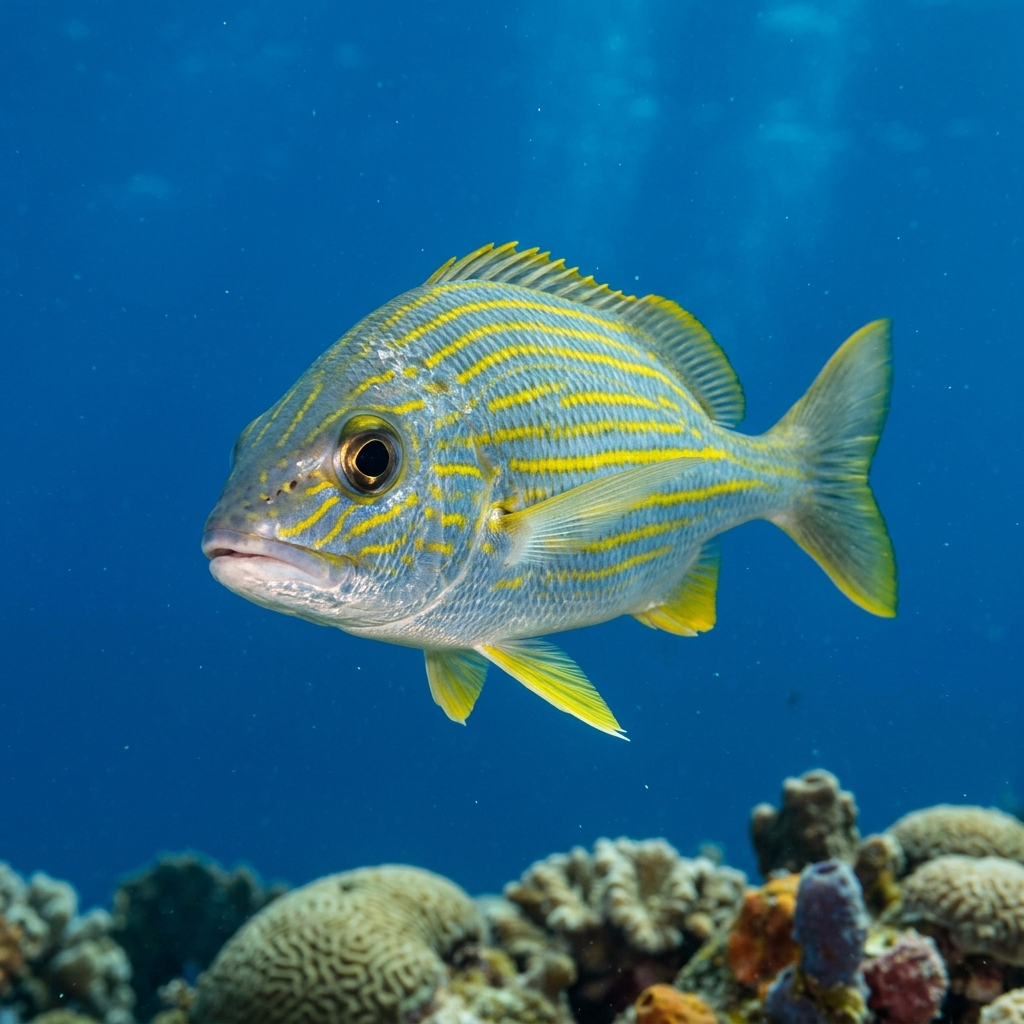
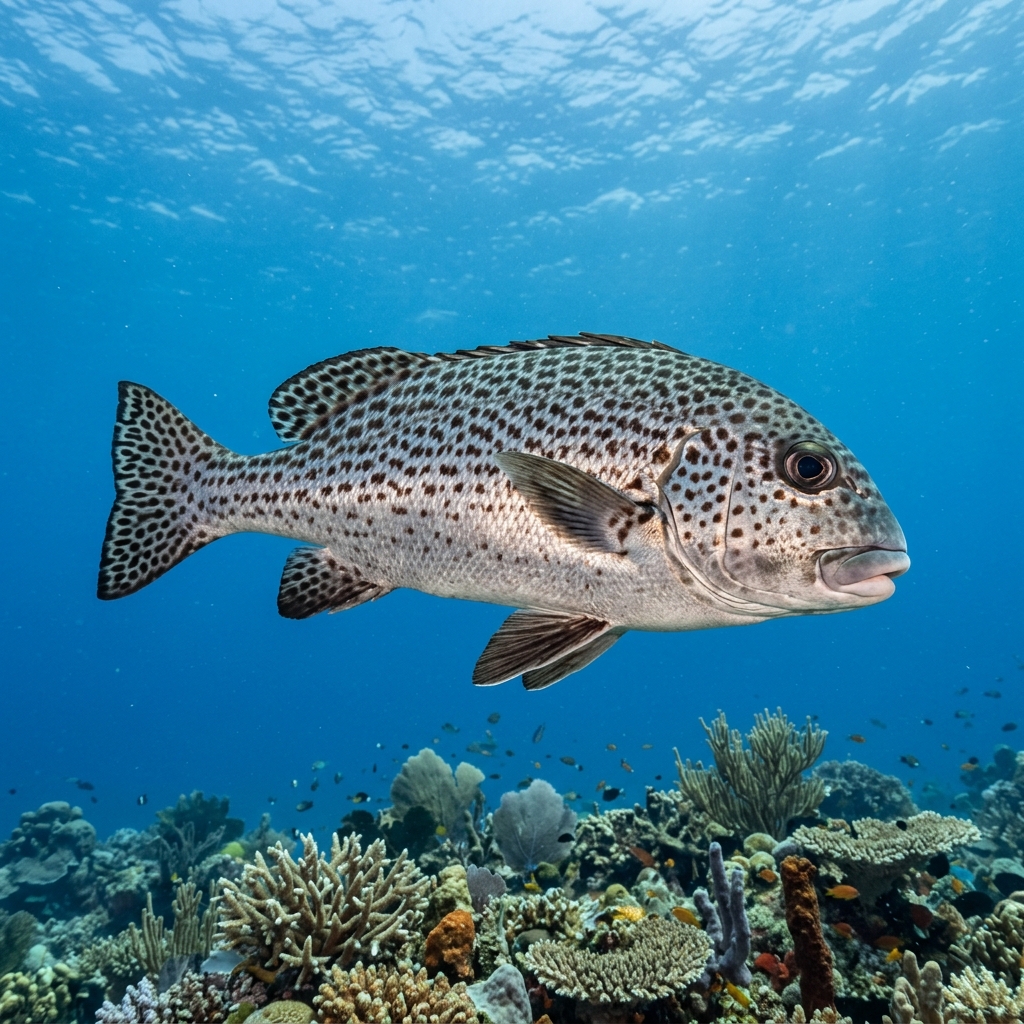
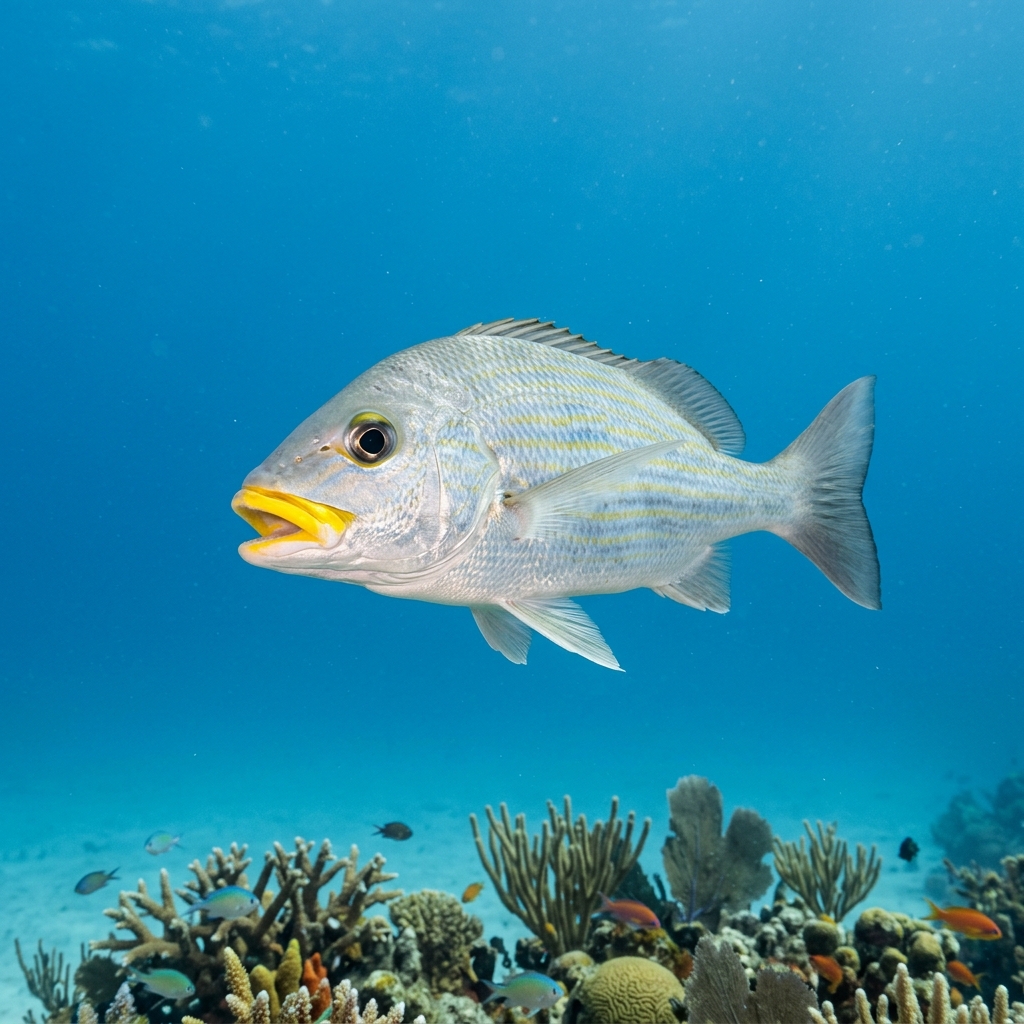
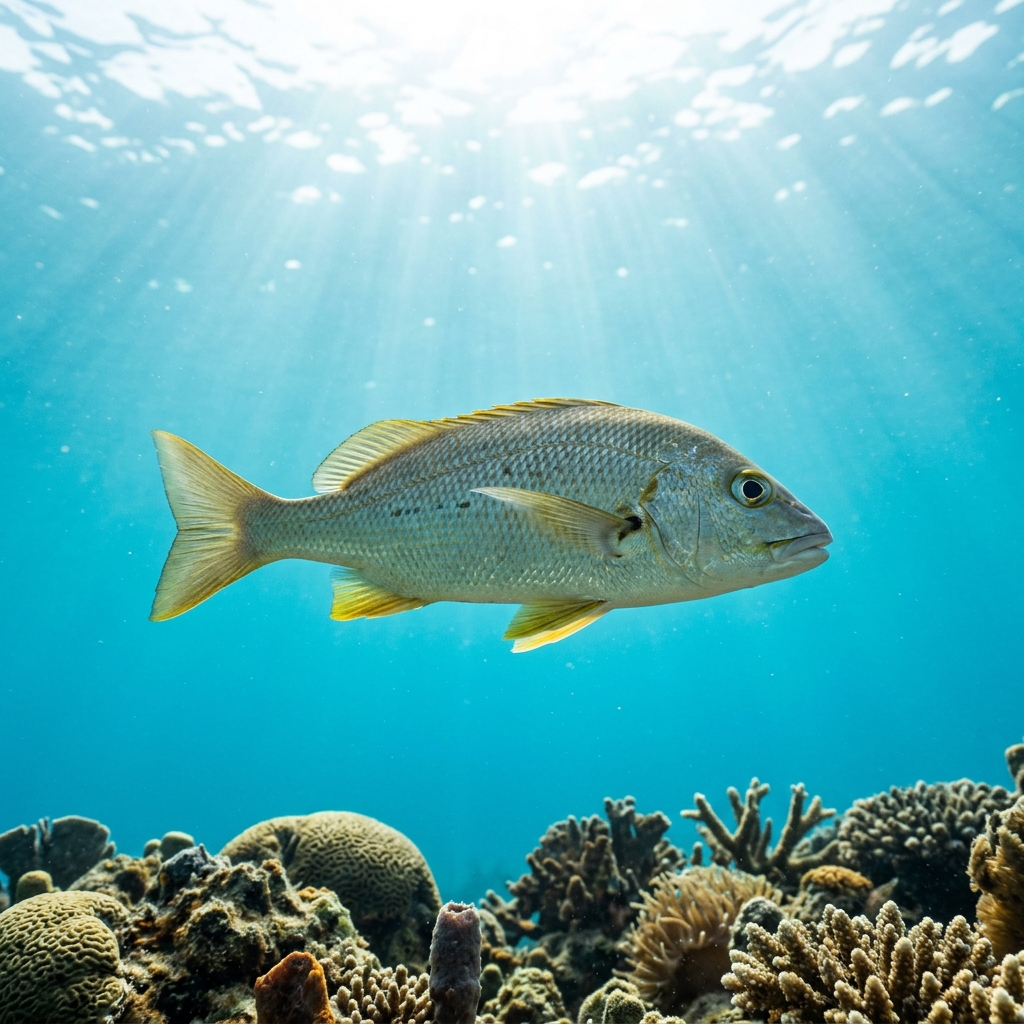
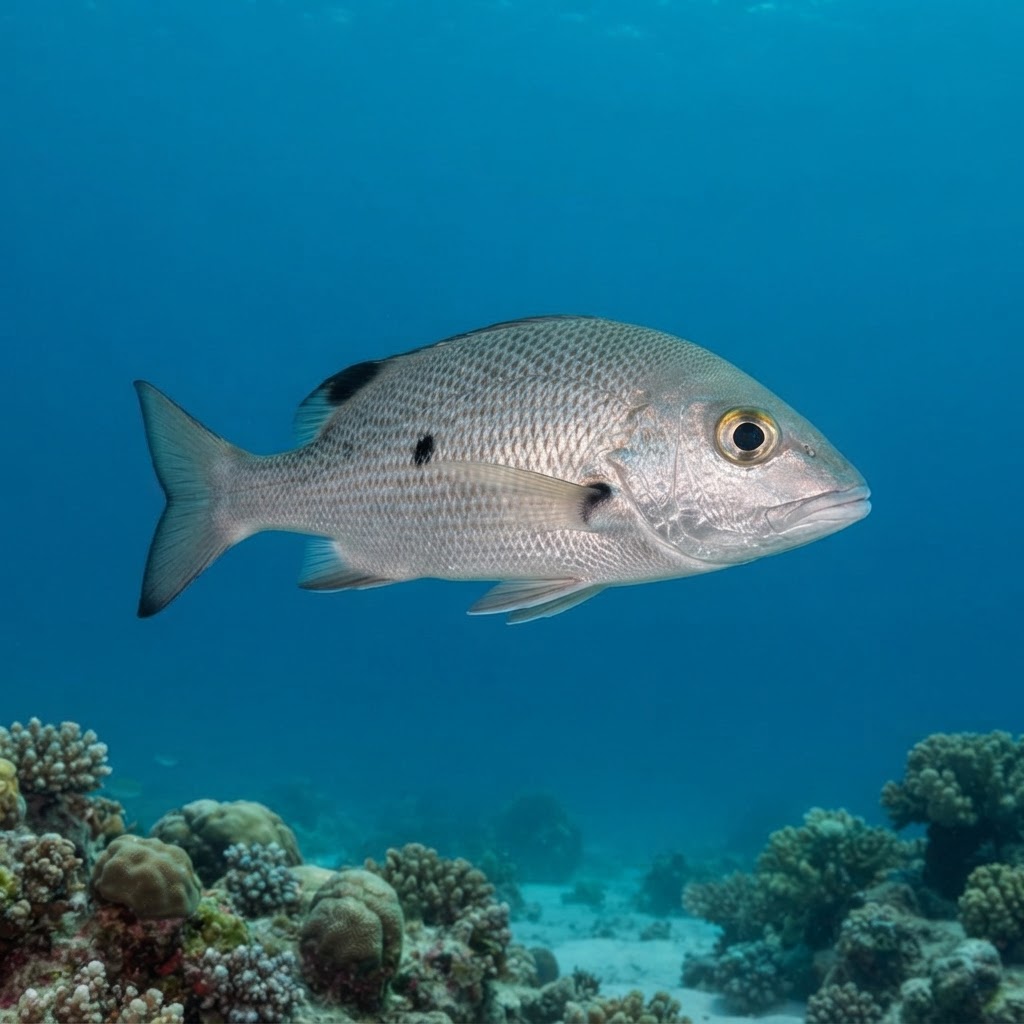
Grows to around 28 cm, with a deep-bodied, slightly compressed grunt shape and a silvery-grey to bronze body marked by faint dusky stripes running along the scale rows. The lips and inside of the mouth show the reddish flush typical of grunts, most visible when it flares at another fish. Look for it hovering close to reef structure rather than out in open water, often in loose company with similar-sized grunts.
Typically found hanging in small, loose groups near reef ledges, coral heads or under overhangs during the day, staying fairly close to structure rather than roaming. Divers usually log it as an uncommon sighting mixed in with other grunts, and it tends to hold its position calmly rather than bolt when approached. Like most grunts it becomes more active over the reef at dusk as it shifts toward feeding.
The name comes from grunt species' habit of producing an audible grunting sound by grinding their pharyngeal teeth, amplified by the swim bladder, something you can occasionally pick up underwater if one is agitated.
No strong seasonal pattern shows up in the data, and with a comfortable range of 25.6 to 28.2 C it's a year-round reef resident across its range rather than a seasonal visitor.
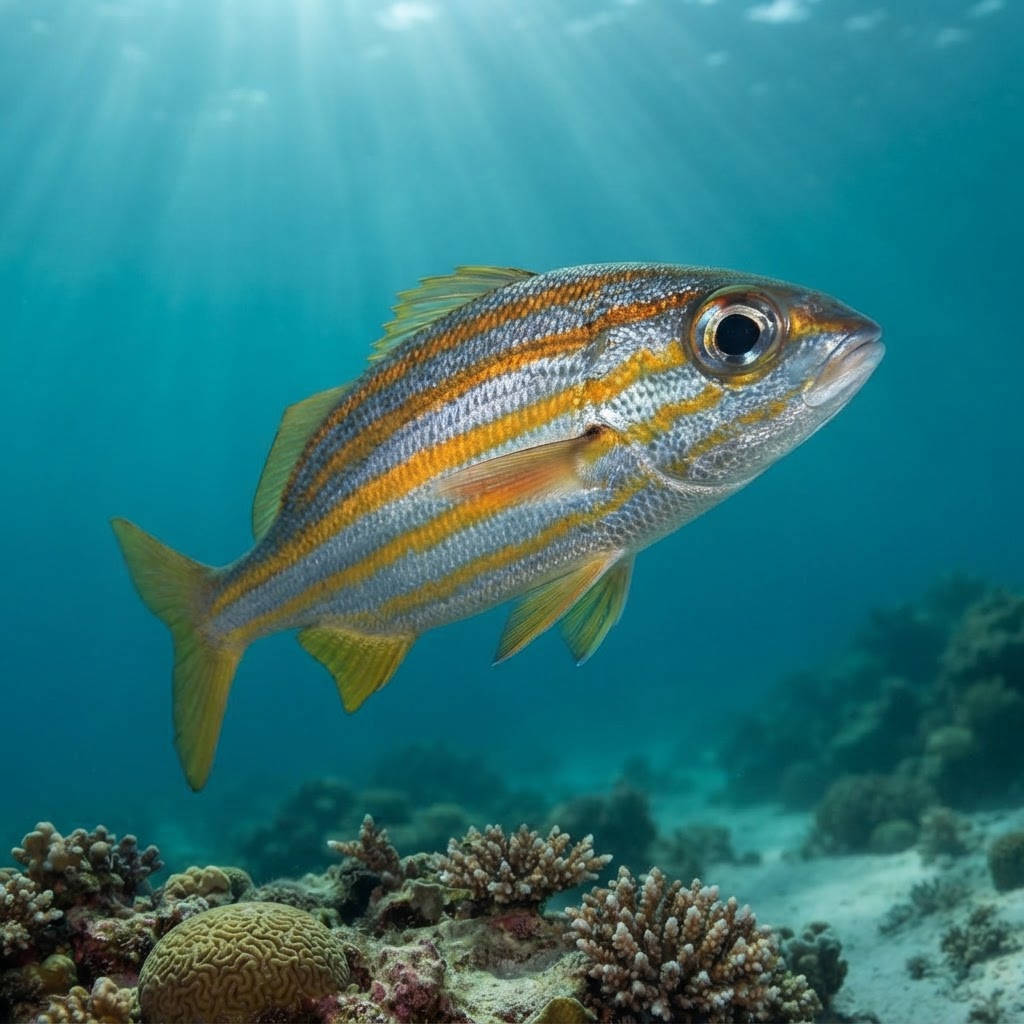
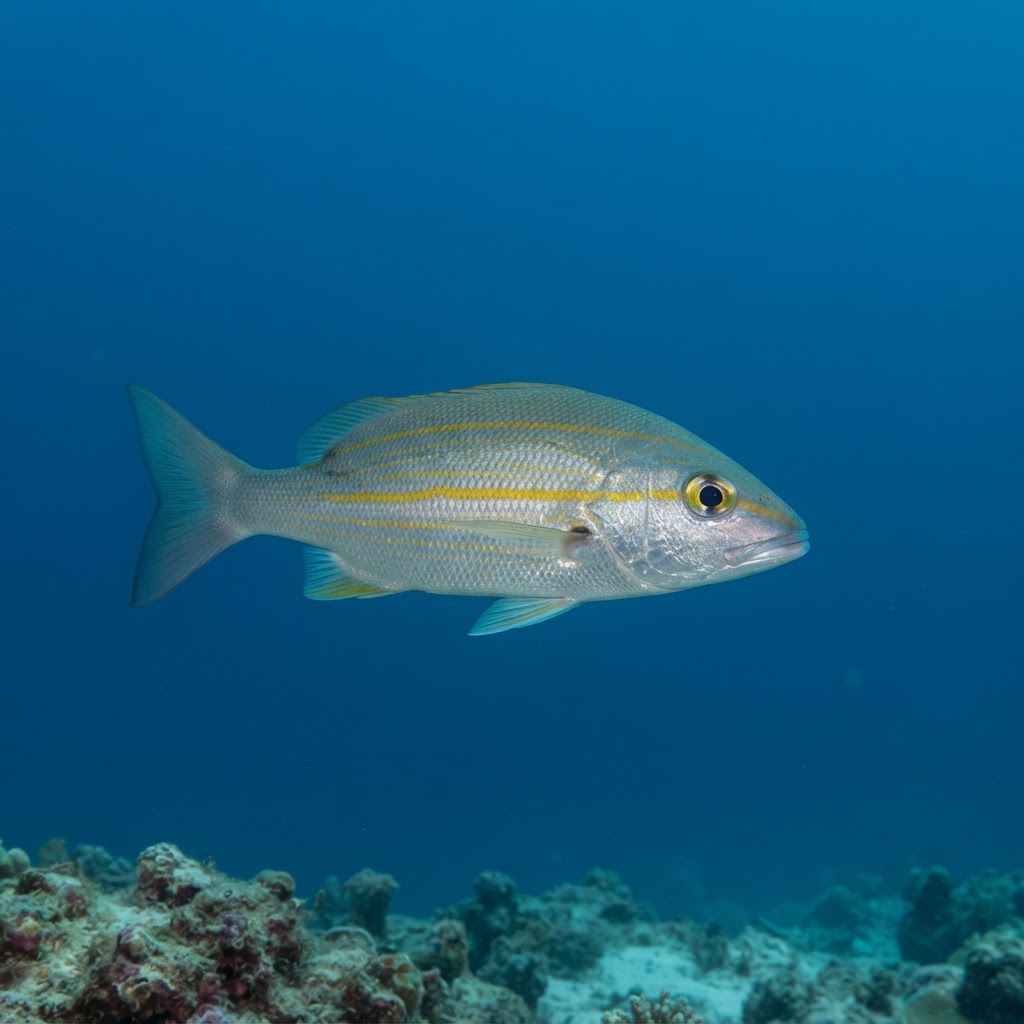
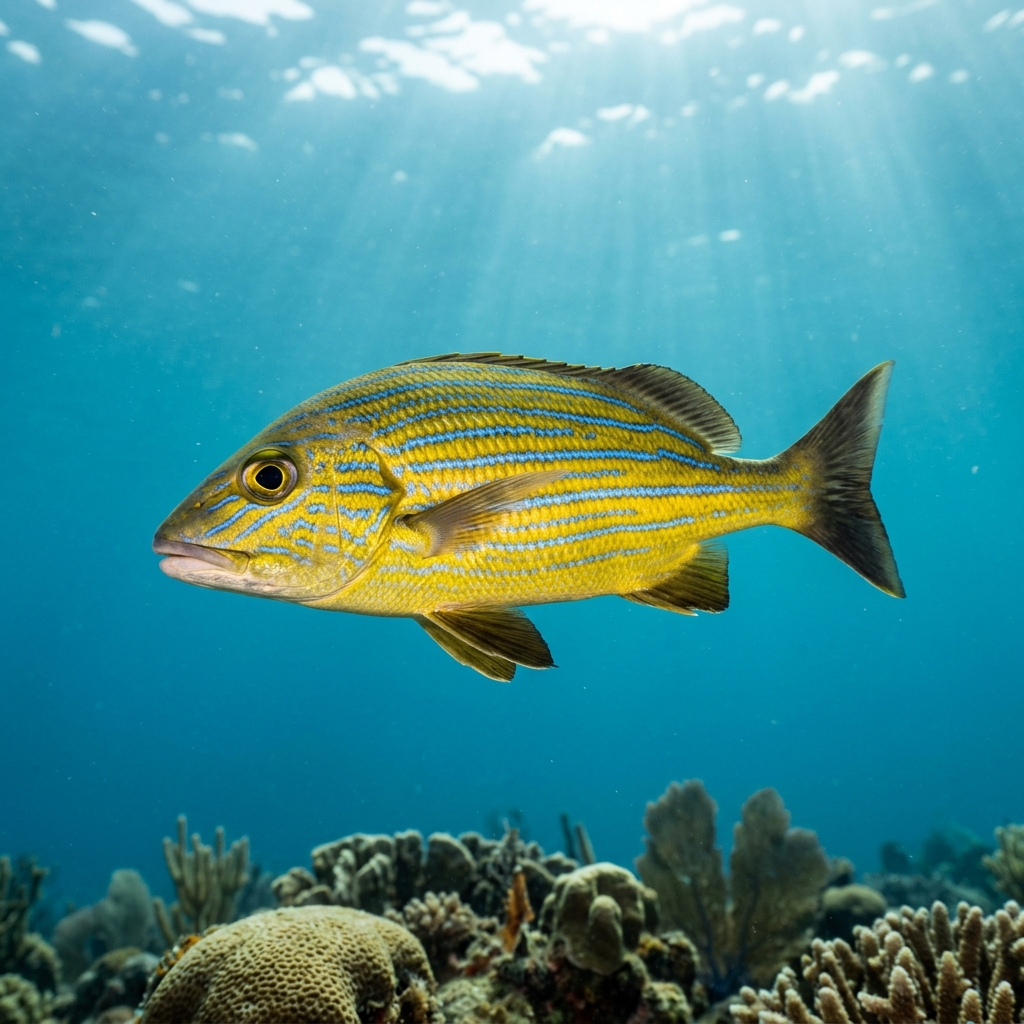
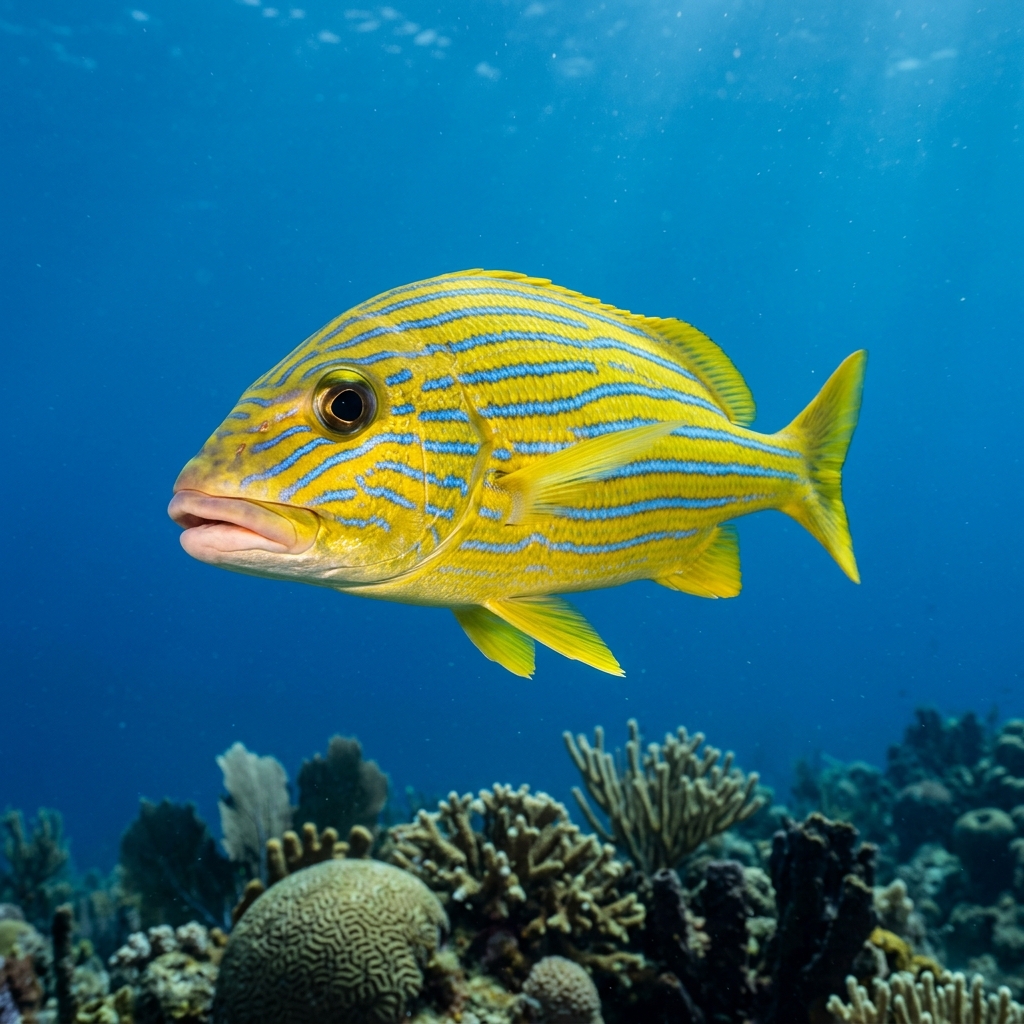
Reef neighbours a diver could mistake it for. Use the identification notes above to tell them apart.
Most reliably logged in Florida and along Mexico's Yucatán Peninsula, which together account for the bulk of recorded sightings. Smaller but consistent populations turn up in Brazil, particularly around Fernando de Noronha and Bahia, plus Western Cuba, Puerto Rico's west coast, Grand Cayman, Bayahibe in the Dominican Republic and reefs off Jamaica.
Mapping where Sailors Choice is logged…
Florida and Mexico's Yucatán Peninsula are the most consistent places divers log it, with additional sightings around Fernando de Noronha and Bahia in Brazil, Western Cuba, Grand Cayman, Puerto Rico's west coast and Bayahibe in the Dominican Republic.
There's no clear seasonal spike in sightings, and it lives comfortably in 25.6 to 28.2 C water year-round, so any time you're diving warm Caribbean or western Atlantic reefs is fair game.
Look for a silvery-grey, deep-bodied fish around 28 cm with faint dusky stripes and a reddish mouth lining, usually hovering near reef structure in small loose groups rather than swimming in open water.
They typically reach about 28 cm, a modest, mid-sized grunt you'll usually see at that size or a little smaller on the reef.
No, they're not considered dangerous to divers and simply hold near reef structure, showing no aggressive behaviour toward people in the water.
Site and sighting data is aggregated from diver logs, iNaturalist and GBIF. For taxonomy and conservation status:
Bluestriped Grunt
1,907 sites