Haemulon sciurus
Find bluestriped grunts year-round on Caribbean reefs from the Yucatán to Bonaire. Warm water, bold blue stripes, and daytime schooling make them easy to spot.
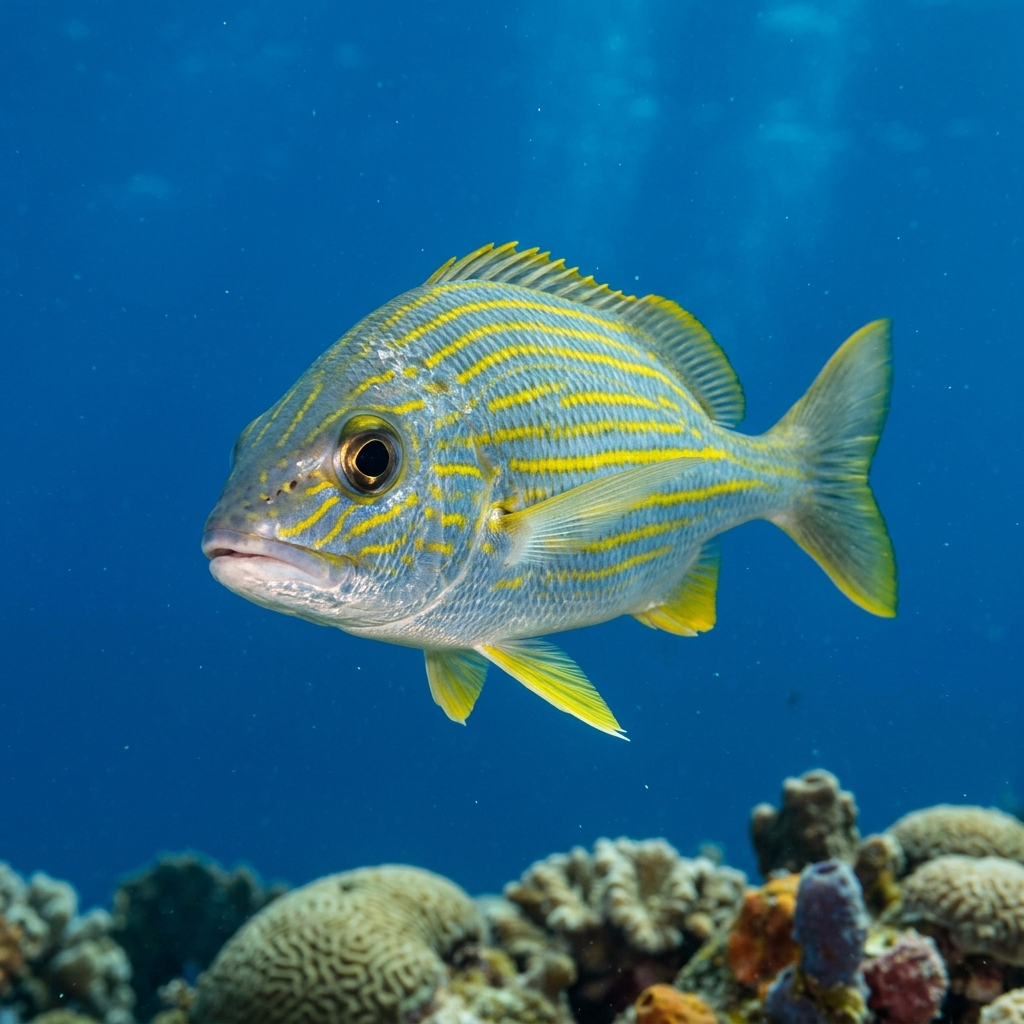
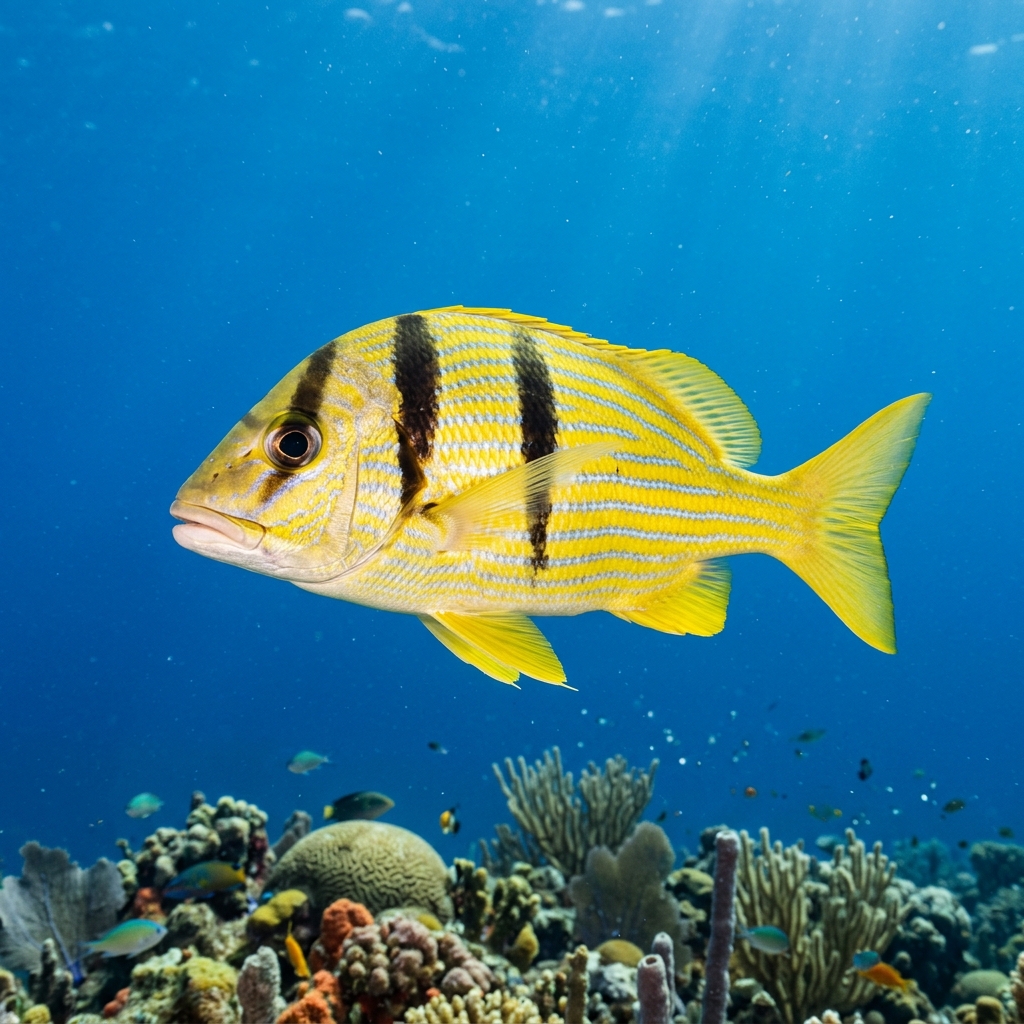
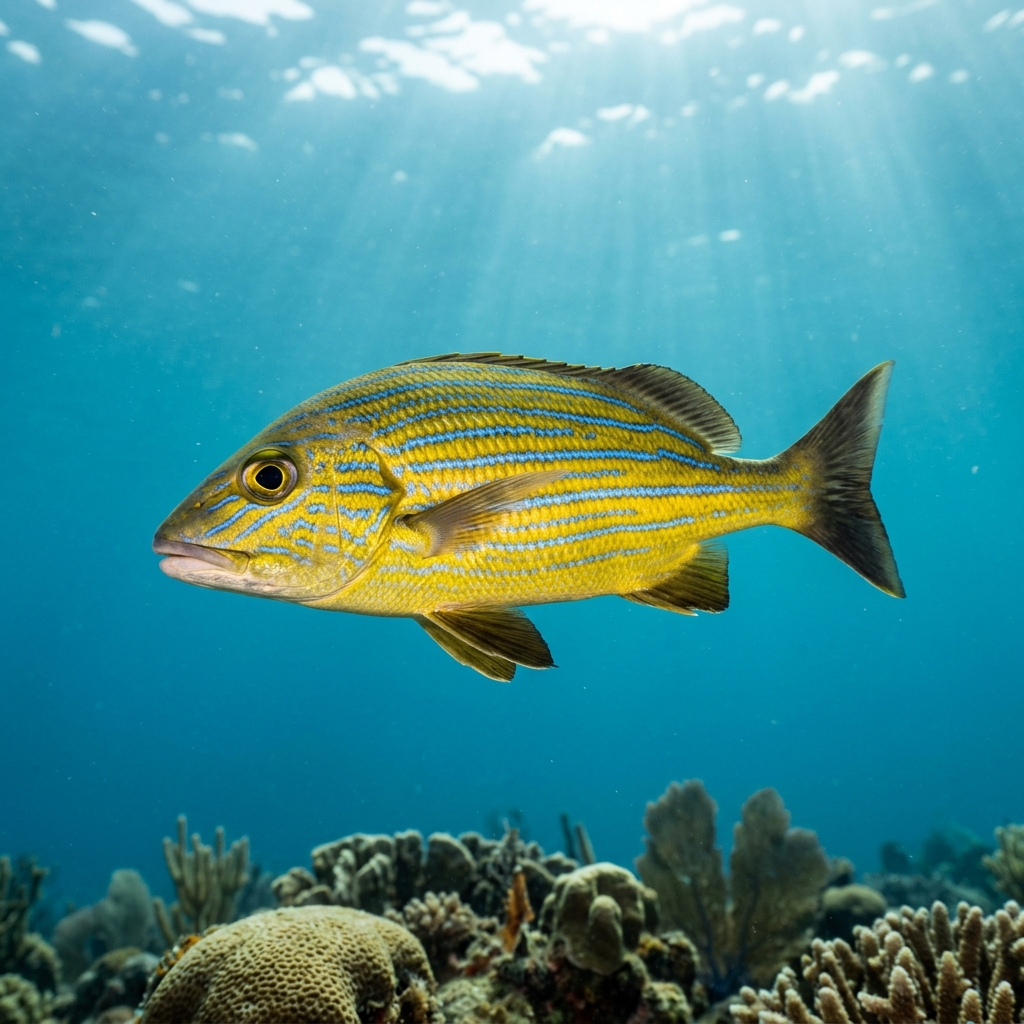
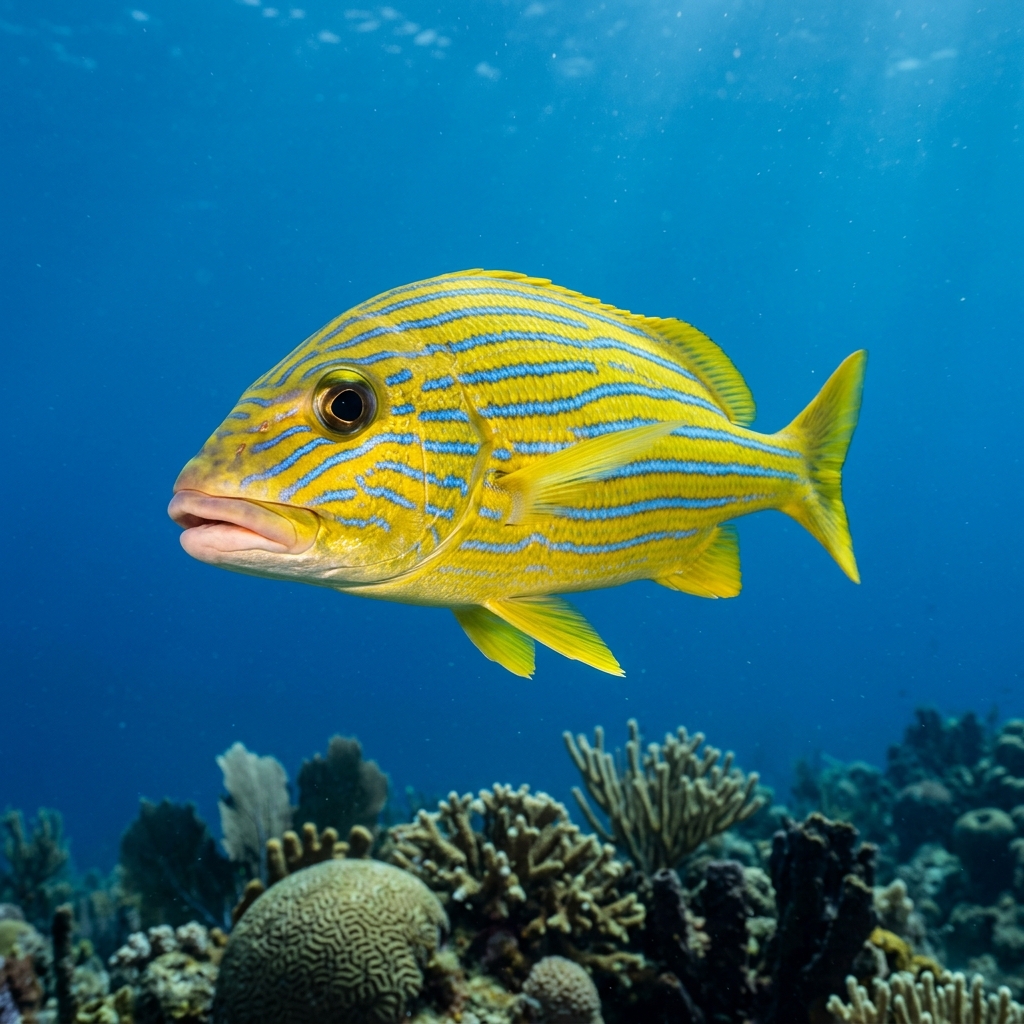
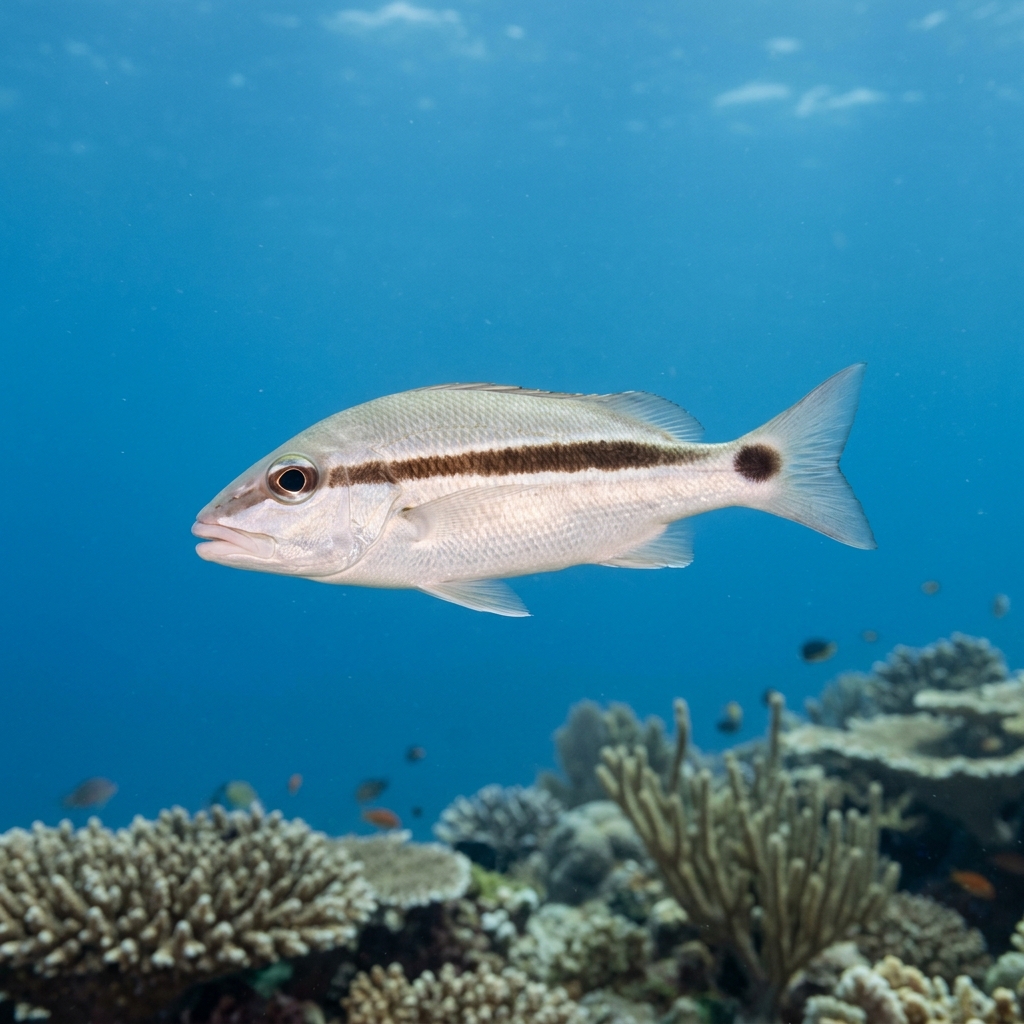
Bold blue and yellow horizontal stripes running the full length of the body are the giveaway, even from a distance. Adults reach around 30 cm and have a deep, compressed body typical of grunts, with a pale yellow tail and fins that carry the same golden hue. The inside of the mouth is red-orange, briefly visible when individuals open their jaws. Juveniles look entirely different: pale with a single dark lateral stripe and a dark spot at the caudal-fin base.
During the day, bluestriped grunts school tightly near coral heads, under ledges, or in the shade of larger reef structures, often sitting relatively still while divers pass through. As the light fades toward dusk, the schools break apart and individuals move out across sandy rubble and seagrass to hunt small invertebrates, a crepuscular (active at dawn and dusk) pattern worth timing a dive around. They are generally unfazed by divers at a respectful distance, though larger fish may edge away from an approaching diver who gets too close.
The common name 'grunt' comes from the sound these fish produce by grinding their pharyngeal teeth (teeth located in the throat) together, with the swim bladder amplifying the noise. You can sometimes hear the sound underwater during encounters.
Present year-round across its Caribbean range, which fits neatly with its preference for water between about 25.5 and 28 °C on tropical reefs. There is no concentrated season to plan around.
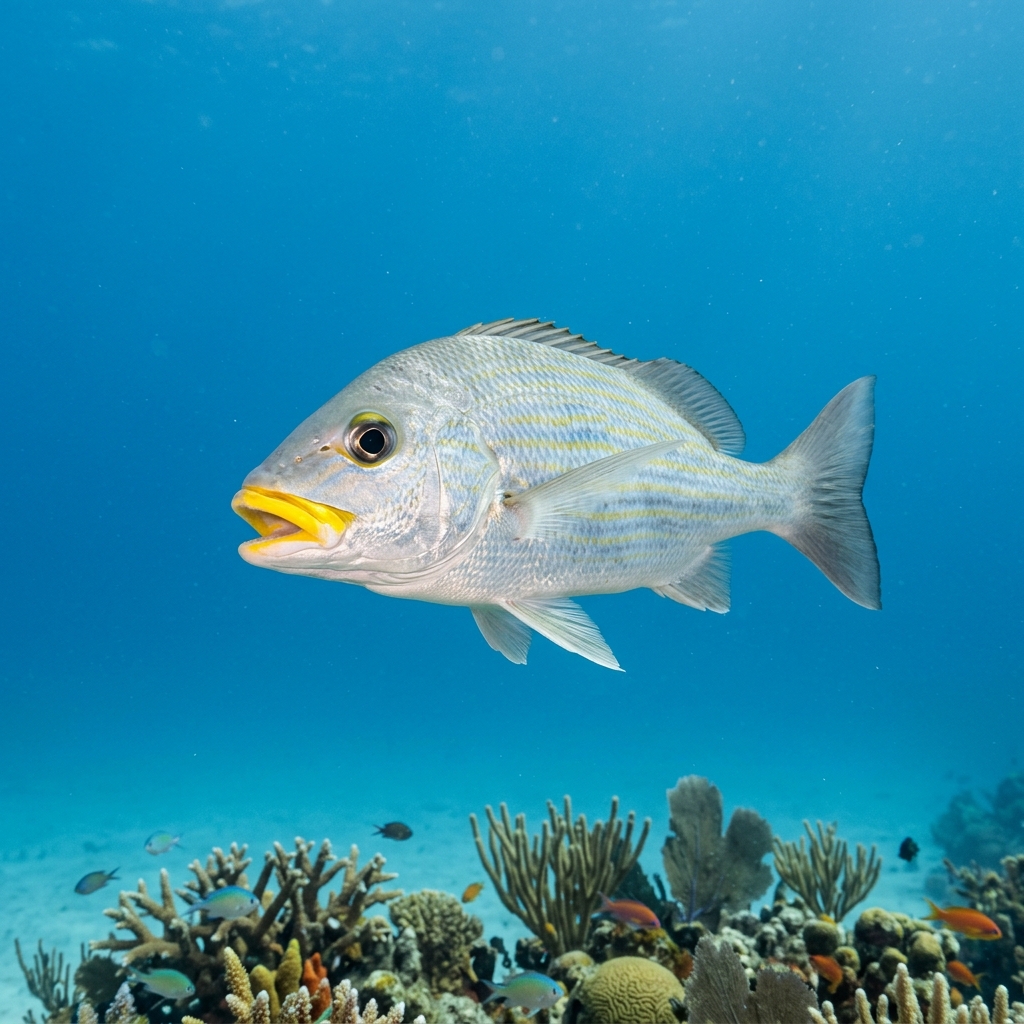
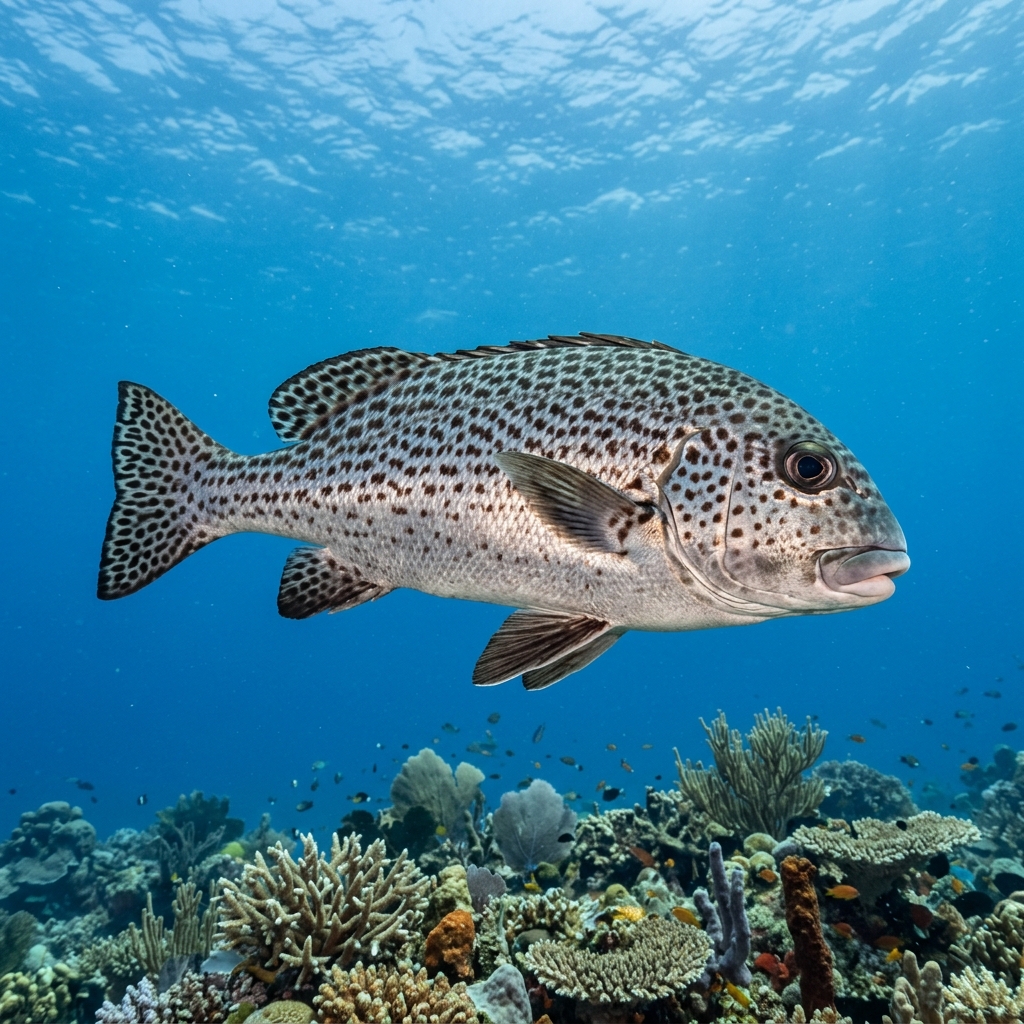
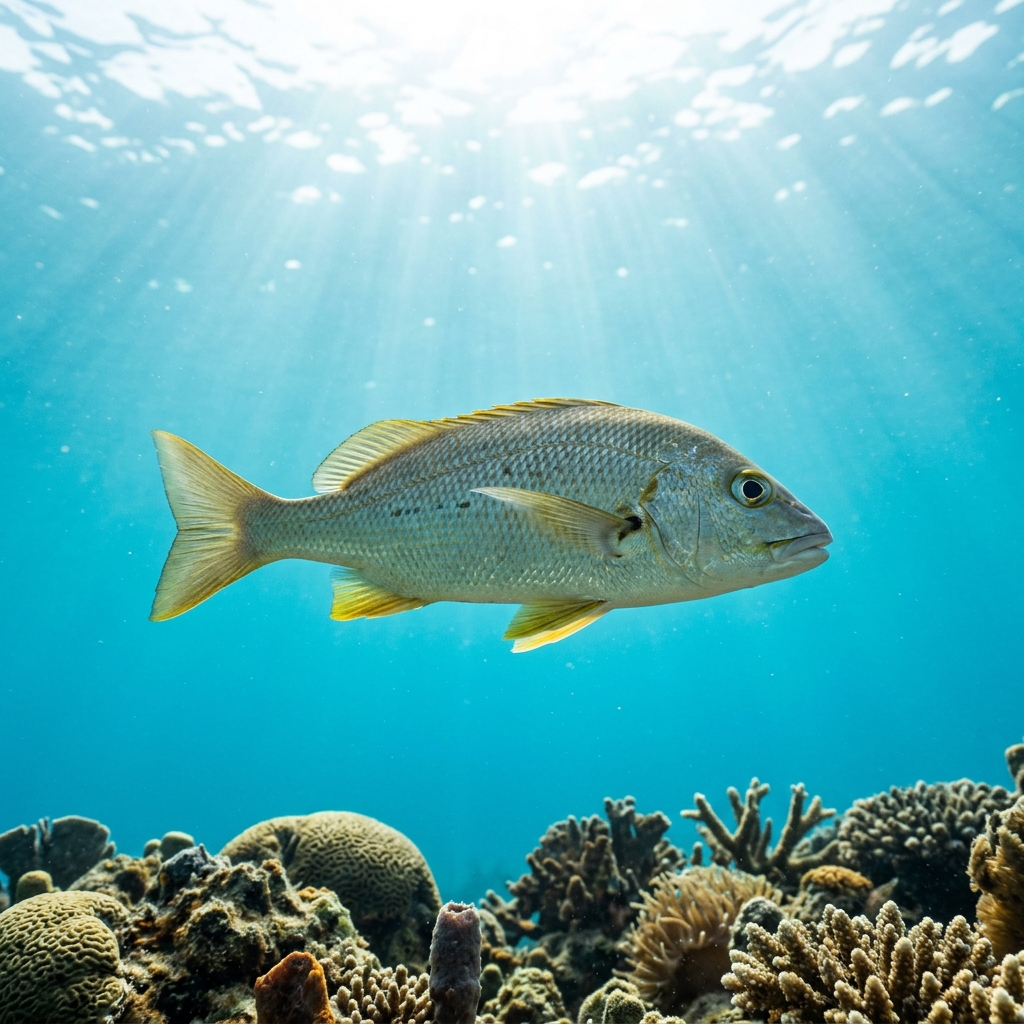
Reef neighbours a diver could mistake it for. Use the identification notes above to tell them apart.
Most commonly logged across the wider Caribbean, with the strongest presence in the Yucatán Peninsula and Florida's southeast reefs, followed closely by Roatán in Honduras, Grand Cayman, and Klein Bonaire. Cuba, the Bahamas, and Belize also offer reliable sightings, making this effectively the reef grunt you will encounter throughout the tropical western Atlantic.
Mapping where Bluestriped Grunt is logged…
They are most reliably encountered across the Caribbean, with strong populations in the Yucatán Peninsula, Florida, Roatán, Grand Cayman, and Bonaire. Cuba, the Bahamas, and Belize round out the top destinations. Sightings are most commonly recorded in shallow to mid-depth reef settings throughout the tropical western Atlantic.
Any time of year. They are present year-round on Caribbean reefs, with no seasonal peak. Their preferred water temperatures sit between roughly 25.5 and 28 °C, conditions that persist on these tropical reefs throughout all seasons.
Look for the parallel blue and yellow stripes running head to tail on a 25 to 30 cm fish with a golden-tinged tail. The French grunt has similar colouring but its stripes run at oblique angles above the lateral line rather than straight. The white grunt is plainer, with a more muted pattern and lacks the vivid blue tones.
They typically reach around 30 to 32 cm. On the reef they feel like a medium-sized fish, noticeably bigger than a small wrasse but compact compared to a large snapper.
Grunts produce audible sounds by grinding their pharyngeal teeth together inside the throat, with the swim bladder acting as a resonating chamber. The result is a low grunting noise that is sometimes audible to divers during close encounters, especially when fish are disturbed.
No. They pose no threat to divers. Larger individuals may edge away or show mild territorial behaviour near favoured feeding spots at dusk, but this amounts to nothing more than keeping their distance.
Site and sighting data is aggregated from diver logs, iNaturalist and GBIF. For taxonomy and conservation status:
White Grunt
1,680 sites