Pomadasys incisus
Spot Bastard Grunt in the Mediterranean and Canary Islands. Most sightings come from Greece, Italy and Gran Canaria. Here's when and where to look.
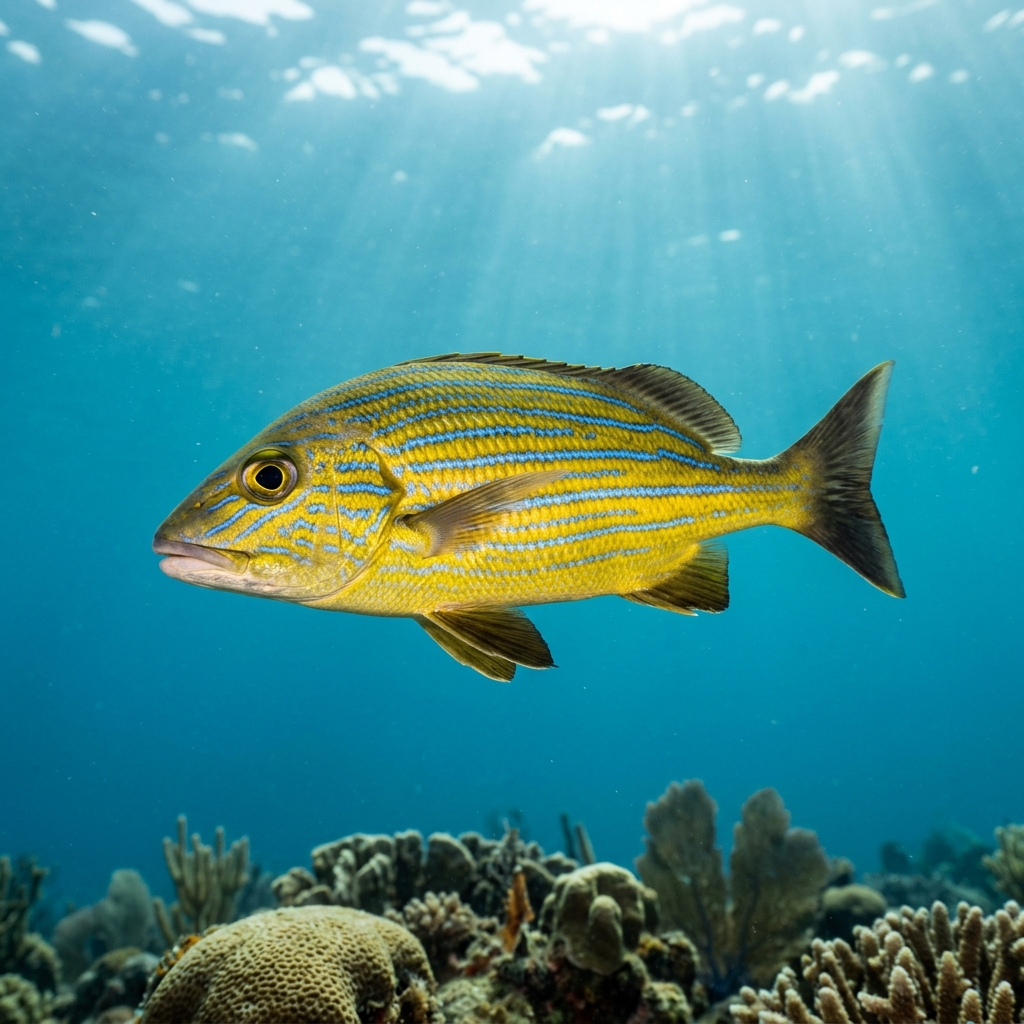
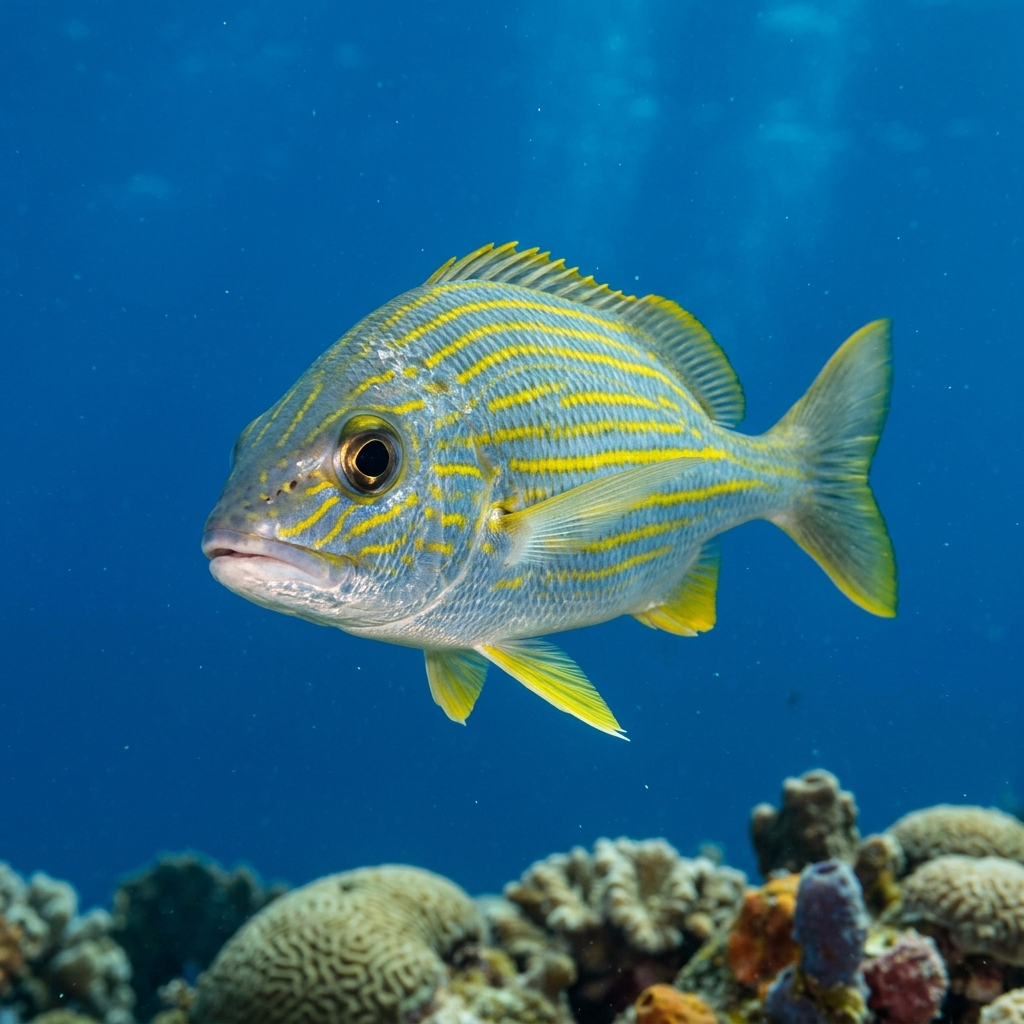
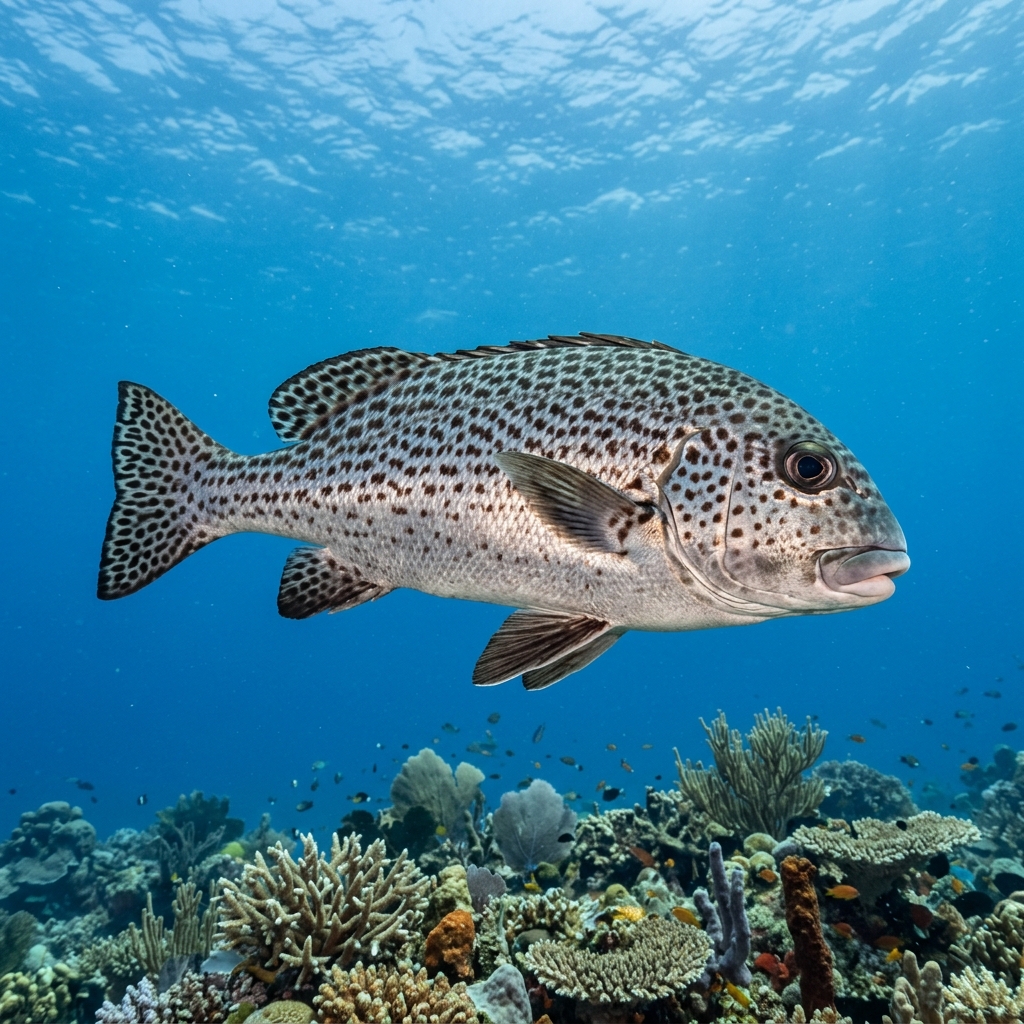
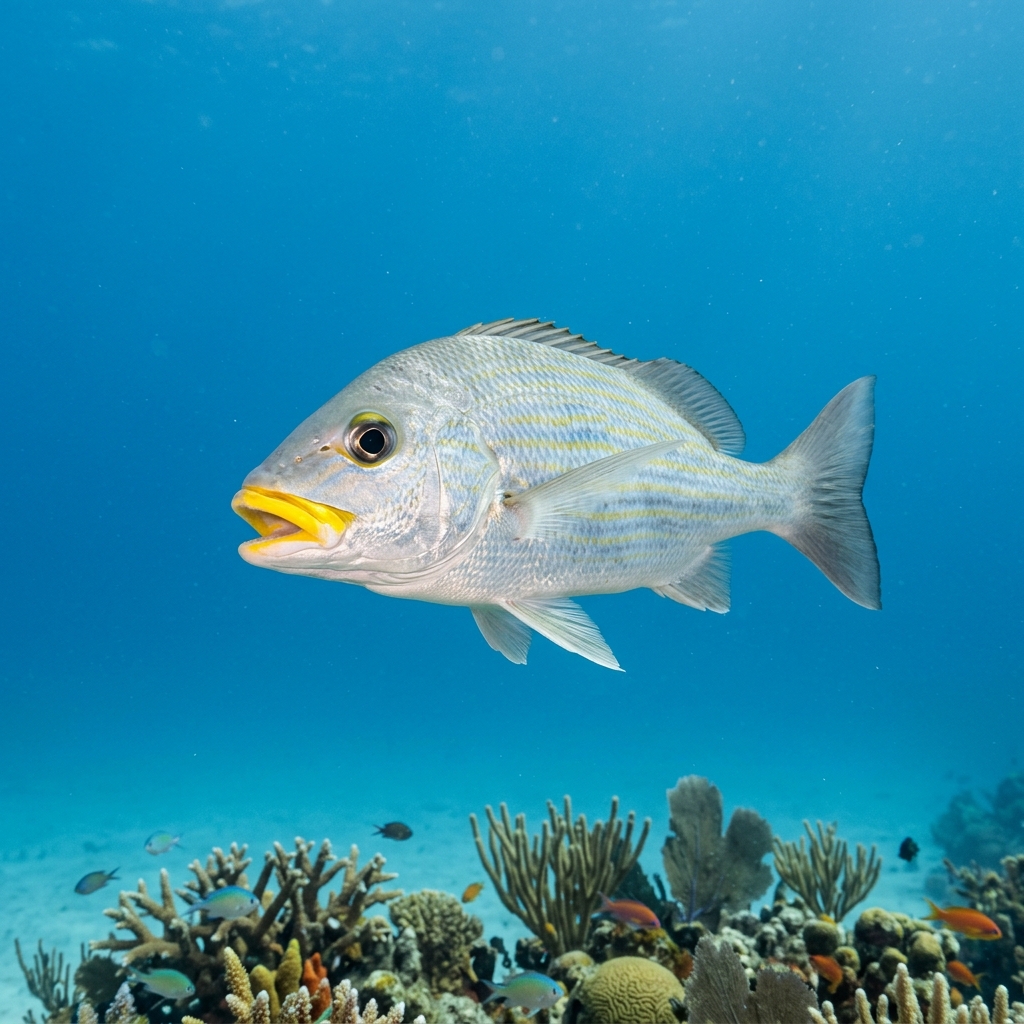
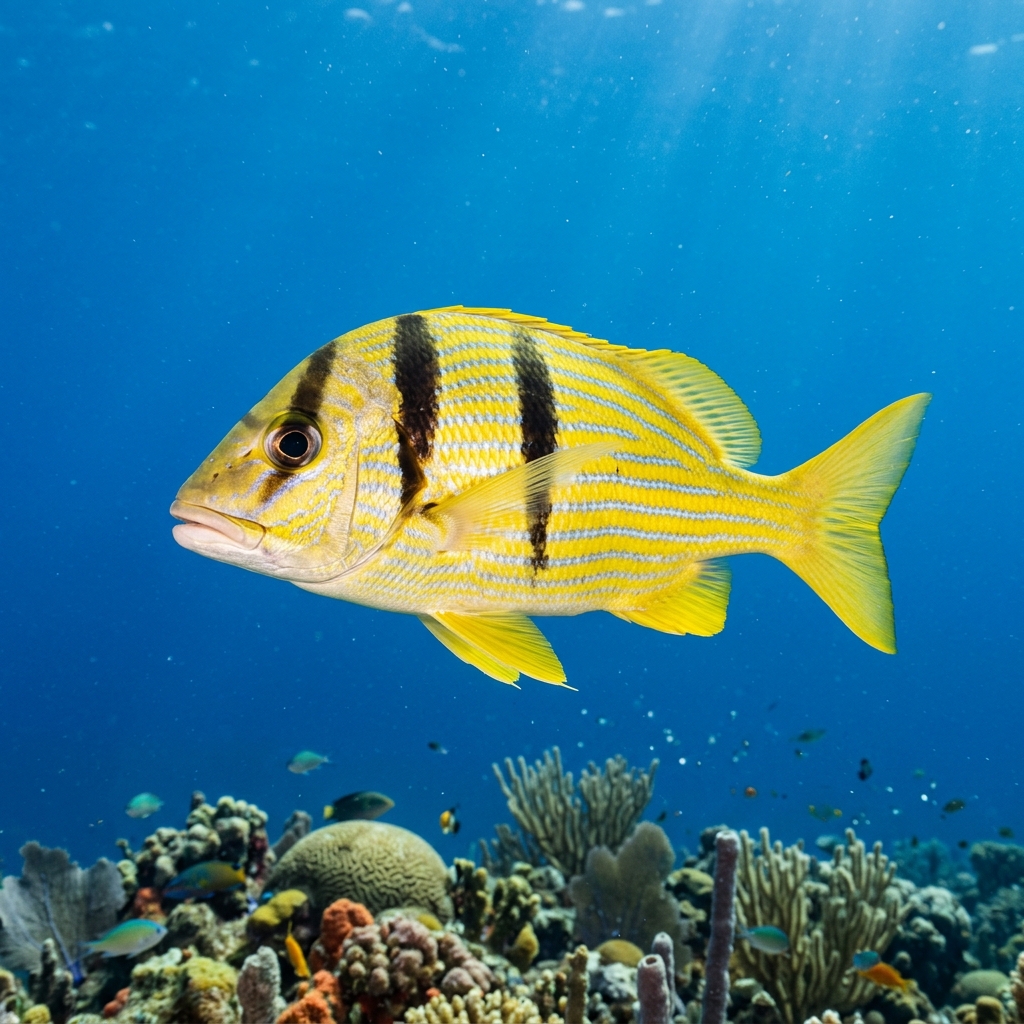
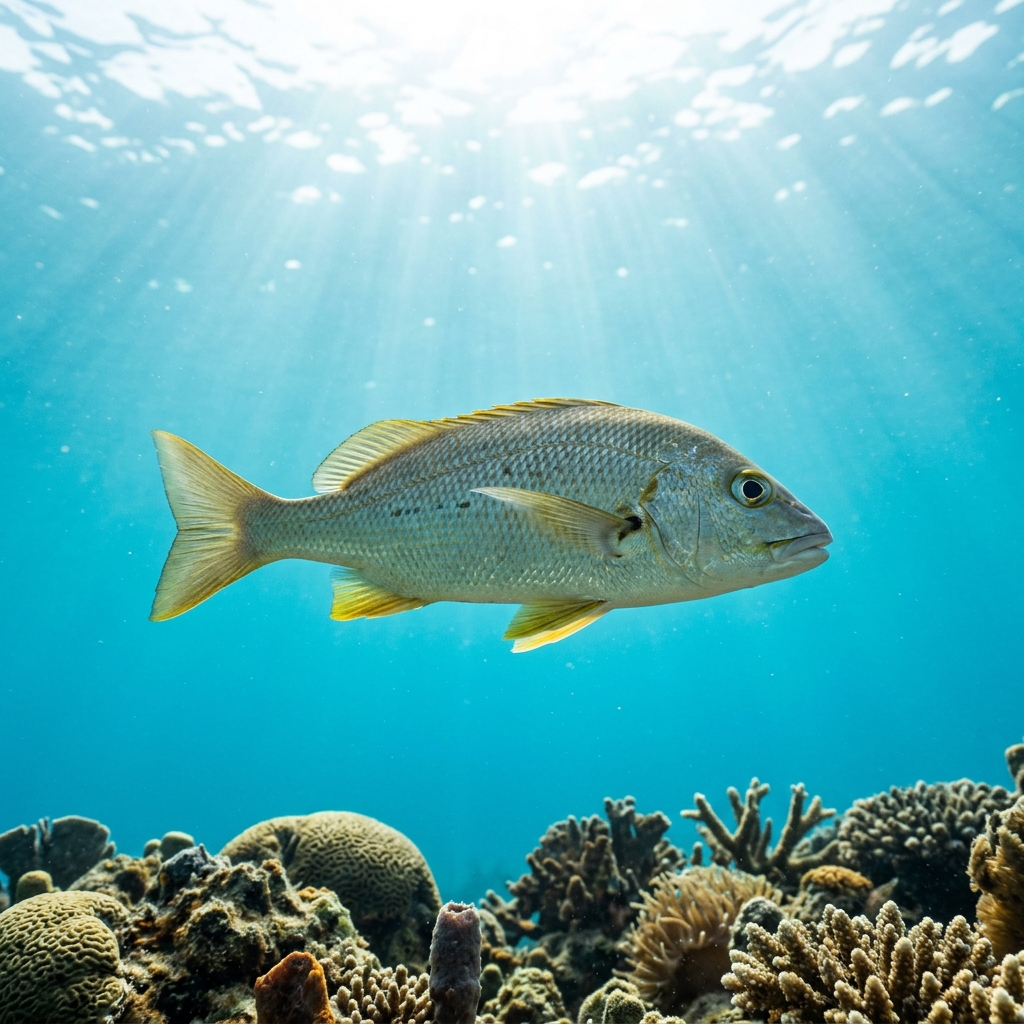
A stocky, deep-bodied fish reaching around 35-40 cm, with silvery-grey flanks that often carry faint, darker streaking along the sides. The mouth is notably thick-lipped, a haemulid (grunt family) trait that helps with its bottom-feeding lifestyle. Look for the moderately forked tail and the blunt, rounded snout to separate it from slimmer reef fish at similar depths. Juveniles tend to be paler with more distinct patterning, but adults are the form most divers encounter.
Bastard grunts are demersal (bottom-associated) fish, typically encountered close to rocky or sandy substrates anywhere from shallow reefs down to 100 m, though most diver sightings occur in the 10-30 m range. They are generally unhurried and will hold position or move slowly away when approached, making observation straightforward if you descend calmly. Like other grunts, they are most active during crepuscular (dawn and dusk) periods when they forage for small invertebrates and other benthic prey.
The common name comes from historical usage meaning 'irregular' or 'mixed-breed', referring to this species sitting slightly apart in morphology from its close haemulid relatives, not from any aggressive character trait.
In northern-hemisphere waters, sightings concentrate in two windows: February to March and then again from July through to December. The July, December period, when Mediterranean surface temperatures climb into the mid-to-upper 20s °C, tends to produce the bulk of summer encounters.
The bastard grunt is a Mediterranean and eastern Atlantic species, with the strongest diver-reported sightings coming from Greece (particularly Attica), Italy (Sardinia, Tuscany, Sicily and Lampedusa), and the Canary Islands, especially Gran Canaria and Tenerife. Spain's Costa Blanca, Croatia's Central Dalmatia, Turkey's Aegean Coast, and Cyprus also feature regularly in sighting logs. Outside Europe, it has been recorded across a wide range of countries, but the Mediterranean hotspots are by far the most reliable places to find it.
Mapping where Bastard Grunt is logged…
Bastard grunt are most reliably logged in the Mediterranean, with Greece (especially Attica), Italy (Sardinia, Sicily and Lampedusa), the Canary Islands (Gran Canaria and Tenerife), Spain's Costa Blanca, Croatia, Turkey's Aegean Coast and Cyprus all featuring strongly in diver records.
In the Mediterranean and eastern Atlantic, sightings peak in two seasons: late winter (February to March) and a longer summer-to-autumn window from July through December. The warmer months, when water temperatures approach the upper end of the species' 18-28 °C comfort range, tend to produce the most encounters.
Look for a stocky, silvery-grey fish around 35-40 cm long with a blunt rounded snout and thick lips, hovering close to rocky or sandy bottom. The deep body profile and characteristic grunt-family mouth distinguish it from slimmer reef species at the same depth.
Typical adults are around 37 cm. Underwater they appear as a medium-sized, noticeably deep-bodied fish, roughly the length of a forearm.
No. The bastard grunt is currently assessed as Least Concern on the IUCN Red List, meaning populations are considered stable across its range.
Grunts in the family Haemulidae produce audible grunting sounds by grinding their pharyngeal teeth (teeth located in the throat), with the swim bladder amplifying the noise. The bastard grunt shares this behaviour with its relatives, and you may actually hear it if you are close enough in calm conditions.
Site and sighting data is aggregated from diver logs, iNaturalist and GBIF. For taxonomy and conservation status:
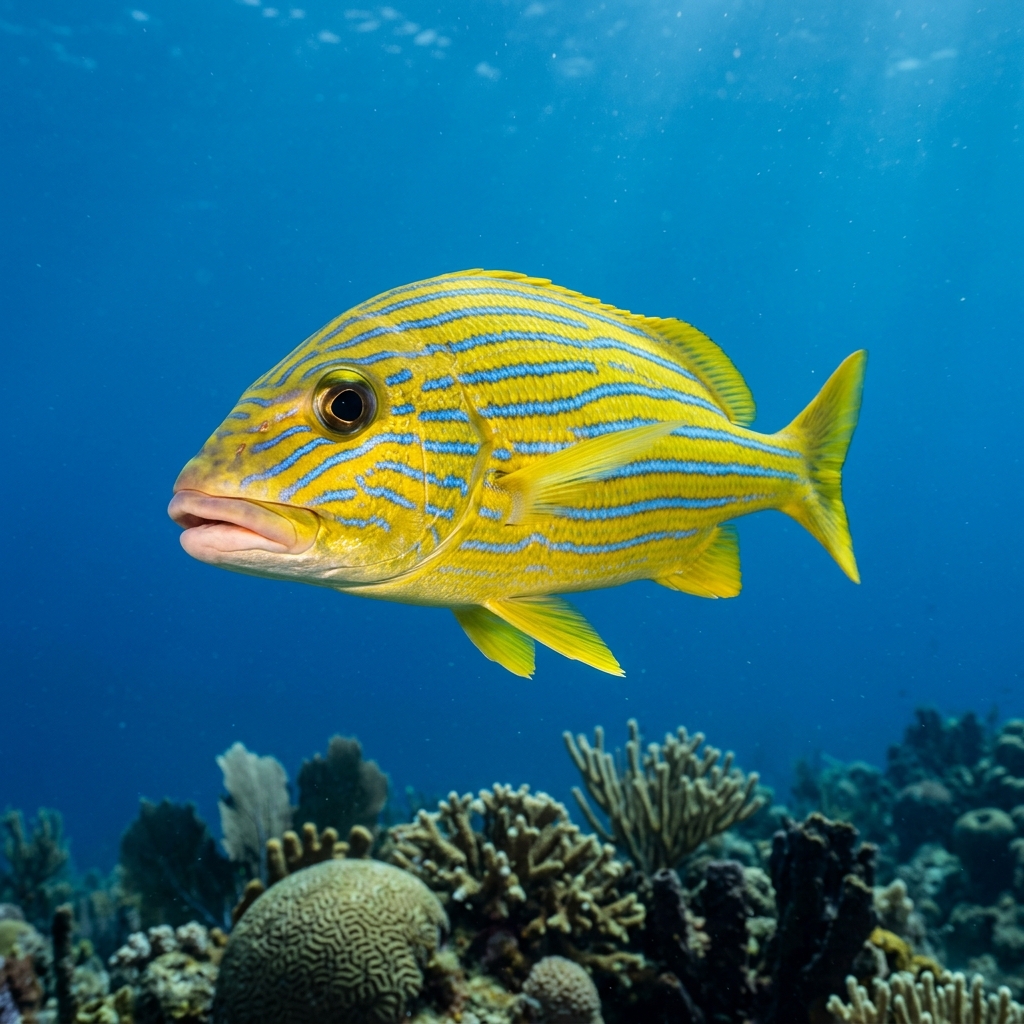
Bluestriped Grunt
1,907 sites