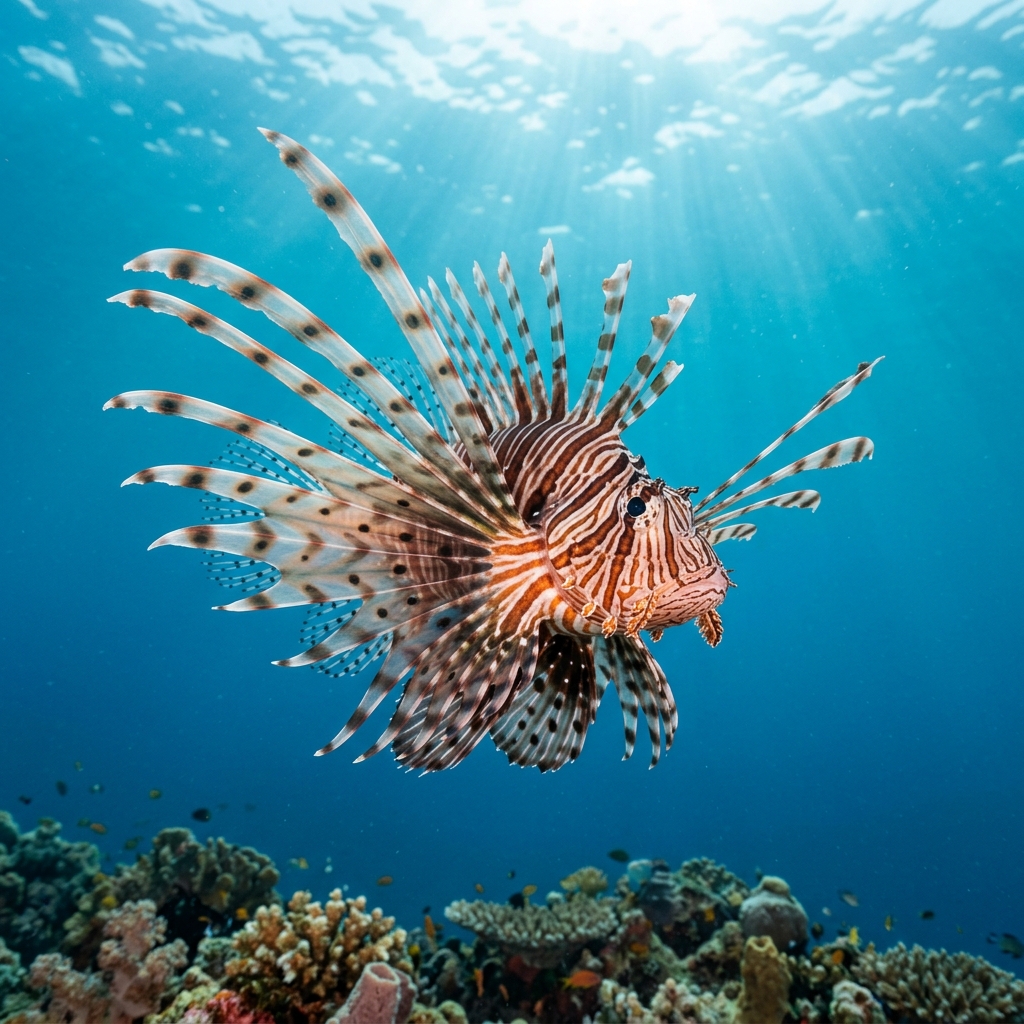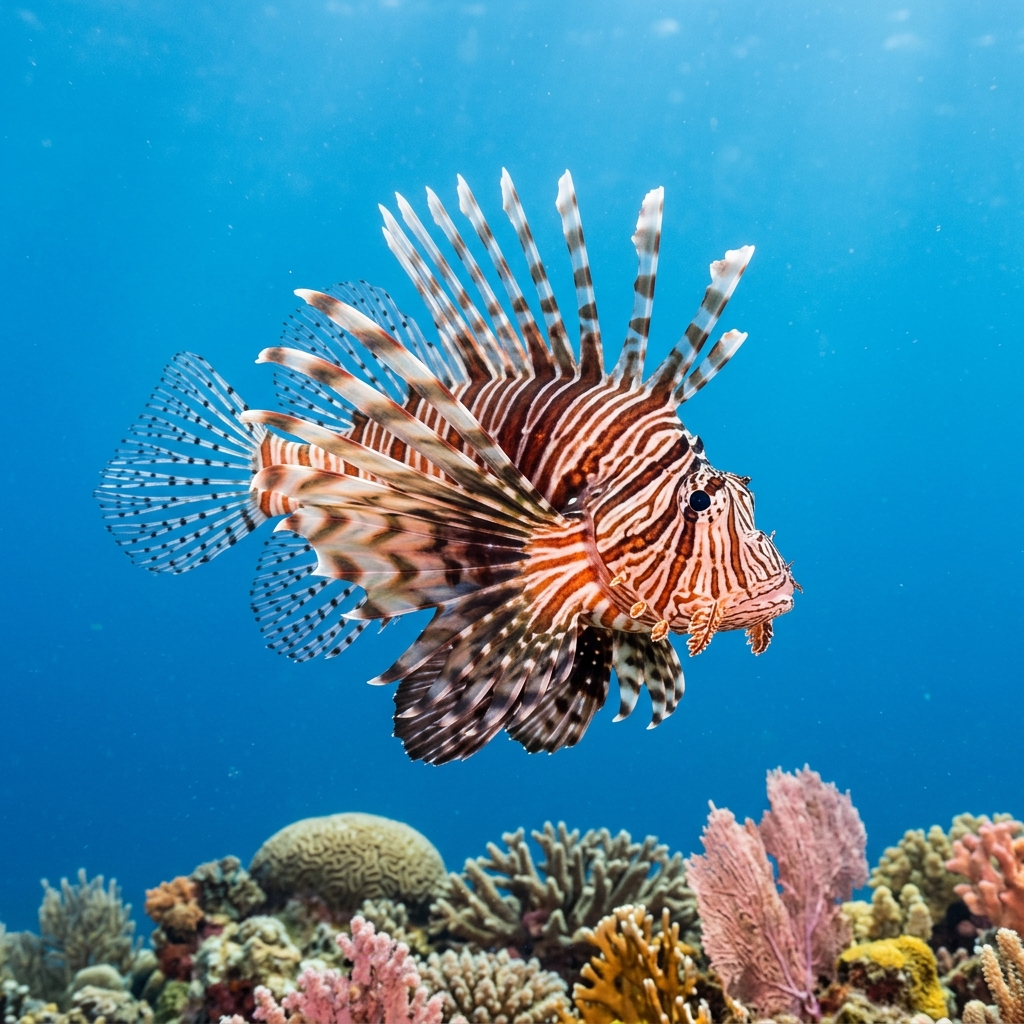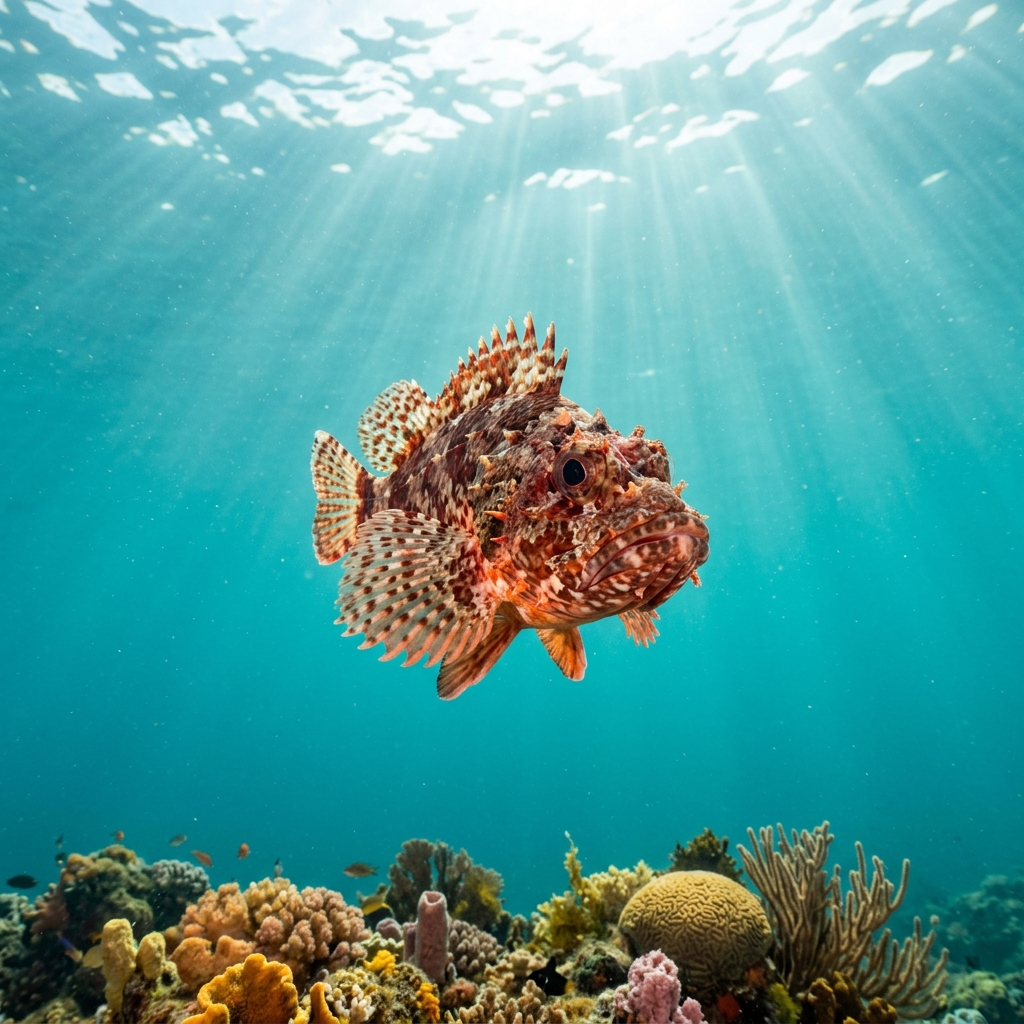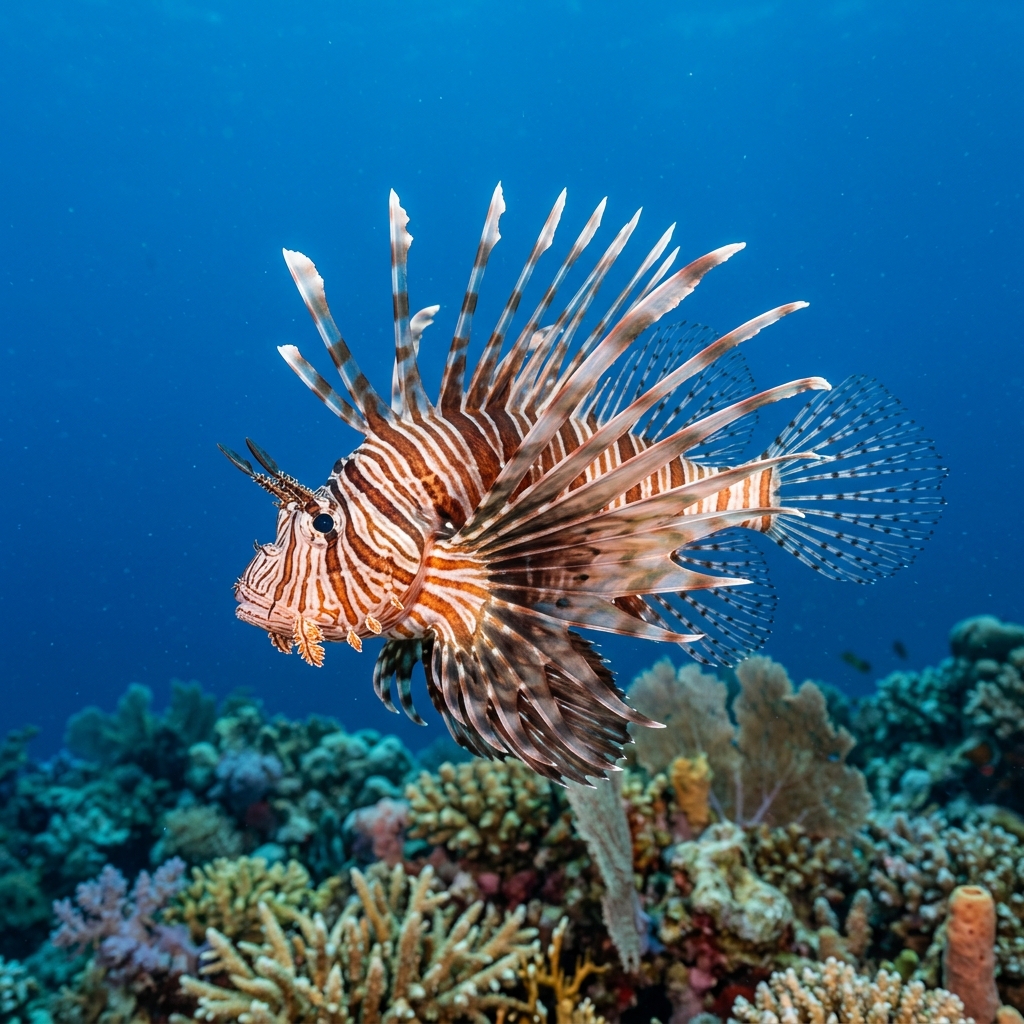
Rhinopias aphanes
Frilly, warty and almost invisible on the reef - here's how to actually find a Lacey Scorpionfish and recognise it once you have.
Safety warning
Carries venomous spines along its dorsal fin, and its camouflage means the real risk is a diver or photographer putting a hand down on the reef without spotting it first. Keep hands off the substrate near weedy or rubble patches and give it space rather than nudging it for a better photo angle.
If you're stung
Venomous spinesGeneral first-aid guidance, not a substitute for professional medical care. In an emergency, call your local emergency number.
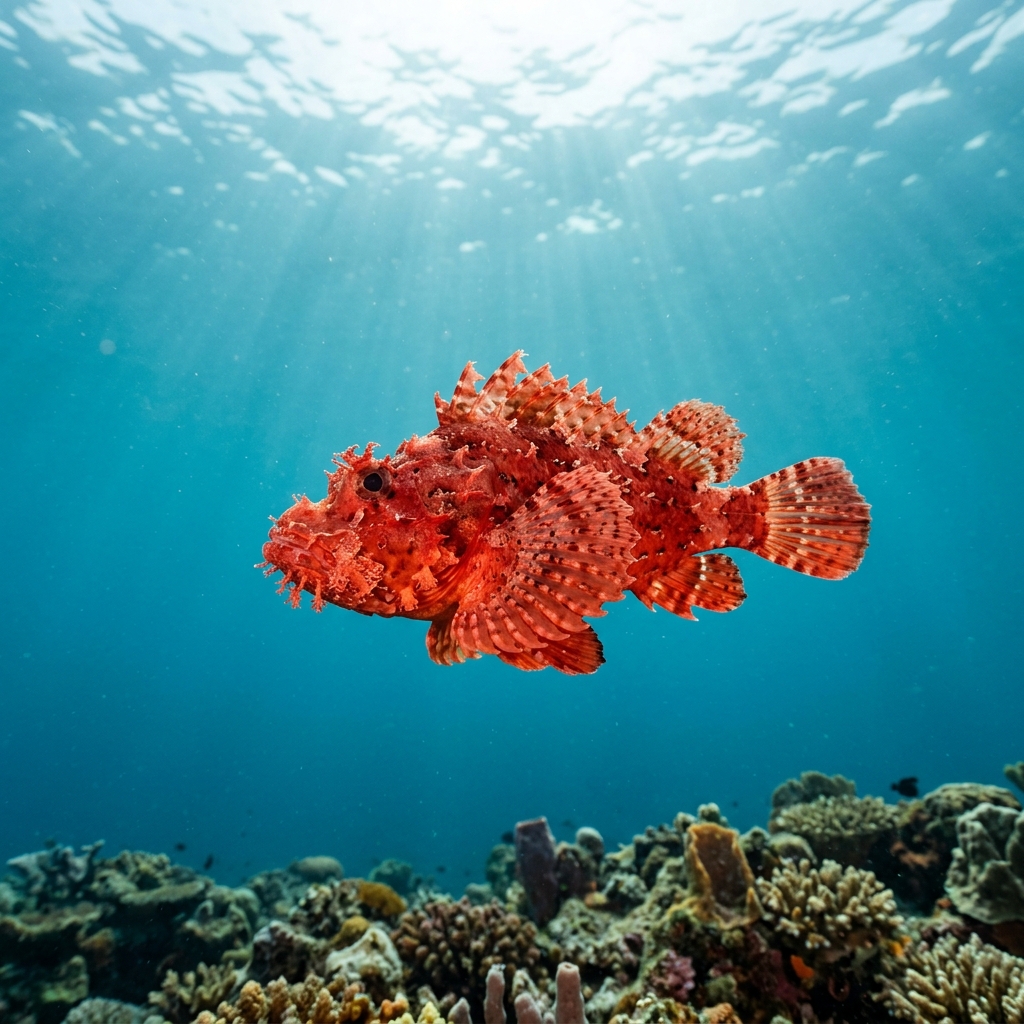
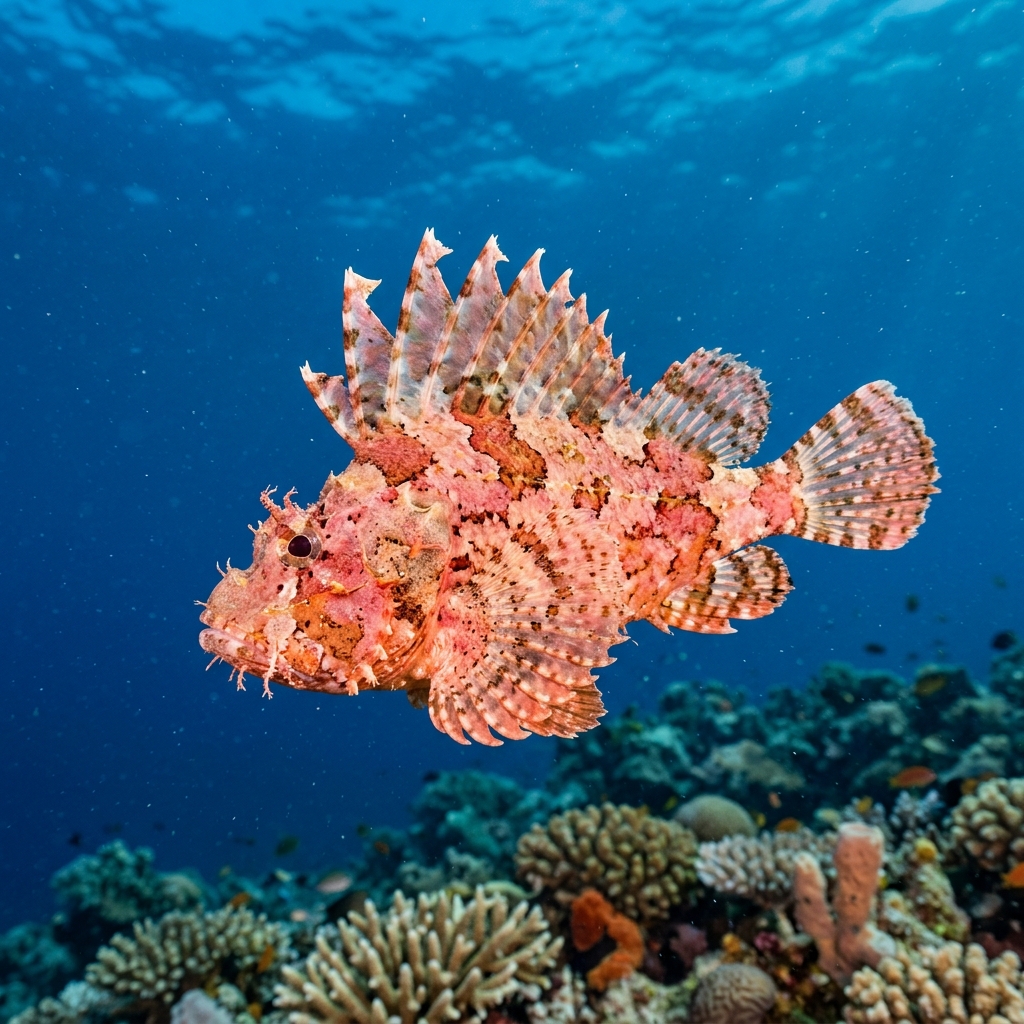
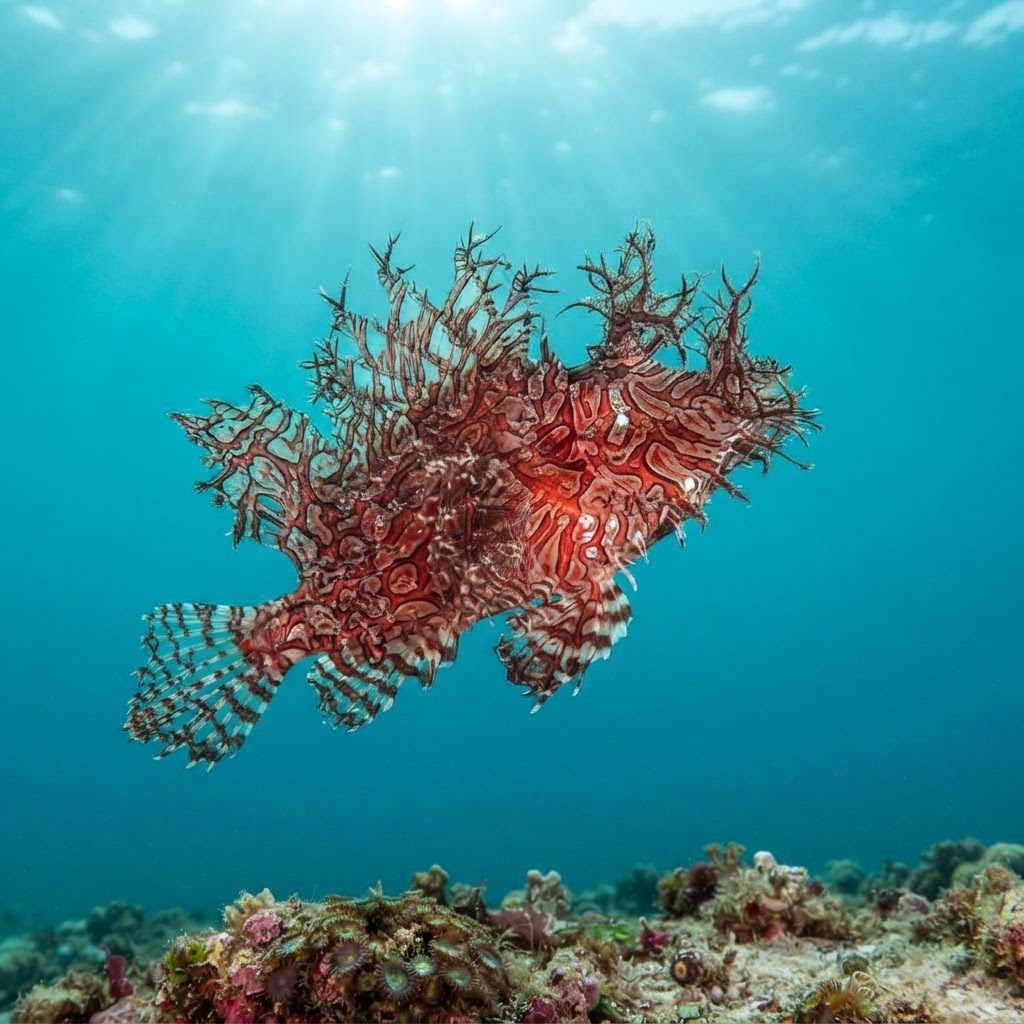
Grows to around 18 cm and relies on an outline built entirely to disappear: a lumpy, high-backed body covered in ragged skin flaps and filaments that mimic weed or algae. Colour is variable, from mottled reds and pinks to yellows and browns, matching whatever it is sitting on. The giveaway is the shape rather than the colour - a steep forehead, a big upturned mouth, and fringed pectoral fins it uses to prop itself on the substrate rather than swim.
Sits motionless on rubble, sponge or weedy substrate for long stretches, letting its camouflage do all the work rather than fleeing divers. Ambushes small fish and crustaceans with a sudden lunge and gulp rather than any active hunting. Most sightings happen when a diver is moving slowly and scanning the bottom closely, since it is otherwise easy to swim straight past.
Some Rhinopias species can shift the intensity of their colour and skin texture over time to better match a new patch of reef, making the same individual look noticeably different from one week to the next.
Comfortable across a 24.9 to 29.4 C range, which points to year-round presence on tropical reefs rather than a tight season. There is not yet enough logged data to pin down a stronger seasonal pattern.
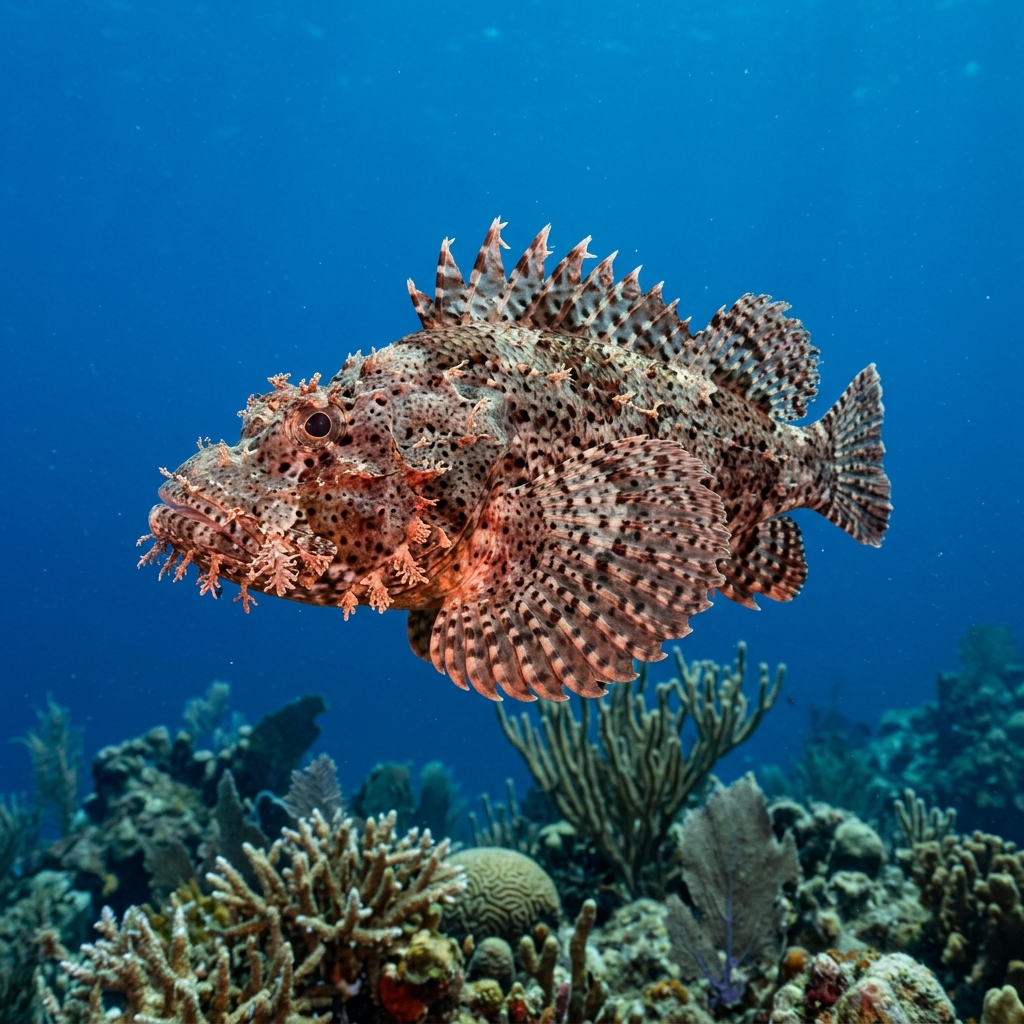
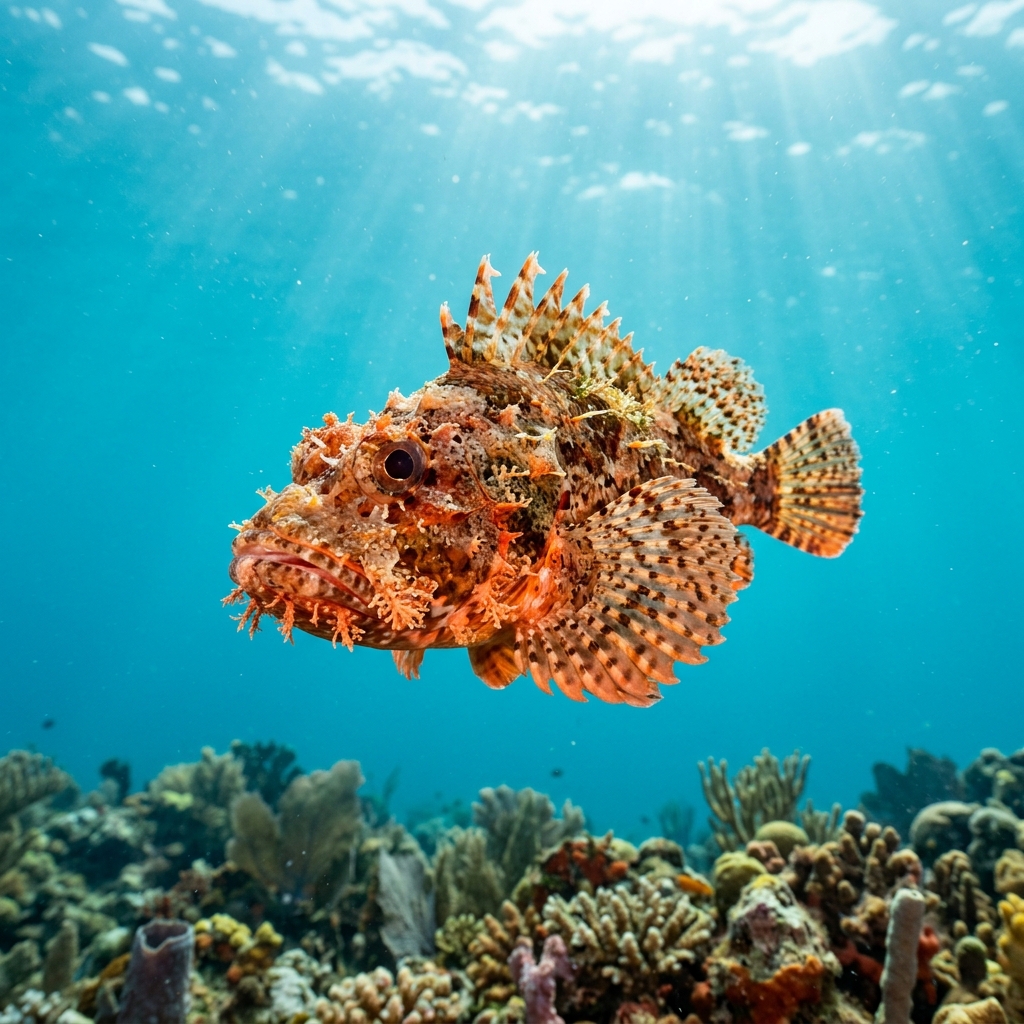
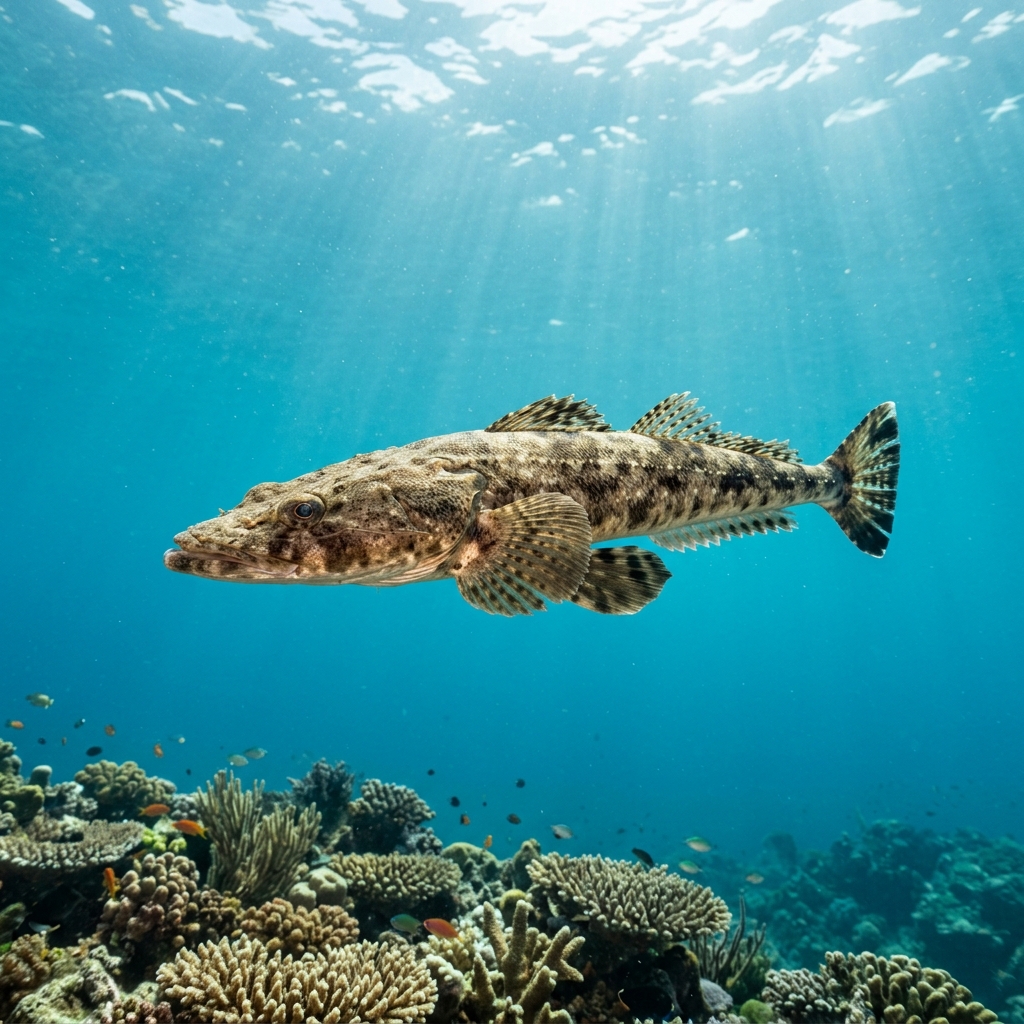
Reef neighbours a diver could mistake it for. Use the identification notes above to tell them apart.
Sighting data for this species is too thin to name reliable dive regions with confidence. What is known biologically points to Indo-Pacific reef systems within its warm-water range, but treat any specific site claim with caution until more dives are logged.
Mapping where Lacey Scorpionfish is logged…
Look for a lumpy body covered in ragged, weed-like skin flaps, a steep forehead and a large upturned mouth. Colour varies with habitat, so the shape and texture are more reliable clues than any fixed pattern.
They typically reach around 18 cm, making them a small, easy-to-miss reef fish despite their bulky, lumpy outline.
Yes. They carry venomous dorsal spines and rely on camouflage rather than fleeing, so the main danger is an accidental hand or knee placed too close on the reef. Watch where you put your hands around rubble and weedy patches.
They are found in warm water between roughly 25 and 29 C year-round, so there is no strong seasonal window logged for this species yet. Any time you are diving suitable reef habitat within its range is worth a slow, close look at the substrate.
Rather than swimming away from threats, it stays completely still and lets its frilly, algae-like skin do the hiding, only lunging when prey wanders close enough to ambush.
Site and sighting data is aggregated from diver logs, iNaturalist and GBIF. For taxonomy and conservation status:
Madeira Rockfish
2,773 sites