Platycephalidae spp.
Flathead are masters of camouflage across Indo-Pacific reefs. Most commonly logged in Australia, the Maldives, and the Philippines, here's where and when to find them.
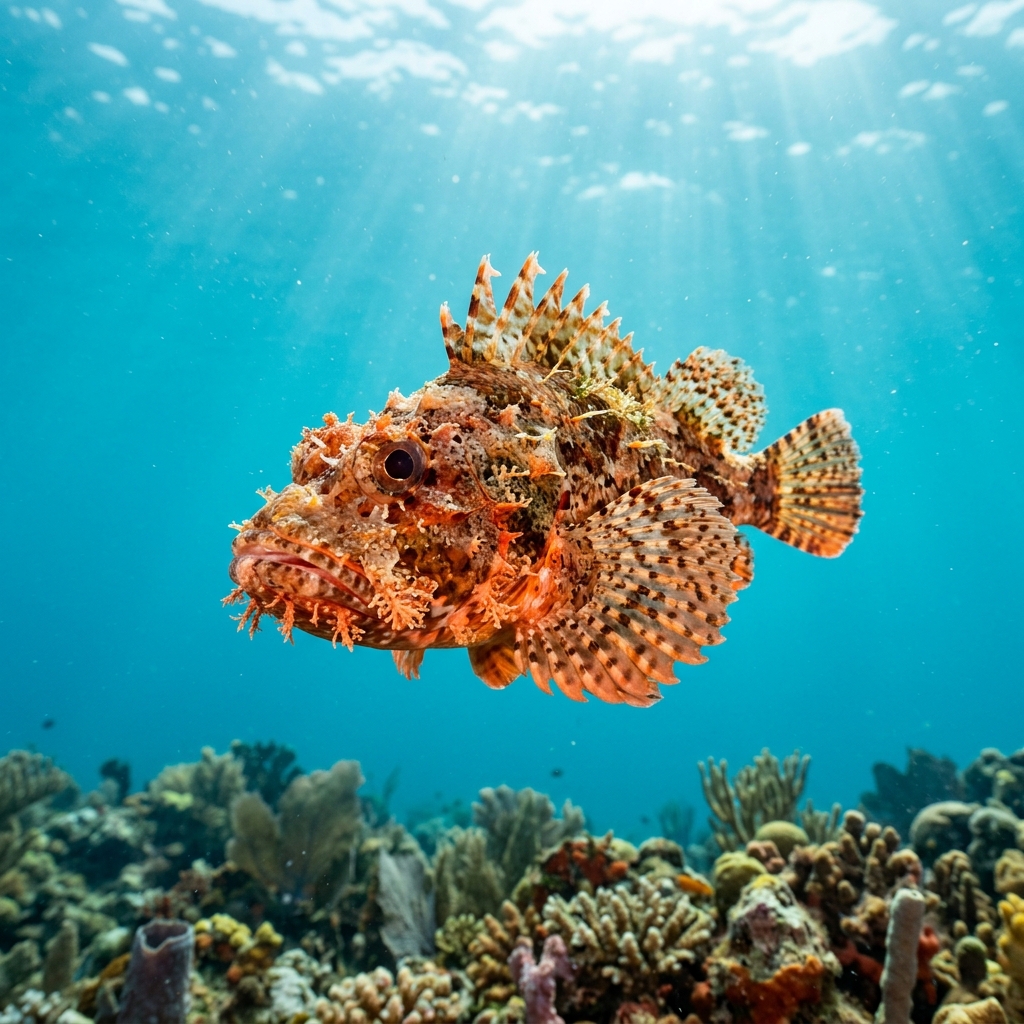
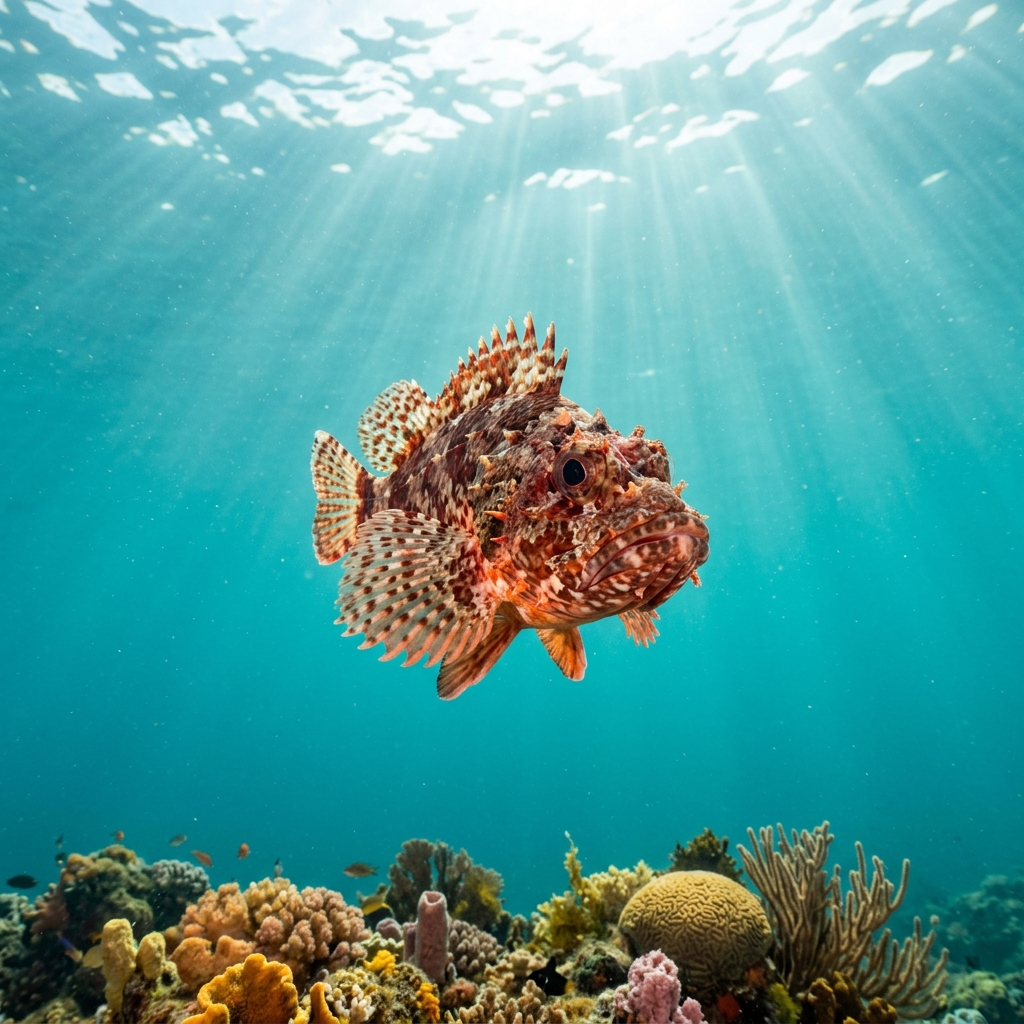
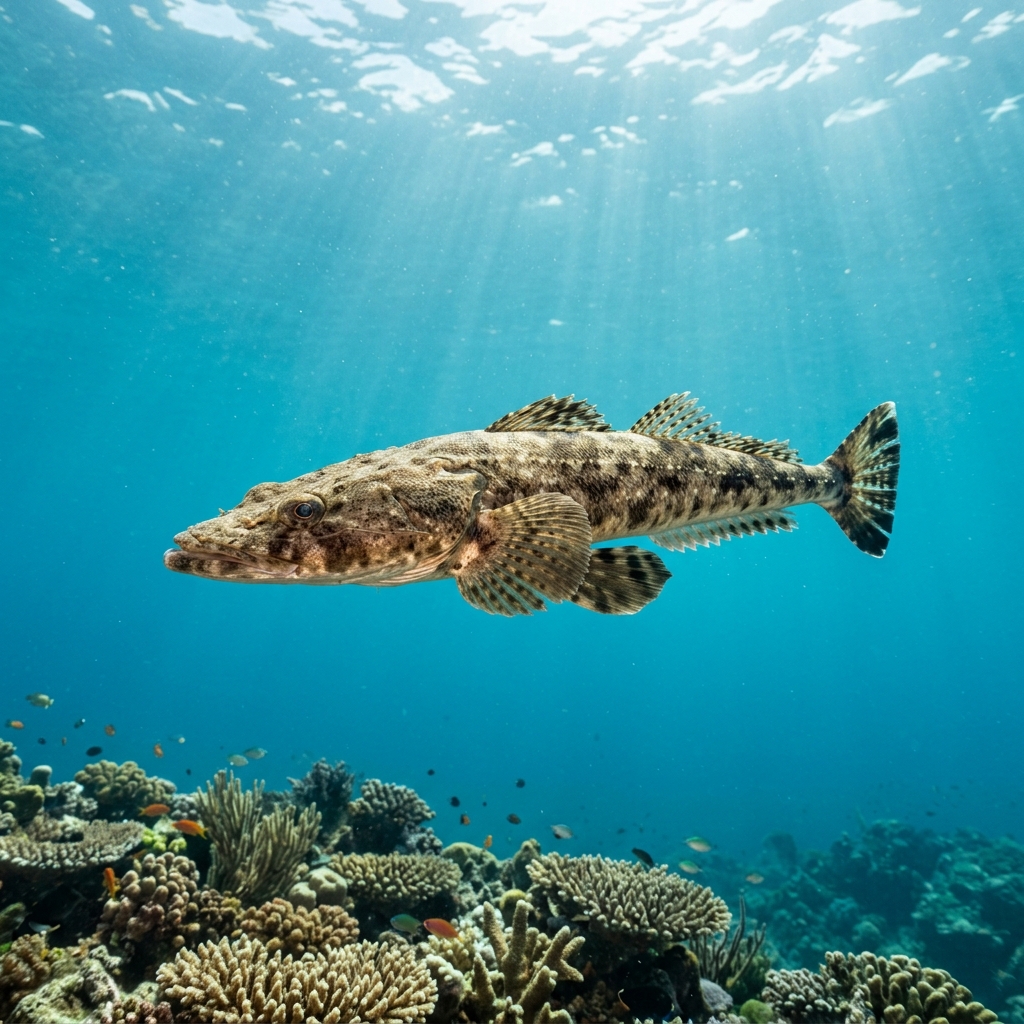
Flatheads are impossible to miss once you know the shape: a dramatically flattened body and wide, depressed head that looks almost sculpted into the seafloor. Colouration runs through browns, tans, and greys with mottled or speckled patterning that blends seamlessly with sand, rubble, and reef. The eyes sit high on the skull, often with ornate fringed irises that break up their outline further. Most species are elongated, tapering to a slender tail, giving them a wedge-like silhouette from above.
Flatheads are ambush predators that spend almost all their time completely motionless on the bottom, relying on camouflage rather than retreat when a diver approaches. You are far more likely to nearly fin over one than to spot it moving; the giveaway is usually the outline of the head or the glint of an eye. They tend to favour sandy patches, rubble, and the base of reef structures rather than hard coral, often in fairly shallow water.
Their compressed heads are lined with ridges, spines, and sensory pores that help them detect prey movement even when half-buried in sediment, making them effective hunters without burning a single calorie on pursuit.
In the Southern Hemisphere, sightings concentrate from July through April, suggesting a quieter window around May and June in places like Australia. The group tolerates water temperatures from around 16 to 29 °C, so it turns up on both tropical and cooler temperate reefs depending on the species.
Australia accounts for the largest share of sightings by far, with strong records across Western Australia, Queensland, and New South Wales. Beyond Australia, the Maldives and Philippines are among the most reliable places to encounter them, followed by Indonesia, Japan, Thailand, and Malaysia. The group spans a wide Indo-Pacific range, so divers across much of the tropical and warm-temperate region stand a reasonable chance of a sighting.
Mapping where Flathead is logged…
Flatheads are most commonly logged in Australia, particularly across Western Australia, Queensland, and New South Wales. The Maldives, Philippines, Indonesia, Japan, Thailand, and Malaysia are also strong destinations. The family ranges widely across the Indo-Pacific, so they appear on reef and sand sites throughout the region.
In the Southern Hemisphere, sightings are most frequent from July through April. The group is comfortable in water temperatures from about 16 to 29 °C, meaning tropical sites host them year-round while cooler temperate locations like southern Australia may see a dip in mid-winter encounters.
Look for the flattened, wedge-shaped head and elongated body lying flush against sandy or rubble substrate. Mottled brown and grey colouration makes them nearly invisible, but the high-set eyes and ridged skull are distinctive once you key in on them. If you are unsure, compare the outline: a flathead is slimmer and more elongated than the stocky crocodilefish, which shares a similar habit.
Size varies across the family. Smaller species reach around 20 to 30 cm, while the larger members, such as the rock flathead found in southern Australia, can exceed 60 cm. Most divers encounter mid-sized individuals in the 25 to 45 cm range.
Flatheads are not considered dangerous to divers. They rely on camouflage and stillness for defence rather than venom or aggression. The main practical risk is an accidental brush if you mistake one for the bottom, so watch where you put your hands and knees on sandy reef edges.
Site and sighting data is aggregated from diver logs, iNaturalist and GBIF. For taxonomy and conservation status:
Madeira Rockfish
2,773 sites