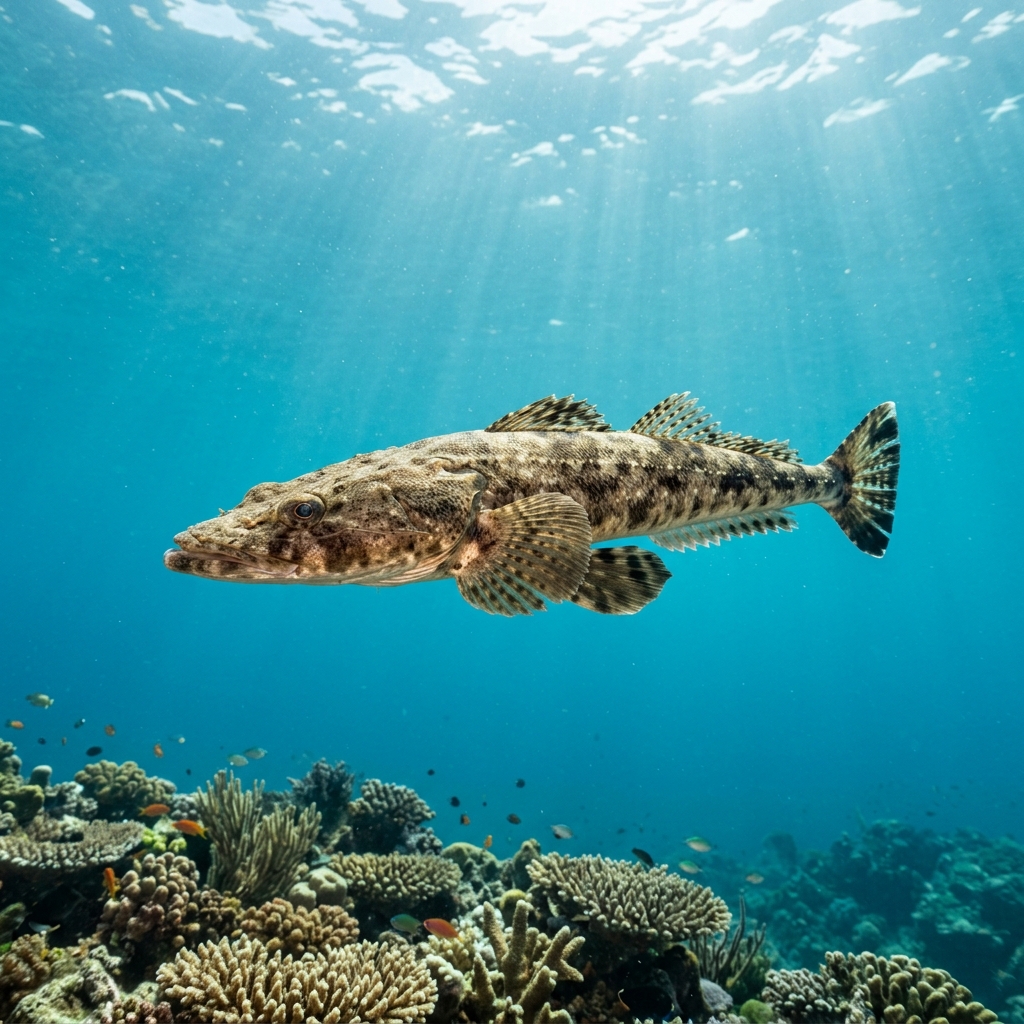
Rhinopias eschmeyeri
Spot Eschmeyer's Scorpionfish in warm Indo-Pacific waters, most reliably logged across Indonesia and Kenya. Here's where to look and how to ID it.
Safety warning
The spines carry venom and snap off easily in the skin. Do not touch it, and never rest a hand or knee on the reef near one; the spines drive in on the lightest contact.
If you're stung
Venomous spinesGeneral first-aid guidance, not a substitute for professional medical care. In an emergency, call your local emergency number.
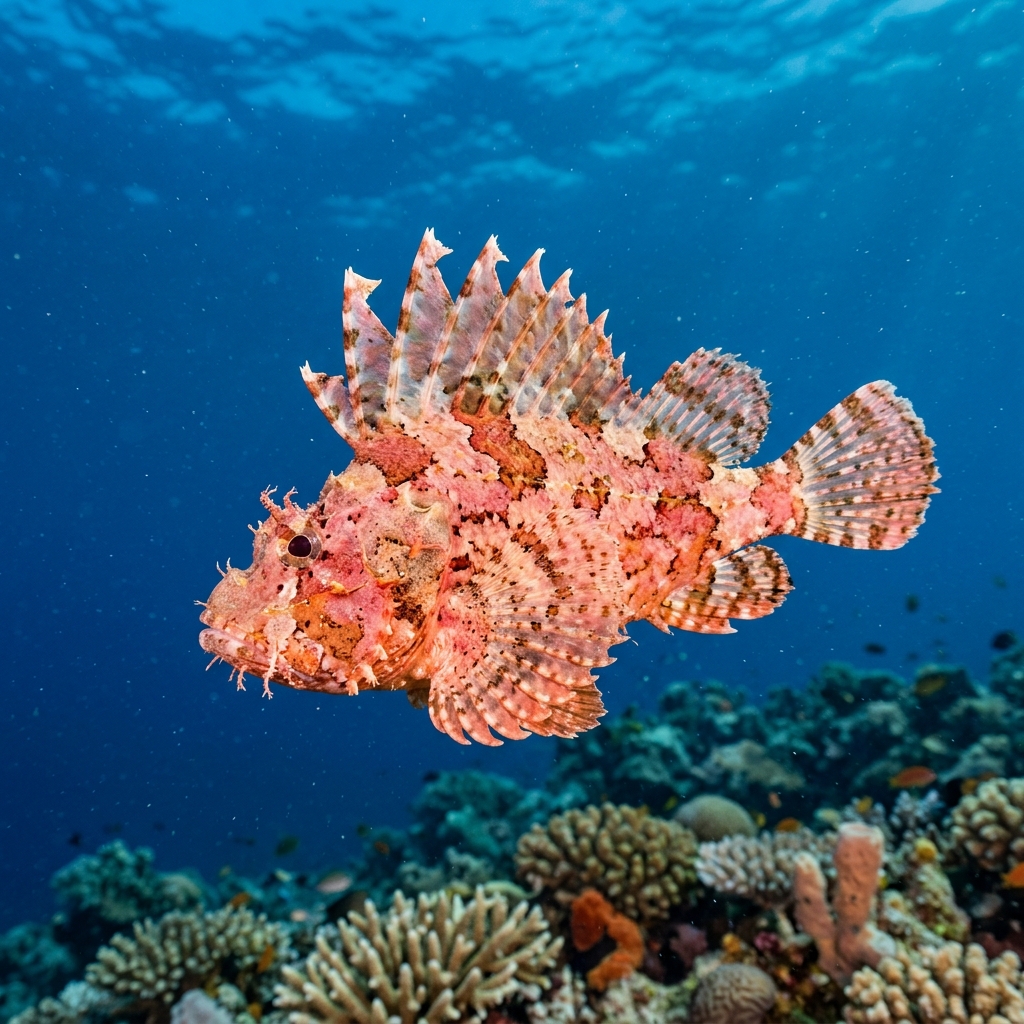
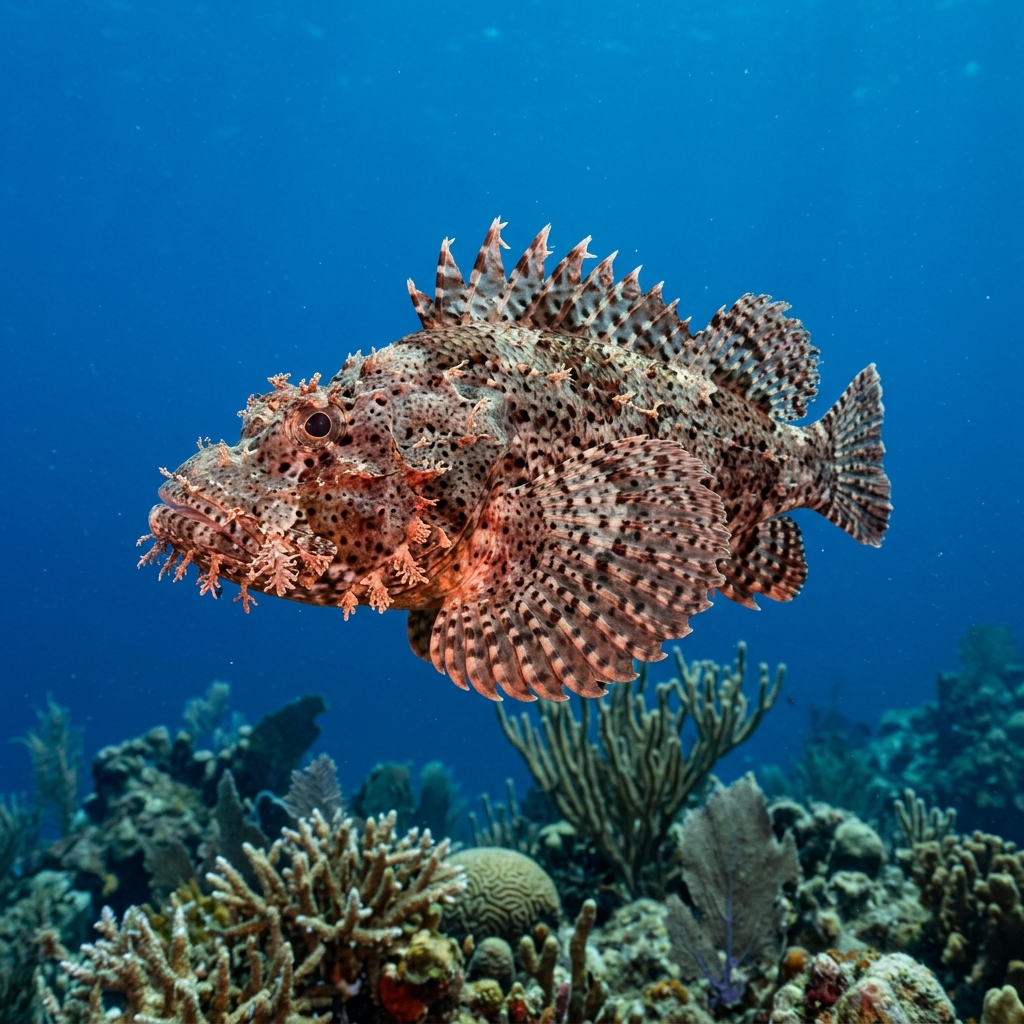
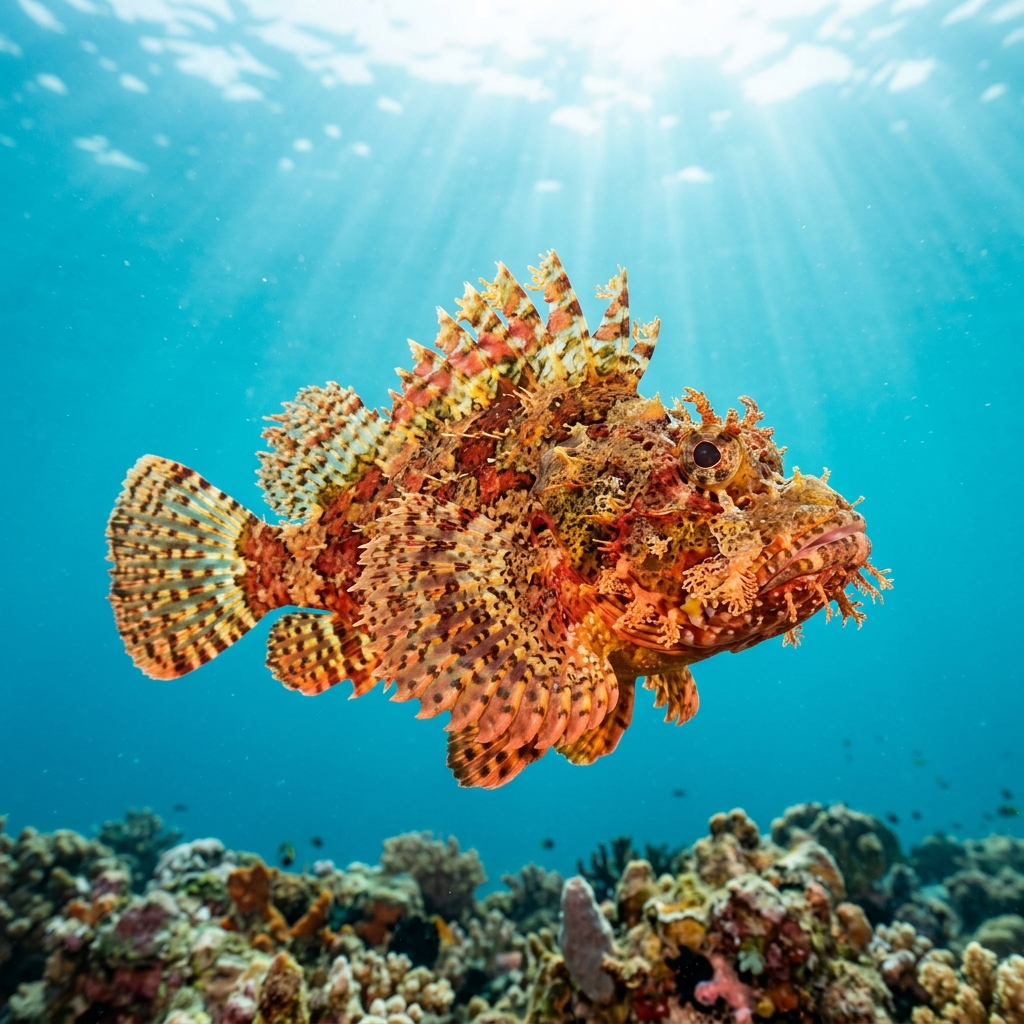
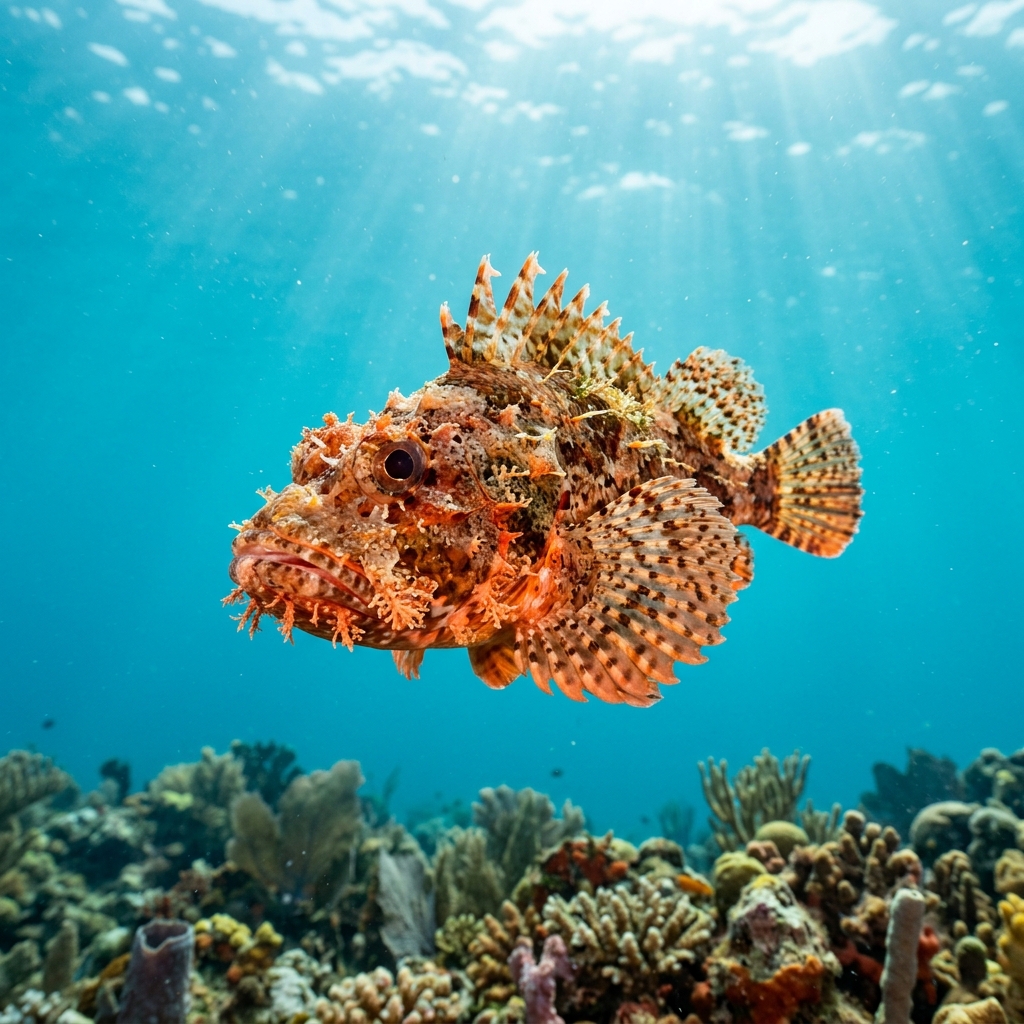
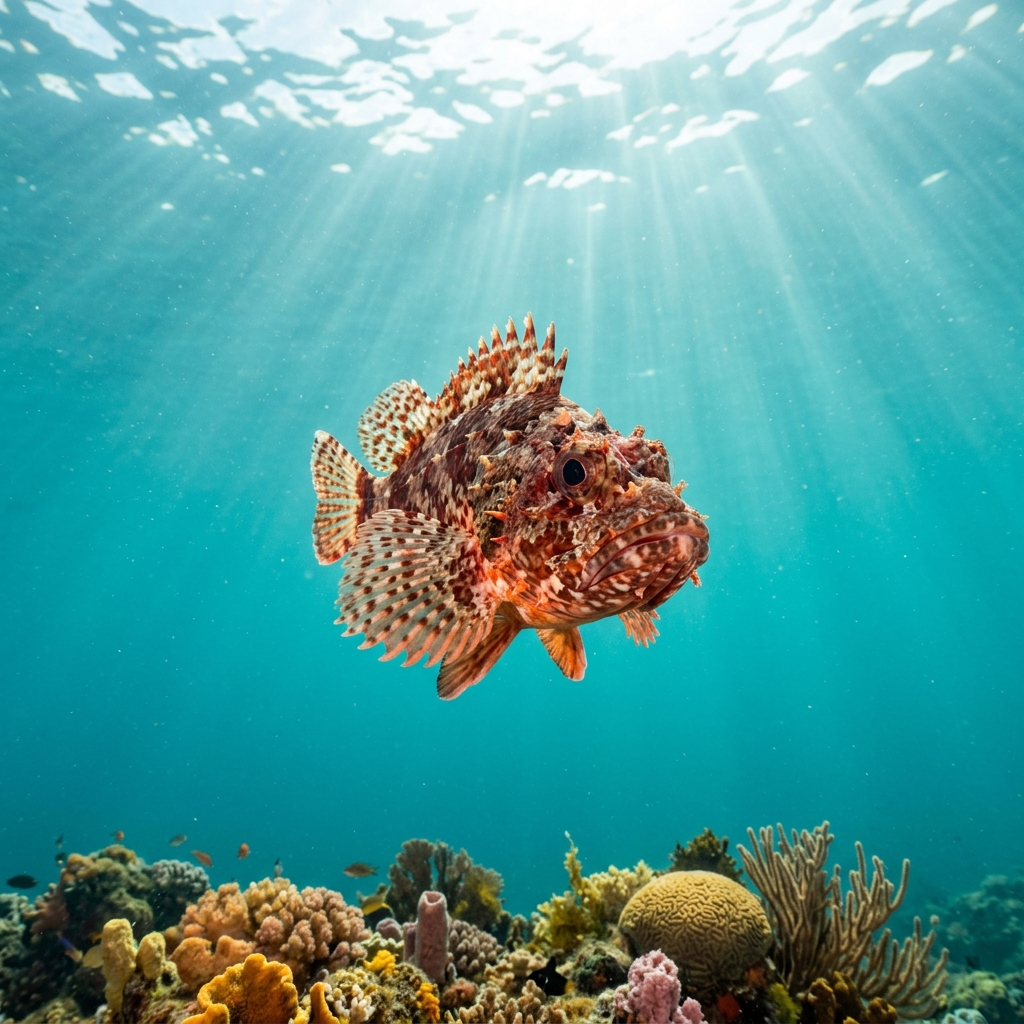
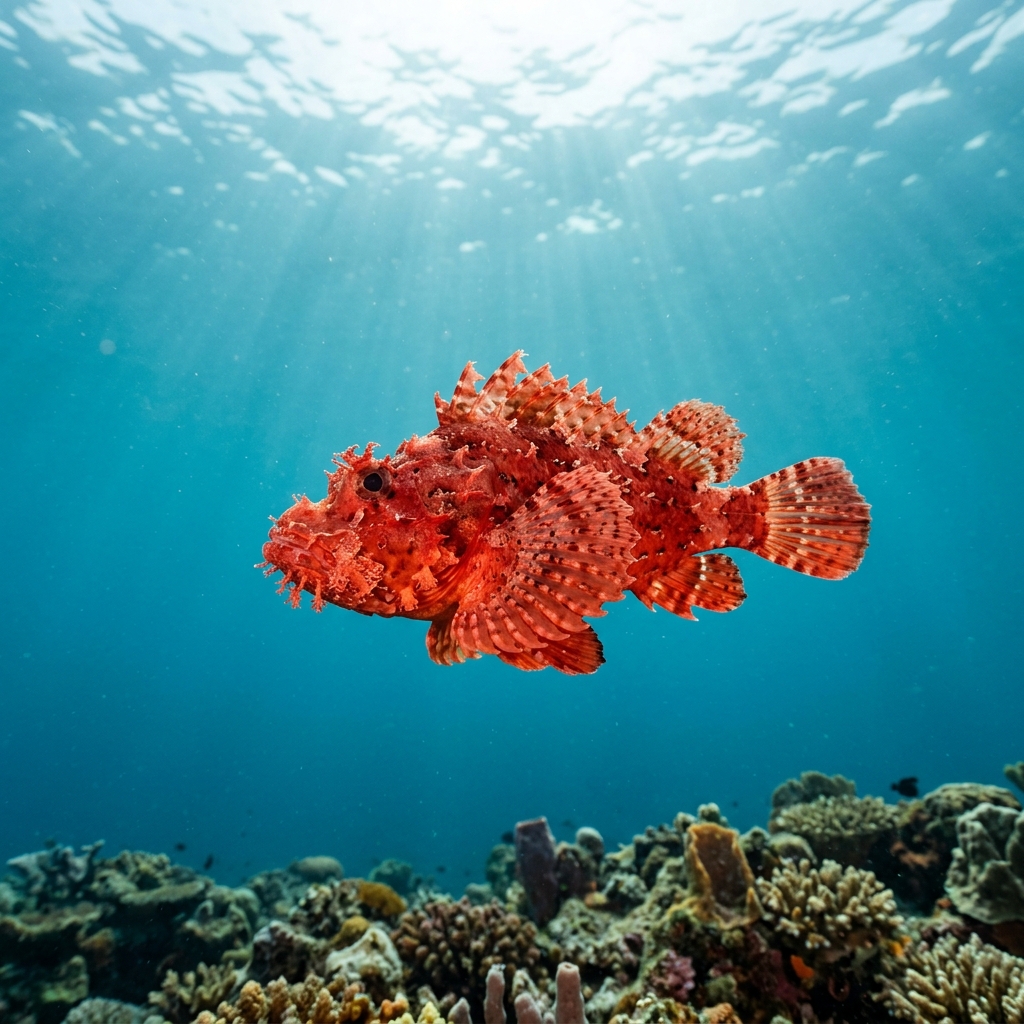
A compact, fleshy scorpionfish covered in elaborate skin flaps (cirri) that drape over its face and body, helping it vanish against rubble or sponge-encrusted reef. Colouration ranges from deep burgundy and red to pale pink or cream, sometimes with blotchy purple or brown patterning. The large, upturned mouth and steeply rising forehead give the head a distinctly humped, almost lumpy silhouette. Look for the dense cirri and that squared-off head shape to separate it from other reef-dwelling scorpionfish.
Eschmeyer's scorpionfish is a classic ambush predator, sitting perfectly still for long periods on rubble patches, sponges, or at the base of coral heads. It relies entirely on camouflage and rarely bolts when a diver approaches, making it possible to observe at close range, provided you move slowly and avoid touching it or the substrate around it. Most sightings are during the day, when the fish sits in open view simply because its disguise is so effective.
Unlike many scorpionfish that settle on hard reef structure, Eschmeyer's scorpionfish often parks itself on soft substrate, rubble, or colourful sponges, matching its body colour and cirri pattern to whatever it happens to be resting on.
No strong seasonal signal has emerged from the available data, so this species is treated as year-round across its range. Observed water temperatures run from around 27 to 29 °C, typical of shallow tropical reefs throughout the Indo-Pacific calendar.
Reef neighbours a diver could mistake it for. Use the identification notes above to tell them apart.
Most sightings come from Indonesia, particularly the Maluku and Papua region and the Nusa Tenggara and Banda Sea area, making the eastern Indonesian archipelago the most reliable place to look. Kenya's Diani and South Coast is the standout African location, with a solid cluster of records, while Timor-Leste and Zanzibar round out the confirmed range. All four countries sit within the warm Indo-Pacific belt where this species is known to occur.
Mapping where Eschmeyer's Scorpionfish is logged…
Indonesia has the most logged sightings, especially in the Maluku, Papua, and Nusa Tenggara regions. Kenya's Diani and South Coast is the leading African site, with further records from Timor-Leste and Zanzibar in Tanzania.
No seasonal pattern has been detected, so dives can be planned year-round at known sites. The species favours water temperatures of roughly 27 to 29 °C, which describes tropical Indo-Pacific reefs throughout most of the year.
Key features are the dense skin flaps (cirri) covering the face and body, the steep humped forehead, and the large upturned mouth. Colour varies from deep red to pale pink or mottled purple, so shape and texture are more reliable ID cues than colour alone.
Like all scorpionfish, it carries venomous dorsal spines that can deliver a painful sting if touched. However, the species does not actively threaten divers. Simply avoid placing hands near it or on adjacent substrate, and the risk is negligible.
It is logged as uncommon at most sites where it appears, and rare at several others. It is not a guaranteed sighting anywhere, so spotting one requires a slow, methodical dive with an experienced local guide who knows the resident individuals.
Site and sighting data is aggregated from diver logs, iNaturalist and GBIF. For taxonomy and conservation status:
Madeira Rockfish
2,773 sites